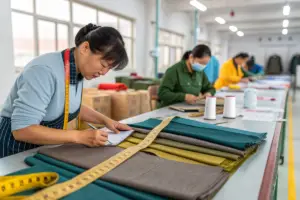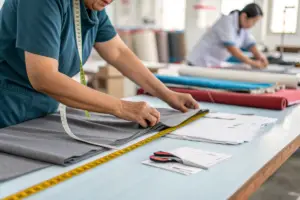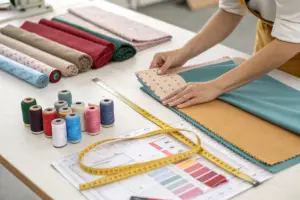
A few months back, a designer from Brooklyn called me in a panic. She had been working with an overseas factory for two seasons. Every single invoice had a vague “miscellaneous surcharge” that grew bigger with each order. First $200, then $600, then $1,200. No one could explain what it covered. She felt trapped. She had already invested in fabrics, trims, and marketing. Walking away meant losing her deposit and her launch timeline. Staying meant bleeding cash on mystery fees.
I hear some version of this story at least twice a week. Talented designers get their margins eaten alive by hidden costs they never saw coming. They price their collections based on a factory's initial quote, only to discover the real cost per unit is 25% higher after the goods ship. By then, their retail markup is locked in, and their profit is gone.
Transparent pricing in garment manufacturing means you see exactly where every dollar of your production cost goes before you pay a single deposit. At Shanghai Fumao, we break down your quote into raw fabric cost, labor minutes per operation, trim sourcing, and logistics fees. No blended numbers, no vague surcharges, no surprises when the final invoice arrives.
This approach changes the power dynamic. Instead of guessing what your true cost of goods sold will be, you can plan your wholesale price with confidence. You can negotiate with your own retail buyers from a position of certainty, not hope. Let me show you how this works in practice and why it matters for your next collection.
Why Do Most Garment Factories Hide Their Real Cost Breakdown?
In 2023, a Portland-based streetwear founder shared his factory bill with me. I spread out the charges across my desk and circled three different entries for “fabric processing.” One was for pre-washing. One was for dye fixation. The third was literally a duplicate of the second charge with a different date stamp. He had paid $4,700 extra across a run of 600 hoodies. The factory banked on his inexperience.
How Does a Blended FOB Price Consume Your Design Profit Margin?
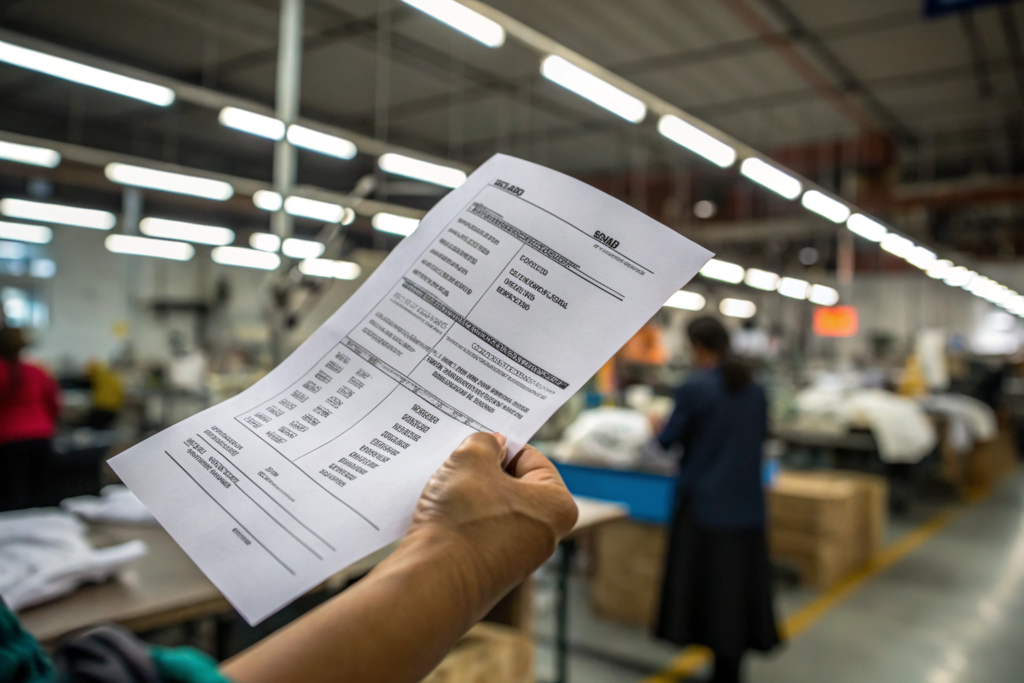
A blended FOB price is the most dangerous tool in a shady factory’s kit. They give you one single number: “$14.50 per unit.” That is it. No layers, no details, no way to see what you are really buying. The number sounds reasonable, so you agree. What you do not see is the padded fabric cost, the inflated labor estimate, or the hidden logistics markup baked inside.
This matters because your entire business model sits on top of that number. A retail margin calculator will tell you to apply a 2.5x or 3x markup to reach wholesale. If the real cost should have been $11.20 instead of $14.50, you just handed your factory $3.30 per unit of your own money. On a 2,000-unit order, that is $6,600 gone. That amount could fund your next photoshoot, your influencer seeding, or your trade show booth.
We refuse to send blended quotes. When you request pricing from Shanghai Fumao, you receive a line-by-line sheet. Fabric consumption per meter, labor cost per stitching operation, zipper and button costs from specific trim suppliers, and the exact freight estimate based on carton dimensions. You see where every cent lands. This lets you identify cost-saving opportunities yourself. Maybe you switch from a Japanese zipper to a high-quality local alternative and save $0.80 a unit. The decision is yours because the data is yours.
Does Your Factory Charge You for “Development” Without Delivering a Pattern?
Design development fees are a common grift. Some factories quote $500 to $1,500 for “pattern making and sampling,” then send you sloppy digital files that do not translate to a physical sample. When the first prototype arrives, the proportions are wrong, the sleeves hang twisted, and the neckline gaps. They call it a “first draft” and ask for another development fee to fix it.
This is where transparent pricing exposes competence. A real pattern maker earns their fee by delivering a production-ready tech pack. At our factory, the development phase includes a digitized pattern file, a physical fit sample on your chosen fabric, and a measurement spec sheet you can keep regardless of whether you proceed to bulk production. We separate this cost clearly from the manufacturing quote because you own the pattern, not us. If you ever need to switch factories, your pattern goes with you. No hostage situations.
A reliable garment manufacturer should want you to understand the difference between a one-time development cost and recurring production costs. When factories blur these together, they are usually covering up incompetence or planning to lock you in. You deserve better.
How Can a Line-by-Line Quote Prevent Your Collection Launch Delay?
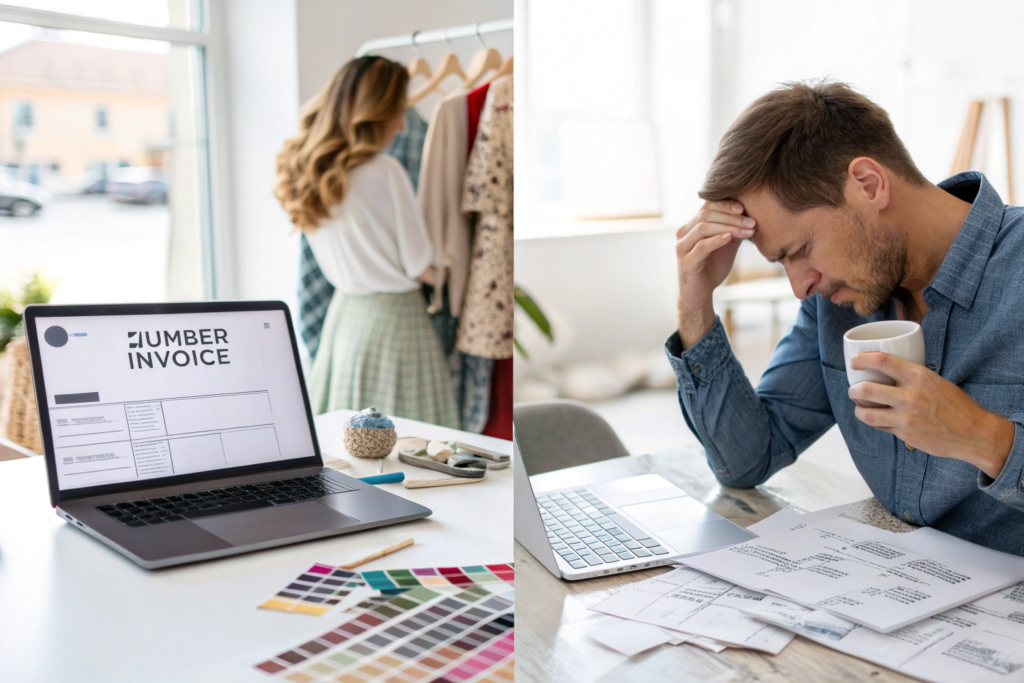
I remember a specific phone call from May 2024. A womenswear designer in Chicago was ready to launch her summer linen collection. She had pre-sold to three boutiques. The delivery window was July, and she had already collected deposits from the store owners. Then her factory emailed her. “We regret to inform you that raw cotton prices have increased. The new unit cost is plus 18 percent. Please remit the difference to proceed with cutting.” She had two choices: delay the launch and refund the boutiques, or pay the ransom and lose her profit.
What Happens When Your Factory Sends a Mid-Production “Supplemental Invoice”?
A mid-production price increase is a classic hostage negotiation tactic. The factory knows you are committed. They know your fabric is already in their cutting room. They know your retail buyers are waiting. So they invent a crisis. Fabric surcharge. Labor shortage. Power price hike. The story changes, but the outcome is the same: you pay more than you agreed.
Transparent pricing kills this tactic before it can grow legs. When your initial quote is line-by-line and contractually attached to a purchase order, the factory cannot invent new categories of cost. At Shanghai Fumao, we lock fabric prices with our mill partners at the moment we receive your deposit. We share the mill receipt with you. If cotton spikes after that date, we absorb the risk on our side because we should have hedged correctly. You are not a commodity trader. You are a designer. You should not be speculating on raw material futures.
We also use a production calendar that ties each line item to a completion date. You see “Cutting: June 3-5,” “Sewing: June 6-14,” “Finishing: June 15-18.” If a delay happens, you know exactly which stage broke down and why. This level of detail transforms a supplier relationship from adversarial to collaborative. Instead of screaming at your sales rep, you work with our floor manager to compress the packing schedule and recover lost days.
Can An Open-Book Pricing Model Speed Up Your Sampling Process?
Sampling is where most timelines die. A designer sends a sketch, waits three weeks for a response, receives a sample that looks nothing like the drawing, and starts the loop again. Three rounds of this and you have burned two months with nothing to show for it.
Open-book pricing accelerates sampling because it removes the guessing game around material sourcing. When I quote a sample, I attach the fabric swatch supplier’s contact card, the composition data, and the available stock position. If the exact deadstock wool blend my designer wants has only 80 yards left, she knows immediately. She can either claim those 80 yards or pivot to an alternative without waiting a week for my reply.
We also separate the cost of a fit sample from the cost of a salesman sample. A fit sample tests the pattern shape on cheaper, similar-weight fabric. It costs less and moves fast. A salesman sample uses the actual production fabric and trims, and it costs more because it is essentially a preview of bulk. When designers understand these cost layers up front, they can budget their development spend intelligently. They do the two fit samples first, nail the silhouette, then produce a single perfect salesman sample for their lookbook photography. No wasted prototypes, no wasted months.
How Does Clear Cost Visibility Protect Your Brand’s Ethical Story?
Last fall, a sustainable fashion brand owner visited our facility unannounced. She had been burned before. Her previous “eco-certified” partner was actually subcontracting her organic cotton orders to an uncertified workshop with poor working conditions. She discovered this when a customer found a random tag inside a dress that did not belong to her brand. The third-party workshop had used leftover packaging from a fast-fashion client to ship her garments.
Are You Paying for Certified Organic Cotton but Getting Conventional?
This question haunts the sustainable fashion industry. The Global Organic Textile Standard certificate can be genuine, but the fabric lot can be swapped. A factory buys a small quantity of certified organic cotton to pass the initial audit, then fills the bulk order with cheaper conventional cotton dyed to match. The carbon impact and chemical footprint are entirely different, but the visual appearance is identical to the naked eye.
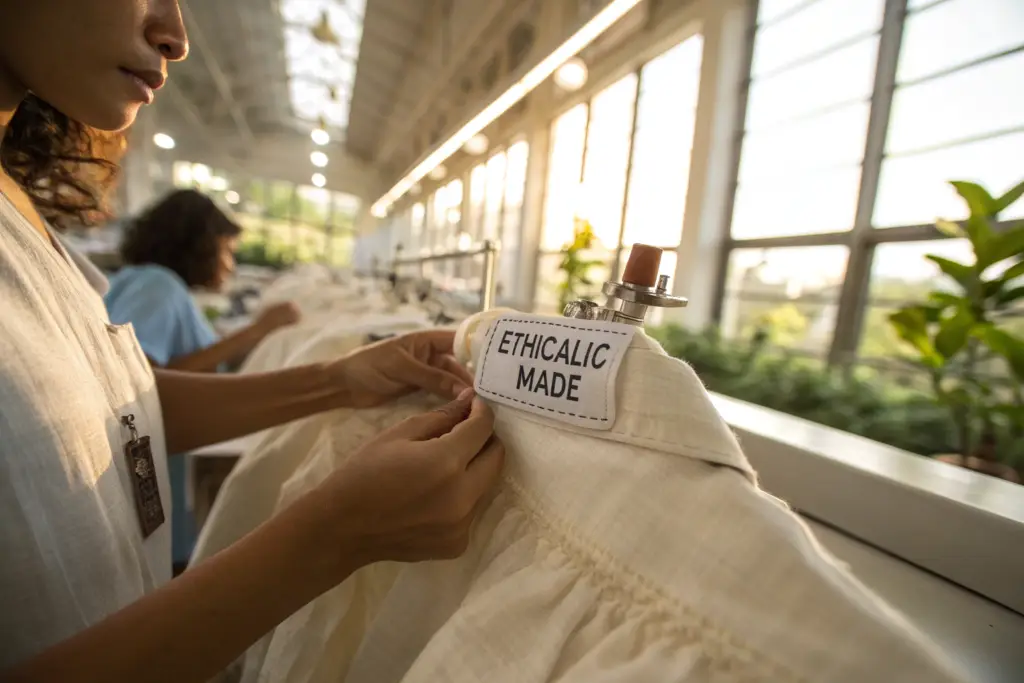
Transparent pricing protects your ethical narrative because it creates a traceable cost paper trail. If you pay a premium for GOTS-certified organic cotton, that premium must appear as a distinct line item on your invoice. We attach the transaction certificate number to that line. You can take that number, visit the certifier’s database, and confirm that the volume of organic fiber we purchased matches the volume of finished garments we shipped you. Mass balance reconciliation is not complicated. It just requires the factory to open their books. A factory that refuses to show you the organic cotton purchase receipt is a factory that probably did not buy organic cotton.
At Shanghai Fumao, we extend this logic to recycled polyester, BCI cotton, and any other sustainable textile claim. If you market your brand as eco-conscious, you need more than a hangtag. You need an audit trail that survives a journalist’s investigation or a customer’s skepticism. We give you that trail, printed clearly in the cost sheet.
Does a Hidden Markup Mean Your Factory Is Underpaying Workers?
This is the uncomfortable link that most industry blogs avoid. When a factory hides its cost structure, it often hides labor exploitation too. A shockingly low FOB price usually means someone in the chain is not getting paid fairly. The fabric might be cheap because the dyeing subcontractor dumps untreated wastewater. The sewing might be cheap because the workers are working unregistered overtime with no social insurance.
Open-book pricing reveals the labor component. You see the piece rate per garment. You see the sewing minutes we calculate based on time-motion studies. A fair living wage benchmark in a Chinese manufacturing city like ours is not a secret. We publish our wage structure internally, and we show our buyers that the labor cost line on their invoice actually translates into take-home pay above the local minimum standard. If a designer challenges this, we invite them to audit.
This matters for your brand story. American consumers, especially Gen Z and millennial buyers, actively research whether brands exploit their supply chains. A vague “ethically made” claim on your website means nothing. A specific statement like “Our manufacturer in Shanghai operates with open-book labor costing verified by monthly payroll audits” actually means something. It differentiates you at the point of sale. Transparent pricing is not just a defensive move against audits. It is a marketing asset you can use to build trust with your own customers.
How Do You Use a True Cost Sheet to Out-Negotiate Retail Buyers?
A year ago, a Los Angeles-based contemporary womenswear designer told me she was terrified of her buyer meetings. The buyers at major department stores would hammer her on wholesale pricing. “Can you do $32 instead of $38?” She had no framework to push back. She would either accept a margin-crushing discount or lose the account. She did not know her own floor.

Why Should Your Wholesale Price Start with the Factory Cost Sheet, Not a Guess?
Most designers price backward. They look at competitors, pick a retail price that feels right, divide by four, and hope the factory can hit it. That is gambling, not business. Real pricing starts with the cost sheet and builds upward.
When you have a true cost of goods manufactured, you can run multiple scenarios. Scenario A: you produce 300 units, your cost per unit is $18, your target wholesale is $42. Scenario B: you produce 800 units, your fabric sourcing efficiency drops the unit cost to $14.50, and your wholesale can drop to $36 while maintaining the same dollar profit per piece. You walk into the buyer meeting with data, not prayers.
I teach my clients to bring the cost sheet to the negotiation table. Not to show the buyer every line, but to demonstrate that the price is built on real numbers, not inflated for bargaining space. When a buyer asks for a discount, you can say, “I have 4% flexibility, not 15%, because my factory pricing is already stripped to the bone.” Buyers respect that. They can smell a padded price from a mile away, and they negotiate hard because they assume you left 30% fluff in the margin. Remove the fluff, and the conversation changes from a haggle to a partnership.
Can Knowing Your Exact Landed Cost Help You Win a DDP Wholesale Account?
DDP terms scare a lot of emerging brands. You quote a price that includes shipping, duties, and customs clearance. If you miscalculate, you lose money on every order. If you overestimate, you price yourself out of the market. The only way to win DDP business consistently is to know your exact landed cost per unit.
Transparent pricing from your factory makes this calculation trivial. I provide the freight cost per carton, the estimated duty rate under your specific HTS code, and the customs brokerage fee. You plug these numbers into a simple spreadsheet, add them to the factory cost, and arrive at a total landed cost with 98% accuracy. No surprises when the goods clear customs. No frantic calls to your bank to cover an unexpected tariff bill.
I watched a brand owner in Austin land a major online retailer account specifically because she could offer firm DDP pricing with a 72-hour quote turnaround. Her competitor was using a traditional factory that took two weeks to quote and then revised the number twice after the order was placed. The retailer chose reliability over a slightly lower unit price. Speed plus accuracy equals revenue. Your ability to close a wholesale deal depends on how fast you can say “this is my price, and it will not change.”
Conclusion
The traditional garment supply chain treats pricing like a state secret. Factories bury costs, hide margins, and surprise designers with fees after the fabric is cut. That model works for factories who plan to disappoint you. It does not work for designers who need to build a sustainable, profitable business year after year.
Transparent pricing flips the relationship. When you see every dollar, you can plan with precision. You can protect your gross margin. You can defend your retail price. You can prove your ethical commitments. You can negotiate from strength instead of desperation. The power shifts from the supplier who holds information to the brand owner who holds clarity.
At Shanghai Fumao, we bet our business on this transparency because we know our costs are fair and our quality is real. We do not need to hide behind blended quotes or mystery surcharges. Our business grows when your brand succeeds, which means we want you to have the data you need to price your collection for profit.
If you are tired of factories that treat your cost of goods like their personal slush fund, let us show you a different way. We will break down your next design into a clean, line-by-line quote that you can take to your bank, your investors, or your retail buyers with total confidence.
Talk to our Business Director, Elaine, about getting a transparent cost sheet for your upcoming collection. She can turn around a preliminary FOB or DDP breakdown within two working days of receiving your tech pack. Reach her at elaine@fumaoclothing.com. Let us turn your pricing from a source of anxiety into your strongest competitive advantage.