I spoke with a mother of three from Austin, Texas, last year. She had been running a small kids wear brand from her spare bedroom. She designed beautiful, simple play dresses. She was sewing them herself on a domestic machine. She was selling them for $48. By the time she factored in the cost of fabric from the local craft store and her own labor time, she was making less than minimum wage. She was trapped. She had more orders than she could sew, but she could not afford to hire local seamstresses. Her brand was popular, but her business model was broken. She needed a way to scale without sacrificing the quality that made her customers love her.
Building a highly profitable kids wear brand with overseas manufacturing is achieved by leveraging the cost efficiency of specialized production hubs to dramatically increase gross margins while focusing the brand’s internal resources on design, marketing, and customer experience. The key is not simply finding the cheapest labor, but finding a manufacturing partner who understands the strict safety regulations, complex sizing needs, and durable fabric requirements unique to children’s apparel. This allows a brand to offer a premium product at a competitive retail price while maintaining a healthy 65-75% margin.
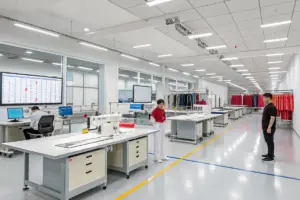
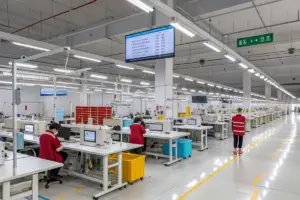
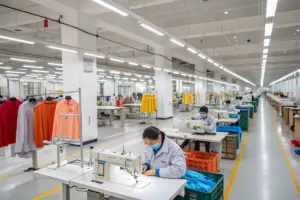
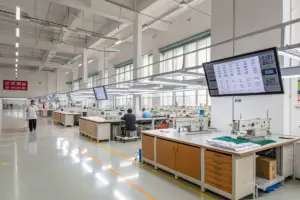
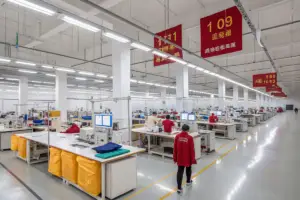
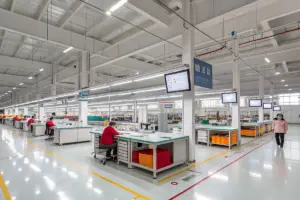
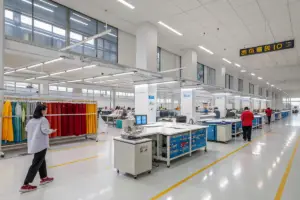
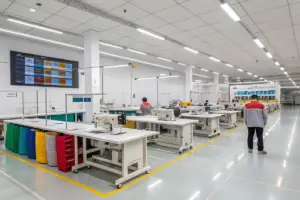
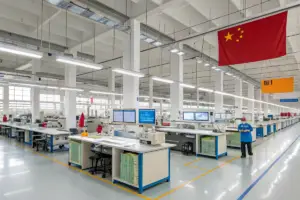
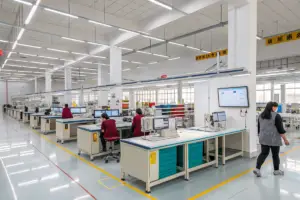
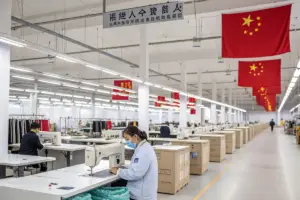
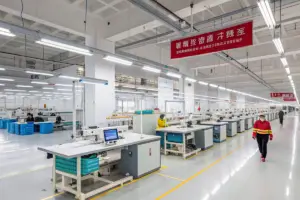
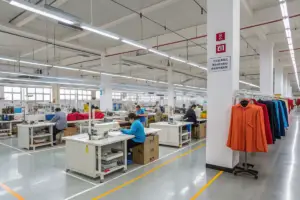
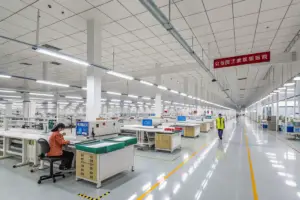
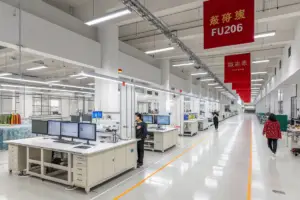
I want to be clear. Kids wear is not just small adult clothing. It is a different beast entirely. The safety requirements are stricter. The growth allowances are tricky. The fabric durability needs to survive playgrounds and washing machines. At Shanghai Fumao, we have dedicated production lines that specialize in this category. We understand that a size 5T is not just a smaller size 10. Let me walk you through exactly how to structure this for maximum profitability without compromising on the trust parents place in your brand.
Why Is Overseas Manufacturing Essential for Kids Wear Brand Profit Margins?
Let’s look at the hard math. This is the conversation I have with every new kids wear founder who contacts Shanghai Fumao. They usually come to me with a beautiful product that costs too much to make. They have a loyal following but no profit to reinvest in ads or new designs. The unit economics of domestic manufacturing for small runs of kids clothing are almost impossible to make work at scale.
Overseas manufacturing is essential for kids wear profit margins because the labor cost differential in cut-and-sew operations is still significant enough to offset the added logistics costs. A specialized factory in a country like China, Vietnam, or Bangladesh can produce a complex children’s garment—with its smaller pieces, tighter curves, and more intricate seam work—for 40-60% less than a comparable domestic contractor. This cost savings translates directly into gross margin, providing the fuel needed to pay for customer acquisition and inventory holding costs.
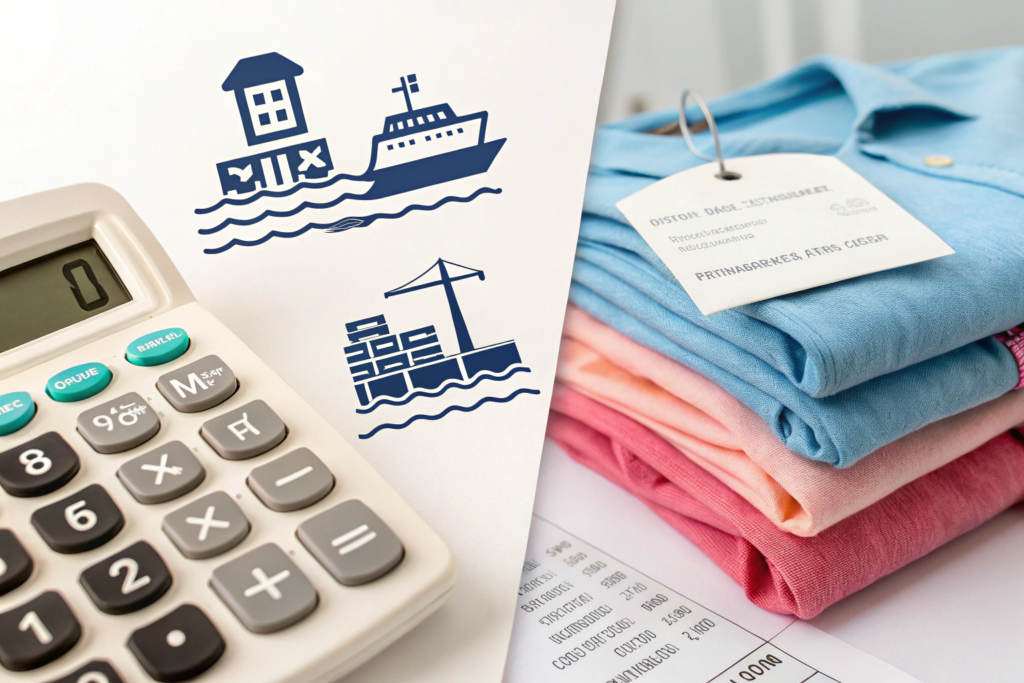
What Does the Real Unit Cost Breakdown Look Like for a Kid’s Hoodie?
Let’s use a real example from our production floor. A classic kid’s hoodie, made from 280gsm French Terry Cotton, with a front pouch pocket and a lined hood. It is a staple item for fall.
Here is a side-by-side comparison of producing 500 units of this hoodie domestically in the U.S. versus producing it at Shanghai Fumao with DDP shipping to a warehouse in California.
| Cost Category | Domestic Manufacturing (Estimate) | Overseas Manufacturing (Shanghai Fumao DDP) |
|---|---|---|
| Cut & Sew Labor | $18.50 per unit | $4.80 per unit |
| Fabric (60" French Terry) | $4.20 per yard (1.2 yds/unit = $5.04) | $3.10 per yard (1.2 yds/unit = $3.72) |
| Trims (Zipper, Drawcord, Label) | $2.50 per unit | $1.80 per unit (Bulk sourcing advantage) |
| Finishing & Pressing | $1.80 per unit | $0.60 per unit |
| Freight & Duty (DDP) | $0.00 (Local pickup) | $1.90 per unit (Included in landed cost) |
| Total Landed Cost per Unit | $27.84 | $12.82 |
Look at the difference. A saving of $15.02 per unit. If you are selling this hoodie wholesale to boutiques for $38, the domestic model gives you a gross profit of $10.16 (26% margin). The overseas model gives you a gross profit of $25.18 (66% margin).
That extra $15 per unit is everything. It pays for your Shopify subscription. It pays for your Instagram ads. It pays for the free shipping you offer your customers. It pays for the salary you finally pay yourself. This is not about making a cheaper product. It is about making a product at a cost that allows the business to exist. The quality of the French Terry from our mill is actually superior to the domestic craft store fabric. It washes better and pills less. The overseas model wins on both cost and quality for this specific item.
How Do Minimum Order Quantities (MOQs) Affect My Kids Wear Cash Flow?
This is the second major financial hurdle. You have the math on per-unit savings. But you need the cash upfront to hit the factory’s MOQ. For kids wear, this can be tricky because you might need six sizes (2T, 3T, 4T, 5T, 6, 7).
A traditional large factory might demand 500 pieces per style per color. For a kids brand with six sizes, that is a massive commitment.
At Shanghai Fumao, we have adapted our production model specifically for independent kids wear brands. We offer "Size Run MOQs." This means you can order 50 pieces of a style, and we will spread those 50 pieces across the six sizes in a pre-agreed ratio (e.g., 10/10/10/10/5/5). You are not stuck with 300 pieces of size 2T that will never sell.
This flexibility is critical for managing inventory risk. Kids grow. You cannot hold inventory for two years like an adult brand can. If you overbuy size 2T this year, those customers will be in 3T next year. You have to liquidate. By using a factory that supports smaller, flexible runs, you protect your cash flow. You reorder the sizes that sell out quickly. This "small batch, fast turn" model is the secret weapon of the most profitable DTC kids brands I work with.
What Safety and Compliance Standards Must My Kids Wear Meet in the USA?
This is the non-negotiable section. Profit margins mean nothing if your product is seized by customs or, worse, hurts a child. The U.S. has the strictest children’s product safety regulations in the world. Ignoring them is not a risk. It is a guarantee of business failure. I have seen brands lose everything because they thought "it’s just a cotton dress, it’s fine."
Kids wear sold in the USA must meet the stringent requirements of the Consumer Product Safety Improvement Act (CPSIA). This mandates third-party testing for lead content and phthalates, permanent tracking labels on every garment, and compliance with specific flammability standards (16 CFR Part 1610 or 1615/1616 for sleepwear). Additionally, any functional parts like buttons or snaps must meet Small Parts regulations (16 CFR Part 1501) to prevent choking hazards. A reputable overseas factory like Shanghai Fumao maintains a compliant supply chain and provides the necessary Children’s Product Certificate (CPC).
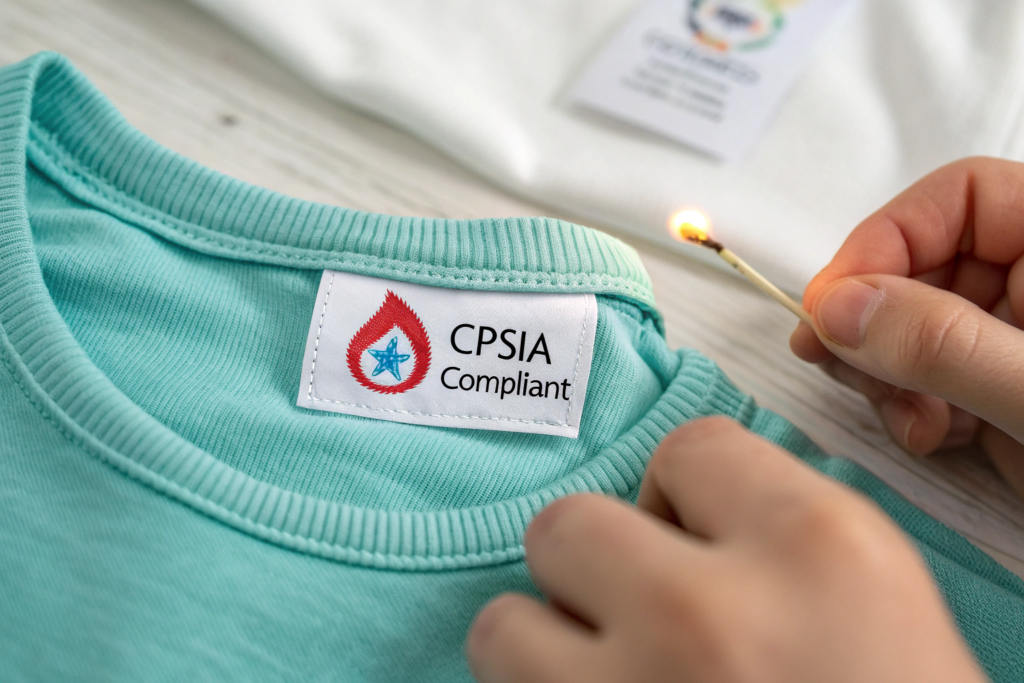
What Exactly Is a Children’s Product Certificate (CPC) and Who Provides It?
This is the document that U.S. Customs asks for. If you do not have it, your container does not leave the port. It is that simple.
A CPC is a legal document that states: "I, the importer, certify that this product has been tested by a CPSC-accepted third-party laboratory and meets all applicable safety rules."
Who provides the CPC?
You do. The importer of record (your brand) is legally responsible for issuing the CPC.
Wait, then what does the factory do?
The factory provides the Test Reports from the lab. You take those reports and use them to create the CPC document.
Here is the workflow we follow at Shanghai Fumao for every kids wear order:
- Material Selection: We only use trims (snaps, zippers, buttons) from suppliers who provide Component Certificates showing compliance with lead and phthalate limits.
- Production Sample Testing: Before bulk production, we send a pre-production sample to a CPSC-accepted lab like SGS or Bureau Veritas. We test for:
- Lead in Surface Coating (Paint/Ink): 16 CFR Part 1303.
- Lead in Substrate (Fabric/Buttons): CPSIA Section 101.
- Phthalates: CPSIA Section 108.
- Report Delivery: We email you the PDF lab reports.
- CPC Generation: You (or we, as a service) compile the reports into a CPC document and sign it.
We also ensure every garment has a CPSIA Tracking Label. This is the tiny white tag sewn into the side seam that has a batch number and date. It allows for a recall if something goes wrong. A factory that does not know how to make and attach these labels is not a kids wear factory. At Shanghai Fumao, this label is a standard part of our tech pack for all kids items. We also strictly adhere to drawstring safety guidelines for hoodies and jackets. No drawstrings in sizes 2T-12 for hood/neck area. This is a rule that results in recalls every single year. We know it. We enforce it.
Why Are Flammability Standards Different for Kids Sleepwear?
This catches many new brands by surprise. You design a cute pair of cotton pajamas. You think you are compliant because cotton is natural. Then you find out tight-fitting cotton pajamas are legal, but loose-fitting cotton pajamas are illegal.
The standard is 16 CFR Part 1615/1616. It requires children’s sleepwear to be flame resistant. Because most natural fabrics are not flame resistant, there are two paths to compliance:
- Use Inherently Flame Resistant Fabric: This is usually polyester treated with a chemical finish. (Most parents dislike this option).
- Use the "Tight-Fitting" Exemption: The garment must be snug-fitting and meet specific maximum dimensions. It must also carry a yellow hangtag that warns: "For child’s safety, garment should fit snugly. This garment is not flame resistant."
If you want to make a loose, flowy cotton nightgown for a 4-year-old, you cannot legally sell it as sleepwear in the U.S. You must call it a "play dress" and market it for daytime.
This is a critical piece of knowledge for your design process. At Shanghai Fumao, we help our clients navigate this by providing the exact spec measurements for "Tight-Fitting" pajamas. We ensure the wrist and ankle openings are small enough to pass the test. We source the correct yellow hangtag and attach it to the garment. This level of regulatory support is why you need a factory that focuses on kids wear. A general factory making adult t-shirts has no idea these rules exist. They will ship you a cute, loose pajama set that you cannot legally sell.
How Can I Develop a Unique Kids Wear Collection That Stands Out in a Crowded Market?
The kids wear market is saturated. If you are just putting a cute saying on a basic t-shirt, you are competing with a million other brands on Etsy and Amazon. The race to the bottom on price is brutal. To be highly profitable, you need to offer something that cannot be easily copied or price-shopped. You need a product that has a "moat." That moat is usually a unique fabric, a proprietary fit, or a signature construction detail.
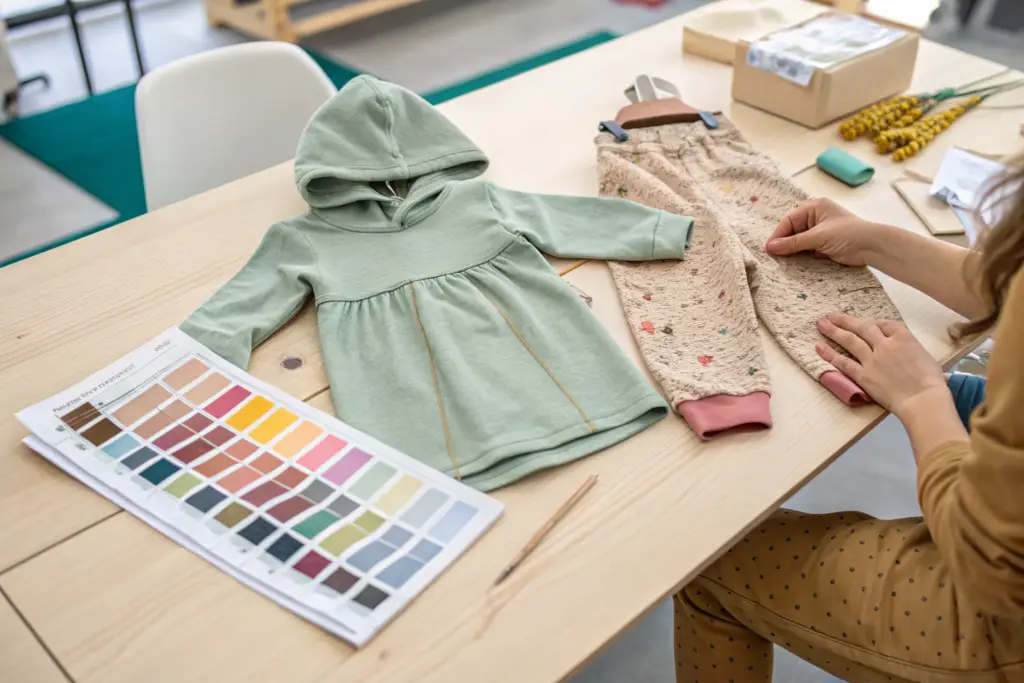
Developing a unique kids wear collection with an overseas partner requires leveraging the factory’s access to specialized textile mills and their technical expertise in garment engineering. This means moving beyond "stock" fabrics and into custom-developed prints, exclusive yarn-dyed patterns, or innovative functional features like grow-with-me cuffs or reinforced knee patches. A strong manufacturing partner acts as a co-designer, suggesting construction methods that enhance durability while maintaining the design aesthetic.
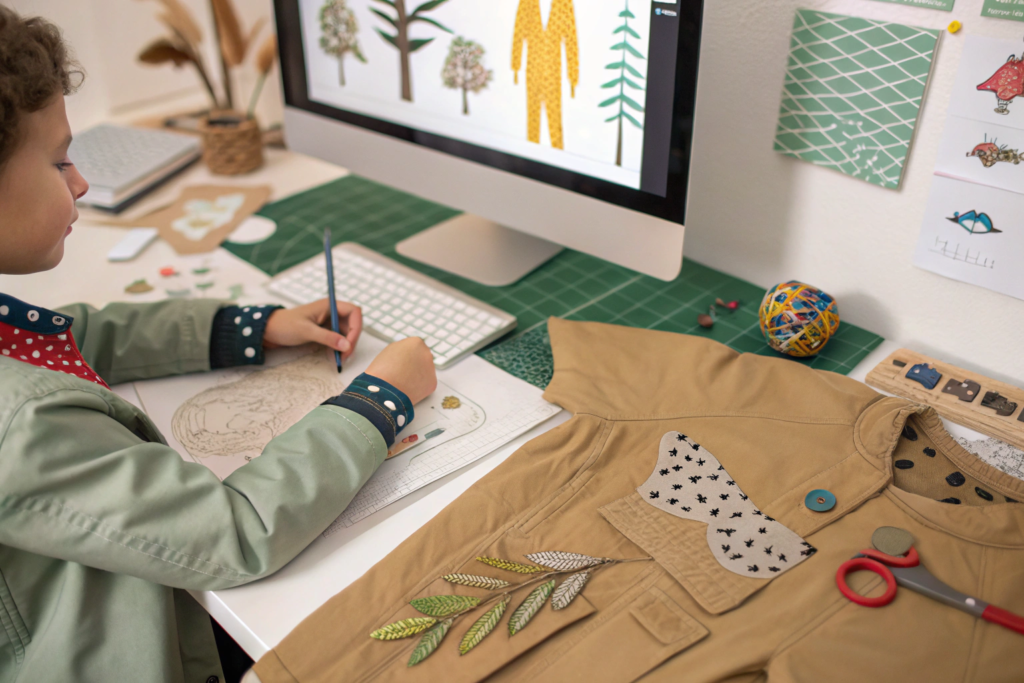
What Are "Rare Style" Details That Increase Perceived Value for Parents?
Parents are savvy shoppers. They scroll Instagram at night. They know what a cheap t-shirt looks like. They are willing to pay more for a garment that looks and feels "special." These are the details we help our clients develop at Shanghai Fumao. These are the things that justify a $48 price tag instead of a $22 price tag.
Here is a table of "Value-Add" details and their approximate cost impact versus their perceived value lift:
| Detail | Description | Cost Add per Unit | Perceived Value Lift | Profit Impact |
|---|---|---|---|---|
| Flatlock Stitching | Visible contrast stitching on seams (activewear style). | $0.15 – $0.25 | High (Looks premium, durable) | Strong Positive |
| Gusseted Crotch (Pants) | Diamond-shaped insert for mobility. | $0.40 – $0.60 | Very High (Fits better, lasts longer) | Very Strong Positive |
| Button-Elastic Waist | Internal adjustable elastic with buttonholes. | $0.35 – $0.50 | High (Grow-with-me appeal) | Strong Positive |
| Fully Fashioned Knit Collar | Collar knitted directly to body (no seam). | $0.50 – $0.80 | Very High (Luxury feel, no neck irritation) | Strong Positive |
| Custom Printed Lining | Inside hood or jacket printed with a fun pattern. | $0.60 – $1.00 | High (Delight factor for kids/parents) | Moderate Positive |
I worked with a kids brand from Portland last year. They wanted a "Hike Pant" for toddlers. We suggested adding a reinforced knee panel using a heavier-weight canvas, but we sewed it on the inside of the pant leg so the outside looked clean. We also added an adjustable elastic waistband inside. The cost add was about $0.90 per pair. They retailed the pants for $52. They sold out in three days. The reviews specifically mentioned the "hidden knee patch" and the "adjustable waist." Those details created a product that was unique to them.
How Can I Use "Deadstock" or Small-Batch Fabrics to Create Exclusivity?
This is a brilliant strategy for a small kids brand. Large factories buy fabric in 5,000-yard lots. They cannot use the "end of roll" pieces of premium fabric. These are called Deadstock.
At Shanghai Fumao, we have relationships with mills that produce for high-end European houses. We can access small quantities (50-100 yards) of beautiful, high-end fabric that would otherwise be thrown away. This includes:
- Liberty of London style floral prints.
- Soft brushed cotton flannel.
- Textured dobby weaves.
Because you are a kids brand, you need less than a yard per garment. A 50-yard roll of deadstock fabric can make 40-50 dresses. That is a perfect Limited Edition Drop.
You can market this as: "The Flora Dress. Made in limited quantities from rescued deadstock cotton. Once it’s gone, it’s gone."
This creates urgency. It prevents discounting. It builds a brand story of sustainability. And because the fabric cost is often lower than custom milling, your margin on these drops can be exceptionally high. This is the exact opposite of the mass-market model. It is a boutique, high-margin strategy enabled by being physically close to the fabric supply chain. We help our clients browse these deadstock options when they visit our factory or through video calls where we show them the actual rolls on the shelf.
What Are the Key Logistics Strategies for Importing Kids Wear Efficiently?
You have designed a beautiful, safe, and profitable collection. Now you have to get it into your warehouse and into the hands of customers without erasing that margin you worked so hard to create. Kids wear logistics has a unique challenge: Seasonality is absolute. If your winter coats arrive on November 15th, you have missed 40% of your selling window. Parents buy back-to-school in August and holiday gifts in November.
Efficient logistics for importing kids wear relies on two key strategies: utilizing DDP (Delivered Duty Paid) shipping to eliminate variable port fees and delays, and implementing a pre-season inventory staging plan that aligns production completion dates with the U.S. retail calendar. Additionally, smart packaging at the factory level—such as poly-bagging individual units with barcodes—reduces fulfillment center receiving time and gets products listed for sale faster.
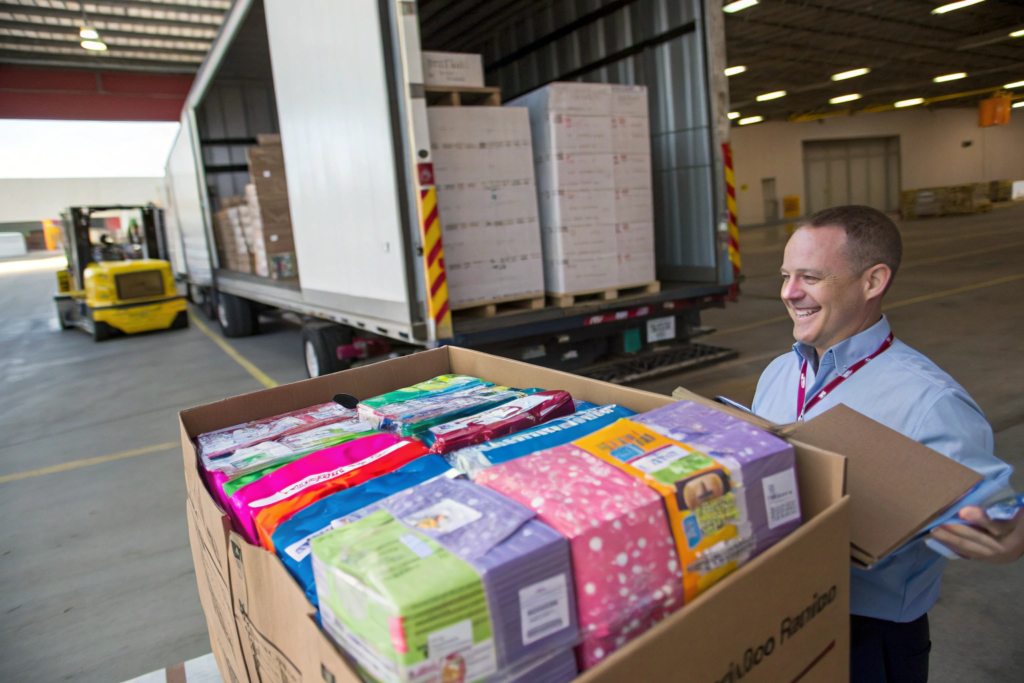
How Does DDP Shipping Protect My Kids Wear Holiday Launch?
I discussed DDP in detail in a previous article, but it is especially critical for kids wear. The window is so tight. You cannot afford a one-week delay at the port because of a customs exam or a trucking shortage.
Let’s map out a timeline for a Holiday Collection (November Launch) .
| Milestone | Date | Responsibility |
|---|---|---|
| Design Final & Sample Approval | April 1 | Brand + Shanghai Fumao |
| Bulk Fabric Ordered | May 1 | Shanghai Fumao |
| Cut & Sew Production | June 1 – July 15 | Shanghai Fumao |
| Final Inspection & Pack | July 20 | Shanghai Fumao |
| Ocean Freight Departure | July 28 | Shanghai Fumao (DDP) |
| Arrival at US Port | Aug 20 | Shanghai Fumao (DDP) |
| Customs Clearance & Drayage | Aug 25 | Shanghai Fumao (DDP) |
| Delivery to Your Warehouse | Aug 30 | Shanghai Fumao (DDP) |
Look at that window. The goods are in your hands by the end of August. You have all of September and October to shoot campaign photos, send samples to influencers, and load inventory into your 3PL. By November 1, you are fully stocked and shipping.
If you used FOB shipping and managed logistics yourself, that "Customs Clearance" step could easily stretch from Aug 25 to Sept 10 due to a missing form. That 2-week delay pushes your marketing launch. It creates stress. It might force you to use expensive air freight for a portion of the order just to have something to sell.
At Shanghai Fumao, we use our DDP service to Guarantee the On-Shelf Date. We build buffer time into our production schedule specifically for the unpredictable nature of ocean freight. Because we control the shipment, we prioritize your holiday goods on the vessel. We know that a late delivery for kids wear is not just an inconvenience. It is a total loss of that season’s revenue.
Should I Use a 3PL or Self-Fulfill for My Kids Wear Brand?
This is a decision about your time. Picking, packing, and shipping orders is a job. If you are doing it yourself, you are not designing, you are not marketing, and you are not growing the brand.
For a kids wear brand, a 3PL (Third-Party Logistics) provider is almost always the right choice once you pass 100 orders per month. The reason is Returns. Kids wear has a high return rate due to sizing issues. A 3PL handles the receipt, inspection, and restocking of returns.
Here is a checklist of what your factory needs to provide to make the 3PL relationship seamless:
- UPC Barcodes on Hangtags: We print and attach these at Shanghai Fumao. The 3PL scans it once to receive the entire carton.
- Polybagging: Every garment is individually bagged. This protects it from dust and handling in the warehouse.
- Carton Markings: We label each carton clearly with Style, Color, and Size Breakdown. The 3PL knows exactly which carton to open first.
By doing this prep work in China, you save $0.75 to $1.50 per unit in 3PL receiving fees. This is a hidden cost that eats margin. A good factory partner understands the U.S. fulfillment ecosystem and packages goods accordingly.
Conclusion
Building a highly profitable kids wear brand with overseas manufacturing is a deliberate process of aligning cost structure with creative vision. It is not about finding the cheapest shirt. It is about finding the right partner who understands that a child’s garment is a unique product category with unique demands.
We have examined the core financial reality. The labor savings from a specialized factory like Shanghai Fumao provide the gross margin necessary to build a real business, not just a hobby. We navigated the critical safety and compliance landscape, where a Children’s Product Certificate and understanding flammability rules are non-negotiable for legal sale in the U.S. We explored the creative side of manufacturing, using rare style details and deadstock fabrics to create a collection that commands a premium price and cannot be easily knocked off. And we mapped out the logistics strategy that ensures those beautiful, safe, profitable clothes arrive in time for the back-to-school rush or the holiday gift window.
The mother from Austin I mentioned at the beginning? She is now a client of Shanghai Fumao. She launched her first overseas-produced collection last spring. She sold out of her "Play Dress" in two weeks. She used the profit to hire a part-time marketing assistant. She no longer sews until 2:00 AM. She designs, she markets, and she spends time with her kids. That is what a profitable supply chain enables. It gives you your life back.
If you are ready to move your kids wear brand from the spare bedroom to a scalable, profitable business, we are ready to help you navigate the transition. From CPSIA compliance to developing those special details that parents love, we handle the complexity so you can focus on the creativity.
Reach out to our Business Director, Elaine. She can walk you through our kids wear capabilities, share our compliance documentation, and provide a transparent quote for your next collection. Contact Elaine at: elaine@fumaoclothing.com. Let’s build something beautiful and profitable together.