Three years ago, I received a phone call at 11 PM China time from a brand owner in New York. He was in a cold panic. His container of 8,000 classic shorts had been sitting at the Port of Long Beach for eleven days, waiting for a chassis to become available. His summer launch was in two weeks. His website was already running a countdown banner. His social media influencers were scheduled to post in ten days. Without product, the entire launch would collapse. He asked me a question I have heard dozens of times since: "What do I do?" I told him to pull 1,500 units from our buffer stock, pack them into air freight cartons, and get them to JFK within four days. The air freight cost was eye-watering. The alternative cost, a missed launch, a damaged brand reputation, and refunded pre-orders, was catastrophic. He authorized the air freight. The launch went live on schedule. The sea freight container arrived three weeks later and filled the replenishment orders. The split strategy saved his season.
Arranging air freight versus sea freight for an urgent classic shorts order is a decision that must be driven by a clear-eyed calculation of the true cost of delay, not just the freight rate on a shipping quote, with air freight providing a five to seven-day transit from a Chinese factory to a US warehouse at approximately four to six times the cost per kilogram, making it financially justifiable only when the lost margin from missed sales and the brand damage from stockouts exceed the air freight premium.
At Shanghai Fumao, I have navigated more freight crises than I can count. The global shipping industry is volatile, unpredictable, and indifferent to your launch calendar. The brands that survive and thrive are the ones that understand both modes of freight, know when to use each, and have a factory partner who can execute either one competently. Let me walk you through the real differences, the hidden costs, and the decision-making framework that will save your season when the clock is ticking.
What Are the Real Transit Times for Air and Sea Freight from China?
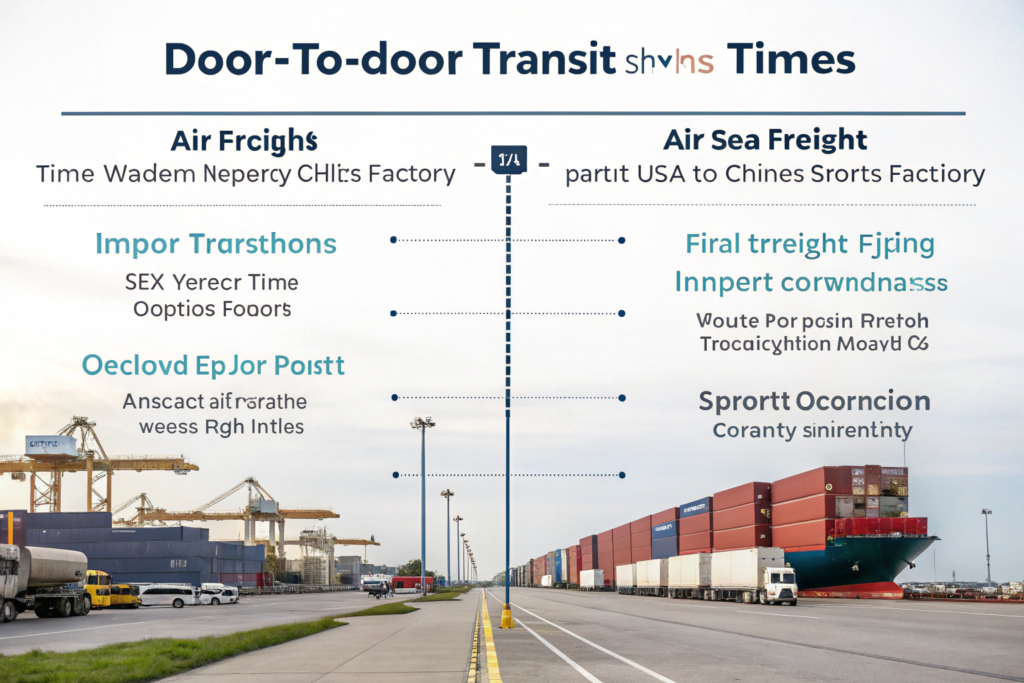
The transit times quoted on a freight forwarder's rate sheet are not lies, but they are estimates based on ideal conditions that almost never materialize. A sea freight quote might say "22 days port to port," but that number does not include the trucking time from the factory to the port of origin, the two to four days the container sits at the port waiting for vessel loading, the port congestion at the destination, or the trucking from the destination port to your warehouse. The real door-to-door transit time is almost always significantly longer than the quoted port-to-port time. Understanding the actual timeline for each mode is the foundation of any freight decision.
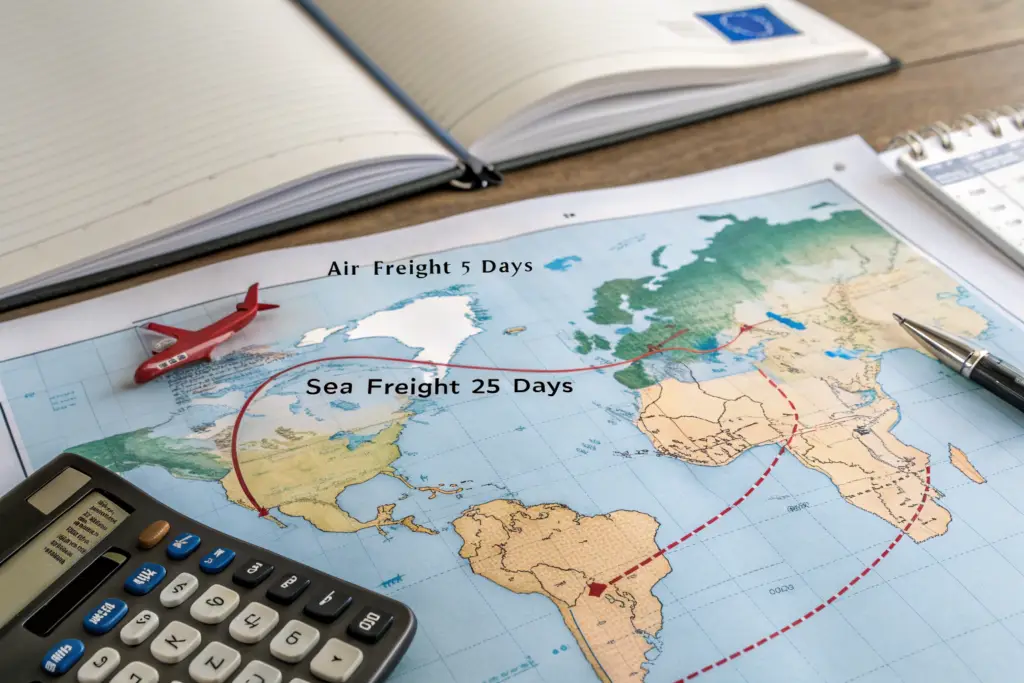
Real-world door-to-door transit times for classic shorts from a Chinese factory to a US warehouse range from five to seven days for air freight, including factory pickup, export customs, flight time, import customs clearance, and final delivery, and from thirty to fifty days for sea freight, including factory-to-port trucking, origin port waiting, ocean transit, potential port congestion at Los Angeles or New York, customs clearance, and final trucking, with the sea freight timeline being far more variable and subject to disruption from weather, port labor actions, and global logistics bottlenecks.
What Hidden Delays Extend Sea Freight Transit Beyond the Vessel Schedule?
The ocean transit itself, the time the ship spends moving from Shanghai to Los Angeles, is typically twelve to sixteen days. This is the number quoted on the rate sheet. The total door-to-door time is two to three times longer because of the stages that happen before and after the vessel movement.
At the origin side, the empty container must be picked up from the container yard and trucked to the factory. The factory loads the container, and the loaded container is trucked to the port terminal. The container sits at the terminal waiting for the vessel cut-off and loading. This origin process adds five to eight days. At the destination side, the vessel arrives and waits at anchorage if the port is congested. The container is discharged, and then it waits for customs clearance, which can take one to five days. After customs release, the container waits for a chassis and a trucker to be available for delivery to the warehouse. This destination process adds another seven to fourteen days under normal conditions, and significantly more during periods of port congestion. The total origin and destination dwell time routinely exceeds the ocean transit time. This sea freight transit time breakdown is what catches inexperienced importers off guard. At Shanghai Fumao, we provide our clients with a realistic door-to-door timeline estimate that includes all dwell times, based on current conditions at both origin and destination ports.
Why Is Air Freight Transit Time More Predictable and Consistent?
Air freight operates on a fundamentally different infrastructure than sea freight. A container ship carries thousands of containers and calls at multiple ports. An air freight pallet moves through a dedicated cargo terminal, is loaded onto a passenger or cargo aircraft with a fixed departure schedule, and arrives at the destination airport within hours of departure. The variability is massively compressed.
The factory-to-airport trucking adds one day. The export customs clearance is typically completed within hours, not days, because air freight customs processes are expedited. The flight time from Shanghai to Los Angeles or New York is twelve to sixteen hours. The import customs clearance at the destination airport is typically completed within twenty-four hours because air freight shipments are prioritized for rapid processing. The airport-to-warehouse trucking adds one day. The total door-to-door time is five to seven days, and this timeline is highly reliable because the air cargo industry operates on fixed, published schedules and the dwell times at each stage are measured in hours, not days. This air freight shipping timeline predictability is the primary value proposition of air freight for urgent orders.
What Is the True Cost Comparison Between Air and Sea Freight?
Every week, I watch a brand owner make the same short-sighted calculation. They compare the sea freight quote, perhaps $0.80 per pair of shorts, against the air freight quote, perhaps $4.50 per pair, and they conclude that air freight is unaffordable. They choose sea freight to save $3.70 per unit, and then they lose $10,000 in missed sales because the shorts arrived three weeks after the season started. The freight cost comparison is meaningless unless it is placed in the context of the total cost of the decision, which includes the cost of not having the goods available for sale.
The true cost comparison between air and sea freight for classic shorts must extend beyond the freight invoice to include the inventory carrying cost of goods in transit, the lost margin from missed sales during a stockout period, the brand damage cost of customer disappointment and cancelled orders, and the warehousing and handling cost differential, with air freight often emerging as the economically rational choice when the fully loaded cost of delay exceeds the air freight premium, which is frequently the case for seasonal products with a defined selling window and a high margin contribution per unit.
How Do You Calculate the True Cost of a Stockout During Peak Season?
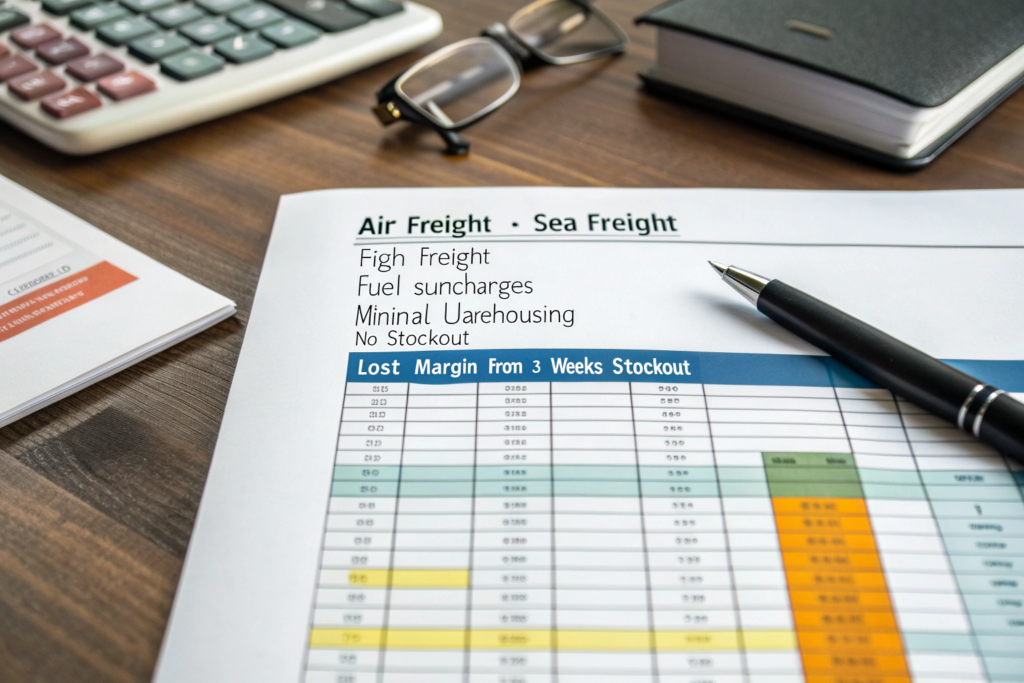
The cost of not having shorts available for sale during the peak season is the single largest hidden cost in the freight decision, and it is almost never calculated. A brand that misses three weeks of the peak May-June selling window is not just delaying revenue. It is permanently losing sales that cannot be recovered, because the customer who wanted to buy shorts in May will not buy them in August, and the wholesale account that needed inventory for a Memorial Day promotion will cancel the order entirely.
To calculate the cost of a stockout, start with the daily sales forecast for the SKU during the peak period. Multiply by the gross margin per unit. Multiply by the number of days the product will be out of stock. The result is the lost margin from missed sales. For a short retailing at $68 with a landed cost of $18, the gross margin is $50 per unit. If the brand sells an average of 80 units per day during peak season, each day of stockout costs $4,000 in lost margin. A three-week sea freight delay of twenty-one days costs $84,000 in lost margin. The air freight premium on a 3,000-unit urgent order at $3.70 per unit is $11,100. The air freight premium is $11,100. The stockout cost is $84,000. The math is not close. This inventory stockout cost calculation analysis reveals that air freight, far from being an unaffordable luxury, is often the only financially responsible choice for urgent seasonal orders.
What Other Costs Are Often Overlooked in the Freight Comparison?
Beyond the stockout cost, there are several other costs that are typically excluded from the simple sea freight versus air freight comparison but that materially affect the total cost of each mode. Sea freight ties up working capital for longer. The goods are in transit for thirty to fifty days, during which time the cost of the goods, paid to the factory at shipment, is unavailable for other uses. The cost of capital tied up in transit inventory should be calculated.
Sea freight shipments are more likely to incur unexpected charges. Port congestion surcharges, detention and demurrage fees when containers cannot be picked up on time, chassis usage fees, and warehouse storage fees for containers held at the port all add to the final cost. These charges are unpredictable and often appear on invoices weeks after the shipment has arrived. Air freight, by contrast, has fewer hidden charges because the dwell times are so short that storage and detention fees rarely accrue. Sea freight also requires more warehousing buffer stock because the longer and more variable transit time demands a higher safety stock level to protect against stockouts. This freight cost comparison air vs sea should include all these factors. At Shanghai Fumao, we help our clients build a fully loaded cost model for each shipment, not just a freight rate comparison.
How Do You Choose the Right Freight Mode for Your Specific Situation?
I have stood next to brand owners staring at two freight quotes, paralyzed by the size of the air freight number. The air freight quote is always intimidating, but the decision about whether to pay it should not be an emotional reaction to a large number. It should be the output of a structured decision process that considers the specific circumstances of the order: the product type, the seasonality, the margin structure, the customer commitments, and the consequences of delay.
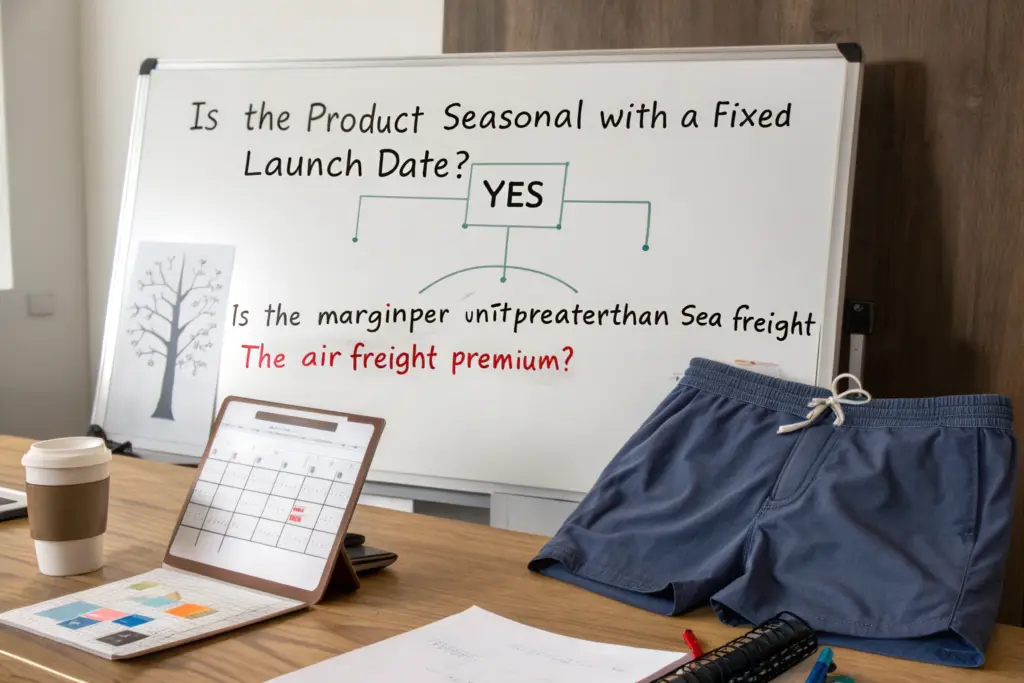
Choosing between air and sea freight for a classic shorts order requires running the specific order through a four-factor decision framework: the urgency factor, whether a fixed launch date, a wholesale delivery window, or a pre-order commitment creates a hard deadline; the margin factor, whether the per-unit gross margin exceeds the per-unit air freight premium, creating a positive return on the air freight investment; the product factor, whether the shorts are a core replenishment item with steady year-round demand or a seasonal item with a defined selling window; and the relationship factor, whether a late delivery would damage a key wholesale account or a direct-to-consumer brand reputation.
When Is Split Shipping a Smart Compromise Strategy?
The binary choice between all-air and all-sea is a false dilemma. The optimal solution for many urgent orders is a split shipment, where a portion of the order is shipped by air to cover the immediate launch needs and the remaining bulk is shipped by sea for replenishment. This strategy captures the best of both modes.
The air freight portion covers the launch quantities, fills the initial wholesale orders, satisfies the pre-order customers, and stocks the website for the first two to three weeks. The sea freight portion arrives as the air freight inventory is depleting and provides the replenishment stock for the remainder of the season. The total freight cost is higher than an all-sea shipment would have been, but dramatically lower than an all-air shipment, and the stockout is completely avoided. The key to executing a split shipment is communication with the factory. The air freight portion must be identified and packed separately, often before the full production run is completed, and the factory must have the logistics capability to manage two separate shipments with different documentation and different carriers. This split shipment logistics strategy is a standard service at Shanghai Fumao. We work with our brand partners to identify the critical launch quantity and prioritize its production and air freight dispatch.
How Do You Factor Wholesale Account Commitments into the Decision?
The freight decision becomes more complex, and the cost of delay becomes more severe, when wholesale accounts are involved. A direct-to-consumer brand that misses its own website launch date loses its own sales. A brand that misses a wholesale delivery window loses a retail partner.
Major department stores and specialty retailers operate on strict delivery windows. A purchase order specifies a delivery date, and that date is tied to a floor-set, a marketing promotion, or a catalog drop. A late delivery can result in chargebacks, financial penalties assessed by the retailer against the supplier for each day or week of delay. These chargebacks are specified in the retailer's vendor compliance manual, and they are enforced. A late delivery can also result in order cancellation, where the retailer simply refuses the shipment and cancels the purchase order, leaving the brand with branded inventory that cannot be sold to another account. The lost wholesale relationship is even more damaging than the lost order. A buyer who cannot trust a brand to deliver on time will reduce or eliminate future orders. This retail compliance and chargeback risk makes air freight a non-negotiable requirement for many wholesale orders. At Shanghai Fumao, we prioritize production scheduling for wholesale orders with firm delivery windows to minimize the need for air freight, but we are prepared to execute it when necessary.
How Do You Execute Air Freight Logistically with Your Factory?
Air freight is not simply sea freight with a different carrier. It is a fundamentally different logistics process with its own packaging requirements, its own documentation, its own cost structure, and its own timeline. A factory that does not regularly handle air freight shipments will make mistakes that cause customs delays, carrier rejections, and additional charges that erase the time advantage that justified the air freight decision in the first place.
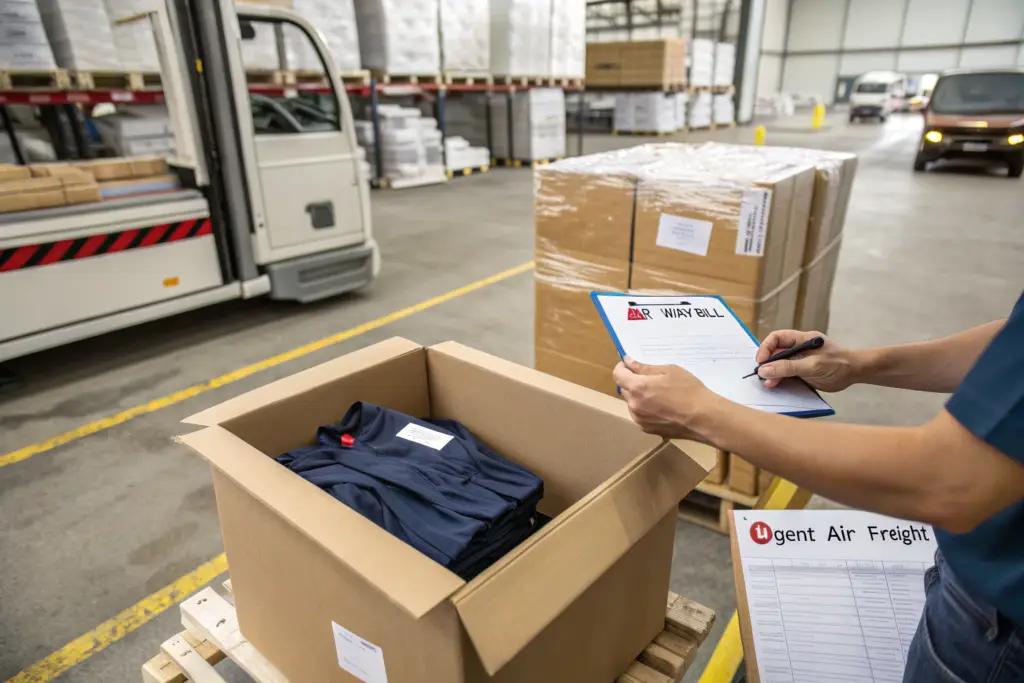
Executing an air freight shipment for classic shorts requires the factory to prepare the goods according to air cargo packaging standards that differ from sea freight standards, using smaller, lighter cartons that maximize dimensional weight efficiency, to prepare air-specific documentation including the Air Waybill and any expedited customs clearance paperwork, and to coordinate tightly with the air freight forwarder on pickup timing, because air freight cut-off times are measured in hours, not days, and a missed truck connection can delay the shipment by twenty-four hours or more.
What Are the Specific Packing and Carton Requirements for Air Freight?
Sea freight cartons are designed to maximize container utilization. They are large, heavy, and stacked floor to ceiling in a container that is loaded by forklift. Air freight cartons are designed to fit into the contours of an aircraft cargo hold and to minimize dimensional weight, which is the primary pricing factor for air cargo.
Air freight pricing is based on chargeable weight, which is the greater of actual gross weight and volumetric weight. Volumetric weight is calculated from the carton dimensions using a standard formula, typically length times width times height in centimeters divided by 6,000 for international air cargo. A carton that is large but light will be charged based on its volume, not its weight. This means air freight cartons must be packed efficiently to minimize empty space. The cartons themselves should be smaller and lighter than sea freight cartons, typically double-wall corrugated rather than triple-wall, because every kilogram of packaging weight is paid for at the air freight rate. Cartons should be sealed securely to withstand multiple handling points, and they should be marked clearly with the Air Waybill number and the destination airport code. This air freight packaging requirements attention to detail is the difference between a smooth air freight experience and a shipment that incurs dimensional weight penalties or arrives damaged.
How Does Documentation for Air Freight Differ from Sea Freight?
The documentation for an international shipment serves as the legal basis for customs clearance at both the export and import sides. Air freight and sea freight use different primary transport documents, and the air freight versions must be prepared with specific attention to speed and accuracy.
The primary transport document for sea freight is the Bill of Lading. For air freight, it is the Air Waybill. The Air Waybill is a simpler document, typically a single page, that serves as both the contract of carriage and the receipt for the goods. Unlike a Bill of Lading, an Air Waybill is not a document of title. It does not convey ownership of the goods. This means the consignee can take delivery of an air freight shipment without presenting an original document, which speeds up the release process significantly. The commercial invoice and packing list for air freight must be accurate and complete because any discrepancy that requires customs clarification will consume time that cannot be spared in an urgent shipment. The harmonized tariff code for the shorts must be correct, and the declared value must be consistent with the commercial invoice. This air waybill and freight documentation preparation is a routine process for an experienced factory. At Shanghai Fumao, our logistics team handles air freight documentation daily and can prepare an urgent shipment for dispatch within hours of the request.
Conclusion
The decision between air freight and sea freight for an urgent classic shorts order is one of the most consequential logistics choices a brand owner will make. The decision should not be driven by a simple comparison of freight quotes, which will always favor sea freight by a wide margin. It should be driven by a total cost analysis that includes the lost margin from missed sales, the brand damage from customer disappointment, the wholesale chargebacks and cancelled orders, and the inventory carrying costs. When these factors are included, air freight frequently emerges as the economically rational choice for seasonal products with high margins and firm deadlines.
The execution of air freight requires a factory that understands the specific packaging, documentation, and timing requirements of air cargo. Not all factories have this capability, and a poorly executed air freight shipment can lose the very time advantage it was purchased to provide. Split shipping, combining an air freight launch quantity with a sea freight replenishment quantity, is often the optimal strategy for balancing speed, cost, and inventory availability.
At Shanghai Fumao, we manage both sea freight and air freight shipments daily. We help our brand partners evaluate the total cost of each option for their specific situation, and we have the logistics infrastructure to execute either mode efficiently. If you are facing a tight launch deadline or managing an unexpected shipping delay, contact our Business Director, Elaine, at elaine@fumaoclothing.com. Let's get your shorts where they need to be, when they need to be there.