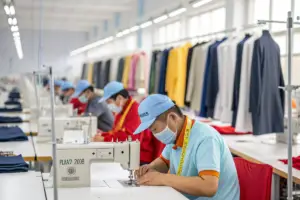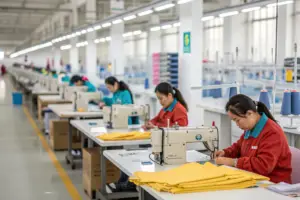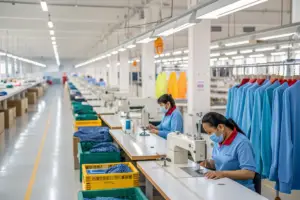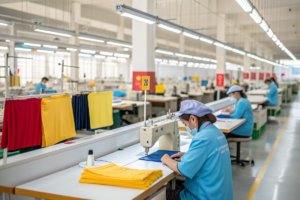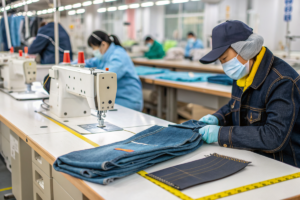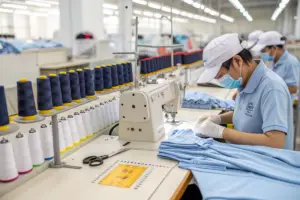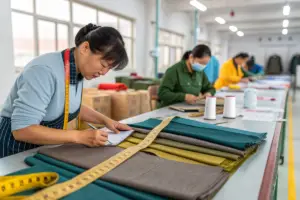
Seven years ago, I made a decision that still sits in my stomach when I think about it. We had a large order for a department store private label program. The timeline was impossibly tight. The fabric mill had delivered late, and we were racing to make the shipping window. My QC team flagged an issue with the waistband stitching on about 8% of the units. The defect was borderline, the stitch was slightly uneven but functionally sound. The shipping deadline was the next day. I made the call to ship. The department store's receiving inspection flagged the same issue. They rejected the entire shipment, charged us for the return freight, and canceled the program. We lost the client. We lost the reputation. We lost the margin on that order, and the margin on the orders that would have followed. The money we saved by not reworking those eight hundred units was a fraction of the money we lost by shipping them. That was the last time I ever overruled my QC team.
Cutting corners on quality control for classic shorts shipments triggers a predictable cascade of commercial consequences that extends far beyond the immediate cost of the skipped inspection, beginning with the direct costs of customer returns, chargebacks, and wholesale rejections on the defective units that reached the market, escalating to the opportunity costs of lost reorders and canceled programs when retail buyers lose confidence, and culminating in the long-term brand damage of negative reviews, social media exposure, and a customer trust deficit that can suppress sales across the entire product line for seasons to come.
At Shanghai Fumao, I rebuilt our entire quality system after that experience. The cost of quality control is not an expense. It is an insurance premium. The cost of skipping quality control is not the money you saved. It is the money you will lose, multiplied, over a timeline that extends far beyond the current season. Let me walk you through exactly what happens when a factory or a brand decides that QC is the place to save money.
What Immediate Defects Appear When Final Inspection Is Skipped?
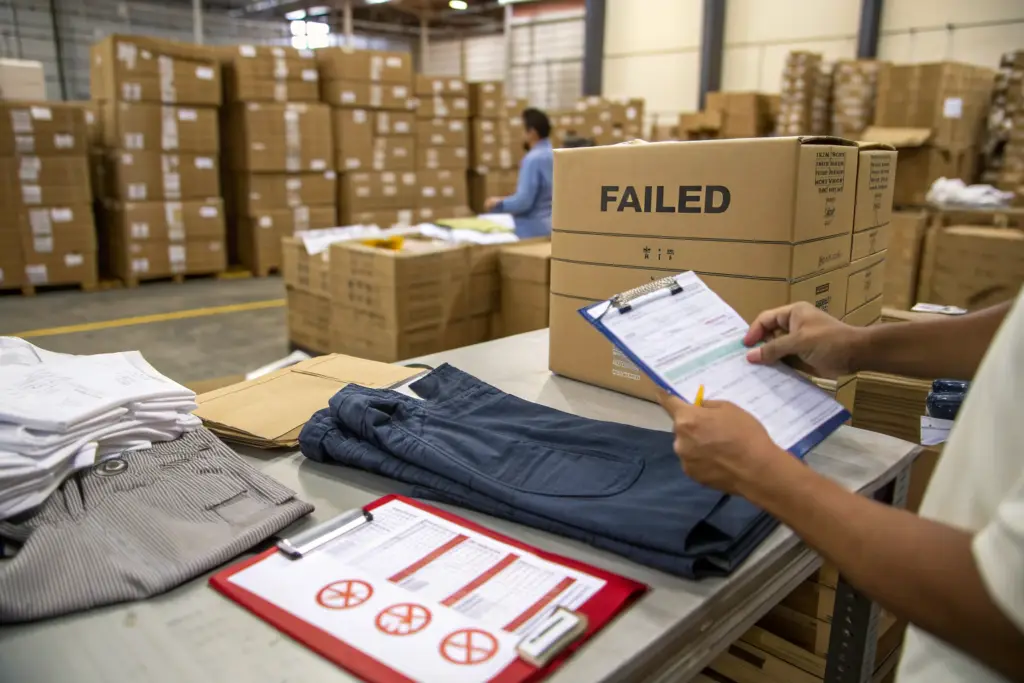
Final inspection is the last quality gate before the shorts are packed, loaded, and shipped. When this gate is removed, whether deliberately to save cost or accidentally through schedule pressure, every defect that was created during production and not caught by inline inspection passes through to the customer. The defect types that a final inspection catches are not subtle. They are visible, measurable, and immediately obvious to the end consumer. The question is not whether defects exist in the shipment. The question is whether the factory catches them before the customer does.
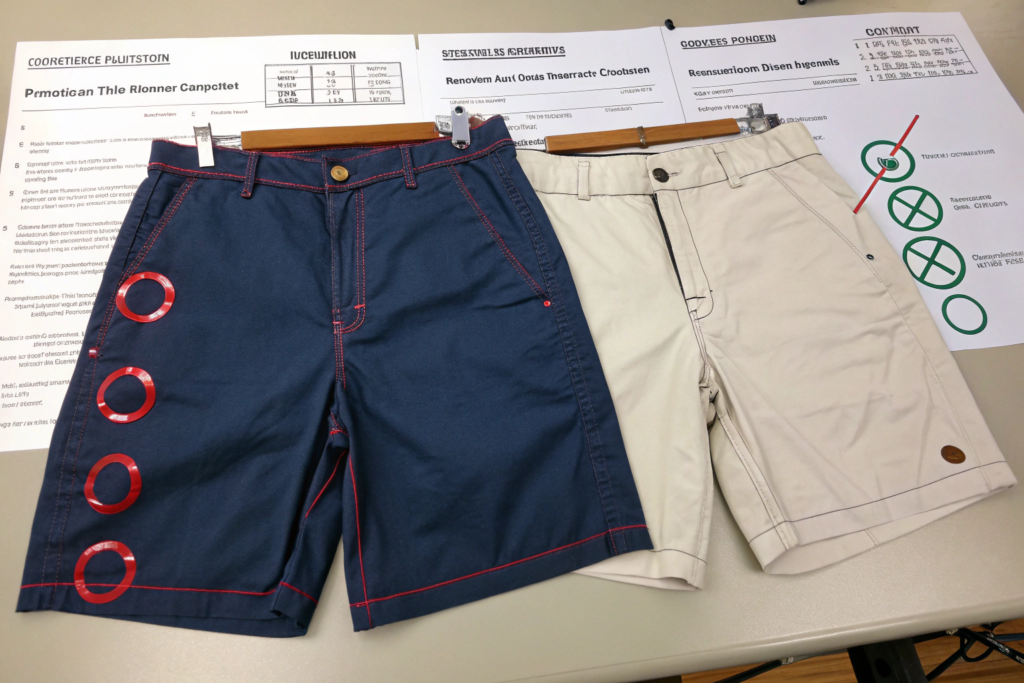
Skipping final inspection allows a predictable set of defects to reach the customer, including dimensional deviations where waistbands, inseams, or hip measurements fall outside the specified tolerance, visual defects such as shading variations between panels, puckered seams, and untrimmed threads, functional defects such as zippers that stick or fail, buttons that crack or detach, and pocket bags that tear under stress, and labeling defects including incorrect size labels, missing care labels, or illegible brand labels, each of which independently can trigger a customer return and a negative review.
How Do Dimensional Deviations Occur Without Final Inspection?
Every pair of shorts is cut and sewn by human operators working on industrial machines. Variation is inherent in the process. The pattern is cut to a specification, but fabric stretches during cutting. The seam is sewn to a specified seam allowance, but the operator may sew slightly inside or outside the line. Over the course of thousands of units, these small variations accumulate.
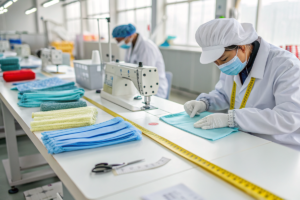
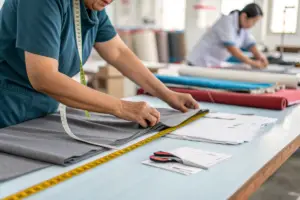
Final inspection measures a random sample of finished shorts against the specification chart. The waistband is measured. The inseam is measured. The hip is measured. The measurements are compared against the specification with the agreed tolerance, typically plus or minus half an inch. Shorts that fall outside the tolerance are identified and either reworked or rejected. Without this measurement check, a shipment can contain a mix of sizes that are nominally labeled as the same size but fit differently. A customer who orders a size 8 and receives a short that fits like a size 6 will return it. A customer who orders a size 8 and receives a short that fits like a size 10 will also return it. This garment measurement tolerance issue is one of the most common causes of fit-related returns, and it is entirely preventable with a proper final inspection.
What Visual and Functional Defects Bypass Inline Checks?
Inline inspection catches many defects during production, but inline inspection is focused on specific operations at specific stations. The inline inspector checks the pocket construction when the pocket is being sewn. She does not check the hem, which has not been sewn yet. The final inspector checks the complete garment as a unified whole.
Visual defects that often survive to final inspection include shading variations between the left and right panels, where fabric cut from different dye lots or different parts of the fabric roll has been sewn together, creating a visible color difference. Puckering at the side seams, where incorrect thread tension or fabric feed has caused the seam to gather and ripple. Untrimmed thread ends, particularly inside the waistband and pocket bags. The functional check verifies that the zipper operates smoothly through its full travel, that the button fastens securely without excessive force, and that the pocket bags are properly sewn and can support a reasonable weight without tearing. These checks take time. A skipped final inspection means these checks are not performed, and the defects reach the customer. This final garment inspection checklist is the standard by which a shipment should be evaluated before release.
How Do Quality Failures Impact Brand Economics Over Time?
The immediate cost of a quality failure is the return, the refund, and the negative review. These are painful but manageable if the defect rate is low and the brand's customer service is responsive. The real damage is not the immediate cost. It is the compounding, long-term cost that accumulates silently over time, in metrics that are harder to see but far more consequential. A customer who receives a defective pair of shorts does not just return them. She stops buying from the brand. She tells her friends. She posts a photo. The wholesale buyer who receives a defective shipment does not just reject it. He reduces the next order, or cancels the program entirely.
The long-term economic impact of quality failures on a classic shorts brand follows a compounding curve where the direct costs of returns, refunds, and chargebacks on the defective batch represent only the visible tip of the cost iceberg, with the far larger submerged costs including the lost lifetime value of customers who churn after a negative experience, the reduced order volume from wholesale accounts who downgrade the brand in their buying plans, the increased customer acquisition cost required to replace churned customers with new ones, and the eventual brand devaluation that makes the company less attractive to investors, acquirers, and retail partners.

How Does Customer Lifetime Value Erode After a Quality Failure?
Customer lifetime value is a measure of the total profit a brand can expect from a single customer over the entire duration of their relationship. A customer who buys a pair of shorts and has a positive experience is likely to buy again, to try other categories, to respond to marketing emails, and to recommend the brand to others. Her lifetime value is high.
A customer who buys a pair of shorts, experiences a zipper failure on the second wear, and goes through the return process is unlikely to buy from the brand again. She has been burned. Her trust is broken. Even if the brand handles the return perfectly, refunds the money, and apologizes, the memory of the product failure outweighs the memory of the good customer service. She churns. The brand loses not just the margin on that pair of shorts, but the margin on every future purchase she would have made over the next several years. Acquiring a new customer to replace her costs five to ten times more than retaining an existing customer. The customer retention and quality correlation is one of the most powerful economic arguments for quality control investment.
What Happens to Wholesale Relationships After a Rejected Shipment?
A wholesale relationship is built on reliability. The retail buyer is making a commitment to your brand, allocating floor space or website inventory, planning marketing, and forecasting sales. That commitment is based on the assumption that the product delivered will match the sample approved.
When a shipment arrives with a quality issue that requires rejection or a significant discount, the buyer's trust is broken. The immediate consequence is financial, the chargeback, the return freight, the lost margin on the order. The longer-term consequence is that the buyer downgrades the brand in their internal risk assessment. The next season, the brand gets a smaller order, or a less favorable floor location, or a shorter selling window. After a second quality failure, the brand is often dropped entirely. The buyer cannot afford the operational disruption and the customer disappointment. The lost wholesale account is not just lost revenue from that account. It is a lost distribution channel that the brand invested time and money to acquire and develop. Replacing that account with a new one requires repeat of the entire sales cycle, the outreach, the sampling, the buyer meeting, the trial order. This retail buyer quality expectations makes wholesale quality failures exponentially more expensive than direct-to-consumer failures.
Why Is Inline and Pre-Shipment Inspection a Financial Safeguard?
Quality control is often viewed as a cost center, a necessary expense that must be minimized to preserve margin. This view is exactly backward when the full economic picture is considered. Quality control is a financial safeguard. It is an investment that generates a return by preventing losses. The ROI of quality control is not measured in the cost of the inspection minus the cost of the defects caught. It is measured in the cost of the brand damage, customer churn, and lost sales that would have occurred if the defects had reached the customer, multiplied by the probability that the inspection prevents that outcome.
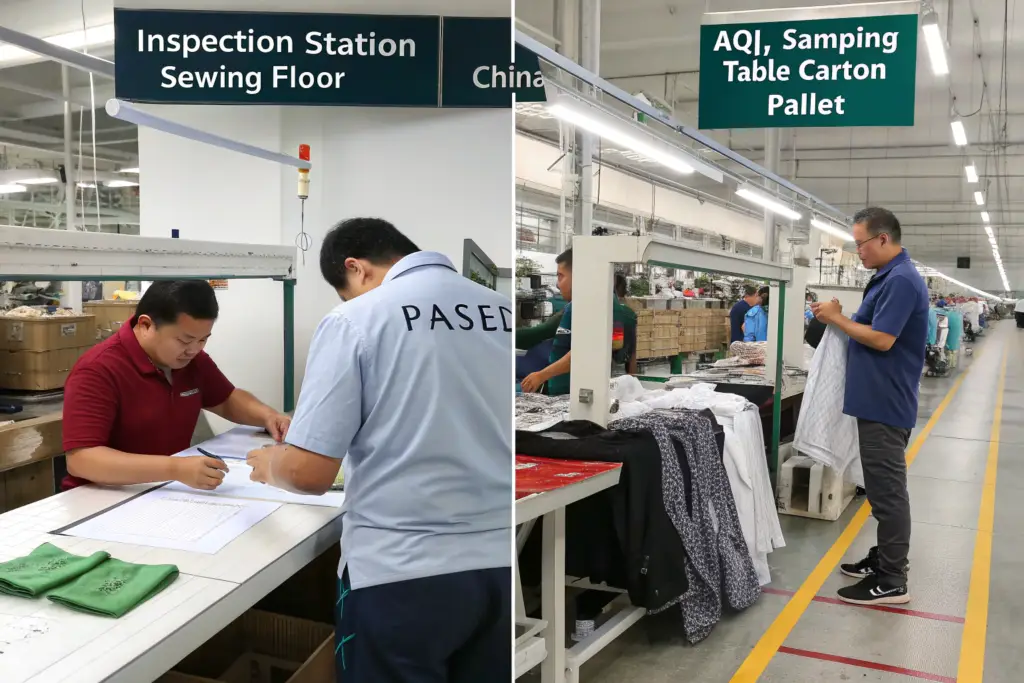
Inline and pre-shipment inspections function as a financial safeguard by intercepting defects at the point in the production process where correction is least expensive, with a defect caught at inline inspection costing minutes of operator time to fix, a defect caught at pre-shipment inspection costing hours of rework time, and a defect caught by the customer costing the full landed cost of the return, the lost margin, the customer acquisition cost of the lost customer, and the brand reputation damage, creating a cost multiplier of approximately 1:10:100 across these three detection points.
How Does the 1:10:100 Rule Apply to Garment Quality Control?
The 1:10:100 rule is a quality management principle that states the cost of fixing a defect increases by a factor of ten at each stage of the production and distribution process. A defect caught and corrected at the point of creation costs one unit of cost. A defect caught at final inspection costs ten units. A defect that reaches the customer costs one hundred units.
In classic shorts production, a defect caught at inline inspection, for example, a misaligned pocket being sewn by an operator, is corrected by the operator in seconds. The cost is the operator's time, effectively negligible. The same defect caught at pre-shipment inspection requires the finished short to be opened, the pocket removed, a new pocket cut and sewn, and the short re-pressed and re-packed. The cost is significant in labor, material, and time. The same defect reaching the customer triggers a return, a refund, a negative review, a customer service interaction, and potentially a lost customer. The cost is catastrophic relative to the original defect. This cost of quality principle is the foundational economic argument for investing in inline and pre-shipment inspection.
What Is the Financial Case for Third-Party Inspection?
A third-party inspection firm, such as SGS, Bureau Veritas, or Intertek, charges a fee for their service. A typical pre-shipment inspection for a classic shorts order costs between $300 and $500. This fee is visible on an invoice. The value it provides is less visible, which is why some brands are tempted to skip it.
The value is the prevention of a shipment-level quality failure. If a third-party inspector examines a random sample of 200 units from a shipment of 5,000 shorts and finds a major defect rate exceeding the AQL limit, the shipment is placed on hold. The factory must rework the entire order and submit to a re-inspection. The cost of this intervention is the inspection fee. The alternative, the shipment arriving at the customer's warehouse with a high defect rate, costs orders of magnitude more. The inspection fee is an insurance premium against a catastrophic loss. The probability of a quality failure multiplied by the cost of that failure far exceeds the inspection fee for any brand that values its customer relationships. This third-party garment inspection ROI calculation is straightforward. At Shanghai Fumao, we welcome third-party inspections because they validate our internal QC systems and provide an objective quality report that protects both the buyer and the factory.
What Preventative Measures Stop Quality Issues Before Cutting?
The most cost-effective quality control is the control that prevents a defect from being created in the first place. Once a defect is sewn into a garment, the cost has already begun its escalation along the 1:10:100 curve. Prevention is cheaper than detection, and detection is cheaper than correction. The brands that achieve the highest quality consistency are not the brands with the most rigorous final inspection. They are the brands that invest in the upstream preventative measures that make final inspection a formality rather than a crisis point.
Preventing quality issues before cutting requires a sequenced set of pre-production verification steps, including fabric testing against specified physical standards before the fabric is accepted into inventory, a full pre-production sample approval that tests the complete construction, fit, and wash results on the actual production fabric, the creation and mutual sign-off of a sealed gold sample that serves as the physical reference standard for all subsequent quality checks, and a pre-cutting meeting where the production manager, QC manager, and cutting room supervisor review the specification, identify potential issues based on the specific fabric properties, and agree on the process adjustments required.
Why Is Fabric Testing Before Cutting the First Line of Defense?
The fabric is the foundation of the garment. If the fabric is defective, no amount of careful sewing can produce a quality short. A fabric that shrinks excessively, pills after washing, or has low tensile strength will produce shorts that fail in the customer's hands, regardless of how well they are constructed.
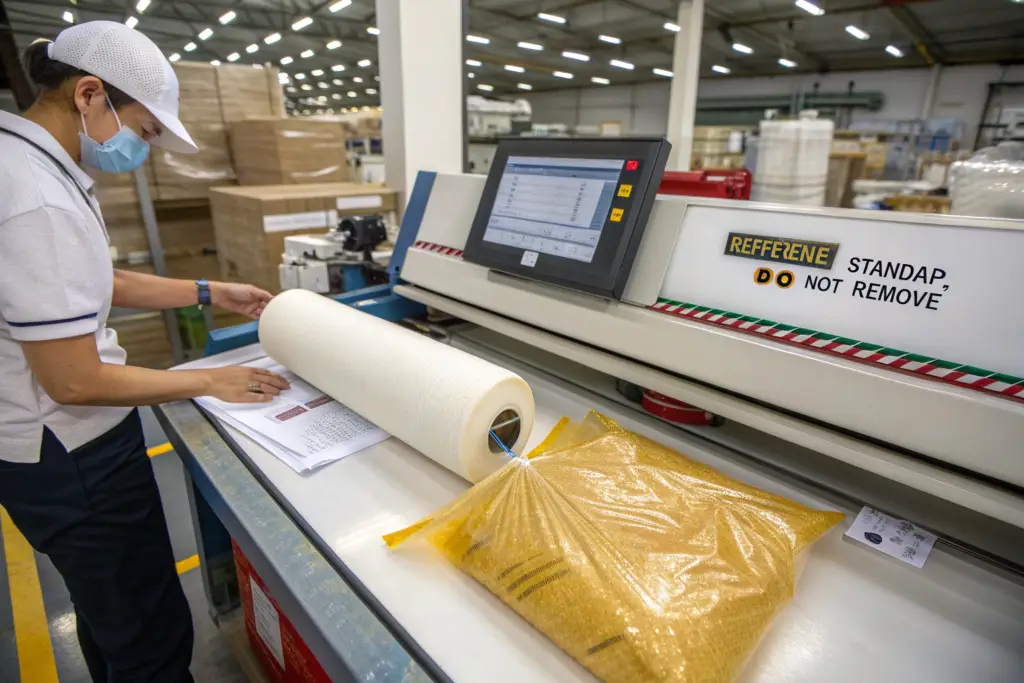
Fabric testing before cutting verifies that the incoming material meets the specified standards. The tests include dimensional stability, which predicts shrinkage; tensile and tear strength, which predict durability; pilling resistance, which predicts surface wear; and colorfastness to washing, crocking, and light, which predict color performance. If any of these tests produce a failing result, the fabric is rejected before a single pattern piece is cut. The cost of rejecting fabric at the receiving stage is the cost of the fabric and the delay while replacement fabric is sourced. The cost of discovering a fabric defect after the shorts are produced and shipped is the full cascade of return and brand damage costs. This fabric testing before garment production is the most effective single investment a factory or brand can make in quality prevention. At Shanghai Fumao, we test every incoming fabric lot against a panel of physical standards, and we release fabric to the cutting room only after a passing report is received.
How Does the Sealed Sample Process Anchor Quality Consistency?
The sealed sample is the physical contract between the buyer and the factory. It is the garment against which all production units will be compared. If the sealed sample is not an accurate representation of what the factory intends to produce, the comparison is meaningless.
The sealed sample must be made from the actual production fabric, not a similar substitute. It must be sewn on the production line, not in the sample room, to ensure that the construction methods used in sampling are achievable at production speed. It must be washed using the production wash process, so that any shrinkage or surface change from washing is captured in the reference standard. The sealed sample is then signed, dated, and sealed in a tamper-evident bag. One copy stays with the factory production manager. One copy goes to the buyer. Every inspection, from inline to final, uses this sealed sample as the reference standard. This garment sample approval process eliminates the ambiguity that fuels quality disputes.
Conclusion
Cutting corners on quality control for classic shorts shipments is a decision that may feel like cost savings in the moment but is, in economic reality, a decision to defer and multiply the cost. The defects that final inspection would have caught reach the customer. The customer returns the product, demands a refund, leaves a negative review, and often never purchases from the brand again. The wholesale buyer rejects the shipment, issues a chargeback, and reduces or cancels future orders. The brand's reputation, built over years of marketing investment and customer goodwill, is eroded in weeks by a flood of negative social proof.
The economics are clear and well-documented. The cost of preventing a defect at the fabric testing or inline inspection stage is measured in pennies. The cost of correcting a defect at final inspection is measured in dollars. The cost of managing a defect that reaches the customer is measured in hundreds of dollars when the full lifetime value of the lost customer is accounted for. The choice to invest in quality control is not a cost decision. It is a decision about whether to pay a small, predictable amount now or a large, unpredictable amount later.
At Shanghai Fumao, we learned this lesson the hard way, through a failure that I still remember vividly. The quality systems we have built since then, fabric testing, inline inspection, pre-shipment AQL sampling, sealed sample management, and third-party audit transparency, are not marketing features. They are the operational infrastructure that protects our clients from the cascade of consequences that follows a quality failure. If you are evaluating manufacturing partners for your classic shorts program, contact our Business Director, Elaine, at elaine@fumaoclothing.com. Let's discuss how our quality systems can protect your brand from the hidden costs of a single bad shipment.