# How Much Does It Cost to Manufacture a Clothing Line?
I have been asked this question more than any other. How much does it really cost to manufacture clothing in China? The answer is not a single number. It depends on your design, fabric, quantity, and shipping method. But I can give you a realistic range that will help you plan your budget. I have helped hundreds of American brands price their first production runs. Let me share what I have learned. Understanding the costs upfront will save you from costly surprises later. I have seen too many brands run out of money halfway through production. Do not let that happen to you. When you know what to expect, you can plan better and negotiate smarter with your factory partner.
**Manufacturing a clothing line in China typically costs between USD 5 and USD 25 per piece for standard garments. This includes fabric, labor, trims, packaging, and shipping. Your final cost depends on fabric quality, order quantity, and design complexity. The most important thing is to get a complete quote from your factory that includes everything. Do not accept a quote that leaves out fabric, trims, packaging, or shipping. A complete quote protects both you and the factory.**
In this article, I will break down every cost component. You will learn exactly where your money goes and how to get the best value. I will also share tips to reduce your costs without sacrificing quality. We will look at real numbers from actual production runs. I will show you exactly how factories calculate their prices and where you can negotiate. By the end, you will know how to budget your clothing line with confidence.
---
## What Are the Main Cost Components of Garment Manufacturing?
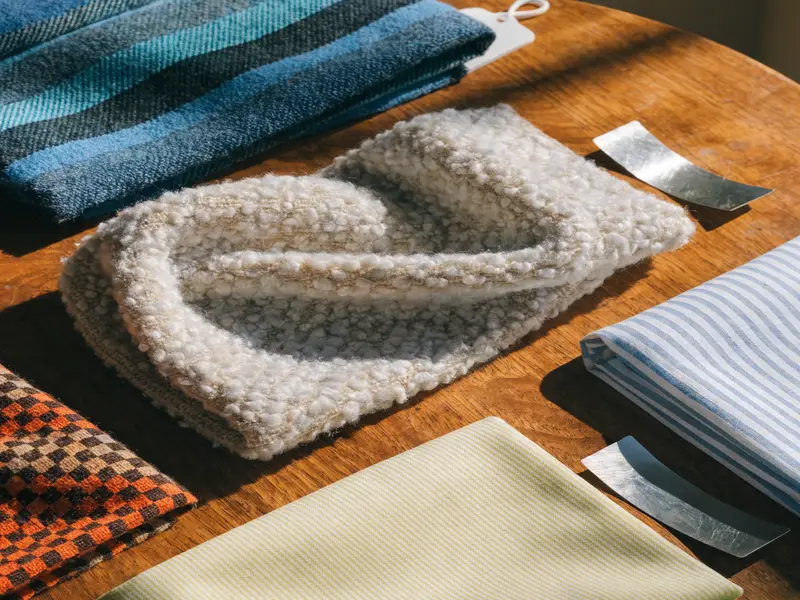
When you get a quote from a factory, you see one number. But that number is made up of several parts. Understanding each part helps you make better decisions and negotiate more effectively.
**The main cost components of garment manufacturing are fabric (40-50% of total), labor (20-30%), trims and packaging (10-15%), and overhead and profit (10-15%). Fabric is always the biggest factor.**
Here is a detailed breakdown of each cost component.
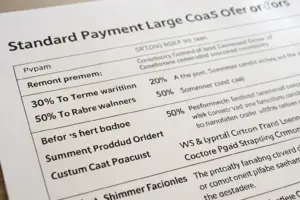
| Cost Component | Percentage of Total | Typical Cost per Piece |
| --- | --- | --- |
| Fabric | 40-50% | USD 2.00 - 12.00 |
| Cutting and sewing labor | 20-30% | USD 1.00 - 6.00 |
| Trims and packaging | 10-15% | USD 0.50 - 3.00 |
| Factory overhead and profit | 10-15% | USD 0.50 - 4.00 |
| Total | 100% | USD 4.00 - 25.00 |
### Why Is Fabric the Most Expensive Part?
Fabric is the heart of any garment. The quality of your fabric determines how your product looks, feels, and lasts. Basic cotton jersey might cost USD 2 per yard. Premium organic cotton or performance fabrics can cost USD 10 or more per yard. A typical T-shirt uses about 1.5 yards of fabric. So fabric alone can range from USD 3 to USD 15 per T-shirt. Choosing the right fabric for your price point is the most important decision you will make. Learn more at [Textile World](https://www.textileworld.com) and [Fibre2Fashion](https://www.fibre2fashion.com). When you visit a fabric mill in China, you will see hundreds of options. Cotton, polyester, blends, knits, wovens, performance fabrics, and more. Each has a different price point. The best approach is to work with your factory to select a fabric that matches your quality goals and your budget. We help our clients find the perfect balance every day. The relationship between fabric quality and price is direct. Better fabric costs more but gives you a better product. Your customers will notice the difference. If you are building a premium brand, invest in good fabric. If you are going for volume, choose cost-effective options that still meet your minimum quality standards.
---
### How Much Does Labor Cost in China?
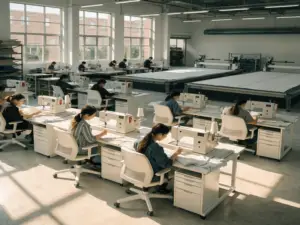
Labor costs in China have risen over the years. But they are still very competitive compared to Western countries. A skilled sewing operator in China earns between USD 3.50 and USD 5.00 per hour. For a simple T-shirt that takes 15 minutes to sew, the labor cost is about USD 0.90 to USD 1.25. For a complex jacket that takes 45 minutes, labor might cost USD 2.60 to USD 3.75. The efficiency of Chinese factories keeps labor costs reasonable. Compare costs at [Just Style](https://www.just-style.com) and [Sourcify](https://www.sourcify.com). Chinese workers are highly skilled in garment production. Many have been in the industry for decades. This experience translates into better quality and fewer mistakes. When you choose a Chinese factory, you are paying for skill and efficiency, not just cheap labor. That is a critical difference that many new buyers overlook.
---
## How Does Order Quantity Affect the Cost Per Piece?
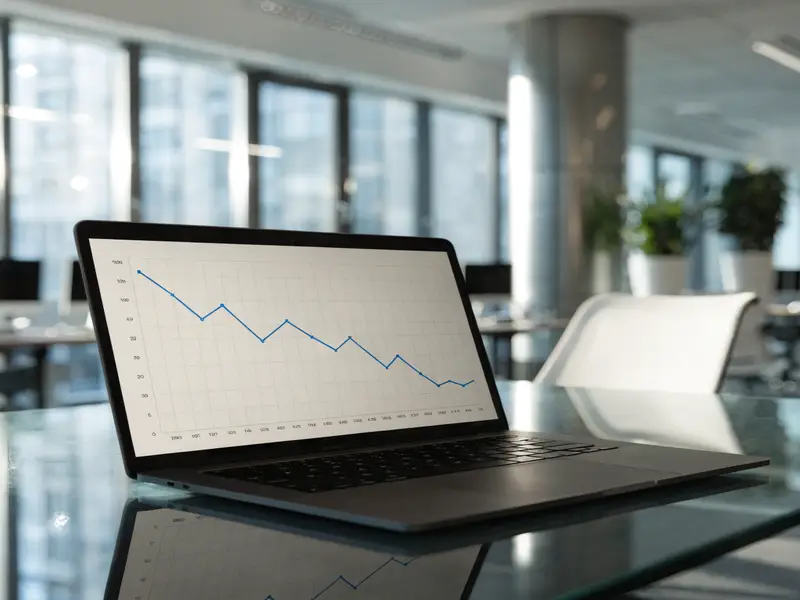
One of the biggest factors in your final cost is your order quantity. The more you order, the lower the cost per piece. This is because factories spread their setup costs across more units.
**Ordering 500 pieces instead of 100 can reduce your cost per piece by 30 to 50 percent. The setup costs for cutting, marking, and machine preparation are the same regardless of order size.**
Here is how quantity affects pricing based on real examples from our factory.
### What Is the Best Quantity for Your First Order?
For a first order, I recommend 200 to 300 pieces per design. This gives you enough inventory to test the market without overcommitting. At 200 pieces, the cost per piece is reasonable. At 100 pieces, you pay a premium for small-run setup fees. At 500 pieces, you get better pricing but you have more inventory risk. Start with 200 to 300 pieces, test the market, and reorder if the product sells well. We have seen many brands succeed with this approach. Read more at [Trade.gov](https://www.trade.gov) and [Canton Fair](https://www.cantonfair.org.cn). The setup costs include pattern making, marker making, cutting, and machine preparation. These costs are fixed regardless of quantity. So when you order 100 pieces, you pay the full setup cost per piece. When you order 500 pieces, the setup cost is spread across more units. This is why larger orders have lower per-piece costs. We always advise clients to find the sweet spot between cost and inventory risk. The most important rule is to never order more than you can sell. I have seen brands succeed with small, carefully planned orders. They test the market, learn what works, and grow from there. This approach minimizes risk while maximizing learning.
---
### How to Calculate Your Total Landed Cost?
Your total landed cost is the complete cost of getting your products from the factory to your warehouse. It includes the ex-works price, freight, insurance, duties, and inland transportation. DDP shipping simplifies this by including everything in one price. At Fumao Clothing, we offer DDP terms. You pay one price and the goods arrive at your door. No surprises. No customs paperwork. Calculate your costs at [Flexport](https://www.flexport.com) and learn about shipping at [Freightos](https://www.freightos.com). DDP shipping is the simplest and most cost-effective option for most American brands. The factory handles everything. You do not need to worry about freight forwarders, customs brokers, or import duties. At Fumao Clothing, we ship DDP to all major US cities. Our clients receive their goods at their door without any additional paperwork or fees. This saves both time and money.
---
## How to Reduce Manufacturing Costs Without Sacrificing Quality?
Every brand owner wants to save money. But you cannot sacrifice quality to do it. Poor quality leads to returns, bad reviews, and a damaged reputation. The good news is that there are smart ways to reduce costs without cutting corners.
**You can reduce manufacturing costs by 15 to 25 percent by choosing standard fabrics, simplifying your designs, ordering larger quantities, and consolidating shipments. These strategies maintain quality while lowering your total cost.**
Here are the most effective cost-saving strategies I recommend to our clients.
### Which Design Choices Save the Most Money?
Simple designs cost less to produce. Avoid complex stitching, multiple fabric panels, and hard-to-find trims. Use standard thread colors instead of custom matches. Choose factory-stock fabrics instead of custom orders. Limit your color options to two or three per design. These small choices can reduce your production cost by 20 percent or more. We help our clients design for manufacturability from the start. Learn about design tips at [Fashion United](https://www.fashionunited.com) and [US CPSC](https://www.cpsc.gov). Another important factor is choosing standard sizing. Custom sizes require more pattern work and fitting time. Standard S-M-L-XL sizing is faster and cheaper to produce. As your brand grows, you can add more size options later. Many successful brands started with standard sizing and expanded over time.
---
### How Does DDP Shipping Save You Money?
DDP shipping means the factory handles everything. Production, export, customs clearance, import duties, and final delivery. You pay one price. This saves you money in several ways. You avoid customs brokerage fees. You avoid storage fees from delays. You avoid unexpected tariff charges. Most importantly, you save time. You do not need to manage logistics. We handle it all. This is especially valuable for first-time importers who are not familiar with the shipping process. Check shipping options at [Maersk](https://www.maersk.com) and [DHL](https://www.dhl.com). DDP is especially valuable for new importers. The customs clearance process can be confusing. One mistake can delay your shipment by weeks. With DDP, the factory takes full responsibility. If there are any issues, we handle them. This peace of mind is worth the cost for most brand owners. When you choose DDP, ask your factory for a complete list of what is included. Some DDP quotes include everything. Others might exclude certain fees. A good factory will be transparent about what is covered. At Fumao, our DDP quote includes production, packaging, labels, shipping, customs clearance, and final delivery.
---
## What Is a Realistic Budget for a Complete Clothing Line?
Now let me give you real numbers. These are based on actual orders from our clients. Your costs may vary, but these ranges will help you plan your budget realistically.
**A complete first clothing line with 3 to 5 designs, 200 pieces per design, in standard fabrics, with DDP shipping to the US, typically costs between USD 8,000 and USD 25,000. This covers everything from sampling to delivery.**
Here is a sample budget for a first-time brand owner.
### Sample Budget for a 3-Design T-Shirt Line?
Here is a real budget from one of our recent first-time clients. Three T-shirt designs, 200 pieces each, standard cotton jersey fabric, DDP shipping to New York. Sampling cost: USD 450. Production cost: USD 4,800. Packaging and labels: USD 600. DDP shipping: USD 750. Total: USD 6,600. Cost per piece: USD 11.00. This is a realistic starting point for a simple clothing line. For more complex garments like jackets or dresses, expect the budget to be 2 to 3 times higher. Research costs at [SGS](https://www.sgs.com) and [Intertek](https://www.intertek.com). This budget does not include marketing, photography, or website costs. Those are separate expenses that you need to plan for. But the manufacturing cost is the foundation. If you can keep your production costs low while maintaining quality, you have a much higher chance of success.
---
### What Hidden Costs Should You Plan For?
Some costs are easy to forget. Photoshoot for your products. Website development. Marketing and advertising. Sample revisions. Shipping samples to you. Duties if not using DDP. I always tell clients to add 20 percent to their estimated budget for unexpected costs. This buffer will save you from running out of money mid-production. A well-planned budget is the foundation of a successful clothing brand. Plan carefully and you will avoid the most common mistakes that sink new brands. Learn more at [Shopify](https://www.shopify.com) and [HubSpot](https://www.hubspot.com). The most successful brands are the ones who plan their finances carefully. They know exactly what everything costs. They have a buffer for unexpected expenses. And they work with transparent factories that provide detailed quotes. At our factory, we give every client a complete cost breakdown. We want you to understand exactly what you are paying for.
---
## Conclusion
Manufacturing a clothing line in China is more affordable than most people think. With proper planning and the right factory partner, you can launch a quality clothing line for under USD 10,000. The key is understanding where your money goes and making smart choices at every step. Choose standard fabrics. Keep your designs simple. Order reasonable quantities. And work with a factory that offers transparent pricing and DDP shipping. Remember that the cheapest option is not always the best value. Quality, reliability, and communication matter just as much as price. A factory that delivers on time with consistent quality will save you money in the long run. We have clients who have been with us for over a decade. They come back because they trust our quality and our pricing. That trust is built on transparency and consistent results. If you are ready to get a quote for your clothing line, contact our Business Director Elaine at elaine@fumaoclothing.com. We will give you a detailed breakdown of all costs. No hidden fees. No surprises. Just honest pricing and quality manufacturing.