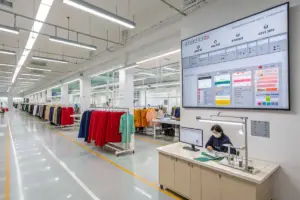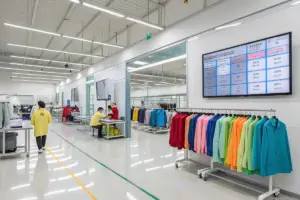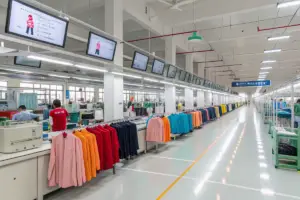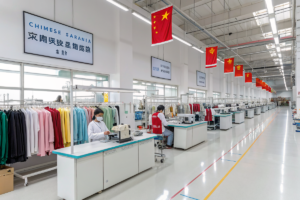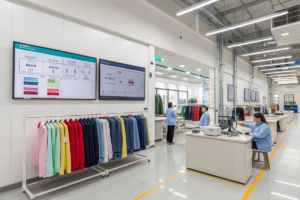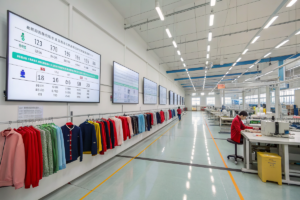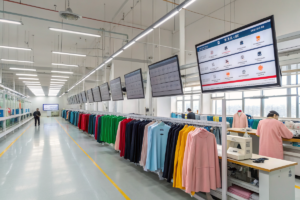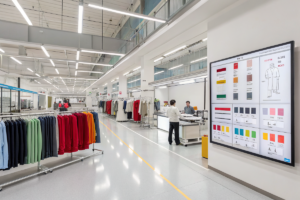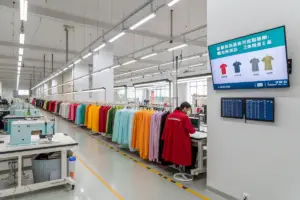
I was sitting in our sample room last April with a brand owner from Chicago. She had built a following of 80,000 on Instagram selling curated lifestyle products. Her audience trusted her taste. She wanted to launch her own line of summer outerwear, linen dusters, quilted shackets, lightweight trench coats, with her brand label sewn into the neck. She did not have a design team. She did not have a tech pack. She did not know what a French seam was. She knew her customer. She knew her brand aesthetic. She knew she needed a factory that could bridge the gap between her vision and a finished, retail-ready product with her name on it. She had talked to five factories before me. Four of them told her to come back when she had a tech pack. One offered to make the coats but quoted a minimum of 800 units per style. She was ready to abandon the project. I asked her to show me her mood board. She pulled out her phone and scrolled through saved images of vintage linen coats, faded floral prints, and soft, oversized silhouettes. I recognized three of the fabrics from our stock inventory. I told her we could have samples in her hands in two weeks. She launched her collection four months later and sold out her first production run in nine days.
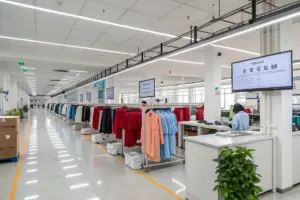
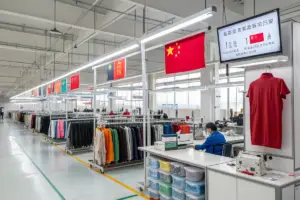
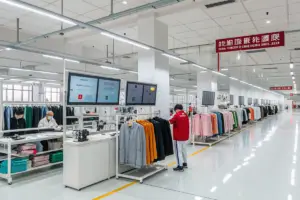
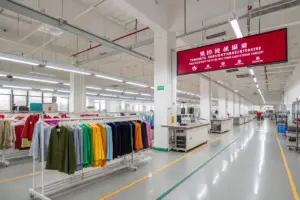
Shanghai Fumao is a top factory for rebranding summer outerwear because we provide a complete white-label and private-label manufacturing solution that goes far beyond cut-and-sew production. We offer in-house design support to translate a brand’s aesthetic vision into production-ready tech packs, a stock fabric library of over 800 articles that eliminates fabric minimums for emerging brands, flexible minimum order quantities starting at 100 units per style using stock fabrics, custom label and hangtag integration that makes the product fully brand-owned, and DDP logistics that deliver finished, labeled, retail-ready coats directly to the brand’s warehouse or fulfillment center. We do not require brands to arrive with a completed design package. We help them build it.
Rebranding summer outerwear is not the same as manufacturing unbranded garments. The factory must be more than a production facility. It must be a product development partner, a branding collaborator, and a quality guardian that protects the brand’s reputation with every coat that ships. I have spent fifteen years building Shanghai Fumao into that kind of partner. Let me walk you through exactly how we support the rebranding process from concept to delivery, and why brands that work with us stay with us season after season.
White-Label vs. Private-Label: What We Offer for Summer Outerwear
The terms white-label and private-label are often used interchangeably, but they describe different levels of customization and brand ownership. A brand that understands the distinction can choose the right level for their business stage and growth goals. A white-label product is a pre-designed garment that we manufacture and hold in our inventory. The brand selects the style from our existing catalog, chooses the color from our stock fabric options, and adds their label and hangtag. The design is not exclusive to the brand. Other brands may purchase the same style with their own labels. White-label is the fastest, lowest-MOQ path to launching a branded summer outerwear line. A private-label product is a custom-designed garment developed specifically for the brand. The brand provides the design concept, or we develop it collaboratively, and we create a pattern, source the fabric, and produce the garment exclusively for that brand. The design is proprietary. No other brand receives the same product. Private-label requires a higher MOQ and a longer lead time, but it delivers a unique product that differentiates the brand in the market.
Shanghai Fumao offers both white-label and private-label manufacturing for summer outerwear, and we help brands navigate the transition between the two as they grow. A brand launching its first summer outerwear collection often starts with white-label. The brand selects styles from our seasonal catalog, customizes the label, hangtag, and packaging, and tests the market with a manageable inventory investment of 100 to 150 units per style. When the brand has validated the demand and built the cash flow to support larger orders, we transition to private-label development. The brand’s second or third collection incorporates custom designs, exclusive fabrics, and proprietary fit specifications that build a defensible brand identity.
The transition from white-label to private-label is a growth path I have guided many brands through. A swimwear and resortwear brand from Miami started with our white-label chiffon kimono in 2022. They ordered 120 units in three stock colors. The kimonos sold through in four weeks. The following season, they came back with a request for a custom kimono length, a custom border print developed from their brand’s signature floral pattern, and a custom satin label with gold foil stamping. The MOQ was 300 units. The lead time was 65 days. The retail price increased from $68 to $98 because the product was now unique and premium. The brand had graduated from white-label to private-label in nine months. They have been a private-label partner ever since. The white-label entry point allowed them to test the category, build the customer base, and generate the revenue that funded the private-label investment.
How Does the White-Label Customization Process Work?
The white-label customization process is designed to be fast and simple while still delivering a fully branded product. The brand begins by browsing our seasonal catalog of available summer outerwear styles. The catalog includes photographs of each style on a dress form, a flat-lay image, a list of available fabric options with swatch images, and the base specifications including measurements by size. The brand selects the styles, fabrics, and colors. The brand then provides their label artwork, typically their logo in vector format, for the neck label, the hangtag, and any exterior branding elements such as a chest embroidery or a sleeve patch. We produce a digital mockup showing the label placement on the selected garment. The brand approves the mockup. We produce a pre-production sample with the brand’s labels sewn in. The brand approves the sample. We proceed to bulk production. The entire process from style selection to sample approval can be completed in 10 to 14 days, assuming prompt brand approvals. The white-label order then enters our standard production queue with a 45 to 55 day lead time from sample approval to container loading. The white-label model eliminates the pattern development, fabric sourcing, and fit sampling phases that consume 4 to 8 weeks in a private-label development. The speed advantage is significant for brands that need to capture a seasonal trend window.
What Label and Branding Options Are Available?
The branding details are what transform a generic garment into a brand asset. We offer a range of labeling and branding options for both white-label and private-label orders. The neck label is the primary brand identifier. We offer woven satin labels, printed cotton labels, and heat-transfer printed labels directly onto the fabric. Woven satin labels are the most popular for summer outerwear because they have a premium hand feel and a subtle luster that complements lightweight fabrics. The label is sewn into the center back neck seam or the side seam, depending on the garment construction. The hangtag is the retail-facing brand communication tool. We offer printed cardstock hangtags in various shapes and sizes, with options for foil stamping, embossing, and spot UV coating. The hangtag is attached to the garment with a loop string or a safety pin. Exterior branding includes embroidery, screen printing, and woven patches. Embroidery is the most durable and premium option for summer outerwear. A small logo embroidered on the left chest or the back yoke adds significant perceived value. We discussed our embroidery capabilities in detail in a previous article. Care labels and size labels are customized with the brand’s name, RN number if applicable, and care instructions that match the fabric test results. The packaging polybag can be customized with the brand’s logo and a "thank you" message printed on the bag. These branding elements are individually small. Together, they create a cohesive, professional brand presentation that builds customer trust and justifies the retail price point.
Design Support: Bridging the Gap Between Vision and Tech Pack
The largest barrier that prevents lifestyle brands, influencers, and boutique owners from launching a summer outerwear line is not capital. It is technical design knowledge. A brand owner knows her customer. She knows the look she wants. She does not know how to translate that look into a pattern, a spec sheet, and a bill of materials that a factory can use to produce a consistent, well-fitting garment. Most factories refuse to bridge this gap. They require a completed tech pack as the entry ticket to production. The brand owner who lacks a tech pack is turned away. She either abandons the project or hires an expensive freelance technical designer who may or may not understand the factory’s specific capabilities and construction standards.
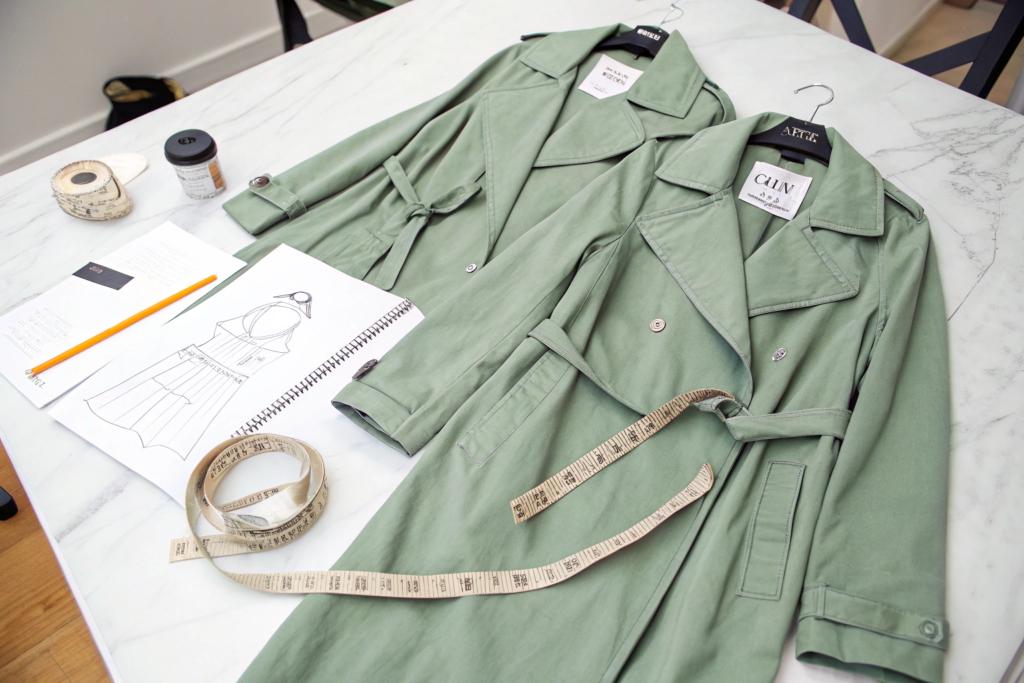
Shanghai Fumao’s in-house design support service bridges this gap. We accept design input in any format: a mood board of reference images, hand-drawn sketches, photographs of vintage garments, links to competitor products, or written descriptions of the desired silhouette, fabric, and details. Our pattern maker and sample team translate this input into a production-ready tech pack that includes detailed flat sketches with construction callouts, a complete measurement specification table with tolerance ranges, a bill of materials listing every fabric, trim, and label component, and a sewing construction sequence that specifies seam types, stitch densities, and finishing methods.
This service is not a free add-on. It is a professional design development service that we charge for, either as a flat fee or as a deposit credited against the production order. The fee covers the pattern maker’s time, the sample sewer’s time, the fabric and trim used in sampling, and the iterative revision process. The fee is significantly lower than what a brand would pay an independent technical designer in the US or Europe, and the output is directly integrated with our production system. The pattern maker who develops the tech pack is the same person who will grade the pattern for bulk production. The sample sewer who makes the first prototype is the same person who will train the production line operators on the construction sequence. The integration eliminates the translation errors that occur when a design is handed off from an external designer to a factory that did not participate in the development process.

Can You Work from a Mood Board or Reference Images Only?
Yes. We have developed entire summer outerwear collections from nothing more than a Pinterest board and a series of WhatsApp voice messages. The process is collaborative and iterative. The brand owner shares her visual references. Our pattern maker asks clarifying questions: "Do you prefer the lapel width from image A or image B? Should the sleeve be set-in or dropped shoulder? Do you want the hem to be curved like this vintage Dior coat or straight like this modern COS coat?" The questions help the brand owner articulate design decisions she may not have consciously considered. The pattern maker sketches rough technical flats based on the discussion. The brand owner reviews the sketches and provides feedback. The pattern maker revises and produces a final flat sketch with measurements. The sample room cuts and sews a first prototype in a muslin or a stock fabric. The brand owner sees her vision translated into a physical garment for the first time. That moment is consistently the most exciting point in our client relationships. The abstract idea becomes a real coat. The feedback on the first prototype is incorporated into a second sample. The process typically requires two to three sample rounds to achieve the desired fit and proportion. The collaborative development approach has produced some of our most successful and longest-running styles.
How Does the Sampling Process Ensure the Final Product Matches the Brand Vision?
The sampling process is a series of checkpoints that progressively lock in the design, fit, and finish of the garment. The first checkpoint is the design sketch approval. The brand signs off on the technical flat sketch and the measurement specifications. This document becomes the reference standard for all subsequent samples. The second checkpoint is the fit sample, made in a stock fabric that approximates the weight and drape of the intended production fabric. The fit sample is evaluated on a dress form and, ideally, on a live fit model who represents the brand’s target customer body type. The brand provides fit feedback: "The sleeve is too tight in the forearm. The body length is perfect. The collar stands away from the neck by about a centimeter. Please adjust." The pattern maker modifies the pattern based on the fit feedback. The third checkpoint is the pre-production sample, made in the actual production fabric with the actual trims and labels. This sample should be identical to the bulk production units in every respect. The brand approves the pre-production sample as the gold standard. Bulk production is measured against this sample during in-line and final inspection. The checkpoint system ensures that the brand’s vision is captured in writing at the sketch stage, verified in three dimensions at the fit stage, and locked in as the production standard at the pre-production stage. No step is skipped. No approval is assumed.
The Rebranding Production Process: Labels, Tags, and Packaging
The rebranding production process is where the factory’s operational discipline directly impacts the brand’s market perception. A neck label sewn crookedly by 3 millimeters is not a production defect that affects the garment’s wearability. It is a brand presentation defect that erodes consumer trust. A hangtag attached to the wrong garment style is a packaging error that creates confusion at the retail level. A polybag that splits open during shipping exposes the garment to dirt and moisture. The branding details are the final impression the factory makes on the brand’s customer. We treat them with the same rigor as the structural seam construction.
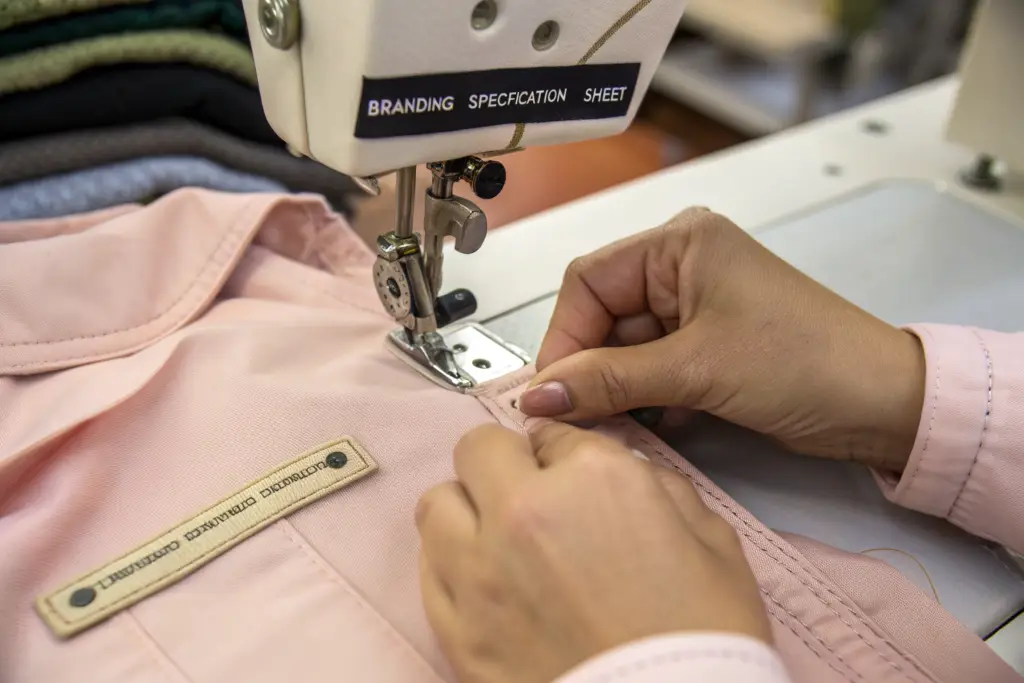
Our rebranding production protocol includes a dedicated branding specification sheet for each brand and each style. The spec sheet documents the exact label type, label placement measured from the center back neck seam and the shoulder seam, the stitch type and thread color used to attach the label, the hangtag type, the hangtag attachment location, typically the left sleeve or the care label loop, the polybag dimensions and printing specifications, and the fold and pack method. This spec sheet is printed and posted at every workstation involved in the branding process: the label sewing station, the hangtag attachment station, and the packing station.
Before bulk production begins, we produce a "golden sample" that has all branding elements applied and is approved by the brand. The golden sample is hung in a clear polybag at the head of the production line. Every operator who handles a branding operation can look at the golden sample and compare their work. The golden sample eliminates ambiguity. It answers the question "Is this label straight?" by providing a visual standard of straightness. During in-line inspection, the QC inspector spot-checks branded garments against the golden sample. During final AQL inspection, the branding elements are checked on every garment in the sample. A misaligned label is classified as a major defect because it cannot be corrected without opening the neck seam. A missing hangtag is classified as a critical defect and triggers a 100% re-inspection of the affected cartons. The branding quality standard is not lower than the garment construction standard. It is equal. The consumer sees the label before she sees the seam.
How Do You Ensure Label Consistency Across Hundreds of Units?
Label consistency is maintained through three controls. The first control is a pre-production label approval. The label supplier produces a pre-production sample of each label type. We check the sample for color accuracy against the brand’s Pantone specifications, for text accuracy including spelling, font, and registration marks, for dimension accuracy against the label specification sheet, and for material quality including weave density, edge finish, and softness. The approved label sample is signed and dated by the brand owner and by our quality manager. It becomes the reference standard for the bulk label order. The second control is a bulk label incoming inspection. When the bulk labels arrive from the label supplier, we randomly sample the shipment and compare each label to the approved reference standard. We check for color variation, weaving defects, inconsistent text, and dimensional drift. A label lot that fails the incoming inspection is returned to the supplier for replacement. The third control is the operator self-check. The operator attaching the label checks each label before sewing. She looks for obvious defects. She compares the label against the golden sample garment. If she finds a defect, she sets the label aside and draws a replacement from the approved inventory. This three-tier control, supplier approval, incoming inspection, and operator self-check, catches label defects before they are sewn into garments and become expensive to correct.
What Packaging Options Protect the Brand Experience During Shipping?
Summer outerwear is lightweight and often made from delicate fabrics that can wrinkle, snag, or absorb moisture during transit. The packaging must protect the garment while also presenting the brand professionally when the wholesale buyer or the end customer opens the package. Our standard packaging for rebranded summer outerwear is an individual clear polybag with a self-adhesive seal strip. The polybag is made from 3-mil low-density polyethylene, which is thicker than the standard 2-mil bag and more resistant to tearing. A silica gel packet is inserted into each polybag to absorb any moisture that enters during ocean transit. The garment is folded neatly with acid-free tissue paper inserted between the folds to prevent crease setting. The branded hangtag is attached so that it is visible through the clear polybag without opening it. The polybag can be printed with the brand’s logo, website URL, and a short message such as "Thank you for supporting our brand" or "Designed in Austin, Made with Care." For premium brands, we offer additional packaging upgrades. A branded cardboard insert placed inside the folded coat maintains the garment’s shape and provides a surface for additional branding or a brand story message. A custom-printed tissue paper wrap replaces the plain tissue. A branded sticker seals the polybag instead of the standard adhesive strip. Each packaging upgrade adds a small incremental cost per unit, typically $0.15 to $0.50. The upgrades significantly elevate the unboxing experience for the end customer and the receiving experience for the wholesale buyer. In the Instagram age, the unboxing is a marketing event. Brands that invest in packaging see their products featured in unboxing videos and social media posts. The packaging investment returns in earned media.
Case Studies: Brands That Scaled with Our Rebranding Program
The proof of our rebranding program is not in the description of our services. It is in the brands that have used those services to build successful summer outerwear lines. I want to share three specific examples, with the brands’ permission, that illustrate different paths through our white-label and private-label programs. These are not hypothetical case studies. They are real brands with real sales numbers, and I am proud of the role our factory played in their growth.
Case study one: a sustainable fashion startup from Portland, Oregon. This brand entered the market in 2023 with a mission to create plastic-free summer outerwear. They worked with our design support team to develop a private-label linen duster made from 100% GOTS-certified organic linen with corozo nut buttons and a cotton label. The development process took eight weeks and required custom fabric sourcing from a certified organic mill. The first production order was 250 units. The duster retailed for $148 and sold out in three weeks. The brand placed a re-order of 500 units, which also sold out. They are now in their fifth season with us and have expanded their line to include a matching linen blazer and a quilted organic cotton shacket.
Case study two: a resortwear brand from Charleston, South Carolina. This brand started with our white-label chiffon kimono program. They selected two kimono styles from our catalog in four stock colors. The initial order was 150 units total, 75 per style, with their logo embroidered on the back yoke. They launched the kimonos through their boutique and their Instagram channel. The kimonos sold out in ten days. The brand used the revenue to fund a private-label development for the following season, creating a custom kimono with a proprietary border print and a longer length. That custom kimono became their best-selling product. They now order 800 to 1,000 units per season across multiple styles.
Case study three: a direct-to-consumer brand from Austin, Texas. The founder was a fashion influencer with a following of 150,000. She had no design or manufacturing experience. She came to us with a mood board and a launch date. Our design team developed three summer coat styles for her brand: an oversized quilted jacket, a belted linen trench, and a cropped denim shacket. We guided her through fabric selection, fit sampling, and branding. Her launch collection of 600 total units sold out in 48 hours. She has since expanded into a full seasonal outerwear brand and has been featured in two major fashion publications.
These three case studies share a common thread. Each brand owner had a clear understanding of their customer and a strong brand identity. What they lacked was the manufacturing infrastructure to translate that identity into a physical product. Shanghai Fumao provided that infrastructure. We did not try to influence their brand direction. We executed their vision with technical excellence and operational reliability. The result was product that their customers loved and a manufacturing partnership that scaled with their growth.
Conclusion
Shanghai Fumao is a top factory for rebranding summer outerwear because we have built our entire business model around the needs of brands that want to launch or expand a summer coat line without building their own design and production infrastructure. Our white-label program provides a low-risk, low-MOQ entry point for brands testing the summer outerwear category. Our private-label program provides a full custom development path for brands that have validated their market and are ready to invest in exclusive designs. Our in-house design support bridges the knowledge gap between brand vision and production-ready tech packs. Our branding production process treats labels, hangtags, and packaging with the same quality rigor as seam construction. Our DDP logistics deliver the finished, branded product to the brand’s door at a predictable, all-inclusive cost.
The rebranding process is not just about sewing a different label into a generic coat. It is about translating a brand’s identity into a product that the brand’s customer will love, wear, and recommend. The label is the symbol of that identity, but the quality behind the label is what earns the customer’s loyalty. A beautiful label on a poorly made coat destroys the brand. A beautiful label on a beautifully made coat builds it. We make the coat. You build the brand.
If you are a brand owner, an influencer, or a boutique retailer considering launching your own line of summer outerwear, I invite you to start a conversation with us. Bring your mood board, your brand story, and your vision. We will bring the fabric library, the pattern making expertise, and the production capability. Together, we can create a collection that your customers will love and a partnership that will grow with your business.
To explore our white-label catalog, discuss a private-label development, or request a sample of our work, contact our Business Director, Elaine. She can provide our current seasonal catalog, our stock fabric swatch book, and examples of label and packaging options from existing brand partners. Email Elaine at: elaine@fumaoclothing.com.