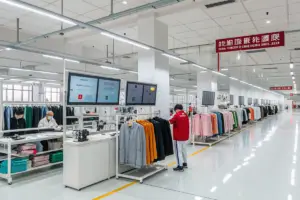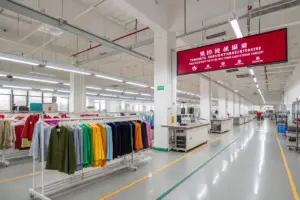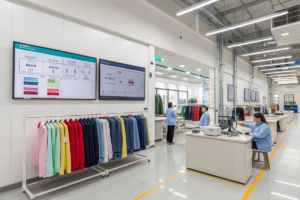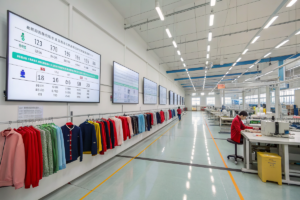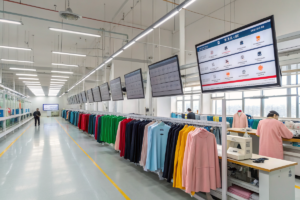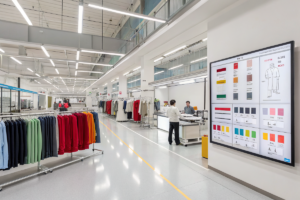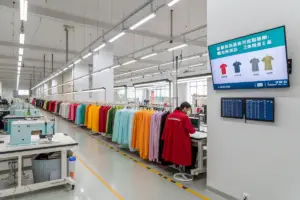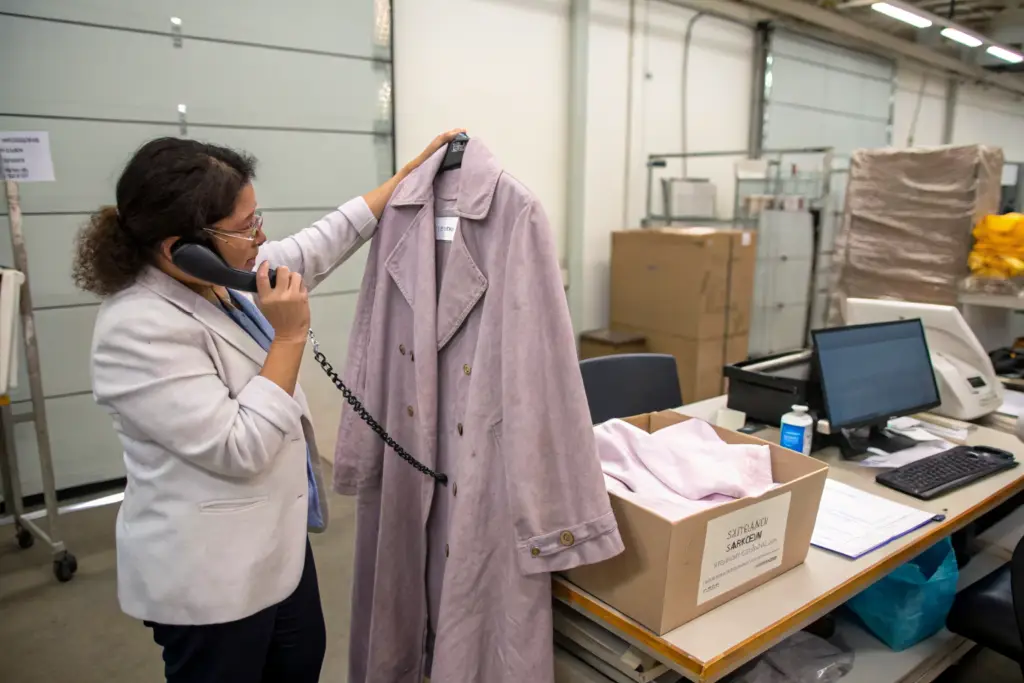
I was standing in our quality control department two summers ago when a brand owner from Los Angeles called me. Her voice was tight. She had just received a customer return, a pastel lavender linen duster that had been worn three times and washed once. The customer had included a photo. The coat had faded from a soft, dusty lavender to a washed-out, almost grey beige. The color was gone. The coat looked five years old. The brand owner had 1,200 units of this coat in her warehouse and another 800 units on a container ship crossing the Pacific. Every single coat was made from the same fabric lot. Every single coat was a potential return. The financial exposure was $45,000 at retail value. The fabric had passed our standard color fastness tests before production. The test results were on file. The lab report showed a grade 4 on the blue wool scale. The customer’s washing machine, combined with the intense July sun, had created conditions that the lab test did not fully replicate. That day, I upgraded our entire color fastness testing protocol. We added a high-temperature wash test. We added an extended UV exposure test. We added a perspiration simulation test. We never shipped another pastel linen coat without all three.
Preventing color fading in mass-produced pastel summer coats requires a four-stage defense system integrated into the manufacturing process. Stage one is fabric-level protection through high-quality, fiber-reactive dyes and UV-inhibiting finishes applied at the mill. Stage two is pre-production testing that goes beyond standard color fastness to include high-temperature wash fastness, extended light fastness, and perspiration fastness tests specific to summer wear conditions. Stage three is production-process protection through controlled dye lot management, pH-neutral detergents in garment washing, and low-temperature pressing. Stage four is consumer-care communication through accurate care labels and customer education that sets realistic expectations for pastel garment longevity.
Pastel colors are chemically fragile. The soft, muted tones that define summer fashion—lavender, blush pink, sage green, butter yellow, sky blue, peach—are achieved with lower dye concentrations than deep, saturated colors. Less dye in the fiber means less color to lose. A navy blue coat can lose 20% of its dye and still look navy blue. A pastel lavender coat that loses 20% of its dye looks like a different color entirely. The margin for error is smaller. The testing must be more rigorous. The production controls must be tighter. At Shanghai Fumao, pastel summer coats account for approximately 60% of our seasonal production volume. We have developed specific protocols for these colors that go beyond our standard quality control system. Let me walk you through each stage of the color fading prevention system and show you exactly how we protect your brand’s pastel palette.
Stage One: Fabric-Level Protection with Reactive Dyes and UV Finishes
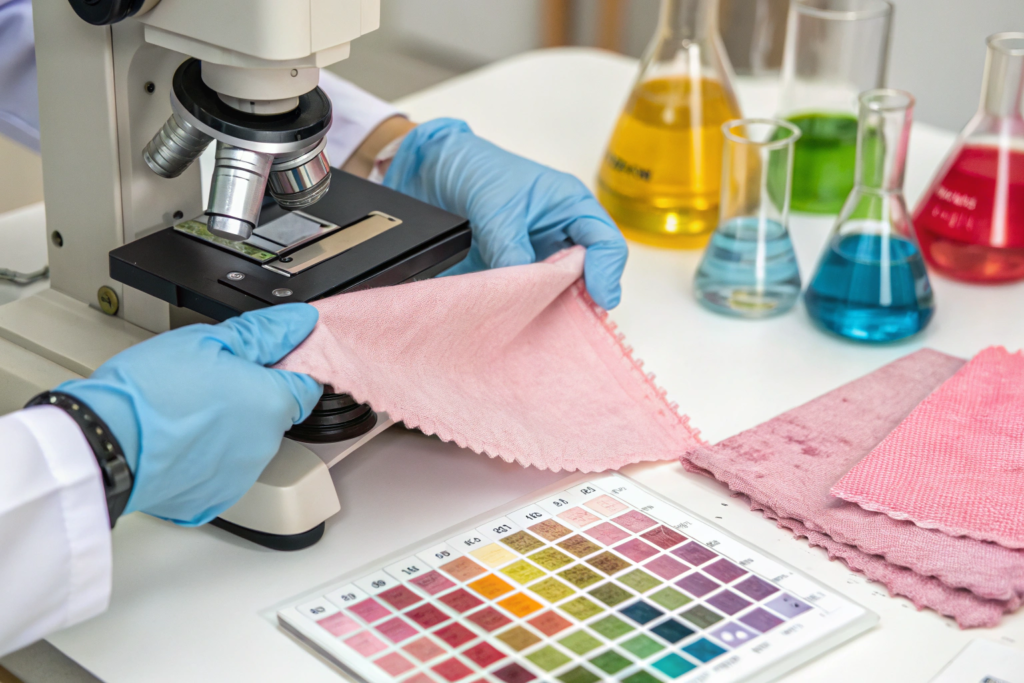
The battle against color fading begins at the molecular level, before the fabric is woven, before the coat is cut. The dye type and the dyeing process determine the baseline color fastness of the fabric. Not all dyes are equal. Not all dyeing processes produce the same bond strength between the dye molecule and the fiber. A brand that selects a beautiful pastel fabric without understanding the dye chemistry is gambling with the color integrity of every coat produced from that fabric. I learned this lesson from a mill visit in Shaoxing seven years ago. The mill owner showed me two bolts of what appeared to be identical pastel blue cotton-linen fabric. One was dyed with direct dyes, a low-cost, simple dyeing process where the dye molecules adhere to the fiber surface through weak electrostatic bonds. The other was dyed with fiber-reactive dyes, a higher-cost process where the dye molecules form a covalent chemical bond with the cellulose fiber. He placed both swatches in a beaker of warm water with a drop of detergent and stirred for 30 seconds. The direct-dyed swatch released a visible cloud of blue into the water. The reactive-dyed swatch released almost nothing. The price difference between the two fabrics was $0.80 per meter. The performance difference was the difference between a coat that fades in the first wash and a coat that maintains its color for seasons.
Shanghai Fumao exclusively uses fiber-reactive dyes for all pastel summer coat fabrics made from cellulosic fibers, including cotton, linen, Tencel, and viscose. For synthetic pastel fabrics, including recycled nylon and polyester chiffon, we use high-energy disperse dyes that are applied under high temperature and pressure to ensure deep penetration into the hydrophobic fiber. We do not use direct dyes, sulfur dyes, or basic dyes for any pastel fabric, regardless of cost savings, because these dye classes do not provide the wet fastness and light fastness required for summer outerwear.
The dye selection is the first defense. The second defense is the UV inhibitor finish. Ultraviolet radiation from sunlight is the most aggressive color fading agent for summer outerwear. Summer coats are worn outdoors. They are exposed to direct sunlight during beach walks, outdoor dining, farmers market visits, and park picnics. A pastel coat that sits in a retail store under fluorescent lighting for a month experiences less UV exposure than a pastel coat worn for one afternoon at an outdoor wedding. The UV inhibitor finish is a chemical treatment applied to the fabric at the mill after dyeing. The finish contains benzotriazole or benzophenone compounds that absorb UV radiation and dissipate the energy as heat, preventing the radiation from breaking the chemical bonds in the dye molecules. The finish is invisible to the eye and does not change the fabric hand feel. It adds approximately $0.25 to $0.40 per meter to the fabric cost. For pastel summer coats, we consider it mandatory, not optional. We apply UV inhibitor finish to 100% of pastel shell fabrics in our production. The finish is not permanent. It degrades gradually with repeated washing. A coat treated with UV inhibitor will retain its color for approximately 20 to 30 washes, compared to 10 to 15 washes for an untreated pastel coat. The finish extends the garment’s wearable life and reduces the brand’s return rate.
What Is the Difference Between Reactive Dyes and Direct Dyes in Simple Terms?
The difference is the strength of the bond between the dye and the fiber. A direct dye sits on the fiber surface like chalk on a sidewalk. It adheres loosely. Water, friction, and sunlight knock the chalk particles off. A reactive dye forms a chemical bond with the fiber like paint that has soaked into wood and cured. The dye becomes part of the fiber molecule. Water, friction, and sunlight have much less effect on the bonded dye. The bond strength difference is most visible in wet conditions. A direct-dyed pastel cotton coat will bleed color into the wash water on the first wash. The bleeding is the unbound dye molecules releasing from the fiber. A reactive-dyed pastel cotton coat will release almost no color into the wash water, even on the first wash. The reactive dyeing process is more expensive for three reasons. It requires higher-quality dyes. It requires longer processing time at controlled temperatures. It requires a thorough washing-off process after dyeing to remove the small percentage of dye that did not bond, and this washing-off process uses more water and energy. The cost increase is real and measurable. The performance increase is also real and measurable. For pastel colors, where the total dye quantity in the fiber is already low, the reactive dye advantage is decisive. A pastel coat with direct dyes is a return waiting to happen. A pastel coat with reactive dyes has a fighting chance.
How Do UV Inhibitors Work Without Changing the Fabric Hand Feel?
UV inhibitors are applied as a finish in the same dyeing and finishing process that applies softeners, wrinkle-resistant treatments, and water-repellent finishes. The inhibitor is a clear, soluble chemical compound that is dissolved in the finishing bath. The fabric passes through the bath and is then dried and cured at high temperature. The inhibitor molecules bond to the fiber surface at a microscopic level. They do not form a coating or a film. They do not bridge between fibers. They are individual molecules dispersed across the fiber surface. Because they are not forming a continuous layer, they do not stiffen the fabric or change the way it drapes. The hand feel of a UV-inhibited fabric is indistinguishable from the same fabric without the inhibitor. The only way to verify the inhibitor presence is through analytical chemistry or through an accelerated UV exposure test comparing the treated and untreated fabric. We verify inhibitor application by testing every treated fabric lot. A swatch from the production fabric is exposed to a xenon arc lamp that simulates 40 hours of midday summer sunlight. The color change is measured with a spectrophotometer. A treated fabric must show a Delta E color change of less than 2.0 after 40 hours of exposure. An untreated pastel fabric of the same color typically shows a Delta E of 4.0 to 8.0 under the same conditions. The test confirms that the inhibitor is present and performing.
Stage Two: Pre-Production Color Fastness Testing Protocol
The standard color fastness tests used for general apparel are insufficient for pastel summer coats. The standard light fastness test, ISO 105-B02, exposes the fabric to a xenon arc lamp until a blue wool reference standard shows a specific degree of fading. For a standard apparel fabric, a rating of 4 on the 8-point blue wool scale is considered acceptable. A grade 4 means the fabric begins to show visible fading after approximately 40 hours of standard light exposure. For a pastel summer coat, grade 4 is not sufficient. The coat will be worn in direct sunlight for cumulative hours across a single summer season. The coat will be washed multiple times. The cumulative stress of light exposure and washing will cause fading that a single-factor test does not predict. We learned this from the lavender duster return I described at the beginning of this article. The fabric had passed ISO 105-B02 at grade 4. It had passed ISO 105-C06 wash fastness at grade 4. It had not been tested for the combination of extended light exposure followed by washing, which more accurately simulates real consumer use.
Shanghai Fumao’s enhanced color fastness testing protocol for pastel summer coats includes three mandatory tests beyond the standard requirements. The extended light fastness test exposes the fabric to a xenon arc lamp for 80 hours, equivalent to approximately 160 hours of summer sunlight or roughly 20 full days of outdoor wear, and requires a minimum grade of 4. The high-temperature wash fastness test runs a wash cycle at 40°C with a standard detergent and requires a minimum grade of 4 for color change and 3-4 for staining of adjacent multi-fiber fabric. The perspiration fastness test, ISO 105-E04, simulates the effect of alkaline and acidic human sweat on the fabric color and requires a minimum grade of 4. Any fabric lot that fails any of these three tests is rejected for pastel summer coat production, regardless of the mill’s certification or the cost implications of rejection.
The perspiration fastness test is particularly relevant for summer coats. Summer coats are worn against bare skin, often over a sleeveless top or a swimsuit. The back neck area, the underarm area, and the inner collar are exposed to perspiration. Human sweat contains salts, acids, and enzymes that can attack dye bonds. A fabric that withstands distilled water washing may degrade rapidly when exposed to the alkaline chemistry of sweat. We test every pastel fabric with both an alkaline perspiration simulation and an acidic perspiration simulation. The test swatch is saturated with the simulated sweat solution, placed under pressure between glass plates, and incubated at 37°C for four hours. The swatch is then dried and evaluated for color change. A fabric that shows visible color change at the edges, a common failure mode where the dye migrates and concentrates at the seam line, is rejected. The perspiration test has caught failures that the wash test and light test missed, and it has prevented returns from customers who wore their pastel coats on hot summer days.
What Is the Delta E Color Measurement Standard and Why Does It Matter?
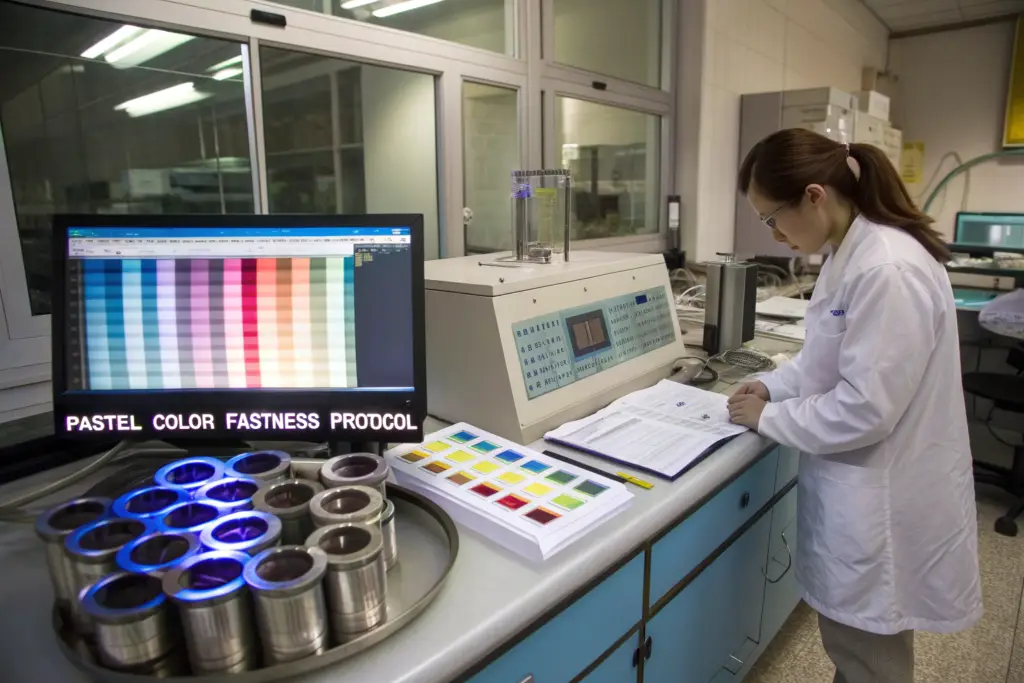
Delta E is a numerical value that quantifies the total color difference between two samples. It is measured by a spectrophotometer, which analyzes the light reflected from the sample across the visible spectrum and calculates the color coordinates in a three-dimensional color space called CIELAB. A Delta E of 0 means the two colors are identical. A Delta E of 1.0 is a just-noticeable difference under ideal viewing conditions. A Delta E of 2.0 to 3.0 is a visible difference that a consumer would notice when comparing the coat to a memory of its original color. A Delta E above 4.0 is a clear, objectionable difference that would cause a consumer to perceive the coat as faded. We use Delta E as an objective pass/fail criterion for our color fastness tests. Before the test, the spectrophotometer measures the color of the fabric swatch and records the baseline CIELAB values. After the test, the spectrophotometer measures the same swatch again and calculates the Delta E between the pre-test and post-test color. For pastel fabrics, we set the pass threshold at a Delta E of 2.5 or lower for light fastness and wash fastness tests. This is a tighter standard than the industry norm of Delta E 4.0, which is the approximate threshold for a grade 4 on the grey scale for color change. We use the tighter standard because pastel colors have less color saturation to absorb a visible shift. A Delta E of 3.0 on a pastel lavender, which has low color saturation, looks like a significant fade. A Delta E of 3.0 on a deep navy, which has high color saturation, looks like a very subtle lightening. The same numerical shift has different visual impact depending on the color saturation. The pass threshold must be calibrated to the color category.
How Do You Test for Color Fastness After Multiple Washes?
The single-wash color fastness test is a snapshot. It tells you what happens after one wash. It does not tell you what happens after five washes, ten washes, or a full season of wear and care. The cumulative effect of repeated washing combined with repeated light exposure is what causes the visible fading that triggers a customer return. We conduct a multi-cycle accelerated aging test on every new pastel fabric we develop. The test protocol consists of five cycles. Each cycle includes: a 40°C machine wash with standard detergent and a tumble dry at medium heat, an 8-hour xenon arc lamp exposure at standard irradiance, and a spectrophotometer color measurement after each complete cycle. The color measurements are plotted on a graph showing Delta E versus cycle number. The graph reveals the fading trajectory. A fabric that shows a Delta E of 1.0 after cycle one, 1.8 after cycle two, 2.4 after cycle three, 2.9 after cycle four, and 3.5 after cycle five is on a steady degradation path and will likely generate returns after a season of use. A fabric that shows a Delta E of 0.8 after cycle one, 1.2 after cycle two, 1.5 after cycle three, 1.7 after cycle four, and 1.9 after cycle five is stabilizing and will provide acceptable color retention over the garment’s wearable life. The multi-cycle test takes approximately one week to complete and costs approximately $400 per fabric. It is not required for every production lot. It is conducted during the fabric development and approval phase, before the fabric is accepted into our stock inventory or approved for a custom production order. The test results are shared with the brand partner as part of the fabric approval package.
Stage Three: Production Process Controls for Color Integrity
The fabric-level protections and the pre-production testing establish a strong foundation. The production process controls ensure that the foundation is not undermined during manufacturing. A fabric that enters the factory with excellent color fastness can be damaged by production processes that apply excessive heat, incorrect chemicals, or abrasive handling. The production environment must be managed to protect the color integrity that the mill and the testing have established.
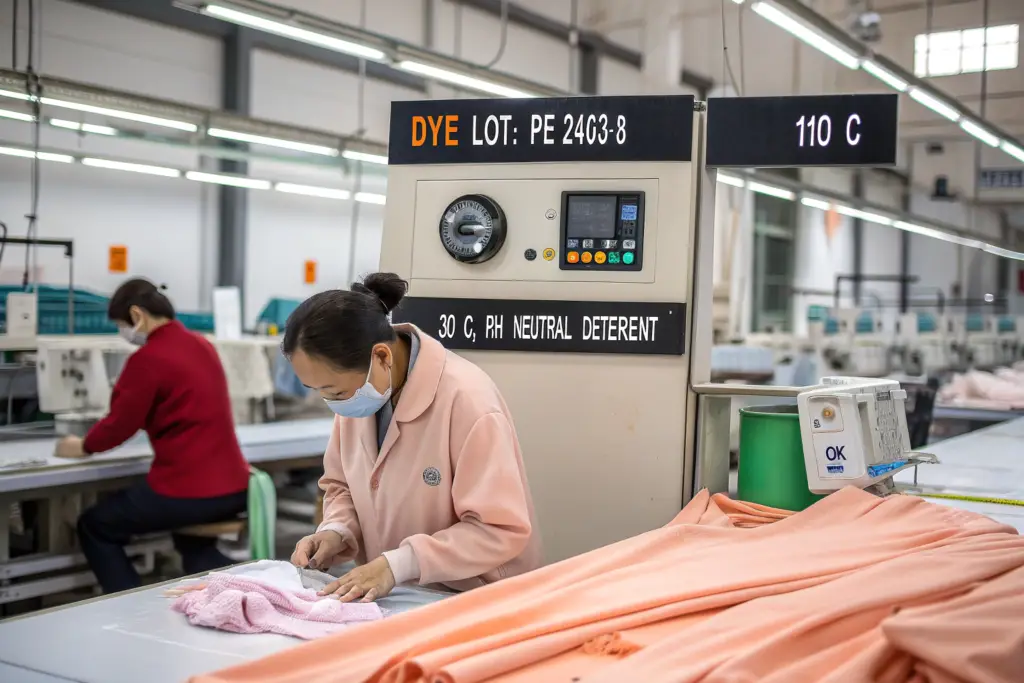
Our production process controls for pastel summer coats address five potential color-damage points. Dye lot segregation ensures that every production order is cut from a single dye lot to prevent shade variation between coat panels. pH-neutral detergent is used in all garment washing and spot-cleaning operations to prevent alkaline chemical attack on the dye bonds. Pressing temperature is strictly limited to 110°C maximum for pastel fabrics, which is lower than the 130°C to 150°C used for darker colors, because high heat accelerates dye sublimation and fading. Steam pressing duration is limited to 3 seconds per section to minimize prolonged heat exposure. Storage and transit conditions are controlled to prevent exposure to direct sunlight, high humidity, or chemical fumes in the factory, warehouse, or shipping container.
Dye lot segregation is the most critical production control for pastel colors. A fabric mill produces fabric in dye lots, typically 500 to 2,000 meters per lot. Each dye lot has a slightly different shade because dyeing is a chemical process with inherent variability. The difference between two dye lots of the same pastel color may be invisible to the naked eye when the fabric rolls are viewed separately. The difference becomes visible when a coat is assembled from panels cut from two different dye lots. The left sleeve is from lot A. The right sleeve is from lot B. Under daylight, the sleeves look like slightly different colors. The coat is unsellable. We enforce a strict single-dye-lot policy for every production order. When the fabric arrives from the mill, each roll is labeled with its dye lot number. The cutting room issues fabric for an order from a single dye lot only. If the order quantity exceeds the yardage available in one dye lot, we cut from the next dye lot only after the first lot is exhausted, and we clearly label the cartons containing the second dye lot garments so the brand can manage inventory accordingly. The single-dye-lot policy prevents the shade-mismatch defect entirely.
Why Does Pressing Temperature Matter More for Pastel Colors?
Heat is a catalyst for chemical reactions, including the breakdown of dye-fiber bonds. A dark fabric that is pressed at 150°C may experience a small amount of dye degradation that is invisible against the deep color background. A pastel fabric pressed at the same temperature experiences the same amount of degradation, but the color loss is visible because the total dye quantity in the fiber is much smaller. Additionally, pastel fabrics often contain a higher percentage of natural fibers like linen and cotton, which are more sensitive to heat damage than synthetic fibers. Pressing a pastel linen coat at 140°C can cause two problems simultaneously: dye fading and fiber scorching. The fiber scorching manifests as a yellow-brown discoloration that is particularly visible on pastel colors. A pale blue coat with scorched patches looks dirty and damaged. We limit pastel pressing temperature to 110°C, which is hot enough to remove wrinkles and set the garment shape, but cool enough to protect the dye and the fiber. The lower temperature requires slightly longer pressing time to achieve the same wrinkle removal, approximately 3 seconds per section instead of 2 seconds. The small productivity loss is acceptable given the quality protection. Our pressing stations are equipped with digital temperature controllers that are calibrated weekly. A pressing station that exceeds the temperature limit triggers an alarm and shuts down until it is recalibrated.
What Cleaning Agents Are Safe for Pastel Garment Processing?
Garment processing involves several cleaning steps. Spot cleaning removes marks or stains that occur during sewing, such as machine oil, pencil marks from pattern tracing, or handling dirt. Garment washing, applied to some styles for softness or a worn-in appearance, subjects the entire coat to a wet process. The chemicals used in these cleaning steps must be pH-neutral and free of optical brighteners. Alkaline detergents, common in industrial laundry operations, accelerate dye bleeding and fading, especially on cellulosic fibers. Optical brighteners are chemicals that make fabrics appear whiter and brighter by converting invisible UV light into visible blue light. On a pastel coat, optical brighteners shift the perceived color and create an unnatural, slightly fluorescent appearance that the consumer may interpret as fading or color change. We use a pH-neutral, enzyme-based spot cleaner for stain removal. We use a pH-neutral, non-ionic detergent for garment washing. Both products are sourced from a textile chemical supplier and are tested on pastel fabric swatches before being approved for production use. The detergent concentration and the wash cycle temperature are specified in the production work order. The washing machine operator measures the detergent with a calibrated dispenser, not by eye. The discipline of chemical control prevents the "it looks clean enough" shortcuts that degrade pastel color integrity.
Stage Four: Care Labeling and Customer Communication
The most effective color fading prevention system in the factory cannot control what happens after the customer takes the coat home. The customer’s washing machine, detergent choice, drying method, and storage habits determine the majority of the color fading that occurs over the garment’s lifetime. The factory’s responsibility extends to providing the customer with accurate, clear care instructions that maximize the garment’s color longevity. A care label that says "Machine Wash Warm" on a pastel coat is technically legal, the coat can survive warm washing. It is not optimal for color retention. A care label that says "Machine Wash Cold" extends the color life by reducing the thermal energy available to break dye bonds. The difference between the two instructions could be an additional season of wearable color.
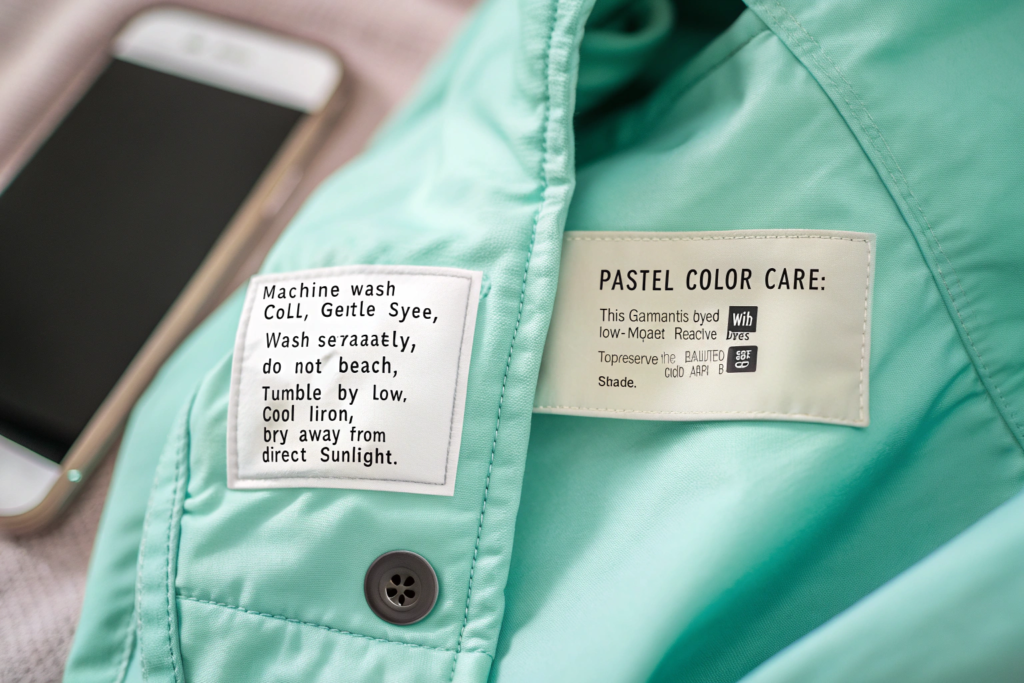
Our care label recommendation for pastel summer coats is deliberately conservative to maximize color longevity: machine wash cold at 30°C maximum, gentle cycle with the garment turned inside out, wash with similar colors or separately for the first wash, use a mild detergent without optical brighteners or bleach, do not use fabric softener, which can coat the fibers and accelerate dye loss, tumble dry on low heat or hang dry in shade, do not dry in direct sunlight, which combines UV exposure with heat, and cool iron on the reverse side if needed. These instructions are printed on the sewn-in care label and are reinforced on the hangtag and the product web page.
The customer communication strategy matters as much as the care label content. A hangtag that explains why the coat is pastel-colored and how to care for it transforms the care instructions from a legal disclaimer into a brand value communication. The hangtag might read: "This coat is dyed in a soft pastel shade using low-impact, fiber-reactive dyes that bond with the fibers for lasting color. Pastel colors are delicate by nature. Wash me cold, dry me in the shade, and I will stay beautiful for seasons to come." This messaging sets a realistic expectation. The customer understands that the coat requires specific care, not because it is poorly made, but because the pastel aesthetic inherently requires gentle handling. A customer who has been educated about pastel care is less likely to return a faded coat. A customer who received no care education and washed the coat in hot water with strong detergent will blame the coat quality, not the care method, and will demand a refund.
What Care Label Language Protects the Brand from Unreasonable Fading Claims?
The care label is a legal document regulated by the Federal Trade Commission in the United States. It must provide accurate care instructions. It also serves as a defense against unreasonable customer claims. If a customer washes a pastel coat in hot water with bleach and the coat fades, and the care label clearly states "Machine Wash Cold, Do Not Bleach," the brand has a factual defense against the return claim. The customer failed to follow the care instructions. The brand is not responsible for damage caused by improper care. This defense is only available if the care label instructions are accurate and the coat can actually withstand the recommended care conditions. A brand that labels a coat "Machine Wash Warm" and the coat fades in warm water has no defense. The care label must be validated through testing. We test every pastel coat style by washing a sample five times according to the care label instructions and measuring the color change. If the coat passes at five washes, the care label is validated. If the coat shows visible fading at five washes with the recommended care, the care instructions are tightened, or the fabric is reformulated. The care label is a promise. The testing ensures the promise is kept.
How Can Brands Educate Customers About Pastel Garment Care?
Brands that proactively educate their customers about pastel garment care experience lower return rates and higher customer satisfaction. The education can take multiple forms. A care card inserted in the polybag with the coat provides detailed, illustrated care instructions. A product page on the brand’s website includes a "Care" tab with written instructions and a short video demonstrating the recommended wash method. A post-purchase email, sent three days after delivery, includes care tips and a link to the care video. A social media post or story series, timed to the delivery window of a new collection, demonstrates how to wash, dry, and store pastel summer coats. These educational touchpoints do not need to be expensive to produce. An iPhone video of a brand team member gently hand-washing a pastel coat in a clean sink with cold water and a mild detergent is authentic, relatable, and effective. The message is not "this coat is delicate and difficult." The message is "this coat is special, and a little care will keep it beautiful." The framing matters. The customer who feels like a caretaker of a special garment is a loyal customer. The customer who feels like they bought a defective product is a lost customer. The communication determines which experience the customer has.
Conclusion
Preventing color fading in mass-produced pastel summer coats is a four-stage system that extends from the dye molecule to the customer’s laundry room. The fabric must be dyed with fiber-reactive or high-energy disperse dyes that form strong chemical bonds with the fiber. The fabric must be finished with a UV inhibitor that protects the dye from sunlight degradation. The fabric must be tested rigorously, not just to standard industry protocols, but to enhanced protocols that simulate the combined effects of washing, light exposure, and perspiration that summer coats experience in real use. The production process must be controlled with dye lot segregation, pH-neutral cleaning chemistry, and low-temperature pressing that protects the color integrity established at the mill. The care label and the customer communication must educate the consumer about the specific care that pastel colors require and set realistic expectations for color longevity.
The cost of this four-stage system is approximately 3% to 5% added to the fabric cost and the quality control budget. The cost of color fading returns on pastel summer coats, if the system is not in place, ranges from 5% to 15% of order value in direct return costs plus the intangible cost of damaged brand reputation and lost repeat customers. The investment in color protection is not a cost. It is a margin preservation strategy and a brand equity protection strategy.
At Shanghai Fumao, our pastel color fastness protocol is documented, audited, and continuously improved. We publish our test results. We share our Delta E data with brand partners. We recommend care label language that maximizes color longevity. We treat color integrity as a shared responsibility between the factory, the brand, and the customer. When a pastel lavender coat from our factory retains its color through a full summer of wear and washing, and the customer returns to the brand’s website to buy the sage green version, the system has worked.
If you are developing a pastel summer coat collection and want to discuss fabric options, testing protocols, and care strategies that will protect your brand’s color integrity, contact our Business Director, Elaine. She can provide our pastel fabric swatch book with corresponding Delta E test data, a sample of our recommended care label and hangtag copy, and a consultation on which pastel shades perform best in your target fabric and silhouette. Email Elaine at: elaine@fumaoclothing.com.