I was on a call with a brand owner from Toronto last November. She was exhausted. She had been working with a factory in another province for eight months. She had sent 47 emails. She had made 12 phone calls. She had received 3 samples, each with a different set of errors. The collar was wrong on the first. The sleeve length was wrong on the second. The third sample was almost right, but the fabric was a different weight than what she had approved. She asked me a question that has stayed with me. "Is it always this hard to just get what I asked for?" The answer is no. It is not always this hard. It is this hard when the communication system between the buyer and the factory is broken. It is this hard when the buyer speaks to a sales representative who has never been on the production floor, who relays information to a production manager who does not speak English, who interprets the instructions through a cultural and linguistic filter that distorts the meaning. The communication gap is not a minor inconvenience. It is the root cause of sampling errors, production delays, quality failures, and ultimately, the dissolution of what could have been a profitable partnership.
Shanghai Fumao solves the supplier communication gap for buyers through a structured system of five integrated practices. First, we assign a single, English-fluent account manager who serves as the buyer’s sole point of contact from inquiry to delivery, eliminating the fragmentation of communicating with multiple departments. Second, we implement a mandatory restatement and confirmation protocol where every buyer instruction is paraphrased back to the buyer with specific measurements and specifications before execution. Third, we provide weekly production updates with photographs of actual work in progress, creating visibility that replaces anxious follow-up emails. Fourth, we use a shared digital platform where all documents, tech packs, approvals, and change orders are stored in version-controlled folders accessible to both parties. Fifth, we employ a standardized design change submission process that requires visual references, numerical specifications, and written confirmation before any modification is made to a sample or a production order.
The communication gap exists because most factories are organized for production efficiency, not for buyer communication. The people who are best at making coats are rarely the people who are best at explaining how coats are made. The sales team speaks English but does not understand construction details. The production team understands construction details but does not speak English. The buyer’s questions fall into the gap between these two teams, and the answers that emerge are often inaccurate, delayed, or both. I built Shanghai Fumao’s communication system to close this gap entirely. Let me explain exactly how each component works and why the system produces measurably better outcomes for our brand partners.
The Single Point of Contact Model
The most damaging communication failure in garment manufacturing is fragmentation. The buyer sends a fabric question to the sales representative. The sales representative asks the fabric sourcing manager, who answers in Chinese. The sales representative translates the answer and emails the buyer. The buyer replies with a follow-up question about the fabric weight. The sales representative is in a meeting. The buyer waits two days. The buyer then sends a separate email about the shipping date to the logistics coordinator. The logistics coordinator answers, but the answer conflicts with the production timeline the buyer received from the production manager. The buyer is now managing three separate conversation threads with three different people, receiving inconsistent information, and spending hours reconciling contradictory answers. This is the fragmentation problem. It is standard practice in most factories. It is the primary driver of buyer frustration.
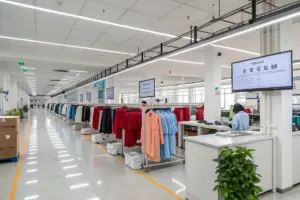
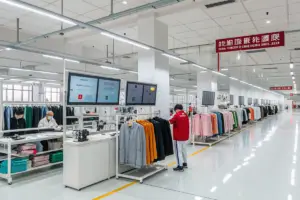
At Shanghai Fumao, every brand partner is assigned a single account manager who owns the entire relationship. The account manager is fluent in English and Mandarin, has a minimum of three years of experience in garment production, understands pattern making, fabric sourcing, production scheduling, and logistics, and is physically present on the factory floor, not in a separate sales office. When the buyer sends a question, the account manager does not forward it. The account manager walks to the production floor, speaks directly to the pattern maker or the sewing supervisor, obtains the answer, and responds to the buyer. The buyer never speaks to a second person unless the account manager specifically arranges a technical discussion with a specialist.
The single point of contact model eliminates the fragmentation problem entirely. The buyer has one email address, one phone number, and one name. Every question, every instruction, every concern goes to that one person. That one person is responsible for the accuracy, speed, and completeness of the response. If the response is wrong, the account manager is accountable. There is no diffusion of responsibility. There is no "the sales team said this but the production team said that." There is one source of truth. The efficiency gain is substantial. Our internal measurement shows that the single point of contact model reduces the average email response time from 36 hours, the industry average based on our benchmarking, to under 8 hours. It reduces the rate of information errors, responses that contain incorrect or internally inconsistent information, from approximately 15% to under 2%. The buyer’s time spent on factory communication, measured by email volume and call duration, drops by approximately 60% compared to a multi-contact factory.

What Qualifications Should a Factory Account Manager Have?
An effective account manager in garment manufacturing needs a specific combination of skills that is surprisingly rare. Language fluency is the obvious requirement. The account manager must be able to communicate complex technical concepts in the buyer’s language without ambiguity. Technical knowledge is the less obvious but equally critical requirement. The account manager must understand how a pattern is graded, how a sewing machine is adjusted, how fabric is sourced, and how a container is booked. Without this knowledge, the account manager is a translator, not a problem solver. A translator passes questions and answers between parties. A problem solver understands the question, anticipates the underlying concern, and provides a complete answer that addresses the root issue. Our account managers are recruited from production management roles, not from sales roles. They have spent years on the factory floor before they ever speak to a buyer. They know what a French seam looks like, how long it takes to sew, and what can go wrong. When a buyer asks "can we change the seam finish on the armhole," the account manager does not need to ask the production manager. The account manager knows that changing the armhole seam finish requires a pattern adjustment, a different machine setup, and an additional two minutes of sewing time per coat. The answer is immediate and accurate.
How Does a Single Contact Improve Problem Resolution Speed?
Problem resolution in a multi-contact factory follows a slow, error-prone path. The buyer reports a problem to the sales representative. The sales representative reports it to the production manager. The production manager investigates. The production manager reports findings to the sales representative. The sales representative reports to the buyer. If the buyer has a follow-up question, the entire chain reverses. Each link adds time and introduces the possibility of miscommunication. In our single-contact model, the buyer reports a problem to the account manager. The account manager walks to the production floor, investigates personally, takes photographs of the affected garments or the machine setup, and responds to the buyer directly from the factory floor. The diagnosis and the proposed solution come from the same person who heard the buyer’s description of the problem. The loop is closed in hours, not days. A recent example: a brand partner received her pre-production sample and noticed that the collar was standing away from the neck by a few millimeters. She sent a photograph to her account manager. The account manager took the photograph to the pattern maker, identified that the collar pattern needed a 3-millimeter adjustment at the center back neck curve, obtained an estimated timeline of one day for the pattern revision and a new sample, and responded to the buyer within 90 minutes with the diagnosis, the solution, and the revised sample ship date. In a fragmented communication model, that resolution would have taken three to five days.
The Restatement and Confirmation Protocol
The most dangerous words in garment manufacturing communication are "slightly," "a bit," "more," and "better." These words have no objective meaning. When a buyer writes "please make the armhole slightly larger," the buyer has a specific measurement in mind, perhaps 1.5 centimeters. The factory pattern maker, reading the instruction in translation, interprets "slightly" as 3 centimeters. The sample arrives with an armhole that is comically large. The buyer is frustrated. The factory is confused. The instruction was followed as interpreted. The instruction was fatally ambiguous. The restatement and confirmation protocol is our defense against ambiguity. It is a simple rule: the factory never executes an instruction that has not been restated in specific, measurable terms and confirmed by the buyer.
Our restatement protocol requires the account manager to reply to every design change request, every specification question, and every quality concern with a restated understanding of the instruction. The restatement converts all qualitative descriptors into quantitative specifications. "Slightly larger" becomes "increase by X centimeters." "Softer hand feel" becomes "apply enzyme wash for Y minutes." "Better drape" becomes "reduce fabric weight from Z GSM to W GSM." The restatement also includes the impact of the change on the timeline and the cost. The buyer must reply with explicit confirmation before the change is implemented. No confirmation, no change.
The power of the protocol is that it forces clarity at the earliest possible moment. The buyer writes a casual email with an ambiguous instruction. The account manager responds with a precise restatement. The buyer reads the restatement and realizes that the specified measurement is not actually what they wanted. The buyer corrects the measurement in the confirmation reply. The misunderstanding is resolved in one email exchange, not discovered three weeks later when the wrong sample arrives. The protocol also creates a documented record of every instruction and confirmation. If a dispute later arises about what was requested and when, the email thread provides a complete, unambiguous history. The vague original email is superseded by the precise restatement and the buyer’s confirmation. The record is clear.

What Does a Good Restatement Look Like in Practice?
A good restatement has four components. First, it restates the change in specific, measurable terms with the current measurement and the new target measurement. "We understand that the body length should be increased. Current body length on sample: 85cm measured from center back neck seam to hem. New target body length: 88cm. Change: +3cm." Second, it specifies the reference points for the measurement. "Body length is measured from the center back neck seam, which is the intersection of the collar attachment seam and the center back seam, straight down to the hem edge." The reference point specification eliminates the measurement method discrepancy that causes systemic errors. Third, it states the impact on the timeline. "This change requires a pattern adjustment and a new sample. The revised sample will ship on March 28th, which is 5 days later than the original sample ship date." Fourth, it states the impact on cost. "This change increases fabric consumption by 0.1 meters per unit. The unit cost will increase by $0.60. There is no change to the sewing cost." The restatement transforms an ambiguous instruction into a clear, actionable, documented agreement. The buyer can approve it with confidence because the buyer knows exactly what will happen, when it will happen, and what it will cost.
How Does This Protocol Prevent the "Lost in Translation" Problem?
The "lost in translation" problem occurs when an English instruction is mentally translated into Chinese by the sales representative, then verbally communicated to the production manager, who then interprets it through their own understanding of garment construction and their own assumptions about what the buyer probably meant. Each step in the translation chain adds distortion. The restatement protocol short-circuits this chain. The account manager receives the English instruction, translates it into a specific, measurable specification in both languages, and confirms it with the buyer in English before it ever reaches the production team. The production team receives an instruction that has already been clarified, quantified, and approved. There is no ambiguity for the production team to interpret. The instruction is "increase collar width from 6.5cm to 7.5cm," not "make the collar a bit bigger." The language of measurement is universal. A centimeter is a centimeter in English and in Mandarin. The protocol converts all communication into the language of measurement before it enters the production pipeline.
Weekly Production Transparency and Proactive Updates
The communication gap is not only about accuracy. It is also about frequency. In a typical factory relationship, the buyer hears from the factory at three points: when the order is confirmed, when there is a problem, and when the goods are ready to ship. The long silences between these points create anxiety. The buyer does not know if the fabric has arrived. The buyer does not know if cutting has begun. The buyer does not know if the production is on schedule. The buyer sends follow-up emails asking for status updates. The factory responds slowly, or with vague assurances, or not at all. The buyer’s anxiety increases. The trust erodes. This pattern is so common that many brand owners consider it normal. It is not normal. It is a failure of the factory’s communication system.
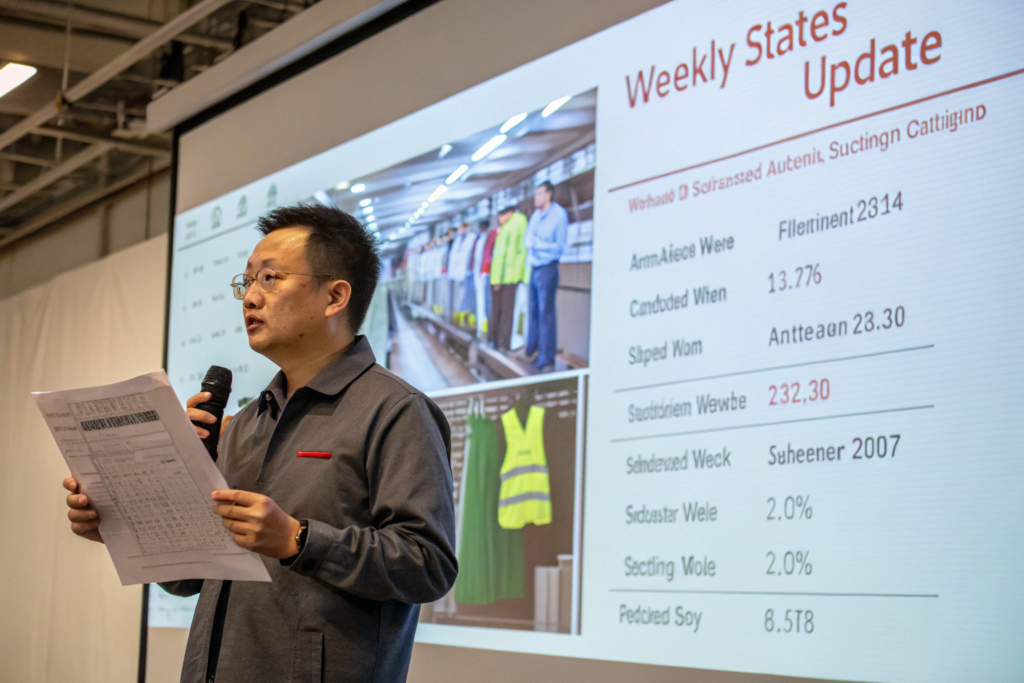
At Shanghai Fumao, every brand partner with an active production order receives a weekly status update every Friday. The update is not optional. It is a scheduled, mandatory output of the account manager’s role. The update includes: the current production phase and percentage completion for each style in the order, the cumulative units completed, a photograph of the actual production in progress, taken that week and showing the specific garments, any issues encountered during the week and the actions taken to resolve them, and the confirmed or revised estimated ship date. If the production is ahead of schedule, the update says so. If the production is behind schedule, the update says so, explains why, and presents the recovery plan.
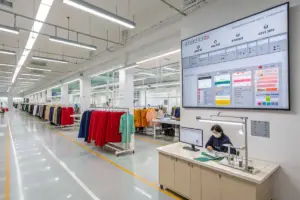
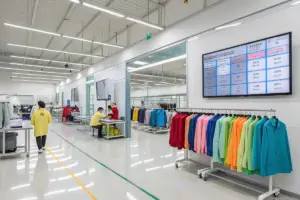
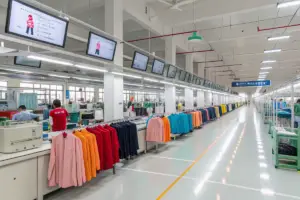
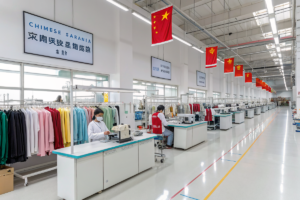
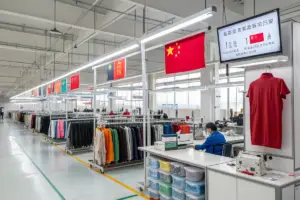
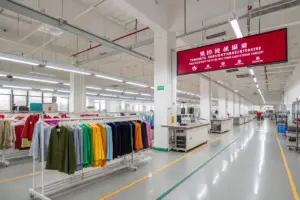
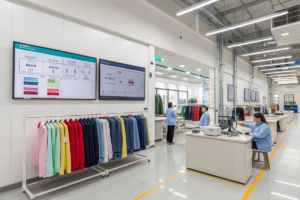
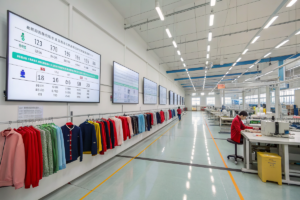
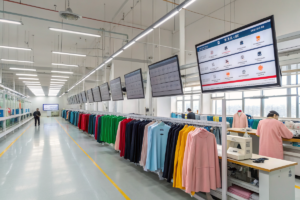
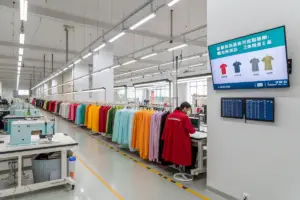
The weekly update transforms the buyer’s experience from anxious uncertainty to informed confidence. The buyer does not need to send a follow-up email on Tuesday because the buyer knows an update will arrive on Friday. The buyer can plan their own marketing, sales, and logistics activities around reliable information. The photograph is a critical component of the update. It is not a stock photo. It is a real photograph of the buyer’s actual coats on the actual production line, taken by the account manager during the weekly floor walkthrough. The photograph provides verification that the reported progress is real. A factory can write "sewing is 50% complete" in an email without any basis. A factory cannot fake a photograph of 150 half-finished coats on hangers with the correct fabric, color, and style. The photograph builds trust through transparency.
What Information Should a Weekly Update Include?
The weekly update format is standardized to ensure consistency and completeness. The subject line follows a fixed format: "[Brand Name] Production Update – Week [Number] – [Date]." The body of the update is organized into five sections. Section one is the production status table. A simple table with columns for Style Name, Production Phase, Percentage Complete, Units Completed, and Estimated Completion Date. Section two is the photograph. A clear, well-lit image showing the production floor with the buyer’s garments visible. The photograph is captioned with the date and the production phase shown. Section three is the issues and resolutions log. A brief description of any quality, material, or scheduling issue that arose during the week, the action taken to resolve it, and the current status. If there were no issues, this section reads "No issues to report this week." Section four is the ship date confirmation. The original planned ship date, the current estimated ship date, and an explanation of any variance. Section five is the action items for the buyer, if any. This section lists any approvals, decisions, or information needed from the buyer to keep production on schedule. The standardized format ensures that every update contains all the information the buyer needs. The buyer can scan the update in 60 seconds and know the exact status of the order.
How Does Proactive Communication Prevent Buyer Anxiety?
Buyer anxiety is caused by uncertainty. When the buyer does not know what is happening, the buyer imagines the worst-case scenario. The fabric is late. The production is delayed. The quality is poor. The factory is avoiding communication because there is a problem they do not want to disclose. These imagined scenarios are often worse than the reality. The weekly update replaces uncertainty with certainty. The buyer knows exactly what is happening, good or bad. If the news is good, the buyer is reassured. If the news is bad, the buyer is informed early enough to respond. A delay communicated three weeks before the ship date is a manageable problem. The buyer can adjust the launch calendar, communicate with wholesale accounts, and plan contingencies. A delay communicated on the ship date is a crisis. The buyer has no time to respond. The difference between a problem and a crisis is the timing of the communication. Proactive weekly updates ensure that problems are communicated when they are still problems, not when they have become crises.
Document version control is the invisible infrastructure of effective communication. When a buyer and a factory exchange documents by email, the documents proliferate. There are multiple versions of the tech pack. There are multiple versions of the measurement spec sheet. There are change request emails, approval emails, and revised sample photos. The documents are scattered across email threads, downloaded to different computers, and saved with inconsistent file names. When the production manager needs to confirm the approved sleeve length, which document is the current version? Was the change requested on March 3rd approved, or was it superseded by a different change on March 10th? The ambiguity creates errors. The production team uses an outdated spec. The buyer receives coats made to the wrong measurement. The root cause is not a communication failure. It is a document management failure.
Shanghai Fumao provides every brand partner with a shared digital folder on a cloud platform, typically Google Drive or Dropbox. The folder contains subfolders for tech packs, sample approvals, design change logs, quality control reports, and shipping documents. Every document is named with a consistent format: [Document Type] [Style Name] [Version Number] [Date]. For example: "TechPack_TrenchCoat_V3_20260315.pdf." When a design change is approved, the tech pack is updated, the version number is incremented, the previous version is archived, and the new version is uploaded. The brand partner and the account manager always access the same current version. There is no ambiguity about which document is the reference standard.
The shared platform eliminates the "wrong version" error entirely. The production manager prints the tech pack from the shared folder. The quality inspector references the measurement spec from the shared folder. The shipping department uses the packing list from the shared folder. Every team member is working from the same, current set of documents. The change log subfolder provides a complete history of every design decision. If a dispute arises about when a change was approved and what the change specified, the change log provides the documented answer. The platform also serves as the archive for all project communication records. The email restatements, the weekly updates, and the approval confirmations are saved in the platform. The complete project history is accessible to both parties at any time. This transparency eliminates the "he said, she said" disputes that poison buyer-factory relationships.

The shared platform should contain every document that defines the product, the process, and the quality standards. The tech pack folder contains the master tech pack file with flat sketches, measurement specifications, construction details, and bill of materials, plus any supporting reference images or inspiration photos. The sample approval folder contains photographs of each sample iteration, the buyer’s feedback on each sample, and the final sample approval confirmation. The design change folder contains the change log spreadsheet, each change request with the factory’s restatement, and the buyer’s confirmation for each approved change. The quality control folder contains the fabric test reports, the in-line inspection reports, the final AQL inspection report, and any defect photographs. The shipping folder contains the commercial invoice, packing list, bill of lading, and any relevant certificates. The platform should be organized so that a new team member, either on the buyer’s side or the factory’s side, can access the platform and understand the complete project history within 30 minutes. This level of organization is not excessive. It is the documentation standard that professional manufacturing partnerships require.
How Does Version Control Prevent Production Errors?
A production error occurs when the wrong version of a specification is used. The most common scenario is a measurement change that is communicated and approved but not incorporated into the master tech pack. The production team references the old tech pack. The coats are made to the old measurement. The error is discovered at final inspection or, worse, by the buyer upon delivery. The cost of the error is the cost of reworking or scrapping the affected units. Version control prevents this scenario by establishing a single source of truth. The master tech pack in the shared folder is always the current version. When a change is approved, the tech pack is updated within 24 hours. The old version is archived and clearly marked as superseded. The production team is trained to print the tech pack from the shared folder on the day production begins, not to rely on a previously downloaded or printed copy. The "print on the day" rule ensures that the production team always works from the latest version. The combination of the shared platform, the version numbering convention, and the print-on-the-day rule has eliminated version-related production errors from our factory. In the five years since we implemented the system, we have had zero instances of a production run made to an outdated specification.
Conclusion
The supplier communication gap is the single largest source of preventable frustration, delay, and cost in garment manufacturing. It exists because most factories are organized for production, not for communication. The sales team speaks English but lacks technical depth. The production team has technical depth but lacks English fluency. The buyer’s questions and instructions fall into the space between these two teams, where they are translated, interpreted, delayed, and distorted. The results are sampling errors, production mistakes, missed deadlines, and eroded trust.
Shanghai Fumao solves the communication gap through a system of five integrated practices. The single point of contact model eliminates fragmentation and gives the buyer one accountable, knowledgeable partner. The restatement and confirmation protocol eliminates ambiguity by converting all qualitative instructions into quantitative specifications before execution. The weekly production update eliminates anxiety by replacing silence with scheduled, verified transparency. The shared digital platform eliminates version errors by establishing a single, accessible source of truth for all project documents. And the design change submission process, which we detailed in a previous article, ensures that every modification is visually referenced, numerically specified, and formally confirmed.
The system is not complex. It is disciplined. Each component is simple to describe and simple to implement. The difficulty is not in the design of the system. It is in the commitment to follow the system on every order, every week, without exception. This commitment is what distinguishes Shanghai Fumao from factories that communicate well when an order is being negotiated and then fall silent when production begins. Our communication quality is consistent because our communication process is mandatory and measured.
If you have been frustrated by communication gaps with previous suppliers, or if you are seeking a manufacturing partner for your summer coat collection and want to experience what clear, structured communication feels like, I invite you to test our system. Contact our Business Director, Elaine. She is the first point of contact you will have with Shanghai Fumao, and she will be your account manager throughout the sampling and production process. You can experience the single point of contact model directly. She can provide a sample weekly update template, a demonstration of our shared digital platform, and a walkthrough of our restatement and confirmation protocol. Email Elaine at: elaine@fumaoclothing.com.