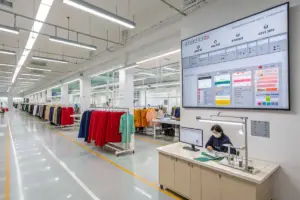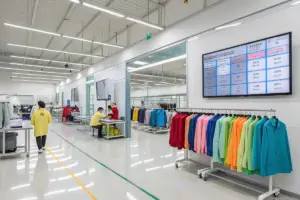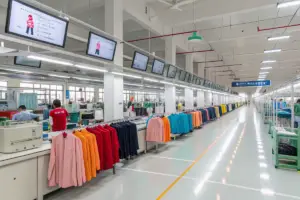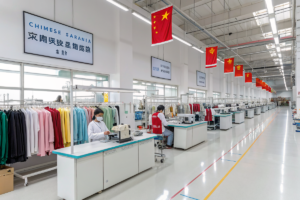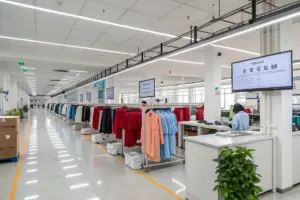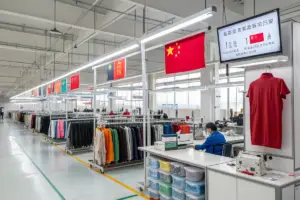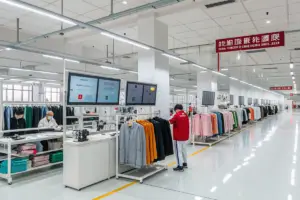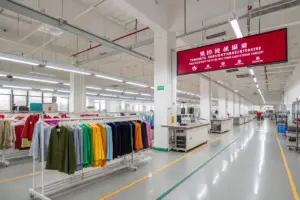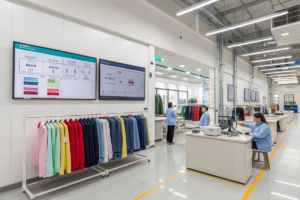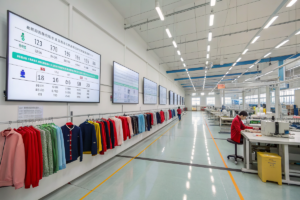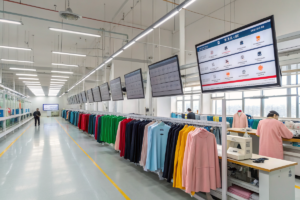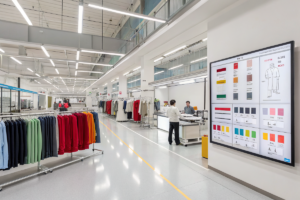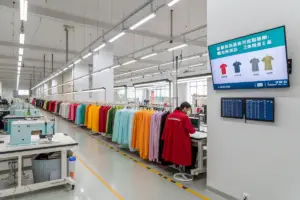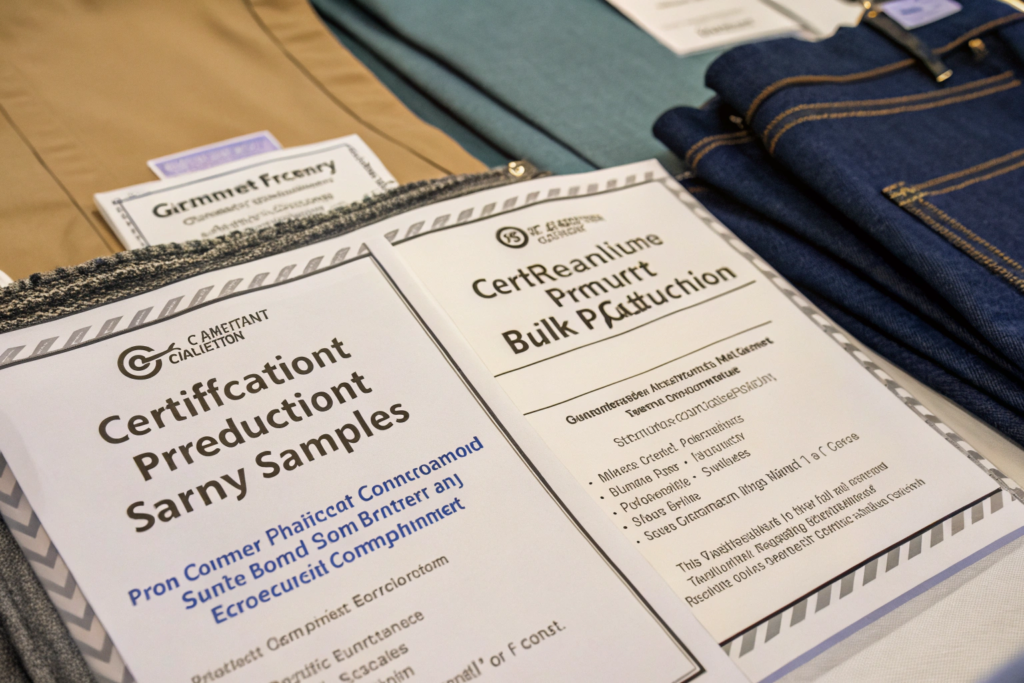
I was reviewing a pre-production sample for a brand partner last September. The sample was a lightweight quilted summer jacket in a soft sage green. The stitching was clean. The fill was evenly distributed. The measurements matched the spec sheet within tolerance. The sample was approved. Bulk production began. Three weeks later, the brand owner emailed me a photograph. She had received her order and was comparing a production coat to the approved sample she kept in her office. The production coat was visibly different. The quilting lines were 7 millimeters apart instead of the 6 millimeters on the sample. The shell fabric had a slightly stiffer hand feel. The zipper pull was a different shape. None of these differences were defects in the traditional sense. The coat was well-made. It just was not the same coat as the sample. The brand owner asked me a question I have heard many times in my career: "Why is the bulk different from the sample? I thought you were certified."
Garment factory certifications and bulk production samples can differ from pre-production samples because certifications audit a factory’s management systems, social compliance, and process capability, not the material consistency between a single handcrafted sample and a mass-produced order. The differences arise from four root causes: raw material batch variation between the sample yardage and the bulk fabric, production scaling effects where techniques used by a single sample sewer are not identically replicated by a line of production sewers, trim and component substitutions made by suppliers between the sample phase and the bulk order, and sample craftsmanship bias where the sample is inherently made with more time, care, and attention than is economically feasible for every unit in a bulk production run.
A certification is a valuable indicator of a factory’s overall competence. It is not a guarantee that every production unit will be identical to the approved sample. Understanding the difference between certification and sample consistency is critical for brand owners who want to manage their quality expectations and build effective quality control processes. At Shanghai Fumao, I have spent years closing the gap between samples and bulk production. Let me explain exactly why the gap exists, what certifications actually measure, and how we minimize the variation that disappoints brand owners.
What Factory Certifications Actually Measure Versus What Samples Represent
Factory certifications and pre-production samples serve fundamentally different purposes and are evaluated against fundamentally different criteria. A certification is an audit of the factory’s management systems. A sample is a physical demonstration of the factory’s craftsmanship capability. Confusing the two leads to unrealistic expectations and preventable disappointment. A BSCI social compliance audit evaluates whether the factory pays legal wages, provides safe working conditions, and does not use forced or child labor. It does not evaluate whether the factory can consistently match a stitch density specification across a 500-unit production run. An Oeko-Tex Standard 100 certification evaluates whether the fabric and trims are free from harmful substances. It does not evaluate whether the bulk fabric matches the sample fabric in color, weight, or hand feel. An ISO 9001 quality management system certification evaluates whether the factory has documented processes for quality control, corrective action, and continuous improvement. It does not evaluate whether those processes are applied with sufficient rigor to catch a 1-millimeter quilting line deviation.
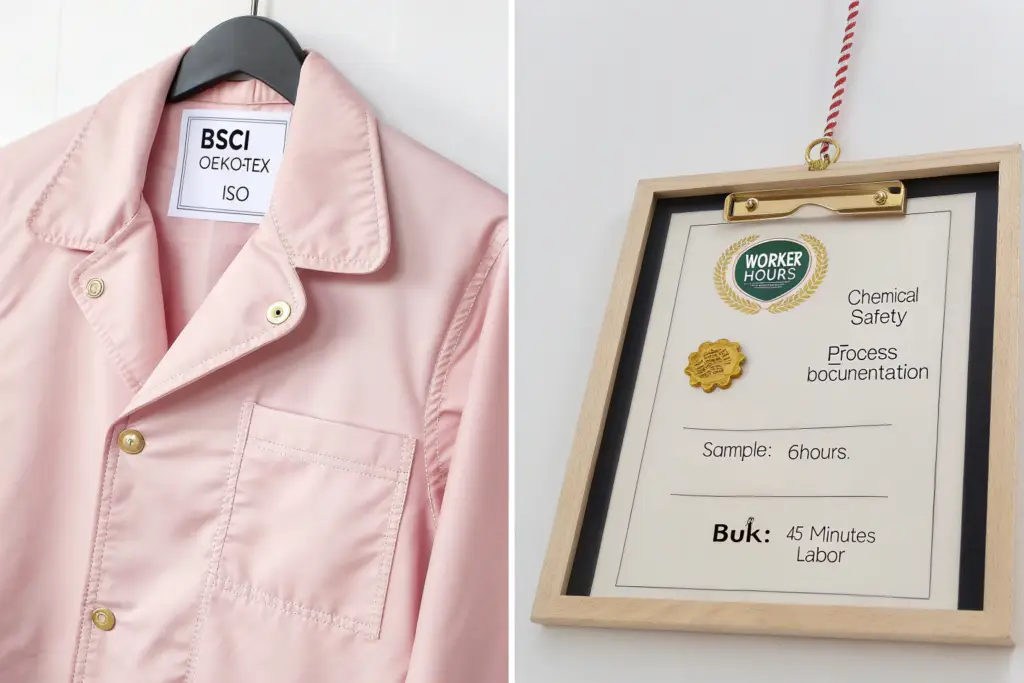
The three most common apparel factory certifications and what they actually verify are: BSCI or SMETA, which are social compliance audits that verify ethical labor practices, worker safety, and environmental compliance, Oeko-Tex Standard 100, which is a product safety certification that verifies fabric and trim components are free from a list of over 100 harmful substances, and ISO 9001, which is a quality management system certification that verifies the factory has documented procedures for quality planning, inspection, and defect correction. None of these certifications verify that the bulk production coat will be identical to the approved pre-production sample.
The pre-production sample is a different category of evidence entirely. It is a physical object made under specific conditions: a single skilled sample sewer, often the most experienced craftsperson in the factory, working without time pressure, using the exact materials specified for the order. The sample demonstrates what the factory is capable of producing under optimal conditions. It does not demonstrate what the factory will produce under production conditions with 25 sewers of varying skill levels working against a daily output target. The gap between capability and consistency is the gap between the sample and the bulk. Certifications provide useful information about the factory’s operating environment. They do not address the capability-consistency gap. Only a factory’s internal production management system, its quality control process, and its commitment to sample-to-bulk matching address that gap.
Does an ISO 9001 Certification Guarantee Bulk Matches the Sample?
No. ISO 9001 certifies that the factory has a documented quality management system. It requires the factory to have a procedure for controlling production processes, a procedure for inspecting products, and a procedure for correcting defects when they are found. It does not specify the acceptable tolerance for a quilting line measurement. It does not require the factory to use the same sewing operators for bulk production as for sample production. It does not mandate that bulk fabric be tested against the sample fabric for hand feel consistency. A factory with ISO 9001 certification may have a thoroughly documented procedure that allows a 3-millimeter quilting line tolerance, and that procedure may be consistently followed, and the certification auditor may be satisfied. The brand owner whose approved sample had 6-millimeter quilting and whose bulk order has 9-millimeter quilting, within the factory’s documented tolerance, has no recourse through the ISO 9001 certification. The certification was valid. The tolerance was not aligned with the brand’s expectation. The value of ISO 9001 is that it creates a framework for discussing and agreeing on specifications and tolerances. A certified factory should be able to produce its inspection checklists, its tolerance standards, and its corrective action records. The brand owner can review these documents, compare the factory’s internal tolerances to their own expectations, and negotiate tighter tolerances if needed. The certification makes the quality system visible. It does not make the quality system match the brand’s unstated expectations.
What Does a BSCI Audit Tell You About Product Consistency?
A BSCI audit tells you almost nothing about product consistency. It tells you about the factory’s treatment of its workers. The audit evaluates compensation, working hours, health and safety, freedom of association, and prohibition of child labor and forced labor. These are critically important indicators of the factory’s ethical standards. They have no direct relationship to the factory’s ability to match bulk production to an approved sample. A factory can score an "A" on a BSCI audit and still produce bulk coats that differ from samples because of fabric batch variation. A factory can score a "C" on a BSCI audit, indicating areas requiring improvement, and still produce bulk coats that perfectly match their samples. The two dimensions of performance are independent. I have seen brand owners reject factories because of a BSCI audit score, which is a valid ethical decision, and I have seen brand owners accept factories because of a high BSCI score and then express surprise when bulk production differed from samples. The BSCI score was never a predictor of sample-to-bulk consistency. It was a predictor of worker welfare. Use certifications for their intended purpose. BSCI for ethical assurance. Oeko-Tex for chemical safety. ISO 9001 for quality system documentation. Do not use any of them as a substitute for a physical bulk production inspection against the approved sample.
Root Cause One: Raw Material Batch Variation
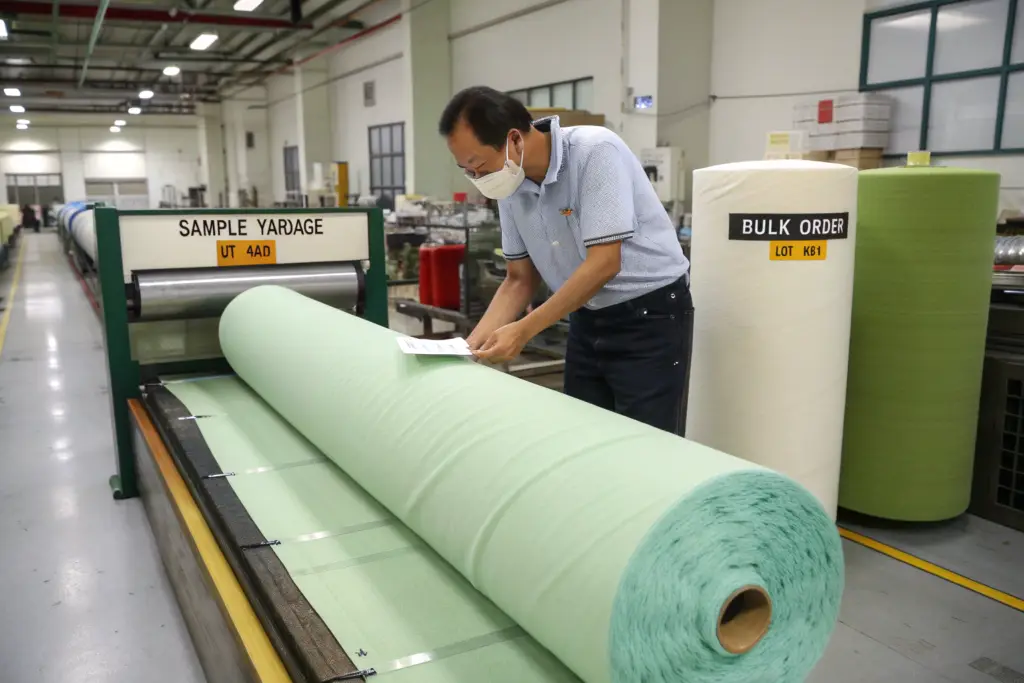
The single most common cause of bulk production differing from samples is raw material batch variation. The sample was made from one batch of fabric. The bulk order was made from a different batch of the same fabric specification. The two batches are nominally identical. They were woven on the same loom type, dyed with the same dye formula, and finished with the same finishing process. They are not actually identical because textile manufacturing is a chemical and mechanical process with inherent variability. The dye concentration in the dye bath varies slightly from batch to batch. The finishing machine temperature varies slightly. The yarn tension during weaving varies slightly. Each small variation is within the mill’s acceptable tolerance. The cumulative effect of these small variations can produce a visible difference between the sample fabric and the bulk fabric.
Batch variation affects four fabric characteristics that directly impact the appearance and performance of a summer coat. Color: dye lot variation is the most visible batch effect. Two rolls of the same "sage green" fabric from different dye lots can differ by a Delta E of 1.5 to 3.0, which is visible to the trained eye and may be visible to the consumer. Hand feel: the softness, crispness, or drape of the fabric can vary between finishing batches due to slight differences in softener concentration or mechanical brushing intensity. Weight: the fabric weight in grams per square meter can vary by 5% to 8% between batches, which affects the drape and the thermal comfort of the coat. Shrinkage: the residual shrinkage after finishing can vary between batches, meaning two coats made from different fabric batches may shrink differently after the first consumer wash.
We manage batch variation at Shanghai Fumao through three controls. First, we order the bulk fabric from the same mill using the same specification as the sample fabric. We do not change mills between sample and bulk without explicit brand approval. Second, we require the mill to provide a sample cutting from the bulk dye lot before the bulk fabric is shipped. We compare this cutting to the approved sample fabric under standardized lighting and measure the color difference with a spectrophotometer. If the Delta E exceeds 2.0, the bulk dye lot is rejected before it leaves the mill. Third, we cut a new pre-production sample from the actual bulk fabric before cutting the entire order. This "bulk fabric sample" is the true reference standard. The original sample was made from sample yardage. The bulk fabric sample is made from the fabric that will actually be used in production. The brand owner approves the bulk fabric sample as the new gold standard. Any differences between the original sample and the bulk fabric sample are identified and either accepted or rejected before bulk cutting begins.
How Can a Brand Owner Verify Bulk Fabric Matches the Sample Fabric?
The most reliable verification method is a physical swatch comparison. The brand owner should request that the factory send a cutting from the bulk fabric lot before production begins. The brand owner places the bulk fabric swatch next to the approved sample and evaluates the match under multiple light sources: natural daylight, indoor incandescent light, and retail store fluorescent light. A fabric that matches under daylight but not under store light, a condition called metamerism, will look different when the consumer sees it in the store. The brand owner should also feel the fabric. Does the bulk fabric have the same drape, the same softness, the same body as the sample fabric? A visual match without a tactile match is not a true match. If the brand owner cannot physically receive the swatch in time, the factory can provide a measured color reading. A spectrophotometer measurement of the bulk fabric and the sample fabric, reported as CIELAB values and Delta E, provides an objective color comparison. A Delta E below 2.0 is generally acceptable for apparel. A Delta E between 2.0 and 3.0 is borderline and should be evaluated with a physical swatch. A Delta E above 3.0 is a visible mismatch and should be rejected.
What If the Mill Cannot Reproduce the Sample Color Exactly?
Mill color reproduction has physical limits. A color that was achieved on a lab dip machine, which dyes a few grams of fabric under precise laboratory conditions, may not be exactly reproducible on a production dye machine, which dyes 500 kilograms of fabric in a single batch. The scale-up from lab to production introduces color shift. When a mill informs us that the bulk dye lot does not perfectly match the approved lab dip or the sample fabric, we present the brand owner with options. Option one is to accept the bulk dye lot as-is, with the understanding that the production coats will have a slightly different color than the original sample. This is acceptable if the color difference is small and the brand’s marketing materials and website photos can be adjusted to reflect the actual production color. Option two is to reject the bulk dye lot and request a re-dye. The re-dye process adds 7 to 10 days to the fabric lead time and may or may not achieve a closer match. Each dye cycle is an independent chemical event with its own variation. Option three is to change the fabric specification to a stock color that the mill can reproduce consistently. This option sacrifices the custom color but guarantees batch-to-batch consistency. The brand owner makes the decision based on the magnitude of the color difference and the importance of exact color matching to the brand identity.
Root Cause Two: Production Scaling Effects
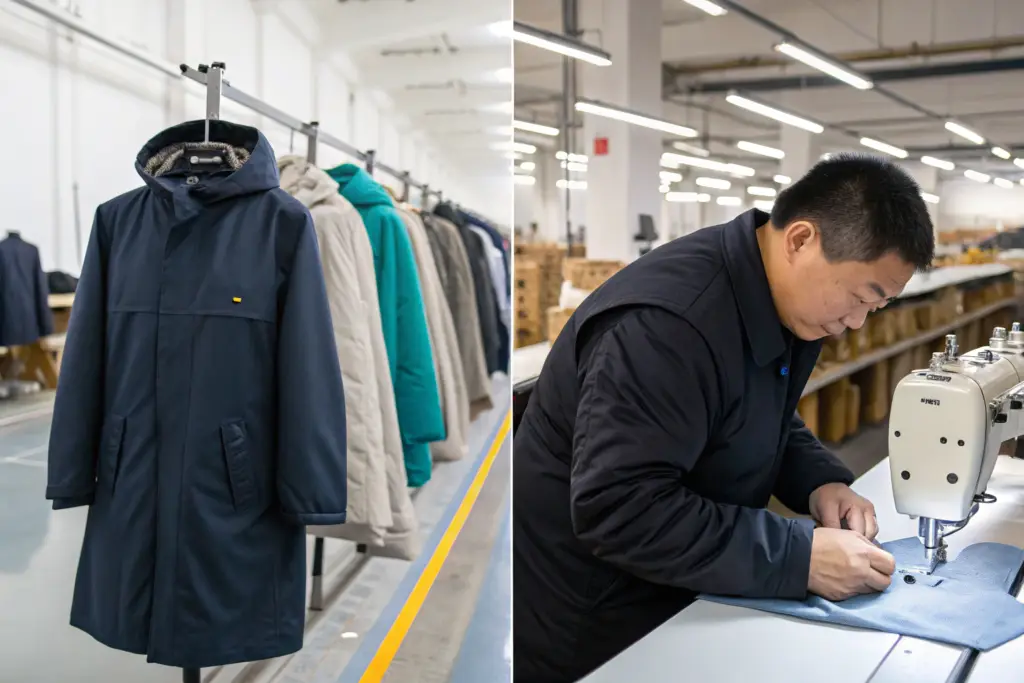
The sample was made by one person. The bulk order was made by twenty people. This is the production scaling effect, and it is the second most common cause of sample-to-bulk differences. The sample sewer, usually the factory’s most experienced craftsperson with ten to twenty years of experience, sewed every seam of the sample at a careful, unhurried pace. She made small, invisible adjustments to ensure the collar rolled perfectly and the hem hung evenly. She spent four hours on a coat that must be produced in 45 minutes on the production line. The production line sewers, who range in experience from two years to fifteen years, each sew a small portion of the coat repeatedly. They sew at a pace required to meet the daily production target. They do not have time to make the micro-adjustments the sample sewer made. Their stitches are correct, but they lack the individual artistry of the sample.
The three specific production scaling effects that cause bulk-to-sample differences are: operation fragmentation, where a single garment is assembled by 15 to 20 different operators rather than one craftsperson, and the handoff between operators introduces slight alignment variations at each seam intersection, speed pressure, where the production line must maintain a throughput of 100 to 200 units per day, and the pace precludes the time-intensive techniques the sample sewer used for particularly challenging operations like setting a collar or attaching a curved hem facing, and skill averaging, where the production line’s output reflects the average skill level of the team, not the peak skill level of the sample sewer, and the weaker operators on the line produce units that are within tolerance but noticeably different from the sample standard.
We minimize production scaling effects through three practices. First, the sample sewer creates a detailed construction guide for each style. The guide documents the exact sewing sequence, the stitch type and density for each seam, the specific presser feet and machine settings, and the critical quality checkpoints. The guide is not a generic factory document. It is a style-specific instruction manual created by the person who figured out how to make the coat beautifully. Second, the sample sewer trains the production line supervisor on the critical operations. The sample sewer demonstrates the collar attachment technique, the hem finishing method, and any other operation where the difference between good and excellent is subtle. The line supervisor then trains the production operators and monitors their work during the first hours of production. Third, we conduct a first-piece inspection where the first complete coat off the production line is compared to the approved sample by the quality control team and, ideally, by the sample sewer herself. The first piece is measured, inspected, and compared. If it does not match the sample standard, the line is adjusted and another first piece is produced. Only when the first piece matches the sample does bulk production proceed.
Can the Sample Sewer Work on the Production Line?
Rarely. The sample sewer’s skills are needed in the sample room for the next development project. Removing the sample sewer from the sample room to work on a production line delays all other sampling projects. However, for particularly complex styles where the sample construction involved techniques that are difficult to standardize, we can assign the sample sewer to work on the production line for the first day of production. Her role is not to produce units herself. It is to coach the production operators, demonstrate techniques in real-time, and solve construction problems as they arise. This is a premium service that we offer for high-complexity, high-value orders where the brand’s quality expectations require an exceptional level of sample-to-bulk consistency. The cost of removing the sample sewer from development work is absorbed by the factory as an investment in the brand relationship and the order quality.
Root Cause Three: Trim and Component Substitutions
The approved sample used specific trims. The bulk coat used different trims. This is trim substitution, and it is a common and frustrating cause of sample-to-bulk differences. The zipper pull on the sample was a custom shape sourced from a specific supplier. Between the sample phase and the bulk order, that supplier discontinued the style, or raised the minimum order quantity beyond what the order required, or delivered substandard quality that was rejected. The factory, under pressure to meet the production schedule, sourced an alternative zipper pull that was "close enough." The factory did not inform the brand owner because the factory considered the substitution minor and did not want to cause a delay. The brand owner noticed immediately.
The three reasons trim substitutions occur between sample and bulk are: supplier discontinuation, where the original trim supplier stops producing the specified item or changes the specification without notice, minimum order quantity barriers, where the sample trims were purchased at small quantities for sampling, but the bulk order requires more units than the supplier can provide or requires a larger minimum order than the factory can meet within the order timeline, and cost or lead time pressure, where the factory identifies a cheaper or faster alternative and substitutes it to improve margin or meet a tight deadline, without seeking brand approval.
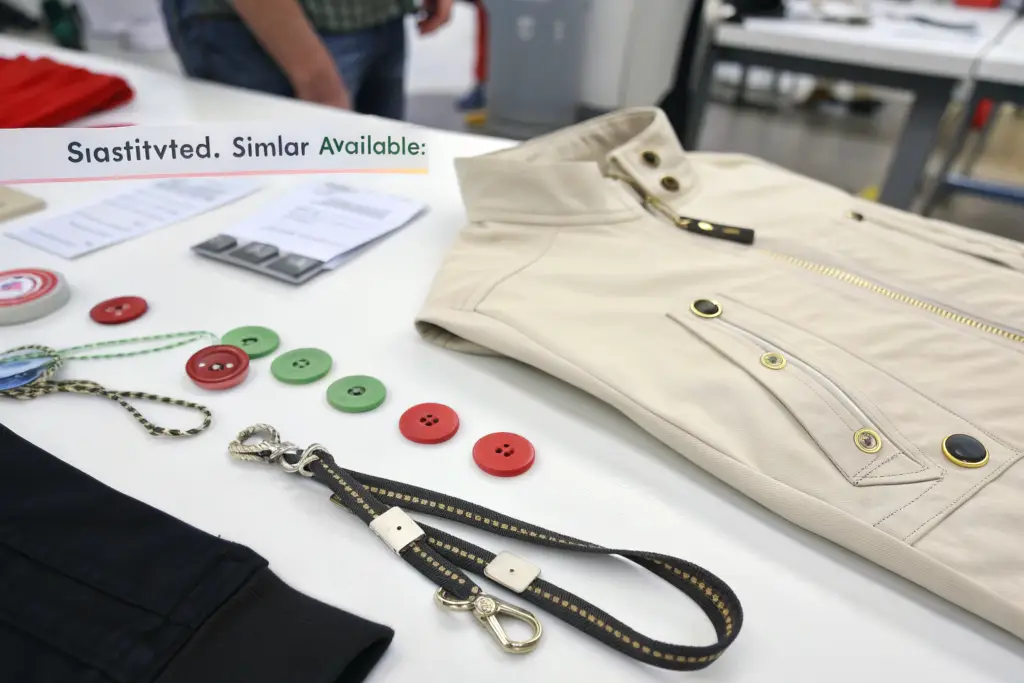
We prevent unauthorized trim substitutions through a strict trim approval and lock-in process. Every trim component specified for an order is documented in the bill of materials with the supplier name, supplier product code, material composition, color specification, and a physical reference sample. Before bulk production begins, the trim components are ordered in the full bulk quantity. Upon arrival, the bulk trims are compared to the approved sample trims by our quality control team. If a bulk trim differs from the approved sample trim, even in a small detail like the shape of a zipper pull or the thickness of a drawcord, the discrepancy is flagged. The brand owner is notified and provided with a photograph of the original trim and the substituted trim, an explanation of why the substitution was necessary, and the factory’s recommendation. The brand owner approves or rejects the substitution before the trim is used in production. This process adds a small administrative overhead. It prevents the large frustration of discovering an unauthorized substitution on finished coats that cannot be economically reworked.
What Trims Are Most Frequently Substituted Without Approval?
The most frequently substituted trims are the components that brands notice immediately and that factories consider minor. Zipper pulls are the number one substitution. The zipper tape and teeth may be identical to the sample, but the pull shape, finish, or branding differs because the factory used a different pull from the same zipper supplier. Buttons are the number two substitution. A sample button with a specific thickness, dish depth, and surface texture is replaced with a bulk button that is "close" in color and size but different in hand feel. Drawcords and cord locks are the number three substitution. The sample used a flat cotton drawcord with a matte metal cord lock. The bulk coat has a round polyester drawcord with a shiny plastic cord lock. Hangtags and labels are the number four substitution. The sample had a specific paper stock and printing finish. The bulk hangtag is on a different paper stock because the label printer changed their material availability. These substitutions are individually small. Their cumulative effect is a coat that feels like a downgrade from the sample, even though the shell fabric and the construction are identical. A brand owner who approves trims at the sample stage and then does not verify trims at the bulk stage is accepting a significant risk of unexpected substitution.
How We Close the Sample-to-Bulk Gap at Shanghai Fumao
At Shanghai Fumao, I have built a four-gate system specifically designed to close the gap between the pre-production sample and the bulk production order. This system is not a certification. It is an operational protocol applied to every order. It addresses each of the root causes of sample-to-bulk difference: material variation, production scaling, and trim substitution. The system does not guarantee that every bulk coat will be identical to the sample. No system can make that guarantee in mass production. The system does guarantee that any difference between the sample and the bulk will be identified, communicated, and approved before it becomes a surprise in the brand owner’s warehouse.
Our four-gate sample-to-bulk matching protocol consists of: Gate One, the bulk fabric sample approval where we cut and sew a new sample from the actual bulk production fabric, which the brand owner approves as the new reference standard before bulk cutting begins. Gate Two, the construction standardization guide created by the sample sewer, which documents every operation with photographs and specifications. Gate Three, the trim verification checkpoint where all bulk trims are physically compared to the approved sample trims, and any discrepancies are submitted for brand approval before use. Gate Four, the first-piece bulk inspection where the first complete production coat is compared to the approved bulk fabric sample, and production is halted if the first piece does not match within specified tolerances. These four gates are documented with photographs and checklists provided to the brand owner in the pre-shipment quality package.
The bulk fabric sample is the most important of the four gates. It is the bridge between the development phase and the production phase. The original sample said "this is what we can make." The bulk fabric sample says "this is what we will make, using the actual materials that have arrived for your order." The bulk fabric sample resets the expectation to reality. If the bulk fabric has a slightly different texture than the sample fabric, the bulk fabric sample reveals this. The brand owner can adjust their expectations, adjust their marketing photography, or request a fabric re-source. The decision is made before 500 coats are cut and sewn. The cost of discovering the fabric difference on a single sample is negligible. The cost of discovering it on 500 finished coats is catastrophic.
How Do You Handle a Brand Owner Who Rejects the Bulk Fabric Sample?
A rejection of the bulk fabric sample is a difficult but manageable situation. The rejection means the fabric that arrived for bulk production does not meet the brand’s quality standard or does not match the original sample closely enough. Our first response is to quantify the difference. We measure the color with the spectrophotometer. We measure the weight with a precision scale. We test the hand feel with a panel of three experienced fabric technicians who provide a subjective comparison to the original sample. The quantified difference is presented to the brand owner with a clear statement of the gap. The second response is to present resolution options. Option one: accept the bulk fabric with a price adjustment. If the fabric is objectively lower quality, for example a lower thread count resulting in a rougher hand feel, we negotiate a reduced unit price that reflects the quality difference. Option two: re-source the fabric from a different mill or a different dye lot. This adds 15 to 25 days to the lead time, and the brand owner must decide whether the quality difference justifies the delay. Option three: proceed with the bulk fabric and adjust the retail price or the marketing positioning to reflect the different fabric quality. Option four: cancel the order, with the financial implications determined by the cancellation clause in the manufacturing agreement and by which party is responsible for the fabric shortfall. The resolution is a negotiation based on the objective quality data, not on subjective disappointment.
Conclusion
Garment factory certifications and pre-production samples differ from bulk production because they measure different things under different conditions. Certifications audit management systems, ethical practices, and chemical safety. They do not measure sample-to-bulk consistency. Samples demonstrate what one skilled craftsperson can produce with carefully sourced materials and unlimited time. They do not represent what a production line of twenty sewers will produce under time pressure with materials from a different batch. The gap between certification, sample, and bulk is not a sign of factory dishonesty. It is an inherent feature of mass production that must be actively managed, not passively assumed away.
The management of the gap requires a specific set of practices. Verify the bulk fabric before cutting. Create a construction standardization guide that translates the sample sewer’s techniques into production line instructions. Verify all bulk trims against the sample trims before use. Inspect the first piece off the production line against the bulk fabric sample. These practices are not complicated. They are procedural. They require discipline, documentation, and a factory culture that prioritizes transparency over convenience.
At Shanghai Fumao, our four-gate sample-to-bulk matching protocol is applied to every order. We do not rely on our certifications to assure brand partners of product consistency. We rely on our process. We provide the bulk fabric sample for approval. We provide the construction guide. We provide the trim verification photographs. We provide the first-piece inspection report. We close the gap through documented action, not through promises.
If you have experienced sample-to-bulk discrepancies with previous suppliers and want to understand how our matching protocol would apply to your next summer coat order, contact our Business Director, Elaine. She can provide a sample of our bulk fabric approval documentation, our construction guide format, and our first-piece inspection checklist. She can also arrange a video call to walk you through our sample room and production line so you can see the process in action. Email Elaine at: elaine@fumaoclothing.com.