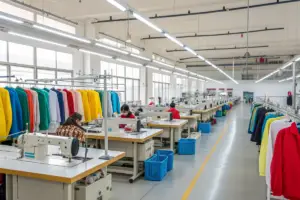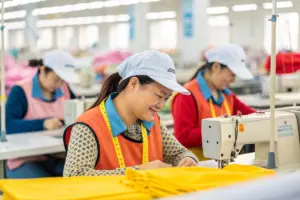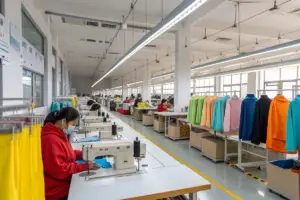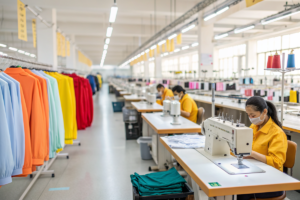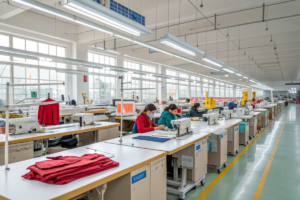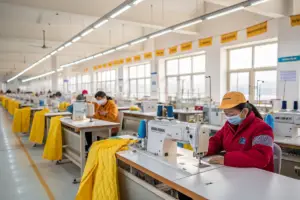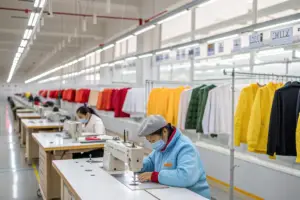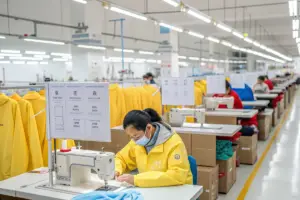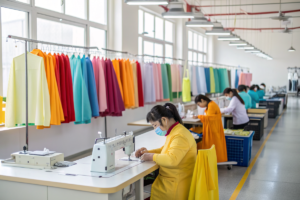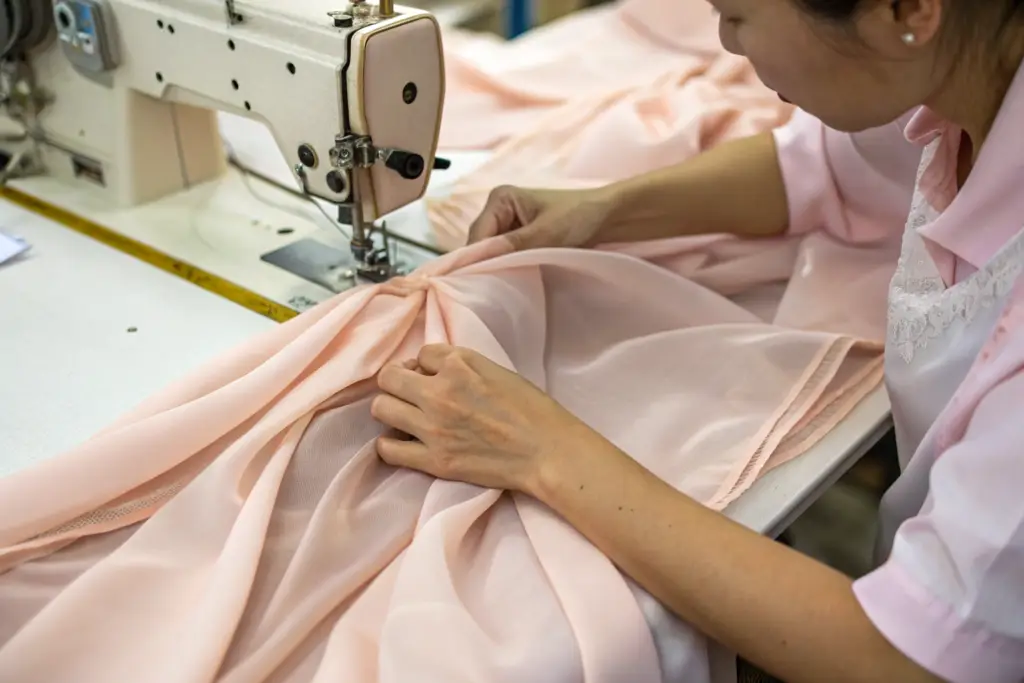
I was standing next to a sewing operator on our delicate fabrics line last June. She was working on a chiffon kimono, a garment so light it weighed less than 200 grams. The fabric was a beautiful, semi-transparent blush pink with a soft drape. She was sewing a French seam along the sleeve. I watched her hands. She did not push the fabric. She did not pull it. She guided it with her fingertips, barely touching the surface, like she was handling a spiderweb. The seam finished perfectly flat, perfectly enclosed, no puckering, no fraying, no needle holes visible under the seam line. I have seen this operation performed on a standard sewing machine by an untrained operator. The fabric bunches at the needle. The thread tension pulls the seam into a wrinkled mess. The needle punches visible holes that cannot be repaired. The garment is ruined before it leaves the machine. The difference between that disaster and the perfect seam I watched last June is not one thing. It is a system of twelve interconnected variables that we have spent fifteen years calibrating for thin summer fabrics.
Shanghai Fumao guarantees stitching quality on thin summer fabrics through a proprietary production system that controls five critical variables: needle selection with size 65 or 70 sharp-point needles for woven fabrics and size 70 ballpoint for knits, thread selection using high-tenacity 60-weight polyester thread for ultra-light fabrics or 40-weight for standard weights, machine calibration with reduced presser foot pressure, reduced thread tension, and a straight-stitch needle plate to prevent fabric flagging, operator specialization where only experienced seamstresses who have completed our 40-hour lightweight fabric certification program are assigned to thin fabric lines, and a quality control protocol that inspects seam integrity at three stages using magnified visual inspection and seam strength testing.
Thin summer fabrics like chiffon, georgette, voile, lightweight linen, Tencel twill, and recycled nylon ripstop are beautiful but unforgiving. They reveal every stitch irregularity. They amplify every tension error. They fray at the cut edge within minutes of handling. They shift under the presser foot. They pucker at the slightest imbalance between the top and bottom thread. Many factories refuse to work with these fabrics at scale. They accept orders for heavyweight denim and canvas and decline anything under 200 GSM. We built a dedicated production line to master the opposite end of the spectrum. Let me explain exactly how we control each variable and why our system produces stitching quality that other factories cannot match on thin materials.
The Needle and Thread Matrix for Lightweight Fabrics
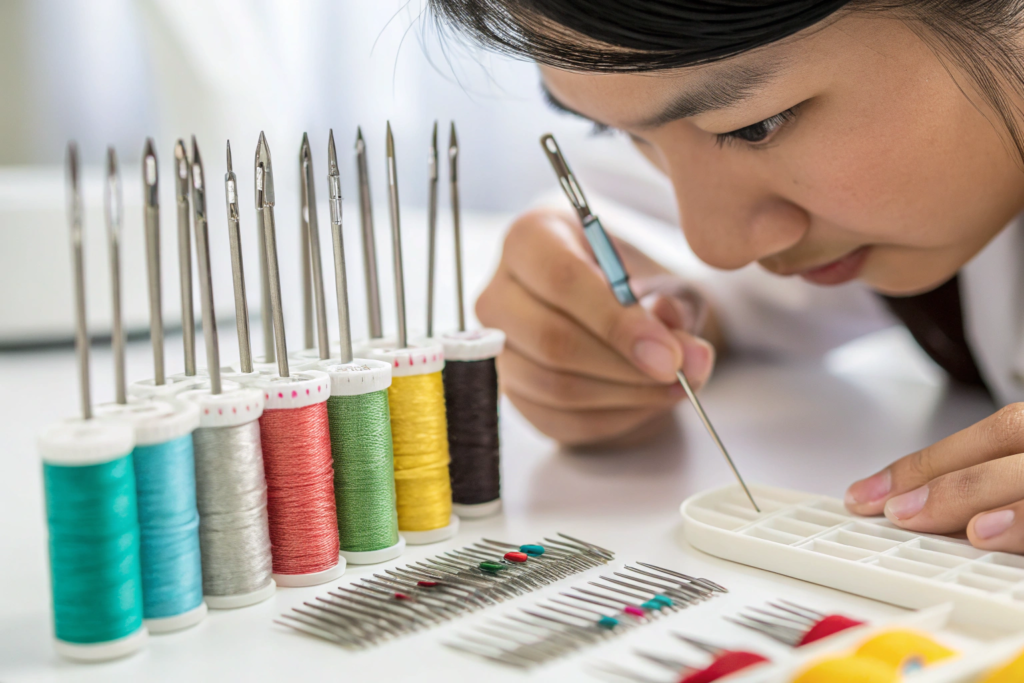
The needle is the first point of contact between the machine and the fabric. If the needle is wrong, nothing else matters. A needle that is too thick for the fabric will punch a permanent hole in the weave. The hole does not close after the stitch is formed because the fabric fibers are too fine to rebound around a large puncture. The result is a visible perforation line along the seam, a garment that looks pre-damaged before the customer wears it. A needle that is too blunt will push the fabric yarns aside instead of penetrating between them. The yarns snag. The fabric develops a pulled-thread defect that looks like a small run in the weave. A ballpoint needle designed for knits will grab woven fibers and create the same snagging defect. The needle choice must be specific to the fabric type, fabric weight, and yarn structure.
Our needle selection protocol for thin summer fabrics follows a strict matrix. For woven fabrics between 80 and 150 GSM, including chiffon, georgette, voile, and lightweight linen, we use a size 65/9 sharp-point needle with a slim blade and an acute point angle. For woven fabrics between 150 and 200 GSM, including lightweight cotton twill, Tencel blends, and fine corduroy, we use a size 70/10 sharp-point needle. For knit fabrics including jersey and double-knit blazer fabrics, we use a size 70/10 ballpoint needle with a rounded tip that separates yarns without cutting them. Needles are replaced every 4 hours of continuous sewing or immediately if a needle strike occurs, whichever comes first.
Thread selection is equally precise. Standard sewing thread is 40-weight polyester or polyester-wrapped poly-core. This thread works well for medium to heavy fabrics. On thin fabrics, 40-weight thread is too thick. It adds bulk to the seam. It creates a heavy, stiff stitch line that overwhelms the delicate fabric. For fabrics under 120 GSM, we switch to 60-weight high-tenacity polyester thread. The 60-weight thread is significantly thinner than 40-weight. It produces a finer, softer seam that blends into the fabric rather than sitting on top of it. The trade-off is tensile strength. A 60-weight thread has lower breaking strength than a 40-weight thread of the same fiber. We compensate by using a high-tenacity polyester filament with a breaking strength of 900 grams or higher, which is sufficient for lightweight garment seams that will not experience heavy stress. We never use cotton thread on thin summer fabrics. Cotton thread has a lower breaking strength and a rougher surface texture that increases friction through the needle eye and can cause thread breaks during high-speed sewing. Polyester thread is smoother, stronger, and more consistent.
How Does Needle Size Affect Stitch Appearance on Chiffon and Georgette?
The visual impact of needle size on chiffon is immediate and dramatic. A size 75 needle, which is a standard general-purpose size, creates a stitch hole that is visible to the naked eye at arm's length. The hole appears as a tiny white dot along the seam line because the needle has displaced the translucent fibers and created a void that catches light differently. On a solid-colored chiffon, this creates a dotted-line effect that cheapens the garment. A size 65 needle reduces the hole diameter by approximately 30%. The hole is still present under magnification, but it is invisible at normal viewing distance. The stitch appears to float on the fabric surface rather than being anchored through visible punctures. This visual improvement is the difference between a garment that looks like it came from a high-end boutique and one that looks like it came from a discount retailer. We conducted a side-by-side test for a brand partner who was skeptical about the needle size difference. We sewed two identical chiffon kimono samples, one with a size 75 needle and one with a size 65 needle. We photographed both under studio lighting at a distance of 50 centimeters. The size 75 sample showed visible needle holes along every seam. The size 65 sample showed none. The brand partner approved the size 65 sample without further discussion.
What Thread Tension Settings Prevent Puckering on Lightweight Linen?
Linen is a paradox. It is a natural, breathable summer fiber that feels cool against the skin, but it is also stiff and inelastic. It does not stretch. It does not recover. It holds whatever shape the needle and thread impose on it. If the thread tension is too high, the stitch pulls the fabric into a permanent wave. If the tension is too low, the stitch loops loosely on the underside and snags during wear. The correct tension is a narrow window discovered through testing on the actual production fabric. Our standard starting point for lightweight linen at 150 to 180 GSM is a top thread tension of 90 to 110 grams of force, measured with a tension gauge, and a bobbin tension of 20 to 25 grams. This is lower than the standard tension for medium-weight cotton, which typically runs 120 to 150 grams on the top thread. The lower tension allows the stitch to form without compressing the linen fibers. We then run a 30-centimeter test seam on a fabric scrap, inspect it under magnification for balanced thread interlock, and measure the seam length before and after sewing to detect any shortening caused by thread pull. A seam that shortens by more than 2% indicates excessive tension and requires further adjustment. This test is repeated at the start of every shift and after every thread change.
Machine Setup and Production Environment Control
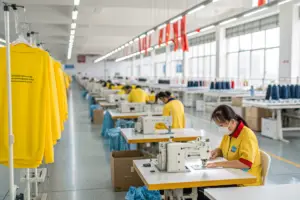
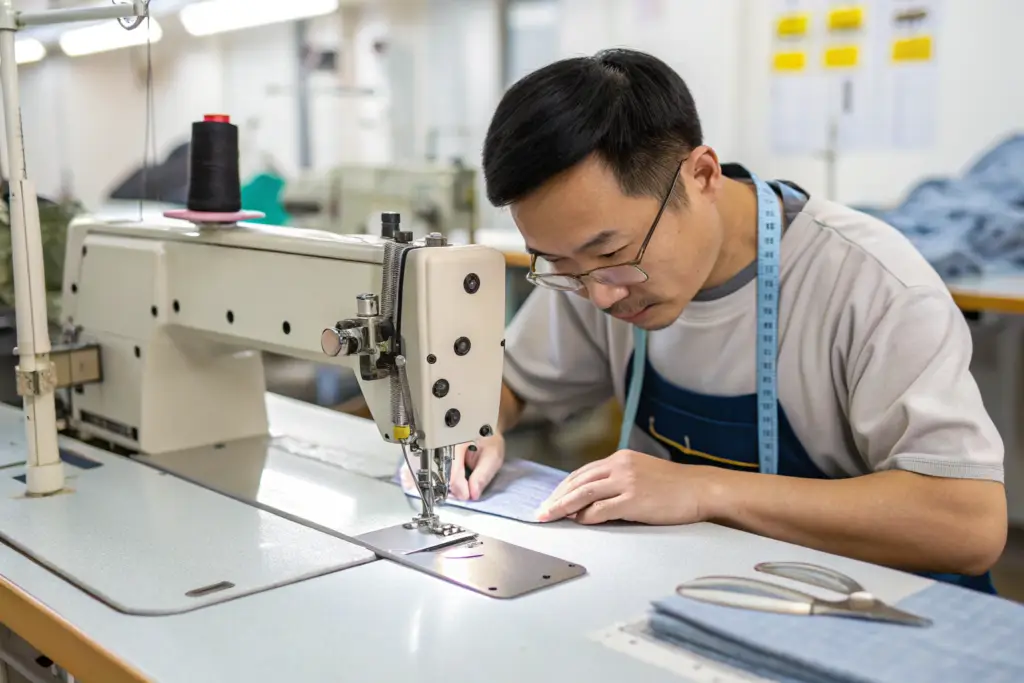
The sewing machine is not a universal tool. It is a configurable platform that must be set up differently for different fabric types. The machine that sews denim all day cannot sew chiffon without significant modifications. The modifications are not complex, but they require a trained mechanic, the correct replacement parts, and a disciplined setup procedure. Many factories skip the modifications because they take time and the mechanic is busy. They sew thin fabrics on machines set up for heavy fabrics and accept the resulting quality defects as normal. We do not accept this. Every machine on our lightweight fabrics line is configured specifically for the fabric category it will sew. The configuration is documented, checked at the start of every shift, and rechecked if a quality issue is detected during in-line inspection.
Our machine setup protocol for thin summer fabrics includes five mandatory modifications: installation of a straight-stitch needle plate with a needle hole diameter of 1.6 millimeters or less to prevent the fabric from being pushed down into the hole during needle penetration, a condition called flagging, installation of a lightweight presser foot with a smooth, polished underside to reduce friction and prevent the foot from marking the fabric surface, reduction of presser foot pressure to 2 to 3 kilograms of force, which is approximately half the pressure used for medium-weight fabrics, reduction of sewing speed to 2,500 to 3,000 stitches per minute, which is 30% to 40% slower than maximum speed, and installation of a needle thread guide with a ceramic-coated surface to reduce thread friction and prevent heat buildup that can melt synthetic fibers.
Presser foot pressure is the most frequently overlooked variable. The presser foot holds the fabric flat against the feed dogs while the needle penetrates. Excessive pressure compresses a thin fabric, stretches it slightly, and creates a permanent distortion that becomes visible as puckering when the pressure is released. Insufficient pressure allows the fabric to lift with the needle, causing skipped stitches and uneven stitch length. The correct pressure is just enough to hold the fabric flat without compressing it. We determine this pressure by placing a strip of the production fabric under the presser foot, lowering the foot, and pulling the fabric horizontally with a spring gauge. The fabric should slide with a resistance of 150 to 200 grams. This test is quick, objective, and repeatable. Every machine on the line is tested at the start of every shift.
How Does Sewing Speed Affect Stitch Quality on Delicate Fabrics?
Speed is the enemy of quality on thin fabrics. An industrial sewing machine running at 4,500 stitches per minute is a violent device. The needle accelerates from zero to maximum velocity and back to zero 75 times per second. At that speed, the needle generates friction heat that can melt synthetic fibers at the puncture point. The feed dogs move the fabric in tiny, rapid increments that can stretch or distort a lightweight material. The operator struggles to guide the fabric accurately because the machine is moving faster than human reaction time can correct. Reducing the speed to 2,500 stitches per minute transforms the process. The needle runs cooler. The feed dogs advance the fabric more gently. The operator can guide the seam line with precision. The stitch quality improves measurably. The trade-off is productivity. A slower machine produces fewer units per hour. This is the cost of quality on delicate fabrics, and it must be reflected in the production pricing. We build this slower production rate into our cost estimates for thin fabric garments. A factory that quotes a low price for chiffon production is almost certainly running their machines too fast and producing defective seams that the final inspector has not caught or has chosen to ignore.
What Role Does the Production Environment Play in Stitching Quality?
The production environment affects thin fabric stitching in two ways: humidity and cleanliness. Low humidity causes static electricity buildup on synthetic fibers like polyester chiffon and nylon. The static charge makes the fabric cling to the machine table, to the operator's hands, and to itself. The operator fights the fabric to position it correctly. The fight produces uneven seams and distorted shapes. We maintain relative humidity between 55% and 65% on our lightweight fabrics line using industrial humidifiers. This humidity range dissipates static charge and keeps the fabric supple and manageable. High humidity above 70% can cause natural fibers like linen and cotton to absorb moisture and become slightly heavier and more elastic, which changes how they feed through the machine. Our HVAC system monitors and logs humidity continuously. If humidity moves outside the acceptable range, production is paused until the system corrects it. Cleanliness is the second environmental factor. A stray piece of lint, a thread clipping, or a speck of dust on the machine table can snag a chiffon fabric as the operator slides it into position. The snag creates a pulled thread that cannot be repaired. Our lightweight fabrics line is cleaned every two hours during the shift. The machine tables are wiped down with anti-static cleaning solution. The floor is swept and vacuumed. The operators wear lint-free aprons and hair coverings. These housekeeping practices are tedious and often ignored in high-volume factories that prioritize throughput over quality. They are mandatory on our delicate fabrics line.
Operator Training and the Lightweight Fabric Certification
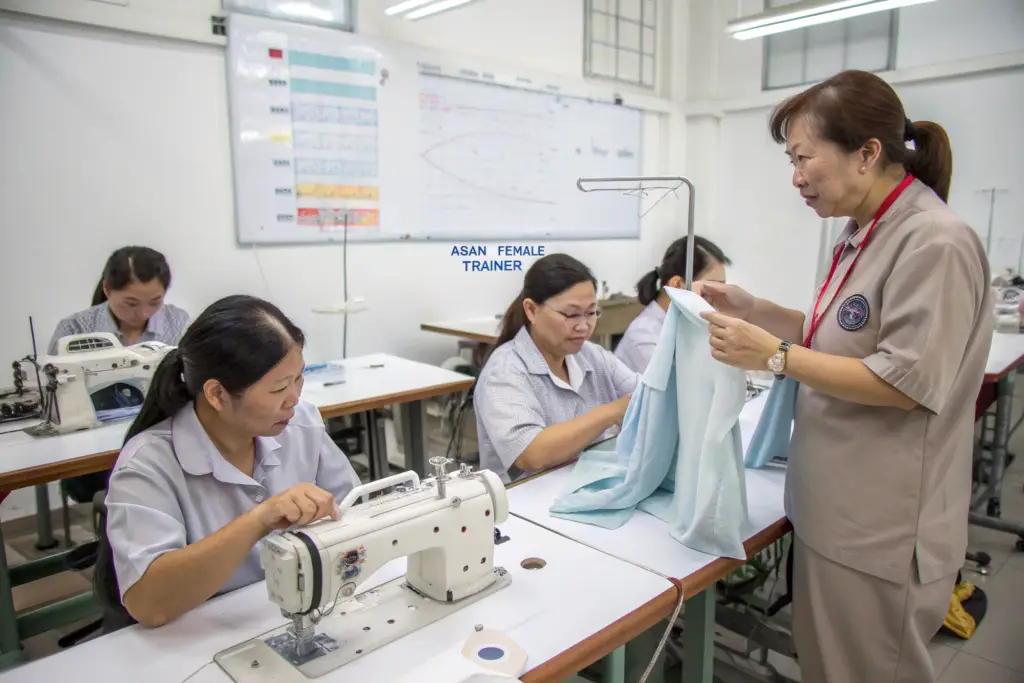
Even the best machine setup cannot compensate for an unskilled operator. Thin fabrics demand a different handling technique than standard fabrics. The operator cannot push, pull, or stretch the material. She must guide it with a light touch, allowing the feed dogs to do the work of advancing the fabric. She must maintain a consistent fabric alignment without gripping the material tightly. She must respond instantly to any sign of puckering, thread breakage, or irregular feeding by stopping the machine and correcting the issue before it compounds. These are not innate skills. They are learned behaviors developed through training and reinforced through practice.
Shanghai Fumao's lightweight fabric certification program is a 40-hour training course required for any operator assigned to our delicate fabrics line. The course covers fabric handling theory, machine setup for specific fabric types, seam construction techniques including French seams, flat-felled seams, and baby hems on thin materials, defect identification and correction, and a final practical examination where the trainee must sew a complete chiffon kimono sleeve with French seams to specification within a time limit. The pass rate for first-time trainees is approximately 65%. Operators who fail are reassigned to standard fabric lines and may retake the course after 90 days.
The 40-hour investment is significant for both the operator and the factory. The operator is not producing sellable garments during training. The factory is paying wages for non-productive time. Many factories view this as an unacceptable cost. They assign new operators to delicate fabrics with no specialized training and accept the resulting quality defects as the cost of doing business. We view the training investment as a competitive advantage. A certified lightweight fabric operator produces a higher-quality garment at a lower defect rate, which reduces rework costs, scrap costs, and return costs. The training pays for itself within the first two production runs of the trained operator. We currently have 28 certified lightweight fabric operators across two shifts. They are the highest-paid operators in the factory because their skills are the most valuable and the hardest to replace.
What Specific Hand Techniques Do Operators Learn for Chiffon and Georgette?
The hand technique for chiffon is fundamentally different from the technique for cotton or denim. The operator is taught to use a "floating hand" position. The palms do not rest on the fabric. The fingertips lightly guide the fabric edge, maintaining alignment with the seam allowance guide on the needle plate. The fabric is never pulled forward or held back. The feed dogs control the advance. The operator's hands are only for directional guidance. The second technique is "seam start stabilization." When beginning a seam on chiffon, the first few stitches tend to push the fabric down into the needle hole because there is no existing seam ahead of the needle to provide resistance. The operator is taught to hold the thread tails gently behind the needle for the first centimeter of stitching, creating a slight tension that prevents the fabric from flagging into the needle hole. This technique eliminates the bunched-up knot of thread that often appears at the start of a chiffon seam. The third technique is "continuous seam feeding" for curved seams like armholes and necklines. On a straight seam, the feed dogs advance the fabric evenly. On a curve, the inner edge of the curve advances more slowly than the outer edge. The operator must gently ease the outer edge forward while slightly restraining the inner edge to maintain a consistent seam allowance around the curve. This is the most difficult skill to master and the most common source of defects in chiffon garment construction.
How Are Operators Evaluated and Re-Certified?
The lightweight fabric certification is not a one-time credential. Skills degrade over time if they are not practiced regularly. An operator who spends three months on standard fabrics and then returns to the delicate line will have lost some of the fine motor control required for chiffon handling. We re-certify operators annually through a practical test identical to the original certification exam. The operator sews a test garment under the observation of the quality manager. The test garment is inspected for seam quality, stitch consistency, and absence of defects. Operators who pass continue on the delicate line. Operators who fail receive a one-day refresher course and a retest. Operators who fail the retest are reassigned to standard fabrics until they can pass the certification again. This system ensures that every operator on the delicate line has demonstrated current competency, not just historical training. It also creates a career progression incentive. Operators aspire to join the delicate line because it carries higher pay and higher status within the factory. The certification becomes a professional achievement that motivates continuous improvement. This human element of the quality system is just as important as the machine settings and the inspection protocols.
In-Process and Final Stitch Inspection Protocols
The final element of our stitching quality guarantee is the inspection protocol. A perfectly set up machine operated by a certified seamstress can still produce a defective seam if a needle dulls mid-shift, a thread spool has an inconsistency, or a momentary distraction causes a handling error. The inspection system catches these random failures before the garment reaches the customer. Inspection for thin fabric stitching is more intensive than standard inspection because the defects are smaller and harder to see. A 2-millimeter seam allowance variation on a denim jacket is invisible. The same variation on a chiffon blouse creates a visible irregularity. The inspection must be correspondingly more precise.
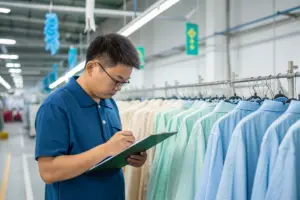
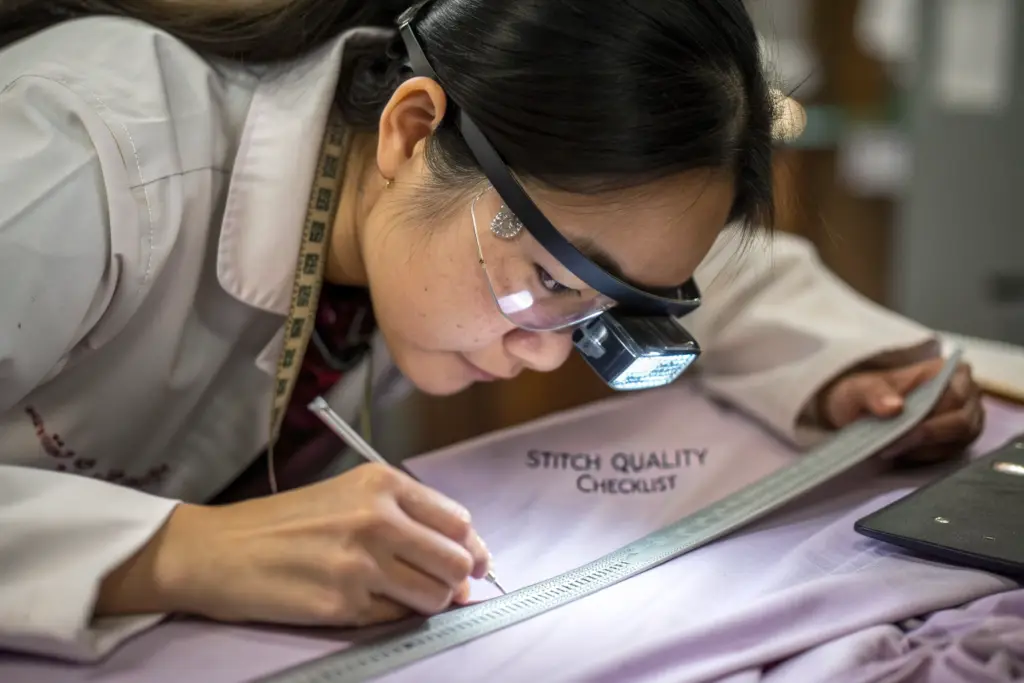
Our stitch quality inspection protocol for thin summer fabrics operates at three stages. In-process inspection at the sewing station, conducted by the operator herself after every seam and by the roving QC inspector who checks random seams at each station every two hours, uses a 10x magnifying loupe to verify stitch formation, thread tension balance, and absence of needle holes, puckering, or skipped stitches. End-of-line inspection, conducted on 100% of garments leaving the delicate line, adds a seam strength test where a 10-centimeter section of the most critical seam, usually the armhole or shoulder, is gently pulled by hand to verify that the seam does not open or slip. Final AQL inspection, conducted on the finished, pressed garment, includes a detailed seam-by-seam visual check under standardized lighting and a measurement of stitch density using a stitch counter to verify that the specification of 12 to 14 stitches per 3 centimeters is met.
Seam strength testing is the most objective measure of stitching quality. A seam that looks perfect but pulls apart under light tension is a defective seam. The hand-pull test we perform at end-of-line is a pass/fail test. The inspector applies approximately 2 kilograms of force to the seam, which is roughly equivalent to the stress the seam would experience if the wearer reached forward quickly. If the seam opens, the garment is rejected and sent for rework. If the seam holds, it passes. For critical seams on garments that will experience higher stress, such as the shoulder seams of a belted trench coat, we perform a laboratory seam strength test using a tensile testing machine on a sample from each production lot. The machine applies increasing force until the seam fails. We record the failure force and the failure mode, whether the thread broke or the fabric tore. A seam that fails below 8 kilograms of force is investigated, and the production lot is held pending corrective action. This quantitative testing supplements the visual inspection and provides objective evidence of stitch quality that can be shared with brand partners.
How Do You Inspect a French Seam for Complete Edge Enclosure?
The French seam is the standard seam construction for thin summer fabrics because it encloses the raw fabric edge completely, preventing fraying and creating a clean, finished interior. The French seam is sewn in two passes. The first pass sews the fabric wrong sides together with a narrow seam allowance. The seam is trimmed, pressed, and folded right sides together. The second pass sews an enclosing seam that traps the raw edge inside a fabric channel. The inspection must verify that the raw edge is fully enclosed and that the second seam is straight and consistent. The inspector uses a transparent seam gauge placed over the French seam. The gauge has markings at 2 millimeters, 3 millimeters, and 4 millimeters. The inspector checks that the finished French seam width is consistent along its entire length, typically 5 to 6 millimeters total width. The inspector then gently flexes the seam to open the fabric channel and visually checks that no raw edge fibers are protruding. A protruding fiber indicates that the first seam was trimmed too wide or the second seam was sewn too close to the fold. The inspector uses a fine-point probe to trace the inside of the seam channel. The probe should slide smoothly without catching on any raw edges. If the probe catches, the seam is defective and must be re-sewn. This inspection is performed on every French seam on every garment from the delicate line, not just on a sample. The 100% inspection rate is necessary because a single protruding edge will fray in the wash and create a hole in the seam channel that the customer will discover.
What Documentation Proves Stitch Quality to Wholesale Buyers?
Wholesale buyers increasingly demand documented proof of quality, not just verbal assurances. A buyer placing a $30,000 order for summer coats wants to see test reports, inspection checklists, and certification records before they release payment. We provide a standard stitch quality documentation package with every wholesale order that includes: the pre-production seam strength test report from an independent or factory laboratory, showing the failure force and failure mode for each critical seam type, the in-line inspection log showing the date, time, inspector name, station number, and pass/fail result for each two-hour inspection round, the end-of-line 100% inspection summary showing the total garments inspected, the number passed, the number rejected for rework, and the defect categories found, the final AQL inspection report with the sample size, accept/reject numbers, and detailed defect list, and the operator certification records showing the name, certification date, and re-certification status of each operator who sewed the order. This documentation package is compiled for every order and provided to the brand partner before the shipment is released. It creates a quality traceability record that the brand can use to demonstrate due diligence to their wholesale buyers. If a quality issue arises after delivery, the documentation allows us to trace the defect back to a specific machine, operator, and inspection point, identify the root cause, and implement a corrective action that prevents recurrence. This closed-loop quality system is the foundation of our stitching quality guarantee.
Conclusion
Guaranteeing stitching quality on thin summer fabrics is not a single technique or a single machine setting. It is a comprehensive production system that integrates needle selection, thread specification, machine configuration, environmental control, operator training and certification, and multi-stage inspection with objective measurement. Remove any one element, and the system degrades. A factory that uses the correct needle but skips operator training will produce inconsistent quality. A factory that trains operators but rushes the inspection will ship defects. A factory that inspects thoroughly but uses incorrect thread tension will produce seams that fail in the wash. The system must be complete and consistently applied.
At Shanghai Fumao, our system has been developed, tested, and refined over fifteen years of specializing in lightweight summer garments. The 28 certified operators on our delicate fabrics line, the humidity-controlled production environment, the 60-weight thread inventory, the needle replacement schedule, the French seam inspection protocol, and the documentation package that accompanies every wholesale order are all components of a single quality assurance engine. The engine produces a measurable output: a defect rate on thin fabric seams that is consistently below 1.5% at final inspection, compared to an industry average of 5% to 8% for similar products. This is not a marketing claim. It is a documented performance metric that we share with prospective brand partners.
If you are developing a summer coat collection that includes chiffon, georgette, lightweight linen, or any fabric under 180 GSM, and you are concerned about stitching quality based on past experiences with other factories, I invite you to test our system. Request a sample. Specify a thin fabric and a French seam construction. We will produce the sample using our lightweight fabric protocol. You can compare it side-by-side with samples from other factories. The stitch quality will speak for itself.
To arrange a sample or to receive our stitch quality documentation package for a current or upcoming order, contact our Business Director, Elaine. She can also schedule a video demonstration of our delicate fabrics line so you can see the machine setups, the operator techniques, and the inspection process in real time. Email Elaine at: elaine@fumaoclothing.com.