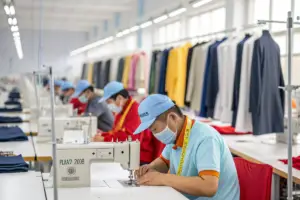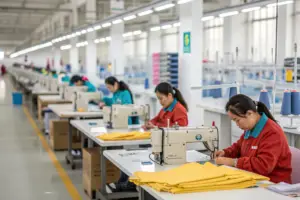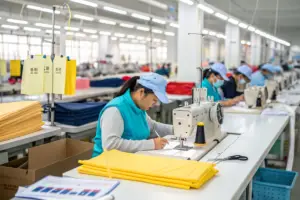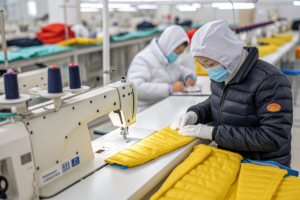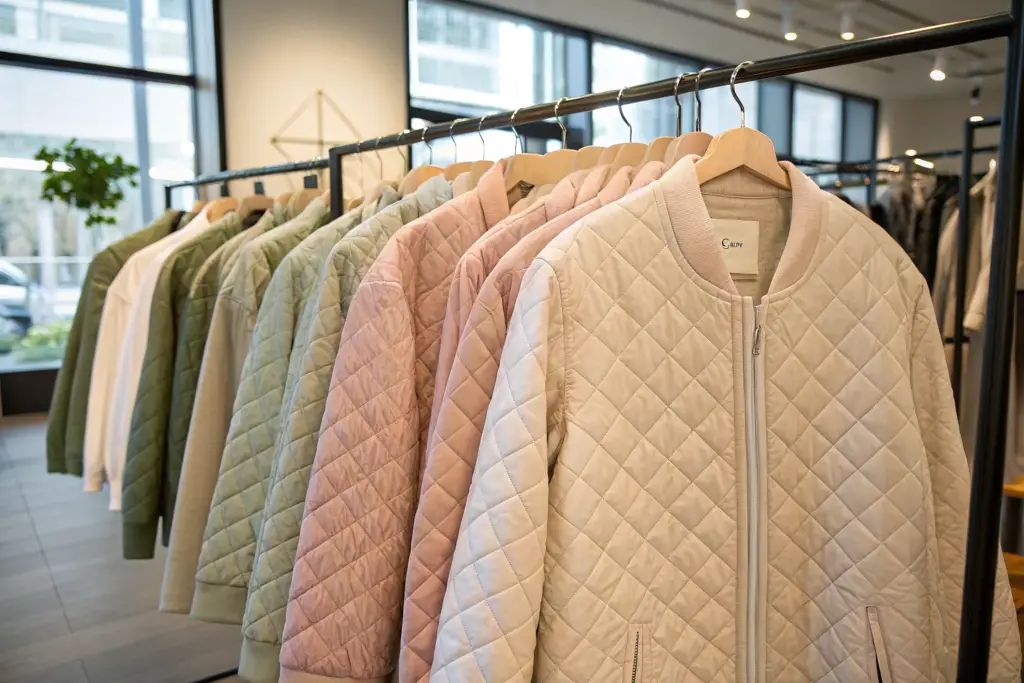
I stood on our factory floor last July, watching a batch of lightweight quilted jackets move down the finishing line. The order was for a boutique brand in San Francisco. The destination was a city known for its freezing summer fog. The jackets were not bulky winter puffers. They were thin, almost blanket-like, with a diamond quilt pattern and a soft cotton-linen shell. I picked one up and weighed it in my hand. It felt like a sweater, not a coat. That was the moment I understood the trend. This was not outerwear. This was wearable comfort packaging. The quilted summer jacket has become the answer to a problem every brand owner has faced: how do you sell a "jacket" to someone who refuses to wear anything heavy between June and August?
Quilted summer jackets are trending for cooler evenings because they solve a precise thermal and emotional need that no other garment addresses. They provide the lightest possible insulation layer—often just 40 to 80 grams of fill—wrapped in breathable natural fibers. They look intentional and styled, unlike a hastily grabbed sweatshirt. They pack small, drape softly, and tap directly into the "gorpcore" and "cottagecore" aesthetics that continue to dominate social media. They are a comfort object you can wear in public.
The quilted summer jacket is not trying to be a performance puffer. It is trying to be the jacket equivalent of your favorite worn-in quilt at home. At Shanghai Fumao, we have seen orders for lightweight quilted jackets triple in the last two summers. European distributors started the trend. American direct-to-consumer brands accelerated it. Now, it has crossed over into mainstream retail. Let me walk you through the construction details, the styling rules, and the production challenges that define this category, so you can launch your own quilted summer jacket before the market gets saturated.
The 60-Gram Revolution: Why Ultra-Thin Fill Is Changing the Game
The traditional puffer jacket is a winter warrior. It is filled with 200 grams, 400 grams, even 600 grams of down or synthetic insulation. It is designed to trap body heat in freezing temperatures. It works brilliantly for that purpose. But when the evening temperature drops from 25°C to 18°C, a 200-gram jacket is useless. It is too hot to wear, too bulky to carry, and too casual-looking for a dinner setting. The summer quilted jacket fills this gap with fill weights so low they would have been considered manufacturing errors a decade ago. We are now producing jackets with 40 GSM, 60 GSM, and 80 GSM fill. These numbers are not typos. They are the result of deliberate engineering. A 60-gram fill sheet is about the thickness of two stacked business cards. It provides what I call a "temperature buffer," not a temperature barrier. It takes the edge off a cool breeze without inducing sweat. It wraps the wearer in a micro-layer of still air, and that is all that is needed when the baseline temperature is already pleasant.
The 60-gram fill weight has become the industry sweet spot for summer quilted jackets. It provides enough structure to hold the quilting pattern visually, enough insulation to make a noticeable difference against wind chill, and enough lightness to fold into a tote bag without adding meaningful bulk. The total garment weight for a mid-length quilted summer jacket should land between 250 and 350 grams.
This weight restriction changes everything about production. You cannot use a standard baffle construction, where the fill is blown into individual stitched compartments, because 60 grams of fill does not loft enough to fill a baffle. The jacket would look deflated and sad. Instead, we use a "needle-punched" fill sheet. The synthetic fibers are mechanically entangled into a flat, consistent, non-woven fabric that can be cut and sewn like a textile. This prevents the fill from shifting or clumping during washing, which is the number one durability complaint with cheap quilted jackets. The fill sheet is then stitched directly between the shell and lining in a simple diamond or channel quilting pattern. No baffles. No down-proof fabric. No complicated construction. The simplicity is the innovation. It keeps the cost down, the weight down, and the washability up.
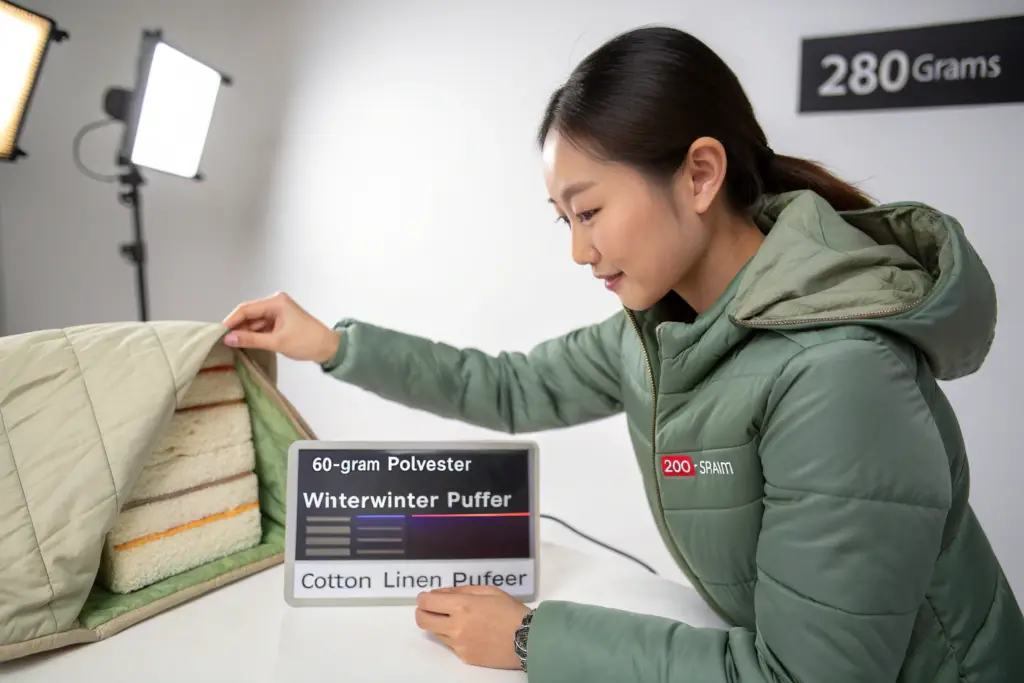
Can You Use Natural Fill Materials for Summer Weight Quilting?
You can, but you should not. Natural fills like down and feathers present three problems for summer-weight jackets. First, down's minimum practical fill weight is around 120 grams. Below that, it cannot create a stable loft, and it shifts to the edges of the baffle, leaving cold spots in the center. Second, down is a high-maintenance material. It requires dry cleaning or very careful washing. The summer quilted jacket is meant to be thrown on over a damp swimsuit, stuffed into a beach bag, and washed frequently. A down jacket cannot survive that lifestyle. Third, down is expensive. A summer jacket that retails for $85 cannot absorb a $15 down fill cost. That math does not work. For these reasons, we recommend and almost exclusively use high-quality, needle-punched polyester fill for summer quilted jackets. The polyester is hypoallergenic, machine washable, quick-drying, and affordable. The sustainability-conscious European market has pushed back on virgin polyester, so we now offer a 100% recycled PET fill option made from post-consumer plastic bottles. It costs about 20% more than virgin fill, but it provides an identical thermal performance and carries the Global Recycled Standard (GRS) certification that European boutique buyers demand. We also experimented with a Kapok fiber fill, a natural plant-based alternative that is hollow and buoyant like down. The thermal performance was good. The issue was supply chain consistency. Kapok is harvested from wild trees in Southeast Asia, and the quality varies dramatically by season. Until the supply chain matures, it is a risky choice for a production run that requires consistent quality across thousands of units.
How Does Quilting Pattern Affect the Thermal Performance of Lightweight Jackets?
The quilting pattern is not just decorative. It is the structural skeleton that holds the thin fill in place and determines how the jacket drapes on the body. A tight diamond quilt pattern creates more stitch lines, which compress the fill at each seam and create cold spots. For a 40-gram jacket, this can reduce the already minimal insulation by 30%. A wide channel quilt pattern creates fewer stitch lines, allowing the fill to loft more fully across the body. However, channels wider than 8 centimeters allow the fill to shift vertically over time, especially after multiple washes, creating empty pockets at the shoulders and bunched fill at the hem. We have found through testing that a 6-centimeter diamond or a 7-centimeter horizontal channel is the optimal configuration for 60-gram fill. This pattern provides enough structure to keep the fill evenly distributed without over-stitching the garment into thermal oblivion. We also consider the visual effect. A horizontal channel quilt elongates the body. A diamond quilt creates a classic, heritage look. A chevron quilt creates a modern, athletic silhouette. The pattern choice should align with your brand aesthetic, but the spacing and stitch density must be driven by the fill weight. A design mistake we see often is brands requesting a complex, highly decorative quilt pattern with many stitch lines on a very thin fill. The result is a jacket that looks quilted but feels like a windbreaker. The thermal promise is broken. The returns follow. Let the fill weight determine the quilting density, not the mood board.
The Cottagecore-to-Gorpcore Spectrum: Styling the Summer Quilted Jacket
The quilted summer jacket occupies a unique cultural space. It sits at the intersection of two massive aesthetic movements that define the current decade. On one side, you have cottagecore: the romantic, nostalgic embrace of rural simplicity, floral prints, patchwork textures, and handmade aesthetics. On the other side, you have gorpcore: the utilitarian, functional embrace of outdoor gear, technical fabrics, and performance-driven design. The quilted jacket works for both because quilting itself is a heritage craft that predates modern fashion. It reads as both a vintage handcraft and a functional insulation pattern. This dual identity gives it a cultural versatility that other summer jacket categories lack. A linen blazer is strictly cottagecore-adjacent. A nylon anorak is strictly gorpcore-adjacent. A quilted jacket can swing either direction, or land somewhere in the middle, depending entirely on the fabric choice, the print, and the styling context.
You need to decide where your brand's quilted jacket sits on the cottagecore-to-gorpcore spectrum before you design a single stitch. This decision determines your fabric, your color palette, your quilting pattern, and your target retail price. Cottage-leaning jackets use floral cotton prints and diamond quilting. Gorpcore-leaning jackets use matte recycled nylon and channel quilting. Both are trending. Both sell. But you cannot sit in the middle with a generic beige polyester jacket and expect to win shelf space.
A brand owner from Portland I worked with last year understood this perfectly. She launched two distinct quilted summer jackets in the same season. The first was a "Prairie Quilted Jacket" in a faded floral viscose shell with a rounded collar and wooden buttons. It retailed for $128. The second was a "Trail Quilted Jacket" in a matte black recycled nylon shell with a stand collar and reflective zipper pulls. It retailed for $148. The first sold to the Anthropologie customer. The second sold to the REI customer. Both sold through at full price because the branding and design were precise. The jackets did not compete with each other. They occupied different worlds.
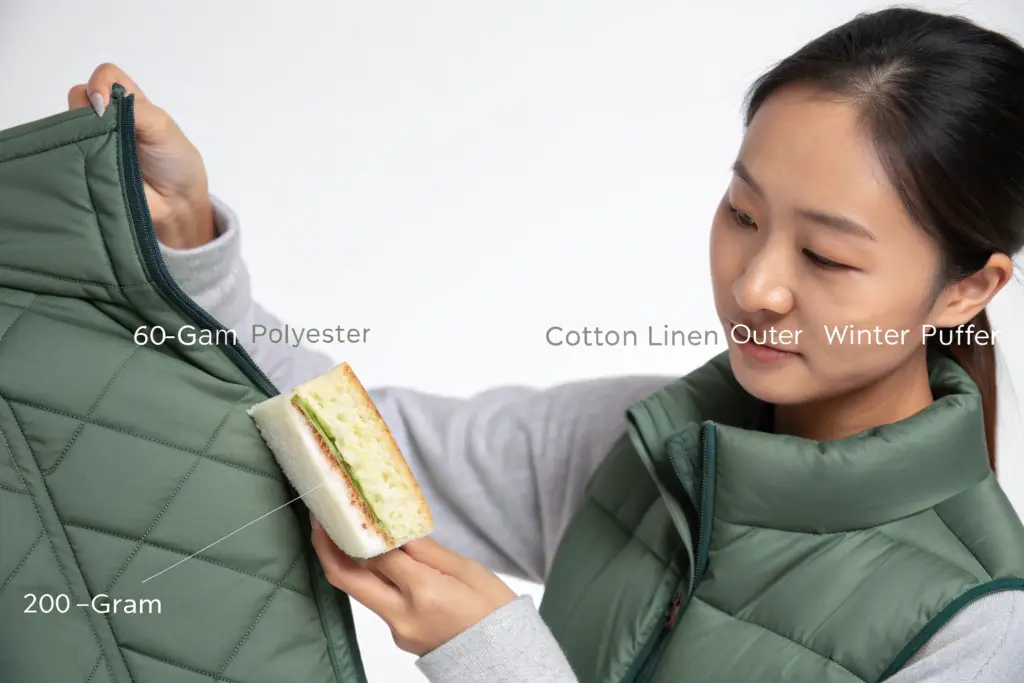
How Are Influencers Styling Quilted Jackets for Evening Wear?
The evening styling of quilted summer jackets is the key to their viral potential. A quilted jacket worn during the day reads as a practical layer. A quilted jacket worn in the evening reads as a deliberate style choice. The transition happens through contrast. The jacket is the casual, textured layer. Everything underneath is elevated and dressy. A satin slip dress under a boxy quilted jacket. A silk camisole and tailored trousers under a cropped quilted jacket. Heeled sandals, statement earrings, and a clutch bag paired with the coziest, most blanket-like jacket in your closet. This contrast is highly Instagrammable. It signals that the wearer is confident enough to break fashion rules. It also signals that she is prioritizing her own comfort over the discomfort of dressing purely for aesthetics. The quilted jacket in this context is a quiet rebellion against the expectation that evening wear must be cold, restrictive, and uncomfortable. European influencers in Paris and Copenhagen have been leading this charge. They style oversized, floor-length quilted dusters over cocktail dresses. They cinch quilted jackets at the waist with a leather belt and wear them as a top over wide-leg trousers. These styling innovations are spreading through social media and driving consumer demand for quilted jackets that can transition from a beach bonfire to a restaurant terrace without a costume change.
What Colors and Prints Are Driving Summer Quilted Jacket Sales?
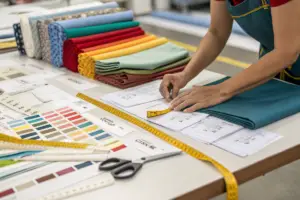
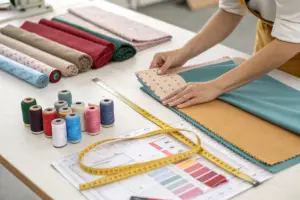
Color is a make-or-break variable for summer quilted jackets. The winter puffer is allowed to be black, navy, or charcoal because its job is to blend into the grey winter landscape. The summer quilted jacket exists in a world of green grass, blue skies, and warm golden light. It must play by summer color rules. The best-selling colors in our production data for the last two summer seasons are sage green, dusty rose, pale lavender, butter yellow, and a faded terracotta that photographs like a Tuscan sunset. These are not bright, saturated colors. They are muted, earthy, and slightly sun-faded. They look soft and approachable, matching the tactile softness of the quilted texture. White and cream are popular but return at higher rates due to visible staining from sunblock, spilled rosé, and general summer activities. We recommend a natural, unbleached cotton shell in an ecru or oatmeal tone as a more practical light-neutral alternative. Prints are also performing exceptionally well, particularly in the cottagecore segment. Small-scale floral prints, delicate Liberty-style ditsy prints, and subtle paisley patterns in one or two muted colors sell at a premium and generate strong emotional response in social media advertising. The print masks any inevitable creasing from packing and makes each jacket feel unique and personal. A brand we work with in the UK launched a limited-edition quilted jacket using deadstock floral cotton fabric from an Italian mill. Each jacket was slightly different depending on the fabric placement. They sold 300 units at £149 each in under 48 hours. The scarcity and the individuality drove the urgency. The quilting itself was simple. The fabric was the hero.
Production Challenges: Mastering the Lightweight Quilt Construction
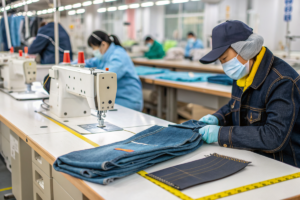
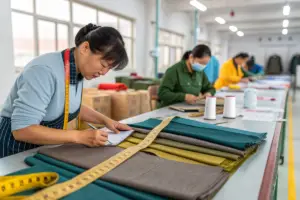
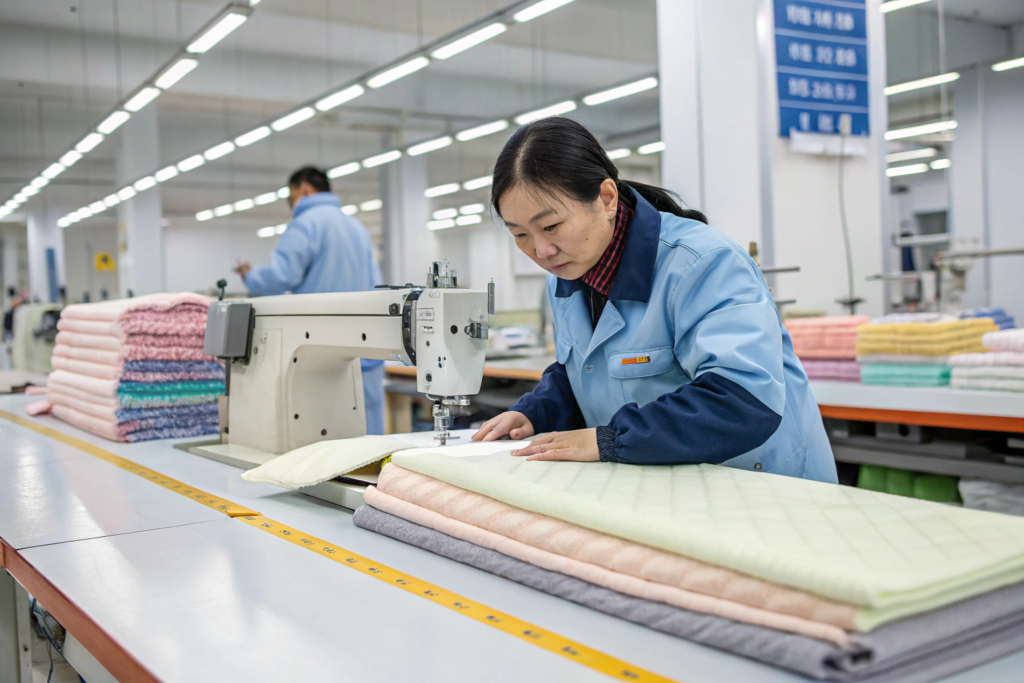
Producing a lightweight quilted jacket is deceptively difficult. The thin fill that makes the jacket summer-appropriate also makes it a nightmare to sew. The fabric sandwich of shell, fill, and lining wants to shift. The layers slide against each other. The needle can punch the fill unevenly, creating little puffs of polyester erupting through the shell. The quilting stitch lines, if not perfectly tensioned, will pucker the thin fabric into a wrinkled mess that looks defective even though it technically holds together. I learned all of this the hard way on a production run for a San Diego brand three summers ago. We used a 40-gram fill on a very fine cotton voile shell. The sewing machines ate the fabric. The needle holes were visible along every stitch line. We had to scrap 80 units and start over with a different needle type, a smaller needle size, and a stabilizer paper backing that dissolved in the wash. The order was late by ten days. The client was understanding but the lesson cost us $4,000 in wasted materials and lost labor time. We never made that mistake again.
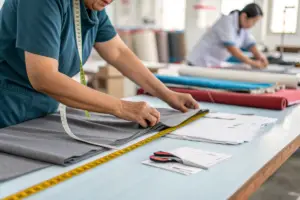
Lightweight quilt production requires three critical process controls: needle selection, layer basting, and stitch tension calibration. The needle must be a sharp-point microtex size 70 or 75 to pierce the fine shell without tearing the fibers. The three layers must be basted together around the perimeter with a 1-centimeter seam allowance before the main quilting stitches are applied. And the thread tension must be tested on a 10-centimeter sample before every single production run, not just once per season.
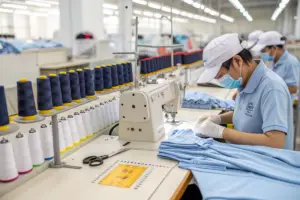
These steps sound tedious. They are tedious. But they are the difference between a quilted jacket that looks crisp and professional and one that looks like a homemade craft project. We now run a dedicated quilting station at Shanghai Fumao with machines set up specifically for lightweight work. The operators on that station are trained for two weeks before they touch a production order. Their defect rate is tracked daily and displayed on a screen above the line. This level of specialization is uncommon in a generalist factory, but it is necessary if you want to produce quilted summer jackets at scale with consistent quality.
How Do You Prevent the Fill from Shifting After Washing?
Fill migration is the silent killer of quilted jackets. It doesn't show up in the initial quality inspection. It shows up after the customer washes the jacket three times and the fill has bunched into a sad, lumpy ball at the bottom of each quilted channel. The jacket goes from a smooth, even layer of insulation to a textured mess. The customer leaves a one-star review. The brand reputation takes a hit. The root cause is insufficient bonding between the fill and the shell fabric during the quilting process. The simple solution is more stitching, but more stitching creates cold spots and a stiffer jacket. The better solution is a fusible fill. We now use a fill sheet with a low-melt thermoplastic binder fiber mixed into the polyester. After the quilting is complete, the finished panels pass through a heat-calendering machine that slightly melts these binder fibers, fusing the fill sheet to both the shell and the lining at a microscopic level. The jacket still drapes softly because the bond points are tiny and widely dispersed. But the fill cannot shift, slide, or bunch, even after 20 machine wash cycles. We validate this with an accelerated wash test. Every new fill batch is sewn into a test quilt block and washed ten times in a commercial washer at 40°C. If the fill migrates more than 5 millimeters from its original position, the batch is rejected. Most factories do not do this test. They rely on the fill supplier's specification sheet. Specification sheets lie. Wash tests do not.
Why Is Seam Matching Critical for Quilted Garment Aesthetics?
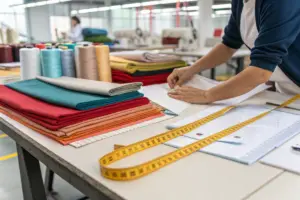
Seam matching at the side seams and the armhole seams is the visual detail that separates a premium quilted jacket from a discount one. The quilting pattern creates a strong visual grid. When two panels are joined at the side seam, the horizontal or diamond pattern lines must align perfectly across the seam. If they don't, the eye immediately sees the break. The jacket looks crooked, even if the fit is perfect. Achieving this alignment requires the cutting room to cut each panel with precise pattern matching in mind. It requires the sewing operator to pin and match each intersection point before sewing. It adds approximately 15% to the sewing time compared to a non-quilted jacket. For a summer jacket with a retail price under $100, this labor cost is difficult to absorb. We offer two standards to our clients. The "premium seam match" standard guarantees alignment within 2 millimeters at every intersection. This is for brands selling at $100 and above. The "commercial seam match" standard guarantees alignment within 5 millimeters. This is for brands selling at $60 to $90. The visual difference is noticeable in a side-by-side comparison, but the commercial standard is perfectly acceptable for a casual summer jacket that will be worn open and moving. The key is to set the expectation upfront, cut accurately, and pay the sewing operators a small bonus for achieving the premium match rate. A 5% efficiency bonus for perfect seam matching eliminates the rush that causes misalignment. The operators take their time because they are paid to care.
Conclusion
The quilted summer jacket trend is not a passing fad. It is a logical response to a world where summers are getting hotter, air conditioning is getting more aggressive, and the boundary between indoor and outdoor living is blurring. People need a layer that is lighter than a sweater, more structured than a shirt, and more emotionally comforting than a technical shell. The quilted summer jacket, with its heritage craft associations and its modern, ultra-thin insulation technology, fills that need perfectly.
The brands that will win in this category are the ones that understand the details. You must spec your fill weight to the gram. You must choose your quilting pattern based on thermal performance, not just aesthetics. You must decide where your jacket sits on the cottagecore-to-gorpcore spectrum and design every detail—from the buttons to the color—to serve that identity. You must build your production with a partner who understands the specialized machinery, the fusible fill technology, and the seam matching precision required to make a lightweight quilted jacket that survives the washing machine.
At Shanghai Fumao, we have made the mistakes and learned the lessons. We have the dedicated quilting station, the accelerated wash-test protocol, and the greige fill inventory to support your production run. We know which recycled polyester fill performs best at 60 grams. We know which cotton-linen shell fabric won't pucker under the needle. We know how to ship a summer jacket in May so it arrives for the June evening boom. If you have a quilted summer jacket concept on your mood board, let's turn it into a sample, then a production order, and then a best-seller.
To start that conversation, reach out to our Business Director, Elaine. She has fabric swatches, fill sample cards, and a clear pricing matrix ready for you. She can also share wash-test videos and seam-match comparison photos so you can see the quality difference with your own eyes. Contact her at: elaine@fumaoclothing.com.