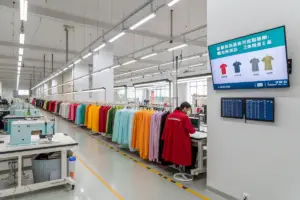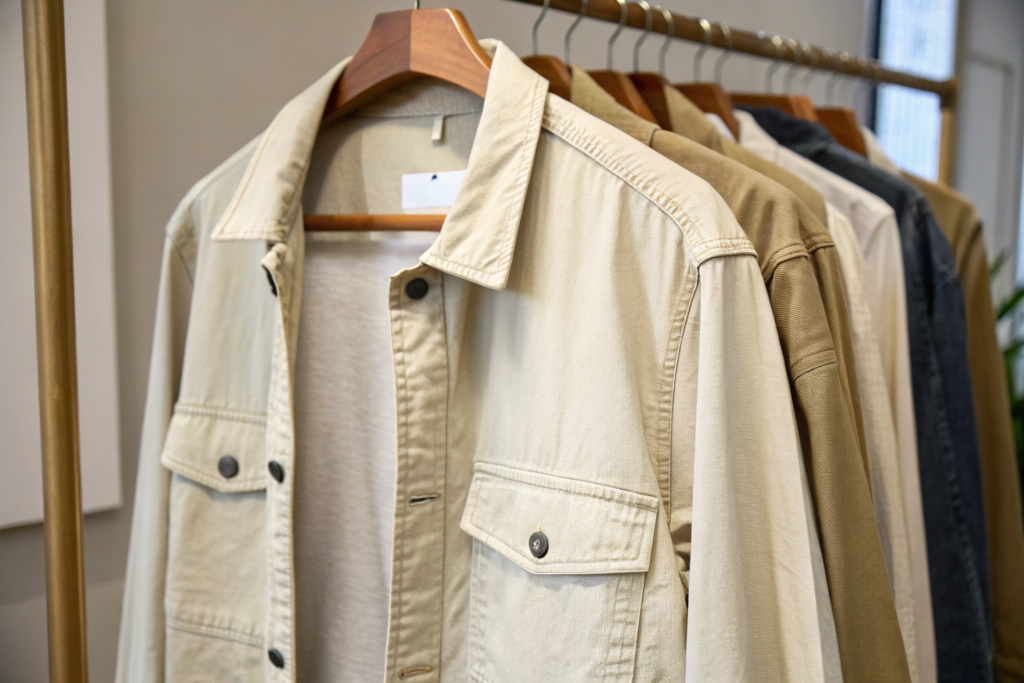
I was on a video call with a brand owner from Chicago last August. She held up two garments to her laptop camera. One was a heavy flannel shirt she had been selling for three autumns. The other was a sample we had just shipped her, a shirt-jacket hybrid in a brushed cotton twill. She looked frustrated. "My customers keep asking for something they can wear now, in this 80-degree heat, that will still work when it drops to 60 degrees next month. I don’t have an answer for them." I pointed at the hybrid in her right hand. "You do now. That’s a shacket." She had never heard the word before. Six weeks later, she had sold through 1,200 units and was already placing a spring re-order. The shacket solved a problem she didn’t know could be solved.
A shacket is a shirt-jacket hybrid designed to function as a lightweight, unstructured outer layer. It is heavier and more structured than a shirt but lighter and less formal than a jacket. The name is a straightforward portmanteau of "shirt" and "jacket." It is the perfect summer-to-fall transitional piece because it provides just enough insulation for cool mornings and evenings without causing overheating during the warmer midday hours.
The shacket category has exploded in the last three years because it fills the most neglected gap in the consumer wardrobe: the temperature range between 15°C and 22°C. That range is too warm for a proper jacket and too cool for a single shirt. The shacket lives in that gap. It is the layer you throw on for a September bonfire, an October farmers market run, or a late-August beach evening. At Shanghai Fumao, we have developed shacket programs for brands across the US and Europe. Let me walk you through what makes a shacket different from a regular shirt or jacket, how to choose the right fabric weight, and why this category is a margin goldmine if you design and price it correctly.
Defining the Shacket: More Than Just a Heavy Shirt
I need to clear up a confusion I hear constantly from new brand owners. A shacket is not just a shirt made from jacket fabric. That misunderstanding leads to poor pattern choices, uncomfortable fits, and returns. A true shacket is cut and constructed differently from both a shirt and a jacket. It starts with the pattern block. A shirt block is designed to fit close to the body with high armholes and a narrow sleeve. It assumes the garment will be worn as a single layer or over an undershirt. A jacket block is designed with extra ease to accommodate a sweater or hoodie underneath. A shacket block sits precisely in the middle. We add 10 to 12 centimeters of ease to the chest measurement, compared to 6 to 8 for a shirt and 16 to 20 for a jacket. This gives the shacket a relaxed, slightly oversized silhouette that allows a t-shirt underneath without looking baggy or sloppy. The armhole is dropped by 2 centimeters compared to a shirt, providing shoulder freedom without the deep, restrictive drop of a winter coat.
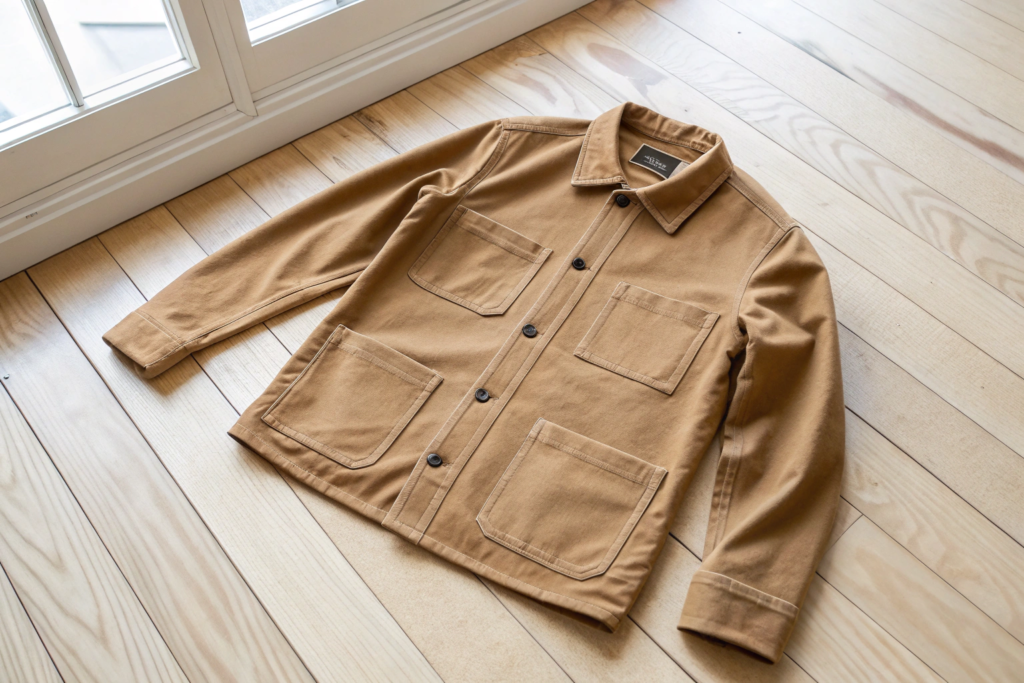
A properly constructed shacket has four distinguishing features: a convertible collar that stands up or lays flat, patch pockets large enough to hold a phone, a straight or slightly curved hem that can be worn tucked or untucked, and a total garment weight between 350 and 500 grams. Anything lighter is a heavy shirt. Anything heavier is a light jacket. The 350-to-500-gram zone is the sweet spot.
The hem length is also a critical differentiator. A shirt hem is designed to be tucked into trousers. It is curved, with a longer tail in the back, and finishes around the hip bone. A jacket hem is designed to be worn untucked and finishes below the hip. A shacket hem is a hybrid. It is usually straight or has a very subtle curve, allowing it to be worn untucked as the default styling, but it is short enough, typically hitting at the mid-hip, that it doesn’t look like a lab coat. We settled on this measurement through trial and error. Our first shacket sample for a New York brand four years ago was too long. It looked like a short bathrobe. We shortened it by 6 centimeters, and the entire proportion snapped into place. The brand owner sent me a one-word email: "Perfect." That length adjustment is now baked into our standard shacket block.
What Fabrics Work Best for a True Shacket Construction?
The fabric must be heavy enough to hold structure but soft enough to drape comfortably. A stiff, rigid fabric makes a shacket that feels like cardboard. A flimsy, lightweight fabric makes a shacket that collapses and looks like a wrinkled shirt. The ideal fabric weight is between 200 and 280 GSM for a cotton or cotton-blend woven fabric. Within this range, several options perform exceptionally well. Brushed cotton twill is the most popular choice. The brushing process raises the surface fibers, creating a soft, fuzzy hand that feels warm and cozy against the skin. It also gives the fabric a slightly matte, casual look that photographs well for e-commerce. Cotton flannel is a classic option for autumn shackets, but it is often too warm for the summer-to-fall transition window. A lightweight flannel at 180 GSM can work, but it must be tightly woven to prevent tearing at the pocket seams. Wool blends are gaining traction in the premium segment. A 60% wool, 40% polyester blend at 240 GSM provides natural temperature regulation and a beautiful, textured drape. It retails at a higher price point but attracts a customer who values natural fibers. Corduroy is a niche option that performs well in the vintage and workwear aesthetics. A fine-wale corduroy at 8 wales per inch creates a rich, tactile texture without adding excessive weight. The wale count matters. Wide wales look like upholstery fabric. Fine wales look like fashion fabric. I always send a corduroy sample swatch to the brand owner before cutting because the visual weight of corduroy in a photograph is very different from its actual fabric weight. A dark corduroy photographs much heavier than it feels.
How Does the Shacket Differ from an Overshirt or a Chore Coat?
This question causes endless confusion in buyer meetings. The overshirt, the shacket, and the chore coat exist on a spectrum of weight and formality. An overshirt is the lightest of the three. It is essentially a shirt made from slightly heavier fabric, designed to be worn open over a t-shirt. It has a soft, unstructured collar and no lining. It weighs between 250 and 350 grams. A shacket sits in the middle. It has more structure than an overshirt, often including a partial lining in the body or sleeves, a slightly stiffer collar with a topstitched edge, and heavier buttons. It weighs between 350 and 500 grams. A chore coat is the heaviest. It has a full lining, reinforced seams, larger utility pockets, and a boxier, more work-oriented silhouette. It weighs above 500 grams and is functionally a light jacket. The boundaries blur at the edges. A heavy shacket and a light chore coat can be nearly identical. The distinction matters for marketing and SEO purposes more than for construction. Customers searching for "shacket" are usually looking for a fashion-forward, trend-driven piece. Customers searching for "chore coat" are usually looking for a heritage, workwear-inspired piece. You should name your product based on your target customer’s search behavior, not on a technical construction specification that no consumer understands. We produce garments that could legitimately be called any of the three. The hang tag says what sells.
Styling the Shacket: From August Beach Nights to October Bonfires
The shacket’s greatest commercial strength is its styling versatility. It can be worn open or closed, layered or solo, casual or slightly dressed up. This versatility creates a wide customer base. The same garment appeals to a college student throwing it over a crop top for a September football game, a young professional layering it over a merino sweater for a casual Friday office, and a parent wearing it to a Saturday morning soccer game. That is a rare marketing advantage. Most garments have a narrow demographic lane. The shacket has a six-lane highway. The styling options are so extensive that we now provide a "Styling Lookbook PDF" to our brand partners with every shacket production order. It contains 20 flat-lay styling combinations and 10 model-shot styling suggestions. This is not a service we initially planned to offer. It became necessary because brands were not maximizing the marketing potential of their own product.
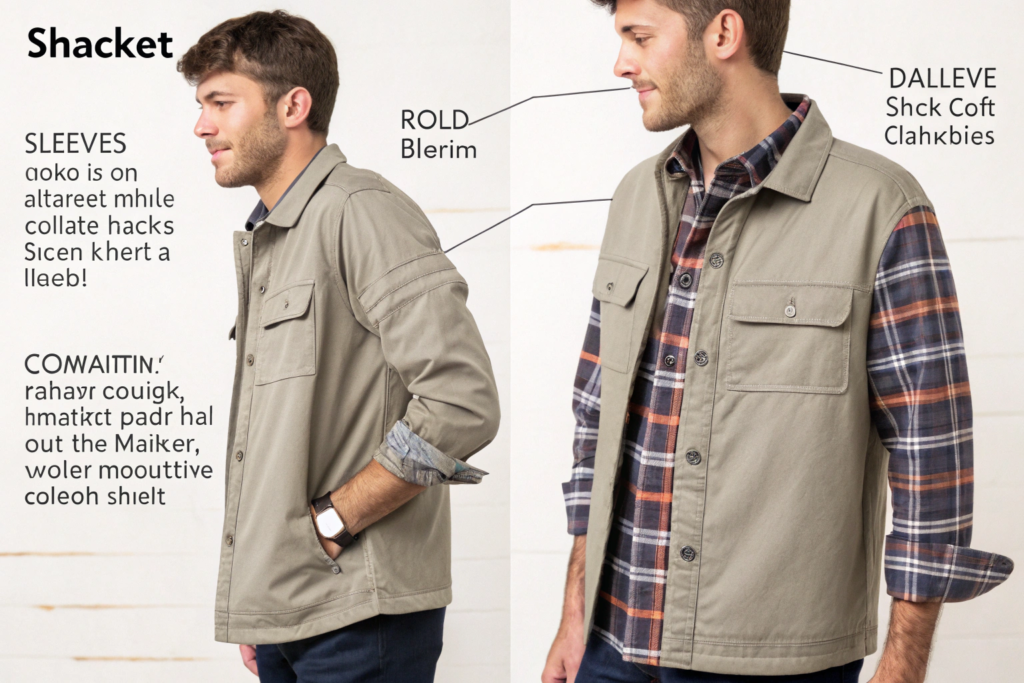
The shacket’s styling versatility stems from its hybrid nature. It can replace a cardigan, a denim jacket, or a lightweight hoodie in almost any casual outfit. The three highest-performing styling formats in social media content are: worn open over a white tee with the sleeves rolled twice, worn buttoned and French-tucked into high-waisted jeans, and worn completely open and pushed back off the shoulders for an editorial, fashion-forward look.
Sleeve rolling is not a minor detail. It is a conversion driver. A shacket with the sleeves down looks like a shirt. A shacket with the sleeves rolled to the forearm instantly looks like a jacket alternative. The visual transformation signals "I am wearing this intentionally as outerwear." We construct our shacket sleeves with a slightly wider cuff opening to accommodate easy rolling. We also add a button tab on the inside of the sleeve, 12 centimeters up from the hem, that allows the rolled sleeve to be secured with a button. This prevents the roll from constantly falling down, which is a consumer annoyance that leads to negative reviews. It costs us $0.12 per unit in extra button and sewing time. The return on that $0.12 is a feature that gets mentioned in positive reviews and demonstrated in styling videos. Pay for the micro-details. They generate the macro-conversions.
Can You Wear a Shacket in a Business Casual Setting?
Yes, with strict limitations. The shacket is inherently a casual garment. It originates from workwear and outdoor utility clothing. Attempting to dress it up too far creates an awkward, mismatched look that undermines the wearer’s credibility. However, a shacket can work in a relaxed business casual environment if three conditions are met. First, the shacket must be in a solid, muted color. No plaids, no bold checks, no bright patterns. Charcoal, navy, olive, or camel are acceptable. Second, the fabric must be a smooth, non-brushed twill or a fine wool blend. No fuzzy flannel. No corduroy. No blanket textures. Third, the shacket must be worn over a collared shirt, not a t-shirt, and paired with tailored chinos or dark denim, not cargo pants or ripped jeans. Under these conditions, the shacket reads as an unstructured sport coat alternative, not a weekend camping layer. I have seen this work effectively for architects, creative directors, and tech industry professionals in West Coast offices. I would not recommend it for a law firm, a bank, or any environment where a traditional blazer is the expected uniform. The shacket cannot replace a blazer. It can only replace a casual cardigan or a sweater. Know the boundary and communicate it clearly in your product descriptions. Overpromising on formality leads to returns from customers who try to wear a shacket to a job interview and realize it looks wrong.
How Are Fashion Influencers Transitioning the Shacket from Day to Night?
The day-to-night transition is the holy grail of fashion marketing. Consumers want garments that work for multiple occasions. The shacket achieves this transition through a simple switch in the inner layer and the accessories. During the day, the shacket is worn over a simple t-shirt or tank top with sneakers and a crossbody bag. For the evening transition, the t-shirt is swapped for a silk camisole or a fine-gauge turtleneck. The sneakers are swapped for heeled ankle boots or leather loafers. The crossbody bag is swapped for a clutch or a small shoulder bag. The shacket itself remains unchanged. It is the constant that anchors the outfit through the transition. Influencers on TikTok and Instagram have built entire styling series around this concept. They film themselves in the morning, wearing the shacket with a coffee cup and sunglasses. Then they film themselves in the evening, same shacket, different everything else, holding a cocktail glass. The before-and-after format generates high engagement because it demonstrates the garment’s value proposition visually. It answers the consumer’s silent question: "How many ways can I actually wear this?" Every styling combination you can show in a 15-second video translates to a higher perceived value and a lower return rate. We encourage our brand partners to seed shacket samples to micro-influencers specifically for day-to-night styling content. It converts better than standard product shots.
Fabric Weight and Seasonal Timing: The Production Calendar for Shackets
Timing is everything with a transitional garment. If your shacket lands in the warehouse too early, it competes with summer clearance sales and sits unsold. If it lands too late, the customer has already bought a fall jacket from your competitor and doesn’t need your product. The shacket selling window opens in late July for early adopters and trend-conscious shoppers. It peaks in September and October. It declines sharply after mid-November when winter coat season begins in earnest. This window dictates the entire production calendar working backward from the sell date.
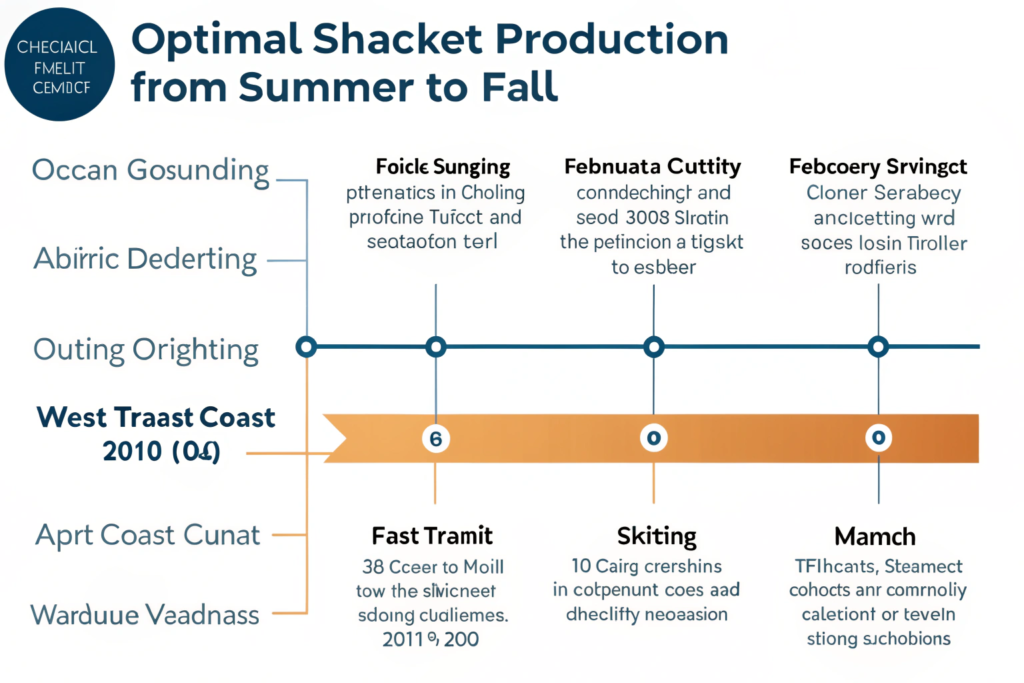
The optimal shacket production timeline for a summer-to-fall launch is as follows: fabric sourcing and sample development in January and February, bulk fabric ordering in March, production cutting and sewing in April and May, quality control and finishing in June, ocean freight shipping in early July, and warehouse arrival by late July or early August. This timeline assumes a 30-day ocean freight transit to the US West Coast. East Coast deliveries need an additional week.
Missing these deadlines by even two weeks can cost you 30% of your sell-through. I watched this happen to a Colorado brand in 2022. Their shacket production was delayed by a fabric mill issue in India. The goods arrived in their Denver warehouse on September 28th, a full month late. The peak selling window had already passed. The autumn marketing campaigns had launched without the hero product. The shackets eventually sold, but at a 40% markdown in November. The margin was wiped out entirely. The fabric was beautiful. The design was strong. The logistics killed the profit. We now build a mandatory two-week production buffer into every shacket order. If the fabric is scheduled to arrive on March 10th, we tell the cutting room it is arriving on February 24th. The buffer absorbs the inevitable delays in the supply chain without pushing the final delivery date. I would rather have finished goods sitting in our warehouse for a week than have a container missing the sailing date by a day.
Should You Offer Different Fabric Weights for Different Delivery Windows?
This is an advanced strategy that sophisticated brands use effectively. A single shacket design can be produced in two fabric weights and released in two delivery waves. The first wave, delivered in late July, uses a lighter 200 GSM fabric in summer-appropriate colors like stone, pale blue, and sand. This wave captures the early adopter who wants a shacket for late-summer beach evenings and air-conditioned restaurants. The second wave, delivered in early September, uses a heavier 260 GSM fabric in richer autumnal colors like rust, forest green, and navy. This wave captures the mainstream customer who is shopping for proper fall layering pieces. The pattern block remains identical. The construction details remain identical. Only the fabric weight and color palette change. This approach requires two separate fabric orders and two separate production runs, which increases complexity and slightly raises the unit cost due to smaller individual run sizes. However, it also allows the brand to occupy retail floor space for a longer continuous period without the product feeling seasonally out of place. A 200 GSM shacket in a beachy linen blend looks right in August. A 260 GSM shacket in a wool blend looks right in October. The customer perceives a fresh offering, even though the underlying design is the same. We piloted this strategy with a California-based lifestyle brand last year. Their combined sell-through across both waves was 92%, compared to 75% for their previous single-weight shacket launch. The dual-weight approach works.
How Do Minimum Order Quantities Work for Shacket Production?
Minimum order quantities, or MOQs, are the barrier that stops many small brands from launching a shacket program. Fabric mills require minimums. Dyeing houses require minimums. Factories require minimums. These numbers can feel overwhelming. Here is the reality at Shanghai Fumao. Our standard MOQ for a shacket is 300 units per style, per color. This means if you want one shacket style in three colors, the total order is 900 units. This number is driven by fabric minimums. Most woven fabric mills require a minimum order of 500 meters per color. A single shacket consumes approximately 1.6 meters of fabric, depending on size and pattern efficiency. Five hundred meters produces about 300 shackets after cutting waste. The math is tight. We can sometimes negotiate lower MOQs with our partner mills for an additional surcharge. A 200-unit-per-color run might be possible with a 10% to 15% fabric upcharge. We also offer a "stock fabric" option. We hold inventory of our most popular shacket fabrics, brushed cotton twills in core colors, in our warehouse. If you design your shacket using our stock fabric, the MOQ drops to 100 units per color because the fabric minimum is already met. This is the best entry path for a small brand testing the shacket market for the first time. You sacrifice some design exclusivity—other brands might use the same fabric—but you gain the ability to launch with minimal inventory risk. I always recommend the stock fabric route for a first shacket order. Prove the concept. Generate the sales data. Then invest in a custom fabric for the second order.
Conclusion
The shacket is not just a trend word that will disappear next season. It is a permanent new category in the consumer wardrobe because it solves a permanent problem. The temperature gap between summer heat and autumn chill has always existed. What changed is that consumers now have a specific garment designed for that gap, and they have a name for it. The shacket name will evolve. The hybrid shirt-jacket concept will endure.
The opportunity for brand owners is significant and measurable. A well-designed, well-timed shacket program can achieve sell-through rates above 85% at full price, margins above 65%, and re-order rates that extend the selling window into the holiday gifting season. The keys are getting the fabric weight right for your delivery window, nailing the relaxed-but-not-sloppy silhouette, and building a production timeline that delivers goods before the September peak, not after it. The micro-details matter. The sleeve roll tab. The pocket size. The collar stiffness. These are not afterthoughts. They are the features that generate five-star reviews and social media demonstrations.
At Shanghai Fumao, we have produced thousands of shackets for brands ranging from small direct-to-consumer startups to established multi-brand retailers. We have the stock fabric inventory to lower your MOQ barrier. We have the pattern blocks dialed in to the precise ease and length that consumers expect. We have the production calendar mapped out to hit the late-July delivery window that maximizes full-price sell-through. If you are considering adding a shacket to your next collection, or if you want to build an entire transitional outerwear program around this category, I invite you to start that conversation now, not in April when the production slots are full.
Reach out to our Business Director, Elaine. She can send you fabric swatches from our stock inventory, share the detailed measurement specs of our standard shacket block, and provide a firm production timeline with pricing. The summer-to-fall window is closer than it appears. Let’s build your shacket before the season escapes. Contact Elaine at: elaine@fumaoclothing.com.