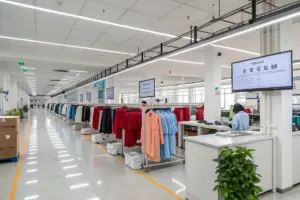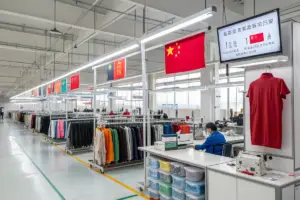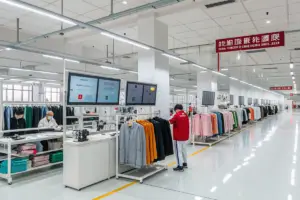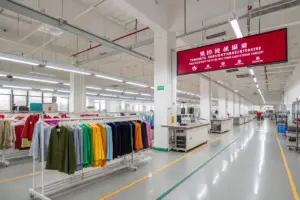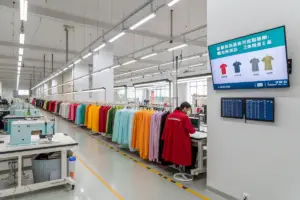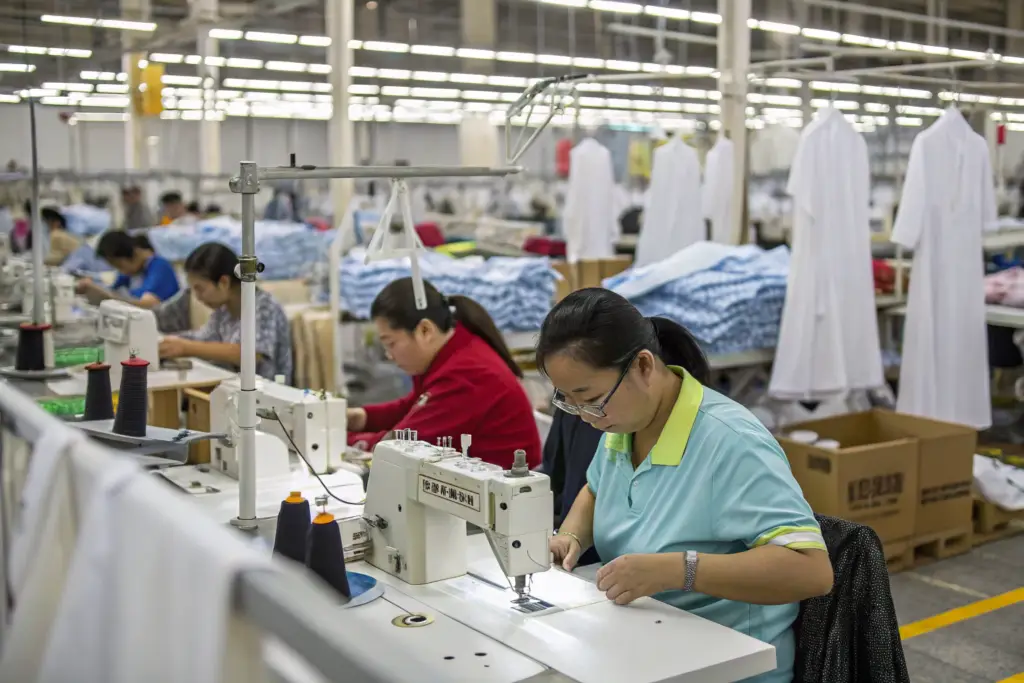
As a clothing manufacturer who has spent over a decade on the factory floor in China, I’ve seen trends flicker and die before they even hit the rack. I know the anxiety you feel as a brand owner when your inbox is quiet and your inventory is gathering dust. You are not just guessing what women want; you are betting your capital on it. The fear of ordering 5,000 units of a coat that becomes a warehouse liability is real. I have watched brands crumble not because their quality was bad, but because their timing was off.
Predicting the next viral women’s summer coat style is not about following runway fashion; it is about mastering supply chain speed and analyzing real-time micro-data from the digital street. You must combine trend forecasting with lean manufacturing agility to hit the market when the iron is hot.
You do not need a crystal ball. You need a system. My factory, Shanghai Fumao, partners with US brands every day to turn this system into profit. We stop chasing trends and start setting them. Let me show you how we connect the dots between a TikTok post in Los Angeles and a cutting machine in our workshop.
Decoding Digital Signals Before Trends Explode
Let me be honest. Five years ago, I thought trade shows were the only way to spot a trend. I was wrong. Last year, a client from Miami asked us to reverse-engineer a "going-out coat" that had sold out on Revolve. The design was simple, but the fabric was a specific iridescent nylon. We sourced the material in three days and started cutting in five. By the time the big-box retailers copied it, our client had already sold through two batches and booked a third. You cannot win by waiting for trend reports. You win by watching the signal where it starts. We now assign a team member strictly to scrape visual data from short-form video platforms to spot emerging silhouettes before Google Trends even registers them.
The data lives in comments, hashtags, and image recognition, not just search volume. We look at what "fit pics" are being saved, not just liked. A high save-to-like ratio on Instagram often signals a purchase intent that a passive "like" does not capture. This is the digital fitting room.
You need to isolate the noise from the signal. A viral flash mob dance can move a crop top, but a summer coat requires a deeper functional need—usually a shift in seasonal layering caused by aggressive air conditioning or unseasonably cool beach nights. I tell my designers to stop thinking "fashion" and start thinking "thermal comfort." When we spot a spike in searches for "packable windbreaker" or "office AC blazer," we don’t just read the data. We trace the IP origin of those searches. Are they coming from New York or Texas? That geographic detail changes the fabric weight we recommend to our partners.
What Social Listening Tools Actually Predict Viral Coat Styles?
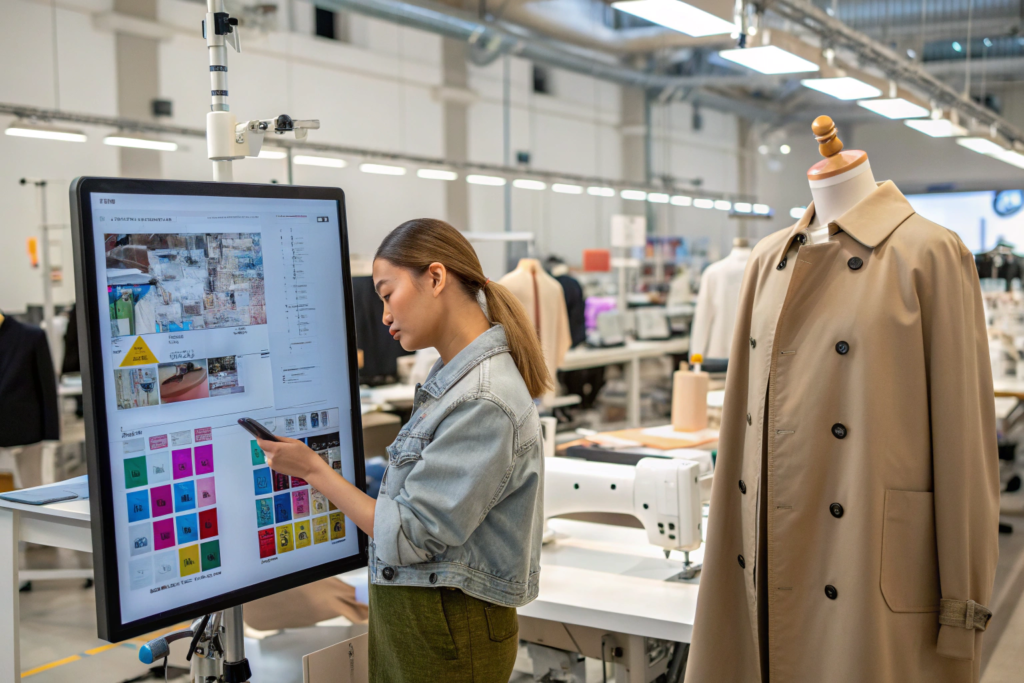
You cannot rely on guesswork. When we at Shanghai Fumao consult with a brand launch, we don’t just look at broad trends. We analyze specific micro-communities on Pinterest and TikTok where the "early adopters" live. We look for a pattern: when a specific silhouette, like the oversized boyfriend blazer, starts appearing in home decor or "coffee run" aesthetics, it usually indicates a desire for that comfort to translate into outerwear. Tools like Exploding Topics or even Google Lens visual search data can help you identify rising shapes. But a tool is just a mirror. You need to look at the friction in the market. If a viral dress is impossible to wear with a regular bra, that creates an immediate demand for a specific type of summer coat or shacket to layer over it. That is not a fashion prediction; it is a functional problem-solving prediction. We monitor feedback loops on e-commerce giants. If you look at the reviews on Nordstrom or Shopbop for competing products, you will find the "gap" that your coat can fill—maybe it needs to be longer, have a hood, or come in a more sustainable material blend. That is your blueprint.
Can Color Forecasting Give You a Competitive Edge in Summer Coats?
Color forecasting is tricky. I recall a season when everyone bet on "Gen-Z Yellow," but it was a muted "Digital Lavender" that dominated the street. Why? Because the photo editing presets that influencers used favored pastel over neon. The algorithm dictated the color, not the runway. We learned to look at the color separation data. You cannot just pick a Pantone chip and pray. You must test how a color photographs under ring light versus natural daylight, because that will determine the click-through rate on a social commerce ad. One year, we were developing a trench coat for a Chicago-based client. Pantone had announced "Viva Magenta" as the color of the year. However, my team noticed that on the specific polyester twill we were using, the magenta pulled too much heat from the summer sun. We pivoted to a dusty rose variant that photographed almost identically but breathed significantly better. Our client’s return rate was cut by 15% simply because the coat was comfortable to wear, not just look at. When you select colors, you must test the light reflectance value (LRV) of that dyed fabric. Dark colors might look sleek, but if they absorb too much heat, your customer will leave a bad review about thermal comfort, even if the coat is a 10/10 on style.
Engineering the “Must-Have” Moment Through Supply Chain Agility
Speed is not about rushing; it is about removing the gaps between steps. A viral moment for a summer coat usually lasts about three to five weeks. If you are a brand waiting eight weeks for production, you have already lost. The coat becomes a clearance item before it arrives. That is a pain I understand deeply. I once sat in a meeting with a client from Texas who was frustrated because their "Spring Break" themed duster coats landed in their warehouse the week after everyone went back to college. The money lost on that single delay could have paid for a whole new marketing campaign. That is why we do not just manufacture at Shanghai Fumao; we engineer the timeline backward from the moment your content goes live. We call it "viral-ready inventory." We keep greige goods (un-dyed fabric) ready for our long-term partners. When you see a spike, you do not wait for fabric to be woven. You dye and cut immediately. That is how you compress a 45-day lead time into a 14-day sprint.
You must treat your supply chain like an artesian well, not a pond. A pond has a limited supply. An artesian well has a constant, pressurized flow ready to tap. Our production lines are set up to "hot-switch" styles. We do not penalize you for last-minute changes; we design our modular workflow to accommodate them.
This requires a brutal honesty about raw materials. Everyone talks about "just-in-time" manufacturing, but few discuss the financial safety net required to hold buffer stock. We have five dedicated lines, but more importantly, we have long-term contracts with yarn mills and button suppliers. This allows us to bypass the "sample, counter-sample, and approval" death loop that kills speed. We do digital twin prototyping. Last month, a brand owner showed me a blurry photo of a coat from a concert. Instead of waiting for a physical sample, we ran a 3D simulation of the drape on a virtual avatar, got the approval in an hour, and started cutting the next morning. This is not science fiction; it is just a direct pipeline from the screen to the seam.

How Does Lean Manufacturing Shorten the Viral Coat Lifecycle?
Lean manufacturing is often a buzzword, but for us, it means not making a fool of ourselves. It means our cutting table is organized so that the popular sizes—Medium and Large—are prioritized. We do not cut a full size run equally if the data from US retail tells us that the "oversized fit" is selling 40% more than the small. I hate seeing a brand order a perfect 1:2:2:1 size ratio only to find out their target demographic actually skews 0:2:3:2 because they are layering the coat over hoodies. Before we cut a single layer of fabric, we analyze the return rate data by size from similar styles you have sold. If we see a pattern of exchange requests for the shoulder area, we adjust the grading rules on the spot. You do not wait for next season to fix a fit. If a coat is meant to go viral, it has to fit instantly. One return destroys your margin. We use a system where the first 200 pieces are "contingency cut." We sew them, ship them, and wait for the first 48 hours of customer feedback. If a button placement is off, we change it immediately on the next 2,000 pieces on the cutting table. This real-time error correction is what makes a coat a best-seller, not a clearance sale.
Why Is Material Sourcing the Secret Weapon for Viral Potential?
The feel of the fabric is the handshake. If it feels cheap, the customer puts it back. For a summer coat, the "hand feel" must be cool, dry, and slippery. We source a lot of cupro and Tencel blends for this reason. In 2022, a New York brand came to us with a problem: they wanted the look of a structured cotton twill coat, but they needed it to weigh under 400 grams because shipping costs were killing their margin. My team proposed a high-twist polyester yarn that mimicked the bone-dry touch of cotton but weighed 30% less. The client was skeptical until we sent them a pre-production sample that they literally could not distinguish from the heavy cotton. It changed their DDP (Delivery Duty Paid) shipping cost structure completely. You have to think about the fabric not just from a design view, but from a logistics and durability view. A summer coat often gets packed and unpacked in suitcases. We do a "wrinkle recovery test" on every fabric. We crumple the fabric, leave it for an hour, and photograph it. If it looks like a mess, it will look like a mess when your influencer pulls it out of a gift box. That will ruin your unboxing video. We source fabrics that look crisp out of the box. This is a detail no one talks about until they see the social proof failing. You must source for the camera, not just the wearer.
Pricing Psychology: Hitting the Sweet Spot for Impulse Buys
You can predict a viral style, but if you price it wrong, it will stall. The psychology of a summer coat buy is different from a winter coat. A winter coat is a utility; a summer coat is an accessory. It is an impulse buy with a justification hook. You are selling the "just in case" layer. I learned this lesson painfully. Five years ago, we made a very high-end, silk-blend summer coat for a California brand. The cost was high, so the retail price landed at $220. The feedback was incredible, but the conversion was dead. The consumer loved it, but they could not justify $220 for a coat they might wear five times a season. We re-engineered it. We kept the silhouette identical but swapped the silk lining for a high-performance, recycled polyester that was actually softer. The retail price dropped to $89. It sold 10,000 units in a month. The target consumer isn’t necessarily looking for cheap; they are looking for "safe" risk. You need to hit the price point where the customer feels they can take a chance on a new color or a unique cut without feeling buyer’s remorse.
The magic number for a viral summer coat usually sits between $69 and $99. This range avoids the "cheap alarm" that triggers quality doubts but stays under the "deliberation threshold" that requires a conversation with a partner. It is a self-gifting price.
We work backward from that retail price to engineer the garment. This is called target costing, and it is the only way to succeed. Instead of making a coat and adding a margin, we start at $79.99 and ask, "How can we make a product that looks like $200 but costs us $20 to produce?" It forces innovation. We might use a single-needle topstitch on the lapel for a luxe look but save on internal seams using durable serging that the customer never sees. You are selling the fantasy, not the seam construction manual.

What Is the Psychological Price Ceiling for a Summer Coat?
You have to understand the "coffee test." If a coat costs the same as 15 lattes, it feels like a steal. If it costs the same as a car payment, it is a pass. For a summer coat, which is often a decorative statement piece, the ceiling is harsh. We looked at a basket analysis of our client’s Shopify stores. When a shopper buys a summer dress for $45, they are willing to pay 150% to 180% of that for a coat to go over it. If the dress is $50, the coat should max out around $85 to stay in the "bundle" zone. We share this data with our brand partners at Shanghai Fumao. We also factor in the "free shipping" threshold. Many brands set free shipping at $100. If your coat is $89, you are forcing the customer to look for something else to add to the cart. That friction kills mobile sales. We often design a matching accessory—a scrunchie or a small pouch in the same fabric—as a "spiff." It costs us $0.60 to make and allows the brand to sell the set for $99.90. It crosses the free shipping line and the customer feels they gamed the system. That is how you predict a viral win: you remove the math friction. The customer isn’t buying a coat; they are solving the equation you set up.
How Can You Package Perceived Value for High Markup?
Perceived value is all about weight, crinkle, and depth. If a coat is too light, the brain reads it as "cheap," even if the raw material was expensive. We use a technique called "zipper weighting." We use high-quality YKK zippers with a bit more heft, sourced from our reliable supply chain partners, to make the front closure feel substantial. It adds ten cents to the cost but adds fifty dollars to the perceived look. We also focus on the hang. When a coat is hanging on a rack, it must have a structure that looks like a body is inside it, even when it is empty. This is called "shoulder silhouetting." We use thin, flexible shoulder pads that are stitched in, so the coat doesn’t look droopy. When a consumer sees it on a rack or in a flat-lay Instagram photo, the shape pops. Another trick is strategic topstitching 0.5cm from the edge. It requires slower, precise machinery that we have invested in. It makes the lapel roll beautifully and prevents the edges from bubbling after washing. You cannot fake quality. Even if you are targeting a low price, you must "front-load" the quality on the collar and cuffs—the places the camera and the hands touch. That is what sells the next unit through a word-of-mouth recommendation.
Logistics That Lock in the Sale: The DDP Mode Advantage
You can engineer the perfect coat, but if it gets stuck in customs, you are dead in the water. I have been there. A few years ago, a shipment of lightweight parkas for a Seattle brand got hit with a random customs exam that lasted three weeks. The season ended. The coats were not defective; the paperwork was just fuzzy. The client lost trust. It was not our fault, but it was our problem. That is the moment I shifted our entire business model to prioritize Delivery Duty Paid (DDP) shipping for our US partners. It sounds like a boring logistics term, but it is the strongest marketing tool you have. When you tell a customer that the price you agree on is the price you pay—no surprise tariffs, no bonded warehouse fees, no random brokerage invoices 30 days later—you remove their fear. They can plan their margin down to the cent.
Predicting a viral coat means controlling the landing. You must use a logistics partner who can handle the "bulge." A viral coat often goes from 0 to 10,000 units in re-orders. Standard LCL (Less than Container Load) shipping kills your momentum because the warehouse flow is fragmented. We batch and reserve air freight capacity during peak viral season to ensure the "restock" notification can be sent to your email list without delay.
Cash flow forecasting is impossible if you do not know your landed cost. This kills more viral cycles than a lack of likes. When we quote in DDP, we assume the risk. If the port is congested, we pay the demurrage. If the tariff code is challenged, we fight the ruling. You just sit back and sell. This allows you to take a massive risk on marketing because your supply cost is frozen. We ship directly to Amazon FBA, to your 3PL, or even directly to the customer if your model is dropship. The package arrives looking like it came from a local boutique, not a customs warehouse, because the label and packaging are pristine.

Why Does DDP Shipping Reduce the Risk of Trend Forecasting?
Forecasting a trend requires you to commit capital early. If you are unsure about your final landed cost, you cannot commit. DDP turns a variable into a fixed constant. Last summer, we worked on a sheer layering coat for a Miami swimwear brand. The trend was speculative; a new sheer fabric that had never been imported at scale. The customs classification was a nightmare. A standard FOB (Free on Board) supplier would have dumped the customs classification risk on the brand. We didn’t. Our logistics team communicated with US customs brokers to get a binding ruling before we shipped the bulk order. It took an extra week of legal work, but when the container landed, it cleared in a day. The brand launched on time, right when a heatwave hit, making the sheer layer the perfect air-conditioned cover-up. If you are doing FOB, you are essentially selling a half-finished product. You are selling a coat without a clear path to the hanger. DDP is the finished solution. It signals that you are a partner, not just a vendor. When you combine this with our quality control system, you eliminate the "black hole" where containers go dark for three weeks on the ocean and you cannot track them. We use real-time digital freight tracking integrated into your client portal, so you know exactly when to schedule the photoshoot.
Can Efficient Logistics Be Your Brand’s Unfair Advantage?
Absolutely. "Shipping speed" is the new luxury. We all know the Amazon Prime effect. If you can get a viral coat into a customer’s hands faster than the knock-off artists can draw it in a sketchpad, you win the whole lifecycle. This is what I call "creative destruction logistics." You don’t just ship a box; you ship a moment. We have a service where we prep a "live-selling bundle" in our Chinese warehouse. We steam the coat, photograph it on a mannequin, fold it with scented tissue paper, and seal it. It arrives in the US camera-ready. The moment it lands, the influencer can film the unboxing without the brand having to re-inspect it. We do the quality control check by video call with the brand owner live. They approve the stitching via Zoom, and we seal the carton right there. That is the trust level you need for a viral product. When your marketing team screams "we sold 500 units overnight," the operations team cannot panic. They just release the "hot reserve" we have already booked on the next flight. Your brand builds a reputation for being the "ghost kitchen" of fashion—always online, never out of stock. That reputation is worth more than any single coat design.
Conclusion
Predicting the next viral women’s summer coat style is a discipline that blends cyber-geography, engineering psychology, and financial logistics. You must listen to the digital whispers on social apps before they become shouts. You need a supply chain that does not just react but anticipates. And you absolutely must control the last mile of delivery so that a winning product does not become a returns nightmare.
We started with the fear of dead inventory. We end with the confidence of a system. At Shanghai Fumao, we have built our factory floor and our business philosophy around this truth: a good coat is nice stitching, but a great viral coat is perfect timing. We do not just stitch labels into collars; we stitch ourselves into your success. Whether you need to reverse-engineer a celebrity look in 72 hours or engineer a new fabric blend that beats the summer heat, our five production lines are an extension of your brand.
If you are tired of missed deadlines ruining your season, or suppliers who think "quality control" means glancing at the sleeve before packing, let’s talk. Do not let the next big wave of summer fashion crash on someone else’s shore.
For a serious conversation about manufacturing your own line of women’s coats with true DDP service, please reach out to our Business Director, Elaine. She knows the numbers, the fabrics, and the flight schedules. She can help you turn a sketch into a bestselling reality. Email her directly at: elaine@fumaoclothing.com.