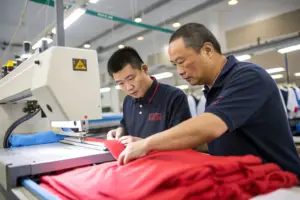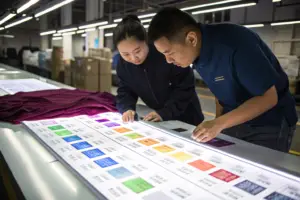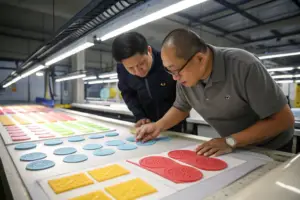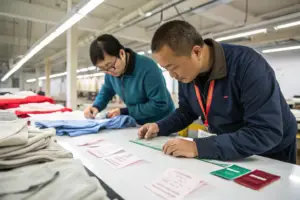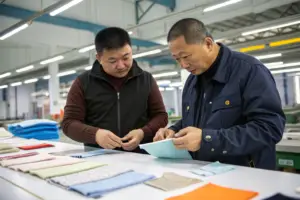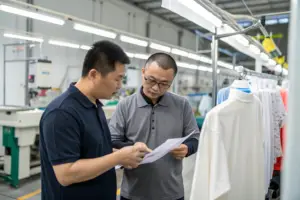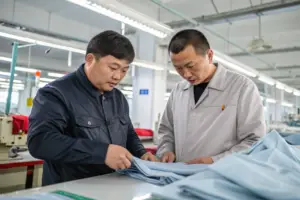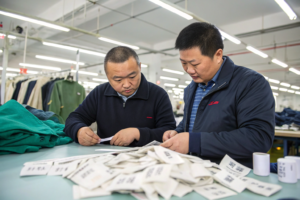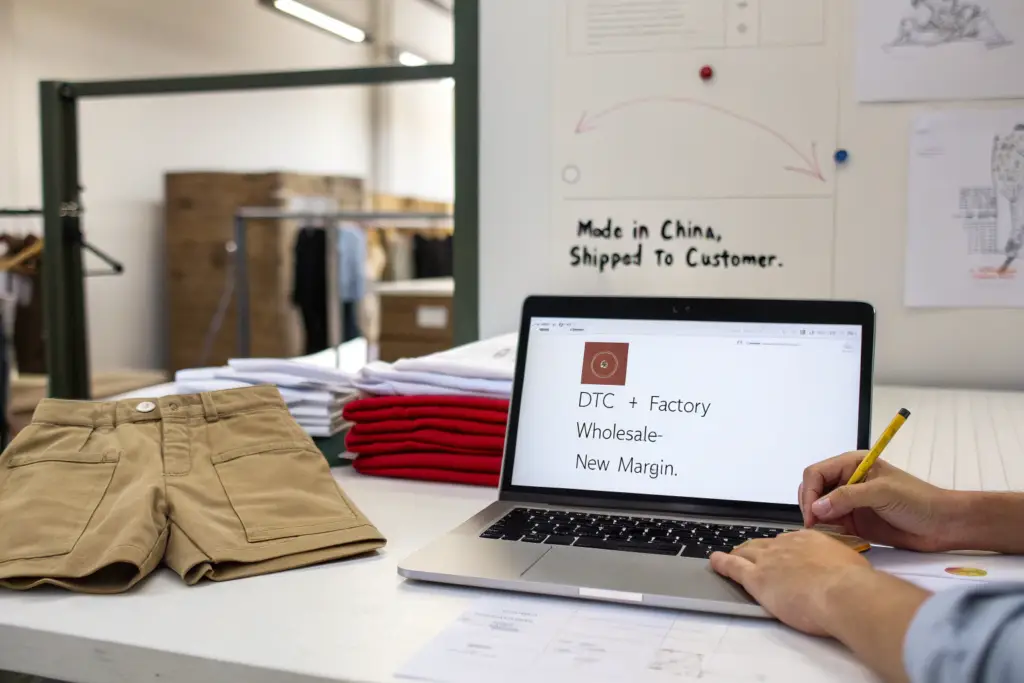
About four years ago, I began noticing a shift in the types of inquiries arriving at our factory. The callers were not the traditional distributors, the department store buyers, or the established brand owners I was accustomed to. They were younger. They spoke a different language. They asked about Facebook ad creative, unboxing experiences, and customer lifetime value. They were founders of Direct-to-Consumer brands, brands that sold exclusively online, that owned their customer relationships, and that had built their businesses on the model of cutting out the wholesale middleman. And yet, they were calling me, a factory that operates on a wholesale model. The irony was striking. The brands that had made their name by eliminating the middleman were now flocking to a model that, in its essence, is a form of wholesale.
The Direct-to-Consumer model is increasingly sourcing classic shorts through what is effectively a wholesale relationship with Chinese factories because the brutal unit economics of digital customer acquisition, particularly on Meta platforms, have compressed the margin available for product cost to a level that makes traditional, multi-tiered supply chains unviable for the DTC model, forcing brands to seek the lowest possible FOB price without sacrificing the quality that keeps return rates low and customer lifetime value high, a combination that the specialized, high-efficiency classic shorts factories in China are uniquely positioned to provide.
At Shanghai Fumao, I now count DTC brands as a significant and growing portion of our client base. The relationship we offer them is a wholesale relationship in everything but name. They purchase finished, branded goods from us at a per-unit price, and we ship those goods to their warehouse or directly to their customer. The arrangement works because it solves a specific, urgent economic problem that the DTC model faces. Let me walk you through the math, the model, and the mutual dependence that has emerged.
What Is the Margin Squeeze Driving DTC Brands to Factory Wholesale?
The DTC model, which seemed unstoppable in the 2010s, has collided with a hard economic reality in the 2020s. The cost of acquiring a customer through digital advertising, particularly on Meta platforms like Facebook and Instagram, has risen sharply. Apple's privacy changes in 2021 degraded the ability of brands to target ads precisely. Competition for attention in the digital space has intensified. The result is a Customer Acquisition Cost that, for many DTC brands, now consumes 30%, 40%, or even 50% of the revenue from a first purchase.
The escalation of digital Customer Acquisition Costs has forced DTC brands into a painful profit squeeze, where the combined cost of the product and the advertising must still leave room for overhead and profit, a reality that has turned the FOB price of the product into the only remaining variable that the brand can control, making the direct-to-factory wholesale relationship, which eliminates the agent's commission, the brand's own design and development overhead, and the cost of carrying inventory, the most viable path to a product cost that allows the unit economics to function.

How Does the Meta Advertising Squeeze Force a Lower Landed Cost?
The math is straightforward and unforgiving. A DTC brand sells a pair of classic shorts online for $75. The brand spends $25 on advertising to acquire the customer who makes that purchase. The payment processor takes $3. The brand's fixed overhead, the staff, the software, the rent, needs to be covered, allocating perhaps $12 to this unit. The brand needs to make a profit, perhaps $15. The remaining amount available for the product is $20. That $20 must cover the landed cost of the shorts, including the factory FOB price, the freight, and the duty.
If the brand cannot source the shorts at a landed cost of $20 or less, the entire model breaks. They either lose money on every sale, raise their retail price to a level that kills conversion, or cut their advertising spend and watch their growth stall. The direct-to-factory wholesale relationship, purchasing finished goods from a specialist factory like Shanghai Fumao at a pre-negotiated FOB price, is the only way to achieve this cost target without sacrificing the quality that keeps the return rate and the Customer Acquisition Cost from spiraling out of control. This DTC brand unit economics and customer acquisition cost explains the financial pressures in detail.
Why Is the Traditional Agent-Designer-Factory Model Too Slow and Expensive?
The traditional model for a brand developing a product involves multiple layers. The brand contracts a designer to create the design. The design is sent to an agent, who sources a factory. The factory produces a sample. The sample is shipped to the brand. The brand reviews the sample and requests changes. The cycle repeats. Each layer adds cost. The designer's fee, the agent's commission, and the multiple rounds of sampling and shipping. Each layer adds time. The total development cycle can be six to twelve months.
The DTC brand, which must be agile, responsive to data, and fast to market, cannot afford this model. They need to move from concept to customer in weeks, not months. The direct-to-factory relationship collapses the supply chain. The brand communicates directly with the factory. The factory's own pattern makers and sample room handle the development. The process is faster, cheaper, and more responsive. This direct-to-factory sourcing for e-commerce brands explains the advantages of the collapsed supply chain.
How Does the "Factory ODM" Model Serve as the Perfect DTC Partner?
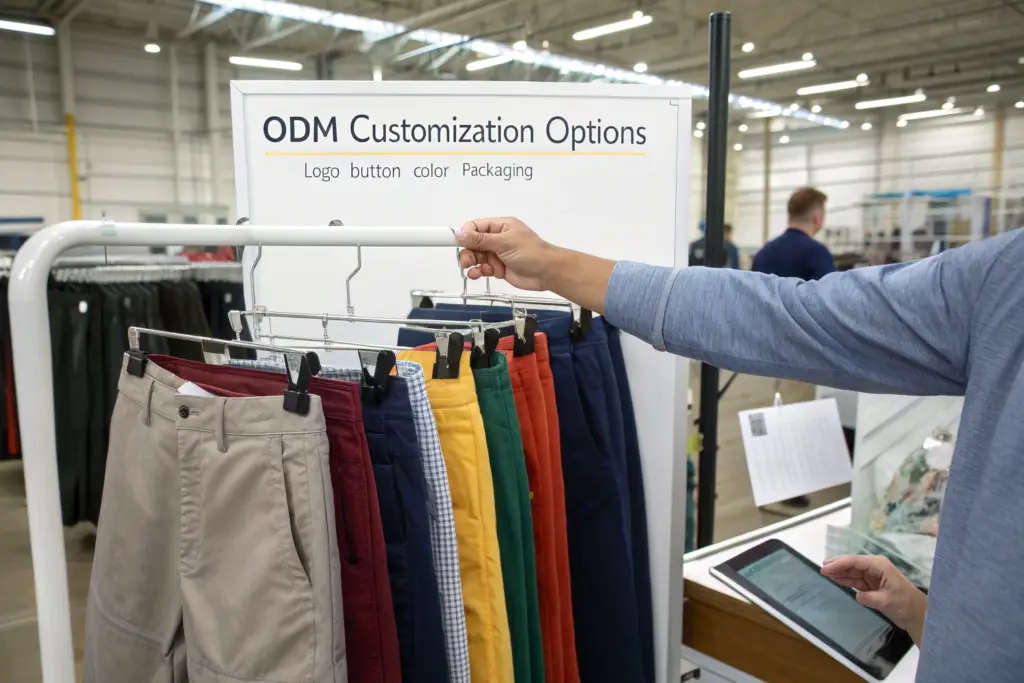
The direct-to-factory relationship is not just about a lower FOB price. It is about a different type of partnership. The most successful DTC brands that work with factories like ours are not developing products from scratch. They are leveraging our ODM, Original Design Manufacturer, capabilities. We design, develop, and produce a range of classic shorts based on our market knowledge and our manufacturing expertise. The DTC brand selects from this range, customizes the branding, and brings the product to market under their own label.
The factory ODM model aligns perfectly with the needs of the modern DTC brand because it offloads the cost, the time, and the risk of product development onto the factory, which is uniquely positioned to absorb them, and allows the DTC brand to focus its limited resources on its core competencies: brand building, digital marketing, and customer experience, creating a symbiotic relationship where the factory provides the product infrastructure and the brand provides the market interface.
How Does ODM Eliminate the Development Bottleneck for DTC Brands?
Product development is the slowest and most resource-intensive part of the apparel supply chain. For a DTC brand with a small team, typically a founder and a few employees, developing a short from a sketch is a months-long project that consumes time and attention that the team does not have. The ODM model eliminates this bottleneck entirely.
The factory has already done the development work. The pattern is made. The fit is approved. The fabric is sourced. The construction is tested. The DTC brand walks into a virtual or physical showroom, selects the short that matches their brand aesthetic, specifies the label, the hangtag, and the packaging, and places an order. The time from selection to shipment can be as short as four to six weeks, compared to six to twelve months for a full custom development. This speed-to-market is a critical competitive advantage for the DTC brand. This ODM manufacturing model for e-commerce brands explains the process in more detail.
Why Does the DTC Model Excel at Selling "Unbranded" Quality?
The DTC brand is, in many ways, the perfect vehicle for selling a factory-developed product. The value proposition of the DTC brand is not, fundamentally, about unique, proprietary design. The value proposition is about curation, storytelling, community, and a direct, authentic relationship with the customer. The product is the hero, but the brand is the context.
A well-made, classic chino short, developed by a specialist factory using quality materials and construction, is a perfect product for a DTC brand. The product does not need a unique design feature to be compelling. It needs to be well-made, well-fitting, and well-presented. The DTC brand wraps the factory's product in its own brand story, its own photography, its own social media presence, and its own customer experience. The customer buys the brand, and the brand delivers the quality. This DTC branding and product curation strategy explains the brand's role as a curator.
One of the most significant financial risks in the apparel business is inventory risk. The brand purchases a large quantity of shorts upfront, pays for them, and then must sell through them. If the shorts do not sell as expected, the brand is left with unsold inventory that ties up cash and eventually must be discounted or written off. The new wholesale model that is emerging between DTC brands and Chinese factories addresses this risk by sharing it more equitably.
The inventory risk in the DTC-to-factory model is being restructured through hybrid approaches that combine elements of traditional bulk wholesale with newer, more flexible models, such as the phased production order, where the brand commits to a total volume but calls off the inventory in smaller batches throughout the season, and the direct-to-consumer dropship model, where the factory packages and ships the product directly to the end customer on behalf of the brand, eliminating the brand's need to hold inventory entirely.

How Does Phased Production Reduce the Upfront Cash Commitment?
The traditional wholesale model requires the brand to purchase the entire seasonal order upfront. The brand pays a 30% deposit, and then the balance before shipment. A large amount of cash is tied up in inventory that will not be sold for months. The phased production model breaks this into smaller, more manageable pieces.
The brand commits to a total volume, for example, 3,000 units for the season. The factory reserves the fabric and the production capacity. The brand places an initial purchase order for 1,000 units. When those units sell through, the brand places a reorder for the next 1,000 units. The brand's cash is tied up in only a portion of the total inventory at any given time. The factory has the security of the total volume commitment. The risk is shared. This phased production and inventory financing for small brands explains the model in more detail.
What Is the Direct-to-Consumer Dropship Model from a Factory?
The most radical evolution of the model is the factory-direct dropship. The brand does not hold any inventory at all. The brand sells the shorts on its website. The order is transmitted directly to the factory. The factory picks, packs, and ships the specific pair of shorts directly to the brand's customer, often with the brand's packaging and labeling.
This model eliminates the brand's inventory risk entirely. The brand pays the factory only for the units that are sold. The brand's role is purely marketing and customer experience. The factory's role expands to include fulfillment. This model is complex to set up, requiring tight integration between the brand's e-commerce platform and the factory's systems, but it is increasingly being adopted by DTC brands that want to minimize their capital at risk. This dropshipping from manufacturers for DTC brands explains the logistics and the technology involved.
Conclusion
The flocking of Direct-to-Consumer brands to wholesale relationships with Chinese classic shorts factories is not a rejection of the DTC model. It is an evolution of it, driven by the hard mathematics of digital advertising costs and the structural advantages of the factory partnership. The factory provides what the DTC brand needs most: a predictable, low FOB price that makes the unit economics viable, a fast and flexible ODM development model that eliminates the time and cost of traditional product development, and increasingly, an inventory and fulfillment partnership that shares the financial risk of holding stock.
The relationship is symbiotic. The factory gains access to brands that understand digital marketing, that can build a community around a product, and that can sell directly to the consumer at a premium over the wholesale price. The brand gains a supply chain partner that allows them to focus on what they do best. The line between wholesaler and manufacturer, between brand and retailer, is blurring. The factory is becoming the platform, and the DTC brand is becoming the channel.
At Shanghai Fumao, I have built our factory specifically to serve this new model. We offer ODM product development, flexible phased production, and direct-to-consumer fulfillment capabilities. If you are a DTC brand looking for a manufacturing partner who understands your business model and can help you make the unit economics work, contact our Business Director, Elaine, at elaine@fumaoclothing.com. Let's build a supply chain that lets you focus on your brand.