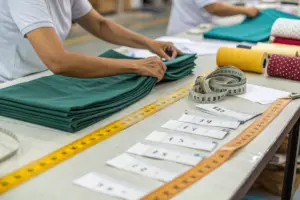
I once watched a brand owner stare at a spreadsheet in our Shanghai office. She had not blinked in about 45 seconds. Her autumn collection had just landed in her U.S. warehouse. 3,500 units of wool coats, cashmere sweaters, and corduroy trousers. Beautiful product. Strong sell-in to boutiques. But she had also received a late shipment of her summer linen dresses due to a port delay. Those dresses were supposed to arrive in May. They arrived in September. Now she had 800 linen dresses competing for warehouse space, sales rep attention, and retail floor placement with her autumn collection. The summer inventory was dead on arrival. The autumn inventory would have to carry the entire season's revenue. She looked up from the spreadsheet and said, "I made money on paper. I lost money in the warehouse." That sentence has stayed with me for years.
Mastering seasonal wholesale apparel inventory management requires a system that balances four competing forces: demand forecasting with incomplete information, cash flow constraints that tighten as inventory builds, the physical reality of warehouse capacity, and the brutal truth that a garment's value declines with every passing week of its selling season. The brands that do this well operate on a simple principle. They treat inventory not as an asset to be maximized but as a perishable good with a known expiration date. They plan production in tiers, releasing only 60% to 70% of the forecasted volume as an initial production run and holding the remaining fabric as greige goods that can be cut and sewn if early sell-through data confirms demand. They liquidate slow movers early, taking a small loss at week four of the season rather than a catastrophic loss at week twelve. And they maintain a real-time inventory dashboard that shows not just what is in the warehouse but what is scheduled to arrive, what is in production, and what is still in fabric form.
Seasonal inventory management is the least glamorous part of running an apparel brand. It is also the part that determines whether the brand exists next year. I have seen brands with beautiful designs, strong sales, and loyal retail accounts collapse because they had $200,000 tied up in unsold inventory while their spring production invoice was due. Cash is not profit. Cash is what you pay factories with. Inventory is cash that has been converted into fabric, and until that fabric is sold, the cash is trapped. I want to share what we have learned at Shanghai Fumao from watching our most successful brand partners manage this balance.
How Should a Wholesale Apparel Brand Forecast Demand Without Historical Sales Data?
A first-time brand owner asked me last year how many units she should produce for her debut collection. She had no historical sales data. No reorder patterns. No sell-through percentages. She had gut feeling and Instagram follower count. I told her that gut feeling was not a forecast. It was a wish. And producing to a wish was the fastest way to fill a warehouse with unsold inventory. We built her first forecast using proxy data instead. We looked at the sell-through rates of three comparable brands in her category. We analyzed her pre-order commitments from the two boutique buyers who had seen her samples at a trade show. We calculated the minimum production quantity that would hit her target landed cost per unit. The resulting forecast was a range, not a single number. A minimum quantity that covered her costs. A maximum quantity that she could afford to produce without borrowing money. A target quantity that represented her best estimate of demand. She produced to the target. She sold 80% of the inventory at full wholesale price. She did not run out of stock. She did not drown in excess. The forecast was imperfect, but it was data-driven, and it kept her solvent.
A wholesale apparel brand can forecast demand without historical sales data by building a proxy demand model from three data sources: the sell-through performance of comparable brands in the same category and price point, the conversion rate of pre-season buyer appointments into confirmed purchase orders, and the minimum viable production quantity required to achieve a profitable landed cost. The forecast should produce a range with a floor, a target, and a ceiling. The initial production run should commit only to the floor quantity. The fabric for the target quantity should be secured as greige goods that can be rapidly finished if early demand signals confirm the higher forecast. This staged commitment strategy limits downside exposure while preserving upside capacity.
Forecasting without history is not impossible. It is just different from forecasting with history. The key is to recognize that the first season's forecast will be wrong. The question is not whether it will be wrong but how wrong it will be and in which direction. The production strategy must accommodate this uncertainty. A brand that produces 100% of a speculative forecast is betting the company on a guess. A brand that produces 60% and holds greige fabric for the remaining 40% is managing risk.

What Proxy Data Sources Provide the Most Reliable Early-Stage Demand Signals?
When a brand has no internal sales data, the best proxy data comes from observing the sales performance of brands that serve the same customer with a similar product at a similar price. This is competitive benchmarking, not copying. The brand identifies three to five comparable brands and monitors their publicly observable inventory behavior. How many units of a given style do they produce? The number is often visible in the quantity of sizes available on their wholesale platform. How quickly do they sell out? The sell-out pattern can be estimated by monitoring stock availability over time. At what point in the season do they begin discounting? The discount timing reveals when demand at full price has been exhausted. The second proxy data source is trade show and buyer appointment feedback. A brand that does ten buyer appointments and receives purchase orders from six of them has a 60% conversion rate. That conversion rate, combined with the average order size, provides a demand floor. The third source is direct-to-consumer interest signals. Email list sign-up rates for a collection launch announcement. Social media engagement on product teaser posts. Pre-order deposits from early supporters. None of these signals are individually predictive. Combined and triangulated, they produce a demand range that is more reliable than intuition.
How Can a Tiered Production Commitment Strategy Protect Cash Flow During the First Season?
A tiered production strategy splits the total forecast into three commitment levels. The first tier is the floor quantity. This is the minimum number of units the brand is confident it can sell based on confirmed pre-orders and conservative proxy estimates. The floor quantity is produced as finished goods. The fabric is cut, sewn, finished, and packed. This inventory is ready to ship to wholesale accounts on day one of the selling season. The second tier is the target quantity. This represents the brand's best estimate of total demand. The fabric for the target quantity is purchased as greige goods and held in inventory, but it is not cut and sewn. The greige inventory strategy preserves optionality. If early sell-through data confirms strong demand, the greige fabric is dyed, cut, and sewn in a rapid replenishment run. If demand is soft, the greige fabric is held for the next season or sold to another brand at a small discount. The third tier is the ceiling quantity. This is the maximum demand the brand could service if every sales channel overperforms. No fabric is purchased for the ceiling quantity. It exists only as a production capacity reservation with the factory. If demand approaches the ceiling, the factory sources the additional fabric and runs a third production batch. The brand pays a premium for the rush order but avoids the catastrophic cost of producing ceiling-quantity finished goods that do not sell. This three-tier system limits the brand's cash exposure to the floor quantity while preserving the ability to capture upside demand.
What Are the Most Common Inventory Traps That Destroy Seasonal Wholesale Profit Margins?
A brand owner I know made a $70,000 mistake that he did not recognize until his accountant showed him the numbers. He had produced his spring collection in three colors per style. Navy, olive, and a bold coral that his designer loved. The navy and olive sold through at 85%. The coral sold through at 15%. He had ordered the same quantity of all three colors because the factory's minimum order quantity applied per color. At the end of the season, he had 400 units of coral inventory that he could not sell at any price. The gross profit from the navy and olive was consumed entirely by the markdown loss on the coral. His collection was profitable on a style level and unprofitable on a total level. The color killed him.
The most common inventory traps that destroy seasonal wholesale profit margins include color-level overproduction, where equal quantities are ordered across all colorways despite uneven demand, size curve miscalibration that leaves a brand with excess XS and XXL while M and L sell out, late deliveries that compress the selling window, and the holding-too-long trap where a brand refuses to liquidate slow sellers at a 30% loss in week four and ends up liquidating them at a 70% loss in week twelve. Each of these traps is preventable with data, discipline, and a willingness to accept small, early losses rather than large, late ones.
The emotional attachment to inventory is a business killer. A brand owner looks at a rack of unsold garments and sees the design work, the fabric sourcing trips, the fittings, the photoshoot. They see the effort. The market sees a product it does not want at the current price. The market does not care about the effort. The brand owner who can separate emotional value from market value makes better liquidation decisions. The brand owner who cannot pay storage fees on dead inventory for three years while hoping it magically becomes desirable.
Why Does Color-Level Overproduction Happen and How Can a Smart MOQ Strategy Prevent It?
Color-level overproduction happens because factories set minimum order quantities per color, not per style. A factory might require 300 units per color for a specific fabric. If a brand wants three colors, they must order 900 units total, even if their demand forecast says 600 units across all colors. The brand orders the 900 units to meet the MOQ and hopes demand materializes. It usually does not. The excess 300 units become dead stock. The smart MOQ strategy is to negotiate with the factory to apply the minimum across the total style quantity rather than per color. This requires the factory to hold greige fabric and dye smaller color batches, which adds cost. The brand should expect to pay a 5% to 8% surcharge for this flexibility. The surcharge is far cheaper than liquidating 300 unsold units. At Shanghai Fumao, we offer a color-flexible MOQ program for brand partners who commit to a minimum total yardage per fabric quality. The brand can split that yardage across up to four colors without per-color minimums. The dyeing cost is slightly higher per meter because the dye house runs smaller batches. The total cost is lower than the markdown loss from forced color overproduction. We also recommend a color ranking forecast where the brand predicts the demand distribution across colors before ordering. The top color gets 50% of the units. The second color gets 30%. The third color gets 20%. This distribution matches the typical sell-through pattern for most apparel categories. The brand that orders equal units across all colors is betting against the historical data.
How Does Size Curve Miscalibration Create Phantom Inventory Shortages and Surpluses?
A size curve is the percentage distribution of total production across sizes. A standard women's apparel size curve might be 10% XS, 20% S, 30% M, 25% L, 15% XL. If the brand's actual customer base skews differently, the standard curve creates a mismatch. The brand sells out of medium in week two and loses sales for the rest of the season because the reorder cannot arrive fast enough. The brand has excess XS that never sells because the customer base runs larger than the standard curve. Both problems are size curve miscalibration. The solution is to build the size curve from actual sales data, not from a textbook standard. If the brand has no historical data, they should analyze the size curves of comparable brands or use the size curve recommended by their retail buyers. The buyers know their customers' size distribution. A brand that sells primarily to boutiques in the Midwest may have a different size curve than a brand that sells to boutiques in Los Angeles. The size curve should be specific to the sales channel and the geographic market. We work with our brand partners to review their size curve analysis after every season. The actual sell-through by size is compared against the planned size curve. The next season's production plan adjusts the curve accordingly. A 3% shift in the size curve can reduce end-of-season excess inventory by 15%.
How Can Real-Time Inventory Visibility Transform Wholesale Reorder Fulfillment?
A boutique buyer in Texas once called one of our brand partners on a Wednesday afternoon. She had sold 12 units of a specific dress style over the weekend. She had 3 units left in her store. She needed 15 more units by Friday, or she would lose weekend sales. The brand owner checked her inventory dashboard. She could see that her warehouse had 8 units of that dress in the correct sizes. She could see that a production run of 50 additional units was in the sewing stage at our factory and would ship within five days. She allocated 5 of the 8 warehouse units to the Texas boutique for immediate shipment. She promised the remaining 10 units from the incoming production batch, arriving at the boutique the following Tuesday. The boutique buyer was satisfied. The brand owner captured a reorder that would have been lost if she had to call the factory, wait for an email response, and guess when the goods would be available. Real-time visibility turned a potential lost sale into a fulfilled reorder and a loyal retail account.
Real-time inventory visibility transforms wholesale reorder fulfillment by eliminating the information lag between what is in the warehouse, what is in production, and what is available to sell. A dashboard that integrates finished goods inventory, work-in-progress production status, and incoming shipment tracking allows a brand to commit inventory to a wholesale buyer with confidence. The brand can see that a style has 20 units in the warehouse, 100 units in sewing at the factory, and 50 units on a vessel arriving in 10 days. They can allocate across these availability dates, giving the buyer a specific delivery promise rather than a vague "we will check and get back to you." The speed of the response often determines whether the reorder is placed.
The technology to achieve this visibility exists and is accessible to small and mid-size brands. It does not require a six-figure enterprise resource planning system. Cloud-based inventory management platforms, combined with a factory willing to provide production status data, can deliver 90% of the visibility that a large enterprise enjoys. The key is the factory's willingness to share data. A factory that treats production status as internal information creates an information blackout for the brand. A factory that provides a live production dashboard treats the brand as a partner.

What Technology Stack Connects Factory Floor Production Data to Wholesale Inventory Availability?
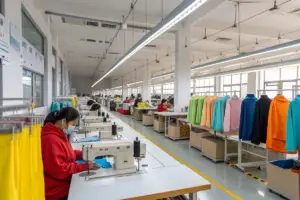
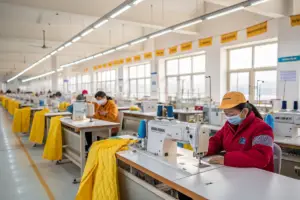
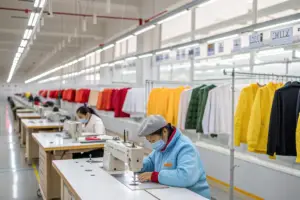
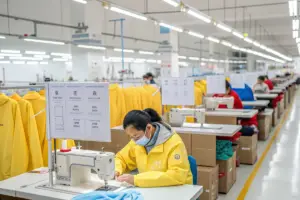
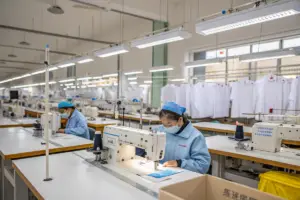
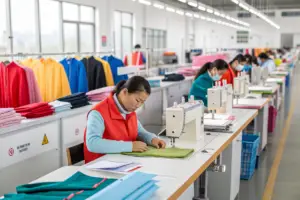
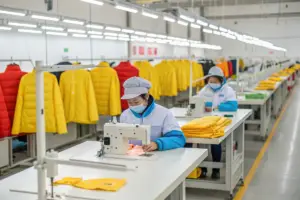
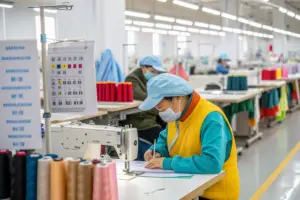
The technology stack has three layers. The first layer is the factory's shop floor production tracking system. Every production stage, cutting, sewing, finishing, packing, is recorded with timestamps and quantities. At Shanghai Fumao, our sewing lines use barcode scanning at each station. When a bundle of cut parts enters the sewing line, it is scanned. When it exits the finishing station, it is scanned. The system knows exactly how many units are in each production stage for each purchase order. The second layer is a cloud-based inventory management platform that integrates with the factory's production tracking system through an API connection. The platform pulls production status data and combines it with finished goods inventory counts from the brand's warehouse. The third layer is a wholesale order management system that allows the brand's sales team to check real-time availability and promise delivery dates to retail buyers. The three layers connect the factory floor to the boutique sales floor. A garment that is cut today in Shanghai appears as "available in 21 days" on the brand's wholesale portal. A garment that is packed and ready to ship appears as "available in stock." The brand's sales team never has to call the factory to check production status. The data is live, visible, and actionable.
How Does a Reorder Readiness Buffer Prevent Stockouts During Peak Selling Windows?
A reorder readiness buffer is a small quantity of greige fabric held specifically for rapid replenishment of styles that sell above forecast. The buffer is not finished goods. It is fabric that can be cut and sewn in an accelerated production run. The buffer size is calculated based on the expected reorder rate for the product category. Basic styles that reorder consistently, such as a white cotton shirt or a black legging, might have a buffer equal to 30% of the initial production run. Fashion styles with less predictable reorder demand might have a buffer of 10% to 15%. The buffer enables a rapid replenishment production cycle that can deliver finished goods in 10 to 14 days instead of the standard 30 to 45 days. The speed difference is entirely in the fabric availability. Standard production waits for fabric to be sourced, dyed, and finished. Buffer production starts with fabric that is already in the factory, already dyed in the correct color, and waiting for the cutting table. A brand that sells 200 units of a style in the first two weeks of the season can trigger a 100-unit buffer replenishment that arrives in the warehouse before the initial 200 units sell out. The retail accounts never see an out-of-stock. The brand captures every potential sale during the peak selling window.
What Exit Strategies Should a Wholesale Brand Have for End-of-Season Excess Inventory?
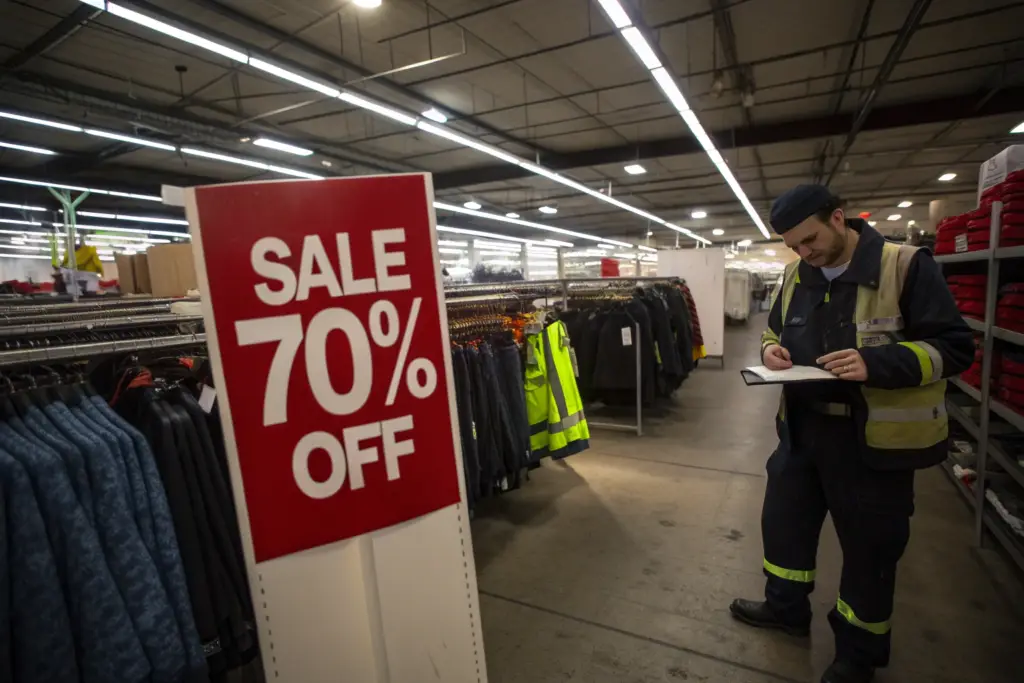
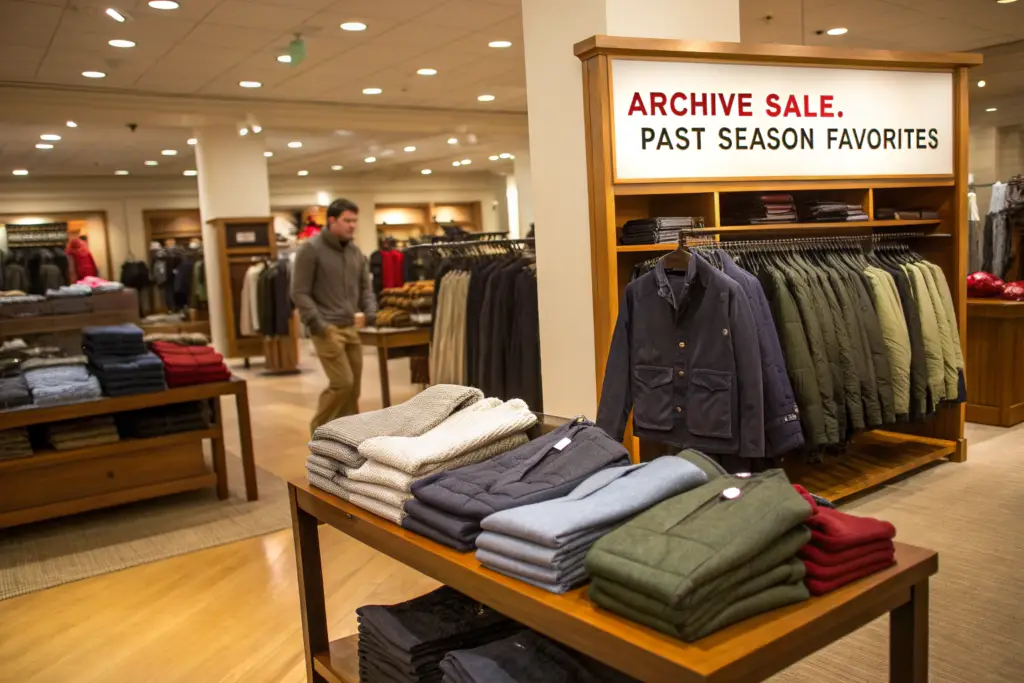
A brand I respect has a phrase they use internally. "We do not have a sale. We have an archive release." Their end-of-season excess inventory is not marked with red SALE stickers and crammed onto a clearance rack. It is curated, photographed, and presented as a special access event for their most loyal customers. The discount is 30%, not 70%. The inventory sells out within 72 hours because the brand has trained their customers to anticipate the archive release as an exclusive opportunity, not as a desperate liquidation. The psychology is entirely different. The customer feels privileged. The brand preserves its pricing integrity for the next season. The excess inventory is cleared, and the brand's full-price positioning is undamaged.
A wholesale brand needs multiple exit strategies for end-of-season excess inventory, ranked by recovery rate and brand impact. The highest recovery and lowest brand impact come from selling to existing wholesale accounts at a modest discount for in-season replenishment before the season ends. The next tier is a direct-to-consumer archive sale positioned as an exclusive event for email subscribers and loyalty members. The third tier is selling to off-price retailers like Nordstrom Rack or TJ Maxx, which recovers 25% to 40% of wholesale cost but degrades brand perception if done visibly. The lowest recovery is donation with a tax write-off, which recovers approximately 15% to 20% of cost through tax savings but generates no cash. The worst option is holding inventory indefinitely, which converts cash into storage fees and eventually into landfill fees.
The timing of the exit decision is as important as the exit channel. A brand that decides to liquidate at week four of a 16-week season can still sell to wholesale accounts at a 20% discount because the retail buyers still have selling weeks ahead. The same brand that waits until week 14 has no wholesale buyers left. The season is over. The only buyers are off-price retailers who demand 70% discounts. The difference between acting at week four and acting at week fourteen is 50 percentage points of margin recovery.
How Can a Brand Liquidate Slow Movers Through Existing Wholesale Channels Before the Season Ends?
The in-season wholesale liquidation is the highest-recovery, lowest-damage exit strategy. The brand identifies slow-moving styles and colors at week three or four of the season. They notify their existing wholesale accounts that these styles are available at a 20% to 25% discount for immediate delivery. The discount is positioned as a "mid-season replenishment opportunity," not a clearance sale. The retail buyer can add the discounted styles to their existing assortment, mark them at their standard margin, and sell them as in-season product. The brand recovers 75% to 80% of the wholesale price. The retail buyer gets margin-enhancing inventory. The slow-moving product is cleared from the warehouse before it becomes dead stock. This strategy requires a wholesale inventory liquidation platform that allows the brand to push discounted availability notifications to their buyer network. The communication must be specific and limited. "We have 40 units of Style 1042 in Navy available at a 20% discount for delivery within 5 business days. First-come, first-served." The limited quantity and limited window create urgency. The buyers respond because they know the discount is temporary and the inventory is finite. The brand clears the slow movers without ever placing a public markdown.
What Off-Price Retail Partnerships Offer the Best Recovery Rate Without Damaging Brand Equity?
Off-price retail is a legitimate inventory exit channel, but it must be managed carefully. The risk is not the sale itself. The risk is the brand's full-price customers seeing the product at TJ Maxx for 60% off and concluding that the brand's full retail price is inflated. The mitigation strategy is to sell to off-price retailers through a jobber or a liquidation broker rather than directly. The jobber aggregates excess inventory from multiple brands and sells to off-price retailers in mixed lots. The brand's product appears as one item among many, not as a branded presence. The brand name is not featured in the off-price retailer's marketing. The recovery rate through a jobber is 20% to 35% of the original wholesale price, lower than direct off-price selling but higher than donation. The brand also retains control over which off-price retailers receive the product. Some off-price retailers, like Nordstrom Rack and Saks Off 5th, position themselves as premium outlet experiences. The shopping environment is clean and organized. The brand association is less damaging than appearing in a discounter with fluorescent lighting and disorganized racks. A brand that chooses its off-price partners carefully and routes the product through a jobber can recover meaningful cash without visible brand damage. The alternative, holding inventory for two years and eventually donating it or destroying it, recovers nothing and costs storage fees along the way.
Conclusion
Seasonal wholesale apparel inventory management is not about getting the forecast right. The forecast will be wrong. Every season. For every brand. The question is whether the brand's production strategy, inventory visibility systems, and exit plans are robust enough to absorb forecast error without destroying the business. A brand that produces 100% of forecast, has no real-time visibility into production status, and has no exit strategy beyond a desperate 70%-off clearance sale is one forecasting error away from insolvency. A brand that produces in tiers, monitors inventory in real time, and liquidates slow movers early through wholesale channels can survive and thrive even when the forecast is off by 30%.
At Shanghai Fumao, we have structured our manufacturing services to support the brands that take inventory management seriously. Our color-flexible MOQ program prevents forced overproduction on unpopular colorways. Our greige fabric buffer program enables rapid replenishment of strong sellers without committing to finished goods before demand is proven. Our production tracking dashboard gives our brand partners real-time visibility into work-in-progress status, so they can promise delivery dates to their wholesale accounts with confidence. These are not premium services reserved for our largest accounts. They are standard operating procedures for every brand partner because we believe that a factory's responsibility does not end when the goods leave the loading dock. It ends when the goods sell through at full price.
If your brand is ready to implement a tiered inventory strategy, or if you are looking for a factory partner who will help you build a reorder readiness buffer for your best-selling styles, reach out to us. At Shanghai Fumao, we will review your current inventory challenges and recommend specific production strategies to address them. Contact our Business Director, Elaine, at elaine@fumaoclothing.com. She can share a case study of how one of our brand partners reduced their end-of-season excess inventory by 40% through a combination of color-flexible MOQs and greige buffer planning. Inventory is cash in another form. Manage it with the same discipline you apply to your bank account.