I sat in a coffee shop in Los Angeles last March with a 23-year-old brand founder. He had sold 4,000 hoodies in six months with no paid advertising. His marketing was entirely organic. TikTok posts of kids wearing his designs in real life. No studio lighting. No models. Just phones and confidence. I asked him what his customers wanted. He pulled out his phone and showed me a saved folder of screenshots. "They want clothes that look like they already lived a life," he said. "Oversized but not sloppy. Functional pockets everywhere. Fabrics that feel heavy and substantial. Graphics that look hand-drawn, not vector-perfect. And they want to mix pieces in ways that confuse their parents." That conversation rewired how I think about streetwear manufacturing. The elements that move product are not the elements that look good on a runway. They are the elements that look good in a bathroom mirror selfie at 8 AM before school.
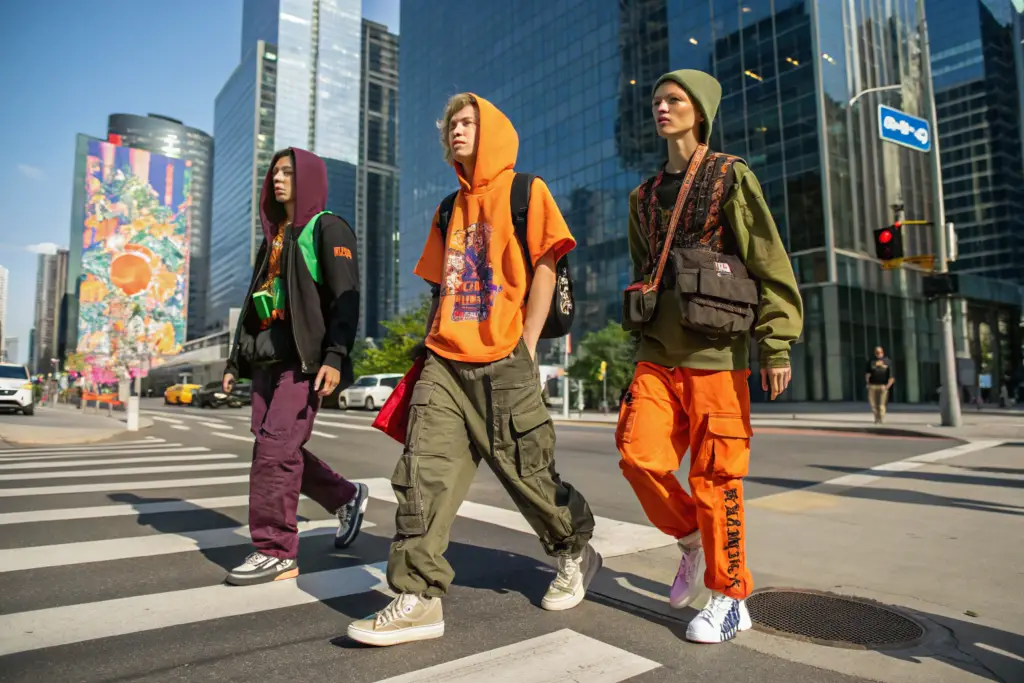
The streetwear elements most popular among overseas young groups include oversized silhouettes with dropped shoulders and boxy cuts, utility-driven designs with multiple cargo pockets and modular straps, heavyweight fabrications that drape with structure, and graphics that use hand-drawn illustration styles, vintage wash effects, and cultural reference layering. Accessories like crossbody bags, beanies, and chunky footwear complete the look. The common thread across all these elements is authenticity. Young consumers can detect a corporate attempt to manufacture street culture from a mile away. The brands that win are the ones that understand streetwear is not a style category. It is a visual language spoken by a global youth community that values self-expression, comfort, and cultural awareness above traditional fashion rules.
This generation of consumers has unprecedented power. They discover brands on social media. They validate brands through peer networks. They abandon brands that feel inauthentic without a second thought. Manufacturing for this market requires understanding not just what they wear but why they wear it. I want to share what we have learned at Shanghai Fumao from producing for streetwear brands that have successfully captured this demographic across North America and Europe.
Why Do Oversized and Boxy Silhouettes Dominate the Current Streetwear Aesthetic?
A streetwear brand owner in Chicago once sent me a sample reference that changed how I draft patterns. It was a vintage 1990s skateboard T-shirt he had found at a thrift store. The shirt had been washed hundreds of times. The shoulder seams had migrated outward. The neck rib had relaxed into a wide, comfortable opening. The hem had developed a gentle curve. He asked us to reverse-engineer that worn-in shape as a new garment. Not to make it look new. To make it look like it had been his favorite shirt for five years. We measured every distortion. The dropped shoulder. The stretched sleeve length. The relaxed neckline. We built a pattern that replicated the shape of a broken-in shirt but with fresh, heavyweight fabric. That shirt became their best-selling SKU for two seasons.
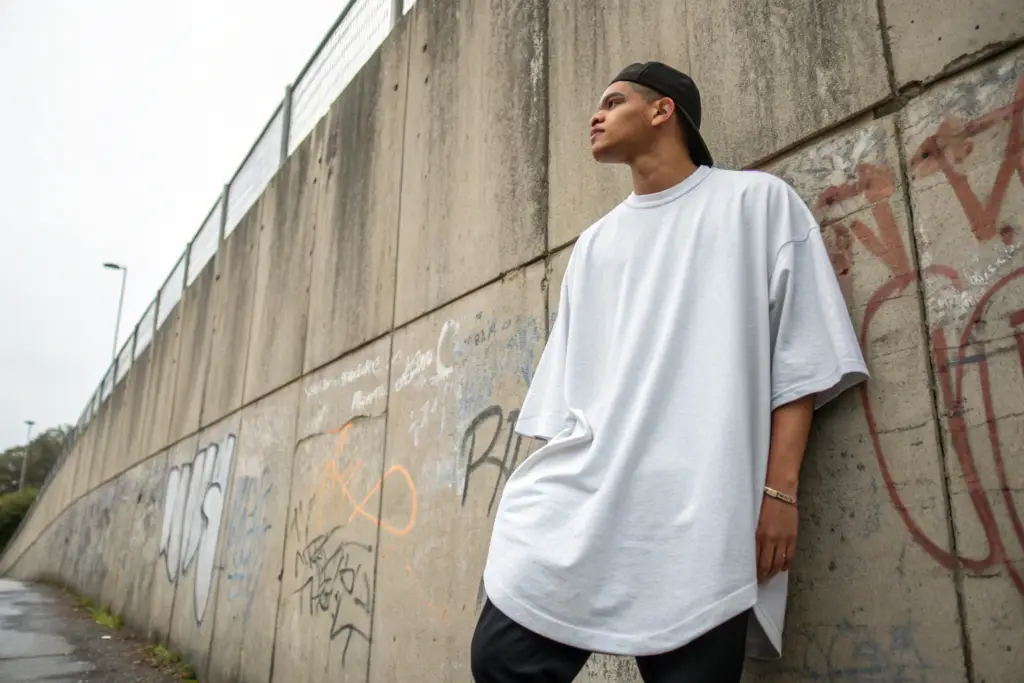
Oversized and boxy silhouettes dominate streetwear because they communicate comfort, confidence, and a rejection of traditional tailored menswear norms. The key measurements include a shoulder seam dropped 5 to 8 centimeters past the natural shoulder point, a chest circumference 25% to 40% larger than the body measurement, and a sleeve length that extends to the elbow or mid-forearm. The silhouette works because the excess fabric is balanced by heavyweight material that drapes downward rather than billowing outward. A lightweight fabric in the same dimensions would look like a tent. A heavyweight fabric looks architectural.
We manufacture oversized silhouettes differently from standard fits. The pattern grading rules are different. A standard T-shirt grades up by adding 5 centimeters of chest circumference per size. An oversized T-shirt grades up by adding 8 to 10 centimeters per size to maintain the intended proportion of excess fabric. The fabric consumption increases significantly. An oversized XL T-shirt can consume 1.8 meters of fabric compared to 1.2 meters for a standard XL. The brand pays more for material, but the customer perceives the extra weight and volume as premium value.
How Should Pattern Grading Adjust to Maintain the Oversized Proportion Across Sizes?
The biggest mistake in oversized grading is treating the oversized fit as a constant absolute measurement rather than a constant proportion. A brand might specify that the shoulder seam should drop 6 centimeters from the natural shoulder. If the pattern grader applies that same 6-centimeter drop to every size, the proportion changes. An XS with a 6-centimeter drop looks dramatically oversized. An XXL with the same 6-centimeter drop looks almost standard, because the natural shoulder is wider and the 6 centimeters represents a smaller percentage of the total width. The correct method is percentage-based grading. The shoulder drop should be a fixed percentage of the total shoulder width. We use 15% to 20% depending on the brand's intended look. For a garment with a 50-centimeter natural shoulder width at size medium, a 20% drop adds 10 centimeters. For an XXL with a 58-centimeter natural shoulder width, the same 20% drop adds 11.6 centimeters. The proportion holds. The oversized look is consistent across the size range. We apply this percentage-based grading to all key dimensions: chest circumference, body length, and sleeve width. The pattern grading methodology is documented in a brand-specific grading table that we develop during the sampling stage and lock before bulk production. Every production run references the same grading table. The customer who buys an XS and the customer who buys an XXL receive the same design intention.
What Fabric Weight Is Required to Achieve the Structured Drape That Defines Premium Streetwear?
Lightweight fabric kills an oversized silhouette. A 140 GSM single jersey in an oversized cut drapes like a nightgown. It clings to the body at contact points and billows unpredictably everywhere else. Heavyweight fabric, 220 GSM and above, creates the structured drape that premium streetwear demands. The weight makes the fabric hang straight from the shoulder points, creating clean architectural lines. It also provides the tactile experience that young consumers associate with quality. They pick up the garment, feel the weight, and perceive value. We recommend 240 to 280 GSM for oversized T-shirts, 320 to 400 GSM for hoodies, and 350 to 450 GSM for sweatshirts. These weights are significantly above mass-market standards. A standard fast fashion T-shirt is 140 to 160 GSM. A standard hoodie is 280 GSM. The premium streetwear weight adds 50% to 100% more material. The cost is higher, but the product occupies a different category in the consumer's mind. It is not a disposable fashion item. It is a piece they will wear for years. We source heavyweight jersey and fleece fabrics specifically for streetwear brands. The fabric is knit on machines designed for heavier yarns. The finishing process includes a garment wash that removes surface tension and gives the fabric a soft, lived-in hand from the first wear. The customer does not need to break in the garment. It arrives pre-broken-in.
What Utility and Functional Design Details Are Driving Streetwear Accessory Trends?
I watched a teenager at a bus stop in Brooklyn last winter. He was wearing a pair of cargo pants with eight visible pockets. His phone was in a side pocket. His wallet was in a zip pocket on the thigh. His keys were clipped to a D-ring on the belt loop. His hands were free. No backpack. No shoulder bag weighing him down. He was carrying everything he needed in a distributed load across his pants. It was the most efficient personal carry system I have ever seen on a non-military garment. That teenager was not preparing for combat. He was preparing for a day of school, friends, and movement across the city. The utility trend is not about looking tactical. It is about having your stuff with you without carrying a bag.
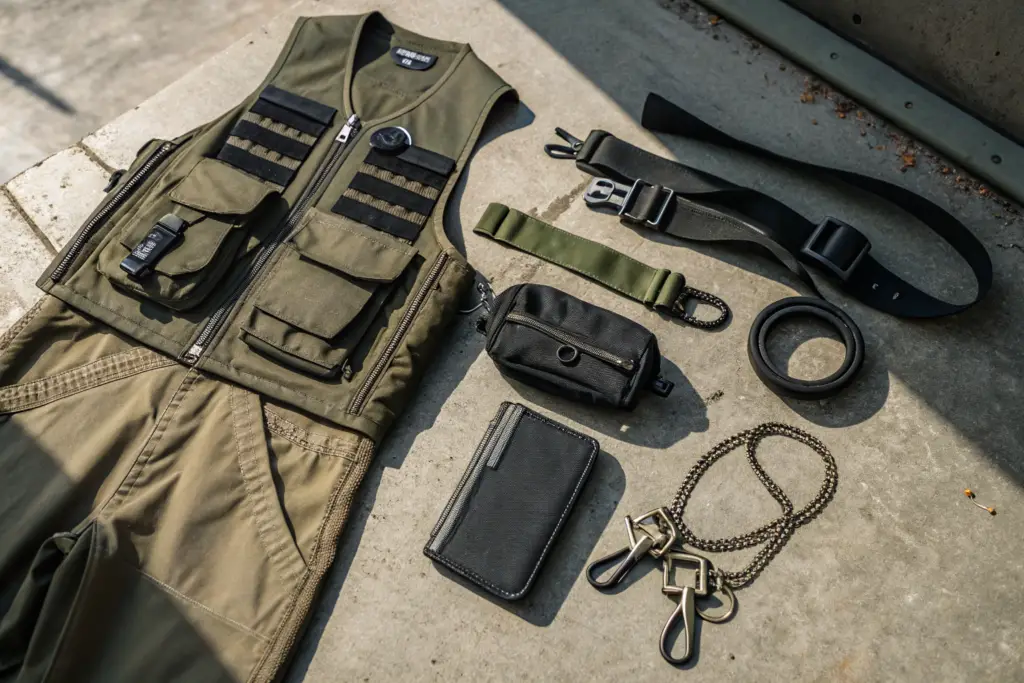
Utility and functional design details drive streetwear accessory trends because they solve a genuine problem for young consumers who are mobile, phone-dependent, and bag-averse. Crossbody bags with multiple compartments keep essentials accessible without restricting movement. Cargo pants with oversized pockets accommodate modern phone sizes. MOLLE webbing and D-ring attachment points allow the wearer to customize their carry system. The aesthetic codes come from military, outdoor, and workwear traditions, but the functionality is adapted for urban daily life. The details that sell are not decorative. They are functional features that a teenager can explain to a friend in two sentences.
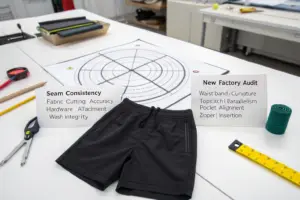
Manufacturing utility streetwear requires a different trim supply chain than standard fashion garments. The zippers need to be durable. The pocket flaps need to close securely. The webbing needs to be abrasion-resistant. The D-rings need to be load-bearing, not decorative. We source these components from suppliers who serve the outdoor equipment and military gear industries. The quality expectation is higher. A zipper that fails on a fashion jacket is a minor annoyance. A zipper that fails on a crossbody bag worn daily is a product failure that generates a return.
Why Are Crossbody Bags and Chest Rigs Replacing Traditional Backpacks in Youth Fashion?
The backpack is a school object. It is associated with homework, textbooks, and adult requirements. The crossbody bag is a personal object. It is associated with street style, music festivals, and autonomous movement. The shift from backpack to crossbody is a psychological shift from obligation to choice. Functionally, the crossbody bag offers advantages that a backpack does not. It can be accessed without removing it. The wearer swings it to the front, unzips a pocket, retrieves their phone or wallet, and swings it back. This takes three seconds. A backpack requires taking one arm out of a strap, swinging the bag around, accessing the compartment, and repositioning. On a crowded sidewalk or a moving subway car, the crossbody is simply more practical. The manufacturing requirements for a streetwear crossbody bag include a heavyweight nylon or polyester shell in 600D to 1000D density, YKK or equivalent quality zippers with oversized pulls that can be operated with one hand, an adjustable strap with a quick-release buckle, and internal organization pockets sized for a smartphone, a cardholder, and a portable charger. The bag must survive daily use for at least one year without seam failure, zipper failure, or strap fraying. This is a higher durability standard than most fashion accessories meet. Brands that source their crossbody bags from general fashion accessory suppliers often experience quality failures. We direct our brand partners to specialized bag manufacturers who understand the durability requirements of daily-wear utility products.
How Are MOLLE Webbing and Modular Attachment Systems Being Adapted for Everyday Garments?
MOLLE is an acronym for Modular Lightweight Load-carrying Equipment. It is a military system of webbing strips sewn onto gear that allows pouches and accessories to be attached and rearranged. Streetwear brands have adopted the visual language of MOLLE while adapting the function for civilian use. A vest with MOLLE webbing might hold a phone pouch on Monday, a camera case on Tuesday, and nothing on Wednesday when the wearer wants a cleaner look. The modularity is the value proposition. Manufacturing MOLLE webbing requires precise stitching. The webbing strips are sewn with bartack stitches at regular intervals. The bartack is a dense zigzag stitch that reinforces the attachment point. Each bartack must withstand a pull force of at least 15 kilograms to be functional. Decorative MOLLE that is not properly reinforced will tear under load. We use a bartack sewing machine specifically programmed for MOLLE specifications. The stitch count, thread tension, and bartack length are locked into the machine program. Every attachment point on every garment is identical. This consistency is critical for a brand's reputation. A customer who clips a $50 accessory pouch to a vest and has the webbing tear off on the first wear will never buy from that brand again.
What Graphic Print Styles and Placements Are Resonating with Gen Z and Young Millennial Consumers?
A brand founder in London told me something that changed how I think about graphic placement. He said, "My customers do not stand still. They are walking, dancing, sitting in cars, leaning against walls. The graphic has to look good from every angle, in motion, not just in a flat lay photo." He was right. A centered chest print looks perfect in a product photo and disappears in real life. The wearer's arms cover the sides. Their phone, held in front of them, blocks the center. The graphic becomes invisible. His solution was off-center placement, back prints, and sleeve prints that are visible when the wearer is in motion. His sales data proved the point. Off-center and back-print styles outsold centered chest prints by a 3-to-1 ratio.
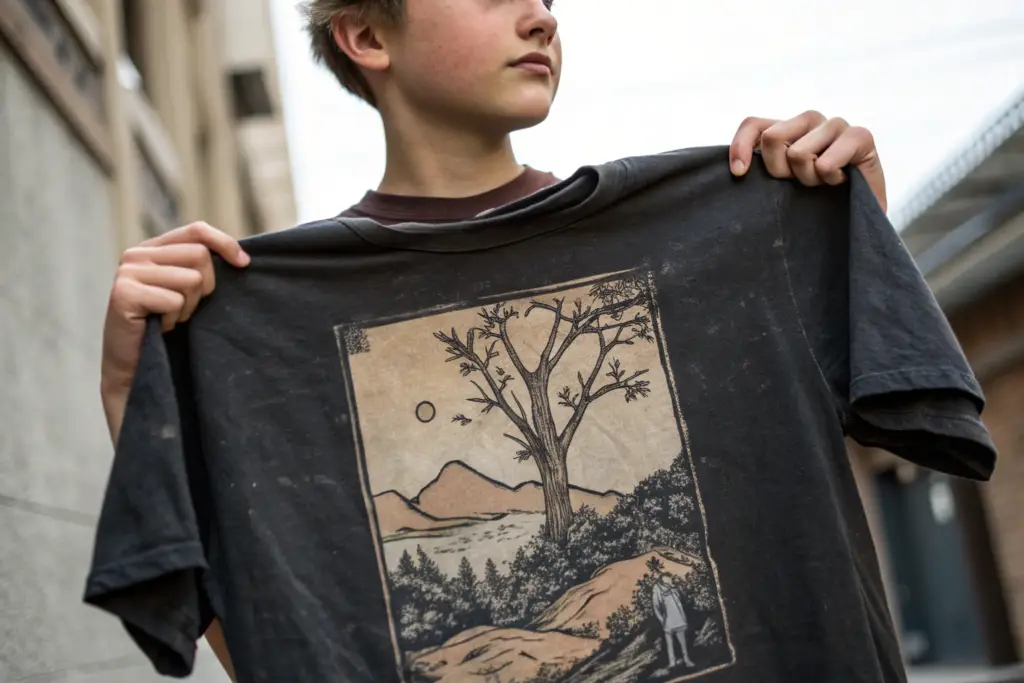
The graphic print styles resonating with Gen Z and young millennial consumers include hand-drawn illustrations with visible line work and imperfect textures, vintage-inspired wash effects that make a new garment look archival, and cultural reference layering that combines multiple visual languages into a single design. Placement trends include off-center chest prints, full-back graphics, sleeve prints on oversized silhouettes, and tonal prints that use different textures of the same color rather than contrasting colors. The printing technique itself has become part of the aesthetic. Water-based and discharge prints that sink into the fabric are preferred over plastisol prints that sit on top of the surface.
Printing for streetwear is technically demanding. The heavy fabrics that give the garment its structure also make printing harder. A thick fleece surface is uneven. A standard screen print on an uneven surface produces a patchy result. The ink deposits unevenly. The fine details blur. We use specialized printing platens with extra padding to level the fabric surface during printing. The squeegee pressure and angle are adjusted for each fabric weight. The curing temperature and dwell time are adjusted to ensure the ink bonds to the fiber without scorching the heavy fabric.
Why Are Water-Based and Discharge Prints Preferred Over Plastisol on Heavyweight Streetwear?
Plastisol ink is a plastic-based ink that sits on top of the fabric. It creates a raised, rubbery layer that the wearer can feel. On a lightweight fast fashion T-shirt, this layer is often heavier than the fabric itself. On heavyweight streetwear, the plastisol layer can crack when the thick fabric bends and folds. The print looks new for three washes and then develops fissures. Water-based ink is different. It uses water as a carrier that evaporates during curing, leaving the pigment bonded to the fiber. The print has no hand feel. It moves with the fabric. It does not crack because there is no separate layer to crack. Discharge printing goes further by removing the fabric dye in the print area and replacing it with the ink pigment. The result is a print that is physically part of the fabric. The surface texture is identical to the unprinted areas. For streetwear brands that market their garments as premium, long-lasting products, water-based screen printing is the standard. The print ages with the garment rather than peeling off it. The aesthetic aligns with the brand promise of durability and authenticity. The cost is slightly higher than plastisol, and the production process is more technically demanding. The ink viscosity, mesh count, and curing parameters must be precisely controlled. But the result is a garment that a customer wears for two years without the print degrading.
How Does Placement Theory Influence the Perceived Value of a Streetwear Graphic?
Placement theory is the design discipline of positioning a graphic where it will be most visible during natural movement. The human body in motion creates visual frames. The upper back is visible when the wearer walks away. The sleeve is visible when the wearer reaches for something. The side seam is visible when the wearer stands in profile. Standard centered chest placement uses none of these frames. It places the graphic where it is most visible in a static frontal photograph and least visible in dynamic daily life. Streetwear brands that understand placement theory use the body's motion frames. A graphic printed along the sleeve, from shoulder to elbow, is constantly visible as the wearer moves their arms. A graphic printed on the upper back, between the shoulder blades, is visible every time the wearer turns around or walks away. An off-center chest placement at the left or right pectoral position creates visual interest in a static photo and remains partially visible when the wearer crosses their arms. We work with brand designers to test print placements on live models in motion, not just on flat garments on a table. The placement that looks best on a table is often not the placement that looks best on a body walking down the street.
What Fabric Textures and Material Innovations Are Defining the Next Wave of Streetwear?
Young consumers touch clothes before they look at the price tag. I have observed this in trade show booths, in retail stores, and in our own showroom. A teenager picks up a hoodie. They squeeze the fabric. They rub the inner fleece against their cheek. They stretch a small section to test the recovery. That tactile evaluation takes three seconds. If the fabric feels substantial and interesting, they check the price. If the fabric feels thin or generic, they put it down without ever looking at the price. The texture is the first salesperson.
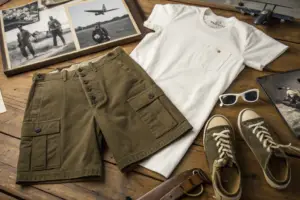
The fabric textures and material innovations defining the next wave of streetwear include heavyweight French terry with an exaggerated loopback texture, garment-dyed finishes that create subtle color variation across the surface, nylon and polyester blends with matte, paper-like hand feels, and textured knits that mimic the appearance of woven fabrics. The innovation is not in creating new fibers but in applying finishing processes that give conventional materials an unconventional hand feel. Enzyme washes, silicone softeners, and mechanical brushing techniques transform standard cotton jersey into fabrics that feel like vintage garments that have been worn and washed for years.
The streetwear fabric market is moving away from shiny, technical performance fabrics and toward matte, natural-feeling materials. A 400 GSM cotton French terry with a brushed interior reads as luxury to a young consumer. A 200 GSM polyester performance knit reads as cheap, even if it costs more to produce. The perception of quality is driven by weight and texture, not by fiber content or technical specifications. We source our streetwear fabrics from mills that specialize in heavy-gauge knitting and garment-dye finishing.
What Is the Role of Garment Dyeing and Enzyme Washing in Creating the Vintage Streetwear Look?
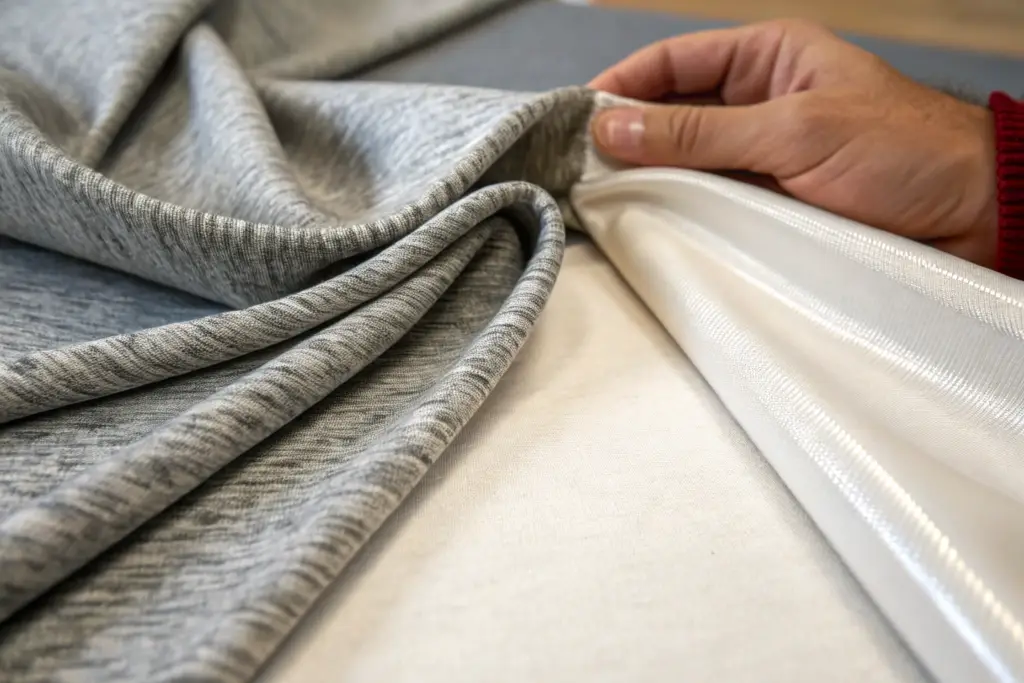
Garment dyeing is the process of dyeing a fully constructed garment rather than dyeing the fabric roll before cutting. The dye penetrates the seams, the stitching, and the fabric surface unevenly, creating subtle color variation that looks natural and worn. Enzyme washing uses cellulase enzymes to eat away the surface fuzz of cotton fibers, creating a smooth, clean surface with a soft hand feel. Together, garment dyeing and enzyme washing create a garment that looks and feels like it has been worn and washed for years, even though it is brand new. This is the garment finishing process that premium streetwear brands use to differentiate their products from mass-market alternatives. A standard T-shirt is piece-dyed, meaning the fabric is dyed in roll form before cutting. The color is perfectly uniform. The hand feel is whatever the fabric finish provides. A garment-dyed, enzyme-washed T-shirt has color variation at the seams. The stitching thread takes the dye differently than the fabric, creating a contrast effect. The surface is exceptionally smooth and soft. These details signal to the consumer that the garment is special. The cost of garment dyeing is higher than piece dyeing because each garment is processed individually. The dyeing time is longer. The shrinkage must be carefully controlled because the garment is already constructed. But the premium that streetwear consumers will pay for the resulting aesthetic justifies the additional cost.
How Are Technical Fabrics Being Softened and Matte-Finished for Everyday Streetwear Use?
Technical fabrics have traditionally been designed for performance, not for hand feel. A waterproof nylon jacket is functional but feels like a plastic bag. Young consumers reject this trade-off. They want the functionality of technical fabrics with the hand feel of natural materials. The fabric industry has responded with a new generation of soft-touch technical fabrics. Matte-finish nylons with a paper-like hand feel. Brushed polyester that mimics the softness of cotton flannel. Water-repellent cotton blends that bead water without feeling synthetic. The finishing processes that create these hand feels include mechanical brushing, where the fabric surface is abraded with fine wire brushes to raise a soft nap, and chemical softening, where silicone-based softeners are applied to the fabric to reduce surface friction. The result is a fabric that performs like a technical material but feels like a natural fiber. A streetwear brand we work with uses a soft-shell fabric technology for their winter jackets. The outer face is a matte-finished, water-resistant polyester that feels like densely woven cotton. The inner face is a brushed fleece that feels like a sweatshirt. The jacket provides wind resistance and water repellency without the crinkly, plastic feel of a traditional rain shell. Their customers describe the jacket as "a hoodie that blocks wind." That description captures exactly what the market wants: technical performance hidden inside a streetwear aesthetic.
Conclusion
Streetwear is not a trend. It is the default fashion language of a global generation that grew up with the internet, social media, and direct access to cultural products from every country. The elements that define streetwear, oversized silhouettes, utility functionality, authentic graphics, and tactile fabrications, are not arbitrary aesthetic choices. They are responses to genuine consumer needs. Young people need clothes that let them move freely through cities. They need pockets because they carry phones, wallets, and keys without wanting to carry bags. They need graphics that express their cultural affiliations and personal tastes. They need fabrics that feel substantial and last long enough to justify the price.
At Shanghai Fumao, we have invested in understanding these needs because we manufacture for the brands that serve this consumer. Our pattern grading tables accommodate oversized proportions. Our trim supply chain sources military-spec webbing and YKK zippers for utility garments. Our printing department runs water-based and discharge inks on heavyweight fabrics. Our finishing partners offer garment dyeing and enzyme washing for the vintage aesthetic. These capabilities are not theoretical. They are production-ready and proven across multiple seasons with streetwear brands selling in North America and Europe.
If your brand is developing a streetwear collection and you need a manufacturing partner who understands the difference between a standard T-shirt and a 280 GSM oversized drop-shoulder tee with a discharge back print, we are ready to collaborate. At Shanghai Fumao, we can review your tech packs against current streetwear specifications and flag any dimensions, fabric weights, or print techniques that might not meet the expectations of young overseas consumers. Contact our Business Director, Elaine, at elaine@fumaoclothing.com. Send her your design concepts and your target retail price point. She will return a manufacturing feasibility assessment with fabric weight recommendations, print technique options, and a production timeline that respects your launch date. Let's make garments that a teenager at a Brooklyn bus stop wants to wear every single day.