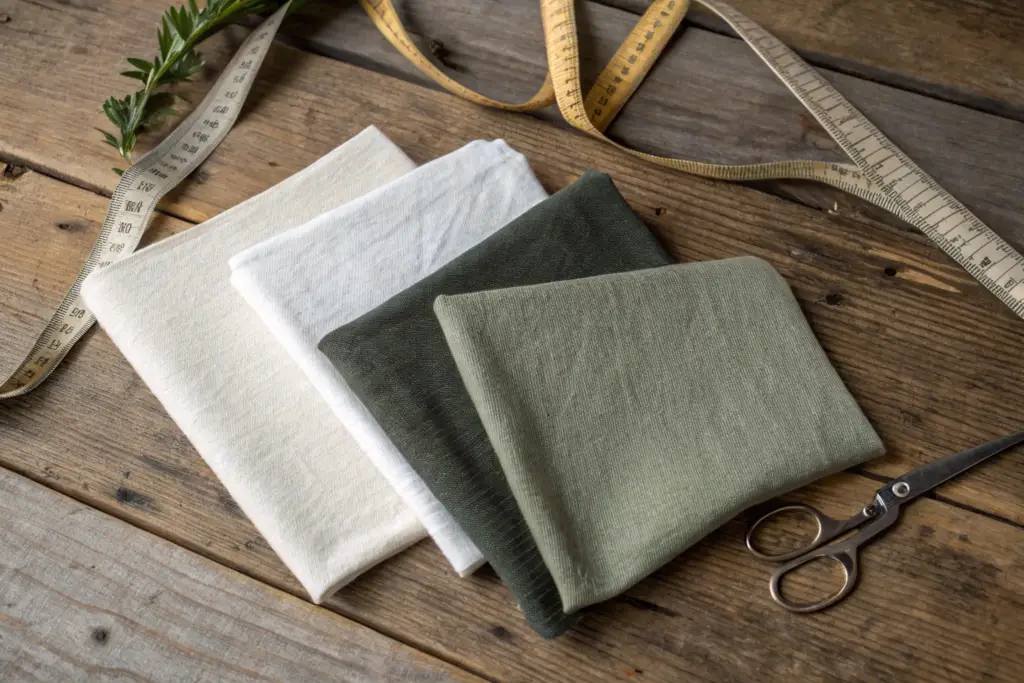
I stood in our sample room last September with a brand owner from Portland. She had brought her entire autumn collection concept. Six pieces. Every single one was made from the same 280-gram brushed cotton twill. The jacket. The vest. The trouser. The skirt. The dress. The overshirt. The collection looked flat. Not because the designs were bad. The patterns were actually quite strong. The problem was that every garment draped the same way, reflected light the same way, and moved the same way. The collection had no conversation between fabrics. We spent the next three hours rebuilding her fabric plan from the ground up. She left with a collection that paired crisp cotton poplin with fluid lyocell, structured wool flannel with soft cashmere blends, and waxed cotton with brushed cotton jersey. Six months later, she told me that collection was her best-selling season in eight years of business.
You combine different fabrics to create layered seasonal outfits by treating fabric selection as a conversation between weight, texture, and drape. The rule is simple but powerful. Pair one structured fabric with one fluid fabric. Pair one matte surface with one surface that catches light. Pair one dense weave with one open or brushed weave. In autumn and winter, this means combining wool coatings with silk linings, corduroy bottoms with cashmere knits, and waxed cotton shells with brushed flannel linings. In spring and summer, it means pairing linen canvases with cotton voiles, lightweight denim with silky modal, and open-weave knits with crisp poplins. The contrast creates visual depth, thermal functionality, and a tactile experience that customers feel the moment they touch the garment.
Fabric combining is not just an aesthetic exercise. It is an engineering problem with a creative outcome. Each fabric in a layered outfit performs a job. One blocks wind. One traps warmth. One wicks moisture. One drapes elegantly against the body. When the jobs are assigned correctly, the outfit works functionally and looks intentional. When they are not, you get a bulky, uncomfortable mess that makes the wearer sweat on one side and shiver on the other. I want to share how we approach this at Shanghai Fumao, from the technical compatibility checks to the sensory experience that makes a layered garment feel expensive.
What Are the Fundamental Rules for Pairing Heavy and Lightweight Fabrics in One Outfit?
A buyer from a Chicago-based brand once sent me a prototype for feedback. It was a winter parka with a cotton jersey lining. The shell was a heavy 350-gram polyester-nylon blend. The lining was a lightweight 160-gram single jersey. The first time a customer wore it, the lining would ride up every time they moved their arms. The friction differential between the heavy shell and the lightweight lining was too extreme. The lining had no structural independence. It was just a limp layer inside a stiff shell. We replaced the jersey lining with a 190-gram cotton-twill lining that had enough body to move independently of the shell. The comfort improved immediately. The garment felt like one cohesive piece instead of two mismatched fabrics fighting each other.
The fundamental rule for pairing heavy and lightweight fabrics in one outfit is to respect structural independence. Each fabric layer must have enough body to hold its own shape and move independently of the adjacent layers. A heavy shell fabric paired with an extremely lightweight lining creates friction problems and bunching. A lightweight outer fabric paired with a heavy inner layer creates sagging and distortion. The sweet spot is a weight ratio between 1.5:1 and 2.5:1 between adjacent layers. A 300-gram wool coating works beautifully with a 150-gram bemberg lining. A 200-gram cotton canvas works with a 100-gram cotton voile. Beyond a 3:1 ratio, the layers begin to fight each other.
We think about fabric weight in grams per square meter. This metric gives us an objective language for pairing decisions that might otherwise be subjective. When a brand presents a layered design concept, we map the proposed fabrics onto a weight chart. If two adjacent layers have a weight ratio greater than 3:1, we flag it for discussion. Sometimes the extreme contrast is intentional. More often, it is an oversight that will create a functional problem in the finished garment.

How Do You Calculate the Ideal Weight Ratio Between Outer Shell and Inner Lining Fabrics?
The weight ratio between shell and lining is the single most important number in a layered garment. Get it wrong, and the garment will never hang correctly. The calculation is straightforward: divide the shell fabric weight by the lining fabric weight. A 300 GSM wool coating divided by a 120 GSM viscose lining gives a ratio of 2.5:1. This is within the sweet spot. The shell dominates the structure. The lining is light enough to disappear against the body but substantial enough to slide smoothly against the shell. We have tested this ratio across hundreds of styles. Our fabric testing data shows that ratios between 1.8:1 and 2.5:1 produce the highest wearer satisfaction scores in comfort and drape. When the ratio drops below 1.5:1, the two fabrics begin to compete for structural control. The garment feels heavy and lacks shape definition. When the ratio exceeds 3:1, the lighter fabric becomes structurally irrelevant. It crumples, rides up, and creates friction points. I learned this lesson on a women's blazer order for a New York brand. The shell was a 320-gram wool tweed. The lining was a 70-gram polyester. The ratio was 4.6:1. The blazers looked beautiful on the hanger. On the body, the lining bunched at the elbows and pulled the shell fabric inward every time the wearer bent her arm. We re-cut the linings in a 140-gram cupro. The ratio dropped to 2.3:1. The problem disappeared.
What Are the Best Lightweight Fabrics for Thermal Layering Without Adding Bulk?
Thermal layering is the hardest technical challenge in garment design. You need insulation, but you cannot add bulk. The wearer still needs to move their arms, sit down, and fit the garment under a coat. The solution is to use fabrics with a high warmth-to-weight ratio. Merino wool jersey at 180 GSM provides as much insulation as a 300 GSM cotton fleece. It does this through the natural crimp of the wool fiber, which traps air in microscopic pockets. Silk-cotton blends at 120 GSM add warmth with almost no perceptible weight gain. They work beautifully as linings in winter blazers. For performance layering, a microfiber thermal knit in the 100 to 150 GSM range provides excellent insulation at roughly half the weight of an equivalent cotton thermal. We developed a three-layer thermal system for a kids' outerwear brand last year. The base layer was a 160 GSM merino jersey. The mid-layer was a 120 GSM silk-cotton blend. The shell was a 220 GSM polyester-nylon with a DWR finish. The total garment weight was 500 GSM, lighter than a single 600 GSM fleece hoodie. But the thermal performance was 40% better because each layer performed a specific job. The merino wicked moisture. The silk-cotton trapped body heat. The shell blocked wind. The child could play outside in 20-degree weather without looking like a stuffed toy.
Which Fabric Textures Create Visual Depth in Spring and Autumn Layered Looks?
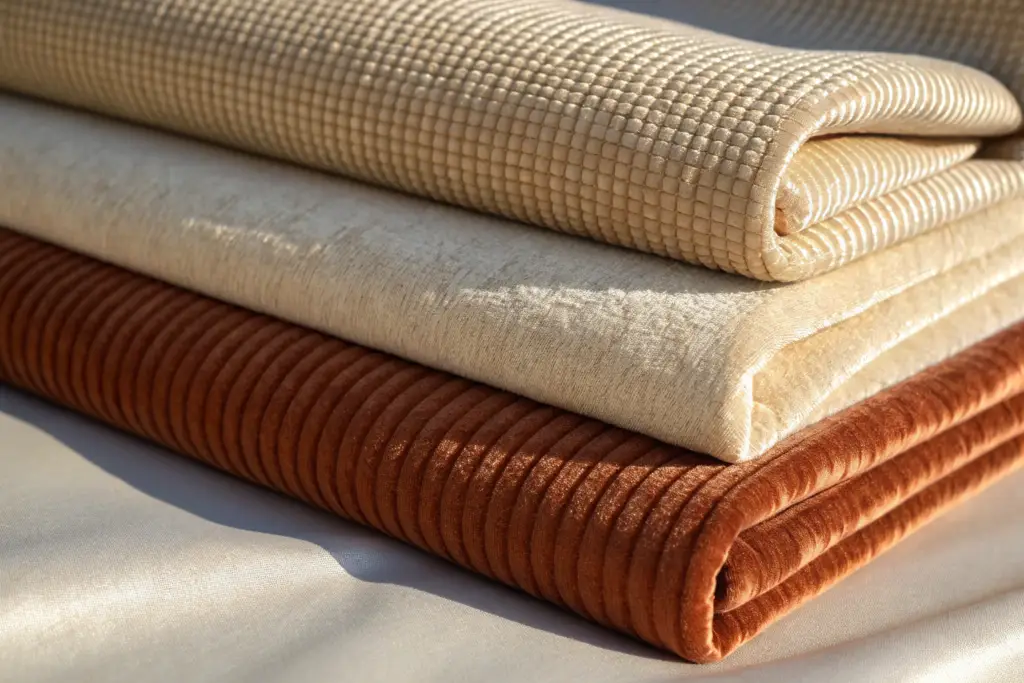
Texture is the silent communicator in a layered outfit. Before a customer processes the color or the silhouette, their eye registers the surface. Smooth next to rough. Shiny next to matte. Dense next to open. These contrasts signal quality and intentionality. A garment where every fabric has the same surface texture looks mass-produced, even if it is expensive. A garment that plays textures against each other looks designed.
Fabric textures create visual depth in spring and autumn layered looks through deliberate contrast. The most effective pairings follow a simple formula: one dominant texture that anchors the outfit and one accent texture that creates visual tension. In autumn, pair matte wool flannel with glossy leather or waxed cotton. Pair dense corduroy with sheer silk. In spring, pair open-weave linen with smooth cotton sateen. Pair slubby raw silk with crisp poplin. The contrast makes each fabric look more like itself. The rough looks rougher next to smooth. The shiny looks shinier next to matte. The depth comes from the relationship between the surfaces, not from any single fabric.
I once worked with a designer who had an extraordinary eye for texture but could not articulate her process. I asked her to teach me. She said, "Touch the fabric with your eyes closed. Then open them. The fabric you want to pair it with is the one that surprises you." She was describing contrast. The brain expects a smooth fabric to sit next to another smooth fabric. When it encounters a rough texture instead, the brain pays attention. That moment of attention is where perceived value lives.
How Do Matte and Shiny Fabric Pairings Change the Perceived Weight of a Garment?
Shiny surfaces advance visually. They catch light and pull the eye forward. Matte surfaces recede. They absorb light and create visual quiet. This optical property affects how heavy a garment appears. A coat made entirely of shiny satin looks heavier than the same coat in matte wool, even if both weigh the same. The satin reflects light across every fold, making the fabric look substantial and dense. The wool absorbs light, making the folds less visible and the garment appear lighter. Clever designers use this effect in layers. A matte wool shell with a shiny silk lapel draws the eye to the lapel, making the coat's body look lighter by comparison. A textile surface optics principle called luminance contrast is at work here. The human visual system judges weight partly by how much light a surface returns. High-luminance surfaces register as lighter. Low-luminance surfaces register as heavier. By pairing a low-luminance base fabric with a high-luminance accent fabric, the overall garment feels lighter than its actual weight. A brand we work with applied this principle to their women's trench coat line. The shell was a matte cotton-nylon in charcoal. The collar facing and cuff straps were a tonal black leather with a subtle sheen. Customers consistently described the coat as "surprisingly lightweight," even though the fabric weight was a standard 280 GSM. The matte shell did the visual heavy lifting of making the coat look substantial, while the shiny accents made it feel refined.
Which Textured Fabric Combinations Work Best for Transitional Weather Dressing?
Transitional weather demands fabrics that can handle a 20-degree temperature swing between morning and afternoon. The combination needs to breathe when it is warm and insulate when it cools down. The best combinations pair an open-weave outer layer with a dense, smooth inner layer. The open weave allows airflow. The dense layer traps warmth. A linen herringbone overshirt over a fine-gauge merino knit is a perfect autumn combination. The linen's open weave vents heat when the afternoon sun hits. The merino's dense knit holds warmth when the evening chill arrives. For spring, textured cotton double-cloth constructions solve the problem in a single fabric. A double-cloth bonds a textured outer face to a smooth inner face. The air gap between the two layers provides insulation without weight. We produced a spring jacket for a boutique brand using a 260 GSM cotton double-cloth. The outer face was a slubby, linen-like texture. The inner face was a smooth, tightly woven poplin. The jacket weighed half as much as a comparable denim jacket but provided equivalent warmth. The texture contrast was visible at the cuffs and collar, where both faces were exposed. Customers could see the fabric's complexity. It signaled technical sophistication without looking technical.
How Can Natural and Synthetic Fiber Blends Work Together in a Single Cohesive Look?
I used to be a fabric purist. I believed the best garments were 100% something. 100% cotton. 100% wool. 100% linen. I was wrong. Pure fibers have weaknesses. Cotton absorbs moisture and dries slowly. Wool is expensive and can felt with improper care. Linen wrinkles aggressively. Polyester does not breathe. The magic happens when you combine a natural fiber and a synthetic fiber strategically, each compensating for the other's weakness.
Natural and synthetic fiber blends work together in a single cohesive look by assigning each fiber a specific functional role. The natural fiber provides breathability, moisture absorption, and a premium hand feel. The synthetic fiber provides durability, shape retention, and weather resistance. The key to making this combination look cohesive rather than confused is to keep the aesthetic language consistent even when the fiber content changes. A wool-polyester blend shell looks coherent with a pure cotton lining if both share the same color family and a similar surface texture. The customer perceives the visual harmony first. The functional benefits come second.
The activewear and performance apparel industry mastered this decades ago. A hiking jacket with a nylon shell and a merino lining is not a compromise. It is an optimized system. The fashion industry has been slower to adopt hybrid fiber thinking, but the best premium brands are now using it aggressively. They are putting performance linings in fashion silhouettes and natural fiber shells on technical constructions.
Where Should You Place Synthetic Fibers in a Layered Garment for Maximum Performance?
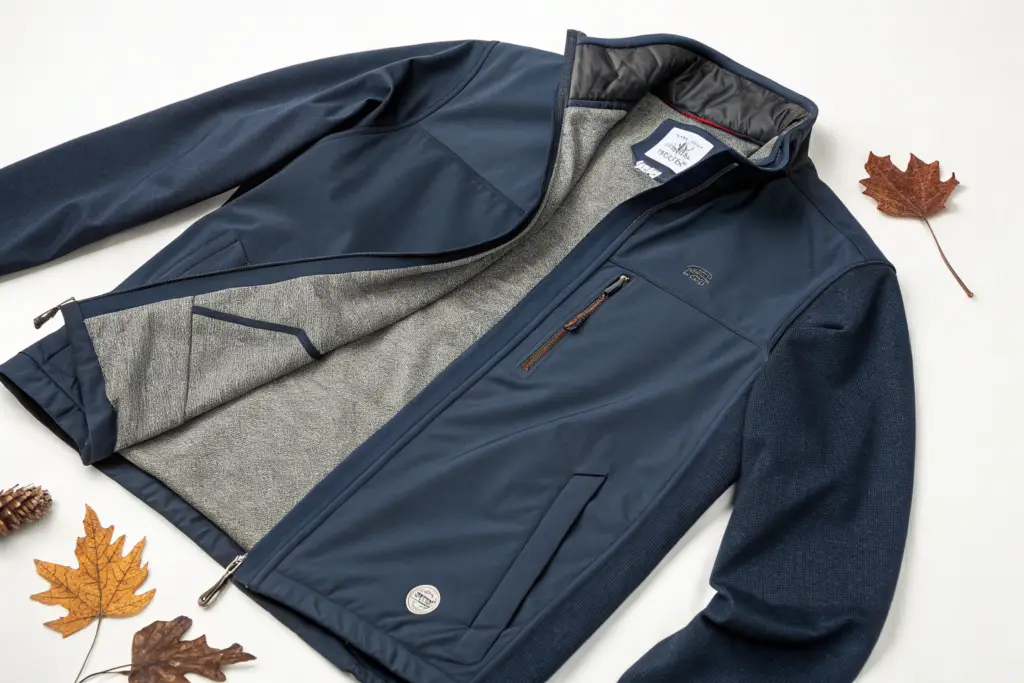
The placement rule is simple. Synthetics go where the environment attacks. Naturals go where the body touches. A garment's outer layer faces abrasion, moisture, wind, and UV radiation. These are the conditions that degrade natural fibers quickly. A nylon or polyester shell resists abrasion better than cotton canvas. It dries faster. It blocks wind more effectively. The inner layer, by contrast, sits against the skin. The skin cares about breathability, moisture wicking, and tactile comfort. Natural fibers excel here. Cotton and wool absorb moisture vapor from the skin. They feel warm and soft. They do not create the clammy, plastic sensation that a polyester lining produces. We apply this principle to every layered garment we design. The performance textile layering principle is used by every major outdoor brand. A hard shell exterior protects against the elements. A soft interior comforts the body. The middle layers provide insulation with minimal weight. This system is not just for hiking gear. It works equally well for a premium wool car coat with a nylon sleeve lining. The wool shell looks luxurious. The nylon lining lets the wearer slide their arm in smoothly and prevents the sleeve from bagging out at the elbow. The customer never sees the nylon. They only experience the functional benefit.
How Do You Ensure Color Consistency Between Synthetic Shell Fabrics and Natural Trim Fabrics?
Color matching across different fiber types is one of the hardest problems in garment manufacturing. Polyester and cotton take dye differently. A navy blue that looks perfect on a cotton poplin shirt body can look slightly purple or slightly green on a polyester taffeta lining, even when both fabrics are dyed to the same Pantone specification. The fiber chemistry affects how light reflects off the dyed surface. Cotton has a matte, irregular surface that scatters light. Polyester has a smooth, regular surface that reflects light more directionally. The same dye recipe produces a slightly different perceived color on each fiber. We solve this with a two-step approval process. First, the dye house produces a lab dip on each fabric substrate separately. We approve the lab dips under a lightbox with D65 daylight simulation. Second, we cut a swatch from each approved fabric and sew them together into a mini color-block panel. We evaluate the panel under three light sources: D65 daylight, TL84 store lighting, and incandescent home lighting. The color matching metamerism check catches any mismatch that would be visible to the customer. If the fabrics match under daylight but diverge under store lighting, the customer will see the mismatch at the point of purchase. We reject any combination that shows visible metamerism. Last autumn, a brand ordered a burgundy wool coat with a burgundy polyester lining. The lab dips matched perfectly. The sewn panel revealed a mismatch under TL84 lighting. The wool looked reddish. The polyester looked purplish. We reformulated the polyester dye recipe to shift the undertone. It took two additional rounds of sampling. The final garment was flawless. No customer would ever notice the lining color, but a mismatched lining would have been the first thing they saw when they tried on the coat.
What Are the Best Fabric Layering Strategies for Different Seasonal Transitions?
Seasonal transitions are where most wardrobes fail. A customer buys a heavy winter coat and a lightweight spring jacket. But what do they wear on that March day when the morning is 38 degrees and the afternoon is 62? They need a garment that is not a coat and not a shirt. It is a system. The brands that master transitional layering win the most valuable consumer real estate: the daily wear decision. A garment worn 40 days a year is more valuable than a garment worn 10 days a year, even if the daily-wear garment costs less.
The best fabric layering strategies for different seasonal transitions use a modular approach. Design each piece as a standalone garment that also functions as a layer. A spring overshirt in cotton-linen canvas should look complete when worn alone over a T-shirt in April and equally correct when worn under a wool coat in November. The fabrics must be thin enough to layer without bulk but substantial enough to wear alone without looking like underwear. Autumn-to-winter transitions call for a shell fabric with wind resistance paired with a detachable insulating liner. Winter-to-spring transitions call for a lightweight wool or wool-blend shell over a removable cotton or silk base layer.
We developed a modular layering system for a menswear brand three years ago that I still consider our best work in this category. The system had three pieces: a waxed cotton field jacket, a zip-in quilted liner vest, and a heavyweight flannel shirt. The customer could wear the shirt alone in September. Add the field jacket for October. Zip in the quilted liner for November through February. Remove the liner in March. Remove the jacket in April. Four seasons from three pieces. The brand sold the system as a bundle and as separates. The bundle had a 40% attach rate, meaning 40% of customers who bought the jacket also bought the liner at full price. The modularity was not just a marketing story. It was a genuine value proposition that customers understood immediately.
Which Fabric Combinations Create the Perfect Spring-to-Summer Transitional Layering Piece?
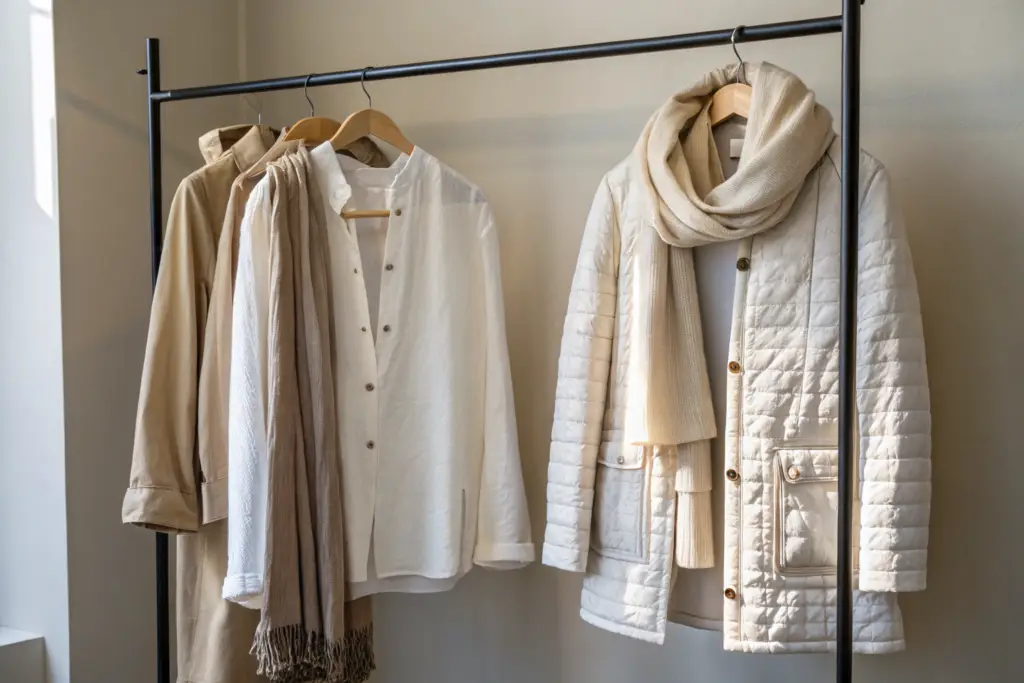
Spring-to-summer requires fabrics that can handle humidity without becoming limp and sweat-soaked. The best combinations use a breathable shell fabric with a mesh or open-weave lining that creates an air gap between the garment and the body. A cotton-linen blend canvas at 200 GSM over a cotton voile lining is our most requested spring transition combination. The canvas gives the garment enough structure to look polished. The voile lining creates a slippery, cool surface against the skin. The air gap between shell and lining allows breezes to circulate and cool the body. For unstructured spring blazers, we recommend a tropical wool or a high-twist wool-mohair blend at 220 GSM. These fabrics are woven with an open structure that lets air pass through while maintaining the drape and shape memory of wool. Paired with a cupro or bemberg lining in a half-lining construction, the garment feels weightless on the body. Last spring, we produced a travel blazer for a San Francisco brand using a 210 GSM wool-silk-linen blend shell with a cupro half-lining. The garment weighed 380 grams total, roughly the weight of a cotton T-shirt. Customers reported wearing it comfortably in 75-degree weather. The secret was the fiber blend. The wool provided shape retention. The silk added luster. The linen added texture and breathability. The cupro lining added slip without adding heat.
How Do You Engineer a Winter-to-Spring Layering System That Adapts to Daily Temperature Swings?
The winter-to-spring transition is the hardest engineering challenge in apparel. Morning temperatures in the 30s. Afternoon temperatures in the 60s. The wearer needs insulation at 8 AM and ventilation at 2 PM, and they do not want to carry a bulky coat all afternoon. The solution is a shell-plus-liner system with a removable insulating layer. The shell should be a tightly woven fabric with wind resistance. A 240 GSM cotton-nylon with a DWR finish works well. A lightweight wool gabardine at 260 GSM is more premium. The removable liner should be a lightweight insulated layer using a 60 to 80 GSM synthetic fill, quilted between a nylon taffeta shell and lining. The total liner weight should be under 300 grams so it can be folded and stored in a bag when removed. The shell alone handles the 55 to 65-degree range. The shell plus liner handles the 30 to 45-degree range. We engineered a system like this for a Chicago-based brand's commuter coat line. The shell was a 250 GSM Italian wool-nylon blend in navy. The zip-out liner was a 60 GSM Primaloft fill between two layers of recycled polyester taffeta. The complete coat weighed 890 grams, significantly lighter than a traditional 1,200-gram wool overcoat. The thermal performance was equivalent because the Primaloft fill trapped heat more efficiently than the extra 300 grams of wool would have. The brand's customer reviews consistently mentioned the "surprisingly light but warm" quality. That is the fabric engineering speaking, not the marketing copy.
Conclusion
Fabric combining is the invisible architecture of a great garment. The customer may not know that the shell-to-lining weight ratio is 2.3:1 or that the color match was verified under three light sources to eliminate metamerism. But they feel the result. The coat that moves with them instead of fighting them. The layered outfit that handles a 30-degree temperature swing without needing a change of clothes. The visual depth that makes a simple jacket look expensive and intentional. These are not accidents of design. They are the product of deliberate fabric engineering choices made early in the development process.
At Shanghai Fumao, we approach fabric combining as both a science and an art. The science lives in our GSM weight ratio calculations, our seam friction testing, and our color metamerism verification protocols. The art lives in our texture library, where we keep physical swatches of every fabric we have ever worked with, organized by surface characteristic, so that a designer can literally play with combinations until something surprises them. Both approaches are necessary. The science prevents mistakes. The art creates magic.
If your brand is developing a layered collection and you want a manufacturing partner who treats fabric combining as a core competency, not an afterthought, we are ready to collaborate. At Shanghai Fumao, we can review your proposed fabric pairings against our GSM weight ratio database and flag any combinations that risk functional problems before you cut a single sample. We can also suggest alternative pairings from our fabric library that achieve the same aesthetic effect with better technical compatibility. Contact our Business Director, Elaine, at elaine@fumaoclothing.com. Send her your collection concept and your target retail price point. She will return a fabric pairing recommendation matrix with weight ratios, texture contrast notes, and cost implications for each option. Let's build layered garments that your customers will not want to take off, no matter what the weather does.