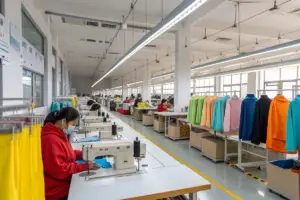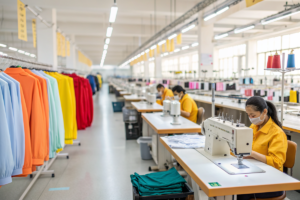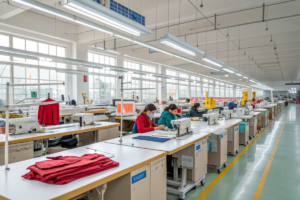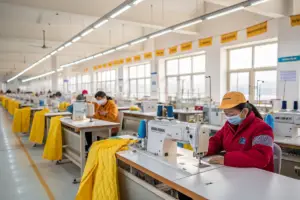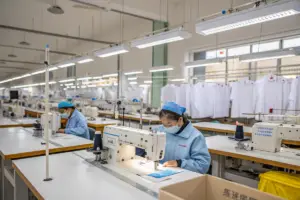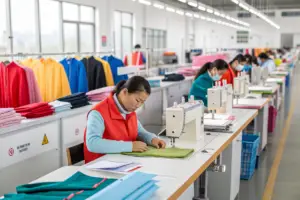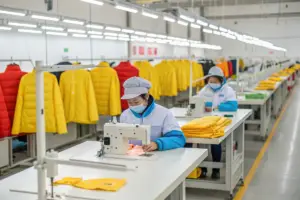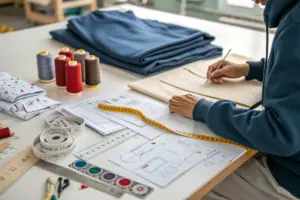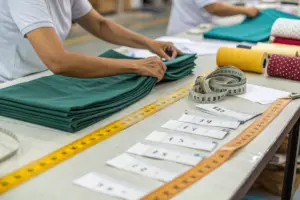
I once received a phone call at 9:30 PM on a Tuesday. It was a fast fashion brand director from Los Angeles. Her voice was tight. A competitor had just dropped a viral dress on Instagram. Her merchandising team had found a similar fabric in stock. She needed 800 units of a redesigned version in her warehouse in 18 days. Not weeks. Days. I told her I would call her back in 20 minutes. I walked to our fabric storage area, checked the greige inventory, called our dyeing subcontractor to confirm a slot, and reviewed our cutting room schedule. At 9:50 PM, I called her back. We can do it. The fabric went into the dye bath the next morning. The first cut pieces hit the sewing line on day five. The shipment left Shanghai on day 16. That speed is not magic. It is infrastructure, supply chain density, and a culture that treats deadlines as promises, not suggestions.
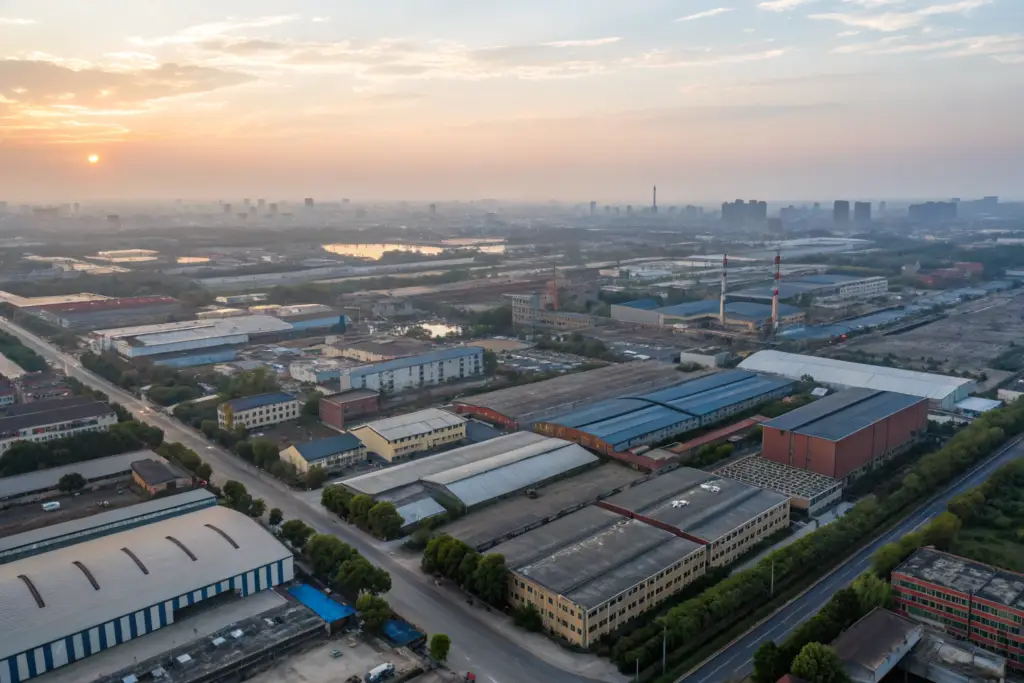
Fast fashion brands rely heavily on Chinese garment factories because China has built an unmatched manufacturing ecosystem where raw material suppliers, dye houses, trim factories, and assembly lines sit within a 50-kilometer radius. This geographic density collapses traditional supply chain lead times from months to days. Add to this a workforce skilled in rapid style changeovers, a logistics infrastructure that moves goods from factory floor to port in hours, and a deep cultural commitment to on-time delivery, and you get a speed-to-market engine that no other country currently replicates at scale.
Western brands do not choose China just because it is cheap. That narrative is outdated. They choose China because a factory in Guangdong can receive a tech pack on Monday, source the exact zipper and button on Tuesday, cut the fabric on Wednesday, and ship the finished garment by Friday of the following week. That is not just manufacturing. That is a competitive weapon. I want to break down exactly how this speed machine works, from the local supply chain to the factory floor management systems we use at Shanghai Fumao.
How Does China's Localized Textile Supply Chain Cut Lead Times by Weeks?
A fast fashion brand in Europe once asked me to source a specific brushed gold zipper. They had been waiting six weeks for their previous supplier in another country to import the zipper from a third country. I picked up my phone and called a zipper factory 18 kilometers from my office. The owner answered on the second ring. I described the zipper: metal tooth, brushed gold finish, custom puller with a logo engraving, size 5, 18-centimeter length. He said he could have 1,000 pieces ready in three days. Three days. Not three weeks. Not three months. That is the power of localized supply chain density.
China's localized textile supply chain cuts lead times by weeks because every component of a garment can be sourced within a single industrial cluster. Fabric mills, dye houses, thread suppliers, zipper factories, button workshops, and packaging vendors all operate within driving distance of each other. When a brand changes a design detail, a Chinese factory can send a motorcycle courier to pick up a new trim sample and return within two hours. In a dispersed supply chain, that same change would require an international courier shipment and a week of transit time.
This clustering did not happen by accident. It is the result of decades of deliberate industrial policy and organic market evolution. Specific cities have become synonymous with specific textile categories. Shaoxing is the center of chemical fiber and woven fabrics. Ningbo is known for men's suiting. The Pearl River Delta dominates denim production. When a factory in one of these clusters needs a specific material, it does not search a global catalog. It walks down the street. This proximity creates a feedback loop of speed that gets faster every year.
Why Does Material Availability Within a 50-Kilometer Radius Matter for Speed?
When a factory orders fabric from a mill 2,000 kilometers away, the buyer places a purchase order, waits for production scheduling, waits for quality approval, and then waits for shipping. Even with air freight, the process takes a week minimum. When the mill is 30 kilometers away, the factory manager drives to the mill in the morning, inspects the fabric lot in person, and loads the rolls onto a truck that afternoon. The fabric is on the cutting table the next day. This physical proximity also solves quality issues instantly. Last month, we received a batch of cotton-lycra jersey for a rush order. The stretch recovery was 3% below the spec. I called the mill owner. He arrived at our factory 40 minutes later with a technician. We tested the fabric together on our fabric testing equipment. The mill identified the heat-setting parameter error on the spot. They reran the batch that night. We had compliant fabric the next morning. If that mill had been in another country, that 3% recovery issue would have become a two-week email argument, a rejected shipment, and a missed delivery deadline. The 50-kilometer radius is not just about logistics. It is about accountability that can be enforced with a handshake and a face-to-face conversation.
How Do In-House or Nearby Trim Suppliers Eliminate Bottleneck Waiting Time?
Trims are the hidden speed killer. A garment is 90% fabric and 10% trims by weight, but trims cause 50% of production delays. Buttons arrive late. Zippers are the wrong color. Labels have a spelling error. In a slow supply chain, each trim error costs a week. In China's clustered system, trim suppliers are often located in the same industrial park. Our primary zipper supplier is a 12-minute drive from our factory. Our hang tag printer is 8 minutes away. Our woven label supplier has a production facility 25 minutes away. When a brand needs a last-minute trim change, we do not send an email and wait. We call the supplier, describe the change, and send a sample reference photo via WeChat. The supplier produces a physical sample within hours. A motorcycle courier delivers it for approval the same day. This speed is built on a local trim supply network that maintains buffer stock of common materials. Zipper tape in standard colors. Basic button molds. Blank hang tags. The supplier can customize the stock component rapidly because the base material is already on their shelf. Two years ago, a brand discovered a legal issue with their hang tag claim on a 2,000-unit order scheduled to ship in four days. The original tags said "100% organic cotton," but the certification documentation only covered 95%. The remaining 5% was spandex. We called our tag printer. They designed a corrected tag, printed 2,000 units, and delivered them to our finishing line within 18 hours. The shipment left on time. In a non-clustered supply chain, that hang tag error would have delayed the container by at least five days.
What Production Management Techniques Enable 7-Day Turnarounds in Chinese Factories?
Speed without control is just chaos. I have walked through factories that brag about being fast. You see piles of cut parts on the floor. Operators are rushing. The defect rate is invisible because no one is counting. That is not real speed. That is a ticking time bomb of chargebacks and returns. Real speed requires a production management system that knows exactly where every piece is, how long it has been there, and which station will become a bottleneck before the bottleneck actually happens.
Chinese factories achieve 7-day turnarounds by running a production control tower that combines real-time shop floor data with predictive bottleneck analysis. They use modular sewing lines that can reconfigure from one style to another in under 30 minutes. They also maintain a cross-trained workforce where operators can shift between stations based on minute-by-minute line balancing needs. This is not traditional mass production. It is agile manufacturing applied to apparel.
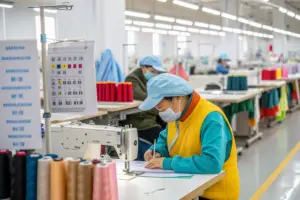
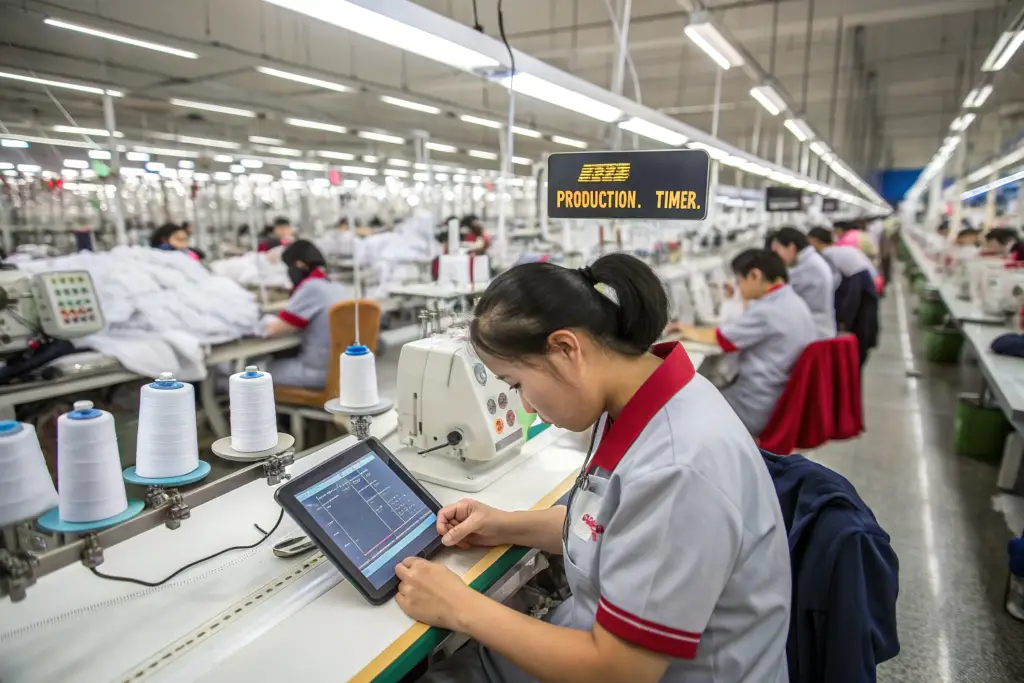
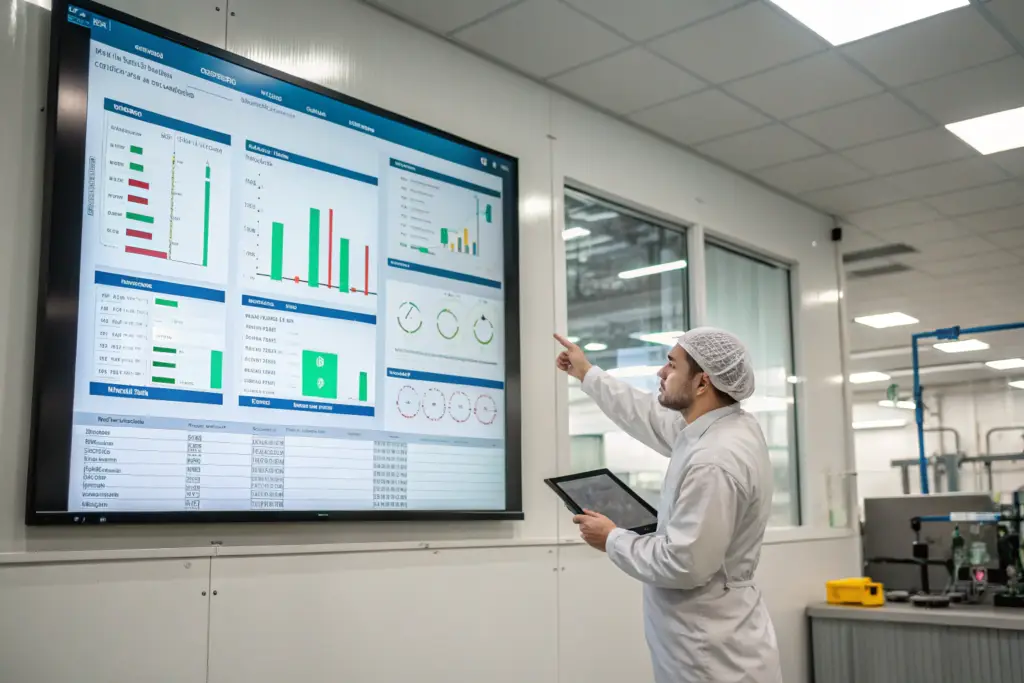
We run our factory floor like an air traffic control center. Every sewing station is connected to a central production monitoring system. Each operator scans a barcode when they start a bundle and scans again when they finish. The system calculates the exact cycle time per operation, per operator, per style. If station 7 is accumulating work-in-progress while station 9 is starved, the system alerts the line supervisor. The supervisor moves a cross-trained operator from station 9 to station 7 within minutes. This happens continuously throughout the day.
How Does Real-Time Production Monitoring Prevent Bottleneck Collapse?
A traditional factory discovers bottlenecks at the end of the day when the output report shows a shortfall. By then, eight hours of production capacity have been lost. A real-time monitoring system discovers the bottleneck within minutes. We use a production monitoring software platform that displays the live output of every single sewing station on a dashboard screen mounted above the line. The dashboard uses color coding. Green means the station is on target. Yellow means it is 10% behind. Red means it is 20% behind. When a station turns yellow, the system automatically sends an alert to the supervisor's tablet. The supervisor investigates. Is the operator new? Is the machine misfeeding? Is the fabric causing handling difficulty? The problem gets diagnosed and solved while the rest of the line is still running at full speed. Last November, our system flagged a yellow alert on a sleeve hemming station at 9:45 AM. The operator was falling behind because the fabric had a slightly slippery finish and was difficult to feed through the folder. The supervisor replaced the standard folder with a non-stick coated folder from the maintenance cabinet. The operator's cycle time returned to target by 10:15 AM. Without real-time monitoring, that problem would have festered until lunch break. By then, 150 sleeve units would have been delayed. The bottleneck would have cascaded to the side-seam station and then to the final inspection table. A 30-minute problem would have become a half-day delay.
Why Is Cross-Training Operators the Secret Weapon of Speed?
A sewing line is only as fast as its slowest station. In a traditional line, each operator knows one operation. If one operator is absent, the entire line stops or slows to half speed. In an agile line, operators are trained on three to five different operations. This does not happen overnight. It requires a structured operator cross-training program with skills matrices and regular rotation schedules. We built our cross-training system over four years. Each new operator starts on a single operation and masters it within their first three months. In month four, they begin training on a second operation during low-volume periods. By month twelve, they are certified on at least three stations. The skills matrix is displayed on the production board. The supervisor can see, at a glance, which operators are qualified to move where when a bottleneck appears. This system also protects us against absenteeism. On any given day, our absenteeism rate averages 3%. In a non-cross-trained factory, 3% absenteeism means 3% of stations are idle. In our factory, it means 3% of operators are absent, but 100% of stations are staffed because the supervisor redistributes the remaining workers based on the skills matrix. The line speed does not drop. The brand does not feel the absenteeism. The shipment date holds. That is the real meaning of resilience.
What Role Do Chinese Ports and Logistics Play in Shortening the Factory-to-Market Cycle?
A finished garment sitting in a factory warehouse is not a saleable product. It is inventory burning cash. The fastest sewing line in the world means nothing if the goods sit for a week waiting for a truck, then another week waiting for a container booking, and then another week waiting for a vessel. The factory-to-market cycle includes the physical movement of goods, and China has invested heavily in making that movement frictionless.
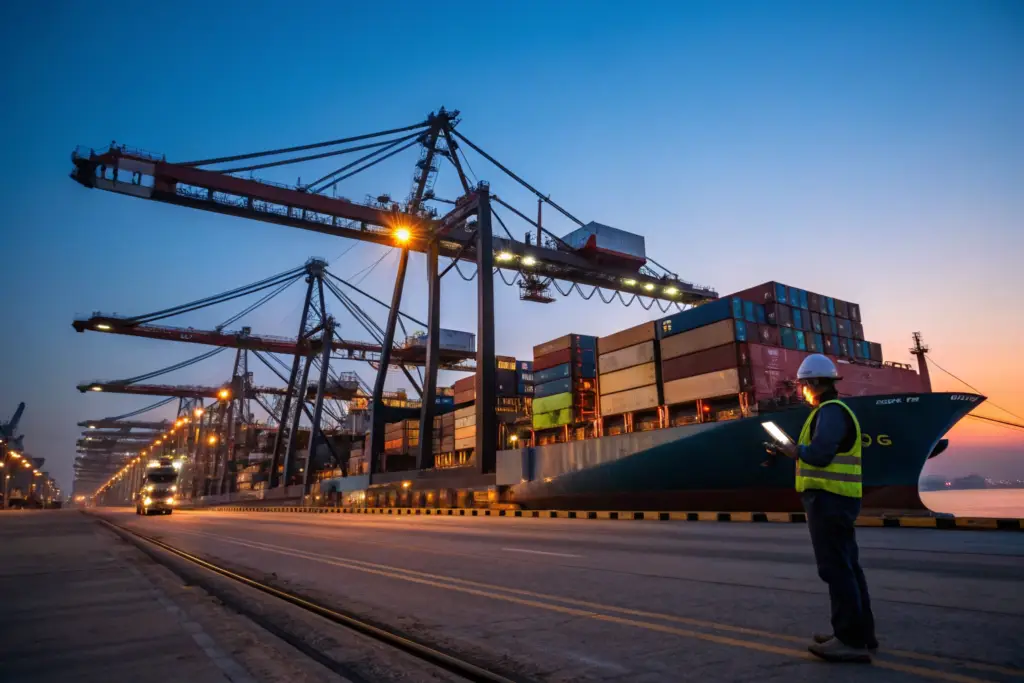
Chinese ports and logistics infrastructure shorten the factory-to-market cycle by offering multiple daily vessel sailings to major U.S. and European ports, streamlined customs clearance processes, and a dense network of freight forwarders who compete on speed rather than just price. A factory in Shanghai can truck goods to the port in four hours, clear export customs in one day, and load onto a vessel that departs the following morning. This logistics velocity compresses the total lead time in a way that landlocked or port-constrained manufacturing countries cannot match.
The geography of China's manufacturing regions is logistics-friendly. The Yangtze River Delta, where Shanghai Fumao is located, has the world's busiest container port. The Pearl River Delta has Shenzhen and Guangzhou ports. Goods do not travel across continents to reach a deep-water port. They travel across a city or a province. This geographic advantage is amplified by a competitive logistics industry that runs on razor-thin margins and extreme reliability.
How Do Frequent Vessel Sailings from Shanghai Reduce Delivery Uncertainty?
A port with one sailing per week creates a binary outcome for a factory. You either hit the cutoff and ship on time, or you miss it and wait seven days. A port with daily sailings creates a gradient of outcomes. If you miss the Monday cutoff, you can catch the Tuesday vessel. The delay is one day, not one week. The Port of Shanghai offers multiple daily sailings to Los Angeles, Long Beach, New York, Rotterdam, and Hamburg. This frequency is a form of insurance. It absorbs the small, unpredictable delays that happen in any manufacturing process without derailing the overall delivery promise. We track vessel schedule reliability data monthly. Our logistics team maintains a live spreadsheet of cutoff times for every major carrier. When a production order is running six hours behind, we do not panic. We check the alternative carrier schedule. Often, a different line has a cutoff six hours later or a vessel departing the following morning. The cost difference is usually minimal. The delivery integrity is preserved. I remember a shipment two years ago. A truck breakdown on the way to the port cost us four hours. We missed the original vessel cutoff by 45 minutes. Our freight forwarder rebooked the container onto a different carrier's vessel departing 14 hours later. The goods arrived in Los Angeles eight hours after the original ETA. The brand never knew there was a problem. That kind of logistics redundancy is only possible in a port ecosystem with deep sailing frequency.
Why Does Customs Clearance Speed Matter for Last-Minute Orders?
Export customs clearance is the administrative gate that every container must pass through. In a slow system, this gate can hold a container for three to five days while paperwork is reviewed. In China's major export ports, the customs process for standard apparel shipments is largely digitized and risk-profiled. A factory with a clean compliance record and a verified exporter status can clear customs in under 24 hours. At Shanghai Fumao, we maintain an Authorized Economic Operator certification with China Customs. This status recognizes our history of accurate documentation and compliance. Our shipments are flagged as low-risk in the customs system. They receive expedited document review and fewer physical inspections. The practical benefit is predictability. A container that clears customs in one day can be booked onto a vessel with confidence. A container that might clear in one day or might clear in five days cannot. For fast fashion orders with razor-thin delivery windows, that predictability is worth more than a small freight rate discount. We also prepare all export documentation while the goods are still in production. The packing list, commercial invoice, and certificate of origin are drafted and reviewed before the first piece comes off the sewing line. When the goods are packed and the final carton counts are confirmed, the documents need only a quick update before electronic submission. There is no last-minute paperwork scramble. The container moves from factory floor to vessel without administrative friction.
How Does a Factory's Cultural Commitment to Speed Affect Your Brand's Bottom Line?
Speed is not just a process. It is a mindset. I have worked with factory owners in several countries. In some places, when a deadline gets tight, the response is a shrug and a list of excuses. In China, when a deadline gets tight, the response is a phone call to every department head, a huddle in the production office, and a plan to recover the time. This cultural commitment to delivery is not written in any contract. It is enforced by reputation. A factory that misses a shipment date loses not just one order. It loses the trust of the entire brand's sourcing team, and that news travels fast through the industry.
A factory's cultural commitment to speed affects a brand's bottom line by reducing the cost of missed selling windows. Every day a garment sits in transit past its planned shelf date, its retail value drops. Markdowns eat margin. Unsold inventory becomes dead stock. A factory culture that treats deadlines as non-negotiable protects the brand's full-price selling window, which is the single largest determinant of profitability in fast fashion. The factory's speed culture translates directly into the brand's gross margin.
I have seen this dynamic play out in real numbers. A brand launches a summer dress with a planned eight-week full-price window from June 1 to July 31. If the factory delivers on May 20, the dress enjoys the full eight weeks at full margin. If the factory delivers on June 15, the dress loses two weeks of full-price selling. Those two weeks at the end of the season are when the markdown pressure is highest. The brand might have to discount by 30% to clear the inventory. On a $40 wholesale dress, that is a $12 per-unit margin loss. Across 5,000 units, the late shipment just cost the brand $60,000 in lost margin. That number dwarfs any per-unit cost saving from a cheaper factory in a slower country.
How Does On-Time Delivery Performance Build Long-Term Retailer Relationships?
A brand's relationship with its retail buyers depends on delivery reliability. A department store allocates floor space and marketing budget based on the promised delivery date. If the goods arrive late, the store has empty racks during a promoted period. The store loses sales. The buyer loses faith. Next season, the brand gets a smaller order or loses the floor placement to a competitor who delivered on time. The factory that caused the delay never sees this downstream damage. It just loses one purchase order. The brand loses a retail partnership that took years to build. I have spoken to retail buyer expectations directly through brand partners. One U.S. department store buyer told a brand we work with that their on-time delivery rate was the primary reason they renewed the private label contract for a third year. The brand's delivery rate was 98.5%. The competitor's was 87%. The 11.5 percentage point gap was worth more than the competitor's 8% lower cost per unit. The buyer said, and I quote the brand owner who relayed this to me, "I can plan around a known cost. I cannot plan around an unknown delivery date." That sentence has stayed with me. It guides how we manage every production schedule at Shanghai Fumao.
What Is the True Cost of a Missed Fast Fashion Selling Window?
Fast fashion sells speed as a product feature. The customer buys the dress today because it looks like the one they saw on social media yesterday. Six weeks from now, that trend has moved on. The dress is a markdown item. The math of missed windows is brutal. A product with a planned 60-day selling window at full price that arrives 15 days late loses 25% of its full-price selling period. Research from industry retail analysis shows that the first 20% of a fashion item's selling window generates roughly 40% of its total full-price sales. Missing the first two weeks is not losing two weeks of sales. It is losing the highest-velocity weeks. When the goods finally arrive, the early adopters have already bought the competitor's version. The brand is now selling to discount-sensitive customers who were not willing to pay full price in week one. The markdown pressure is immediate and deep. We track this for our brand partners. One of our women's wear clients plotted their sell-through data across three seasons. Products delivered on time achieved an average sell-through of 82% at full price. Products delivered 10 or more days late achieved 58%. The 24 percentage point gap translated to a gross margin difference of roughly $8 per unit. Across a 10,000-unit season, the on-time delivery was worth $80,000 in pure margin. The factory that delivered the late goods charged $0.50 less per unit. The brand saved $5,000 in sourcing cost and lost $80,000 in margin. That is not a trade-off. That is a trap.
Conclusion
The incredible speed of Chinese garment factories is not a single thing. It is not a faster sewing machine. It is not a longer working day. It is a system. A dense local supply chain where fabric, trims, and accessories are available within a 50-kilometer radius. A production management approach that monitors output in real time and rebalances the line minute by minute. A logistics infrastructure with daily vessel sailings and digitized customs clearance. And a cultural commitment to deadlines that turns a delivery date from a hope into a promise. Each of these elements reinforces the others. Remove one, and the speed collapses.
Western fast fashion brands do not come to China for this speed because they want to exploit workers or cut corners. They come because China has built a manufacturing ecosystem that can turn a social media trend into a physical garment on a store rack faster than any other country on earth. The brand that gets the dress to market in 18 days wins the customer. The brand that takes 45 days sells the same dress at 40% off six weeks later. The factory is the invisible engine behind that competitive equation.
At Shanghai Fumao, we have spent years tuning this engine. Our local trim suppliers are minutes away. Our production monitoring dashboard runs live on every line. Our logistics team books vessels while the fabric is still on the cutting table. We do not deliver speed by sacrificing quality. We deliver speed because our systems are designed to eliminate the waiting that hides inside every traditional production process.
If your brand needs a manufacturing partner who understands that a selling window is a perishable asset, reach out to us. We can walk you through a sample production timeline that shows exactly how many days each stage requires and where the buffers sit. Contact our Business Director, Elaine, at elaine@fumaoclothing.com. Send her your next style concept and your ideal in-store date. She will tell you honestly whether we can hit it, and if we can, exactly how we will make it happen. In fast fashion, speed is not a luxury. It is the product. Let's build yours together.