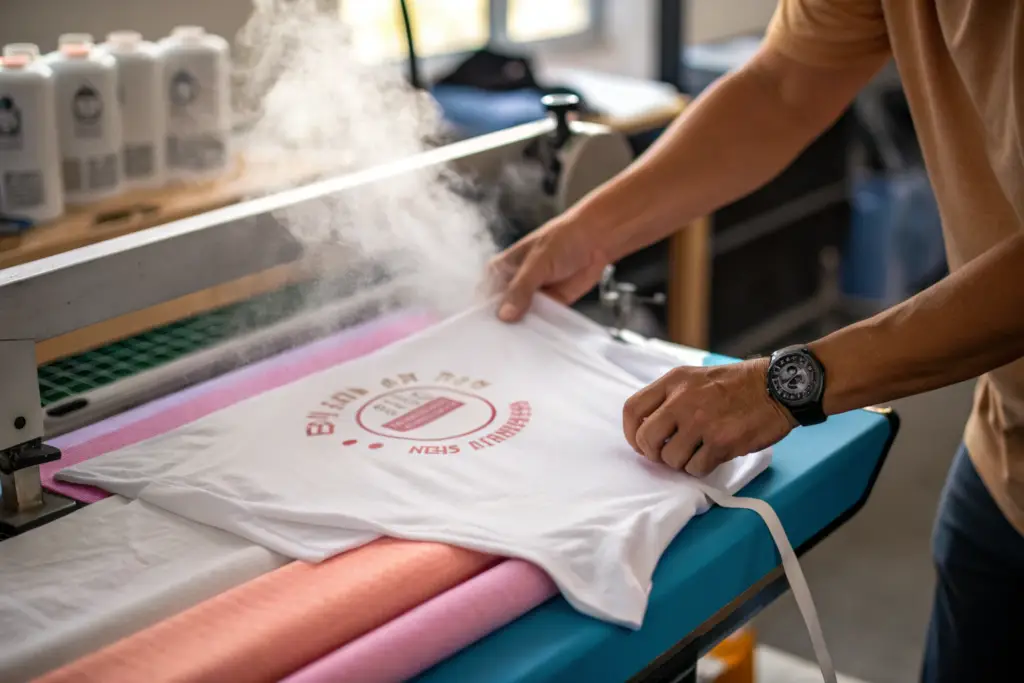
I have watched beautiful lightweight garments get destroyed by a logo. A brand comes to us with a lovely 100-gram bamboo fiber tee. The fabric is soft. It drapes well. Then they ask for a thick plastisol print that weighs more than the fabric itself. The result is a stiff, unwearable patch on the chest. I have seen this mistake cost a Canadian brand their entire summer collection review. They had to delay the launch by two months while we redeveloped the decoration method. Thin summer fabrics do not forgive bad printing choices. You have to match the craft to the cloth, or the cloth will fight back.
The most suitable logo printing crafts for thin summer fabrics are water-based screen printing, tonal silicone heat transfers, and high-density digital direct-to-film transfers. These three methods keep the hand feel soft and the fabric breathable. They also avoid the heavy, rubbery texture that can ruin lightweight cotton, linen, or viscose. For ultrafine fabrics, discharge printing or burnout techniques offer a zero-hand-feel logo that becomes part of the textile itself.
Choosing a decoration method is not just a branding decision. It is a physics problem. You are applying a substance to a surface that weighs less than 120 GSM. The wrong choice creates puckering, strike-through, or a sweat-trapping patch on a garment meant to breathe. I want to walk you through how we evaluate these crafts at Shanghai Fumao, so you can make a decision that protects the integrity of your summer designs.
What Is the Lightest Screen Printing Method for Custom Logos on Lightweight Apparel?
Two summers ago, a yoga wear brand from California sent us a panic email. Their previous printer had used a standard plastisol ink on 30 pieces of their new crop top line. The print was heavy. It blocked airflow. When the fabric stretched during a forward fold, the ink cracked like old paint. The fabric was a 95% modal, 5% spandex jersey. It had a butter-soft hand feel, and the print had turned it into sandpaper. We stripped the sample development back to zero and switched to a water-based discharge print. The result was a logo that felt like nothing at all. The ink removed the fabric dye and replaced it with the logo color. There was no layer on top. That saved their collection.
Water-based screen printing is the lightest screen printing method for thin summer fabrics. Unlike plastisol, which sits on top of the fiber, water-based ink soaks into the yarn. The result is a print you cannot feel with your eyes closed. Discharge printing goes a step further by stripping the garment dye and depositing pigment inside the fiber cell, creating a truly zero-hand logo.
We think about fabric weight in categories. A 90 GSM cotton voile behaves differently from a 140 GSM slub jersey. The printing method has to match not just the weight but the fiber type. Cellulose fibers like cotton and linen can handle water-based chemistry well. Synthetic fibers like polyester need a different approach because discharge agents do not work on them.
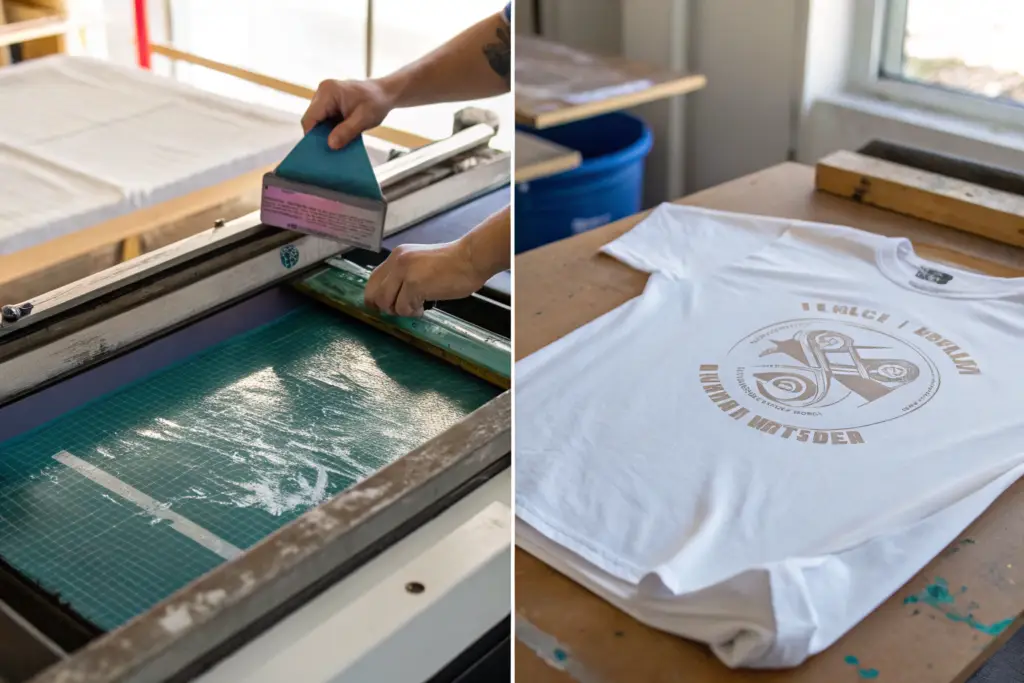
Why Does Water-Based Ink Penetration Prevent Cracking on Stretch Knits?
Cracking happens when a print layer and a fabric layer move at different speeds. When a woman stretches a yoga top over her shoulders, the fabric elongates by 10 to 15 percent. A plastisol layer might stretch only 2 percent. The bond breaks. Water-based ink solves this because there is no separate layer. The ink particle bonds with the individual cotton fiber. The stretch becomes uniform. We tested this with a textile testing lab using a Martindale abrasion tester on a 120 GSM ring-spun cotton tee. After 5,000 rub cycles, the water-based print showed no surface breakage. The plastisol control sample began delaminating at 2,000 cycles. For any garment that needs to stretch during wear, this is the difference between a logo that lasts and one that fails after three washes. We also control the mesh count carefully. For thin fabrics, we use a 200 to 230 mesh screen. A lower mesh count deposits too much ink, which bleeds through the back. A higher count keeps the ink deposit light and the hand feel soft.
When Should You Choose Discharge Printing Over Standard Water-Based Ink?
Standard water-based ink adds a layer. It is a very thin layer, but on a pure white 80 GSM voile shirt, even a thin layer can be felt. Discharge printing removes something instead. It uses a zinc formaldehyde sulfoxylate agent to strip the dye from the targeted print area and simultaneously deposit a new pigment. The resulting logo lives at the exact same level as the surrounding fabric. I recommend this for any garment under 100 GSM. Last April, we ran a 500-piece order for a boutique brand's linen summer tunic. The fabric was a 95 GSM handkerchief-weight linen in natural beige. They wanted a dark navy logo. A standard water-based navy would have risked a slight surface deposit. We used discharge printing. The final logo was invisible to the touch. It also eliminated any risk of the navy ink bleeding into the beige during the first home wash. The key limit to remember is that discharge only works on natural fibers dyed with reactive dyes. It will not work on synthetics or garment-dyed pieces using vat dyes. Before committing to this method, always send a fabric cutting to the printer for a bleachability test. We do this as a standard step at Shanghai Fumao.
What Heat Transfer Techniques Prevent Heavy Hand Feel on Thin T-Shirts?
Heat transfers have a bad reputation. Most people picture those thick, plastic-feeling logos on giveaway sports jerseys. The edges curl after a few washes. The logo feels like a sticker. That is a calendered PVC transfer, and it has no business touching a summer garment. The heat transfer category is broad, though. Some of the most delicate, high-end logos I see on luxury knitwear are actually transfers. You just do not know it because they are invisible to the touch.
Silicone heat transfers and digital direct-to-film transfers prevent heavy hand feel on thin t-shirts by using a thin, elastic polymer film that moves with the fabric. Silicone transfers are particularly effective on performance blends because they withstand high heat and stretch without peeling. Digital direct-to-film transfers allow photorealistic detail at a fraction of the thickness of old-school vinyl.
We think of heat transfers as a construction problem. The transfer has three layers. There is the carrier film, the ink or polymer layer, and the adhesive layer. On thin fabrics, the adhesive is the troublemaker. If the adhesive melts through the fabric and reaches the platen, you get strike-through. If it does not melt enough, the logo peels off. The sweet spot requires precise temperature and dwell-time control.
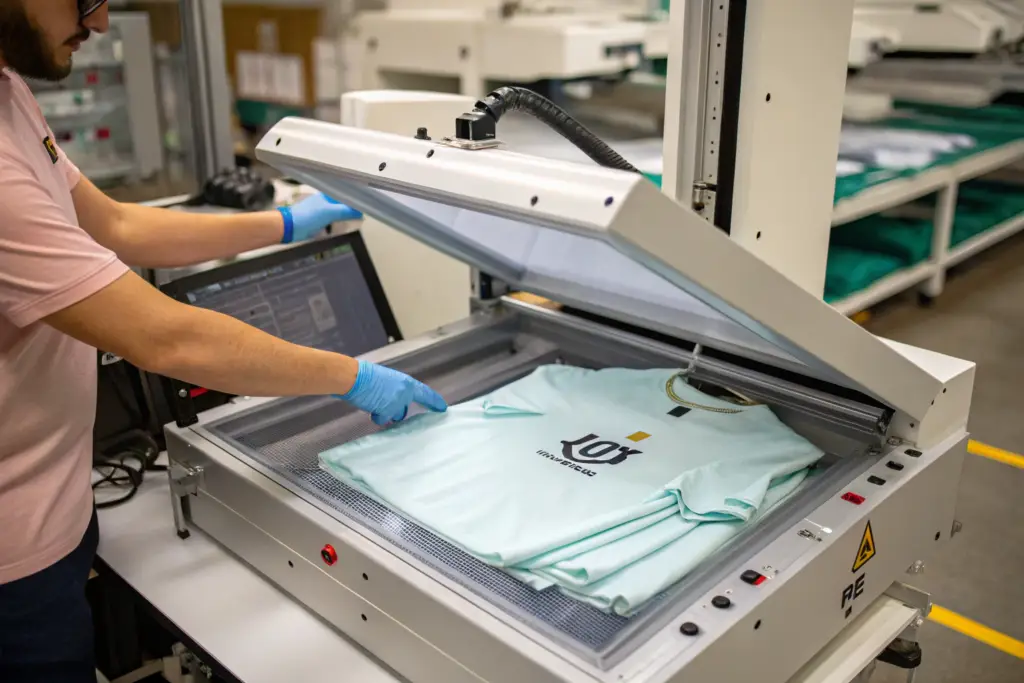
Why Do Silicone Heat Transfers Outperform Vinyl on Summer Sportswear?
Vinyl transfers feel like a plastic bandage. They block airflow. Silicone is different. It is a cross-linked polymer that feels rubbery but remains flexible after curing. It also breathes better because it can be applied with an engrave pattern that leaves micro gaps. We used this method last year for a triathlon apparel brand. Their race singlets were a 100 GSM polyester micromesh. They needed a chest logo that would not trap sweat. A standard plastisol screen print would have blocked the mesh pores entirely. We used a tonal matte silicone transfer with a laser-engraved surface texture. The logo was a dark grey on a charcoal base. It looked like a water mark. The athletes reported zero irritation during long bike legs. The transfer also survived a chlorine resistance test according to AATCC test method 162. We ran 10 wash cycles in chlorinated pool water, and the edges showed no lifting. For any brand doing swimwear, triathlon, or high-sweat performance gear, silicone is a serious option. It costs more than vinyl, but a peeling logo on a $120 race kit costs the brand's reputation.
How Does Direct-to-Film Technology Handle Fine Line Details on Lightweight Viscose?
Viscose is tricky. It has a smooth, almost slippery surface. Traditional screen printing can bleed because viscose absorbs ink rapidly and unevenly. Heat transfers can look like a sticker sitting on a silk scarf. Direct-to-film technology solves this with a very thin adhesive powder that melts at a lower temperature. The film itself is a PET carrier coated with a polyurethane hot-melt adhesive. The printer lays down the ink on the film first, then dusts it with a fine-grain adhesive powder, and cures it. The resulting transfer is then pressed onto the fabric with a low-temp, high-pressure cycle. We processed a 200-piece order for a women's brand using a 110 GSM viscose challis. The logo was a fine-line floral monogram. The lines were 0.5 millimeters wide. A screen would have blurred them. The direct-to-film transfer held every serif. The final hand feel was almost undetectable. The key parameter here is the adhesive powder grain size. For thin fabrics, we specify an 80 to 120 micron powder. Larger grains create a sandpaper texture. Smaller grains bond cleanly without soaking through.
How Can You Achieve a Zero-Hand-Feel Logo on Ultralight Summer Fabrics?
Some brands do not want you to see the logo at all unless you are looking for it. Think of a high-end resort shirt where the branding is a tonal shadow. Or a luxury sleepwear set where the label is printed directly on the back neck to replace a physical tag. These applications need a decoration method that does not add any thickness. Not even the thickness of a sheet of paper. Achieving this requires moving from surface decoration into fabric modification.
You achieve a zero-hand-feel logo on ultralight summer fabrics by using burnout printing on blends or by tattooing a debossed logo through ultrasonic welding. Burnout printing removes the cotton portion of a poly-cotton blend, leaving behind a sheer, patterned mesh that is the polyester skeleton. Ultrasonic welding fuses fibers together in a specific shape without any ink, thread, or adhesive.
We entered this territory two years ago when a luxury loungewear brand asked us to solve a tag problem. They had a 70 GSM microfiber robe. The printed satin tag was thicker than the robe fabric. It irritated the back of the neck. We replaced the physical tag with a tonal ultrasonic debossed logo. The result was a brand mark that you could only see in the right light, like a watermark on paper. It added zero weight and zero irritation.
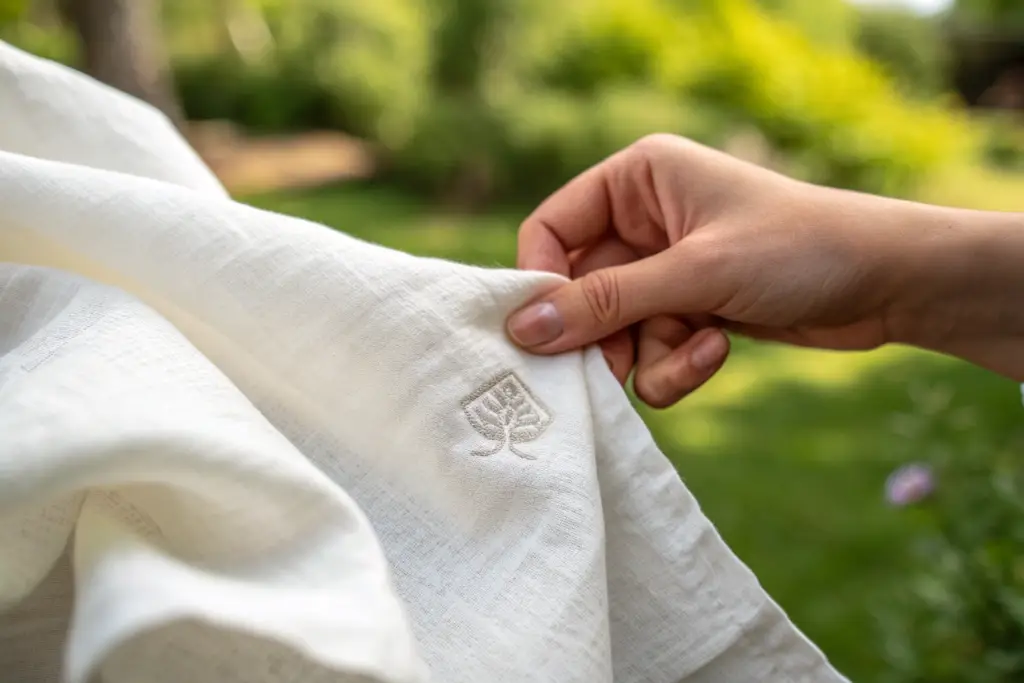
What Fabric Blends Are Compatible with Burnout Printing for Decorative Logos?
Burnout printing uses a chemical gel that contains sulfuric acid. When printed on a cotton-polyester blend and cured, the acid burns away the cellulose fibers but leaves the synthetic fibers intact. This creates a sheer pattern that is both decorative and functional. The most common blend is 60% cotton, 40% polyester. A 50/50 blend also works but produces a less defined pattern. We tested a burnout logo on a 55% linen, 45% viscose summer scarf last year. The result was a delicate, lace-like logo that let air pass through it. The scarf was already a warm-weather accessory, and the burnout pattern made it even more breathable. This technique requires strict safety protocols. The acid must be fully neutralized after curing, or residual chemicals can weaken the fabric over time. We run a post-print rinse through an industrial wash with a pH buffer solution. Every batch is tested with a pH test strip before packing. A residual pH below 5.0 is rejected. For U.S. brands, we also need to confirm the finished garment meets CPSIA lead and phthalate limits. Burnout printing does not introduce these substances, but the acid neutralization process must be validated.
How Does Ultrasonic Embossing Work for Subtle, Ink-Free Branding on Delicate Textiles?
Ultrasonic embossing is not printing. It is remodeling the fabric itself. The machine uses a patterned horn that vibrates at 20,000 cycles per second. When pressed against a synthetic fabric or a synthetic blend, the high-frequency vibration generates localized heat. The fibers melt and fuse in the shape of the horn pattern. There is no ink. There is no thread. The logo is a permanent structural change in the textile. We use this for nightwear and intimate apparel brands. Last November, a sleepwear label needed a chest logo on a 90 GSM cupro slip dress. Any ink would have shown through to the front. Any transfer would have created a shiny patch. We created a ultrasonic welding die with their monogram. The debossing took 0.3 seconds per piece. The logo is a subtle depression in the fabric, visible when light hits it at an angle. It cannot peel, crack, or fade because it is not on the fabric. It is the fabric. The limitation is fiber content. This method needs at least 65% thermoplastic fiber content. Polyester, nylon, and cupro all work. Pure cotton or linen will not fuse. For summer collections that use a lot of synthetic blends, this is a decoration method that adds not a single gram of weight to the garment.
How to Prevent Thin Fabric Distortion During the Logo Application Process?
I once ruined 50 beautiful silk-cotton blend tops in a single afternoon. It was five years ago. The platen adhesive was too strong. The fabric was too delicate. When the printer operator peeled the shirt off the board, the fibers stretched and never recovered. The shirts looked warped. We had to scrap the entire batch. That day, I learned that fabric distortion is not a printing failure. It is a handling failure that happens before the first drop of ink touches the cloth. You cannot fix it after the fact.
You prevent thin fabric distortion during logo application by using low-tack pallet adhesive, precise off-contact screen settings, and temporary backing sheets for the lightest fabrics. Heat transfer methods must use a reduced temperature profile with an extended dwell time to bond the adhesive without scorching the textile. For direct-to-garment printing, a pretreated but fully dried fabric surface stops moisture from causing the fibers to swell unevenly.
Different printing methods cause distortion in different ways. Screen printing pulls the fabric up when the screen lifts. Heat transfers can shrink the fabric if the platen temperature is too high. Digital printing can leave a wet ring that puckers the cloth. Each problem has a specific preventive measure. You have to know which one applies to your method.
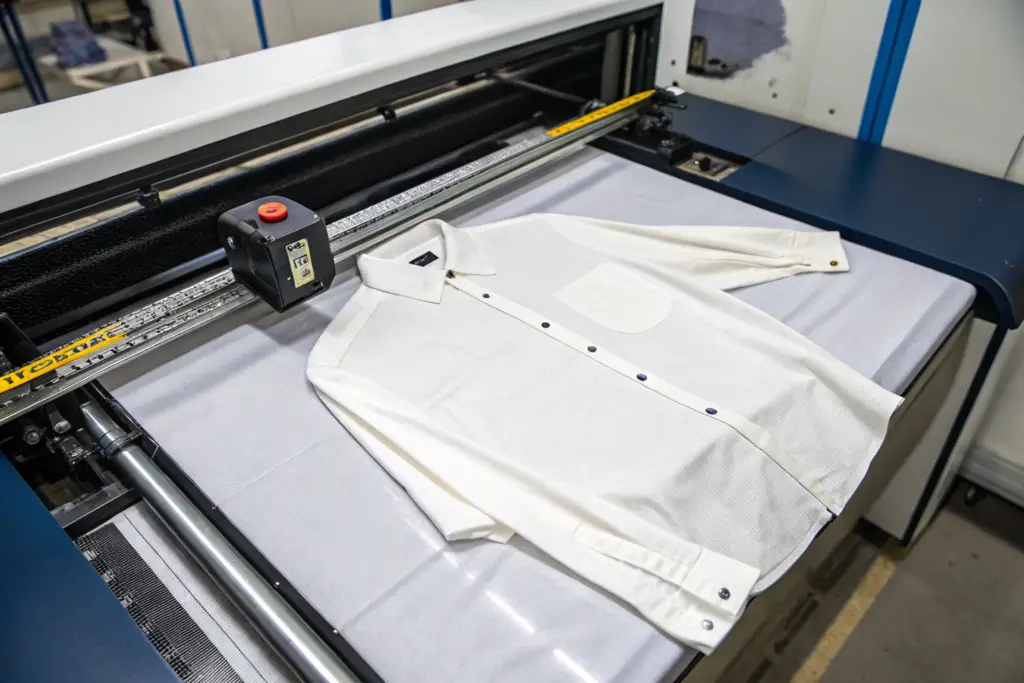
What Pallet Adhesive Strength and Off-Contact Gap Prevent Screen Printing Drag?
Screen printing on thin fabric requires balancing two forces. The adhesive must hold the fabric in place. The screen must clear the ink and release the fabric without pulling it up. If the adhesive is too strong, the shirt stretches during removal. If it is too weak, the fabric shifts mid-print and the registration blurs. We use a liquid pallet adhesive that we heat-cure lightly before loading. For fabrics under 120 GSM, we reduce the standard off-contact gap to 1.5 millimeters. A larger gap increases the snap-off force. The screen peels away with more energy, and that energy pulls on the fabric fibers. We also flash-cure between colors at a reduced temperature. A standard flash unit runs at 160°F surface temp. For thin fabrics, we drop it to 140°F and extend the dwell time by 1.5 seconds. This prevents heat shrinkage during the print cycle. A screen printing equipment supplier once helped us configure a set of low-tension screens specifically for our lightweight fabric station. Lower screen tension reduces the peel force even further. It is a small adjustment, but across a 500-piece run, it eliminates the cumulative fatigue that causes operators to stretch shirts just to keep the line moving.
How Should Direct-to-Garment Pretreatment Be Adjusted for Sheer Cotton?
Direct-to-garment printing uses a water-based pretreatment that helps the ink bond to cotton fibers. On a standard 180 GSM tee, the pretreatment spray is generous. On a 100 GSM voile, the same spray volume can oversaturate the fabric. The wet fabric swells. When the print head passes over it, the damp fibers stick to the print head and cause a head strike. The resulting print has a smeared edge and a puckered fabric halo around the design. We learned to dial back the pretreatment volume by 40% for sheer cottons. We also enforce a full drying cycle before the shirt enters the printer. A shirt that feels dry to the touch can still have 8% internal moisture content. That moisture turns to steam during the heat-press curing stage and creates a localized shrinkage ring. We now use a moisture meter to verify the fabric is below 5% moisture before printing. Last month, we ran a 300-piece order of white cotton lawn blouses for a resort wear brand. The print was a delicate navy blue logo on the back yoke. By reducing pretreatment and verifying dryness, we achieved a 99.5% first-pass yield. Two blouses out of 300 had minor puckering. The previous year, with standard settings, our reject rate on a similar order was 8%. The improvement is entirely in the prep, not the print.
Conclusion
A summer garment is a delicate platform. It breathes. It flows. It exists to keep the wearer cool when the temperature climbs. A logo that blocks airflow, cracks with movement, or scars the fabric with heavy adhesive betrays the entire purpose of the piece. Every decoration method we have covered here solves a specific problem that lightweight textiles present. Water-based and discharge screen printing sink the logo into the yarn, not on top of it. Silicone and high-density direct-to-film transfers offer durability with a feather-light touch. Burnout and ultrasonic embossing remove material instead of adding it, creating a brand mark that is part of the architecture of the cloth. And every single one of these crafts depends on precise handling parameters that protect the fiber from stretch, heat, and chemical damage.
I have watched our team at Shanghai Fumao evolve from basic plastisol printers to textile engineers who can execute a 0.5-millimeter line on a 90-gram cupro slip dress. That journey came from listening to brands who were tired of compromising. They wanted their logo to look sharp and feel like nothing. We built the process controls to deliver that result batch after batch.
If your summer collection needs a logo decoration partner who treats fabric weight as a critical design constraint, not an afterthought, reach out to us. At Shanghai Fumao, we run dedicated printing stations calibrated for lightweight goods. We can test your fabric, recommend the method that matches your hand-feel requirements, and produce a pre-production sample for your approval before cutting a single piece of bulk fabric. Contact our Business Director, Elaine, at elaine@fumaoclothing.com. Send us your tech pack and your target fabric swatch. We will send back a logo that your customers will not want to stop touching.