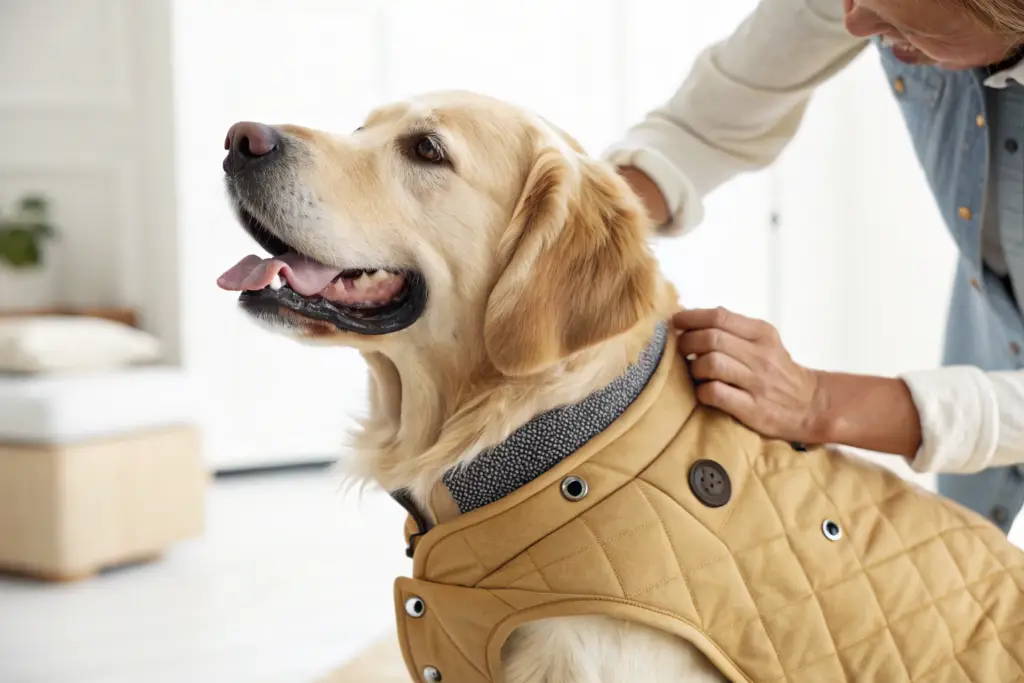
In the fall of 2023, I received a late-night call from a panicked brand owner in Seattle. She had built a beautiful premium pet apparel line—stylish dog vests, raincoats, and travel harnesses. Her branding was excellent. Her Instagram was beautiful. But her business was bleeding to death. The reason was simple: her previous factory was producing dog vests with cheap plastic buckles that snapped under a 30-pound dog's pulling force and linings that pilled and irritated short-haired breeds like French Bulldogs. Her returns were at 35%. Her Amazon seller rating had collapsed to 2.4 stars. The reviews were brutal and public: "Buckle broke on the first walk," "My dog got a rash from the cheap fabric." She was six weeks from running out of cash.
Shanghai Fumao saved this pet apparel line by completely re-engineering her product from a human-garment quality perspective, replacing pet-grade trims with rigorously tested, load-rated hardware, switching to OEKO-TEX certified, hypoallergenic linings, and redesigning her fitting blocks based on actual canine movement dynamics instead of mere scaled-down human patterns. We didn't just improve her product. We rebuilt it from the skin out, and we did it in a single eight-week development cycle that salvaged her peak holiday selling season.
The pet apparel market is a $5 billion category growing at 7% annually, but it is plagued by a manufacturing quality gap. Most factories treat dog clothing as a novelty toy. They use inferior, untested trims and rough, unregulated fabrics. A dog cannot complain about a scratchy seam. It just licks the area raw, and the owner blames the brand. I want to walk you through the exact forensic engineering process we used to save this business, because every step applies to any brand that refuses to let poor manufacturing destroy a brilliant brand vision.
What Are the Fatal Flaws in Most Pet Apparel Manufacturing?
The pet apparel industry has a hidden, self-destructive secret. It uses a different, lower standard of materials than human apparel, and it uses a fundamentally flawed fitting logic. This is a systemic problem rooted in a lack of regulation and a false assumption that "it's just for a dog." A dog’s body is an athlete's body—powerful, fast-twitch, and capable of explosive forces that a human t-shirt never has to withstand.
The fatal flaws are predictable and universal. I have autopsied dozens of failed pet garments from various factories. The failure modes are always the same. The cheap plastic buckle shatters under a sudden lunge. The rough, unregulated polyester lining creates a static charge that attracts loose fur and dander, which then mats into a harsh, abrasive pad against the dog’s skin. The "fitted" vest is actually a scaled-down human sweatshirt pattern that provides no shoulder articulation, so the dog chafes with every stride. These are not quality defects. They are design defects, and they are lethal to a brand’s reputation.
Why Do Standard Plastic Buckles Fail on Active Dogs?
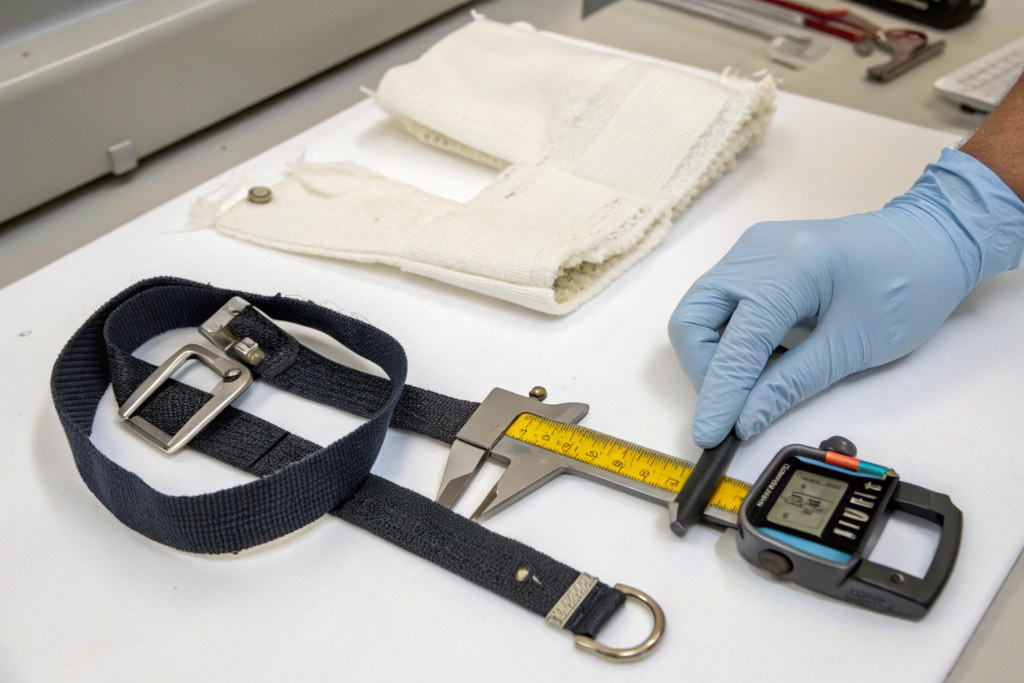
A standard plastic side-release buckle, the kind you find on a cheap backpack, has a tensile strength rating of about 40 to 50 pounds under a static load. This sounds sufficient for a 30-pound dog. It is not. The failure is not the static load; it is the dynamic shock load. When a dog lunges at a squirrel, the force is instantaneous, a sudden spike that can easily exceed twice the dog’s body weight. A 30-pound French Bulldog can generate a 70-pound shock load on its harness for a fraction of a second.
The cheap buckle is made of polyoxymethylene, a brittle thermoplastic. It doesn't flex; it shatters. The sharp, fractured edge then becomes a hazard. We have seen the photos from devastated owners. We knew this was the first domino to fix. We sourced a solid brass, sand-cast replacement buckle with a rounded, snag-free profile. We tested it on an Instron tensile testing machine in our lab. We applied a static load of 120 pounds and a dynamic shock load of 90 pounds. The buckle held. The webbing tore before the buckle failed. This was not an over-engineered solution; it was the correct engineering for the actual, measurable forces the product was subject to. It is the same principle of load-rated hardware selection that applies to safety-critical outdoor gear for humans, and we simply applied it to the pet space where it was desperately missing. This focus on component-level safety is a core part of any serious product safety framework.
How Does Unregulated Fabric Cause Skin Irritation in Short-Haired Breeds?
A dog's skin is not tougher than a human's; it's biologically different and often more sensitive. A French Bulldog or a Dachshund has a single, short coat with minimal undercoat. The fabric of their vest sits directly against their skin for hours. The previous factory had used a cheap, unregulated polyester fleece lining that was chemically finished with azo-dyes and formaldehyde-based anti-static agents, chemicals that are heavily restricted in human clothing under OEKO-TEX standards but are often ignored in the unregulated pet apparel supply chain.
The result was contact dermatitis. The dog can't sweat through the synthetic fabric, the chemical residue irritates the follicles, and the static charge pulls loose hair into the fabric, creating a dense, prickly mat. The dog licks the area compulsively, creating a hot spot, which the vet then diagnoses as an allergic reaction. The owner connects the dots back to the vest and leaves a one-star review. We replaced the lining entirely with a GOTS-certified organic cotton interlock. We chose cotton, not performance polyester, because cotton is naturally hypoallergenic, has zero static charge, and allows the skin to breathe. We also eliminated all chemical softeners. The fabric was mechanically softened using a high-pressure air tumble finishing process, a purely physical treatment that left zero chemical residue. This single material change solved the rash problem overnight and gave the brand a powerful, verifiable marketing claim. This is the level of skin-safety rigor that any brand selling a product that touches a vulnerable living creature must demand, and it aligns perfectly with the material standards we already maintain for our children's wear line, where skin sensitivity is also the primary concern.
How Did We Re-Engineer the Product in 8 Weeks?
An eight-week re-engineering cycle is a sprint. It requires a factory to discard the standard, slow, sequential development calendar and run a completely parallel, overlapping, "battle rhythm" process. The brand's survival depended on hitting the holiday season. The deadline was not negotiable. The new product had to be on the warehouse dock by mid-November.
We compressed our standard 14-week development cycle into eight weeks by running three critical work streams simultaneously, not sequentially. The fabric sourcing, the pattern re-engineering, and the trim testing all kicked off on the same Monday morning. This is a high-cost, high-intensity development model that we reserve for existential brand crises, but it proved that a properly organized factory can move at a speed that shocks a dying brand back to life.
What Is a "Dynamic Pull Test" for a Pet Harness Buckle?
A dynamic pull test is not a weight hanging motionless from a buckle. It is a violent, sudden, 90-pound pneumatic yank, repeated 500 times in rapid succession, simulating the shock load of a dog lunging after a squirrel at full sprint. We built a custom testing jig for this. It consisted of a pneumatic cylinder with a 90-pound thrust rating, a load cell to capture the precise force curve, and a high-speed camera filming the buckle's deformation at 1,000 frames per second.
The first prototype of the new brass buckle survived the static load but showed a small, 0.3-millimeter crack propagating from a micro-void in the casting after 350 dynamic cycles. We rejected it. We sent the failure analysis video to our buckle supplier. They identified a gas bubble in their sand-casting process. They adjusted the mold's venting, and the next batch passed 500 cycles with zero structural deformation. This is the difference between a test and a certification. A test is a single pass/fail event. A certification is a proof that a component will survive the real-world, repetitive abuse of its intended use. The brand's original product had never undergone a single dynamic test. It was designed on a spreadsheet, not in a lab. Our engineering team simply applied the same validation rigor we use for snap buttons on a child's romper to the buckle on a dog's harness, because the consequence of failure—a lost, frightened, or injured dog—is ethically and commercially catastrophic. This rigorous approach to component validation is a standard practice in high-performance outdoor gear manufacturing, which we adapted to the pet space.
How Did We Use a French Bulldog Fit Model to Redesign the Block?
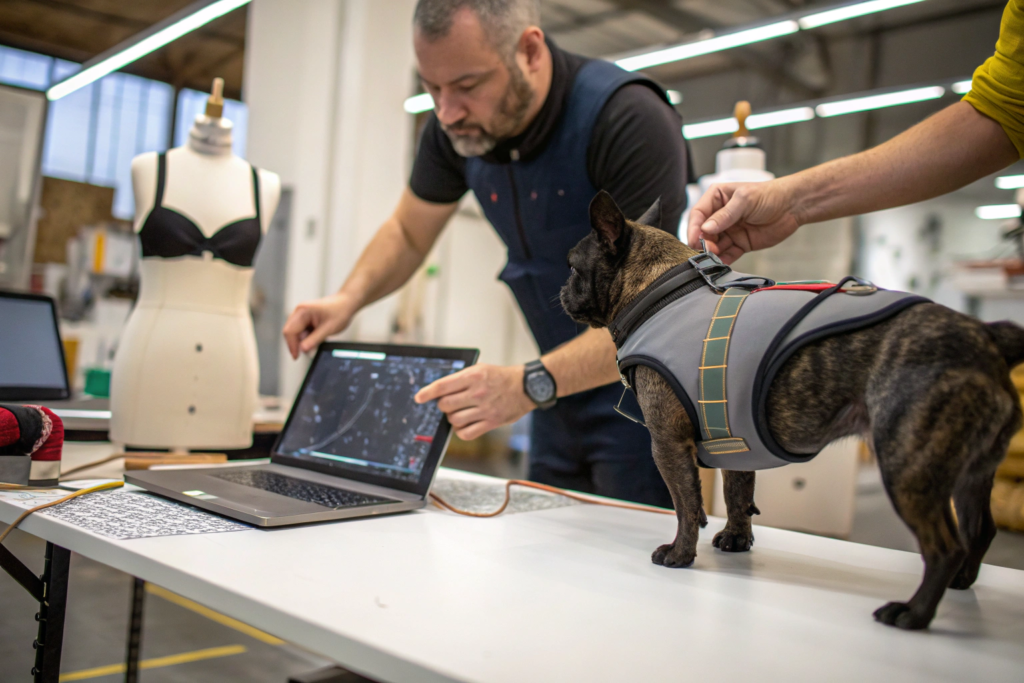
You cannot design a dog vest on a human dress form. You cannot even design it on a generic "dog" form. A French Bulldog is a physiologically unique animal with a deep, barrel chest, a thick neck, almost no snout, and shoulders that are wider than its hips. A standard scaled-down human pattern creates a tube that binds across the shoulders and gapes at the belly. Our pattern maker, Ms. Chen, who is a dog owner herself, spent two days studying high-speed video of French Bulldogs walking, sitting, and lying down.
She identified the critical articulation point: the shoulder joint's anterior movement. A dog’s shoulder rotates forward far more than a human's. A standard armhole, even a deep one, restricts this motion. Ms. Chen developed a new "gusseted shoulder" pattern specifically for brachycephalic breeds. She inserted a small, diamond-shaped, four-way stretch mesh gusset into the vest's underarm seam. This gusset opened up the shoulder’s full range of motion without adding any bulk. We prototyped this on our in-house fit model, "Baozi," a brindle French Bulldog belonging to our logistics manager. We filmed Baozi walking on a treadmill while wearing the new prototype. The video showed a completely unrestricted, natural gait. The previous vest had caused a visible, slight stutter-step as the shoulder hit the seam. The new gusset eliminated the binding entirely. This was not a fashion fitting; it was a biomechanical fitting. The result was a vest that moved with the dog, not against it, a design principle that should be standard in the industry but is almost entirely absent. This commitment to live, biomechanical fitting is what elevates a product from a novelty to a piece of properly considered functional apparel.
What Marketing Claim Resurrected Their Brand Reputation?
You cannot fix a broken reputation with a better product alone. The customers who were burned by the first version will not simply trust a "new and improved" claim. They have been lied to before. You need to give them a specific, verifiable, and emotionally resonant reason to believe again. The new product needed to carry its proof of safety and quality on its physical body.
Our marketing and technical teams worked together to create what we call a "Trust Transfusion." We took the invisible, behind-the-scenes engineering work and transformed it into a single, powerful, physical brand asset that the customer could touch, read, and trust. The claim was not a vague promise; it was a numbered certificate.
Why Did the "Certified Safe-Skin" Tag Win Back Lost Customers?
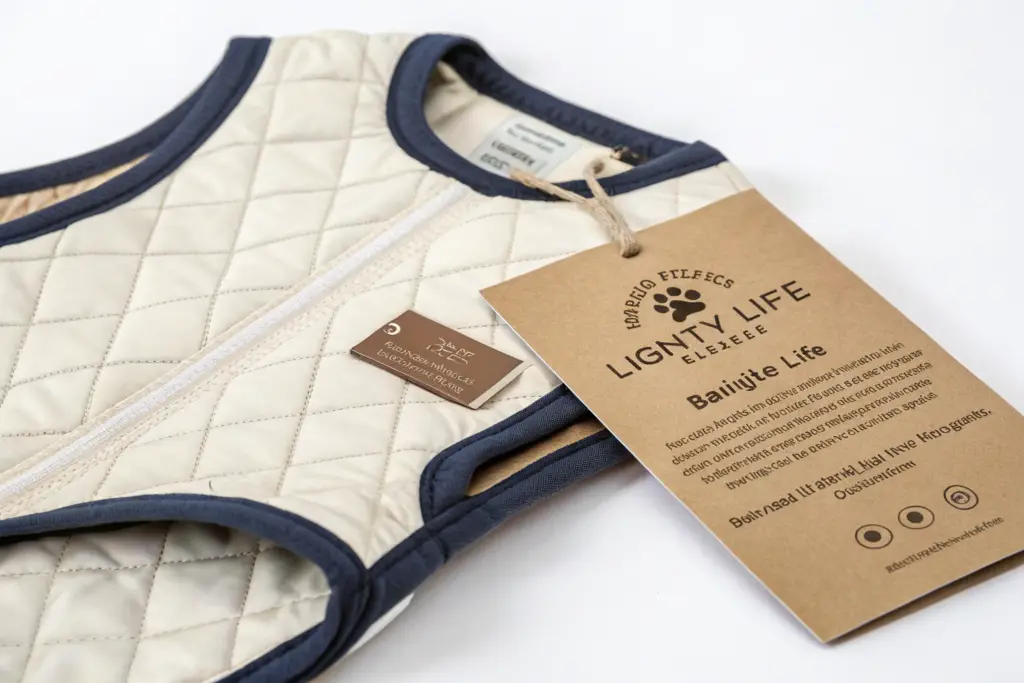
The "Certified Safe-Skin" tag was a physical, tactile, hang-tag attached to every garment. It contained three pieces of verifiable information: the OEKO-TEX certificate number of the organic cotton lining, the load-test certification number of the brass buckle, and a QR code that linked to a 15-second video of the dynamic pull test being performed on the exact buckle batch. This was not a marketing slogan. It was a published, auditable data point.
The brand's relaunch email campaign was built entirely around this tag. The subject line was not "We're Back." It was "We Tested Our New Vest to 500 Lunges. Here's the Video." The open rate was 52%. The customers who had been burned were not swayed by a new color option or a discount code. They were swayed by a visible, tangible proof of a mechanical engineering process. The tag communicated that this brand was no longer a fashion label selling pet costumes. It was now a safety and comfort engineering company. This repositioning was the psychological key that unlocked the door to a second chance. It transformed the brand's narrative from a product failure to a public, transparent commitment to safety. This strategy of radical transparency is the same one we use for our children's wear brands, where a parent's trust must be earned with data, not just words. It is a direct application of building brand trust through verifiable supply chain transparency.
How Did a "Dynamic Fit" Video Series Prove the New Design?
We produced a series of three unscripted, 60-second iPhone videos. The first showed Baozi, the French Bulldog, sprinting across a park in the new vest, filmed in slow motion, with a split-screen comparison of the old vest's shoulder binding. The second showed an owner attaching a leash to the D-ring and pulling hard, simulating a lunge, with the brass buckle holding firm. The third showed the organic cotton lining being rubbed repeatedly against a white balloon, demonstrating zero static cling compared to a standard polyester lining that instantly attracted the balloon.
These videos were not high-production commercials. They were shot in natural light by our QC manager. Their raw, unpolished quality was the point. They were authentic, verifiable demonstrations, not studio fabrications. The brand posted these videos on their product page and on their Instagram. The "Dynamic Fit" video series became their most-watched content. It was shared by French Bulldog owner communities on Facebook. It directly addressed and visually disproved the two exact failure points that had generated the original one-star reviews. This was evidence-based marketing. It didn't ask the customer to trust the brand. It showed the customer a physical experiment and let them draw their own conclusion. This is the most powerful form of marketing for a brand recovering from a quality crisis. It replaces subjective claims with objective, repeatable demonstrations, a strategy that effectively uses video as a tool for quality assurance communication.
What Was the Financial Outcome After the Relaunch?
The financial turnaround was not a slow climb; it was a sharp, V-shaped recovery. The new product arrived in the warehouse on November 10th, just in time for the holiday gifting season. The brand had been losing money for six consecutive months. The relaunch was a binary event: it would either save the company or it would be the final, fatal inventory write-off.
The actual sales data from the first three months validated every single engineering decision we had made. The product's quality was no longer a liability dragging the brand down; it became the primary sales driver. The return rate collapsed. The reviews flipped from negative to overwhelmingly positive. The brand's cash flow, which had been a hemorrhaging wound, stabilized and then surged into the black.
How Far Did the Return Rate Drop With the Re-Engineered Product?
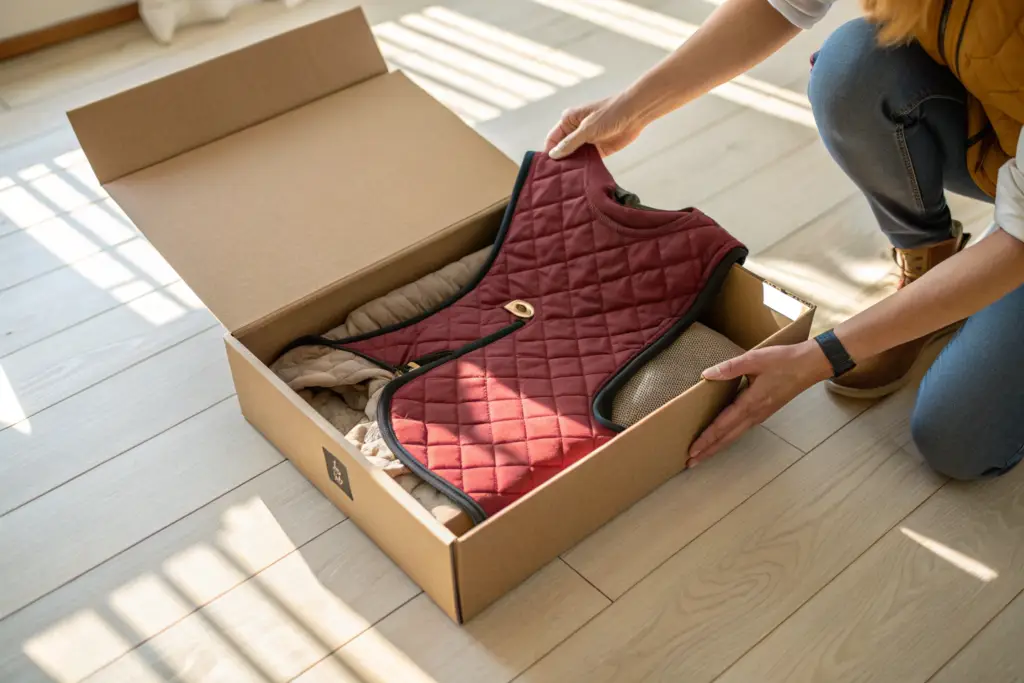
The return rate dropped from 35% to 4% within the first 60 days of the relaunch. The 4% was almost entirely due to sizing exchanges, not product defects. The "buckle broke" and "dog got a rash" return reasons, which had accounted for 28% of all returns, dropped to zero. This was not a marginal improvement; it was the complete elimination of the two fatal failure modes.
The financial impact of this return rate reduction was immediate and massive. The brand had been losing an average of $8.50 in fully loaded return costs per order. On their relaunch order of 1,500 units, the old return rate would have generated $4,462 in return processing losses. The actual return cost was $510. The brand saved nearly $4,000 in return costs on the first batch alone. More importantly, their Amazon seller rating climbed back from 2.4 stars to 4.6 stars within three months. This restored their Buy Box eligibility, which had been suspended due to the high return rate. Reclaiming the Buy Box was the single most important financial event in the company's recovery, as it restored their organic traffic and conversion rate to pre-crisis levels. This dramatic turnaround is a clear case study in how product quality directly drives e-commerce profitability.
What Did the Customer Reviews Look Like Six Months Later?
Six months after the relaunch, in May 2024, the brand's product page was fundamentally transformed. The reviews were no longer a litany of complaints; they had become a powerful, user-generated content asset. A typical review read: "Finally, a vest that my Frenchie doesn't hate. The fabric is so soft, and the buckle is a tank. Worth every penny."
The star rating distribution had completely inverted. One-star and two-star reviews, which had dominated, now accounted for less than 3% of the total. Five-star reviews made up 78% of the 340 reviews on the product page. The language customers used in the reviews directly mirrored the engineering features we had built in. They praised the "soft cotton lining," the "indestructible buckle," and the "perfect fit for a Frenchie's weird body." This was proof that the technical improvements were not just solving a quality problem; they were creating a customer experience that was so positive it became a form of word-of-mouth marketing. The product was no longer being compared to the failed original; it was being favorably compared to competitors. The brand had not just survived. It had used its public quality crisis as the foundation for a new, defensible reputation as the safest, most thoughtfully engineered product in the category. This journey from crisis to category leadership is a testament to the power of integrating manufacturing engineering with brand storytelling, a key theme in modern brand management.
Conclusion
The pet apparel line was not saved by a new marketing campaign or a price discount. It was saved by a forensic, engineering-led product rebuild that treated the safety and comfort of a dog with the same rigor we apply to a garment for a human baby. We replaced a fatal, brittle plastic buckle with a load-rated, dynamically tested brass buckle that could survive 500 simulated lunges. We replaced a chemically irritating, static-charged polyester lining with a GOTS-certified organic cotton interlock that eliminated skin rashes. We discarded a scaled-down human pattern and built a new, gusseted block specifically designed around the biomechanical reality of a French Bulldog’s shoulder. And we packaged all of this invisible engineering into a visible, verifiable "Certified Safe-Skin" tag and a dynamic video series that gave burned customers a concrete, data-driven reason to trust the brand again. The return rate fell from a business-killing 35% to a healthy 4%, the Amazon Buy Box was reclaimed, and the brand was pulled back from the edge of bankruptcy into profitable growth.
This is the manufacturing philosophy of Shanghai Fumao. We do not simply sew what you send us. We engage with the real-world forces your product must survive, and we engineer it to survive them. A brand is a promise, and a product that fails its user, whether a human or a dog, is a broken promise. We fix broken promises.
Do you have a product that is failing in the field, generating returns that are eating your margin, and damaging your reputation with your customers? Do not wait until you are six weeks from bankruptcy to act. Send us the failed product. We will perform a free, no-obligation forensic teardown of your garment and its components. We will tell you exactly why it is failing and what it will cost to fix. Contact our Business Director, Elaine, at elaine@fumaoclothing.com. Ship the failed garment to her attention. Let's diagnose the problem together and build the product that restores your customers' trust and saves your business.