Every season, I watch U.S. brand owners hold their breath. They have wired a deposit. The ship date has passed. The supplier’s WhatsApp shows "last seen" days ago. A container full of autumn jackets is still sitting on a dock, unmoving. I have seen this happen too many times in my 15 years running a garment factory in China. One missed delivery window can turn a season’s profit into a year’s dead stock. Finding a supplier is not the hard part. Finding a supplier who acts like a partner is the real challenge.
A reliable clothing manufacturer in China is one who pairs technical precision with radical transparency. You need a partner with verified certifications, a physical factory floor, and a documented history of shipping on time. Look for direct communication with a decision-maker, not a trading company sales rep who has never seen the production line. A trustworthy factory will also be honest about what they cannot do, rather than falsifying a certificate to win an order.
The difference between a good factory and a great factory often comes down to three things. These are engineering capability, material integrity, and delivery discipline. I will break down exactly how we handle these at Shanghai Fumao, so you can apply the same checklist when you talk to any potential partner.
How to Verify a Chinese Clothing Factory’s Quality Control System?
Last March, a startup founder in Texas sent me a desperate message. He had just received 300 faux-leather jackets from a new supplier. The zippers were already pulling away from the seams. The supplier blamed the shipping company. That excuse was worthless. When I inspected the photos, I saw the real problem immediately. The factory had used a standard round needle on PU-coated fabric. It perforated the material backing like a dotted tear line. You do not need to be a technical expert to avoid these disasters, but you do need to check the quality system that happens before the first stitch is made.
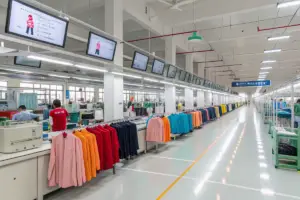
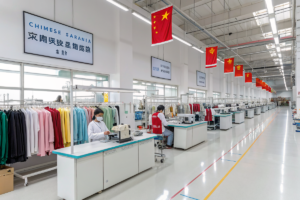
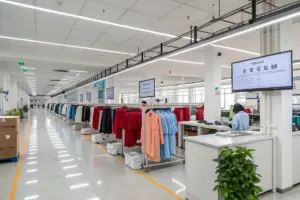
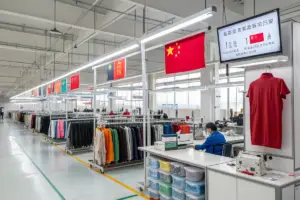
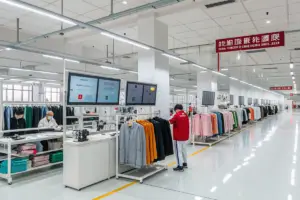
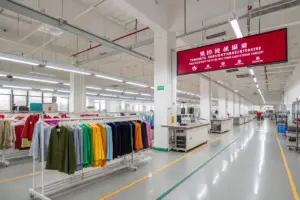
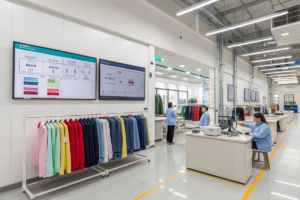
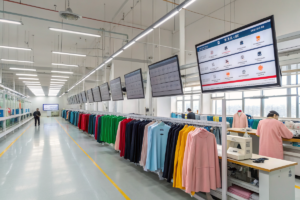
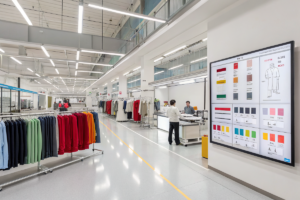
You verify quality control by tracing the raw material source and demanding in-line inspection reports. A factory with real process control will invite you to tour the cutting floor via live video. They will show you the tension settings on the sewing machines and the lightbox for checking fabric color consistency. Most importantly, they perform needle detection tests on every single piece before packing, a non-negotiable step for the U.S. market.
We often group quality failures into two buckets. There are visual defects, like loose threads or crooked seams. Then there are structural defects, like the zipper failure that Texas founder faced. Visual defects annoy customers. Structural defects destroy a brand. To stop both, a factory needs a system that catches problems when a style is just a paper pattern, not when it is already inside a shipping carton.
Why Does Pre-Production Sampling Matter More Than Final Inspection?
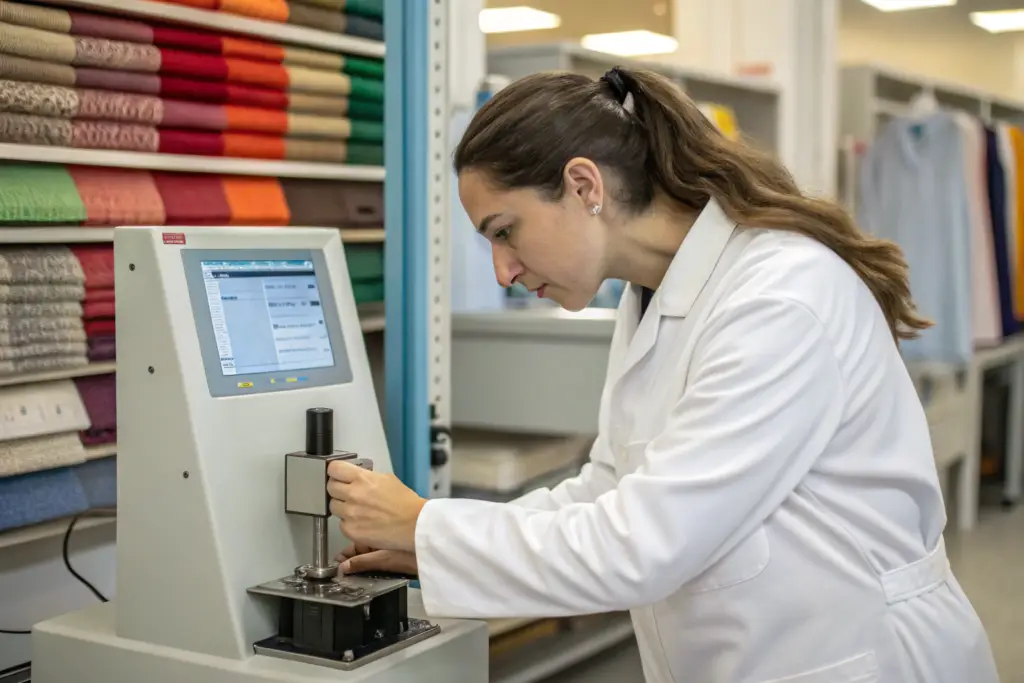
Many U.S. buyers only ask for a final random inspection. I believe that is like getting a blood test after you have already had a heart attack. By the time a garment leaves the line, the money is spent and the clock is ticking. The real defense happens in the sampling stage. At Shanghai Fumao, we cut a size-set sample for every single order. We then stretch, wash, and hang that sample according to the specific fabric care standards. A few months ago, a streetwear brand we work with wanted a heavyweight cotton fleece hoodie. Our pre-production wash test showed 8% shrinkage. The buyer had not budgeted for over-sizing the pattern. We paused. We adjusted the pattern grade rules. That one test saved him from storing 500 hoodies he could not sell. A factory without this step would have just shipped them.
How Do Inline Inspections Prevent Bottleneck Defects?
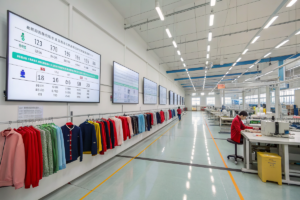
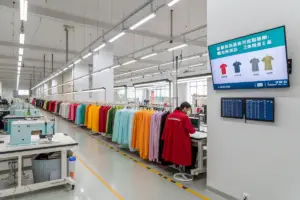
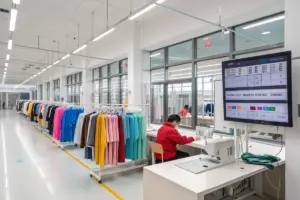
Most people picture an inspector walking around with a clipboard. That is a police patrol. We prefer a checkpoint system. Think of a production line as a highway. You need toll booths, not just a single checkpoint at the final exit. We build three checkpoints into every line. The first is the cutting table. Here, our team checks if the fabric lay tension is consistent. If one layer is stretched tighter than the next, the cut panels will shrink back to different sizes after washing. The second checkpoint is the sewing assembly. We use a modular production system where a single operator sews the collar and sets the sleeve. When a problem starts, we spot it at the next station within five minutes, not the next day. The third checkpoint is the finishing table. Here, we check for broken needles with a conveyor-type metal detector. Every single piece passes through. We log the count. This log travels with the packing list to the buyer. No report means no shipping.
How Do Chinese Clothing Manufacturers Ensure On-Time Delivery During Peak Seasons?
I remember a single week in October. We had four shipments for three different U.S. brands. The Shanghai port was congested. Trucking costs were climbing daily. One of the brands, a women’s wear line based in Chicago, had a strict delivery window for Black Friday. If the goods missed the vessel cutoff, they would arrive in December. Those trench coats would be as useful as ice in winter. Their previous supplier had failed them the year before by blaming the "peak season crunch." We do not get to blame the calendar. We plan for it.
Chinese manufacturers ensure on-time delivery during peak seasons by locking in raw fabric supply and production slots 60 days before the rush. They avoid relying on spot-market fabrics during September and October. A disciplined factory also builds "air freight buffers" into the costing, where the factory absorbs the express freight cost if a process delay happens on their side, protecting the buyer’s shelf date.
Late shipments usually do not start with slow sewing lines. They start with slow decision-making. One of the biggest hidden delays happens while a buyer waits for a lab dip approval. Or while a salesman nods to a deadline he knows his factory cannot meet, just to close the deal. You need a factory that treats deadlines like engineering tolerances, not vague suggestions.
What Role Does Material Pre-Booking Play in Avoiding Delays?
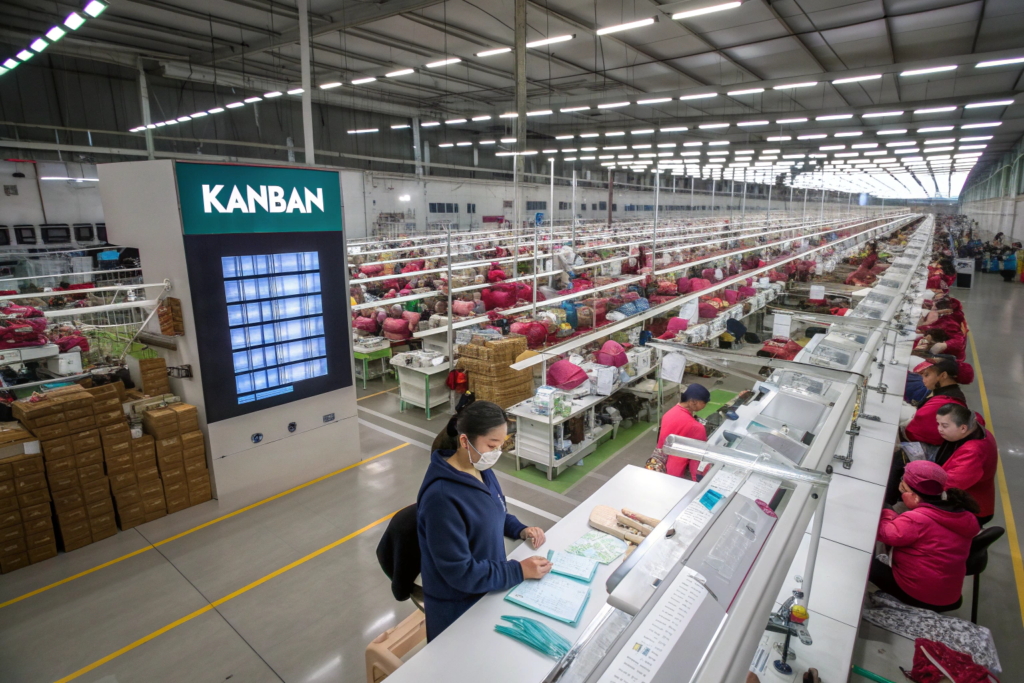
Fabric procurement is where 70% of delays are born. Many U.S. buyers think the factory already has the fabric in stock. That is rarely true for custom colors. In 2024, we moved to a risk-buffering model for our regular partners. For our men’s knitwear programs, we pre-book greige fabric for repeat colors in July, two months before the peak. When a brand issues a repeat order in September, we do not queue for dyeing. We are already inside the dyeing vat. This requires the factory to carry a small inventory risk, but it cuts lead times from 45 days to 25 days. I learned this from a logistics crisis two years ago. A buyer needed 600 linen-blend blouses restocked for a holiday catalog. The yarn was still in transit. By the time we received it and dyed it, we had lost ten production days. Now, we refer to a supply chain mapping approach for all high-volume styles. We identify the bottleneck material before the order is placed, not after.
How Can a Factory’s Capacity Planning Report Protect Your Ship Window?
You should never ask a factory "Can you make my deadline?" The answer is always yes if they want the deposit. Instead, ask for their weekly capacity load chart. At Shanghai Fumao, our planning department runs a rough-cut capacity plan on a rolling basis. We have five dedicated lines. We break each line’s minutes down per style. If a line’s weekly output capacity is 8,000 standard minutes, we do not book more than 7,500. That 500-minute slack is a delivery cushion. It catches machine breakdowns. It catches an operator’s sick day. Before you place a bulk order, ask for a visual load chart. A factory that cannot show you this is guessing. A factory that shows you a chart at 105% capacity is lying. I once consulted for a garment industry technology project where a factory overloaded their cutting room by 20%. It did not cause a slight delay. It caused a complete cascade failure where sewing lines stood idle waiting for cut parts. You want a factory running at 90% planned efficiency, with a transparent buffer you can see on paper.
What Certifications Should a Legitimate Garment Factory in China Have for Export to the USA?
We once lost a competitive bid to a cheaper factory. The U.S. brand was thrilled with the sample package. Then they asked for the social compliance audit. The cheaper factory sent a scanned certificate. It was expired. The brand’s compliance team flagged it during their review. They came back to us. That expired certificate cost the competitor the order, but it almost cost the brand their retail partner’s trust. In U.S. department stores, a vendor’s compliance status is not a nice-to-have. It is a binary pass or fail. As a factory owner, I know that a certificate on a wall is just paper. It is the living inspection process that actually keeps your supply chain safe.
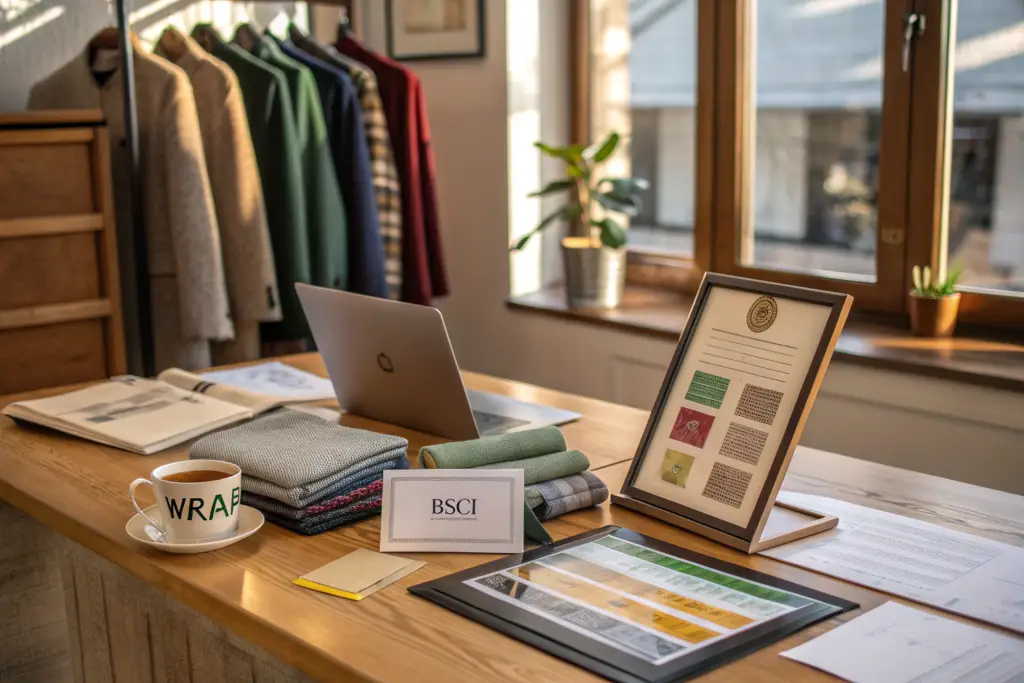
A legitimate garment factory exporting to the USA needs a social compliance audit like WRAP, BSCI, or SEDEX, and often a specific security audit like C-TPAT for cargo safety. Quality management certifications like ISO 9001 are valuable, but they are secondary to a clean social audit. Buyers should also verify that the factory has a valid factory business license that matches the address they are visiting.
I have seen a disturbing trick. A supplier takes you to a show factory. It looks pristine. It has all the certificates. Then they produce your goods in an un-audited workshop three blocks away. This is subcontracting without consent. It is also why you must match the address on the audit report with the address on the shipping documents.
How to Spot a Falsified or Expired Social Compliance Audit?
The first red flag is image quality. If the certificate file a salesman sends you is a grainy JPEG, they might have altered the date in Photoshop. Ask for the auditor’s name and the auditing firm’s reference number. Then, do a simple cross-check on the public directory of WRAP or amfori BEPI. Most reputable audit bodies maintain an online database. It takes me 60 seconds to verify a factory. I tell my clients, if a supplier stalls on giving you the auditor’s name, walk away. Last year, a brand owner in Florida asked me to check a certificate from a bag factory. I found the factory was certified, but the certification had lapsed ten months prior. The supplier was using the old certificate number. We caught it because the photo of the certificate on the wall showed a valid date, but the online registry showed a suspension. Also, look for the scope of the certificate. Some factories get certified only for their cutting and sewing section but not their printing section. If your product uses screen printing, the printing facility must also be covered.
Is C-TPAT Membership Necessary for Smooth U.S. Customs Clearance?
C-TPAT is not a legal requirement. But not having it can slow your goods down at the port. When U.S. Customs targets a container for a security exam, a non-C-TPAT factory’s container statistically sits longer. The inspection fee also lands on the importer. At Shanghai Fumao, we maintain active C-TPAT protocols. It means we have tamper-proof seals, secure perimeters, and documented visitor logs. I see these as basic security hygiene. For a U.S. buyer, a factory with these protocols also tends to be better organized overall. If a factory tracks who enters the packing area, they likely also track how many zippers go into your jacket. One logistics coordinator I know in Los Angeles swears by this correlation. He claims his highest-damage shipments always came from factories that had zero security protocols. It is a surprising link, but it makes sense. Chaos in security usually means chaos in quality.
How to Manage Apparel Import Logistics and Avoid Hidden Costs from China?
A buyer once called me, furious about an "extra" $2,500 charge on his delivery. It was not a shipping line fee. It was a demurrage charge because his trucker could not pick up the container in time at Long Beach. He had chosen a DDP price that looked cheap. He had not checked whose responsibility it was to arrange the final mile chassis. In my world, a cheap factory price means nothing if the freight quote hides these accessorial charges. I have spent years untangling this for our partners. The sea freight market is an animal, but hidden costs are almost always a human error or a deliberate bait-and-switch.
You manage apparel import logistics and avoid hidden costs by insisting on a transparent DDP (Delivered Duty Paid) quotation that lists all charges, including customs bond, ISF filing, and final mile delivery with a tailgate lift. Do not fall for low FOB prices that shift the port congestion risk entirely to you. A factory offering a true DDP service takes responsibility for the goods until they touch your U.S. warehouse floor.
The three letters "DDP" can mean different things depending on who is typing them. For some suppliers, DDP stops at the port. For us, it stops at the zip code of your warehouse. The distinction matters. A container can sit at the port racking up storage fees, and without a clear contract, the supplier will say, "We delivered it to the USA." That is a technical truth but a practical disaster.
Why Is FOB Often a Trap for Small to Mid-Size U.S. Apparel Brands?
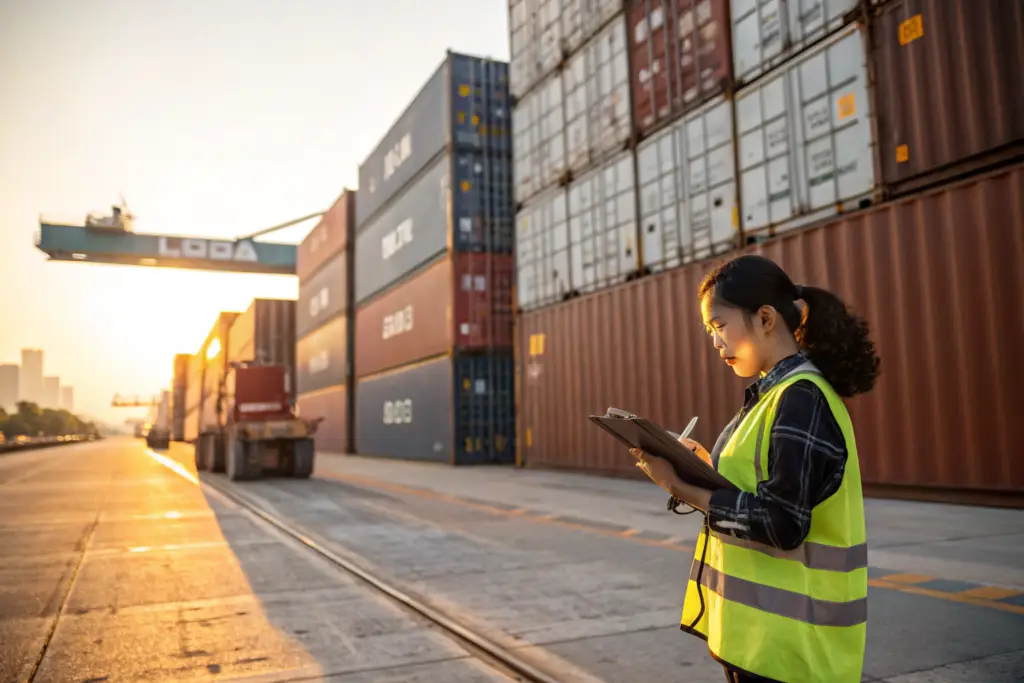
FOB sounds liberating. You control the freight. You choose your forwarder. But if you order just 500 T-shirts, you have no leverage with a shipping line. Your forwarder will quote you a rate, but during the peak season, that rate is subject to a General Rate Increase with almost no notice. We moved most of our small brand clients to an optimized DDP model. We consolidate their goods with other shipments in our partner’s bonded warehouse. It turns a 1 CBM loose pallet into part of a full container load. The saving on the ocean freight portion is real. More importantly, it eliminates the risk of destination terminal handling charges that a new brand owner has never even heard of. I once guided a startup through their first import. They had a quote for $800 in freight. The actual bill, after chassis split fees, port congestion surcharge, and pier pass, was $2,100. They had no line item for these. A DDP quote from a factory with a dedicated logistics team would have just been one number, guaranteed.
How Does a Factory’s Packing Method Affect Your U.S. Warehousing Costs?
This is the most boring part of apparel sourcing. It is also where I have seen brands lose five figures. If a factory packs a carton with mixed sizes and colors, your 3PL warehouse charges you a sorting fee per piece. If the carton weight exceeds 50 lbs, some warehouses charge a heavy-lift fee. At Shanghai Fumao, we pack solid-size solid-color. We label the outer cartons with a standardized UCC-128 barcode for the warehouse’s scanning system. This means the pallet goes straight from the container to the shelf. No opening, no sorting, no extra hourly billing. I remember a winter where a client’s warehouse charged an extra $1,500 simply because the boxes were unlabeled and the warehouse staff had to visually check each sweater to separate the mens from the womens. That one packing decision wiped out a week’s margin. We train our packing team that "shipped" means "warehouse-ready," not "dumped in a box." It is about treating your supply chain costs as part of the product cost, not an afterthought.
Conclusion
The search for a manufacturer can feel like walking through a minefield of expired certificates and empty promises. I have seen the damage these things cause to good brands. It is not just about money. It is about the lost nights, the angry emails, and the empty racks during your prime selling season. A factory should be a shock absorber for your business, not a source of constant stress.
What I have learned from running Shanghai Fumao is this: a factory’s processes are the only thing you can bank on. You need sampling that exposes 8% shrinkage before it becomes 500 unsellable hoodies. You need a capacity chart that shows a 90% load, not a 110% lie. You need a C-TPAT protocol that matches the address on the shipping label. You need packing lists that stop a $1,500 sorting fee at your warehouse. These tiny, unglamorous details are the difference between a product launch and a product loss.
If you are tired of chasing late containers and arguing with sales reps who have never touched a sewing machine, we should talk. At Shanghai Fumao, we do not just sew fabric. We engineer reliability into every cut, stitch, and shipment. We have five dedicated lines ready to handle your custom men’s wear, women’s wear, and kids’ wear programs with serious quality control. Whether you need a true DDP solution to your warehouse door or help fixing a persistent quality issue with your current supplier, reach out to our Business Director, Elaine. She can walk you through our capacity and show you exactly how we build a buffer into your delivery schedule. Email Elaine directly at elaine@fumaoclothing.com. Let’s get your next collection on the water and on time.