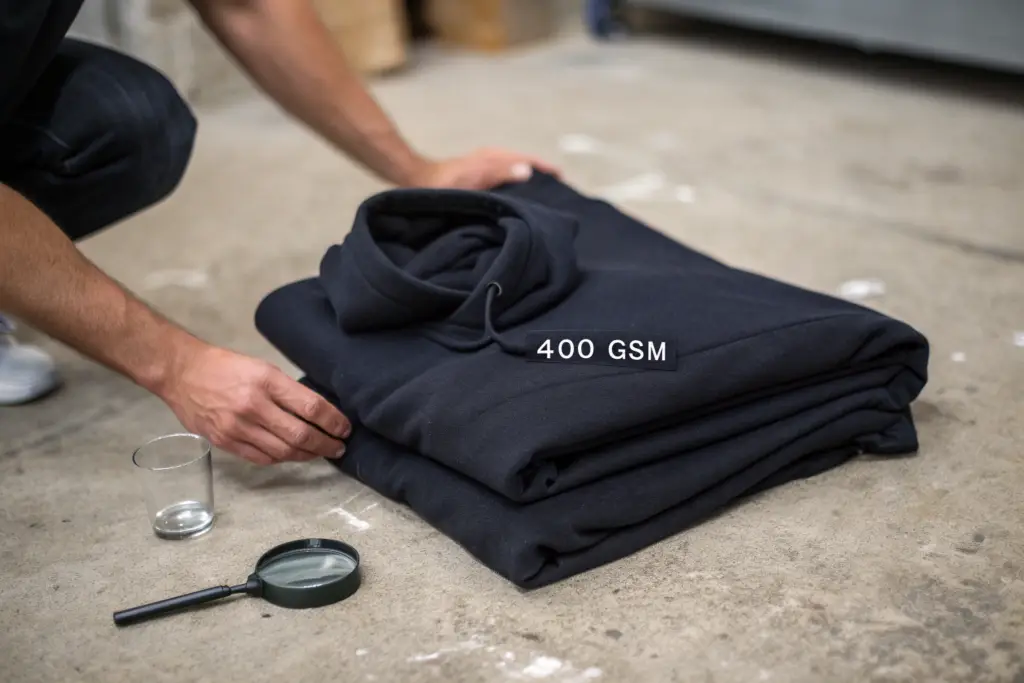
A Los Angeles-based premium streetwear brand once attempted to cut costs by switching their bestselling hoodie from a 400 GSM heavyweight cotton fleece to a 280 GSM mid-weight alternative. The design was identical. The color was identical. The price remained at $148. The brand's founder believed the customer would not notice the difference. The returns and customer complaints began within two weeks of delivery. The reviews were brutal: "This feels cheap now." "What happened to the quality?" "My old one stands up on its own; this one just lies there." The brand had not understood that their customer was not just buying a hoodie silhouette. They were buying the physical experience of heavyweight cotton—the way it draped, the way it held its shape, the way it communicated substance and permanence through its sheer physical presence. The brand switched back to 400 GSM. The reviews recovered. The lesson was visceral: in premium streetwear, the weight of the fabric is the brand.
Heavyweight cotton—defined as 300-450 GSM for fleece and French terry, and 200-280 GSM for jersey—is the absolute preferred fabric for premium streetwear brands because its substantial physical weight creates a distinctive, structured drape and silhouette that holds its shape and stands away from the body, communicating durability, luxury, and substance in a way that lightweight cotton cannot replicate; its dense fiber mass provides superior durability, resisting the pilling, thinning, and shape loss that lightweight fabrics develop after repeated wear and washing; and its thermal density and structural integrity create a garment that improves with age, developing a unique wear pattern and patina that the streetwear consumer values as a marker of authenticity and personal history.
At Shanghai Fumao, I source heavyweight cotton fabrics from mills that specialize in dense, compact yarn construction and high-stitch-density knitting. A premium streetwear brand's entire reputation can rest on the physical weight of their hoodie. The customer picks it up, feels the heft, and makes a subconscious quality judgment in less than one second. The fabric weight is the first communication, before any logo or design detail is processed.
Why Does "GSM Density Above 300" Create the Structured Silhouette and Drape That Defines Premium Streetwear?
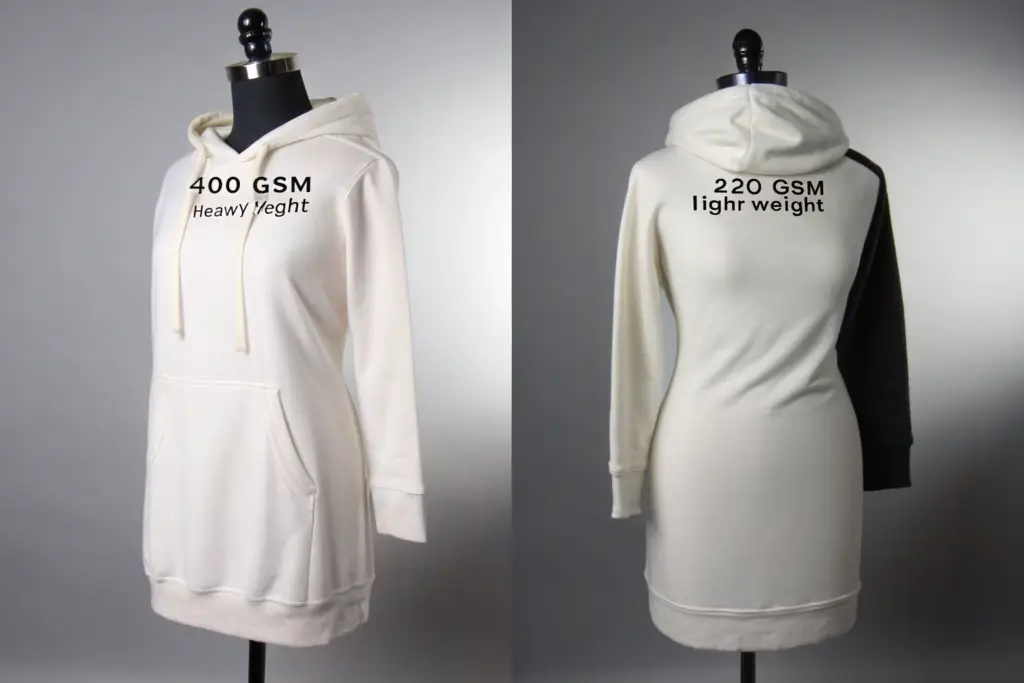
A New York streetwear brand once built their entire design identity around a specific oversized hoodie silhouette—a boxy, cropped body with broad, dropped shoulders and a hood that stood up with architectural presence. The silhouette was achieved with a 420 GSM French terry. When a cost-cutting initiative suggested switching to a 300 GSM fabric, the brand's head designer staged a demonstration. He placed the 420 GSM hoodie on a dress form. The hoodie held its shape perfectly, the shoulders square, the body standing away from the form. He placed the 300 GSM hoodie on an identical form. The shoulders slumped, the hood collapsed, and the body draped against the form. The difference in silhouette authority was dramatic. The cost-cutting initiative was abandoned. The brand's design identity was inseparable from the fabric weight that made it physically possible.
A GSM density above 300 creates the structured silhouette and drape that defines premium streetwear because the higher fiber mass per square meter gives the fabric internal rigidity and body, allowing it to hold its engineered shape—a broad shoulder, a boxy body, a standing hood—independently of the wearer's body, whereas a lighter fabric lacks the internal structural mass to resist gravity and will drape against the body, conforming to the wearer's shape rather than asserting the garment's own architectural silhouette.
A garment's silhouette is a physical structure. The fabric is the building material. A lightweight fabric is like a thin piece of paper—it folds and conforms to whatever it touches. A heavyweight fabric is like a piece of cardboard—it has its own internal rigidity, and it resists conforming. The boxy, structured, architectural silhouettes that define premium streetwear—Fear of God, Yeezy, Essentials—are physically impossible to achieve with lightweight fabric. The silhouette is engineered into the fabric weight itself.
How Does "Fabric Bending Rigidity" Measured in the Kawabata Evaluation System Correlate With the Perceived "Premium" Quality of a Streetwear Garment?
Bending rigidity measures the force required to bend a fabric. A heavyweight 400 GSM French terry has a bending rigidity multiple times higher than a 200 GSM jersey. This higher rigidity translates directly into the structured, architectural drape that the streetwear consumer perceives as premium, intentional, and expensive.
Why Does a "Self-Standing Hood" Require a Minimum of 350 GSM and a Double-Layer Construction?
A hood that stands up with architectural presence, rather than collapsing limply onto the shoulders, requires the fabric to have enough internal rigidity to hold its curved shape against gravity. A single-layer hood at 350 GSM may still collapse. A double-layer hood at 350 GSM—two layers of the heavyweight fabric sewn together—doubles the structural mass and creates a hood that stands with authority.
How Does "Heavyweight Cotton's Durability Performance" Reduce the Pilling, Thinning, and Shape Loss That Destroy Lightweight Garments?
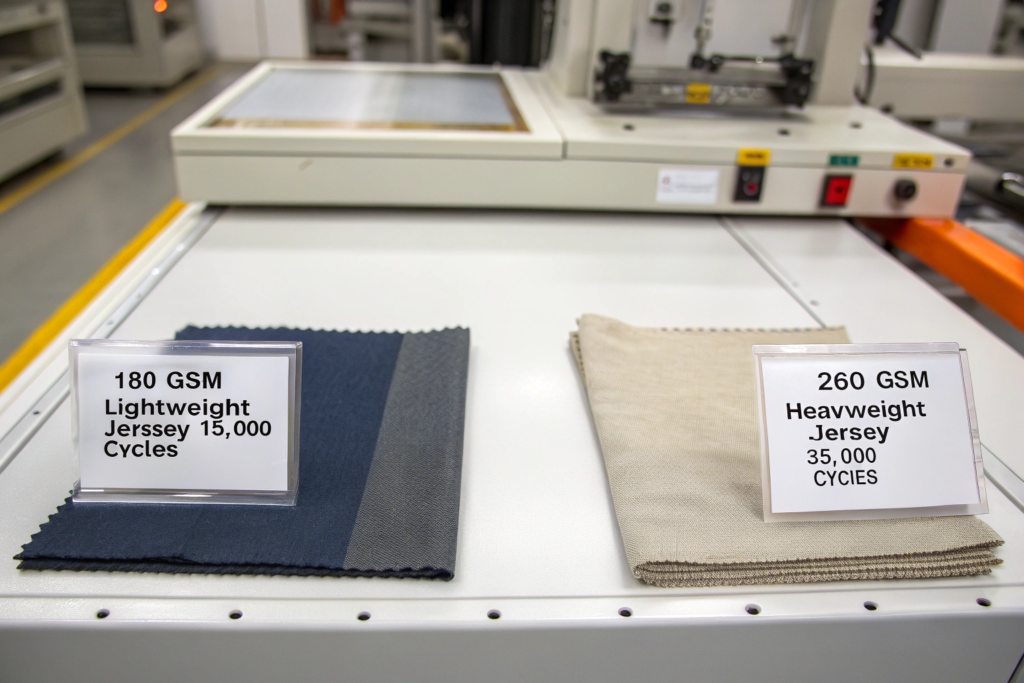
A Chicago-based premium basics brand once sourced a beautiful, soft 180 GSM cotton jersey for their t-shirts. The shirts felt luxurious on first wear and sold well. Within three months, the returns and complaints began. The fabric was pilling heavily under the arms and across the chest where seatbelts and bag straps made contact. The fabric was thinning at the elbows. The shirts were losing their shape, the hems curling, the necklines stretching out. The brand had selected a fabric weight that was insufficient for the mechanical stresses of daily wear. A competitor brand using a 260 GSM heavyweight jersey for a similarly priced t-shirt received almost zero durability complaints.
Heavyweight cotton's superior durability performance reduces pilling, thinning, and shape loss because the higher fiber density per square meter means there is simply more material to wear before the fabric degrades, and the tighter, more compact yarn structure resists the surface fiber breakage that causes pilling, while the greater internal mass provides dimensional stability that prevents the progressive stretching and distortion that lightweight fabrics experience after repeated wear and washing cycles.
Pilling occurs when short, loose fibers on the fabric surface tangle together into small balls. A lightweight fabric has fewer fibers per square meter, and each individual fiber carries a higher proportion of the mechanical stress. The fibers break more quickly, and the broken fibers tangle into pills. A heavyweight fabric has more fibers per square meter, distributing the stress more broadly, and each individual fiber is less likely to break. The result is a fabric that maintains its smooth surface appearance far longer.
How Does "Compact Yarn Spinning" Technology Contribute to the Pilling Resistance of High-Quality Heavyweight Cotton?
Compact spinning uses a vacuum condensation zone to tuck every fiber tip tightly and parallel into the yarn core, eliminating the loose, protruding fiber ends that are the primary source of surface pilling. A heavyweight fabric knitted from compact-spun yarns will exhibit dramatically less pilling than a heavyweight fabric knitted from standard ring-spun yarns.
Why Does "Shape Retention After Washing" Require a Minimum of 220 GSM for a T-Shirt and 350 GSM for a Hoodie?
A lightweight t-shirt at 150 GSM will stretch and distort during washing and wearing, developing a stretched-out neckline, curled hem, and twisted side seams. A heavyweight t-shirt at 220 GSM or above has enough internal fiber mass to resist these mechanical deformations and return to its original shape after washing.
What "Thermal Density and Wear-Pattern Development" Characteristics Make Heavyweight Cotton a Canvas for Personal History?
A Tokyo-based premium streetwear brand once built their entire brand narrative around the concept of "garments that tell the story of your life." Their signature heavyweight cotton hoodie was marketed not as a fashion item but as a companion that would accompany the wearer for years, developing unique fading, softening, and wear patterns that reflected the wearer's individual life. Customers posted photographs of their hoodies after one year, three years, five years of wear. Each hoodie was visibly the same garment, but each had developed a unique, personalized character. The brand had transformed fabric durability into an emotional value proposition: a lightweight garment is discarded after one season. A heavyweight garment becomes part of the wearer's identity.
Heavyweight cotton functions as a canvas for personal history because its substantial fiber mass allows it to withstand years of wear and washing without structural failure, and over those years, the fabric gradually and beautifully degrades in a way that is perceived as patina rather than damage—the color slowly fades at stress points, the surface becomes softer and more supple with each wash, and the garment molds to the wearer's body, creating a personalized, irreplaceable object that carries the memory of the life it has been worn through.
A lightweight cotton t-shirt, when it begins to degrade, looks worn out, tired, and shabby. A heavyweight cotton garment, when it begins to degrade, looks seasoned, authentic, and personal. The difference is the visual quality of the degradation. Lightweight fabric degrades through structural failure—holes, tears, stretched-out shapes. Heavyweight fabric degrades through surface evolution—fading, softening, molding. The first reads as damage. The second reads as history.
How Does "Natural Indigo or Pigment Dye on Heavyweight Cotton" Accelerate the Development of a Unique, Desirable Wear Pattern?
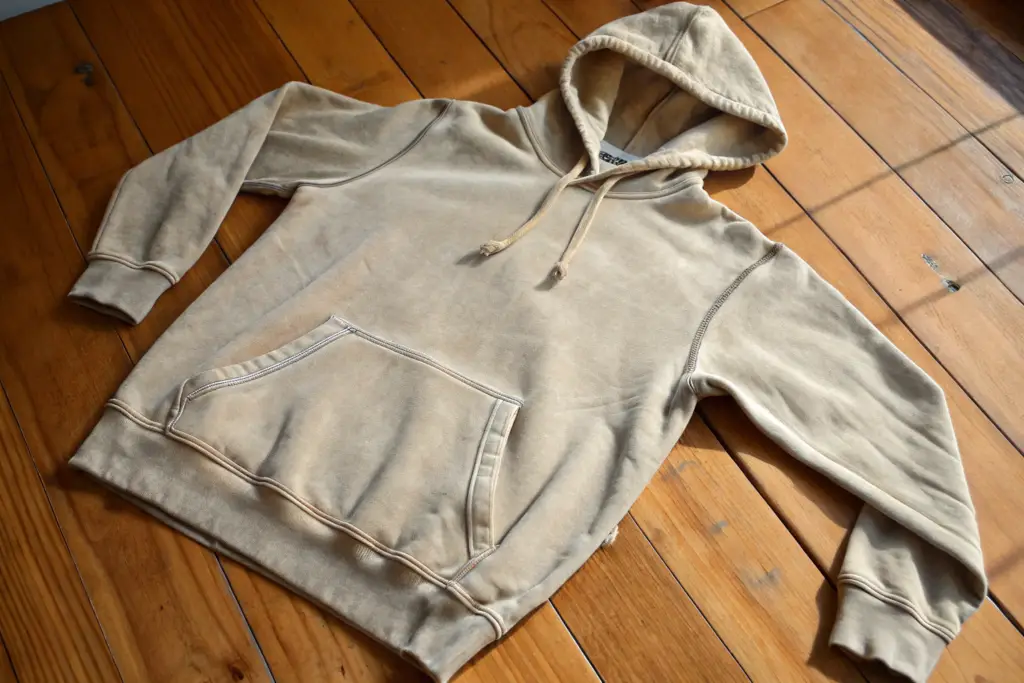
Natural indigo and pigment dyes sit on the surface of the cotton fibers rather than penetrating them completely. As the fabric wears and washes, the dye slowly and unevenly fades from the high-friction areas—elbows, cuffs, collar, seat—creating a unique, personalized fade pattern that the wearer finds aesthetically desirable and emotionally meaningful.
Why Does "Fabric Softening Through Mechanical Washing" Improve the Hand Feel of Heavyweight Cotton Over Time?
The mechanical action of repeated washing gradually breaks down the surface stiffness of the cotton fibers, softening the fabric without compromising its structural integrity. A heavyweight cotton hoodie after 50 washes is softer and more comfortable than when it was new, yet it retains its silhouette and durability. This improvement-with-age characteristic is the opposite of lightweight fabrics, which deteriorate with each wash.
How Do You Specify "Heavyweight Cotton Construction Parameters" on a Tech Pack to Ensure the Factory Delivers the Correct Fabric Weight?
A fast-growing streetwear brand once specified "heavyweight cotton hoodie" on their tech pack. The factory, interpreting "heavyweight" according to their own internal standard, sourced a 280 GSM fleece. The brand had envisioned a 420 GSM French terry. The bulk order arrived, and the hoodies were half the intended weight, lacking the structure and substance that defined the brand's aesthetic. The word "heavyweight" had been interpreted differently by the brand and the factory, and the resulting product did not match the brand's design intent. The brand had provided a subjective adjective where an objective, measurable specification was required.
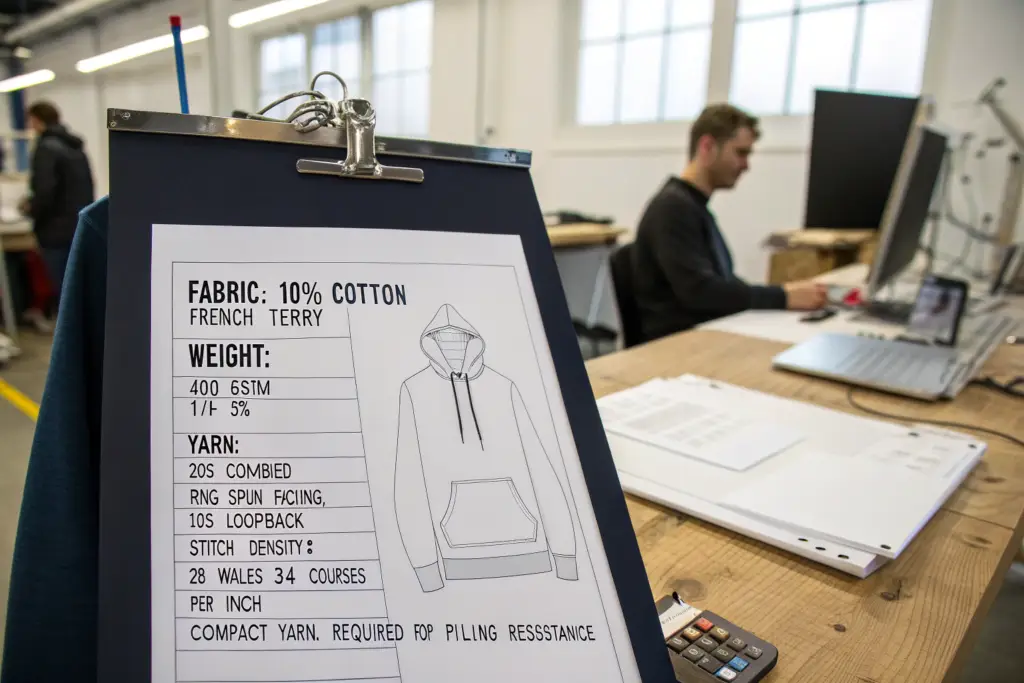
To specify heavyweight cotton construction parameters on a tech pack and ensure the factory delivers the correct fabric weight, the brand must provide four specific, measurable values: the target fabric weight in GSM with a tolerance of +/- 5%; the yarn count for both the face and back of the fabric, expressed in Ne or Nm; the stitch density in wales per inch and courses per inch; and a requirement for compact-spun yarn and any specific finishing treatments, all supplemented by a physical, signed reference swatch that the factory can weigh on a GSM scale and compare against.
"Heavyweight" is a marketing word. "400 GSM, 20S combed ring-spun face, 10S loopback, 28 wales x 34 courses per inch, compact yarn" is a manufacturing specification. The factory's QC team can cut a swatch from the bulk fabric, weigh it on a calibrated GSM scale, count the wales and courses with a pick glass, and confirm that every parameter matches the specification.
How Is "Wales Per Inch and Courses Per Inch" Measured on a Heavyweight Knit, and Why Does It Matter More Than GSM Alone?
Wales are the vertical columns of stitches. Courses are the horizontal rows. Two fabrics can have the same GSM but different wale and course densities, producing different drape, stretch, and opacity. The higher wale and course density of a properly constructed heavyweight knit provides the tight, dense surface that resists pilling and provides the structured silhouette.
Why Must the "Yarn Count Specification" Include Both the Face Yarn and the Back Yarn for a French Terry Fabric?
French terry has a smooth face knitted from a finer yarn and a looped back knitted from a coarser yarn. The face yarn count determines the surface smoothness and pilling resistance. The back yarn count determines the weight, warmth, and internal structure. Both must be specified independently to fully define the fabric construction.
Conclusion
Heavyweight cotton is the absolute preferred fabric for premium streetwear brands because it is not merely a material choice—it is the physical foundation upon which the brand's design identity, quality perception, and emotional relationship with the customer are built. A GSM above 300 provides the structural rigidity that creates the architectural silhouettes—boxy bodies, dropped shoulders, standing hoods—that define the premium streetwear aesthetic. The dense fiber mass provides superior durability, resisting the pilling, thinning, and shape loss that destroy lightweight garments and erode the customer's trust. The thermal density and slow, beautiful degradation of heavyweight cotton transform the garment into a canvas for personal history, developing a unique patina that the customer values as a marker of authenticity. And the correct specification of heavyweight cotton on the tech pack—GSM, yarn count, stitch density, compact yarn—is the only way to ensure the factory delivers the fabric weight that the brand's reputation depends on.
At Shanghai Fumao, I source heavyweight cotton fabrics from mills that specialize in the dense, compact yarn constructions and high-stitch-density knitting that premium streetwear demands. My fabric library includes French terry from 350 to 450 GSM, heavyweight jersey from 220 to 280 GSM, and specialized compact-spun yarns for maximum pilling resistance. Every fabric lot is tested for GSM, wale and course density, and Martindale abrasion before it is released to the cutting table.
If you are a brand buyer building a premium streetwear collection and you want a manufacturing partner who understands that the weight of the fabric is the foundation of the brand, contact my Business Director, Elaine. She can share our heavyweight cotton fabric specifications, our Martindale abrasion test data, and physical reference swatches from our current fabric library. Reach Elaine at: elaine@fumaoclothing.com. Build your brand on fabric that has physical presence.