A Miami-based resort brand once launched a line of beautiful, ultra-lightweight 120 GSM cotton voile Summer shirts featuring a bold, graphic logo on the back. The brand selected a standard plastisol screen print because it was the cheapest option and delivered a bright, opaque result on the pre-production sample. The shirts launched in June. By July, the returns were flooding in. Customers complained that the large plastisol print was a thick, rubbery, non-breathable patch that trapped sweat and heat directly against their skin. In the Miami humidity, the plastic print became sticky and uncomfortable. Worse, after multiple washes, the plastisol began to crack along the fold lines where the shirt had been stored, creating an aged, worn-out appearance. The brand had selected a printing method that was physically incompatible with the lightweight, breathable fabric it was applied to. The print was durable, but it had destroyed the garment’s reason for being: Summer comfort.
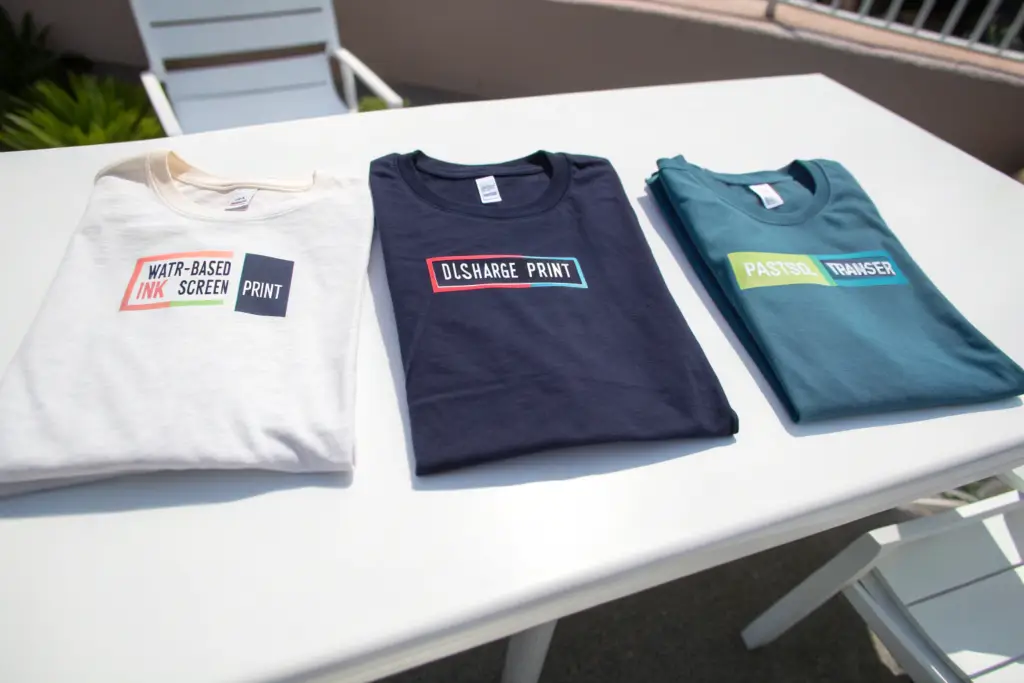
The logo printing methods that fit thin Summer clothing better are water-based ink screen printing, which penetrates the fabric fibers and leaves no surface plastic layer, preserving the fabric’s natural breathability, softness, and drape; discharge printing, which removes the fabric’s original dye and replaces it with the print color, creating a print with zero hand feel and maximum breathability on dark fabrics; and digital direct-to-garment printing, which applies ultra-thin, precise ink layers directly onto the fabric with no screen setup and minimal surface texture, making it ideal for complex, multi-colored logos on lightweight fabrics. Plastisol transfers and thick heat-applied vinyl should be avoided on thin Summer fabrics due to the heavy, non-breathable, rubbery surface they create.
At Shanghai Fumao, I specify the printing method based on the fabric weight, the design complexity, and the end-use environment. A thin Summer garment needs a print that breathes with the fabric, stretches with the fabric, and does not create an uncomfortable, sweaty barrier between the wearer and the air. The printing method is not just an aesthetic choice; it is a functional decision that directly impacts the garment’s Summer performance.
Why Does “Water-Based Ink Screen Printing” Preserve the Breathability and Soft Hand Feel of Lightweight Fabrics Better Than Plastisol?
A San Diego-based surf brand once printed their logo using standard plastisol ink on 130 GSM cotton jersey t-shirts. The plastisol ink produced a vibrant, opaque logo that looked excellent in product photos. On the beach, in the Summer sun, the large logo became a hot, sticky, sweaty patch on the wearer’s chest. The plastisol—which is essentially a PVC-based plastic suspended in a plasticizer—created a non-porous, waterproof barrier that completely blocked airflow through the printed area. The shirt breathed everywhere except where the logo was. The brand’s customers, who were buying the shirts for hot-weather comfort, were unknowingly purchasing a product with a large, built-in sweat patch.
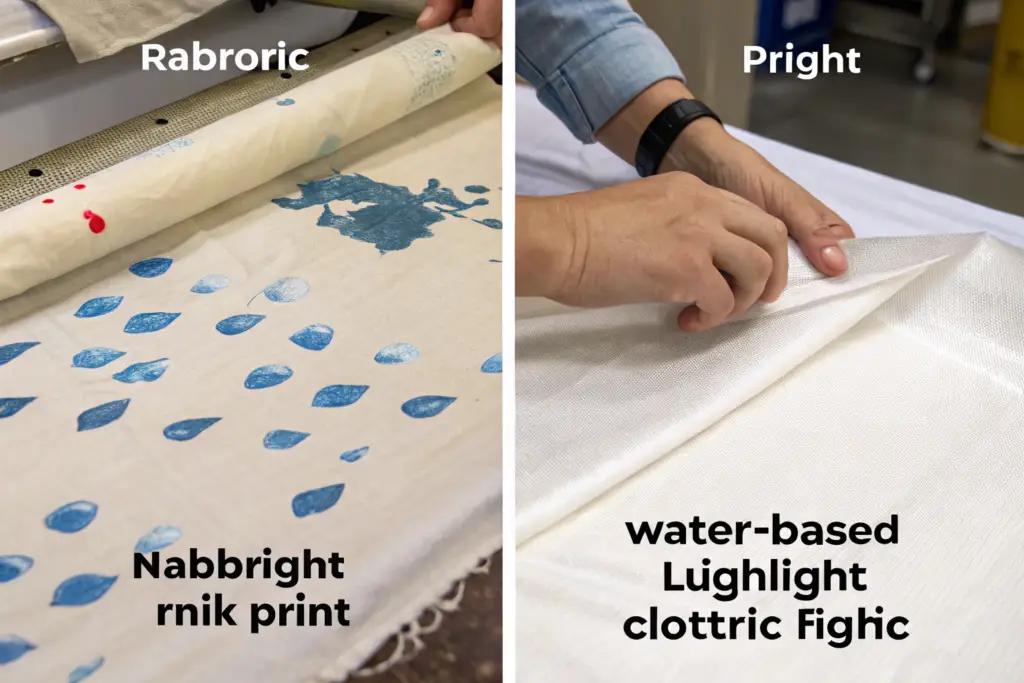
Water-based ink screen printing preserves the breathability and soft hand feel of lightweight fabrics because water-based inks use water as the solvent carrier rather than plasticizers, and the ink pigments penetrate into the fabric fibers and bond with them at a molecular level, leaving no plastic layer on the fabric surface, which means the fabric retains its natural texture, softness, and air permeability through the printed area, unlike plastisol inks that sit on top of the fabric as a thick, non-porous, rubbery layer that blocks airflow and creates a stiff, plastic-like hand feel.
The difference is simple. Plastisol ink is a layer of colored plastic that sits on top of the fabric. Water-based ink is a pigment that soaks into the fabric and becomes part of it. When you touch a water-based print, you feel the fabric. When you touch a plastisol print, you feel the plastic. When air tries to flow through a water-based print, it passes through the fabric weave between the dyed fibers. When air tries to flow through a plastisol print, it hits a solid plastic wall.
How Does the “Fiber Penetration” of Water-Based Ink Differ From the “Surface Coating” of Plastisol at a Molecular Level?
Water-based ink uses a low-viscosity, water-soluble carrier that carries the pigment particles deep into the spaces between the fabric fibers. The water evaporates during curing, leaving the pigment particles physically trapped within the fiber structure. Plastisol is a high-viscosity PVC suspension that cannot penetrate the fabric; it sits on the surface and fuses into a solid, flexible plastic film when heated.
Why Does a “Water-Based Print on Lightweight Fabric” Require a Different Curing Temperature and Time Than a Plastisol Print to Prevent Fabric Scorching?
Plastisol cures at approximately 320 degrees Fahrenheit, and the thick plastic layer requires sufficient dwell time to fully fuse. Water-based ink cures at a lower temperature, and because the water must evaporate completely, it requires adequate airflow during curing. A thin Summer fabric can scorch or burn at plastisol curing temperatures if not carefully controlled, whereas water-based curing is gentler on delicate fabrics.
What Is “Discharge Printing” and Why Is It the Superior Choice for Dark-Colored Thin Summer Garments?
A New York-based premium streetwear brand once tried to print a bright white logo on their bestselling black 140 GSM cotton t-shirt. Using standard plastisol, the white print required a thick, heavy layer of opaque ink to cover the black fabric, creating an uncomfortably heavy, rubbery print on a lightweight Summer shirt. Using water-based ink alone, the white pigment was not opaque enough to fully cover the black fabric, and the print appeared dull, greyish, and weak. The brand was trapped between a thick, uncomfortable print and a weak, unattractive one. The solution was discharge printing, which chemically removes the black dye from the fabric and replaces it with a bright white pigment, creating a print with zero added thickness, zero hand feel, and perfect breathability.
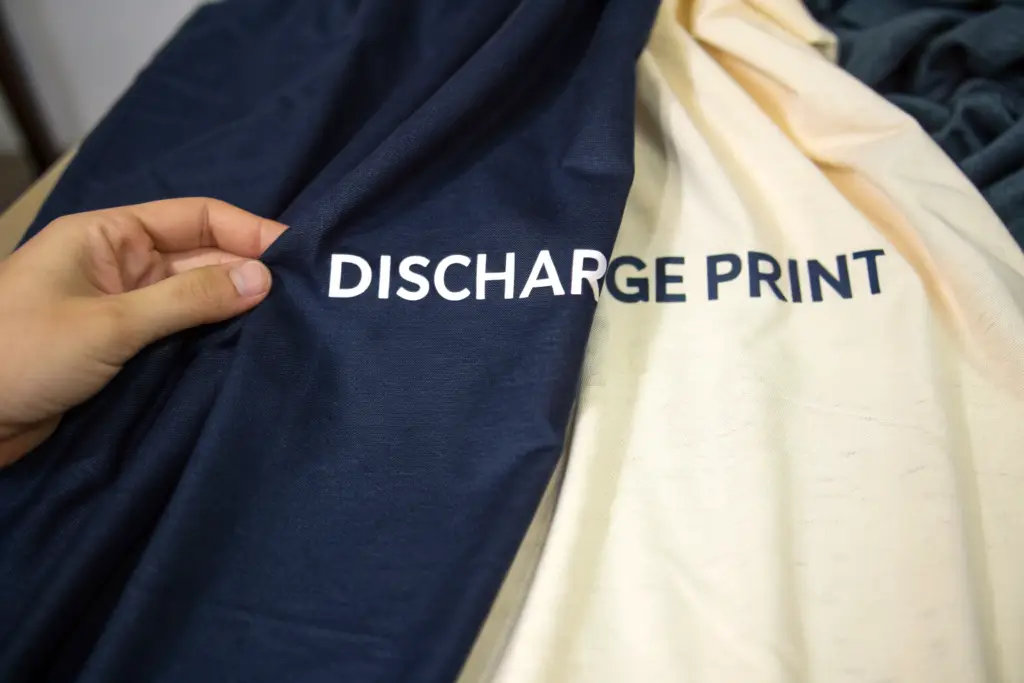
Discharge printing is the superior choice for dark-colored thin Summer garments because it uses a chemical agent—typically a zinc formaldehyde sulfoxylate or a more modern formaldehyde-free activator—to strip the original dark dye from the cotton fibers in the printed area, reducing the fabric back to its natural undyed cream state, and then simultaneously deposits a water-based pigment into the now-colorless fibers, creating a vibrant, opaque print that has absolutely no added surface layer, no plastic feel, and no breathability reduction, making it physically indistinguishable from the unprinted fabric to the touch.
On a dark fabric, printing a bright color with standard ink requires hiding the dark background. Plastisol does this by piling a thick, opaque layer of colored plastic on top of the fabric. Discharge printing does this by removing the dark background entirely and replacing it with the desired color. The result is a print that exists at the same level as the fabric surface, with the same softness, the same drape, and the same airflow.
How Does the “Discharge Agent” Selectively Remove the Original Dye Without Damaging the Cotton Fibers Themselves?
The discharge agent chemically reduces the dye molecules, breaking their color-producing chemical bonds and rendering them colorless, without attacking the cellulose structure of the cotton fiber. The cotton fiber itself remains intact, undyed, and undamaged, ready to accept the new water-based pigment.
Why Is “Formaldehyde-Free Discharge” Now the Required Standard for Any Garment Exported to the European Union?
Traditional discharge agents used zinc formaldehyde sulfoxylate, which could leave trace formaldehyde residues on the fabric. The EU REACH regulation restricts formaldehyde in textiles to very low concentrations, and many European wholesale buyers now require formaldehyde-free discharge certification as a condition of purchase. The brand should specify formaldehyde-free discharge printing in the tech pack.
How Does “Digital Direct-to-Garment Printing” Solve the Minimum Order Quantity Problem for Small-Batch, Multi-Colored Summer Collections?
A Portland-based boutique Summer collection brand once designed a twelve-piece collection, each with a unique, complex, multi-colored watercolor-style logo. The brand needed only 100 units of each design. Screen printing—which requires a separate screen to be burned for each color in the design at a cost of approximately $45 per screen—was economically impossible. A six-color logo across twelve designs would require 72 screens at a total setup cost exceeding $3,200, all for an order of just 1,200 total units. The brand was on the verge of abandoning the collection’s visual identity when they switched to digital direct-to-garment printing.
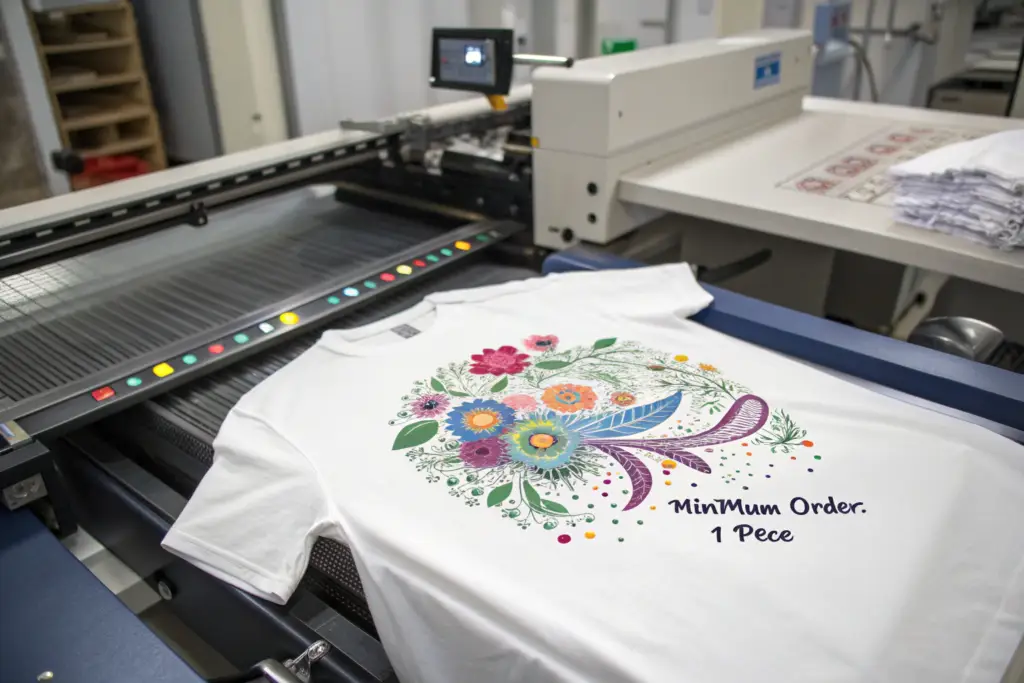
Digital direct-to-garment printing solves the minimum order quantity problem for small-batch, multi-colored Summer collections because it operates like an inkjet printer for fabric, spraying ultra-thin layers of water-based pigment ink directly onto the garment with no screens, no setup costs, and no color count limitations, allowing a brand to print a single unit or a small batch of 20-50 units with a complex, full-color design just as economically as a large run, making it the ideal solution for boutique brands testing multiple designs or offering limited-edition Summer collections.
Screen printing is a high-setup-cost, low-per-unit-cost technology. Digital direct-to-garment is a zero-setup-cost, consistent-per-unit-cost technology. For a large run of 1,000 identical units, screen printing is more economical. For a small run of 50 units of a complex, multi-colored design, digital DTG is dramatically cheaper and faster. The crossover point is typically around 100-200 units, depending on the number of colors in the design.
How Does “DTG Printing on Lightweight Fabric” Achieve a Soft Hand Feel Comparable to Water-Based Screen Printing?
DTG printers use water-based pigment inks that are very similar in chemistry to water-based screen printing inks. The ink droplets are microscopic and are absorbed directly into the fabric fibers. The resulting print has no surface layer, no plastic feel, and excellent breathability, comparable to a high-quality water-based screen print.
What Is the “Pre-Treatment Solution” Required for DTG Printing on Dark Fabrics, and Does It Affect Breathability?
DTG printing on dark fabrics requires a pre-treatment solution to be applied to the fabric before printing. This solution creates a bonding layer that helps the white underbase and the colored inks adhere to the dark fabric. The pre-treatment adds a minimal, barely perceptible surface texture, and when properly applied and cured, it has a negligible impact on breathability. The brand should request a pre-treatment that is specifically formulated for lightweight, breathable fabrics.
How Do You Specify “Print Durability and Wash Fastness” for Summer Garments That Will Be Washed More Frequently Than Winter Garments?
A Charleston-based coastal brand once printed a beautiful water-based logo on 130 GSM cotton t-shirts. The prints looked excellent on arrival and sold well. The returns began after the fourth or fifth wash. The vibrant logo had faded to a pale, washed-out version of its original color. The brand had not specified a wash fastness requirement in the printing spec. The factory had used a low-quality water-based ink with poor wash fastness, and the pigment had literally washed out of the fabric with each laundry cycle. A Summer garment, worn and washed more frequently than a Winter garment, must have a correspondingly higher wash fastness standard.
To specify print durability and wash fastness for frequently washed Summer garments, the brand must include in the tech pack a requirement that the printed fabric pass the AATCC 61 accelerated laundering test with a minimum grey scale rating of 4 for color change and 3-4 for staining, that the print withstand a minimum of 20 home wash cycles without visible cracking, peeling, or significant fading as verified by a post-wash visual inspection, and that the print maintain a minimum of 80% of its original opacity when measured on a spectrophotometer after the specified number of wash cycles.
A Winter hoodie is washed once every two to three weeks. A Summer t-shirt is washed after every wear. The Summer print endures three to five times as many wash cycles in the same calendar period. The print durability specification must account for this accelerated usage pattern.
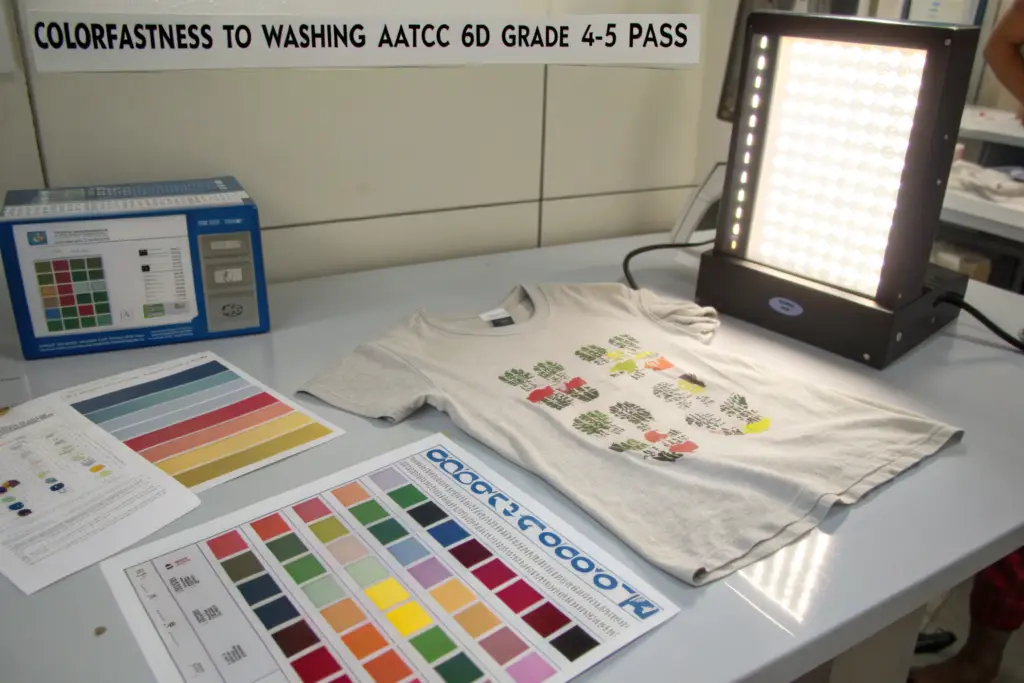
How Does the “AATCC 61 2A Test Cycle” Simulate Five Home Washes in a Single 45-Minute Laboratory Test?
The test uses a Launder-Ometer machine with a stainless steel canister, a standardized detergent, and steel balls for mechanical agitation. The temperature is elevated, and the mechanical action is intensified to simulate the cumulative effect of multiple home washes in a compressed timeframe.
Why Should the “Crocking Fastness” of the Print Also Be Tested for a Summer Garment That Will Be Worn Against Sweaty Skin?
Crocking measures the transfer of color from the printed fabric to another surface through rubbing. A Summer garment worn directly against sweaty skin experiences wet crocking conditions. The print must pass the AATCC 8 wet crocking test with a minimum rating of 3-4 to ensure the logo does not transfer onto the wearer’s skin, other garments, or furniture.
Conclusion
The logo printing methods that fit thin Summer clothing better are those that preserve the fabric’s lightweight, breathable, soft characteristics while withstanding the accelerated wash frequency of Summer use. Water-based ink screen printing penetrates the fabric fibers and leaves no plastic surface layer, preserving breathability and softness. Discharge printing removes the original dark dye and replaces it with vibrant pigment, achieving perfect opacity with zero added thickness. Digital direct-to-garment printing enables small-batch, multi-colored designs with no screen setup costs and a soft hand feel comparable to water-based screen printing. The print durability and wash fastness specifications must be elevated for Summer garments to account for the increased washing frequency, with AATCC 61 wash fastness testing and AATCC 8 crocking testing specified in the tech pack.
At Shanghai Fumao, I specify the appropriate printing method and durability requirements for every Summer garment based on the fabric weight, the design complexity, the fabric color, and the order volume. My print partners are experienced in water-based, discharge, and digital DTG printing on lightweight, delicate Summer fabrics. I require wash fastness and crocking test reports on all printed fabrics before bulk production.
If you are a brand buyer developing a Summer collection with logo prints, and you want a manufacturing partner who understands the relationship between printing method and Summer fabric performance, contact my Business Director, Elaine. She can share our printing method selection guide, our wash fastness and crocking specification thresholds, and samples of each print type on various lightweight fabrics. Reach Elaine at: elaine@fumaoclothing.com. Print the logo that breathes with the fabric.