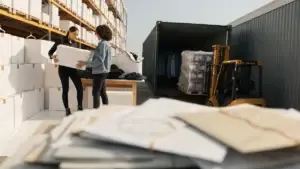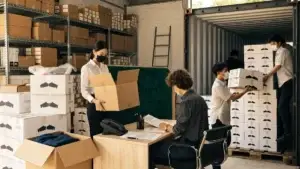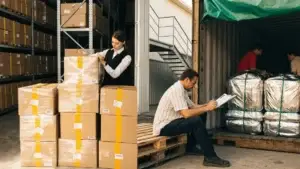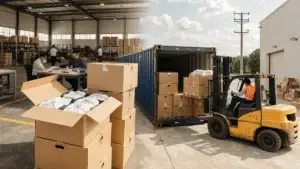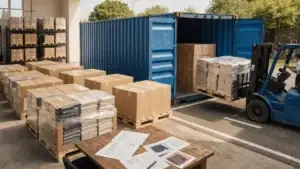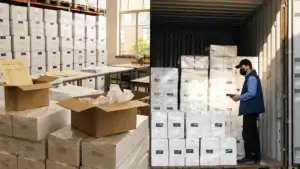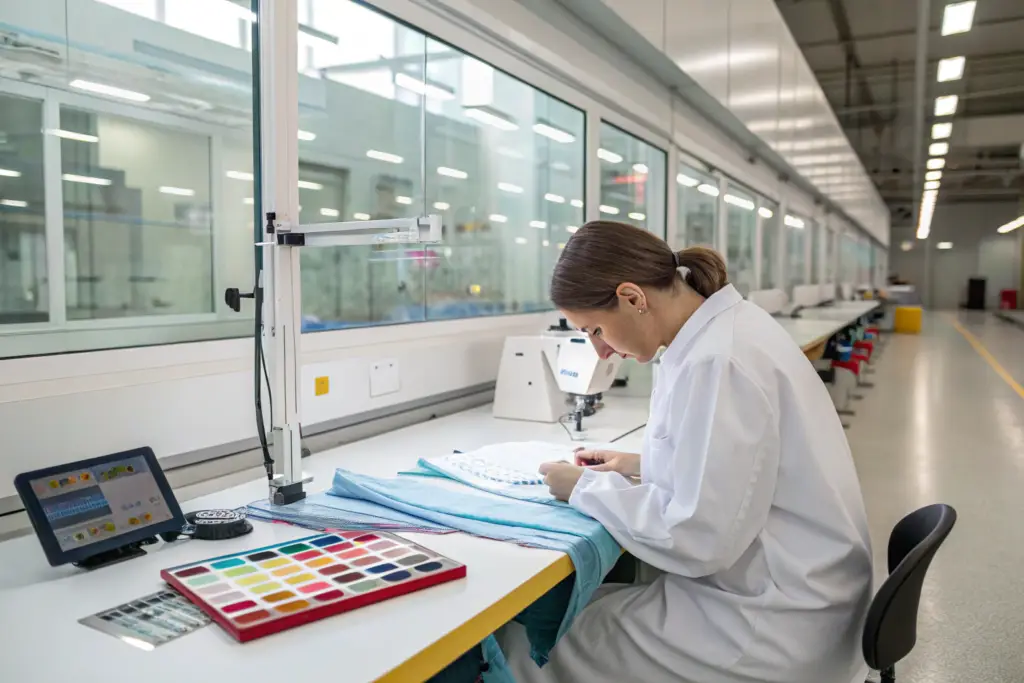
A Seattle-based outdoor apparel brand once placed a $200,000 order with a factory that proudly presented a third-party inspection certificate from a well-known international testing company. The AQL 2.5 report showed a passed inspection with a 1.2% major defect rate. The brand released the balance payment. When the 8,000 jackets arrived at the brand's warehouse, the internal receiving team conducted their own random audit. The actual defect rate was 7.8%—broken zipper pulls, misaligned snap buttons, and inconsistent seam sealing at the hood. The third-party inspector had spent exactly 90 minutes at the factory, sampled 125 units from cartons the factory had pre-selected and placed conveniently near the loading dock, and never once walked the cutting room or the sewing lines. The factory had prepared a "golden carton" display for the inspector. The inspection was a theatrical performance, and the brand had paid $200,000 for a ticket.
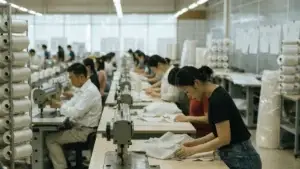
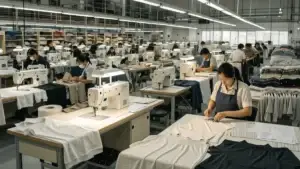
American brand buyers demand in-house quality control for overseas garment production because an in-house QC team, embedded physically within the factory and employed directly by the factory's quality department—not by an external inspection company—conducts continuous, unannounced inline inspections at every production stage from raw material receiving through cutting, sewing, finishing, and packing, creating an institutional culture of quality accountability where the person who inspects the seam sits ten meters from the person who sewed it, rather than a third-party inspector who visits for a brief, scheduled, and often predictable final audit that the factory can stage and prepare for.**
At Shanghai Fumao, my quality control team is not an outsourced service. They are full-time employees of my factory, permanently stationed at inline inspection points on every production line. They answer to me, not to an external auditing company's regional manager. Their performance is measured by the defect rate discovered by the client's receiving audit, not by the number of inspections completed in a day.
Why Is an In-House "Inline Inspector" Radically More Effective Than a "Final Audit Inspector" From a Third-Party Company?
A third-party inspector once visited a factory to audit a 5,000-unit order of men's chinos. The inspector arrived on Friday at 2:00 PM, spent two hours pulling random samples from sealed cartons, and filed a passing report by 5:00 PM. The chinos shipped the following Monday. The brand discovered that 300 pairs had a crooked waistband seam. The crooked seam had been caused by a mis-calibrated folder guide on sewing machine number four. That machine had sewn 600 waistbands between Monday morning and Thursday afternoon. A third-party inspector arriving on Friday could only detect the defect after 600 defective units had already been produced, packed, and sealed. An in-house inline inspector, stationed at machine number four, would have detected the crooked seam on the third unit produced on Monday morning, stopped the line, recalibrated the folder guide, and prevented 597 defective waistbands from ever existing.
An in-house inline inspector is radically more effective than a third-party final audit inspector because the inline inspector intercepts defects at the point of creation—station by station, hour by hour, during the sewing process—stopping a systemic defect within the first 3-5 units and preventing the cascade of hundreds or thousands of identically defective units that a final inspector, arriving after production is complete, can only discover, document, and belatedly report after the defective goods have already consumed the fabric, the labor, and the production time.
A final audit answers the question: "How many defective units are in this shipment?" An inline inspection answers the question: "Is this production line currently producing defective units, and if so, can we stop it right now?" The first question is historical documentation. The second question is active prevention.
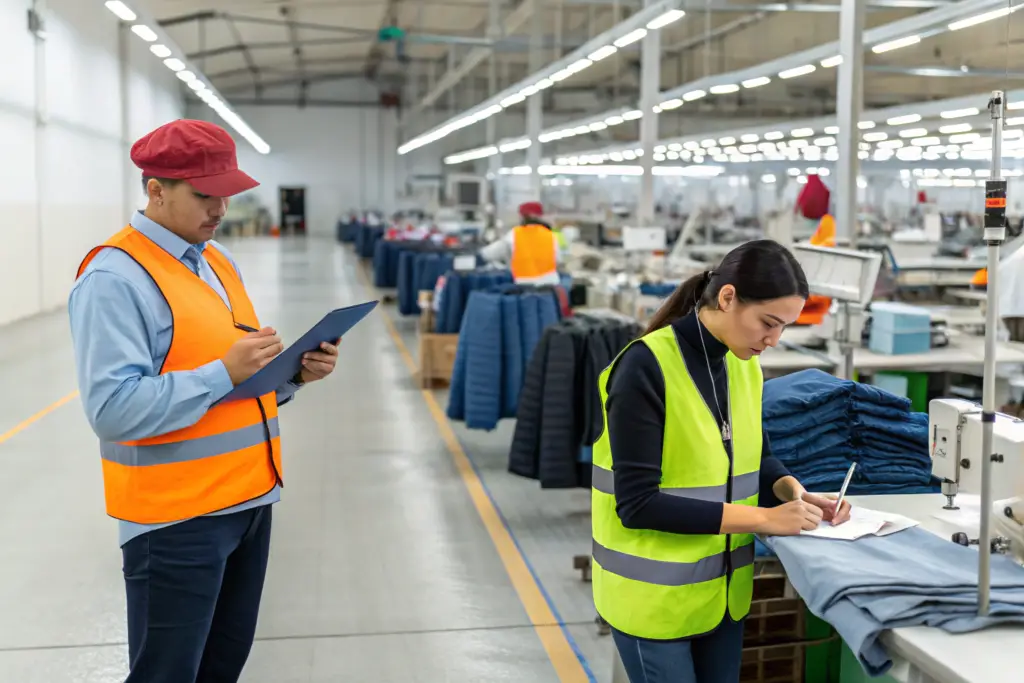
How Does a "First Piece Off the Machine" Check at 8:05 AM Prevent a Full Day of Defective Production?
When a sewing operator begins a new batch or a new shift, the inline inspector takes the very first finished piece from that operator's machine and performs a full dimensional and visual check against the Golden Sample. If the seam allowance, stitch density, or collar shape is incorrect, the machine is adjusted immediately. Only one defective piece exists, not 600.
Why Does a Third-Party Inspector's "Announced Visit" Allow a Factory to Stage a Deceptive Inspection Environment?
A factory that knows an external inspector is arriving on Thursday at 10:00 AM can prepare by cleaning the lines, displaying only the best-cut panels, and hiding the rework rack in a locked room. An in-house inspector arrives unannounced at 7:50 AM every single morning and sees the factory in its true operational state.
How Does an In-House Fabric Testing Lab Prevent a Catastrophic Dye Lot or Tensile Strength Failure Before Cutting Begins?
A Nashville-based denim brand once received a shipment of 4,000 jeans where the denim fabric tore at the knee after minimal wear. The third-party final inspection had checked the finished jeans for visual defects—stitching, button attachment, wash consistency—and passed them. The inspector had not tested the fabric's tensile strength. The fabric itself was structurally weak because the mill had used a lower-grade cotton yarn to cut costs. An in-house fabric testing lab would have cut a swatch from the fabric roll upon arrival, tested its tensile strength, and discovered the substandard fabric before a single jean was cut.
An in-house fabric testing lab prevents catastrophic dye lot and tensile strength failures before cutting begins by performing a "Fabric Roll Audit" on every incoming roll, testing a swatch from the beginning, middle, and end of each roll for color continuity against the approved lab dip using a spectrophotometer, measuring the fabric weight in GSM to verify it matches the specification, testing the tensile strength in both warp and weft directions, and conducting a shrinkage test, all before the fabric is released to the cutting table, ensuring that substandard or shade-variant fabric is identified and rejected before it consumes cutting and sewing labor.
A fabric defect discovered after cutting and sewing is a total loss of the fabric cost plus the labor cost. A fabric defect discovered before cutting is a fabric cost refund from the mill. The in-house lab shifts the failure detection point to the earliest and cheapest possible moment.
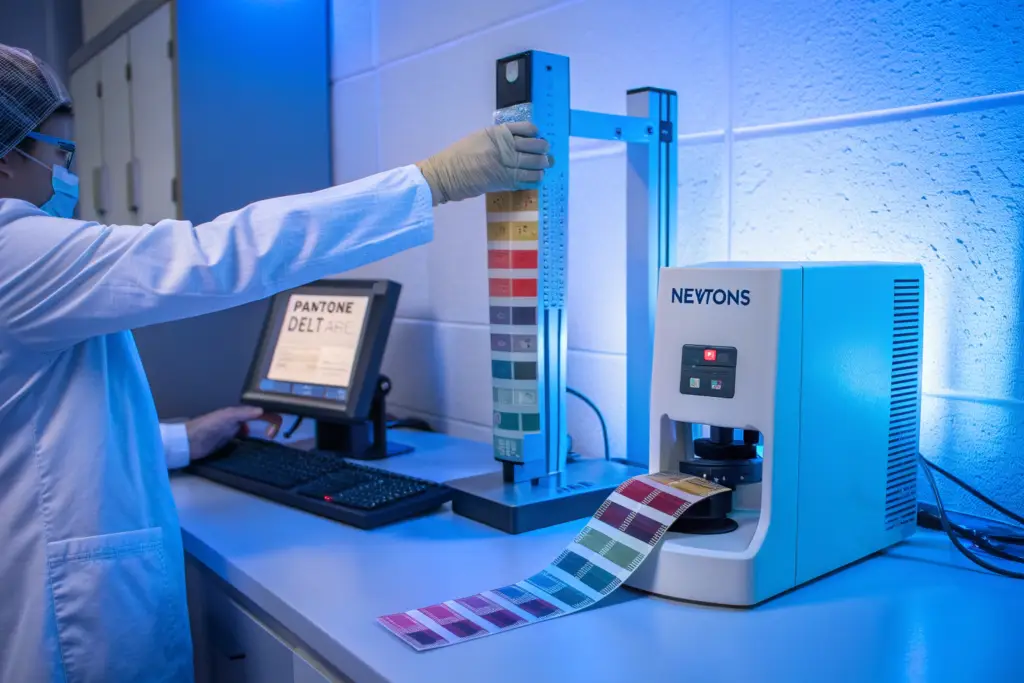
How Does a "Three-Point Roll Measurement" (Beginning, Middle, End) Detect a Shade Band That a Single-Point Test Misses?
A fabric roll can have a subtle shade drift from the beginning of the roll to the end, caused by a temperature gradient in the dyeing machine. Measuring only the beginning swatch will show a perfect Delta-E of 0.6, but the end swatch might show a Delta-E of 2.1. The three-point measurement detects this "shade banding" and rejects the roll before it becomes 200 finished garments with mismatched sleeves.
Why Does an In-House "Shrinkage Test on Every Roll" Prevent a Brand's Garment From Shrinking 4% After the First Customer Wash?
The in-house lab cuts a measured square from each fabric roll, washes it under a standardized domestic wash cycle, and re-measures. If the shrinkage exceeds the 2% tolerance specified in the tech pack, the roll is rejected. A third-party inspector testing a single finished garment for a final audit might never wash that specific garment.
What "Continuous Improvement Loop" Exists in an In-House QC System That Is Impossible With Outsourced Inspection?
A third-party inspection company provides a report. The report documents the number of defects found, categorizes them as major or minor, and issues a pass or fail grade. The report is filed. The factory moves on to the next order. There is no mechanism for the third-party inspector to return to the factory the following week, review the defect data with the sewing line supervisor, identify the root cause of the recurring button attachment failure, and verify that the corrective action—a recalibrated button-sewing machine and a revised operator training protocol—has been implemented and sustained.
An in-house QC system creates a continuous improvement loop by aggregating defect data across multiple orders and months into a "Defect Pareto Analysis," identifying the three most frequently occurring defect types, convening a weekly "Quality Review Meeting" where the QC manager, the production supervisor, and the line operators review the defect photos and root cause analysis together, implementing a specific corrective action with a named responsible person and a deadline, and then verifying at the next week's meeting that the defect frequency has measurably decreased, a closed-loop learning cycle that an external inspector, who has no ongoing relationship with the production team, cannot implement.
A third-party inspector documents quality. An in-house QC system improves quality. Documentation tells you how many defects you made. Continuous improvement reduces the number of defects you will make next month.
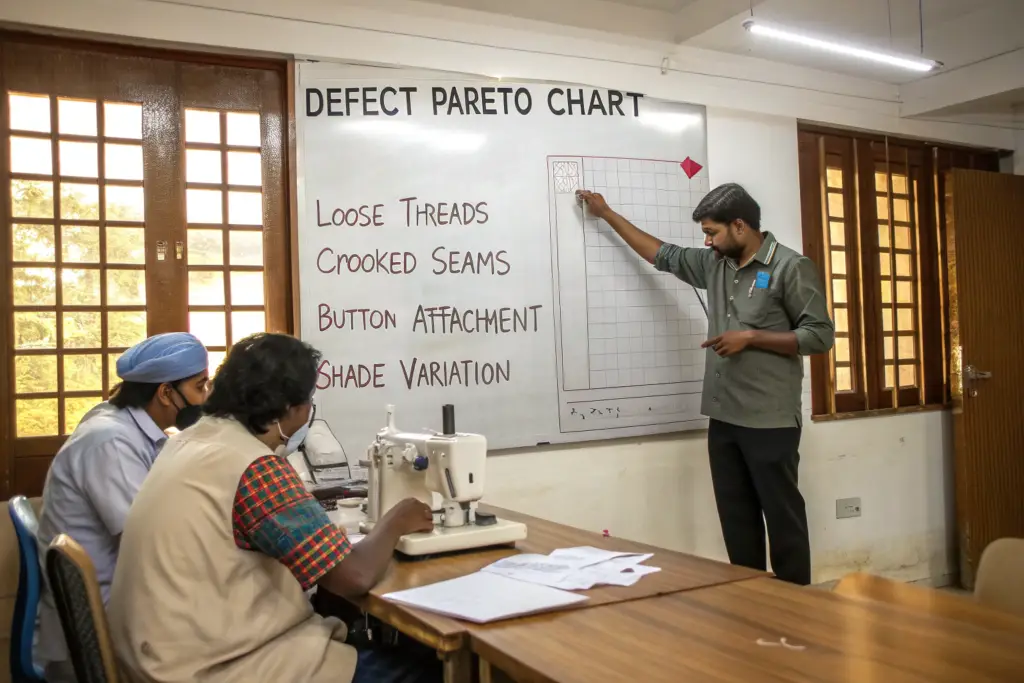
How Does a "Pareto Chart" of Defect Types Identify the Single Machine or Process Causing 40% of All Defects?
A Pareto chart ranks defect types from most frequent to least frequent. Often, a single defect type—such as "skipped stitches on the hem"—accounts for 40% of all recorded defects. This immediately directs the QC manager's attention to the hemming machine and its operator training, rather than spreading limited improvement resources across all defect types equally.
Why Does a "Weekly Quality Review Meeting With Operators Present" Create Ownership That a Mailed Inspection Report Cannot?
When the operator who sewed the defective seam sees the defect photo, hears the QC manager explain the specific deviation from the standard, and participates in the discussion of how to prevent it, she develops personal ownership of the quality outcome. A third-party report, read by a supervisor and filed, never reaches the operator whose hands created the defect.
How Does an "Embedded QC Culture" Reduce the Brand's Total Cost of Quality Below That of a Factory Using Only Third-Party Inspections?
A San Diego-based casualwear brand once calculated the total cost of quality over a two-year period with two different factories. Factory A used only third-party final inspections at $350 per inspection day. Factory B used a fully embedded in-house QC system with inline inspectors, a fabric testing lab, and weekly quality review meetings. Factory A's FOB price was $0.80 lower per unit. However, Factory A's defect-related costs—chargeback fees at $15 per defective unit, return shipping labels at $8 per return, lost wholesale accounts due to inconsistent quality, and the brand's own internal receiving inspection labor—totaled $3.40 per unit shipped. Factory B's total quality cost—the slightly higher FOB plus the embedded QC infrastructure—was $1.20 per unit. The "cheaper" factory was $2.20 more expensive per unit when the total cost of poor quality was measured.
An embedded QC culture reduces the brand's total cost of quality below that of a factory using only third-party inspections because the in-house system shifts the cost of quality from "external failure costs"—chargeback fees, return shipping, wholesale account loss, brand reputation damage—which are the most expensive category of quality costs, to "prevention and appraisal costs"—inline inspection labor, fabric lab testing, operator training—which are dramatically less expensive, creating a total cost of quality that is lower by $2.00-$3.50 per unit shipped even if the base FOB price is slightly higher.
The total cost of quality has four categories: prevention, appraisal, internal failure, and external failure. External failure—a defective unit reaching the customer—is the most expensive by a factor of ten or more compared to prevention. In-house QC maximizes prevention and appraisal spending to minimize external failure spending.
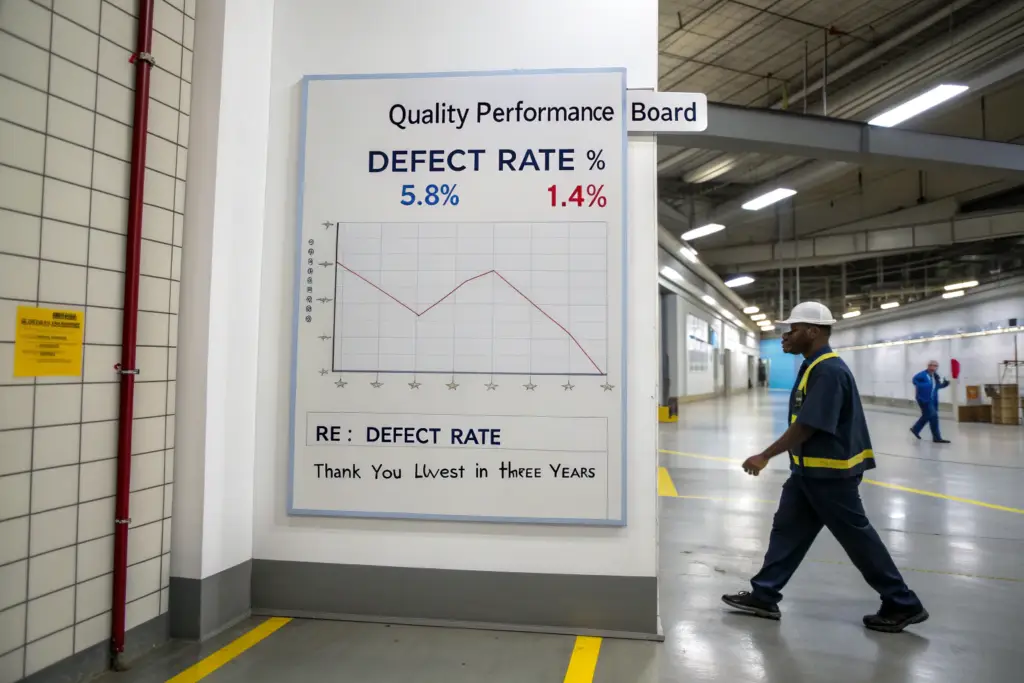
How Does a "Cost of Poor Quality" Spreadsheet Reveal That a $0.80 Higher FOB Is Actually a $2.20 Net Saving?
The spreadsheet columns: FOB Price, In-House QC Cost per Unit, Defect Rate, Chargeback Cost per Unit, Return Shipping Cost per Unit, Lost Wholesale Revenue per Unit. When the defect rate drops from 5.8% to 1.4%, the external failure cost column shrinks dramatically, and the total cost per sellable unit is significantly lower.
Why Does an In-House QC System Enable a Brand to Confidently Sell Through Premium Retail Channels That Require a Defect Rate Below 2%?
Premium department stores and high-end e-commerce platforms track vendor defect rates meticulously. A vendor with a defect rate consistently above 3% is eventually delisted. In-house QC provides the statistical process control necessary to maintain a defect rate below the threshold for premium channel access.
Conclusion
American brand buyers demand in-house quality control because a third-party inspection certificate is a snapshot, not a system. It documents quality at a single moment, under potentially staged conditions, after defective units have already been produced. An in-house QC system is a permanently embedded, continuously operating quality architecture. The inline inspector catches the defective unit on the third piece, not the three-thousandth. The fabric testing lab rejects the substandard roll before the scissors touch it. The weekly quality review meeting identifies the root cause of recurring defects and implements corrective actions that prevent their recurrence. The embedded QC culture shifts the brand's spending from expensive external failure costs to affordable prevention costs, resulting in a lower total cost of quality even if the FOB price carries a small premium.
At Shanghai Fumao, my quality control team is not a separate company I hire for a day. They are my full-time employees, stationed on my five production lines, working in my fabric testing lab, and leading my weekly quality review meetings. Their performance is measured by your defect rate, not by their inspection count.
If you are a brand buyer evaluating manufacturing partners and you want to see our in-house QC system in operation—our inline inspection stations, our fabric testing lab, our defect Pareto charts, and our quality performance data over the past twelve months—contact my Business Director, Elaine. She can schedule a live video walk-through of our QC infrastructure and share our defect rate trend data. Reach Elaine at: elaine@fumaoclothing.com. The inspector who works for the factory owner cares more than the inspector who visits for an hour.