Seven years ago, I lost a $200,000 annual account because I was too focused on being "right." The brand owner had questioned a shade variation on a batch of olive green chinos. The variation was within the AQL 2.5 tolerance we had both signed off on. I sent him the signed spec sheet, highlighted the tolerance clause, and effectively told him he was wrong to complain. I was technically correct. The contract protected me. But I damaged his trust so deeply that he never placed another order. He didn't need a supplier who could win a contractual argument. He needed a partner who could hear his anxiety about his retail buyer's reaction and proactively offer to discount the next order by 10% as a relationship gesture, even when not legally obligated. The cost of that discount would have been $3,200. My "correctness" cost me $200,000 in future revenue. A profitable long-term partnership is not built on airtight contracts. It is built on sacrificial gestures in moments of ambiguous fault.
You establish a highly profitable long-term partnership with a reliable clothing supplier by shifting your mindset from transactional price negotiation to collaborative margin engineering, where you share your retail sell-through data with the factory, invite their production manager to suggest cost-reduction material substitutions that preserve the garment's visual quality, pay invoices within the agreed net terms without strategic delays, and formalize a quarterly "Business Review" video call that discusses not just the current order's defects but the factory's capacity planning for your next year's projected growth.
At Shanghai Fumao, my most profitable relationships are not the brands that beat me down on every unit price. They are the brands that treat my production line as an extension of their own company, sharing their growth plans so I can reserve capacity, and paying promptly so I can negotiate early-payment discounts with my fabric mills.
Why Does Sharing Your Actual Retail Sell-Through Data Radically Lower Your Future Factory Prices?
A Los Angeles athleisure brand owner once handed me his internal retail sales dashboard. The transparency was shocking. He showed me exactly how his bestselling legging was selling 1,200 units per month at a $78 retail price, with a 6% return rate and a $16.50 Facebook customer acquisition cost. He wasn't just sharing data. He was sharing his profit model. In that moment, I stopped seeing him as a buyer negotiating a price and started seeing him as a business partner whose success was mathematically linked to my own. I looked at his $16.50 ad cost and realized if I could lower his factory price by $1.80, he could buy 12% more ads and grow the order volume by 25%. I voluntarily re-engineered the legging fabric blend from a premium Italian nylon to an identically performing, high-gauge Chinese nylon, dropping his FOB cost by $1.90 per unit without him even asking. His volume doubled.
Sharing your actual retail sell-through data radically lowers your future factory prices because it transforms the factory owner's incentive structure from "maximize margin on this single order" to "secure a growing, predictable production volume for the next 36 months," triggering voluntary cost-engineering suggestions, preferential production slot reservations, and a willingness to absorb small raw material fluctuations without passing them through to your price.

How Does a "Volume Projection Letter" Unlock a 5% Raw Material Discount From the Mill?
Fabric mills offer tiered pricing. A 1,000-yard order of specialized organic jersey costs $4.20 per yard. A 10,000-yard annual commitment costs $3.65. Most brand owners cannot commit to 10,000 yards upfront because they don't have the cash. But if you share a signed, non-binding "Volume Projection Letter" stating your honest best estimate of next year's demand, I can take that letter to my mill partner. I can vouch for your growth trajectory with my own factory's credit history. The mill will often grant the tiered discount now, based on the projected future volume, because my relationship with them is decades old. This is a pure price advantage that zero negotiation skill can achieve; only trust can unlock it.
Why Does a Factory Offer "Open Book Costing" Only to Long-Term Data-Sharing Partners?
Open book costing means the factory shows you the actual fabric invoice, the actual trim cost, and the actual labor minutes. This is commercially sensitive. A factory will only expose its true material cost to a brand that has proven, through shared sell-through data, that they are not going to take that sensitive information and shop it to three competitor factories for a $0.15 cheaper quote. When a partner shares retail data, I reciprocate with open book costing. We then sit together, literally on the same side of the table, and ask: "Where can we jointly find $0.80 in this garment without hurting the consumer's perception of quality?" The conversation shifts from "I want your margin" to "Let's find margin together." This is how a brand buyer achieves a per-unit cost that is structurally lower than any competitor trying to beat a factory down on price.
What Specific Payment Behaviors Make a Factory Prioritize Your Order Over Other Clients?
A factory owner in Zhejiang once told me he has a mental "Priority List" of clients, and it has nothing to do with their order size. At the top of his list is a small, 500-unit-per-order brand from Australia that pays every invoice within seven days, without fail, without being chased. At the bottom of his list is a major 10,000-unit European chain that consistently pays 45 days late and requires three reminder emails per invoice. When a fabric shortage hit during peak season, the small Australian brand got their full allocation. The European chain received a "regretful delay" email and lost two weeks of production time. The factory owner's logic was brutally simple: "The Australian brand respects my cash flow, so I protect their production slot. The European chain treats me like a bank, so I treat them like an optional creditor during my peak season."
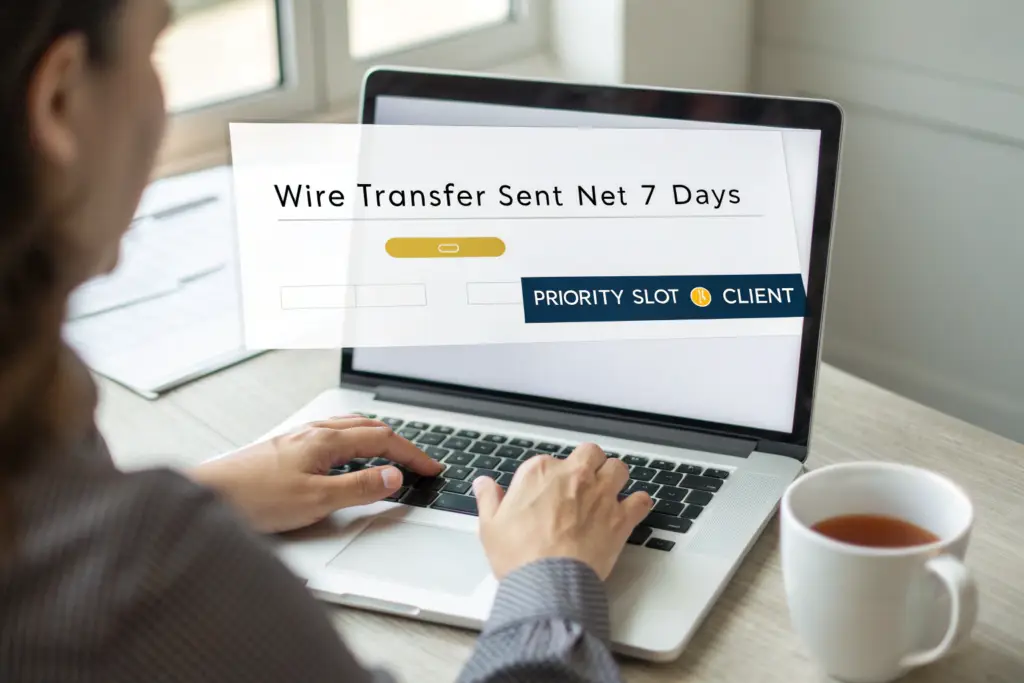
The specific payment behaviors that make a factory prioritize your order are paying the deposit within 24 hours of the proforma invoice being issued, settling the balance payment within seven calendar days of the B/L date rather than waiting the full negotiated 30-day net term, and never, under any circumstances, delaying a payment as a negotiation tactic during a minor quality dispute—instead settling the invoice in full and requesting a separate, documented credit note for the defect value.
How Does a "Deposit Within 24 Hours" Signal Fundamentally Change the Factory's Internal Production Meeting?
When a deposit arrives within 24 hours, the factory's finance department immediately releases the raw material purchase order. The production manager sees the released PO on his Monday morning dashboard and mentally slots your order into the "Confirmed - No Financial Hold" column. That column is real. I have a literal whiteboard. On Monday morning, my production manager moves client cards from "Waiting Deposit" to "Approved to Cut." A brand that wires quickly gets their fabric cut on Tuesday morning instead of Thursday afternoon. Across a 60-day production cycle, that two-day head start compounds.
Why Does a "Settle and Credit Note" Approach Cost Less Than a "Deduct and Dispute" Approach?
When a brand finds a legitimate defect and unilaterally deducts $2,000 from the balance payment, the factory's finance team must reconcile a short-paid invoice. This is a manual, time-consuming process that infuriates the bookkeeper. The factory owner must then decide whether to pursue legal action or swallow the deduction. Either way, the relationship is bruised. The smarter approach: pay the full invoice on time, then send an immediate email: "Payment sent in full. We have identified a $2,000 defect on PO #4567. Please issue a credit note against our next order. Attached is the inspection report." This approach respects the factory's cash flow cycle, isolates the dispute to a documented quality claim, and allows the factory to internally investigate the defect without also panicking about a missing receivable. I prioritize brands that do this.
How Do Quarterly Business Reviews Turn a Vendor Into a Strategic Growth Partner?
A Chicago workwear brand once drifted through three years of production with me without a single structured conversation. Orders arrived. Orders shipped. It was profitable. But it was flat. Then, I asked the owner for a simple 45-minute Zoom call with no specific complaint agenda. I called it a "Quarterly Business Review." He hesitated, then agreed. During that call, he mentioned casually that he was planning to pitch a major retailer for a private label program in the next quarter. He hadn't told me because he assumed it was irrelevant to me. I immediately offered to develop exclusive, proprietary fabrics that his competitor couldn't access through the retailer's own sourcing team. That single, unscripted comment, shared in a non-transactional conversation, led to a $400,000 exclusive program. We had been leaving strategic value on the table for three years simply because we never scheduled a conversation that wasn't about a purchase order.
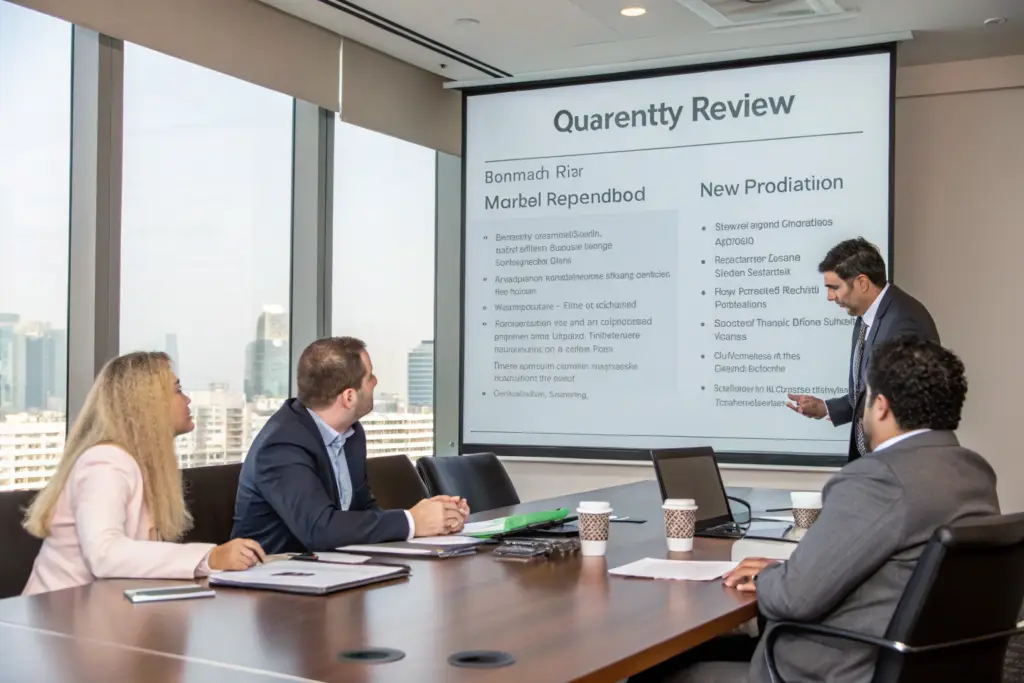
Quarterly Business Reviews turn a vendor into a strategic growth partner by creating a recurring, non-transactional communication space where the brand shares upcoming retailer pitches, market expansion plans, and new product category ideas, and the factory reciprocates with upcoming raw material innovations, available production capacity for the next six months, and early warnings about regulatory changes that could impact the brand's target market.

Textile mills develop experimental fabrics constantly. Most of these innovative swatches sit in a dusty sample room because no brand has asked to see them. A QBR partner receives these innovations first. Last autumn, a mill showed me a new brushed, recycled polyester fleece that felt identical to a premium cotton loopback terry but used 70% less water in production. I reserved the entire first production run for a single QBR partner who had mentioned he was pitching a sustainable loungewear capsule to a department store. He won the department store contract because no competitor could replicate the fabric's hand feel at his price point. This is an innovation advantage that flows exclusively through the relationship channel, not the procurement channel.
How Does an "Early Warning Regulatory Radar" Protect a Brand From a Costly Legal Mistake?
The EU's evolving chemical regulations update approximately every six months. A factory that participates in quarterly technical reviews with its dye houses knows that a specific phthalate used in a glossy print finish will be added to the REACH SVHC candidate list in December. A QBR partner receives this warning in September, adjusts the print formulation proactively, and ships compliant goods. A non-QBR transactional buyer orders the same print in November, ships non-compliant goods, and faces detention at Rotterdam. This early intelligence transfer is worth more than a $0.50 per unit discount.
How Does Loyalty During a Crisis Guarantee Permanent Factory Preference?
During the Shanghai lockdowns of 2022, my factory was forcibly closed for six weeks. I had $380,000 worth of in-progress inventory sitting motionless on cutting tables. Every single one of my clients had the contractual right to cancel their orders and demand a full deposit refund due to Force Majeure. Most of them did, and I refunded them. But one brand owner from Texas wrote me a different email. He said: "I don't need the deposit back. I don't need the goods immediately. I will wait. Extend my delivery window by whatever you need. My cash position can handle this. Your factory cannot." That email is pinned to the wall above my desk. It is not pinned as a decoration. It is pinned so that every single day, when I make decisions about which brand gets the last available production slot during peak season, his name is the first one I see.
Loyalty during a crisis guarantees permanent factory preference because the factory owner's memory of which client protected them during a near-death business experience becomes an unshakeable moral debt that translates into preferential capacity allocation, first access to new fabric innovations, voluntary price freezes during inflationary raw material cycles, and a depth of personal trust that no competitor's lower price quote can ever dislodge.
What Specific Crisis Support Actions Does a Factory Owner Never Forget?
It is not just the large gesture of not cancelling an order. It is the small, specific actions. The brand owner who called my personal mobile phone during the lockdown, not to ask about his shipment, but to ask, "Is your family safe? Do you have enough food?" The brand owner who prepaid his next order's deposit, unsolicited, to inject cash into my paralyzed accounts payable. These acts change the psychological contract from a commercial relationship to a deeply personal alliance. When that brand owner needs a rush order, I do not schedule it. I personally walk it through each station.
Why Does a "Voluntary Price Freeze" From the Factory During Inflation Originate in a Previous Loyalty Moment?
In 2023, cotton prices spiked 18%. Many factories passed the increase through to their clients. I absorbed 10% of the increase and froze the prices for two specific clients who had protected me during the lockdown. My margin on their orders dropped. My CFO questioned the decision on a spreadsheet. I overruled her. The brand owners understood, without me explaining, that the price freeze was a reciprocal gesture. They responded by routing three new product categories through my production lines over the next eighteen months. The short-term margin sacrifice returned as a long-term volume commitment.
Conclusion
A highly profitable, long-term partnership with a reliable clothing supplier is not discovered in a quote comparison spreadsheet. It is slowly built through repeated, deliberate acts of trust. You share your retail data, and the factory reciprocates with open book costing. You pay your invoice within seven days, and the production manager moves your card into the priority slot on Monday morning. You schedule a quarterly conversation with no urgent agenda, and the factory reveals a new sustainable fabric innovation that wins you a department store contract. You refuse to cancel your order during a lockdown, and your name is pinned above the factory owner's desk as a moral reference point for the next decade.
At Shanghai Fumao, I have learned to recognize the brand owners who understand this relational architecture. They are the ones who ask about my production team's Chinese New Year plans before they ask about their shipment status. They are the ones who treat my factory as a living organization of 120 skilled workers, not as a faceless cost center to be squeezed.
If you are ready to stop sourcing and start building a genuine production partnership, I invite you to begin with a single non-transactional conversation. You can reach my Business Director, Elaine. She handles our strategic partnership development and will not send you a price list in the first email. She will ask about your brand's three-year vision, your current supply chain frustrations, and what a true partnership looks like to you. Contact Elaine at: elaine@fumaoclothing.com. The brands that stay with us for a decade all started with this conversation.