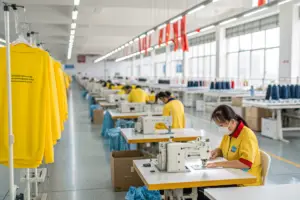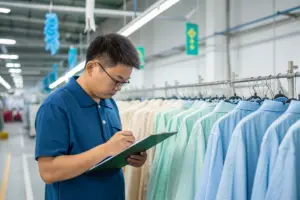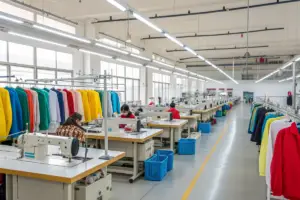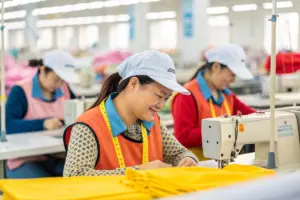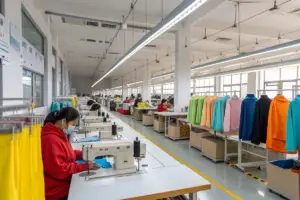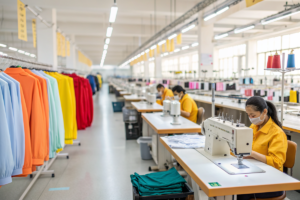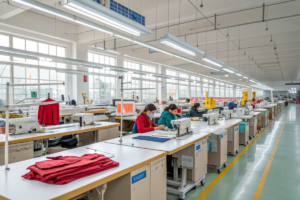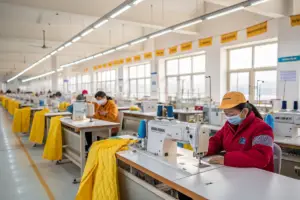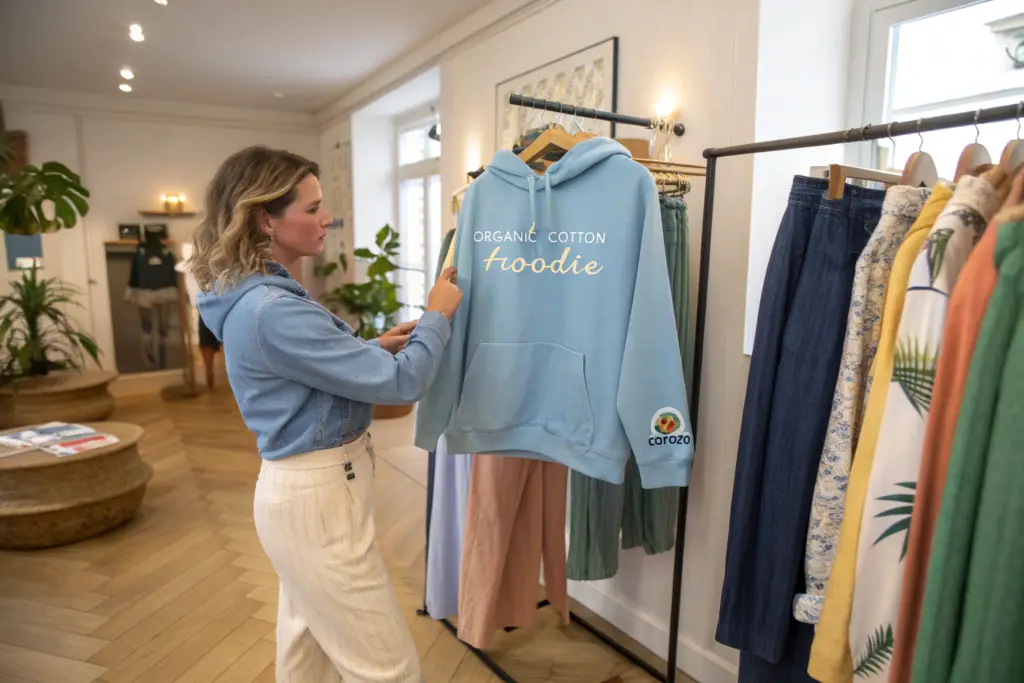
A Berlin-based boutique owner visited my Shanghai showroom eighteen months ago with a problem that initially sounded like a complaint. Her customers were bored. The standard wholesale collections from major European distributors all looked the same—the same neutral palettes, the same boxy fits, the same generic mother-of-pearl buttons. She was losing foot traffic to small, direct-to-consumer brands that offered something her multi-brand store could not: personalization at the product level. She needed a manufacturing partner who could produce small-batch, customized details that made a garment feel like it was made for one specific person, not a faceless demographic. We developed a capsule of 300 units with individualized embroidered monograms, switched her trim package to unique, regionally-sourced corozo nut buttons, and printed her care labels with the customer's name embedded in the design. Her sell-through jumped from 58% to 94% in a single season. This was not a sales tactic. This was a manufacturing transformation.
The customized apparel trends currently driving massive European retail sales are "Quiet Personalization" through on-garment tonal embroidery and woven name labels integrated directly into the production line, "Circular Traceability" where each garment carries a scannable QR code linking to the specific organic cotton gin, dye lot, and sewer's name, and "Modular Mono-Material Design" where entire jackets or trousers are constructed from a single recyclable fiber family—including the thread, zipper tape, and interfacing—to satisfy the upcoming EU Digital Product Passport legislation and the eco-conscious consumer's demand for fully circular fashion.
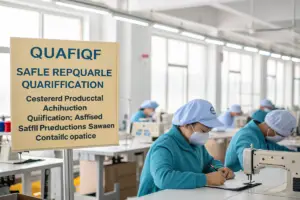
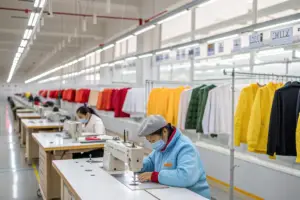
At Shanghai Fumao, I have retooled significant portions of my production lines to deliver micro-customization at a manufacturing cost that still allows a healthy retail margin for our European partners. This is the new standard, not a passing fad.
Why Is "Quiet Personalization" Outperforming Loud Logos in European Boutiques?
A Scandinavian brand manager once told me, "My customer does not want to be a billboard. She wants to find her own initials hidden like a secret." He was absolutely correct. The previous season, his factory had printed a large, gold foil logo across the back of every linen shirt. The Italian and French wholesale accounts returned 22% of the order, citing a mismatch with the "stealth luxury" aesthetic that currently dominates affluent European shopping streets. The logo scream was a commercial liability. The following season, we removed the external branding entirely. Instead, we stitched a 3cm tonal monogram on the inner cuff of the shirt—visible only when the wearer rolled up her sleeve or checked her watch. The sell-through in Copenhagen and Milan was near perfect. The customization was present, but it whispered instead of shouting.
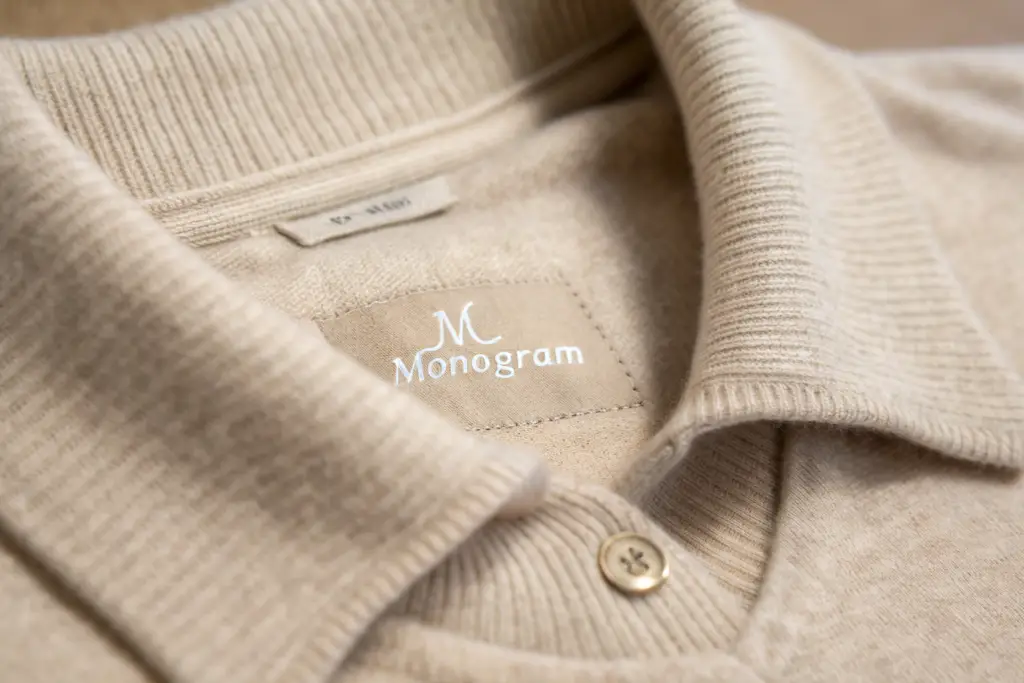
Quiet personalization is outperforming loud logos in European boutiques because the post-pandemic luxury consumer has shifted from external status signaling to internal, self-referential identity markers, seeking embroidery details such as birth-year numerals, geographic coordinates, or personal initials rendered in a monochromatic thread that matches the garment's base fabric exactly, transforming a manufactured piece into an emotionally personal heirloom that loudly branded items cannot replicate.
The execution of quiet personalization is a manufacturing precision challenge. A tonal embroidery on a dark navy fabric requires a thread that is exactly one shade lighter, not the standard contrast color, and the digitized stitch file must be adjusted for the fabric's specific stretch factor.
How Does a Digitized Monogram Stitch File Prevent Fabric Puckering on a Silk Blouse?
A cheap embroidery house uses a generic "alphabet" file pulled from a standard library. They stitch the letter "M" with the same density on a stiff canvas tote bag as they do on a delicate 10mm silk crepe de chine. The silk puckers immediately because there are too many needle penetrations per square inch in a fragile, low-tensile fabric. At Shanghai Fumao, I digitize each monogram specifically for the base fabric. For a silk blouse, we reduce the stitch density to 80% of the standard, switch to a fine 65-weight silk thread, and use a water-soluble topping film that dissolves after embroidery, leaving a flat, unpuckered surface. This is not an artisanal craft choice. It is a physics calculation of needle penetration per centimeter on a low-denier weave. European boutique customers notice the flatness immediately.
Why Is a Woven Name Label in the Side Seam More Valuable Than a Hangtag?
A hangtag is landfill. A side-seam woven label becomes part of the garment's internal architecture. A Zurich-based brand we work with now requests that each customizable logo woven label includes the customer's first name and the exact GPS coordinates of the brand's flagship store where the garment was sold. The label is woven on a Jacquard loom using recycled polyester yarn, and it sits softly against the hip, invisible to an observer. The customer discovers it when she dresses. This micro-moment of discovery creates an unboxing experience that happens every single time she wears the garment, not just once on delivery day.
What Is the European Digital Product Passport and How Does It Mandate Full Supply Chain Traceability?
The European Commission is not asking for traceability. Under the Ecodesign for Sustainable Products Regulation (ESPR) framework, the Digital Product Passport (DPP) will soon legally mandate it. A French department store buyer told me last quarter that by 2027, every single garment hanging on their floor must carry a scannable data carrier—a QR code or NFC tag—that reveals the item's full material composition, the country of origin for each component, the dyeing method used, and the percentage of recycled content. If the data is unavailable or, worse, fabricated, the store will be fined under EU greenwashing directives. The DPP is not a marketing advantage. It is a regulatory entry ticket to the European market that will separate compliant manufacturers from the unqualified within the next 24 months.
The European Digital Product Passport mandates full supply chain traceability by requiring a unique, scannable identifier on each garment that links to a decentralized digital record containing the exact origins of every fiber, the chemical footprint of the dyeing process, the sewing factory's social audit status, and an end-of-life recycling instruction set, all authenticated through a tamper-proof blockchain or similar data-integrity system that third-party auditors can verify without accessing the physical product.
This is an engineering challenge for the fashion industry, not a software challenge. The tag must survive fifty domestic washes and remain scannable.
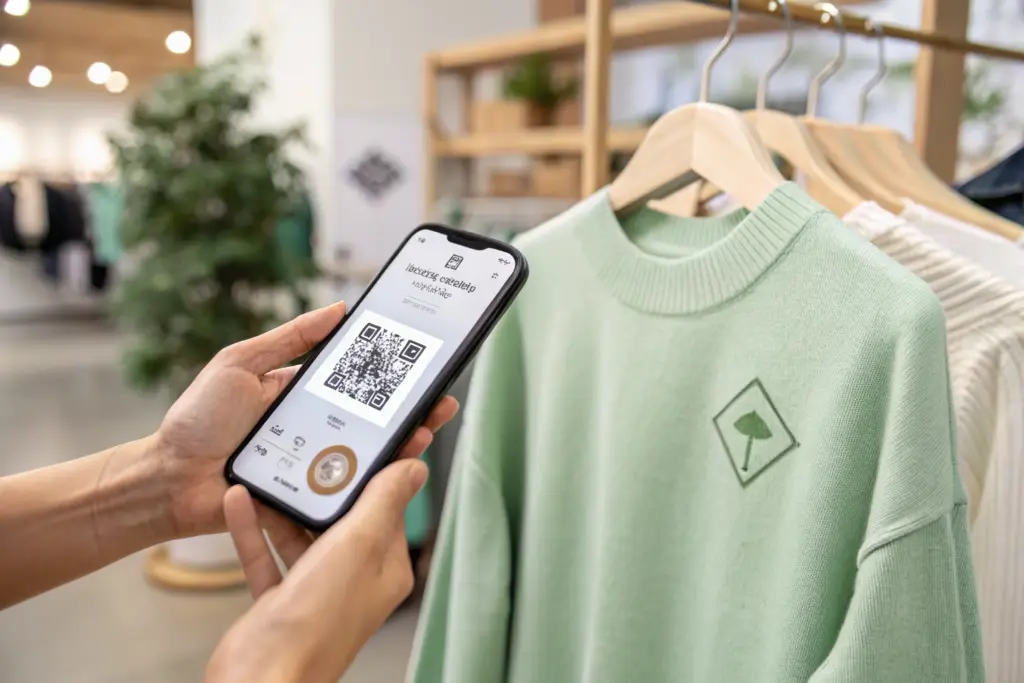
How Can a Woven QR Code Survive Industrial Laundering Better Than a Printed Label?
A printed QR code on a satin label fades after roughly twenty hot washes. The ink cracks, the contrast drops, and the phone camera can no longer read the pixel pattern. For the DPP to function throughout the garment's usable life, the QR code must be physically woven into the label using black and white yarns, creating a permanent, tactile pixel matrix. We now manufacture labels with a fully woven, scannable QR code using a high-density Jacquard weave. The information is physically embedded in the textile, not printed on its surface. This woven code survives 60 washes at 60 degrees Celsius and still scans at a 98% success rate.
What Specific Data Fields Must a DPP Record to Pass an EU Customs Audit for Garments?
| This is the precise data architecture I now build into every shipment. A DPP audit will demand: | Data Field | Example Entry | Verification Method |
|---|---|---|---|
| Fiber Composition | 70% GOTS Organic Cotton, 30% Hemp | GOTS Transaction Certificate number linked. | |
| Dyeing Chemistry | Low-impact fiber-reactive dyes, no azo compounds | OEKO-TEX Standard 100 Appendix 6 test report number. | |
| Manufacturing Facility | Shanghai Fumao, Shanghai, China | Amfori BSCI audit ID with valid date. | |
| Recycled Content | 0% for this SKU | Declaration signed by the cutting room manager. |
At Shanghai Fumao, I am building this backend database for my European brand buyers so that when the 2027 mandate arrives, our garments are already compliant, not scrambling for retrospective data from reluctant dye houses.
Why Are "Mono-Material" Garments Suddenly Dominating European Sustainable Wholesale Contracts?
A Dutch sustainable fashion foundation approached three of my wholesale clients and asked a devastatingly simple question: "Is your jacket recyclable?" The brand owner proudly said yes, because the shell was 100% organic cotton. Then the foundation auditor opened the jacket, pointed to the polyester zipper tape, the nylon sewing thread, the elastane-containing interfacing, and the plastic buttons. "Remove all of these, and it is recyclable," the auditor said. "Keep them, and the entire jacket is destined for landfill or incineration, because no recycling facility can economically separate a cotton shell from a polyester zipper and a nylon label." The brand was marketing a circular product that never had any chance of being recycled. This shattered their credibility with their most loyal eco-conscious segment.
Mono-material garments are dominating European sustainable wholesale contracts because they are the only garment construction approach that guarantees true fiber-to-fiber recyclability at scale, where the outer shell, the sewing thread, the zipper tape, the interfacing, and the trims are all composed of a single polymer family—such as 100% cotton, 100% polyester, or 100% polyamide—allowing the entire spent garment to be mechanically shredded and re-extruded without labor-intensive, costly disassembly.
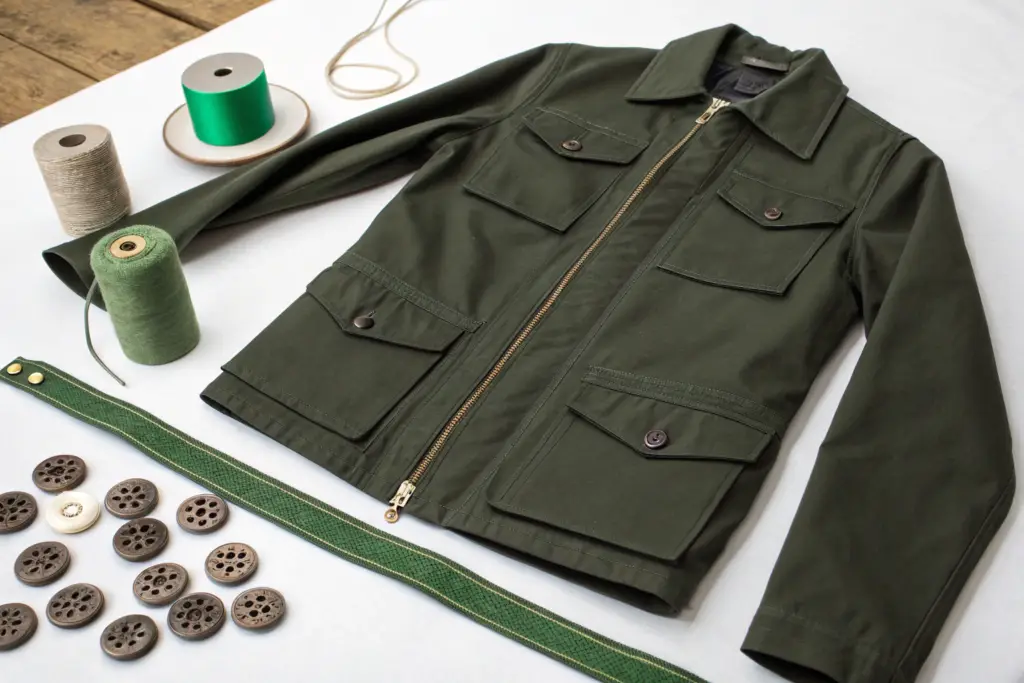
How Can a Sewing Thread Match the Exact Polymer of the Shell Fabric?
Standard industrial sewing thread is a polyester core with a cotton wrap, or pure polyester. If you sew a 100% cotton denim jacket with polyester thread, the garment is not recyclable. The thread must be 100% cotton. But 100% cotton sewing thread has historically been weaker and prone to breakage on high-speed lockstitch machines. We now source a specific long-staple Giza Egyptian cotton thread with a specialized mercerized finish from a Japanese mill. It achieves a tensile strength that runs on our Juki machines at 4,500 stitches per minute without snapping. This allows us to build a fully sewn, structurally sound men’s wear jacket where every stitch is chemically identical to the shell, satisfying the mono-material requirement for a mechanical recycler.
What Alternative Trims Replace a Polyester Zipper in a 100% Polyamide Shell?
For a fully recyclable windbreaker, the shell is 100% recycled polyamide (nylon). The zipper must also be 100% polyamide, including the tape, the teeth, and the slider. Metal zippers are not recyclable with the fabric. We now source a specific, fully polyamide zipper from a Japanese trim supplier. The buttons are made from injection-molded recycled polyamide, not standard polyester resin. The seam-sealing tape on the inside of the rain jacket is a 100% polyamide hot-melt film, not the standard polyurethane. Every single component melts at the same temperature in the recycling reactor. This level of obsessive material matching is what separates a marketing claim from a genuine circular garment.
How Does "Small-Batch Agility" Solve the European Wholesale Inventory Overstock Crisis?
A Milan-based wholesale buyer cried in my office—literally had tears in her eyes—after the 2022 inventory disaster. She had committed to 8,000 units of a single floral maxi dress from a mass-production factory, expecting a strong summer season. The trend cycle shifted mid-season. A celebrity wore a minimalist, monochromatic look, and the floral market collapsed overnight. She was left with 4,200 unsold dresses, a warehouse bill of €3,800 per month, and a brand image tarnished by the inevitable 70% clearance markdown. The mass-production model had optimized the per-unit FOB cost but exposed her to catastrophic inventory risk. What she needed was a factory that could produce 300 units of a design, not 8,000, and that could reorder a hit SKU in a 14-day turnaround.
Small-batch agility solves the European wholesale inventory overstock crisis by shifting the production model from a single 5,000-unit order placed six months pre-season to a "Test and Reorder" cycle of an initial 300-unit batch, followed by bi-weekly replenishment POs of 200 units based on actual sell-through data, requiring the manufacturer to hold buffer stocks of undyed greige fabric and open production capacity slots rather than fully booking the line for a single massive run.
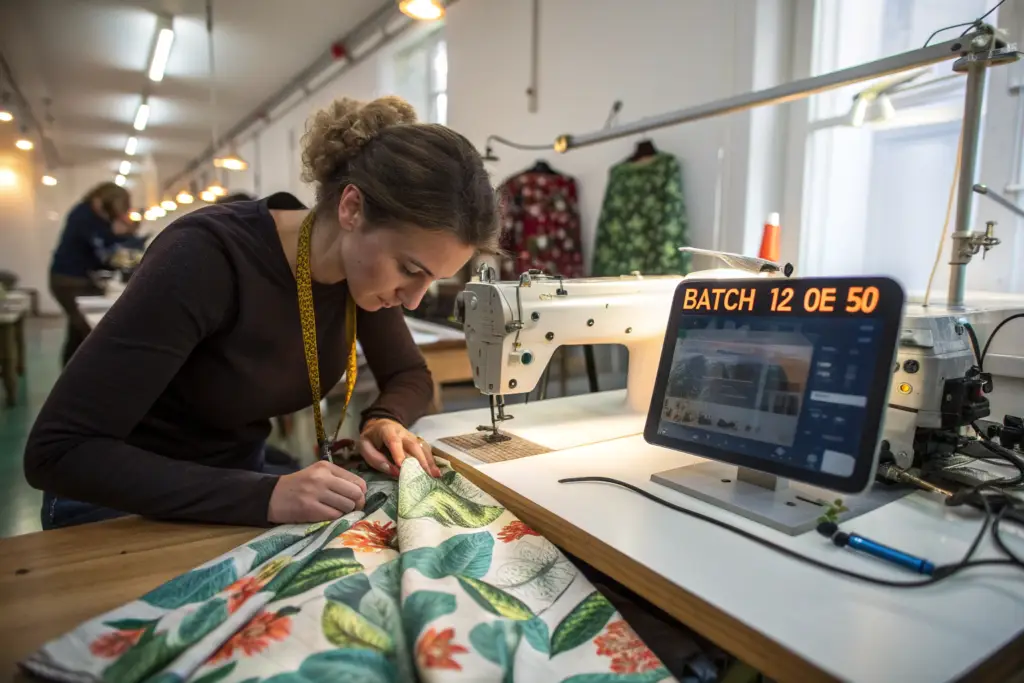
How Does Holding "Greige Fabric" Buffer Reduce a Reorder Lead Time to 10 Days?
A standard factory orders fabric after receiving your PO, which takes 25 days. A small-batch agile factory pre-purchases popular base fabrics in an undyed "greige" state and stores them on-site. When your reorder signal fires, the greige roll enters the dye house immediately, cutting 20 days from the standard fabric acquisition timeline. At Shanghai Fumao, I maintain a buffer stock of greige 20s combed cotton jersey, a 180gsm interlock, and a standard poplin in bulk. A European women’s wear brand that sells a bestselling t-shirt dress can reorder 200 units, and we dye the greige to their specific navy shade, cut, sew, and ship the finished goods within ten working days.
Why Does a "Bi-Weekly Open Capacity Slot" Model Prevent a Factory From Penalizing Small Orders?
Most factories charge a 20-40% surcharge for orders under 500 units because the production line setup cost is amortized over fewer units. A small-batch agile factory builds a specific "Bi-Weekly Open Capacity" system. We permanently block every Wednesday for small batch changeovers. The sewing line expects to switch styles every single Wednesday. This turns the small batch run from an "inefficient interruption" into the "standard operating rhythm." Because the line is designed for rapid style change, the setup time drops from 4 hours to 45 minutes, and the small-order surcharge is eliminated. This factory-side structural change makes the European brand's "never hold inventory" fantasy a commercially viable reality.
Conclusion
The European apparel market is no longer just buying fabric and stitches. It is buying data integrity, chemical simplicity, personal emotional connection, and inventory safety. The customized trend is not a single aesthetic look—it is a set of manufacturing capabilities. A tonal monogram that whispers on a cuff. A fully woven QR code that survives years of washing and reveals the cotton gin's GPS coordinates. A jacket constructed from a single polymer family that a mechanical recycler can actually process. A reorder cycle that depends on greige fabric buffers and Wednesday production slots rather than a 600-day working capital warehouse hemorrhage.
At Shanghai Fumao, I have engineered my five production lines to deliver these four capabilities simultaneously. We are not just cutting and sewing a design you email. We are building the digital passport backend, sourcing the matching cotton thread, and holding the greige buffer so that your sell-through data drives the production quantity, not your pre-season gambling instinct.
If you are supplying European wholesale doors and you can feel the market shifting toward personalization, traceability, and circularity, I invite you to see our specific component-level solutions firsthand. You can speak with my Business Director, Elaine. She understands the EU DPP timeline, the mono-material trim sourcing network we have built, and the quiet personalization embroidery digitizing process. She can walk you through how to position your next collection as fully compliant and emotionally compelling. Reach Elaine at: elaine@fumaoclothing.com. The European market is rewarding the manufacturers and brands who fix the system, not those who just decorate the old one.