
I once received an email from a long-term partner in Chicago that started with the words "I am beyond disappointed." His shipment of 1,500 organic cotton hoodies had just arrived, and every single one had a visible, ugly shade band across the chest. The dye lot was defective. This was our fault, and the evidence was undeniable. My first instinct was defensive tightness in my stomach. But I didn't send a defensive reply. I called him within six minutes of reading the email, and my first sentence was: "We failed you on this batch. I am going to explain exactly what happened in our dyeing sub-contractor's process, and then I am going to present three financial recovery options for you to choose from." That phone call didn't just save the relationship; it deepened it. A quality dispute is not the end of a partnership. It is an exposed crack that, if repaired with transparent engineering, creates a stronger foundation than a flawless shipment ever could.
To properly handle difficult quality disputes with a long-term overseas garment supplier, you must immediately de-escalate by separating the "root cause analysis" phase from the "financial compensation" phase, demanding a physical, photographic failure investigation with a signed corrective action report before discussing credit figures, and agreeing on a structured "debit note and future order discount split" model that compensates the brand for the current loss while preserving the factory's operational cash-flow to ensure the production line stays open for the next, corrected purchase order.
At Shanghai Fumao, I have learned the hard way that a dispute managed with forensic honesty builds a supply chain that cannot be replicated by a cheaper competitor. The factory that admits its mistake and maps its internal failure is worth ten factories that ship perfect goods but are incapable of transparent conversation.
Why Does the "Blame Cycle" Immediately Destroy Any Chance of a Fair Resolution?
A California swimwear brand I know fired a Vietnamese factory after one bad batch. The brand owner's first email was a 900-word list of grievances, written entirely in capital letters and CC'ed to the factory owner's entire LinkedIn network before a single investigation had occurred. The factory owner, publicly humiliated, immediately went into legal defense mode. His reply was a cold, single sentence: "All goods were shipped under approved AQL 2.5 pre-shipment inspection. We owe you nothing." The actual problem? A miscommunication on the elastane percentage in the lab dip that both sides had verbally agreed on but never confirmed in writing. This was a shared failure that could have been split 50-50. But the aggressive initial blast killed any collaborative spirit, and the brand ended up in a six-month PayPal dispute that they lost because the digital evidence was too weak.
The blame cycle immediately destroys any chance of a fair resolution because a verbal accusation triggers the factory owner's psychological self-preservation instinct, causing them to shut down their internal investigation, hide the defective evidence, and switch all communication to a legally-defensive, minimal-liability posture, whereas a neutral, data-first approach presenting the specific physical measurement deviation requests the factory's patternmaker to become a curious detective about her own mistake rather than a frightened defendant.
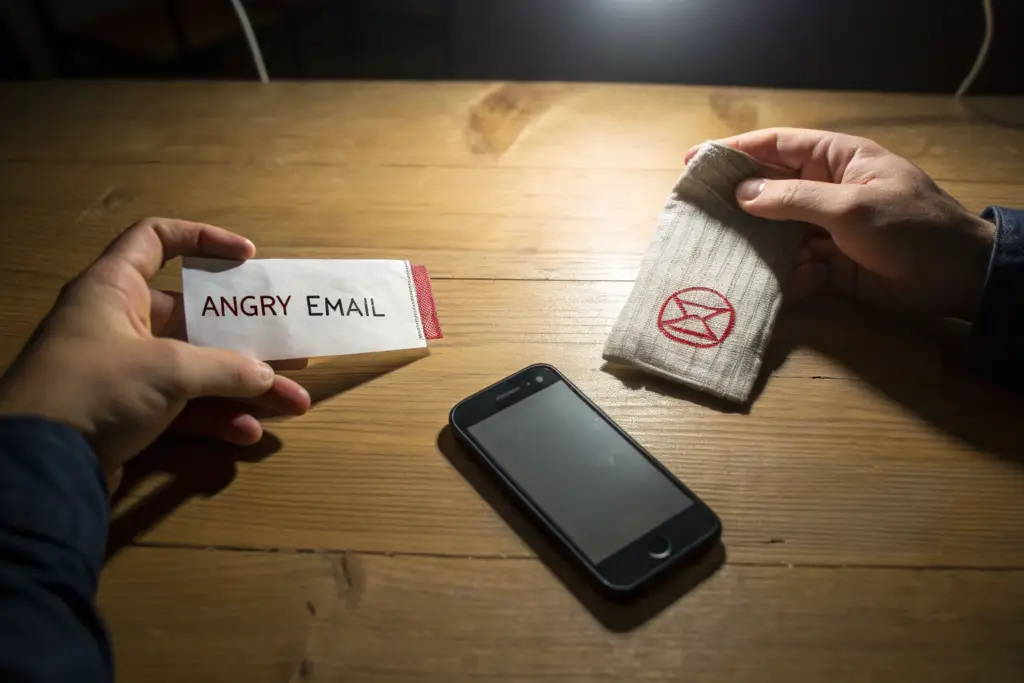
How Does the "CSI Swatch" Method Shift the Conversation From Anger to Evidence?
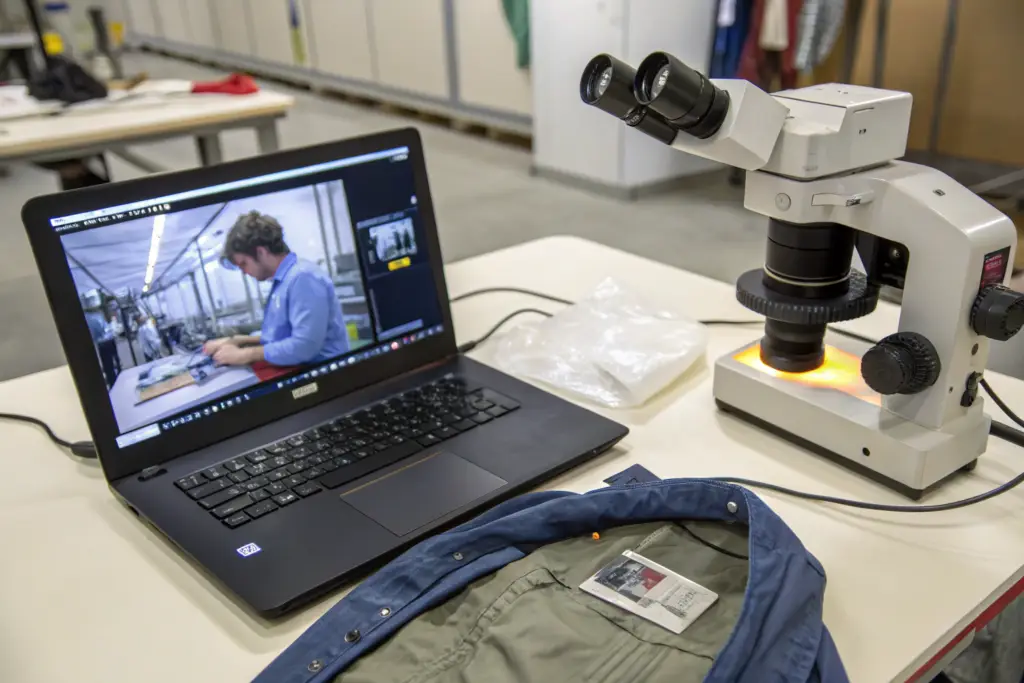
When a partner sends me a photo of a ripped seam, I do not accept the photo as conclusive. I ask them to FedEx me three physical defective samples and three passing samples from the same batch. When the box arrives, I lay them on the cutting table in our QC lab and I call the client on a live video feed. I measure the seam allowance on the ripped garment with a digital caliper. I compare it to the spec sheet. If the allowance is 6mm instead of the specified 10mm, I show the caliper reading live on camera. I do not say "we might have made a mistake." I say "The seam allowance here is 6mm. Our spec demands 10mm. The sewing operator set the folder guide incorrectly. This is our fault." The client sees the measurement with his own eyes, in real-time. The evidence, not my apology, rebuilds trust.
Why Does a Publicly CC'ed Executive Escalation Usually Backfire?
A trading company or a small factory owner has an ego tied to their reputation. An email CC'ing the US Consulate or the B2B platform's complaint department is a nuclear option that should only be pressed when you have already decided to terminate the relationship and pursue legal action. For a long-term partner, escalation should happen quietly, peer-to-peer. I call the factory owner's private mobile phone, not his sales manager's desk line. I speak in a low tone, and I frame it as "We have a shared forensic problem that I need your personal engineering eye on." This saves his face in front of his staff and allows him to investigate without his workers feeling like they are being interrogated. A privately managed dispute with a clothing manufacturer stays within the family, and internal discipline happens without the cost of public legal posturing.
What Is a Fair Financial Compensation Structure That Keeps Both Sides Solvent?
A New York knitwear brand once demanded a full 100% cash refund on a $38,000 defective order. The factory was a small, family-run operation that had served them faithfully for four years. The refund demand would have bankrupted the factory's payroll that month. The factory counter-offered a 20% credit on the next order. The brand refused, hired a Chinese lawyer, and sued. The legal process took 14 months, consumed $12,000 in legal fees on both sides, and ultimately resulted in a court-mediated settlement of 45% cash compensation. The relationship was dead, the factory closed six months later, and the brand lost its only reliable knitwear production line. A fair compensation structure is not the maximum cash you can extract. It is the maximum recovery that keeps your supply partner's electricity turned on.
A fair financial compensation structure for a long-term supplier quality dispute uses a "50-30-20 Split Model": 50% of the total calculated loss is immediately credited via a debit note against the current invoice, 30% is recovered by the factory's agreement to make the replacement goods at the raw material cost with zero labor margin, and the remaining 20% is absorbed by the brand as shared risk, recognizing that a long-term partnership requires both parties to have skin in the failure to align incentives on the corrective future.
The immediate instinct to demand a 100% refund is a transaction mindset. A partnership mindset spreads the financial pain across multiple months and multiple future orders, so the factory can actually digest the liability.

How Is a Debit Note Different From an Aggressive Chargeback on a Trade Assurance Order?
A debit note is a formal, mutually agreed-upon deduction on a future or current invoice. It acknowledges the debt without disputing the factory's account receivables through a third-party arbitration platform. An aggressive Trade Assurance or credit card chargeback, however, freezes the factory's entire receivable balance with that platform, often holding 180% of the disputed amount in reserve. This strangles the factory's cash flow immediately, making it impossible for them to purchase the raw material to fix your problem. I always propose a signed debit note first. I write: "We will short-pay the remaining 50% balance by exactly the debited amount, and the debit note is the legal receipt for this deduction." The factory agrees because their main invoice is still settled without a third-party freeze.
What Are the Tax Implications of a "Credit Note" Versus a "Future Discount"?
A credit note requires the factory to reissue a corrected commercial invoice with a lower declared value. For US Customs, if you declared the original high value on the entry summary, a re-issued lower invoice creates a discrepancy that CBP might audit as an under-declaration attempt. A future discount on the next order is cleaner for customs because the next order simply has a naturally lower unit price, supported by the market reality that a loyal client receives a negotiated discount. At Shanghai Fumao, I structure defect compensation as a line-item discount on the next purchase order's proforma invoice. The original defective shipment's customs declaration remains legally true, and the new shipment's lower value is commercially justifiable. This protects the brand buyer from a painful CBP Form 28 audit.
How Do You Conduct a Corrective Action Forensics Review Without a Factory Visit?
During the pandemic travel restrictions, a batch of sherpa-lined jackets from a partner factory arrived with the lining detaching from the shell after one wear. I could not fly to the factory. The factory owner could not fly to me. The easy, lazy solution would have been a bitter email exchange and a 30% discount. Instead, I asked the factory quality manager to set up a live video stream on a tripod, pointed at the sewing line where the jackets were being assembled. I watched, in real-time, as the operator fed the sherpa fabric into the overlock machine. I noticed the differential feed dog setting was set to 1.2, pulling the bottom fabric faster than the top. This created a micro-pucker that looked fine immediately after sewing but tore under tension. I freeze-framed the video, circled the digital feed setting, and texted the photo. The fix was a 1.0 neutral feed setting. The entire root cause was diagnosed and corrected in a 45-minute live video session, without a single plane ticket.
You conduct a corrective action forensics review without a factory visit by demanding a live, unscripted "Process Walk" video call where the factory's quality manager films each production station responsible for the defect in sequence—from the cutting table to the specific sewing machine head—using a standardized checklist of machine calibration parameters, operator hand-feeding techniques, and thread tension dial readings, while you screen-record the entire session and timestamp the specific moments where a parameter deviates from the approved standard.
A corrective action report (CAP) written without a live process observation is just creative writing. A real CAP requires you to see the hands moving on the fabric.
What Specific Machine Calibration Settings Should You Ask to See on a Live Video?
| When a stitch consistently fails, the problem is rarely the operator's skill. It is the machine's maintenance. I have a standard "Machine Calibration Interrogation" checklist for live video audits: | Machine Component | What to Film | Acceptable Range |
|---|---|---|---|
| Thread Tension Dial | Zoom in on the dial number on the overlock or lockstitch machine head. | For spun polyester core-spun thread on light woven fabric: 2.5–3.5 on a standard scale. | |
| Presser Foot Pressure | Film the operator flipping the manual pressure adjustment knob. | Should be set to the minimum that still feeds the fabric without slipping, typically 2-3 on a generic scale. | |
| Differential Feed Dial | Show the dial setting on the feed dog mechanism. | For non-stretch woven garment assembly, should be at 1.0 (neutral). For elastane blends, 0.8. |
When a factory knows I will ask for these zoomed-in video confirmations, they calibrate the line before I even ask. The threat of the live camera enforces better quality than any annual third-party audit.
A stitching failure can also be a raw material lie. Last year, a run of men’s wear chinos had buttonholes unraveling after washing. The factory swore they used the specified polyester core-spun thread. I asked the QC manager to take a lighter and a smartphone macro lens during the live call. He held a flame to the suspect thread. It melted into a hard, black plastic bead rather than a soft ash. Real core-spun cotton/poly thread burns differently than 100% nylon thread. The nylon was cheaper. The factory had substituted it. The live flame test, conducted over Zoom, took twenty seconds, and the materials manager on the other end had no words to deny it. This is not an inspection. It is a remote interrogation of physical matter.
When Should You Stop Negotiating and Legally Protect Your IP and Receivables?
In 2021, I watched a partner brand lose control of their own logo. They had been in a quality dispute with a factory over a rejected batch. The factory, feeling cornered and unpaid, retaliated by listing the brand's exact products—with the brand's registered logo—on a public B2B marketplace at a price 60% lower than the brand's MSRP. The factory was selling the rejected stock as "OEM surplus." The brand's legal team scrambled, but the factory was in a jurisdiction where IP enforcement took 18 months, and by then, the brand's US wholesale accounts had seen the grey market listing and cancelled their Spring orders. The time to legally protect your IP and receivables is not when the dispute turns ugly. It is during the honeymoon phase, written into the original manufacturing agreement.
You should stop negotiating and immediately shift to legal IP and receivables protection when the supplier fails to respond to a formal corrective action request within 14 calendar days, when they list your branded products on any third-party sales platform without written authorization, or when they demand a full balance payment before a mutually agreed rework inspection has been passed, at which point you must activate your registered trademark customs recordation with CBP and issue a formal cease-and-desist through a law firm with a physical office in the supplier's province.
Waiting too long to pull the legal trigger while still "negotiating in good faith" gives the bad actor time to liquidate your branded inventory on the grey market.

Why Is a US Customs Trademark Recordation Your First Line of Defense?
A US Customs and Border Protection trademark recordation electronically flags your brand name in the CBP screening system. If the rogue factory tries to ship your branded apparel into the United States under a different importer's name, CBP will automatically seize the counterfeit shipment as "unlawful parallel imports." This stops the grey market goods at the port before they hit your wholesale accounts. The recordation costs approximately $190 per trademark class and is filed online. I have walked multiple clients through this recordation process at Shanghai Fumao as part of our standard onboarding, precisely because a factory dispute can theoretically happen with any supplier, including us, and the brand deserves its own legal shield independent of any factory's promises.
What Specific Language Should a Manufacturing Agreement Include About Rejected Goods?
A weak agreement says "Factory will repair defective goods." A strong agreement says "Factory shall not sell, donate, export, or dispose of any goods bearing Buyer's intellectual property without written authorization. In the event of a final rejection, defective goods shall be destroyed under video surveillance with a certificate of destruction issued within 15 days, at the Factory's cost." This clause prevents the stock liquidation scenario. Yes, this is a demanding clause. Legitimate manufacturers agree to it because they don't plan to sell your designs on WeChat. If a brand buyer asks me for this clause, I sign it immediately, because a real factory wants your long-term business, not a one-time grey market profit.
Conclusion
A quality dispute with a long-term overseas garment partner is a test of systems, not a test of tempers. The initial emotional blast feels righteous but destroys the forensic data you need to win. The demand for a 100% immediate refund might feel like justice, but it often kills a solvable manufacturing relationship and leaves you with a dead production line and a lengthy legal process. The supplier who can sit with you on a live video call, zoom into their thread tension dial, burn a suspect thread under a macro lens, and then offer a transparent debit note structure is a supplier worth keeping.
At Shanghai Fumao, I have been on the receiving end of a legitimate quality complaint, and I know the difference between managing a problem with a partner and defending against an attack from an adversary. The first scenario produces a better, more tightly controlled factory. The second produces a locked warehouse and a deleted WhatsApp history. Your long-term supply chain health depends entirely on which dynamic you activate in the first 30 minutes after you open the defective box.
If you are currently in a dispute with a supplier and you need a neutral technical ear to help you interpret whether a defect is structural or cosmetic, I am happy to provide that forensic perspective. You can reach my Business Director, Elaine, who coordinates all quality failure analysis and corrective action reporting for our US partners. She speaks your language natively and can help you structure a resolution conversation that protects both your money and your production timeline. Contact Elaine at: elaine@fumaoclothing.com. A dispute managed well can become the trust story you tell your next buyer.