Three years ago, I got a desperate call from a startup owner in Atlanta. He had found a "fully qualified" supplier on a B2B platform who promised him the moon: cheap prices, fast turnaround, and "no problem" with US customs. He wired a 50% deposit for 2,000 units of branded activewear. The shipment arrived at the port of Savannah, and US Customs and Border Protection immediately flagged it. The factory had sewn in care labels that said "100% Cotton," but the fabric was a cotton-polyester blend. They had also used flammable faux-fur trim on the hoodies without a flammability test. The entire container was seized for misdeclaration and violation of the Flammable Fabrics Act. He lost his deposit, the goods, and his fall season. The phrase "fully qualified" is not a sales slogan. It is a precise legal and operational checklist that costs real money to maintain.
A foreign clothing manufacturer is fully qualified for legal export to the USA when they hold a valid CPSC-accepted General Certificate of Conformity (GCC) for general apparel or a Children's Product Certificate (CPC) for kids' wear, can demonstrate an active, factory-specific US Customs Assigned Importer of Record (IOR) bond filing infrastructure, prove their packaging meets FTC Textile Labeling Rules with correct fiber content breakdowns and country of origin marking, and maintain an unannounced social compliance audit that aligns with the strict forced-labor prohibitions under the Uyghur Forced Labor Prevention Act (UFLPA).
At Shanghai Fumao, I do not just claim compliance. I have built a system where every single roll of fabric entering my five production lines is tagged with a compliance chain that can survive a CBP Form 28 "Request for Information" audit. This isn't a theoretical advantage. It is the barrier to entry.
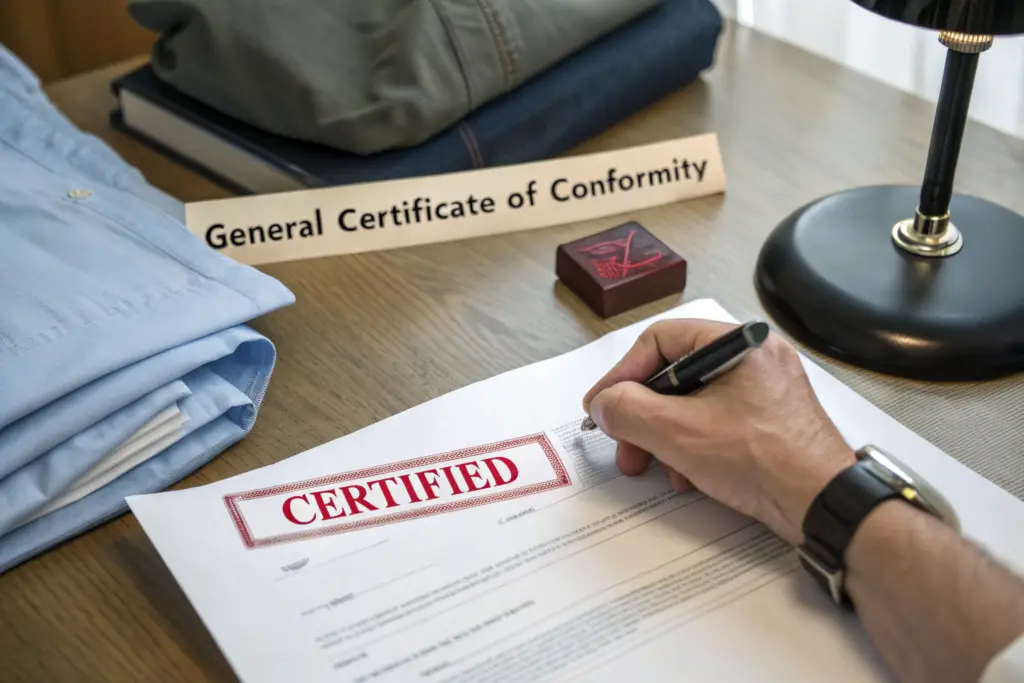
What Is a General Certificate of Conformity (GCC) and Why Does CBP Demand It?
Some factory salesmen tell you, "Don't worry, we handle the documents for you." I tell you: "If you cannot read and verify your own GCC, you are committing an act of blind faith that can bankrupt you." A General Certificate of Conformity is not a generic piece of paperwork issued by a chamber of commerce. It is a self-issued legal statement, backed by a specific test report from a CPSC-accepted third-party laboratory. If the factory's name on the GCC doesn't match the manufacturer's legal entity, or if the test report is from a non-accredited lab in some back-alley building, CBP will treat that certificate as void. And you, as the Importer of Record, bear the criminal liability, not the factory.
A GCC is a mandatory legal document required by the Consumer Product Safety Commission (CPSC) for all general-use apparel classified as non-children's products, certifying that the specific batch of goods has been tested by an accredited lab and complies with flammability standards under 16 CFR Part 1610 for wearing apparel and lead content limits under the Consumer Product Safety Improvement Act (CPSIA).
How Does a Factory Prove Its 16 CFR Part 1610 Flammability Test Is Valid?
The Flammable Fabrics Act is a relic of a terrible era when rayon sweaters turned into torches. Today, the standard 16 CFR Part 1610 defines three classes: Class 1 (Normal Flammability), Class 2 (Intermediate), and Class 3 (Rapid and intense burning—banned for clothing). A valid test report must specify the "Surface Flash Time" in seconds for each tested fabric face. At Shanghai Fumao, we pre-test all brushed rayon challis and fleece fabrics before they even reach the cutting table. I once rejected an entire roll of a beautiful, soft, heavily brushed viscose plaid because the surface flash was 2.8 seconds, pushing it dangerously close to a Class 3 failure. The supplier begged me to "just use the normal codes." I refused. If that fabric had become an apparel batch tested randomly at port, the entire shipment would be labeled "Banned Hazardous Substance" and destroyed.
What Are the Correct Sections of an Accredited CPSC Lab Report?
| The testing lab must be on the CPSC's official "Accepted Laboratory List." A fake certificate often uses a real lab's logo but fakes the report number. Intertek and SGS are the tier-one labs we use. Here is a simple verification checklist for any GCC report a factory hands you: | Report Element | What to Verify | Red Flag Indicator |
|---|---|---|---|
| Lab Accreditation | Check the lab name at CPSC.gov's laboratory search. | The lab address is a residential apartment. | |
| Test Method | Must explicitly state "16 CFR 1610" or "ASTM D1230." | The test title says "General Safety Check." | |
| Batch Traceability | The report must link to your specific purchase order number and fabric lot dye code. | The batch just says "2024 Production." |
I always advise any brand buyer to phone verify valid certificates directly with the lab before wiring the balance payment. A five-minute verification prevents years of legal pain.
How Does US Customs Enforce the UFLPA on Textile Raw Materials?
On June 21, 2022, the Uyghur Forced Labor Prevention Act (UFLPA) came into force. The US government didn't just issue a guideline. They fundamentally reversed the burden of proof. Now, if CBP suspects that any part of your garment—even a single spool of cotton sewing thread—originates from the Xinjiang Uyghur Autonomous Region, they will issue a "Rebuttable Presumption" of forced labor. Your goods are detained, and you must prove a negative. I had a shipment of women's chambray shirts detained in Los Angeles because our organic cotton yarn supplier had used packing boxes sourced from a generic cardboard manufacturer that CBP had flagged. We had to provide complete supply chain mapping from the seed to the box, taking 47 days to clear goods that arrived in 14 days. This act rewrites the rules of qualification. Shallow paperwork no longer cuts it.
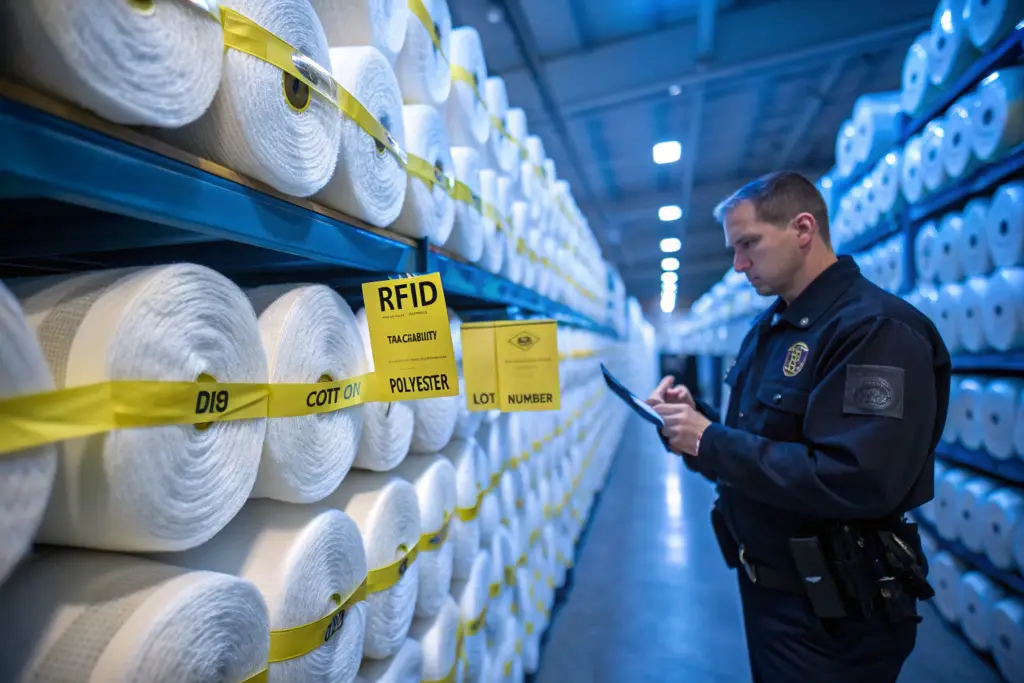
US Customs enforces the UFLPA by requiring importers to provide a "Supply Chain Mapping Document" for every raw material component, specifically tracking cotton from the gin through spinning to the knitting mill, and if any node of that chain is geographically located in Xinjiang or linked to a company on the UFLPA Entity List, CBP automatically treats the goods as prohibited merchandise and seizes them pending proof of non-use of forced labor by "clear and convincing evidence."
What Level of Cotton Ginning Traceability Satisfies a CBP Detention?
Many small trading companies buy "spot cotton" on the open market, mixing bales from different continents. That is explicitly illegal now. For a fully qualified exporter, we purchase cotton under a specific "Bale Identity" tracking system. The USDA's "DNA tagging" technologies, like the PimaCott program for Pima cotton, inject a specific DNA marker into the fiber that survives the entire manufacturing process. If CBP tests a garment from Shanghai Fumao and sees the forensic DNA marker for genuine US San Joaquin Valley Pima cotton, the "Rebuttable Presumption" of forced labor is immediately dissolved. I strongly recommend all clients use this exact forensic tag on high-end kids' wear and baby products because a single detention destroys the entire season.
How Does a Factory Prove Its Polyester Fiber Is Not a Xinjiang Derivative?
China dominates the polyester market, and CBP knows this. To release a polyester fleece jacket, the documentation cannot just state "Polyester Filament, Origin: China." You must map the polymerization plant. I require our petrochemical suppliers to provide a mill certificate stating the specific city and district of the polymerization tank. We also provide CBP with the ethylene glycol purchase contract. It's a deep dive into the petrochemical supply chain. If a potential partner cannot provide this, I will not use their yarn, because CBP views unverifiable polyester yarn as "high risk" under the current garment compliance rules, and I refuse to let my clients' brands sit in a legal limbo warehouse.
What Are the Rock-Solid FTC Labeling Rules That Prevent a Mislabeling Lawsuit?
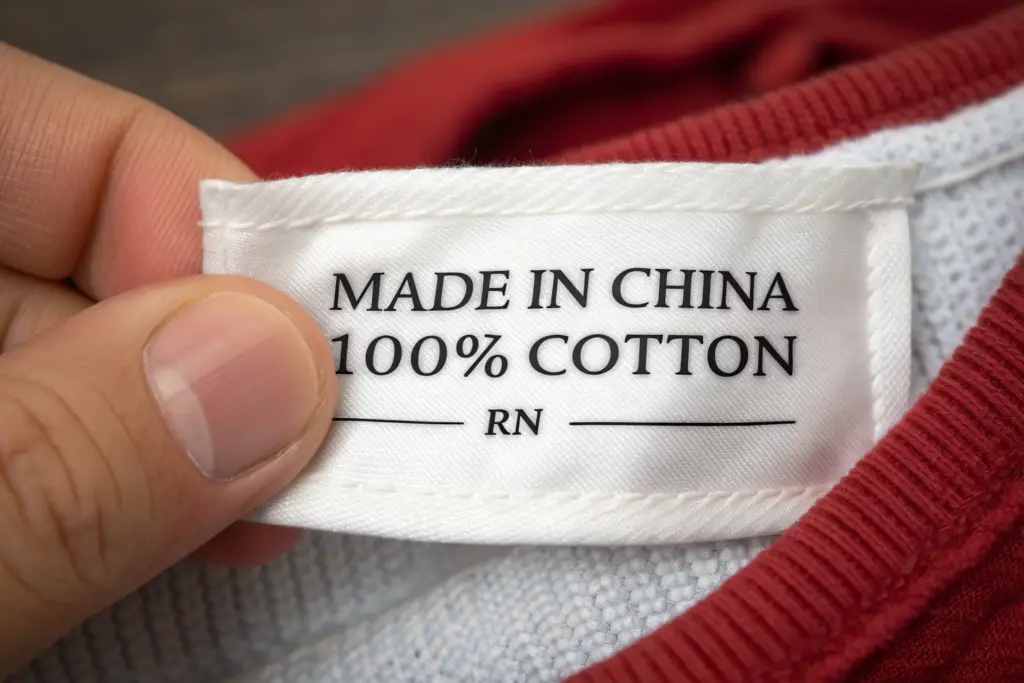
A Boston retailer once received a "cease and desist" letter from the Federal Trade Commission (FTC) because his factory had sewn in labels that read "Made in Italy." He was proud of the Italian fabric he imported. But the fabric was cut and sewn in a Chinese factory. Under US law, the "Country of Origin" is determined by the location of substantial transformation—the cutting and sewing, not the weaving of the fabric. The FTC fined him $14,000 for each count of falsely labeled product, and he had to recall every piece, relabel them with "Made in China of Italian Fabric," creating a mess in his brand's credibility. The label is a legal document. Its text is prescribed by the Textile Fiber Products Identification Act.
The FTC's rock-solid labeling rules require that every garment sold in the USA contains a permanently affixed label showing the generic fiber name (not a trademark) in descending order of weight percentage (excluding ornamentation), the clear country of origin in English, and the registered identification number (RN) or full company name of the manufacturer, importer, or seller handling the product.
When Does a 5% Trim Exclusion Apply to a Wool Peacoat Marked "Pure Wool"?
The FTC allows a "fiber tolerance" of 3% of total fiber weight for unintended impurities. But there is a specific "trim exclusion." If you sell a coat labeled simply "100% Wool," the rule allows you to exclude decorative trim (embroidery, braids, zipper tapes, elastic in cuffs) up to a certain limit. But if the coat has a 100% polyester satin bodice lining, that's not decorative trim—that's a structural fabric. You must state: "Shell: 100% Wool. Lining: 100% Polyester." I stopped a shipment of a beautiful women’s wear tweed jacket last winter because we had embroidered a heavy, complex logo that constituted 8% of the garment's visible surface area on the back using rayon threads. We added "Exclusive of Decoration" directly on the label to pre-empt a mislabeling lawsuit.
How Is the Correct Registered Identification Number (RN) Acquired and Used?
Any brand selling in the US can register for a free Registered Identification Number (RN) on the FTC's official website. This RN number replaces your full company address on the inner label, providing a privacy layer. But if I, as a manufacturer, offer full-package production under your brand, you can either use your RN or, if you don't have one, use ours? No. If the label says "Made in China," but the RN number belongs to Shanghai Fumao, we are the entity legally responsible for the product. Many buyers think they are hiding their address, but they are actually naming us as the manufacturer of record, which is legally correct for an FOB private label deal. Knowing this distinction is critical to formatting the label legally.
Who Is the True Importer of Record in a DDP Shipping Agreement?
"Just ship it door-to-door. I'll pay the extra $2 per unit." This is a trap I see new brand owners fall into. They assume ordering DDP (Delivered Duty Paid) from a foreign factory means that factory is legally responsible if the goods are seized for UFLPA or CPSIA violations. This is wildly false. The shipping term "DDP" is an International Chamber of Commerce (Incoterm) commercial term defining who pays the trucking, duties, and terminal charges. It does not overwrite US Federal Law. Under federal law, the "Importer of Record" is the entity causing the merchandise to enter the commerce of the United States. That entity is you, the US brand owner. If the factory disappears after shipping, CBP comes to your residential address for the $100,000 penalty, not their trading desk in Shenzhen.
In a DDP shipping agreement, the true Importer of Record (IOR) for US Customs remains the US-based brand owner or consignee listed on the CBP Form 7501 Entry Summary, because only a US resident entity can legally hold the continuous customs bond and take full legal liability for the correctness of the declaration, regardless of who prepaid the ocean freight and duty invoices to the courier.

What Is the Critical Difference Between a Customs Bond and a Freight Forwarder's Invoice?
A freight forwarder handles the box. A customs broker handles the declaration. The bond is the insurance between you and CBP. If the forwarder offers to use their own "Customs Broker" under their bond, you are entering what's called a "Nominal Importer" relationship, which is often illegal. Your unique bond, bonded by your EIN (Employer Identification Number), must be the primary contract. At Shanghai Fumao, when we ship DDP, we use our partnered US-licensed customs brokers, but we explicitly sign a Power of Attorney to link the shipment to our client's EIN and their own continuous bond. We absorb the freight cost to the door, but we never obscure the legal identity of the IOR. I sit new partners down and ensure they open a continuous bond with the surety company because a single-transaction bond for a container of clothes is a false economy if there's a hold.
How Does a "Corrected Entry" Threaten Your Future Import Privileges?
If a factory under a DDP contract declares your silk blouses as "polyester" to save 8% on the duty rate, the legal liability is entirely yours. CBP's Centers of Excellence and Expertise (CEEs) run algorithmic audits on HTS codes. If you get caught with a repeated low-duty violation, you don't just get a fine. You are placed on a "high-risk" importer list. Every single future container, no matter the factory, will be subjected to a full intensive "MET" (Manifest Examination Team) exam, costing you thousands in chassis splits and warehousing fees per load. To prevent this, I release the long-form US Customs Entry Summary directly to the brand owner before the vessel departs, showing the legitimate supply chain contract price to the penny.
Conclusion
A fully qualified garment manufacturer for the US market is not just a building with sewing machines. It is a legal shield. It actively manages the forensic traceability of its raw cotton to satisfy the UFLPA; it submits its zippers and snaps to CPSC-accepted lab flammability and lead testing to hold a legally valid GCC or CPC; it formats a legally precise FTC care label that will not trigger a class-action mislabeling lawsuit in a California district court; and it clearly distinguishes between the commercial convenience of DDP shipping and the non-delegable legal duty of the Importer of Record. The cheap factory will smile and tell you "no problem," pocket your deposit, and leave you to explain to CBP why your branded hoodies are sitting in a seized warehouse.
I built Shanghai Fumao to be the factory I would trust with my own brand. Our compliance binders aren't just stamped at the end; they are generated continuously from the moment the yarn is spun. Our US customs pre-clearance rate is a direct result of obsessive advance paperwork. The minimal cost of compliance buys you the most valuable thing in this business: a predictable supply chain that does not erupt into a legal crisis right before the prime retail launch.
If you want a partner who views compliance not as a cost, but as the foundational architecture of your brand's safety, we should talk about your next range. Reach out to our Business Director, Elaine. She manages the entire US customs document trail for our clients. She can walk you through exactly how we structure the CPC, the supply chain map, and the DDP bond to ensure you are protected from the time the cotton is picked to the time the box lands on your doorstep. You can reach her directly at: elaine@fumaoclothing.com. Let's build a supply chain that sleeps soundly through the CBP audit.