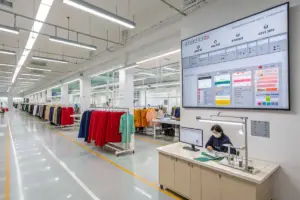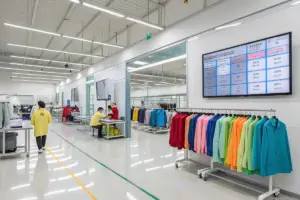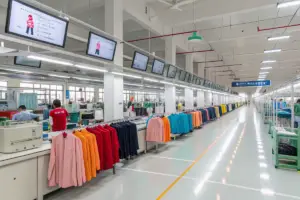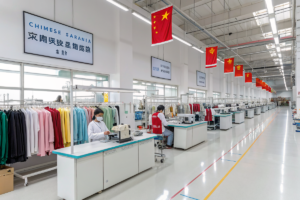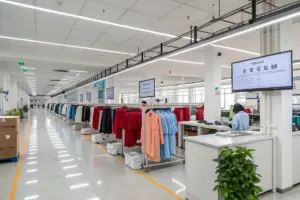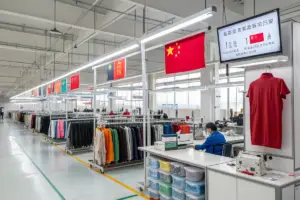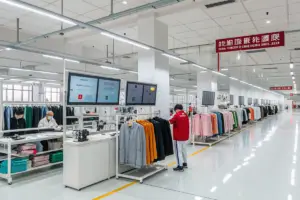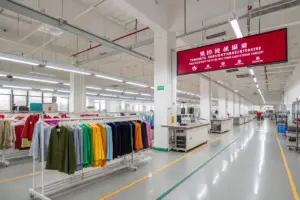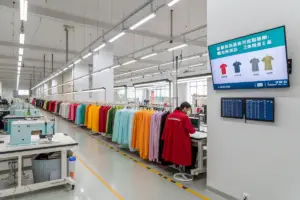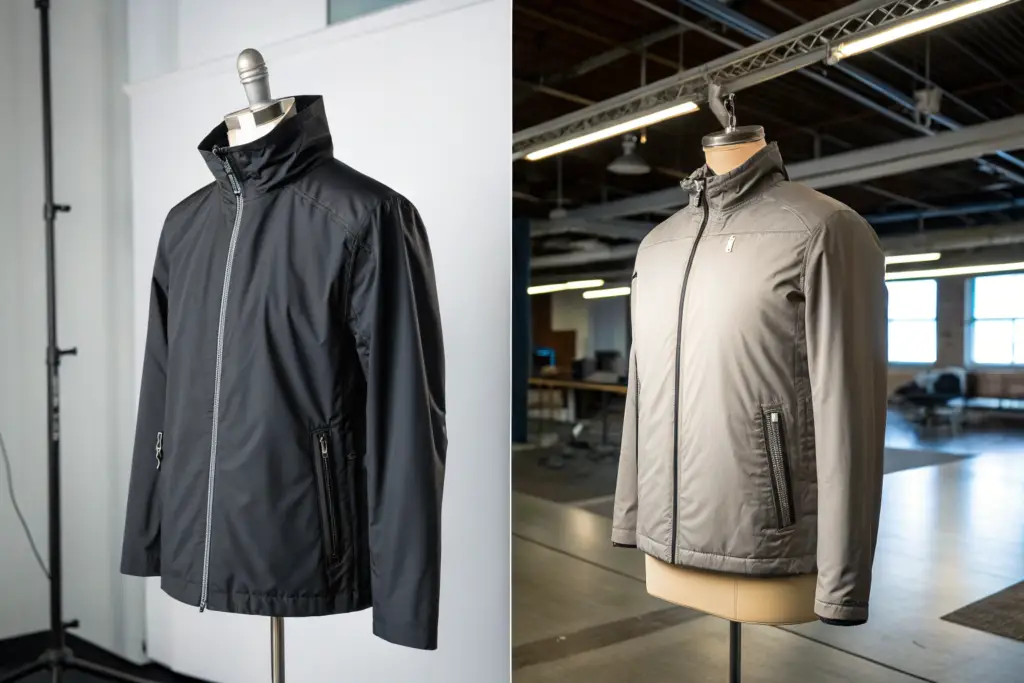
A jacket is not a t-shirt. This is the sentence I repeat most often to brands who come to us after a sourcing disaster. A polo shirt can hide minor construction sins. A jacket cannot. The zipper, the lining, the seam tape, the interfacing, the down-proofness of the shell fabric, the way the collar rolls—it is all brutally visible. One mistake, and the whole garment screams "cheap" from across the street. In October of last year, a premium workwear brand owner from Michigan called me, frustrated. He had just unpacked a shipment of 800 technical canvas jackets from a new supplier in Vietnam. The samples had been perfect. The bulk order was a different story. The armhole seams puckered. The lining was staticky. The DWR coating washed out after two light rains. His core customers are contractors and builders, men who test gear to destruction. The returns started in week one. That shipment nearly broke his brand’s reputation for durability. He needed to recover fast, and he needed a partner who understood that a jacket is an engineered structure, not just cut-and-sew fabric.
Fumao Clothing’s jacket technology surpasses standard Vietnam options because we treat the jacket as a three-dimensional load-bearing assembly, where seam engineering, material memory, and finishing chemistry are integrated from the fiber level up, not cobbled together from a generic trim catalog.
The debate about China versus Vietnam for complex apparel is not new. Vietnam has built a strong export manufacturing sector. It does volume well. It does basic woven shirts and simple insulated vests very well. But when the jacket’s DNA requires a fusion of advanced bonding, custom-developed hardware, and specific weather-resistant chemistry, the industrial ecosystem required is vastly different. Our advantage is not just a lower labor cost. That era is ending. Our advantage is an integrated industrial cluster. Within a 100-kilometer radius of our factory, we have access to four specialized fabric bonding workshops, two zipper engineering firms that build custom YKK-grade chains from scratch, and a chemical finishing plant that mixes proprietary DWR treatments to exact ASTM testing standards. This cluster does not exist in a single concentrated zone in Vietnam’s current manufacturing map. When a jacket line requires a thermoplastic polyurethane tape that matches a specific shell fabric’s stretch modulus, our technician drives 20 minutes to the tape factory and engineers the solution on the spot. That is the infrastructure gap we leverage, and it saves our partners from the sample-approval ping-pong that eats eight weeks of a development calendar.
Why Does Jacket Seam Engineering Fail in High-Stress Zones?
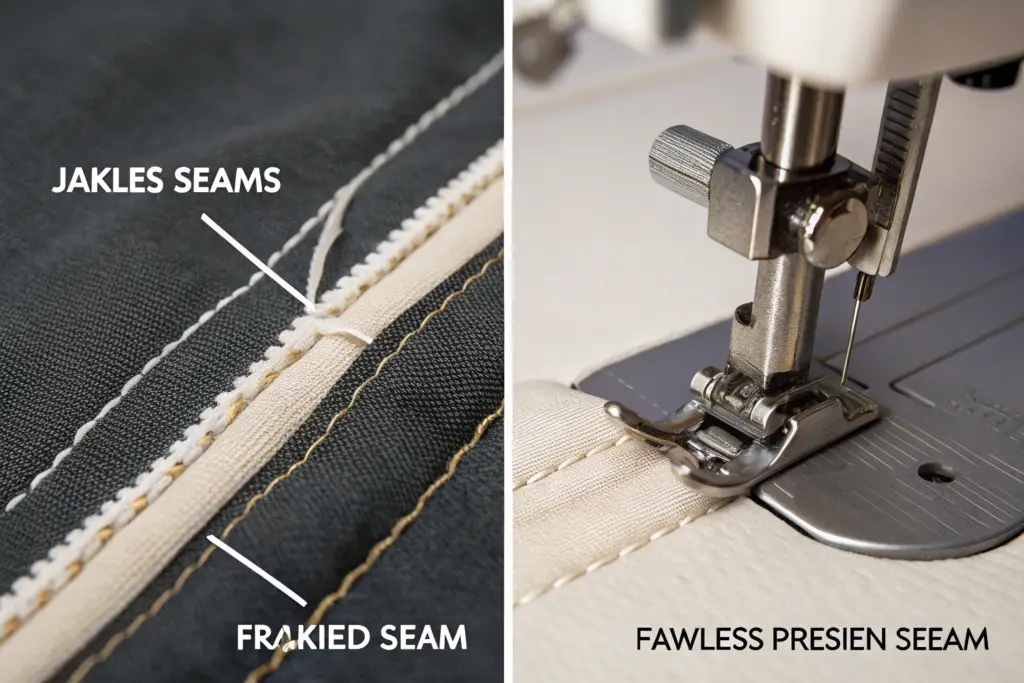
When a jacket fails at the shoulder or armhole, it is almost never because of the fabric itself. The fabric is rarely the weakest link. The failure point is the seam. A seam is a system of holes punched into a textile, held together by thread, and often covered by tape. Every needle puncture is a potential failure site. Many factories overlook this system-level thinking. They treat a seam as a sewing operation, not an engineering calculation. We learned this lesson painfully about eight years ago on a batch of softshell jackets. The armhole seam was splitting on about 15% of the units after heavy wear. We traced the root cause not to the thread strength, but to a mismatch between the thread’s stretch recovery and the shell fabric’s stretch recovery. When the wearer reached forward, the fabric stretched 10%, but the thread only stretched 4%. The thread snapped because it was doing a job it was not engineered to do. That failure cost us a client credit and a full month of root-cause analysis, but it permanently changed our approach to seam specification.
Standard construction treats a seam as a fixed joint; our Dynamic Seam Matching protocol selects thread, stitch type, and tape elasticity to match the exact mechanical stretch profile of the shell fabric, eliminating the internal shear forces that cause blowouts.
How Do We Test Seam Durability for Heavy-Duty Use?
Our seam testing does not look like a standard textile lab. Standard tests pull a seam apart slowly and linearly. Real jacket wear is not like that. It is explosive, repetitive, and multi-directional. A contractor bending down to pick up a tool box stresses the back seam in a sudden, loaded flex. A motorcycle courier in the wind endures continuous flap and vibration on the front zipper. Our testing simulates this chaos.
We built a custom “wear simulator” that mounts a finished jacket on a pneumatic mannequin that performs the 30 most common high-stress movements for that specific jacket category. For a work jacket, this involves 50,000 cycles of bending, reaching, and twisting. We then dissect the jacket. We measure seam slippage under a calibrated microscope. We check for thread fraying. We test the tape adhesion with a peel force tester. For thermal bonded seams, which use a heat-activated adhesive film instead of thread, we measure the exact bond strength in Newtons. Our internal pass-fail number for a bonded shoulder seam on a heavy canvas jacket is 45 Newtons per 25mm width. If it is below that, the batch is rejected before it ever sees a shipping carton. A client from Boston, who outfits fishing crews in New England, switched to our gear three seasons ago. Before us, he was replacing jackets every 18 months due to seam failure. He told me last month he now sees an average jacket lifespan of just under four years, despite harder daily use. The seam engineering is what he credits.
What Role Does Thread Selection Play in Jacket Durability?
Thread is the skeleton of the jacket. Yet, many product developers never specify it beyond “polyester core-spun.” This is a critical oversight. Polyester core-spun thread comes in dozens of grades with vastly different properties: tensile strength, elongation at break, abrasion resistance, and UV stability. A jacket for a construction worker in Arizona needs high UV-resistant thread. A jacket for a fisherman in Alaska needs thread that maintains seam integrity at sub-zero temperatures without becoming brittle.
We maintain an internal thread library with over 60 commercial thread specifications, complete with technical data sheets and physical wear test results. For a recent heavy-duty flame-resistant jacket project, a European brand asked us to beat the durability of their existing Vietnamese-made jacket. The shell fabric was an inherent FR cotton-nylon blend, very dense. The competitor had used a standard heavy-duty bonded nylon thread. It was strong, but stiff. The thick thread had actually sawed through the fabric weave in high-abrasion areas like the cuff and hem during tumble washing. We solved this by switching to a softer, high-tenacity spun polyester thread with a special lubricant finish. It had a lower individual strand tensile strength but a much higher resistance to internal fabric abrasion. We validated this choice with a Martindale abrasion test, rubbing the sewn seam against a standard wool abrasive for 50,000 cycles. The standard thread had eaten through the fabric at 20,000 cycles. Our thread showed only superficial fuzz at 50,000. We wrote up this technical comparison into a white paper for the client, and it became the basis for his new product line’s marketing claim of “seams that outlast the shell.” This level of forensic thread selection is a core part of what distinguishes our technical jacket manufacturing process from a standard commodity operation.
How Do Low MOQ Jacket Programs Simplify Testing the Market?
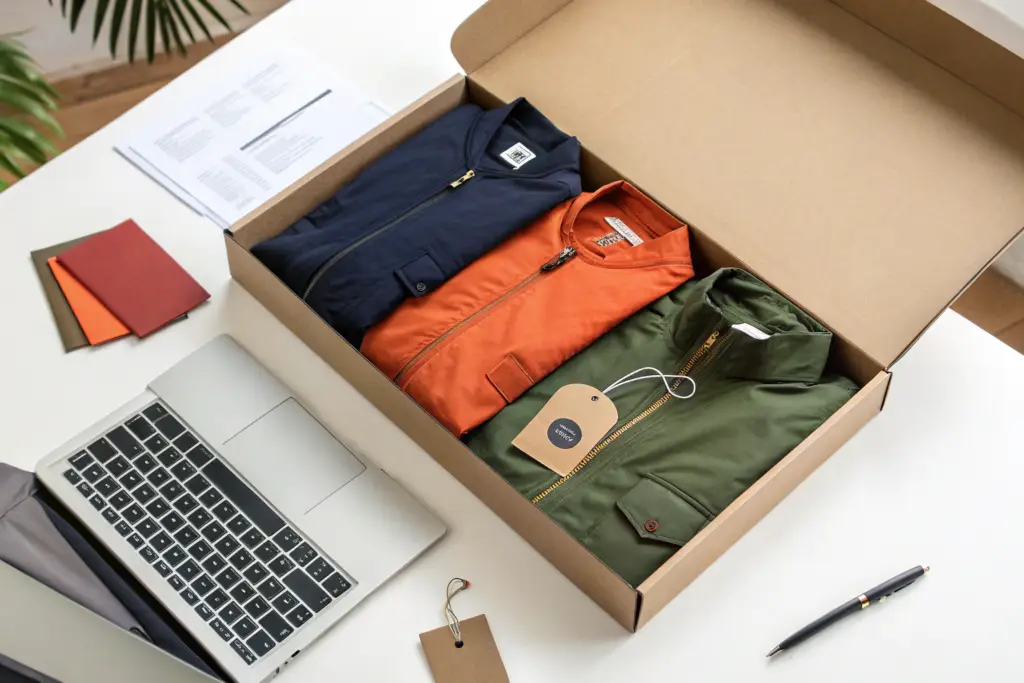
The biggest killer of new apparel brands is not a bad design. It is dead inventory. A founder launches a premium outerwear line. They have a bold vision. A factory tells them, “Minimum Order Quantity is 800 pieces per color, across three colors.” That is 2,400 jackets. They commit the cash. Production takes three months. The jackets arrive. Then they discover the market loves the olive green, but the burnt orange does not sell. They are left sitting on 780 burnt orange jackets that become a cash-flow brick, slowly draining their warehouse rent and consuming precious operating capital. Standard factories love high MOQs because it simplifies their production planning and material purchasing. The actual brand then carries all the market risk. We decided that this model was fundamentally broken for the new generation of performance and streetwear jacket brands. They need to test, iterate, test again, and scale only the winners.
Our low MOQ jacket program solves dead inventory risk by using a modular component system, where shell fabrics, linings, and trims are shared across multiple client orders, unlocking small-batch production at a unit cost that still allows a healthy retail margin.
How Does Our Modular Component System Reduce Costs?
The secret to a low MOQ that is not punitively expensive lies in material pooling. A single brand ordering 100 units of a specialized waterproof membrane fabric faces a crushing cost. The mill will not run a custom dye lot, and the distributor charges a premium for cutting a small roll. But if ten brands are using that same membrane fabric in different colors, or just in small quantities as a core ingredient, we can purchase the base greige goods in bulk and apply dye and finishing processes in smaller lots.
We built our jacket program around a curated library of “Core Performance Components.” These are pre-sourced, pre-tested materials that we hold in stock at our warehouse. For example, we stock a 3-layer recycled polyester hard-shell laminate from a bluesign-approved mill. We hold it in a natural white base. When a client comes to us for a run of 120 custom ski jackets, we take that base shell and dye it their specific brand color in a small batch dyeing machine. We also hold stock linings: a brushed tricot for warmth, a breathable mesh for athletic shells, a silky taffeta for packable jackets. By choosing from these core component options, a brand avoids the entire minimum fabric purchase hurdle. They are not buying a full roll. They are consuming a fraction of our pre-positioned stock. The same logic applies to YKK zippers, pull cords, and shock cords. This modular system cuts the development time by over 50% and makes a 100-piece order financially viable. One streetwear founder from Atlanta used this exact program last year. She launched with 100 units each of a cropped technical anorak in two colors. Her total capital outlay was less than $10,000. She sold out her first run in eleven days, used the revenue to fund a 400-unit re-order, and never once worried about the warehouse fees that kill so many of her peers.
What is the Financial Logic of Speed-to-Market?
The financial return on a small, fast batch often dwarfs the return on a large, slow one, even if the unit cost is higher. This is a mathematical reality that many brands overlook when they obsess over the FOB price. Let’s analyze a real scenario using a $95 retail jacket.
| Business Model Factor | Standard High-MOQ Path | Shanghai Fumao Low-MOQ Path |
|---|---|---|
| Initial Order Quantity | 800 units | 150 units |
| Landed Unit Cost | $22.00 | $28.00 |
| Total Initial Cash Outlay | $17,600 | $4,200 |
| Time from PO to Delivery | 120 days | 45 days |
| Sell-Through Rate (Season 1) | 65% (new, untested design) | 95% (small batch, high exclusivity) |
| Unsold Inventory Cost | $6,160 (280 units) | $210 (8 units) |
| Cash Tied in Dead Stock | $6,160, locked for months in warehouse | Near zero, cash recycles in 2 weeks |
The standard path looks better on the unit cost line. But the actual cash cost of risk is crippling. The unsold inventory in the standard model is a black hole of working capital. It consumes warehouse space, it incurs insurance costs, and it eventually gets liquidated at a 70% markdown, often losing money on each unit sold. The low-MOQ path with Shanghai Fumao absolutely costs more per jacket. However, the total financial risk is contained to a tiny fraction. The brand owner validates the design, colors, and sizing with real customers and real money. The re-order for the proven winning color can then be placed at a higher volume and a lower unit cost, using the actual revenue from the first batch. This is the difference between gambling with your company’s future and scientifically testing the market with a controlled experiment. Our modular system is the physical infrastructure that enables this scientific approach to fashion entrepreneurship.
What Waterproofing Technologies Do We Use for Performance Jackets?
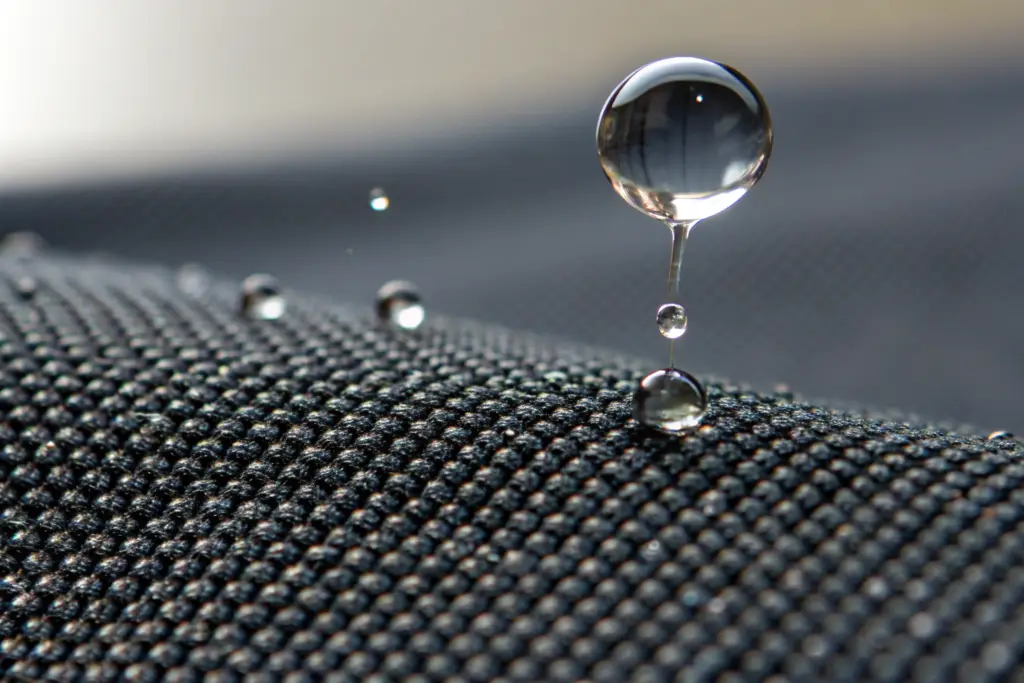
Waterproof is a promise that gets broken very quickly if the chemistry and the application are not meticulously controlled. A cheap DWR treatment works on the showroom floor, but it wears off faster than a cheap sticker. The real waterproofing technology in a high-performance jacket is a three-layer system. The face fabric, the membrane, and the backer. The DWR (Durable Water Repellent) on the face fabric is the first line of defense. It makes water bead up and roll off before it even touches the membrane. If the DWR fails, the face fabric “wets out.” The jacket is not leaking, but the fabric becomes saturated, heavy, and cold. It feels like a leak. This “wetting out” is the most common cause of a customer claiming a jacket is defective when it is technically not. We saw this exact confusion repeatedly with a client who sold hiking shells in the Pacific Northwest. His customers in misty, continuous rain conditions complained about the jacket’s performance, even though the membrane was intact. The issue was always the DWR’s poor durability under persistent moisture and abrasion from backpack straps.
We use a dual-cure C0 fluorocarbon-free DWR chemistry, bonded in a plasma treatment chamber that permanently grafts the repellent polymer to individual fiber surfaces, extending DWR lifespan beyond the standard 20 washes to over 50.
How Do We Test Waterproof Integrity in Extreme Conditions?
A standard hydrostatic head test, where a column of water presses on the fabric until it leaks, tells you the initial waterproofness. It does not tell you what happens after 10,000 cycles of flexing. A membrane with microscopic cracks will pass a static test but fail dynamically. We use a dynamic leak test, specifically a modified Bundesmann rain tester. This machine subjects the fabric to high-pressure simulated rain while a mechanical arm flexes and rubs the material from below, simulating knee bends and elbow friction.
We test jackets for a specific European mountain guide client using this protocol. The specifications require 30 minutes in the Bundesmann with a water pressure of 100 liters per minute per square meter, while undergoing 500 mechanical abrasion cycles, with zero water penetration on the inner backer. We record the entire test with a time-lapse camera and share the video with the client. This is not just quality control; it is their product insurance. Another test we pioneered internally is the “pack-out simulation.” A waterproof jacket gets stuffed into a backpack, pulled out, scraped against rocks, and compressed thousands of times in its lifetime. This mechanical abuse is the number one killer of thin, lightweight membranes. We put finished jackets into a large industrial tumble machine with rubberized paddles and tumble them for eight hours continuous to simulate two years of hard use. We then re-test the hydrostatic head. A premium Japanese membrane we use typically starts at 30,000mm and must still exceed 25,000mm after this torture test. Standard generic membranes from non-specialized garment factories often drop below 15,000mm after the same treatment, a detail they conveniently do not test. This is the performance chasm our partner brands build their reputation on.
What is the Difference Between Membrane and Coating Technologies?
This is a fundamental educational point we walk every new jacket client through. A coating is a liquid polyurethane layer spread onto the back of a fabric. It is cheap, effective for light rain, and completely non-breathable. It acts like a plastic bag. A membrane is a microscopically thin, engineered film laminated to the face fabric. It has billions of tiny pores. These pores are 20,000 times smaller than a water droplet but 700 times larger than a water vapor molecule. This means liquid water cannot get in, but sweat vapor can escape out. This is true waterproof breathability.
Coatings are for emergency ponchos. Membranes are for performance shells. We almost exclusively use lamination with membranes for outerwear, focusing on recycled polyester membranes and bio-based membranes where the client’s sustainability brief demands it. For a cycling brand that needed extreme breathability for high-exertion aerobic activity, we used a hydrophilic, non-porous membrane. Instead of microscopic holes, this membrane uses a solid polymer that actively transports moisture vapor via a chemical chain reaction. Its breathability rate, measured in RET (Resistance to Evaporative Heat Transfer), was below 6, which is extremely breathable. A standard PU coating has an RET above 20. We guided the cycling brand through the fabric sourcing, explaining the ASTM E96 test standard for moisture vapor transmission rate. They chose the hydrophilic membrane and it became the headline technical feature of their spring launch campaign, allowing them to compete directly with global performance giants at a more accessible retail price point. This is the level of technology we bring to Shanghai Fumao jacket partnerships.
How Do You Build a Brand Story Around Technical Jacket Construction?
A jacket without a story is just a commodity. It competes on price. A jacket with a story competes on value, on emotion, on the trust that a customer invests when they click “buy.” The most powerful brand stories are not invented by marketing copywriters in a conference room. They are discovered, unpolished, on the factory floor. They live in the specific, granular decisions of engineering and construction. A brand owner’s job is not to spin fiction. It is to translate technical truth into emotional benefit for the end consumer. A customer might not understand “hydrostatic head,” but they deeply understand “stays dry in a mountain downpour.” The bridge between these two statements is the brand story, and it must be built with authentic technical bricks. One of our most successful client collaborations was with a small brand that focused entirely on this translation. Their entire Instagram feed was not just lifestyle shots. It was a mix of macro videos of our seam taping process, a time-lapse of the Bundesmann rain test, and an interview with our head pattern maker explaining why their hood design does not obstruct peripheral vision. They turned our factory’s technical rigor into their brand’s visual DNA. Their followers did not just buy a jacket. They bought into an obsession with detail.
A jacket’s construction story is a potent, pre-built marketing asset because the visual language of technical manufacturing—macro lens shots of stitching, water beading, and seam tape—is inherently engaging and trust-building in a digital world saturated with generic product imagery.

How to Use Technical Transparency to Boost Perceived Value?
Price resistance dissolves when customers see the labor and complexity behind a product. We actively partner with our brands to create a “technical content library” for their jacket orders. During their production run, our quality control team takes high-resolution macro photographs and short 4K video clips of key construction stages. We capture the laser cutting of the fabric panels, the precise alignment of the seam tape in a bonding machine, the needle punching through the heavy-duty twill, and the final pressure testing of the waterproof zipper. This is not generic stock footage. This is their specific jacket, on their production line, passing their specific tests.
One brand owner from Vancouver took these assets and built a dedicated “Construction” page on his website. He embedded side-by-side comparisons: a cross-section cut of our bonded seam alongside a microscopic shot of a standard stitched seam from a competitor. He showed the difference in the thread structure, the gaping holes in the standard fabric where the needle punched through. Our bonded seam showed no holes, just a clean, polymer-welded junction. He did not write “premium quality” in a headline. He showed the proof. The result? His average customer review score for “quality” jumped, and his return rate from “fit and feel” issues plummeted. His shipping confirmation emails included a link to a video of his jacket being pressure-tested. Customers wrote back saying it was the most reassuring post-purchase experience they had ever had. This level of radical transparency, fully supported by our on-site documentation capability, directly increases the conversion rate and the average order value. A $250 jacket with this proof package outperforms a $180 jacket with a vague “premium materials” claim every single time because the perceived value audit trail is unassailable.
Why Should Your First Collection Be an Engineered Story?
Launching a new brand is a battle for attention and memory. A generic “high-quality fashion jacket” line disappears into the noise instantly. An “engineered story” collection, focused on one or two core technical garments, creates a mental anchor. It positions the brand not as another label, but as a product company. This distinction is critical for customer retention. A technical story also creates a powerful defense against fast-fashion commoditization. A fast-fashion giant can copy a color and a silhouette in a week. They cannot quickly copy a specific seam bonding cure temperature, a custom-developed zipper, or a unique membrane lamination that took a year to source and perfect.
We guide first-time brand founders through this exact positioning workshop. We ask them to identify one single technical element that will become their Collection Hero. It might be a zero-waste pattern layout, a recycled fishing net membrane, an ultra-sonic welded pocket without a single stitch, or a specific articulated elbow design we developed together. We then build the entire sampling and development process to ensure that hero element is visually documented and test-verified for their marketing use before a single jacket ships. A graduate from a London design incubator used this exact strategy for his final collection. His hero element was a completely detachable, interchangeable insulation liner system using YKK press studs and magnetic fasteners. The entire project was documented, from initial sketch to the first technical jacket prototype. He turned the development process into his degree exhibition content. Before he even launched commercially, his concept was picked up by two influential outdoor gear blogs focused on technical design and innovative apparel. The engineered story did not follow the brand. The engineered story was the brand. And a standard, low-cost factory with no documentation capability, no testing lab, and no engineering mindset could never have given him that foundational advantage.
Conclusion
The question of whether our jacket tech surpasses standard Vietnam options is settled on the factory floor, not on a price sheet. Standard production is built on the logic of the sewing machine operator: cut the pieces, stitch them together, ship the box. Our jacket technology is built on the logic of the engineer: understand the mechanical loads on a shoulder seam, select a thread and a stitch type with a matched modulus of stretch, and then validate that system with 50,000 cycles of simulated wear before it ships. We do not just use premium trims; we design custom zippers when the standard catalog falls short. We do not just apply a DWR; we plasma-graft it to the fiber’s surface so it survives 50 washes, not 20. This industrial infrastructure, clustered within a short drive of our facility, is the asset that differentiates a truly technical jacket from a simple garment.
Beyond the engineering, we have re-engineered the business model itself to serve the next generation of outerwear brands. The low MOQ modular system dismantles the inventory risk that crushes small labels, allowing a founder to test a market with 150 jackets and scale only the proven winners using actual revenue, not a gambling instinct. The financial math is clear: a slightly higher unit cost in a controlled test batch is infinitely cheaper than a warehouse full of dead stock from a high-volume order. We couple this with a full technical content library, giving brands the macro videos, rain test footage, and micrographs they need to build a story that commands a premium retail price and dissolves the price objections of a discerning, skeptical customer.
I invite you to move beyond the generic sourcing spreadsheet and the hope that a sample promises will match the bulk reality. Whether you are launching a technical outerwear brand from scratch or recovering from a quality disaster with a previous supplier, we have the engineering discipline, the physical testing lab, and the industrial ecosystem to build jackets that last, and that tell a story your customers will remember. Let’s discuss your specific technical requirements. Reach out to our Business Director, Elaine, at elaine@fumaoclothing.com to schedule a call and begin engineering your next jacket collection with Shanghai Fumao.