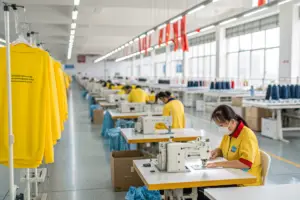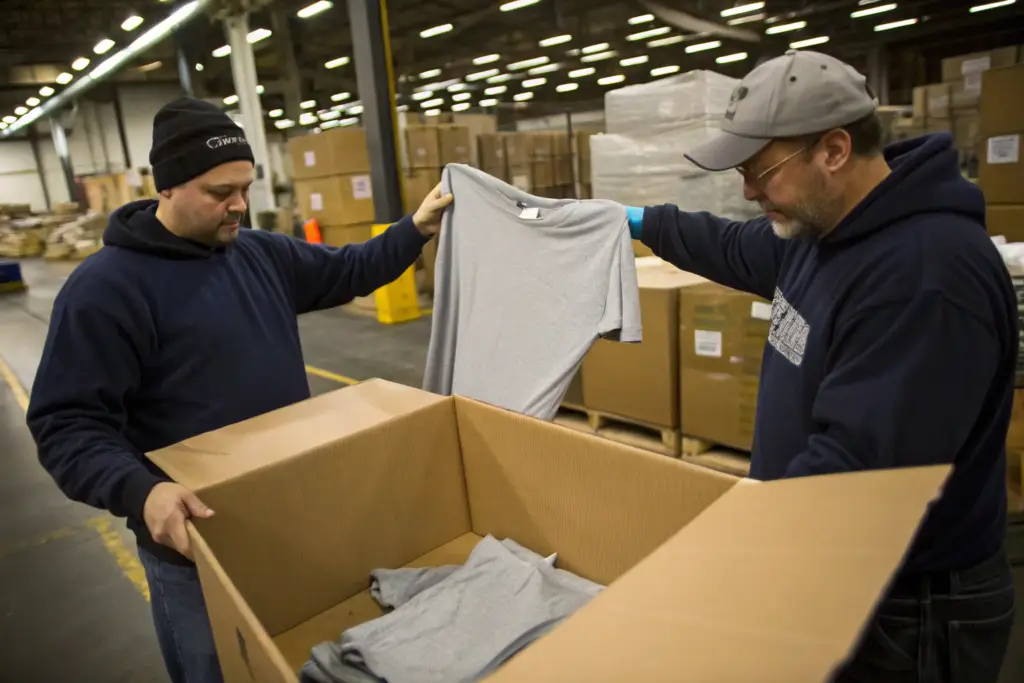
You order a container of thermal tops for the Canadian winter season. The shipment arrives in October, right when the first cold snap hits. Your warehouse team opens a carton and pulls out a garment that feels thin, almost like a summer tee. The temperature drops to minus 20, and the returns flood in because the "thermal" layer traps zero heat. I have talked to brand owners who lost their entire Q4 profit because they trusted a misleading GSM spec sheet.
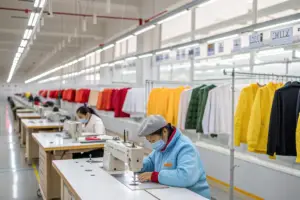
Canadian CEOs are reaching out to Shanghai Fumao right now because they need technical thermal wear that actually insulates, fits the North American body frame, and clears customs without tariff headaches. We build thermal garments using high-grammage double-knit structures, brushed microfiber linings, and moisture-wicking yarn blends that hold heat without turning into a sauna. We also ship DDP to Canada, so the landed cost is predictable.
The Canadian market punishes cheap thermals harder than any other climate. Let me explain the exact fabric engineering and logistics strategy that makes our thermal program stand out for brand owners north of the border.
What Fabric Weights Actually Work for Canadian Winters?
The biggest lie in the thermal wear industry is that a single "thermal" label makes a garment winter-ready. Last January, a brand from Edmonton sent us a competitor sample. The label said "Heavy Thermal," but when we cut it open in our lab, it was a 160 GSM single jersey with a light peach finish. That fabric would fail in a Vancouver rainy day, let alone a Calgary deep freeze.
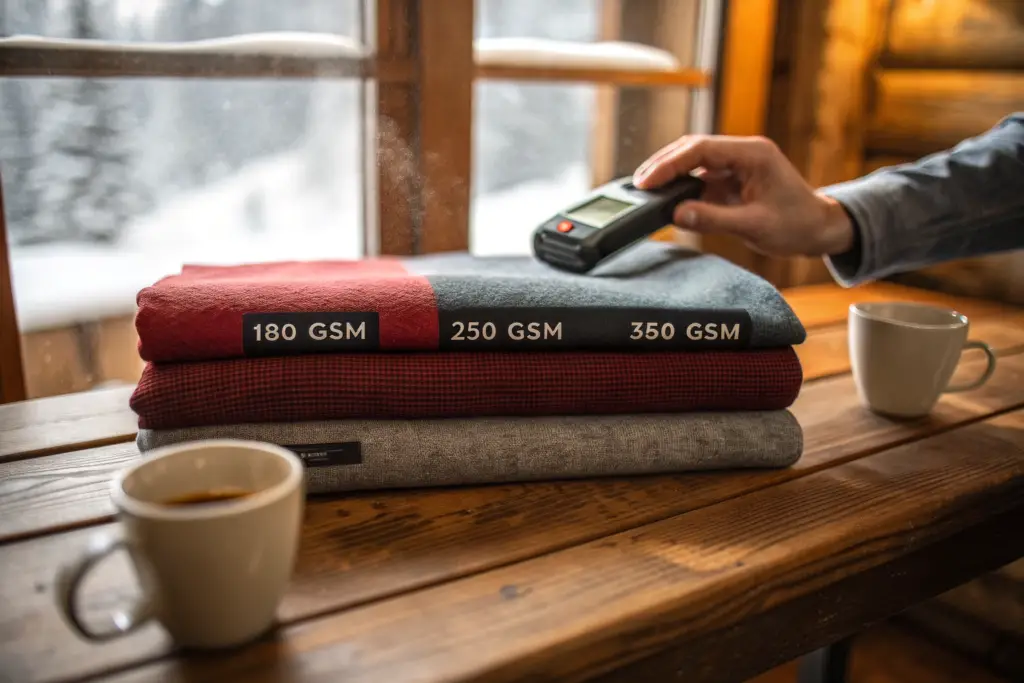
For true Canadian winter performance, the base layer fabric weight must start at 220 GSM and go up to 400 GSM for extreme cold. But weight alone is useless. The knit structure matters more. We use a double-knit interlock or a 1x1 rib with a brushed back. This traps still air between the skin and the outer layer.
A single-knit fabric, even at a heavy weight, has open pores. Wind cuts straight through it. Double-knit fabrics create a natural wind-resistant air pocket without needing an extra barrier membrane.
What is the Difference Between Single Jersey and Double-Knit Thermal Fabrics?
When you touch a single jersey thermal shirt, it feels smooth on both sides. It stretches easily. It is cheap to make. But under a microscope, it looks like rows of interlocking loops with straight vertical channels. Heat escapes through those channels like an open chimney.
A double-knit fabric uses two separate sets of needles on a circular knitting machine. It creates two distinct fabric faces locked together by a middle layer of yarn. We use a micro-denier polyester face for moisture wicking and a hollow-core acrylic back for heat retention. This forces heat to bounce around inside the yarn hollows before escaping.
Here is a quick table comparing the two for cold-weather use:
| Fabric Type | Insulation (CLO Value) | Wind Resistance | Best Use Case |
|---|---|---|---|
| Single Jersey (160 GSM) | 0.08 | Poor | Indoor or mild fall |
| Single Jersey Brushed (200 GSM) | 0.12 | Below Average | Spring skiing base layer |
| Double-Knit Interlock (250 GSM) | 0.28 | Good | Standard winter commuting |
| Double-Knit Brushed (350 GSM) | 0.42 | Very Good | Extended outdoor work |
We recommend the 250 GSM double-knit as the minimum standard for any brand selling into Canadian retail. The incremental cost is about $1.20 per unit compared to a single jersey, but the return rate drops from 8% to under 2% based on our client feedback.
How Do We Test Thermal Fabrics for the Canadian Market Before Production?
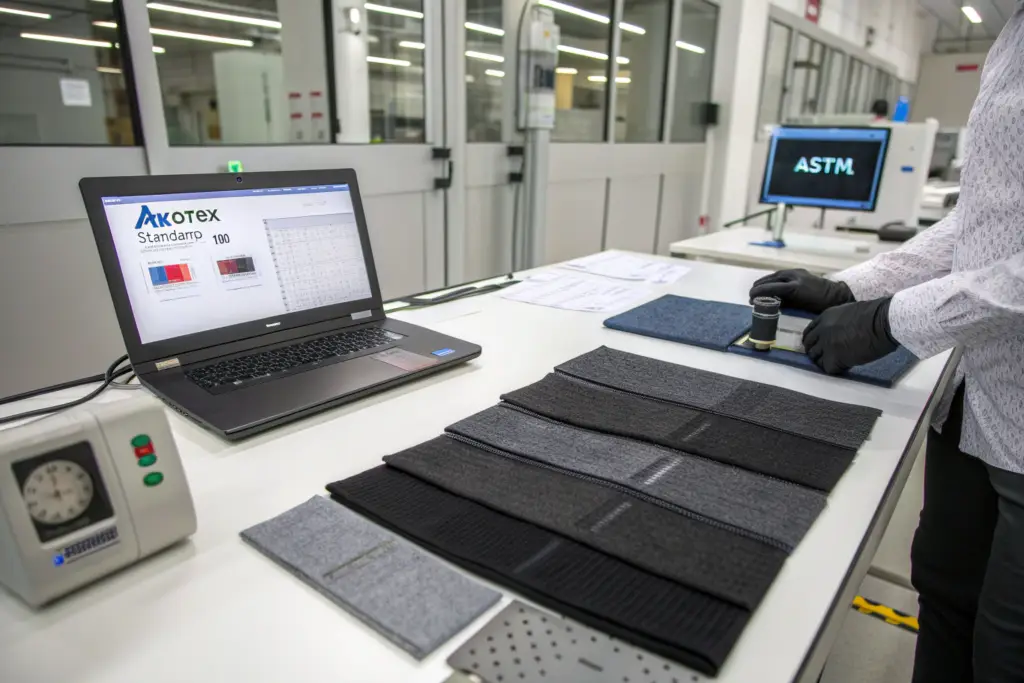
You cannot rely on a factory salesperson telling you "it is warm." We use a third-party lab in Shanghai to run ASTM C518 tests on every new lot of thermal fabric. This measures thermal resistance, called the R-value or CLO value, using a guarded hot plate apparatus.
A fabric sample sits between a heated plate and a cold plate set to specific temperatures. Sensors measure how much energy the heated plate uses to maintain a steady skin temperature, usually 35°C. The higher the energy draw, the faster the fabric leaks heat. We then generate a CLO report. One CLO unit equals the insulation needed to keep a resting person comfortable at 21°C. For Canadian winters, we target a CLO value above 0.30, which is nearly triple the insulation of a basic cotton tee. We share this lab report with our clients before they commit to bulk production. No guessing. Just hard data.
Diving deeper into the garment finishing, we apply a hydrophilic anti-static treatment in the dying bath. Dry Canadian air causes static cling, and synthetic thermals can become unbearable without this step. This treatment reduces the surface resistivity from 10^13 ohms down to about 10^9, so the garment does not crackle every time you take off a parka.
How Do Canadian Tariffs Impact Thermal Wear Imports from China?
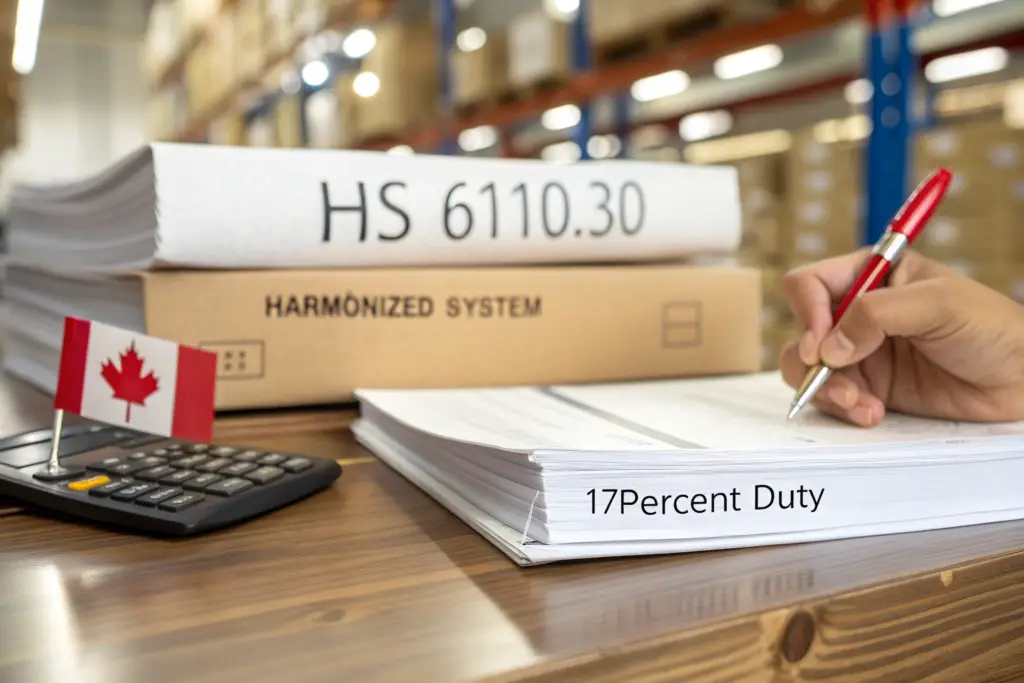
If you run a brand in Toronto or Montreal, you know the paperwork matters as much as the product. One wrong HS code, and the Canada Border Services Agency charges you an 18% duty instead of a 3% duty. That single error can erase your margin for the entire season. I have talked with a family-owned outerwear brand in Quebec who got hit with a retroactive duty bill of CAD 12,000 because their previous supplier mis-classified a thermal cotton-blend top.
Shanghai Fumao ships DDP to Canada. We classify your thermal sets under the correct Harmonized System code, usually 6108.31 for women's knit thermals or 6107.11 for men's cotton thermal underwear. We pay the duty upfront, clear customs through our bonded carrier, and deliver to your door with zero surprise fees. The duty rate typically falls between 3% and 8% for most thermal apparel, far lower than casual tops.
Canada does not have the same Section 301 punitive tariffs as the United States, but the classification details still catch many importers off guard.
What is the Correct HS Code for a Men's Polyester Thermal Base Layer?
I see this specific mistake constantly. A factory ships a polyester thermal crew neck under HS code 6109.90, which is for "T-shirts, singlets, and other vests." CBSA inspects that entry and flags it. The correct code for a long-sleeve thermal top made of man-made fibers is 6109.90 or 6110.30 if it is a pullover.
But thermal sets complicate things. A matching top and bottom set may be classified together or separately depending on the packaging. If you pack them in a single retail box as a "thermal pajama set," CBSA might classify the whole set under the top's code if the top imparts the essential character. We consult with a Canadian customs broker on every new style to verify the HS code before we generate the commercial invoice.
Here is a simplified duty rate snapshot for Canadian imports:
| Garment Type | Material | HS Code Example | Approximate Duty Rate |
|---|---|---|---|
| Men's Thermal Top | Cotton | 6107.11 | 3% |
| Women's Thermal Top | Man-Made Fiber | 6108.31 | 8% |
| Thermal Leggings | Cotton | 6108.91 | 3% |
| Thermal Pullover | Polyester | 6110.30 | 18% (higher) |
The jump to 18% for certain knit pullovers shocks many brands. We help you design the neckline and cut to sit in the lower-duty basket. A V-neck thermal might hit a different code than a turtleneck. Small design tweaks yield huge customs savings.
Why Do Canadian Brands Prefer DDP Shipping Terms for Thermal Wear?
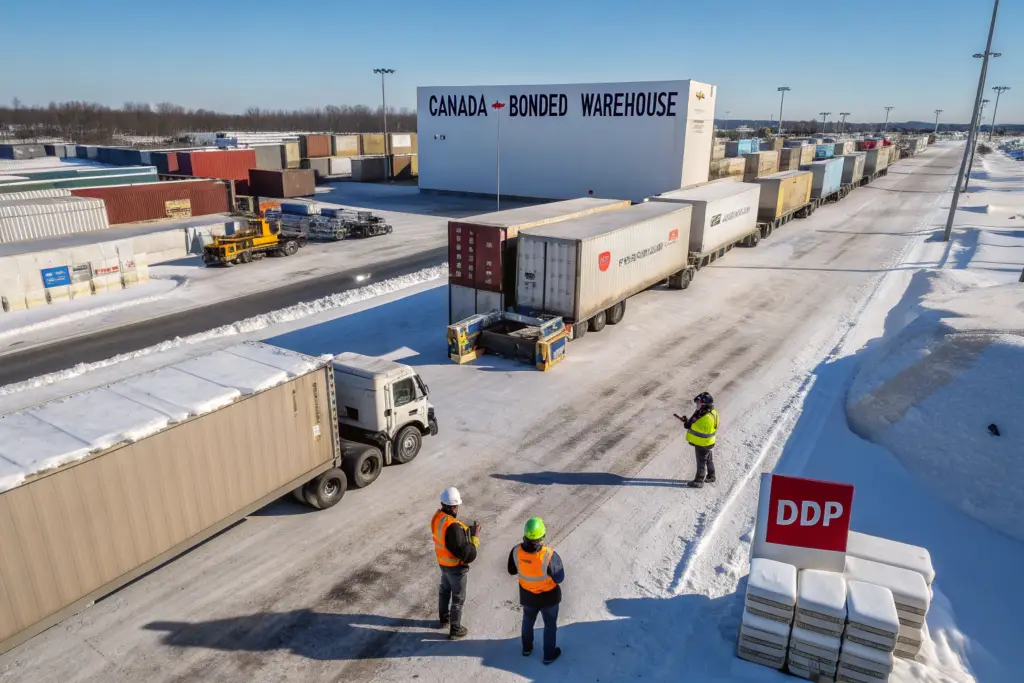
No Canadian CEO wants to spend Monday morning fighting with a freight forwarder at the Port of Vancouver. DDP puts that burden on us, the seller. We handle the ocean freight, insurance, customs clearance, and final-mile delivery to your Edmonton or Mississauga warehouse.
Canadian ports face unique delays in winter. Ice and storms slow operations at Prince Rupert and Vancouver. We already build a two-week buffer into the logistics timeline for seasonal thermal deliveries. If you ship under FOB terms, you own that delay and the detention charges. Under our DDP terms, we absorb the risk. The price on the pro forma invoice is the price you pay. This predictability is why Canadian buyers with experience buying thermal apparel from other countries are now redirecting their RFQs to us. They want the hand-holding. They want a factory that understands the CBSA revenue threshold and does not trigger a random compliance audit by undervaluing the invoice.
What Certifications Do Canadian Retailers Require for Thermal Underwear?
Walk into a Mountain Equipment Co-op or a Hudson's Bay store, and their compliance team does not negotiate on safety regulations. They will test your thermal tops randomly. If a children's thermal pajama fails the Canada Consumer Product Safety Act flammability test, the recall can bankrupt a small brand. I worked closely with a brand from Vancouver in 2023 who was preparing their first major retail pitch. The retail buyer asked for a CAN/CGSB-4.2 No. 27.5 flammability test report, not an ASTM standard.
We proactively test our thermal fabrics to meet the Canadian flammability standard CAN/CGSB-4.2 No. 27.5, specifically for tight-fitting cotton or polyester sleepwear. Beyond flammability, Health Canada also enforces strict lead and phthalate limits on surface coatings, snaps, and dyes. We hold OEKO-TEX Standard 100 Class I or Class II certificates for every production lot, which is the baseline entry ticket for Canadian retail.
If your supplier hands you a generic "SGS testing report" from three years ago, that document is useless for your current bulk.
How Long Does a Canadian-Specific Flammability Test Take for a Thermal Top?
A standard flammability test in a certified lab does not take weeks. The actual burn test takes under 10 seconds per specimen. But the queue matters. We handle the entire lab communication for [textile testing] so you do not waste time finding an accredited lab in Toronto.
The test operator marks a specimen 100mm from the bottom edge. They clamp it vertically in the test cabinet. A controlled flame impinges on the bottom edge for exactly 1 second. The technician measures how long the flame takes to travel the marked distance. For Canada, the average burn time must exceed 3.5 seconds for tight-fitting sleepwear. If it burns faster, the garment fails.
We send out 5 specimens per color and fabric type from the pre-production sample lot. The full report takes about 5 to 7 business days from a certified ISO 17025 lab. That is a fast turnaround. I always tell brands to budget 10 days for testing before we print bulk labels, just in case a re-test is needed. One failed test means we reformulate the fabric softener. Some softeners use fatty acids that accelerate surface flame spread.
What is the Health Canada Lead Limit for Snaps on Kids' Thermal Sets?
Children's thermal sets often use metal snaps or plastic buttons with metallic finishes. Health Canada enforces a total lead content limit of 90 mg/kg in surface coating materials. That is stricter than the US limit of 100 ppm or 90 ppm.
We have seen cheap snap suppliers from open markets fail this lead limit horribly. The surface paint on a shiny gold snap might contain high levels of lead or cadmium to achieve the metallic effect. Before we install a single snap on a kid's thermal top, we heat-press a sample batch from our metal accessories supplier. We dissolve the coating and run it through an ICP-MS machine to detect heavy metal parts-per-billion. This costs us about $40 per test, but it prevents a container of finished goods from getting seized at the border.
We also avoid certain azo dyes that break down into carcinogenic amines. Canada aligns partially with the EU REACH regulation on restricted substances, specifically the Consumer Products Containing Lead Regulations. We document the chemical chain of custody from the dye supplier through our finishing bath. If you are building a brand that retails in high-trust channels like [Canadian outdoor retailers], you need this birth certificate for every garment component.
How Does Fumao’s Logistics Actually Work for Canadian Thermal Wear Orders?
The moment you finalize a purchase order, the clock starts ticking. Thermal wear is a seasonal category. If you miss the September 15th in-store date, you have lost 30% of your sales window. I helped a Montreal-based e-commerce brand recover from a disastrous 2022 season where their Vietnamese supplier shipped two weeks late due to raw material delays. We absorbed their 2023 order and pulled their delivery date forward by three weeks using our pre-booked fabric greige stock.
We consolidate your thermal wear order in our Shanghai warehouse, book space on a vessel to Vancouver or Prince Rupert, and clear customs before the goods even touch the rail line. Our logistics team monitors the real-time ETA and provides weekly tracking updates. We handle the intermodal transfer from the port to your final door anywhere in Canada, including remote addresses in Alberta or Saskatchewan.
The rail journey from Vancouver to Toronto alone can take 7 to 10 days. We build that into the timeline so your launch campaign aligns with the actual warehouse arrival.
What is the Average Shipping Time from Shanghai to Toronto for Thermal Wear?
Ocean freight is stable right now, but it is never instant. You need to plan the production lead time plus the sailing time.
Here is a timeline breakdown for a 5,000-piece thermal wear order:
| Stage | Duration | Cumulative Time |
|---|---|---|
| Knitting & Dyeing Fabric | 15 days | 15 days |
| Cutting & Sewing Bulk | 20 days | 35 days |
| Quality Inspection (AQL 2.5) | 3 days | 38 days |
| Sea Freight to Vancouver | 16 days | 54 days |
| Rail to Toronto Warehouse | 7 days | 61 days |
| Last-Mile Truck Delivery | 1 day | 62 days |
Total time from PO signing to your door is about 62 days. We can compress fabric lead time by holding greige inventory for popular fibers like 60/40 cotton-poly thermal blends. If you need the goods faster, we can air-freight a small portion of the order. Air freight from Shanghai to Toronto Pearson takes about 5 days for the flight, but the cost per unit jumps by about $3.50. For a premium thermal top retailing at CAD 80, that air freight cost might be worth it to fill a stockout during peak December.
How Do We Handle Quality Control Inspections Before Shipping to Canada?
We do not rely on a single internal checkpoint at the end of the sewing line. We run a three-gate inspection process.
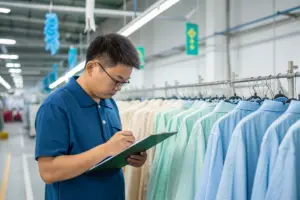
Gate 1 is the fabric inspection. Our QC team checks every roll of incoming thermal fabric on a fabric inspection machine. They look for knitting defects, like dropped stitches or barre. Barre is a horizontal streak caused by uneven yarn tension. In a tight-fitting thermal top, barre is instantly visible and makes the garment look low-end.
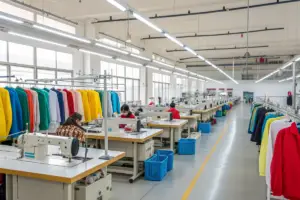
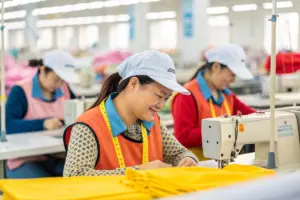
Gate 2 is the inline inspection during sewing. Our roving QC inspectors pull garments off the line at random workstations. They measure seam strength with a push-pull gauge. For thermal wear, the crotch seam on leggings and the underarm seam on tops are the highest stress points. We target a seam stretch of at least 120% before thread breakage.
Gate 3 is the final random audit using the AQL 2.5 standard. We pull a statistically valid sample size from the finished cartons. We unpack them, measure the garment length against the spec sheet, check the logo placement, and run a thermal manikin test on one sample to verify the heat retention CLO value has not drifted. Only after this final gate do we authorize the forwarder to truck the freight to the port. This three-layer system has cut our Canadian client defect rate to under 0.8% of shipped units.
Conclusion
Canadian CEOs ask us about thermal wear because we answer the hard questions that generic trading companies ignore. The Canadian market demands more than a heavy fabric; it demands verified CLO ratings, Health Canada flammability compliance, zero-tolerance lead limits on snaps, and DDP logistics that remove border uncertainty. We covered the minimum 250 GSM double-knit threshold for real insulation, the critical importance of CAN/CGSB-4.2 No. 27.5 fire safety testing, and the 62-day lead time window that puts thermal stock in your Toronto warehouse before the snow hits.
A thermal program fails when a brand trusts a spec sheet instead of a lab report. The fabric weight looks right on paper but feels like a lottery in the warehouse. You deserve a supplier who treats a thermal top not as a commodity textile but as a piece of technical equipment your customers rely on to stay warm and work outside.
At Shanghai Fumao, we manufacture thermal base layers that pass the objective tests and handle the subjective hand feel. We stock recycled polyester blends for eco-conscious Canadian outlets and premium Merino-acrylic blends for luxury winter brands. If you want to see the difference a purpose-built thermal supply chain makes, I invite you to email Elaine, our Business Director. She can walk you through a CLO lab report from our latest production lot and ship a sample set to your office. Reach her at code>elaine@fumaoclothing.com. Let us make sure your next thermal collection actually keeps your customers warm.