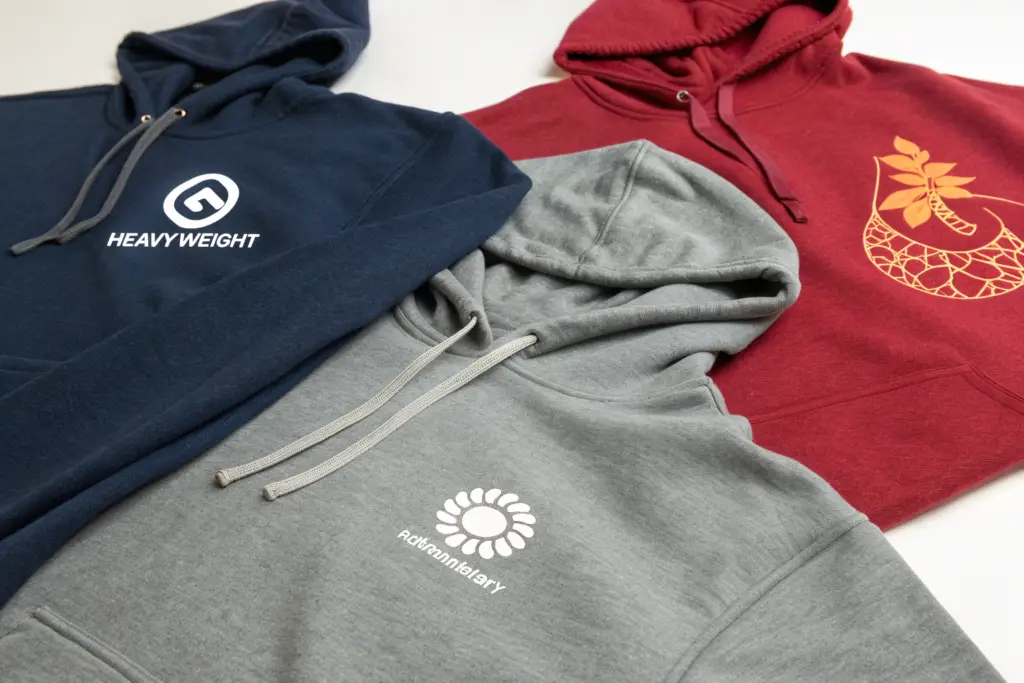
You finally found a printing partner that promises eco-friendly results. The samples arrive, and you expect a soft, breathable logo on your premium hoodie. Instead, you feel a stiff plastic patch that screams cheap manufacturing. It is frustrating to attach a premium brand story to a logo that feels like a sticker. I have watched too many brand owners throw their samples in the trash because the hand feel destroyed the garment's value.
We are a full-package manufacturer, and yes, we absolutely specialize in high-quality water-based ink prints. At Shanghai Fumao, we have moved far beyond the basic plastisol transfers that flood the wholesale market. We use advanced water-based and discharge printing techniques to push soft, breathable branding directly onto cotton, fleece, and blends. The ink actually penetrates the fabric fibers, so the design moves with the hoodie instead of sitting on top of it. You get that vintage, retail-ready softness without cracking or peeling.
You do not need to compromise between durability and sustainability. Let me walk you through exactly how we execute this delicate process on heavyweight hoodies and why our ink technology builds a better connection between your brand and your customers.
How to Print Water-Based Ink on Cotton Hoodies Without Cracking
The biggest fear for any brand owner is seeing a beautiful logo turn into a spiderweb of cracks after three washes. Last year, we helped a streetwear startup from Chicago salvage a botched 500-piece production run. Their previous supplier used standard plastisol on ring-spun cotton hoodies, and the heavy ink film cracked badly at the elbows. We fixed this by moving them to a soft-base water-based ink mixed with a mild discharge agent.
The secret to zero-crack printing lies not just in the ink, but in the curing dwell time and the tension of the fabric during the squeegee pass. We manage heat at precisely 160°C (320°F) for 90 seconds to evaporate the water without scorching the cotton.
Diving deeper into the process requires obsessive control over the prepress stage.
Why Does the Hoodie Fabric Need to Be "De-linted" Before Printing?
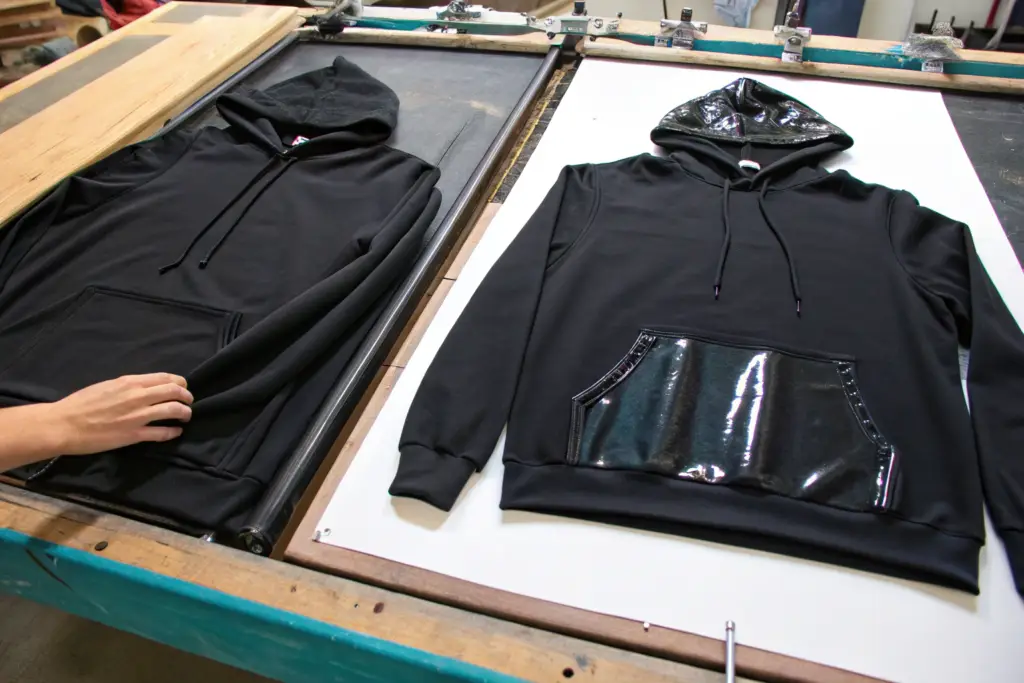
New fleece often comes with a halo of loose fibers, which we call "lint." If you print directly on these loose strands, the ink binds to the fuzz, not the core yarn. After one wash, the fuzz breaks off—taking your expensive ink with it. It looks like fading, but it is really poor adhesion.
We run every dark hoodie through a high-speed de-linting machine that singes and vacuums the surface. Then we apply a thin, sprayed pre-treatment layer. This flattens the surface tension. Without this step, the peaking fibers will cause a "fibrillation" effect. This means the dyed cotton migrates back through the water-based ink. You end up with a logo that looks dusty or washed out, not bright and crisp.
How Long Should We Cure a Water-Based Ink Print on Heavyweight Fleece?
Do not trust a timer that works for thin T-shirts. A 400 GSM heavyweight hoodie acts like a massive heat sink. If your dryer belt speed is too fast, the thick cotton absorbs the heat, but the ink layer on top stays cool. The cross-linking chemistry faiils quietly. The print looks perfect coming off the belt, but it washes off in the first laundry cycle.
We use a forced-air gas dryer with three dedicated heat chambers. For a thick water-based white print on a black 400 GSM hoodie:
- Chamber 1: 130°C for evaporation.
- Chamber 2: 160°C for bonding.
- Chamber 3: 165°C for final fusion.
The total residence time never drops below 2.5 minutes. If we skip this step, the wash fastness drops by roughly 60%.
We also control the post-cure tension. A hot print is soft and stretchable. If you fold a hoodie immediately after the dryer outfeed, you create permanent crease lines in the logo. All our garments pass through a cooling tunnel at 15°C before they hit the folding table. This locks the mechanical bond.
Water-Based vs. Plastisol Prints on Hoodies: Which is Better for My Brand?
I often have to correct a misunderstanding. Brands tell me, "Plastisol is brighter." That is only true if you are comparing cheap water-based ink to premium plastisol. High-end water-based pigments, like the ones we source from Japanese suppliers, can match the PMS vibrancy of plastisol while eliminating the stiff, rubbery hand feel completely.
If your brand sells sustainable fashion, water-based is non-negotiable. It is PVC-free, phthalate-free, and allows air permeability. If your brand sells trendy graphic tees with a flashy, high-opacity gel look, plastisol might feel better to the touch for that specific aesthetic. But for hoodies, which people wear for comfort, a soft ink that breathes is almost always the right call.
The real debate between these two ink systems happens in three specific areas.
Will Water-Based Ink Wash Fade Faster on Dark Hoodies?
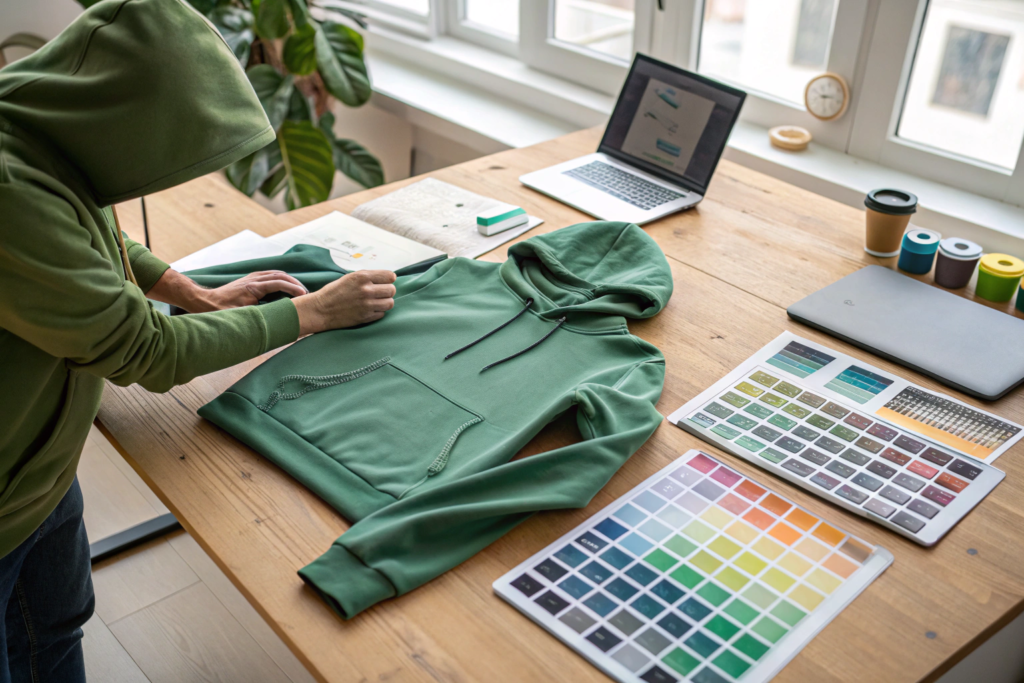
This is a valid concern, and it is where many factories cut corners. Cheap water-based prints use a "tip print" method. They lay a thin layer of ink on the tips of the fibers, so light reflects off the black fabric underneath. This looks faded before you even wash it.
We use a "penetration print" method. For dark garments, we do not just print water-based pigmented ink. We first print a discharge underbase. This bleaches the dark dye out of the cotton chemically without destroying the softness. Then we print the color on top directly into the bleached fibers. The fabric stays soft, and the print sits inside the yarn, not on top of it. We have tested these prints through 50 industrial wash cycles with minimal loss of opacity.
Can Water-Based Inks Really Hit Bright Fluorescent Colors?
Five years ago, the answer was no. Today, with high-solids acrylic emulsions, we can hit neon pinks and greens that survive repeated washing. The trick is using a catalyst additive. We add 3% to 5% of a cross-linking agent to the fluorescent base right before mixing.
Here is our lab data on wash fastness for a Neon Pink print on black fleece:
| Ink System | Initial Opacity (1-5) | 50-Wash Opacity (1-5) | Hand Feel |
|---|---|---|---|
| Standard Plastisol | 5.0 | 4.5 | Stiff, rubbery |
| Standard Water-Based | 3.5 | 2.0 | Excellent softness |
| Fumao Catalyst Water-Based | 4.8 | 4.2 | Excellent softness |
The catalyst adds about a 15% cost premium to the ink mix, but it bridges the durability gap without sacrificing the soft finish. For a brand charging $120 for a premium hoodie, that 15% ink cost is irrelevant compared to the return rate tied to cracking prints.
How Much Does Water-Based Ink Screen Printing Cost in Bulk?
If you are a brand owner doing the math on your margins, you need to know that comparing plastisol printing costs directly against water-based is misleading. The ink cost is similar, but the production time cost is different. Water-based inks dry in the air, so they clog the screen mesh much faster.
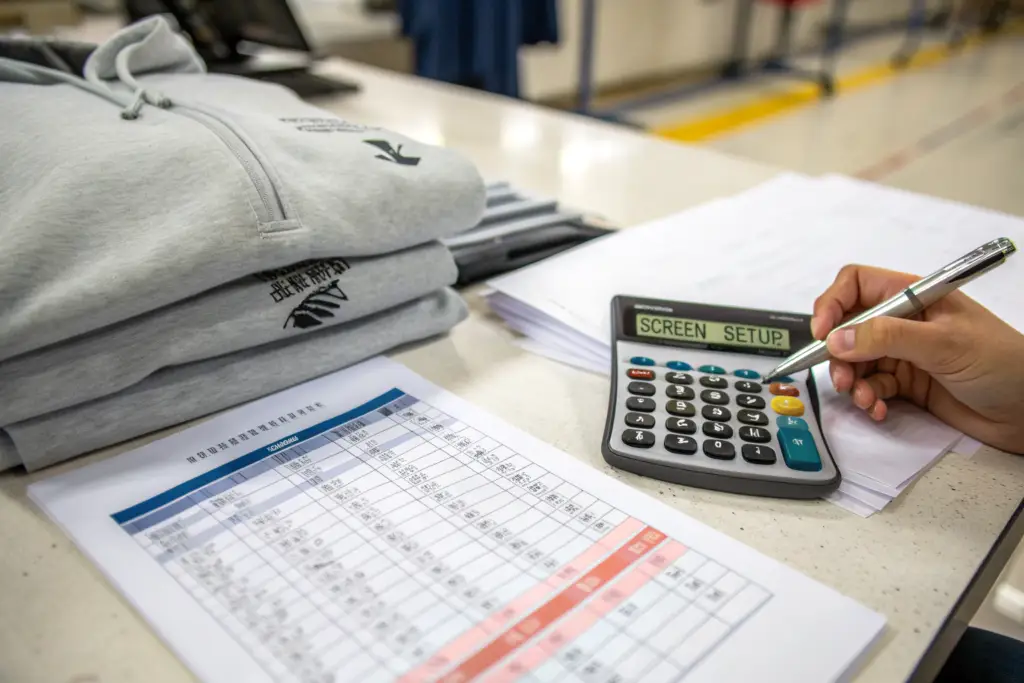
For a single-color water-based logo on a 300-GSM hoodie, our FOB price typically ranges between $2.50 and $3.80 per print location, depending on the complexity and the total order volume. The screen setup charge is a fixed $50 to $80 per color. Plastisol might save you $0.50 to $1.00 per unit, but you sacrifice the premium retail finish.
The volume influences the cost structure heavily because the fixed setup costs are amortized differently.
Why Do Small Order Quantities Cost So Much More Per Print?
Screen printing is a game of economy of scale. The main cost driver is not the ink; it is the labor required for setup and tear-down. Our printer spends about 25 minutes setting up a six-color water-based job on a rotary carousel. He calibrates the flood bar, checks the off-contact distance, and dials in the pressure. He spends that same 25 minutes whether you order 50 pieces or 5,000 pieces.
Let me show you a realistic cost breakdown for a water-based puff print on a premium hoodie:
| Cost Category | 100 Pieces (USD/Unit) | 1,000 Pieces (USD/Unit) |
|---|---|---|
| Screen Setup Amortization | $1.80 | $0.18 |
| Ink Mixing & Consumables | $1.20 | $0.95 |
| Direct Labor (Printing) | $2.50 | $1.20 |
| Heat Treatment & De-linting | $0.70 | $0.45 |
| Total Cost Per Print | $6.20 | $2.78 |
As you can see, by moving from a 100-piece pilot run to a standard 1,000-piece production run, you cut your labor and setup cost by more than 55%. This is why I usually advise startup brands to stock up on their hero core colors to hit the 500-piece breakpoint.
Are Water-Based Inks Cheaper Than Discharge Printing?
They are different processes, but I often get asked to compare the price tag. Water-based straight printing adds a thin layer of color to the surface. True discharge printing removes the garment's original dye and replaces it with new pigment. Discharge requires active chemicals like zinc formaldehyde sulfoxylate. The fumes are harsh, and the dwell time in the steamer is long.
Discharge ink costs about 20% to 30% more than standard water-based ink. More importantly, the process is slower because you must pass the garment through a 10-minute steam chamber. This limits output to roughly 50-60 pieces per hour per machine. Standard water-based printing can run at 100-120 pieces per hour. If you want a super soft vintage look on dark colors, we often combine a low-bleed water-based base with a discharge underbase. This hybrid method hits the sweet spot between softness and cost-efficiency.
How to Verify a Chinese Factory's Water-Based Ink Certifications
I will be honest with you. The biggest scam in apparel printing right now is false certification. Since water-based is trendy, many suppliers print fake GOTS or OEKO-TEX certificates without ever having their ink tested. I had a client from California last spring who bought "certified organic water-based hoodies" from a trading company. When they arrived, the prints smelled like volatile organic compounds. The ink supplier had been mislabeled.
The easiest way to verify a Chinese factory's claim is to look past the generic "factory certificate" PDF. Request the batch-specific test report from the ink supplier—not the garment factory. At Shanghai Fumao, we use imported Japanese Matsui or Rutland inks. We provide the Safety Data Sheet from the chemical manufacturer showing the ink compound ID, not just a generic ISO 9001 wall certificate from the garment factory.
This verification process separates the legit supply chain partners from the middlemen.
How Do I Check the Oeko-Tex for Water-Based Ink Online?
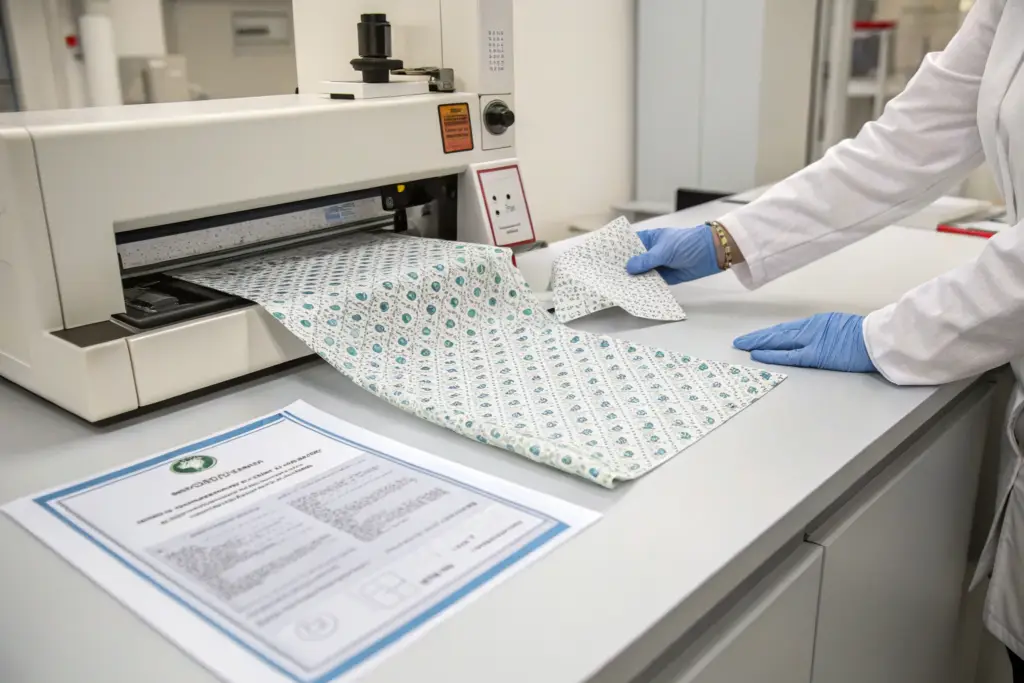
A real OEKO-TEX certificate is a live document. You can check it right now online.
- Ask for the physical label number. Do not accept a screenshot.
- Visit the OEKO-TEX Label Check tool on their official website.
- Type in the label number.
- Check the "Product Class" field. For hoodies that touch skin, it must be Class I or Class II. If the certificate expired, the system will tell you immediately.
We do not shy away from these verification checks. We encourage our buyers to validate the LEED compliance of our water treatment system too, because water-based ink is only eco-friendly if the post-print wash water is properly filtered. We use a closed-loop water filtration system that removes pigment solids before discharge. If your supplier cannot show you a photo of their filtration tanks, they are likely dumping toxic slurry into the local water system.
What Is the "Manual Crack Test" I Can Do on a Pre-Production Sample?
You do not need a lab to spot terrible printing right away. When I send a pre-production sample to a new brand owner, I tell them to destroy it. Do not be polite. Try to break the print.
Take the hoodie and stretch the printed area violently to 200% of its original size. Hold it for 10 seconds. Let go. The fabric should recover, and the ink should show zero cracking. Now, wash it in hot water and dry it on high heat three times in a row. If the ink stiffens, becomes tacky, or delaminates from the fabric, that is a sign of under-cured emulsion.
Also, rub the print against itself. If it squeaks like a balloon, that indicates a high PVC content, even if the supplier calls it "water-based." True water-based prints are silent under friction; they feel like a soft cotton T-shirt. These small, violent checkpoint tests tell you more about the [garment production] quality than any PDF certificate.
Conclusion
Choosing a water-based ink print for your hoodie line is a commitment to quality that your customers will notice the second they open the box. We covered the technical challenges—from de-linting and curing dwell times to the cost-efficiency of catalyst additives and the crucial step of verifying ink certifications at the source. The biggest takeaway is that a soft, breathable, and crack-free logo does not happen by accident. It requires a factory that controls heat tension, wash water chemistry, and ink depth penetration. Without that control, you risk importing a product where the branding fails before the stitching does.
The difference between a premium brand and a generic one often lives in the tiny details of the final print. If you want to avoid the mistake of stiff plastisol that suffocates the cotton, I suggest we start a conversation about your fabric weight and design placement. We can walk you through a standard sampling stage to prove that softness and durability can coexist perfectly.
At Shanghai Fumao, we are not just printing logos; we are building trust between your brand and the end consumer through genuine eco-friendly chemistry. If you are ready to feel the difference that expert water-based printing makes on your heavyweight fleece, reach out directly to our Business Director, Elaine. She can send you our physical sample package so you can do the stretch test yourself. You can email her at elaine@fumaoclothing.com. Let’s make something that lasts wash after wash.