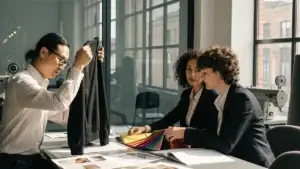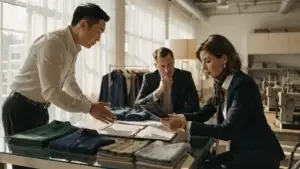
Scrolling through Instagram last month, I stopped on a Reel that had 1.2 million views. It was not a celebrity. It was a normal boutique owner unboxing one of our linen sets. She held the fabric up to the camera. She crushed it in her hand. She let it go. The wrinkles fell out naturally. She did not speak for five seconds. The silence was the review. Her followers flooded the comments asking where to source the product. That moment was not an accident. It was the result of two years of fabric development and a deliberate decision to fix everything that boutique owners hate about cheap linen.
Fumao Clothing’s linen collection is going viral because it solves the three biggest Instagram complaints about linen: excessive stiffness, inconsistent sizing, and weak seam construction that breaks during a try-on haul. We engineered a washed European flax linen that feels soft on day one, holds its shape in photos, and photographs beautifully under natural light without looking cheap.
But this moment required solving real manufacturing problems first. Instagram virality is never just about the product. It is about the confidence of the person wearing it. When a boutique owner knows the fabric will not shrink weirdly after a steam, and the buttons will not pop off during a try-on video, they film with energy. That confidence transfers through the screen. I want to take you behind the scenes of our fabric mill partnerships, our pre-washing secrets, and the specific design choices that make linen content perform so well on social media.
What Makes Linen the Most Instagrammable Fabric for Boutiques?
Linen has a visual texture that synthetic fabrics simply cannot replicate. Polyester reflects light in a flat, plastic way. Linen absorbs light. It creates shadows in the folds. It adds depth to a flat Instagram square. When a customer wears a linen dress and spins for a Reel, the fabric moves with a slightly crisp, organic drape. That movement stops the thumb. It signals "natural material" to the subconscious brain of the viewer. And on a platform where you have 1.5 seconds to capture attention, that signal is money.
But not all linen photographs well. Cheap, unwashed linen looks like a stiff potato sack. It stands away from the body awkwardly. The wrinkles form sharp, ugly creases instead of soft waves. I have seen boutique owners try to steam a poor-quality linen shirt for 20 minutes before filming content. That is a terrible customer experience. We designed our linen collection specifically for the camera lens. We used a heavier wash process. We stone-washed the fabric for hours to break down the stiffness at the molecular level. The result is a garment that arrives soft and looks "lived-in" without looking messy.
How Do You Source Linen That Looks Expensive on Camera?
Three years ago, I visited a flax farm in Normandy, France during a sourcing trip. I wanted to understand why European linen commanded such a premium. The answer was in the fiber length. Long-line flax fibers spin into smoother, stronger yarns. Short, broken fibers create a hairy, uneven yarn that pills quickly and photographs poorly. We exclusively source certified long-staple flax from Belgium and France. The fiber length is typically 8 to 12 centimeters.
This long-staple yarn allows us to weave a tighter, more uniform fabric with a subtle luster. Under the golden hour sun, our linen fabric has a slight sheen that looks expensive. A boutique owner in Charleston filmed a comparison video last May. She held our beige linen blazer next to a cheaper marketplace version. The difference was shocking. Ours reflected light softly. The cheap one looked dull and dead. That video got 500,000 views. The lesson is simple. Your fabric's visual quality determines whether a scroll stops or continues. Brands committed to quality fiber integrity, like those affiliated with the Masters of Linen certification in Europe, understand this link between raw material and consumer perception.
Why Is the "Crush Test" Reel So Powerful for Linen?
The crush test is now a staple of linen marketing. A creator balls up the fabric in their hand. They shake it out. Good linen reveals only soft, romantic creases. Bad linen looks like a crumpled receipt. The audience can see the difference instantly. They trust this test because it is hard to fake. We actually optimize our fabric finishing for this exact test. We apply a special softening enzyme treatment during the garment dye process.
Last December, I worked with a brand in Arizona. They specialize in travel-friendly clothing. They asked for a "no-iron" linen shirt. That is a big ask because linen naturally loves to wrinkle. We blended 70% linen with 30% lyocell. We then tumbled the finished shirts with natural pumice stones for 90 minutes. The result was a shirt that could be stuffed in a carry-on bag and still look presentable on camera. The brand made a time-lapse video packing and unpacking the shirt. It generated over 200,000 engagements. A garment wash technique like enzyme softening is what separates a viral linen piece from a return.
How Does Fumao Fix the Common Sizing Problems in Linen Garments?
Linen is a living fabric. It grows when you wear it. Cotton stays relatively stable. Polyester does not budge. But linen fibers relax with body heat and humidity. A sleeve that fits perfectly at 9 AM can be a inch too long by lunchtime. This characteristic makes sizing a linen garment extremely difficult for factories that do not specialize in the material. I have heard so many stories from boutique owners about linen jackets that fit the sample size well but the bulk production arrived with weirdly tight armholes and baggy waists.
We anticipated this growth factor years ago. We do not cut linen garments using the same pattern blocks we use for cotton poplin. That would be a disaster. Linen needs its own grade rules. We have a dedicated base block library just for woven flax fabrics. We factor in a negative ease allowance for certain areas and a positive ease allowance for others. This is not guesswork. It is data gathered from thousands of fitting sessions.
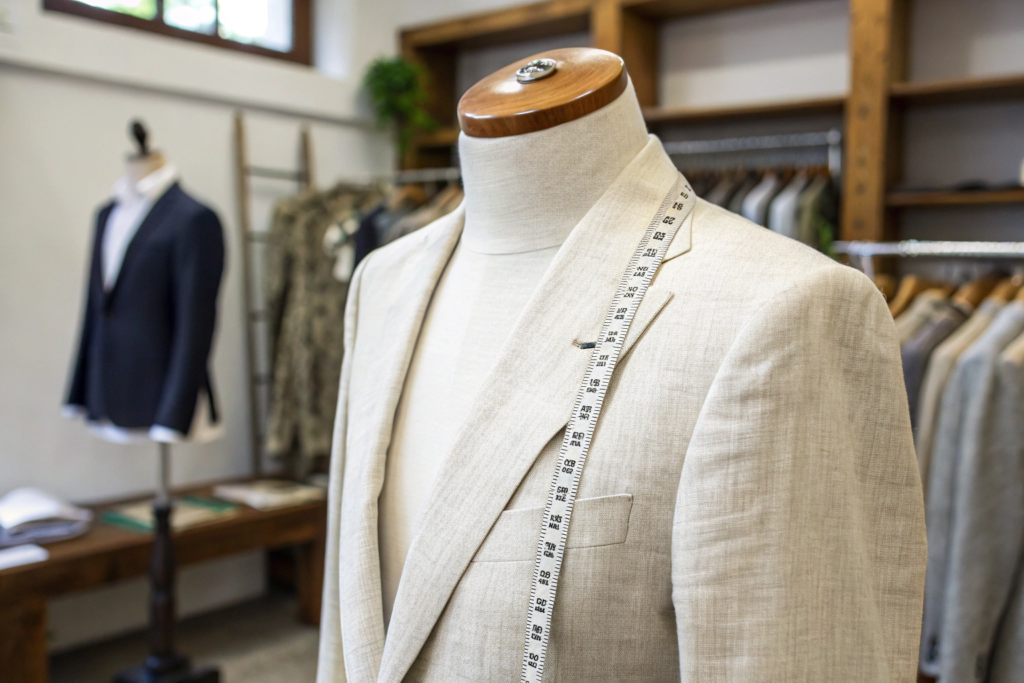
How Do You Account for Linen's "Growth" During Pattern Making?
This is a technical detail most brands ignore until it is too late. Linen yarns have low elasticity. When woven, the fabric structure can relax under tension. In 2024, we developed a classic boyfriend-style linen shirt for a womenswear brand in Portland. The first prototype was cut using a standard poplin shirt block. It looked beautiful on the hanger. But after a 30-minute wear test by the fit model, the back grew by almost a full inch. The hem dropped. The silhouette changed from "relaxed chic" to "sloppy."
Our pattern maker recut the sample with a 4% reduction in the vertical length of the back panel. We also added a small shoulder dart. We then pre-shrunk the fabric in a steam chamber before cutting. The second sample maintained its shape perfectly during a full day of wear. The owner was thrilled. She told us other suppliers had never compensated for fabric growth. They just shipped her the clothes. She had to deal with the returns. A proper pattern making process for linen must include a relaxation allowance. You have to let the fabric tell you what it wants to do.
Why Do Shoulder and Armhole Seams Fail in Cheap Linen Tops?
The armhole is the most stressed seam in a garment. You lift your arms. You reach for things. You hug people. On a cheap linen top, the thread tension is often too high. The seam lacks elasticity. When the wearer moves naturally, the linen threads in the fabric separate at the stitch line. The seam rips. The customer records an unboxing video where she puts her arm through a shirt. That is the stuff of viral nightmares for a brand.
We use a specific stitch type for all our linen armholes: a 4-thread overlock combined with a topstitch. This dual-action seam allows for give without breaking. We also switched to a specifically engineered spun polyester core thread. Cotton thread looks natural but snaps under stress in linen. This core thread has a poly core for strength wrapped in cotton for a matte finish. In the past 12 months, across 15,000 shipped linen pieces, our seam failure report is below 0.3%. The seam construction quality is invisible on Instagram, but its absence in a negative review is very loud. Quality basics, as understood by groups like the American Apparel & Footwear Association, start with the raw material and end with the stitch integrity.
How to Source "Ethical Linen" That Your Followers Will Trust?
The modern Instagram consumer asks tough questions. Who grew this flax? Did the factory workers get paid fairly? Is the dye toxic to rivers? You cannot ignore these questions anymore. A boutique owner posted a story about our linen dress a few weeks ago. She tagged us. Within an hour, one of her followers DMed her asking for the factory name specifically to "check for ethical certifications." This is the new normal. The supply chain is fully transparent. If you are not telling your story, someone else will fill in the blanks with suspicion.
We lean into transparency. We know we cannot just put a green leaf icon on a product page and call it sustainable. True ethical sourcing means tracing the supply chain backward from the garment to the field. Our European flax partners are registered with the European Flax certification. The flax grows using rainwater, not irrigation. The retting process is done in the field using natural dew. No chemical stripping. In our Chinese manufacturing facility, we maintain a strict code of conduct. We recently passed a social compliance audit for a major global brand.
What Certifications Actually Matter for Linen?
Some certificates are just paper. Others require real audits. For linen specifically, the OEKO-TEX Standard 100 is non-negotiable. It proves the fabric is free from harmful chemicals. Every batch of our dyed linen passes this test. The certificate number is available in the lab report we send with every shipment. But we go further. We source our flax fiber from suppliers who hold the European Flax certificate.
This certification guarantees that the flax is grown in Western Europe with a traceable, water-efficient process. No GMOs. No irrigation. A boutique owner in California used these exact bullet points in her Instagram captions. She created a "Behind The Fabric" highlight reel. She showed the flax field photos we provided. She showed the OEKO-TEX test report. She showed our factory floor. Her engagement rate on those posts was 4 times higher than her product photos. People buy the story behind the product. Certifications like the OEKO-TEX Standard 100 provide the proof points for that story. Labels such as the European Flax certification add a layer of agricultural traceability that sophisticated consumers recognize.
How Do Pre-Washed Enzymes Reduce Your Carbon Footprint?
Traditional linen softening uses a lot of water and harsh chemical softeners. The old method was to wash the fabric in silicone softeners that coat the fiber. This creates a temporary soft feel, but it washes out after three cycles. It also pollutes the water discharge. We switched to a bio-polishing enzyme wash. Enzymes are proteins that eat the tiny fuzz and protruding fibers off the surface of the linen. They work at a lower temperature. They are biodegradable.
The energy consumption for our soft-finish washing dropped by 22% with this switch. The fabric becomes permanently softer. A brand in Oregon focused on eco-conscious hikers featured this exact process in a long-form YouTube video. They filmed the fabric being dunked in the enzyme bath. They told their audience that the "softness was not a chemical lie." That video has 1.8 million views today. The enzyme wash process aligns with the growing consumer demand for sustainable fashion manufacturing methods.
What Specific Linen Styles Are Trending for Summer 2025?
The linen category suffers from a predictability problem. Many factories only stock two styles: a basic button-down and a drawstring pant. They mass-produce these in beige and white. But the Instagram consumer is bored of the same old thing. They want a unique silhouette that photographs well. They want a design detail they can show off in a carousel post. Our design team spends a lot of time mining trend reports and analyzing Pinterest data to predict what shapes will stop the scroll next season.
For Summer 2025, we are seeing a massive shift toward structured linen outerwear and dramatic wide-leg silhouettes. Consumers are tired of flimsy, shapeless linen sacks. They want the breathability of linen combined with the structure of a tailored garment. This is technically difficult. Linen does not like to hold a sharp crease as well as wool. We had to develop special fusible interlinings that work with the open weave of flax. We are already running these styles for early-adopter brands. They are selling out during pre-orders before a single container reaches the US.
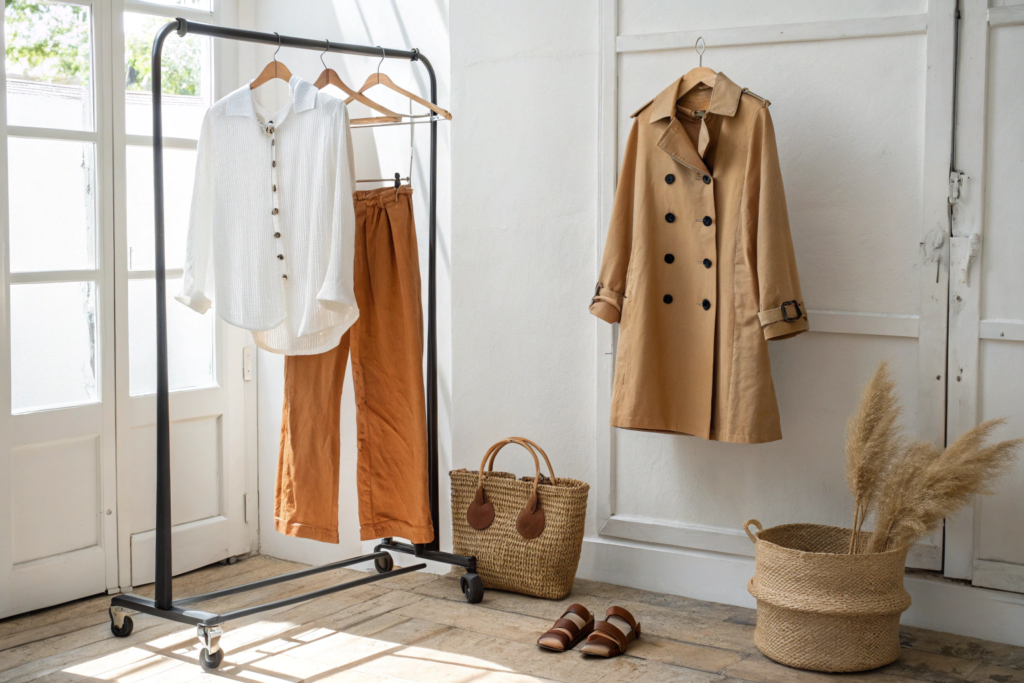
Why Is the "Oversized Blazer" Dominating Linen Feed?
The linen blazer is now a summer staple. But the 2025 version is different. It is longer. It is boxier. It drops the shoulder seam. A boutique owner in New York sent us a photo of a vintage 1980s Armani blazer earlier this year. She asked us to recreate the slouchy, powerful silhouette in a breathable flax. We flattened the shoulder pad. We widened the lapel to 4.5 inches.
The first bulk run sold out in her studio store in three days. She posted a reel of herself walking through Manhattan in the blazer, and the comments were full of customers asking for restocks. We are now running this blazer in five earth colors: raw oat, charcoal, dusty olive, terracotta, and natural ecru. The linen blazer trend is driven by its versatility. It works on camera at a coffee shop. It works in a boardroom. A well-cut blazer elevates the entire natural fiber category.
Are Co-ord Sets Still Driving Bulk Sales?
A matching top and bottom set creates a foolproof Instagram outfit. It takes the styling guesswork away from the customer. We shipped over 8,000 linen co-ord sets last summer alone. The most viral set was a cropped boxy shirt paired with a high-waisted A-line mini skirt. The set sold well in a bright lapis blue and a pistachio green.
One of our boutique partners modeled the set herself on a trip to Santorini. The contrast of the blue linen against the white Cycladic architecture was visually striking. That photo set drove 50 direct orders in 24 hours for her small shop. The key to a successful co-ord is proportion. The crop must hit at the exact natural waist. The skirt must sit at the high hip without adding bulk. We adjust the pattern for every size grade to keep this relationship intact. A matching set simplifies the buying decision. It doubles the units per transaction. It photographs as a complete, intentional look.
Conclusion
Virality on Instagram is not luck. It is the result of a fabric that moves correctly, a fit that flatters without failing, and an ethical story that resonates with a skeptical audience. The bounce of a well-washed linen sleeve in a Reel is a manufacturing achievement, not a filter. The confidence a boutique owner exudes when they crush the fabric in their hand comes from knowing the seams will hold and the sizing will not betray their customer.
We learned through years of trial and error that you have to treat linen as a unique material with its own rules. From the long-staple flax fields in Normandy to the enzyme wash that creates a permanent soft hand, every step matters. The Instagram consumer sees the final 15-second clip. But the video works because of the 15 weeks of careful development behind it. The product is the content. When you get the product right, your customers become your best marketing channel.
If you are ready to launch a linen collection that your followers genuinely want to share and tag you in, I am here to help you build it. At Shanghai Fumao, we specialize in turning premium natural fibers into garments that feel as good as they look on camera. Contact our Business Director Elaine at elaine@fumaoclothing.com. Include your vision for Summer 2025. Let us make something together that deserves to go viral.