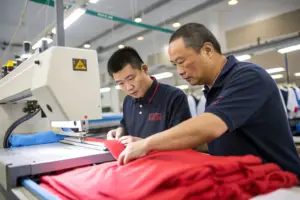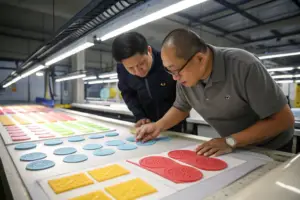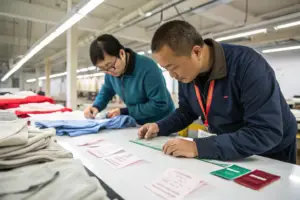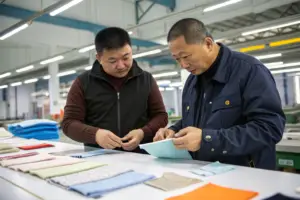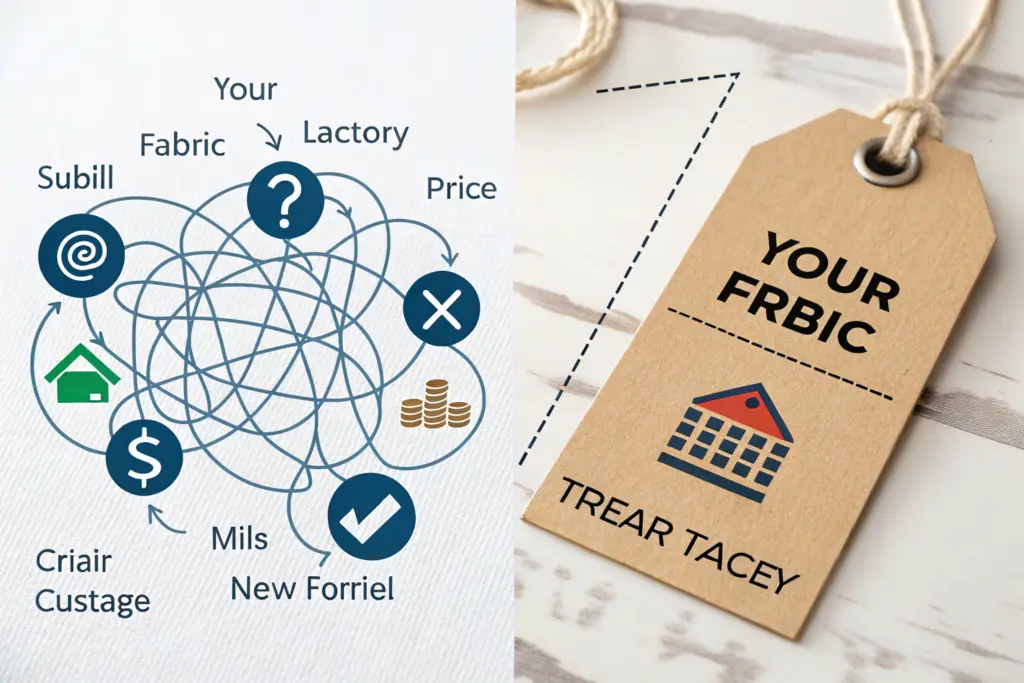
You are staring at your profit and loss statement. The revenue is there, but the margins are tighter than you would like. You start dissecting your costs. You realize a huge, opaque chunk is going to your factory's "Full-Package" price. You have no idea what the fabric actually costs or what the labor truly is. You wonder, "Is there a way to get more transparency and control over these costs? Could I be saving money?" A brand owner told me, "Switching to CMT was like turning on a light in a dark room. For the first time, I could see exactly where every dollar of my production cost was going."
CMT (Cut, Make, Trim) clothing production reduces your costs by separating the cost of materials from the cost of labor. In a Full-Package model, the factory sources everything and provides a single, bundled price that includes their markup on materials. With CMT, you source your own fabric and trims directly, eliminating the factory's material markup. You then pay the factory only for the specific manufacturing services of cutting, sewing, and applying your trims. This unbundling creates transparency and multiple opportunities for cost savings.
At Shanghai Fumao, we offer both Full-Package and CMT services. We have seen firsthand how the CMT model can unlock significant cost advantages for the right brand. Let me show you exactly where the savings come from and how to determine if this leaner, more transparent model is the right financial move for your private label business.
How Does CMT "Unbundle" Your Costs for Greater Transparency?
The most fundamental way CMT reduces cost is by eliminating financial opacity. In a traditional full-package arrangement, you receive one price. It is convenient, but it is a black box. You do not know how much of that price is the actual fabric, how much is the factory's sourcing fee, or how much is the sewing labor. This lack of transparency makes it impossible to identify true cost drivers or find areas for savings. CMT blows the black box open.
CMT unbundles your costs by separating the "Cost of Goods" (your fabric and trims) from the "Cost of Manufacturing" (the CMT labor). You pay your fabric mill and trim suppliers directly. You see their exact invoices. You then pay the factory a transparent, negotiated fee for the Cut, Make, and Trim labor. This eliminates the factory's markup on materials and any hidden sourcing fees, giving you complete control and visibility over the largest components of your product's cost.
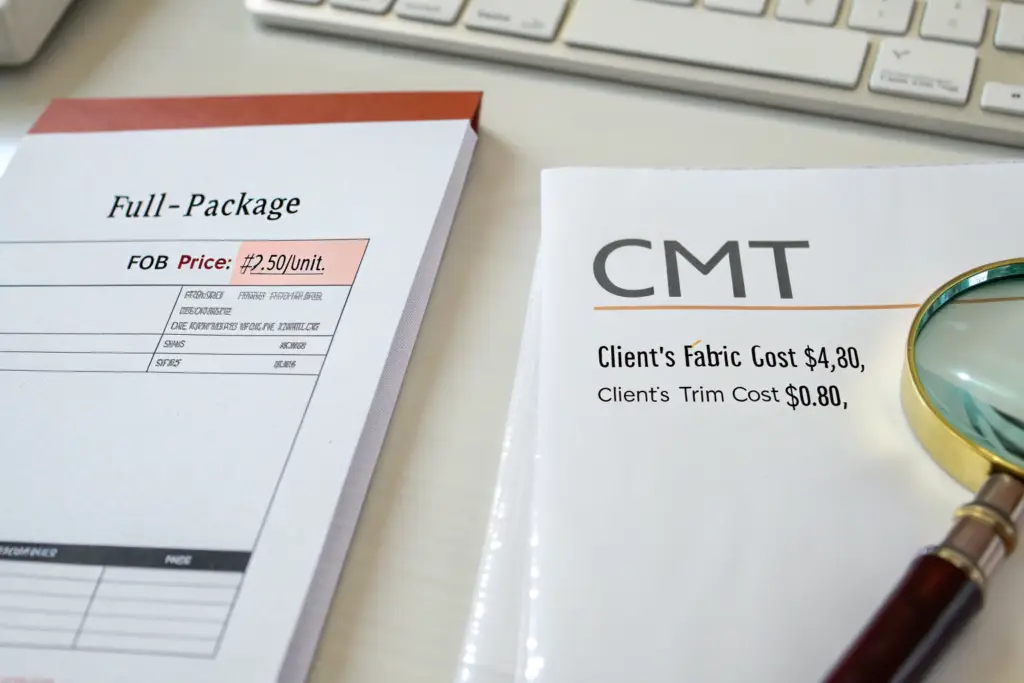
A men's wear client who made the switch from Full-Package to CMT with us was shocked by what he discovered. For a specific woven shirt, his full-package FOB price was $11.80. After transitioning to CMT, he sourced the exact same GOTS organic cotton fabric himself for $4.80 per shirt (including shipping). The trims were $1.10. Our CMT labor charge was $3.60. His total cost was now $9.50. He was saving $2.30 per shirt, a nearly 20% reduction. The savings came entirely from cutting out the intermediary markups on materials. He had been paying a significant premium for the convenience of the full-package bundle. This is the power of unbundling. This is why we offer transparent CMT pricing .
Where Does the Factory's Markup on Materials Typically Hide?
In a full-package price, the factory's profit is embedded in the material cost. They might source fabric for $3.50/yard and charge you $4.25/yard on the BOM. This 10-20% markup is standard industry practice to cover their sourcing time, risk, and working capital. However, if you are a brand with the capability to source directly, you can capture that margin for yourself. This is one of the primary financial drivers for mature brands moving to a CMT model.
How Does Direct Sourcing Empower You to Negotiate Better Material Prices?
When you buy fabric directly from a mill, you are their customer. As your volumes grow, you can negotiate better pricing, just like a factory does. You are no longer a small line item on a factory's purchase order. This direct relationship can lead to significant long-term cost reductions and preferential access to materials. It is a strategic shift from being a price-taker to a price-maker in your own supply chain. This is a key benefit of a direct sourcing strategy .
How Can You Save on Logistics and Inventory Costs with CMT?
The financial benefits of CMT extend beyond just the unit cost of materials. There are significant, often overlooked, savings in logistics and inventory management. In a full-package model, fabric and trims are shipped to the factory, marked up, and then the finished goods are shipped to you. You are paying for the freight on those raw materials within the FOB price. With CMT, you can optimize these material flows and reduce the amount of capital tied up in inventory.
CMT can reduce logistics costs by eliminating unnecessary shipping legs. You can often have fabric and trims shipped directly from your suppliers to the CMT factory, avoiding the cost and delay of shipping them to yourself first. Furthermore, because you own the raw materials, you are not paying the factory's working capital costs for holding that inventory. You have more control over your cash-to-cash cycle.
A women's wear brand I work with sources beautiful Tencel fabric from a mill in Jiangsu province and custom buttons from a supplier in Guangdong. In their previous full-package model, the factory sourced these and built the freight cost into the FOB price. After switching to CMT with us, they now have the mill and the button supplier ship directly to our factory. They pay those freight bills directly. Because they have strong relationships with their suppliers, their negotiated freight rates are actually lower than the factory's standard rates. They are saving about $0.15 per unit on logistics alone. It is a small saving per unit, but over 10,000 units, that is $1,500 back in their pocket. This is the power of controlling your own supply chain logistics .
How Does Owning Your Own Raw Materials Improve Cash Flow?
In a full-package model, you typically pay a 30% deposit to the factory, which they use to buy materials. You are financing their material purchase. In CMT, you pay your suppliers directly, often on your own negotiated payment terms. You also pay the factory a smaller deposit, as it only covers their labor, not the materials. This can significantly improve your cash flow and reduce the amount of working capital tied up in a single production run.
Can CMT Reduce Your Need for Safety Stock of Finished Goods?
Indirectly, yes. Because you have a direct relationship with your fabric mill, you have better visibility into their production schedules and stock levels. You can often arrange for them to hold a small buffer of your greige fabric for you. This means you can trigger a CMT reorder with us much faster than a full-package reorder, reducing the need to hold large amounts of expensive finished goods inventory in your own warehouse. This is a core principle of lean inventory management .
What Are the Hidden Costs of CMT That Could Erode Your Savings?
While the direct cost savings of CMT can be compelling, it is crucial to have a clear-eyed view of the new costs and responsibilities you are taking on. CMT is not "free money." It shifts the operational and financial burden of material management onto your shoulders. If you are not prepared for these hidden costs, they can quickly erode, or even reverse, the savings you anticipated. This is the trade-off for the transparency and control.
The hidden costs of CMT include: 1) The "Time Tax" of managing multiple supplier relationships and logistics, 2) The need to order and finance a "Buffer" of raw materials (typically 3-5%) to account for cutting waste and defects, and 3) The increased complexity of your own internal operations. You are essentially taking on a part-time role as a sourcing and logistics manager.
I recall a brand that was seduced by the potential savings of CMT. They jumped in without fully accounting for the operational overhead. They found themselves spending 10-15 hours a week tracking fabric shipments, coordinating with trim suppliers, and managing the logistics of getting everything to our factory on time. They also didn't order a sufficient fabric buffer and ended up 50 units short on their PO. The "savings" were quickly consumed by the value of their own time and the lost revenue from the shortage. They realized they had the design skills, but not the operational bandwidth for CMT. They wisely switched back to our Full-Package service for their next run, valuing the convenience and bundled responsibility. This is why we have honest conversations about CMT readiness .

How Much of a "Buffer" Should You Plan for in a CMT Order?
This is a critical financial planning point. You should always order 3-5% more fabric and trims than your exact calculated consumption. This buffer accounts for:
- Cutting Waste: The inherent inefficiency in laying out pattern pieces (even with great marker efficiency).
- Defects: Hidden flaws in the fabric roll that are only discovered during inspection or cutting.
- Sewing Rejects: Units that are damaged during production and must be remade.
Failure to order this buffer is the single most common and costly mistake new CMT brands make. It results in a short shipment and lost sales. We always advise our CMT partners on the appropriate buffer for their specific fabric and design.
What Is the "Time Tax" of Managing a CMT Supply Chain?
This is the most overlooked cost. As the brand owner, you are now the central coordinator. You are responsible for ensuring Fabric A from Mill X and Trim B from Supplier Y both arrive at Fumao by Date Z. This requires time, organization, and proactive communication. You need to value your own time honestly. If you are a solo founder, those 10-15 hours a week spent on logistics are hours you are not spending on design, marketing, or sales. The "time tax" is real, and it must be factored into your CMT cost equation. This is where a dedicated Project Manager on our side can help, but the ultimate responsibility remains with you.
How Does Fumao's CMT Model Provide Cost-Effective Value Without the Headaches?
We understand that the idea of managing a CMT supply chain can be daunting. That is why we have built our CMT service to be more than just a sewing line. We provide the structure, the transparency, and the proactive communication that absorbs a significant portion of the coordination burden. We act as your trusted, on-the-ground partner, ensuring your valuable materials are handled with care and precision, and keeping you informed every step of the way.
Fumao's CMT model reduces the headaches of self-managed manufacturing through rigorous internal systems. Our thorough Incoming Inspection of all client-supplied materials catches issues before they become costly problems. Our transparent reporting provides a clear audit trail. And our dedicated Project Managers keep you informed of your material status and production progress, acting as a single point of contact and drastically reducing the "time tax" of managing a remote supply chain.
A brand partner who was nervous about the coordination of CMT told us, "Your incoming inspection report saved me. You caught a shade variation in my fabric shipment before it was cut. I was able to get a credit from the mill. Without that, I would have produced 500 units with mismatched sleeves. That single report paid for your CMT labor." This is the value we add. We do not just sew. We provide the operational excellence and transparency that makes CMT a viable, cost-effective, and lower-stress model for our B2B partners. We make CMT manageable. This is the benefit of a strategic CMT partner .

How Does Our Incoming Inspection Process Protect Your CMT Investment?
Our rigorous incoming inspection is your first line of defense. We meticulously check every roll of fabric and every box of trims you send us. We verify quantities, check for defects, and ensure shade consistency. We provide you with a detailed Incoming Inspection Report with photos of any issues. This report gives you the documentation you need to hold your suppliers accountable and ensures we only use approved, first-quality materials in your production. It protects you from the costly disaster of discovering a material flaw after the garments are sewn. This is a core part of our quality assurance for CMT.
What Ongoing Reporting Keeps You Informed and in Control?
You are never in the dark. You receive:
- Incoming Inspection Reports: Upon receipt of your materials.
- Weekly Production Updates: With photos from the cutting table and sewing line.
- Final Reconciliation Reports: Detailing exact material consumption and any remnants.
This constant flow of information allows you to manage your inventory and plan your business with confidence, even from thousands of miles away. It is the transparency you need to make CMT work for you. This is the standard of our transparent manufacturing .
Conclusion
CMT clothing production can be a powerful tool for reducing your per-unit costs and gaining unprecedented transparency into your supply chain. By unbundling the cost of materials from the cost of labor, it allows you to capture savings from direct sourcing and eliminate intermediary markups. However, these financial benefits come with new operational responsibilities and potential hidden costs that must be carefully managed.
At Shanghai Fumao, we provide the expert manufacturing execution and the transparent, rigorous processes that make the CMT model work. We help our B2B partners navigate the trade-offs, mitigate the risks, and unlock the true cost-saving potential of controlling their own material supply chain. We are the partner that makes CMT a viable and profitable strategy.
If you are ready to explore whether CMT is the right financial move for your brand, let's talk. Our Business Director, Elaine, can walk you through a detailed cost comparison and explain how our CMT services can help you protect your margins. Please email Elaine at: elaine@fumaoclothing.com.