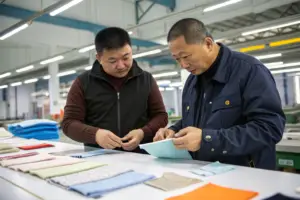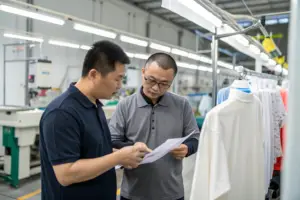
You have sourced the perfect fabric from a specialty mill in Japan. You have designed a custom button that perfectly captures your brand's aesthetic. You have a clear vision for your collection. Now, you need a partner to take your precious raw materials and turn them into finished garments without wasting a single yard or scratching a single button. You do not need help with design or sourcing. You need pure manufacturing execution. This is the world of CMT. A brand owner told me, "I thought I needed a full-package factory. But I have my own fabric sources and my own trim suppliers. CMT was the perfect fit. It gave me more control over my supply chain."
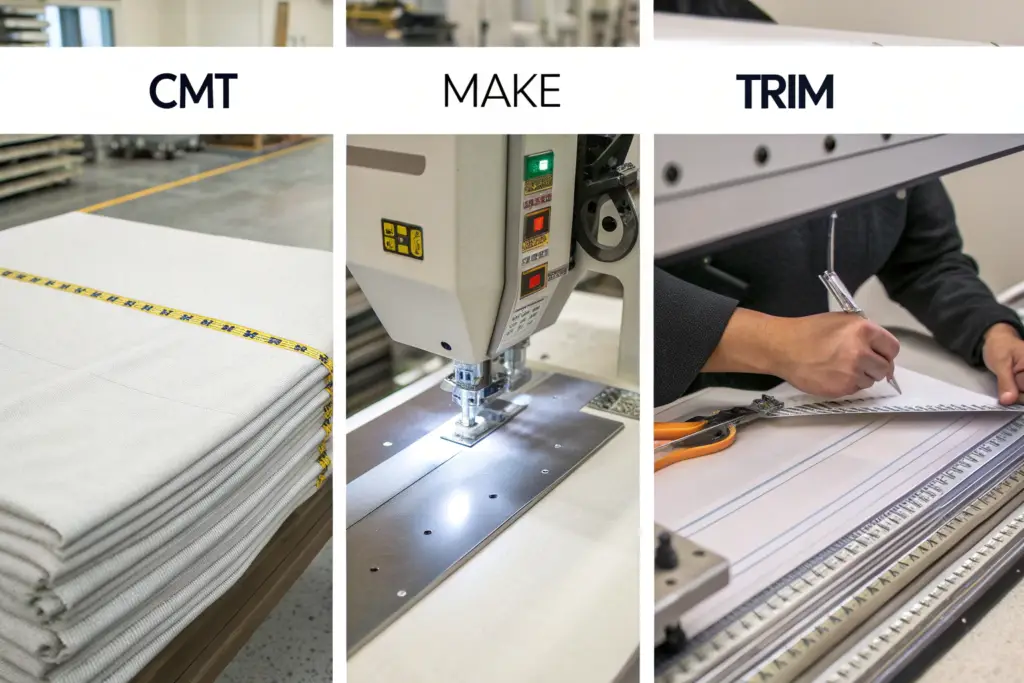
CMT stands for Cut, Make, Trim. It is a specialized manufacturing service where the factory's sole responsibility is to cut the client-supplied fabric, sew it into finished garments ("Make"), and apply the client-supplied trims like buttons, zippers, and labels ("Trim"). Unlike Full-Package or Private Label manufacturing, the factory does not handle design, pattern-making, or the sourcing of fabric and trims. The client retains full control over their raw material supply chain.
At Shanghai Fumao, a significant portion of our B2B business is providing expert CMT services to established brands. They trust us with their valuable materials because we have the specialized equipment, the skilled workforce, and the rigorous processes to execute flawlessly. Let me explain exactly how CMT works, its unique advantages, and why it might be the perfect model for your growing apparel business.
How Does the CMT Process Work from Start to Finish?
The CMT process is defined by a clear handoff. The brand takes on the responsibility of designing the product and procuring all the necessary components. The factory then acts as a pure manufacturing partner, transforming those components into a finished, saleable garment. Understanding this clear division of labor is essential to knowing if CMT is the right model for you. It requires a more hands-on approach from the brand, but offers greater control and potential cost savings.
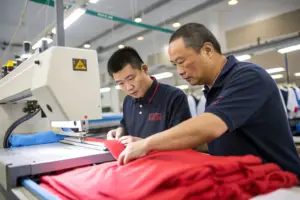
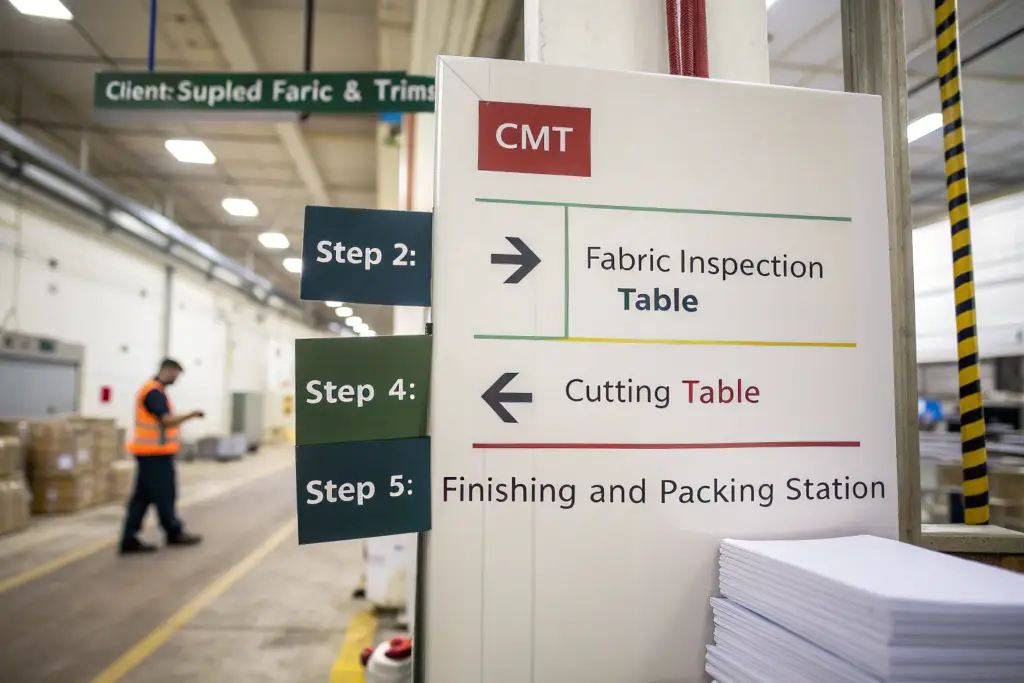
The CMT process follows a precise sequence: 1) The client ships all approved fabric, trims, and a detailed Tech Pack to the factory. 2) The factory performs a rigorous Incoming Inspection of all materials, checking for defects, shade consistency, and quantity against the BOM. 3) The factory creates the cutting marker and cuts the fabric. 4) The factory sews the cut pieces into finished garments ("Make"). 5) The factory applies all trims and finishes the garments. 6) The factory conducts final Quality Control and packs the goods for shipment back to the client or to a designated warehouse.
I recall a men's wear brand that had developed a unique, proprietary wool blend fabric from a mill in Italy. They were very protective of their supply chain. They shipped the precious fabric rolls directly to us. Our team inspected every yard on our backlit tables, checking for any flaws before cutting. We used our specialized outerwear line to construct the blazers, treating the expensive fabric with extreme care. We applied their custom horn buttons and woven labels. The finished blazers were shipped back to their warehouse in Milan. They retained full control of their valuable fabric, and we provided the world-class manufacturing execution. This is a perfect example of a successful CMT partnership .
What Is the Factory's Responsibility During "Incoming Inspection" for CMT?
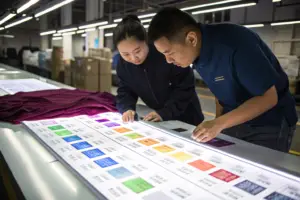
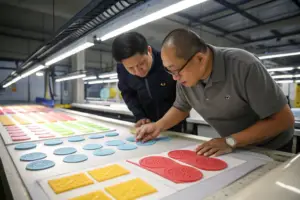
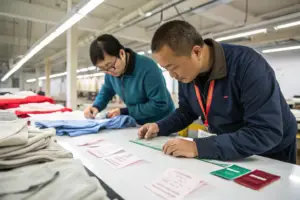
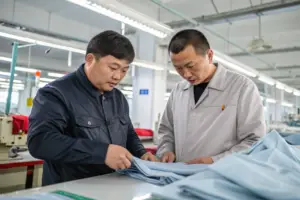
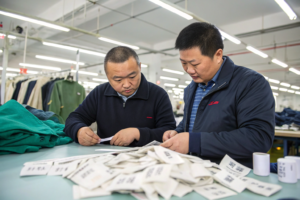
This is a critical step that protects both the client and the factory. Before we cut a single piece, we inspect 100% of the client-supplied materials. For fabric, we check for weaving defects, stains, and shade continuity across rolls. For trims, we verify the quantity, color, and functionality against the client's Bill of Materials (BOM). If we find any discrepancies or defects, we immediately flag them to the client. This ensures we do not cut into flawed material and provides documentation for the client to file a claim with their supplier. This rigorous process is a cornerstone of our quality control for CMT.
Who Is Responsible for Fabric Wastage in a CMT Model?
This is a crucial point of negotiation and transparency. In a CMT arrangement, the fabric belongs to the client. The factory is responsible for achieving an agreed-upon marker efficiency (fabric utilization) during cutting. We provide a detailed Cutting Yield Report after production, showing exactly how many yards were consumed and what the efficiency was. Any fabric remnants are typically returned to the client along with the finished goods, or responsibly recycled with the client's permission. We pride ourselves on maximizing yield and minimizing waste on behalf of our CMT clients .
What Are the Primary Advantages of Using a CMT Manufacturer?
For the right kind of brand, CMT offers a unique set of strategic advantages. It is not the right model for a first-time founder who needs design and sourcing help. But for an established brand with its own material supply chain, or a brand that wants to leverage unique, proprietary fabrics, CMT can be a powerful tool. It shifts the focus of the partnership to pure manufacturing execution and efficiency.
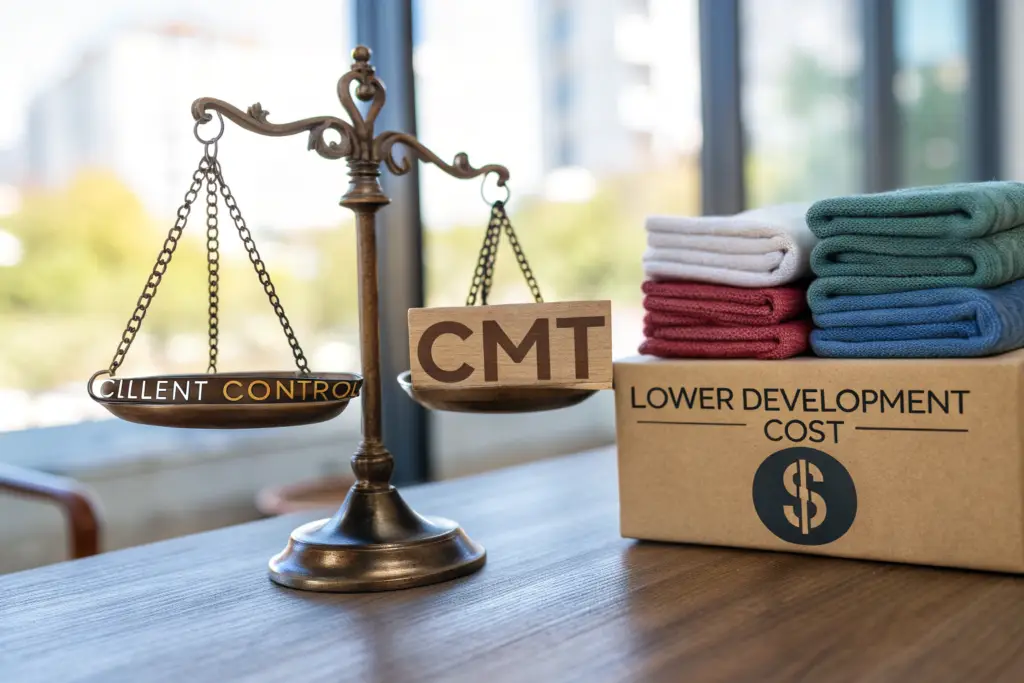
The primary advantages of CMT are: 1) Greater Control Over Raw Materials (the brand can source unique, proprietary fabrics and trims that a full-package factory might not offer), 2) Potentially Lower Development Costs (the brand avoids the factory's markup on materials and sourcing), and 3) Deeper Supply Chain Transparency (the brand knows the exact origin and cost of every component). It is an ideal model for brands with an established, reliable supply chain for their raw materials.
A women's wear designer I work with specializes in using deadstock designer fabrics. She sources incredible, one-of-a-kind silks and wools from jobbers in Italy and New York. A full-package factory could never replicate her sourcing. She sends us these unique, limited-yardage materials, and we provide the expert CMT to turn them into beautiful, limited-edition garments. She retains the unique story and sustainability angle of her fabric sourcing, and we provide the reliable, high-quality manufacturing. This model is perfect for her brand's identity. It allows her to be a designer and a curator, not just a production manager. This is the flexibility of our manufacturing services .
How Does CMT Provide Greater Transparency in Your Cost Structure?
In a full-package model, the factory provides a single FOB price that includes materials, labor, and their margin. In CMT, you receive a detailed cost breakdown. You know exactly what you paid for the fabric and trims. You know exactly what the factory is charging for the Cut, Make, and Trim labor. This transparency allows for more precise costing and can help you identify areas for cost savings in your own supply chain. It is a preferred model for data-driven brands.
Is CMT a Good Fit for a Brand Focused on Sustainable or Unique Materials?
Absolutely. It is often the best fit. If your brand's identity is built around a specific, sustainable material like GOTS organic cotton from a specific farm collective, or recycled polyester from a particular source, CMT allows you to maintain that direct, transparent relationship. You control the story from fiber to factory. You are not relying on the factory's sourcing network. This is a powerful advantage for sustainable clothing brands.
What Are the Key Risks and Challenges of the CMT Model?
While CMT offers control and potential cost savings, it is not without its challenges. It shifts a significant amount of coordination and risk management onto the brand owner. You become the conductor of a more complex orchestra. Understanding these challenges upfront is essential to determining if you have the operational capacity and expertise to manage a CMT supply chain effectively.
The primary risks and challenges of the CMT model are: 1) Increased Coordination Burden (the brand is responsible for ensuring all materials arrive at the factory on time and in the correct quantities), 2) Cash Flow Implications (the brand must pay for all raw materials upfront, which can tie up significant capital), and 3) Material Risk (if the client-supplied fabric has a hidden flaw or is short-shipped, it can cause production delays or shortages, and the financial risk lies with the brand).
A brand I advised learned this the hard way. They were excited to use a unique corozo button they had sourced themselves. They ordered exactly the right quantity, but the shipment from the button supplier was delayed by two weeks. The fabric was cut and the sewing line was ready, but production ground to a halt waiting for the buttons. The entire shipment was delayed. In a full-package model, the factory would have managed that trim sourcing and absorbed the delay. In CMT, the coordination burden—and the delay—fell on the brand. They now have a much greater appreciation for the hidden value of full-package sourcing. This is why we have honest conversations with potential CMT partners about their operational readiness.

How Can Material Shortages or Defects Impact a CMT Order?
This is the single biggest risk in CMT. If the client supplies 1,000 yards of fabric, but 50 yards are found to have a flaw during our incoming inspection, that 50 yards cannot be used. If the brand did not account for this buffer (typically 3-5% for cutting waste and defects), they may not have enough material to complete the full order quantity. The result is a short shipment. In a full-package model, the factory bears this risk and is responsible for sourcing replacement material. In CMT, this is the brand's risk. Careful planning and ordering a buffer are essential.
What Happens If Client-Supplied Trims Are Delayed?
As in the example above, a delay in trim arrival can halt the entire production process. The factory has cut the fabric and scheduled the sewing line. When the trims do not arrive, the line must be switched to another order, and your order goes to the back of the queue. This can add weeks of delay. Effective CMT requires the brand to be a highly disciplined and proactive supply chain manager. This is a key difference from our full-package service , where we manage this complexity for you.
How Does Fumao's CMT Service Differ from Our Full-Package Offering?
Many factories either focus exclusively on full-package or treat CMT as an afterthought. At Fumao, we have built dedicated systems and expertise for both models. We understand that they serve different needs for different brands at different stages. Our CMT service is not a stripped-down version of our full-package offering; it is a specialized service line with its own rigorous protocols, designed for brands that know exactly what they want and need a world-class manufacturing partner.
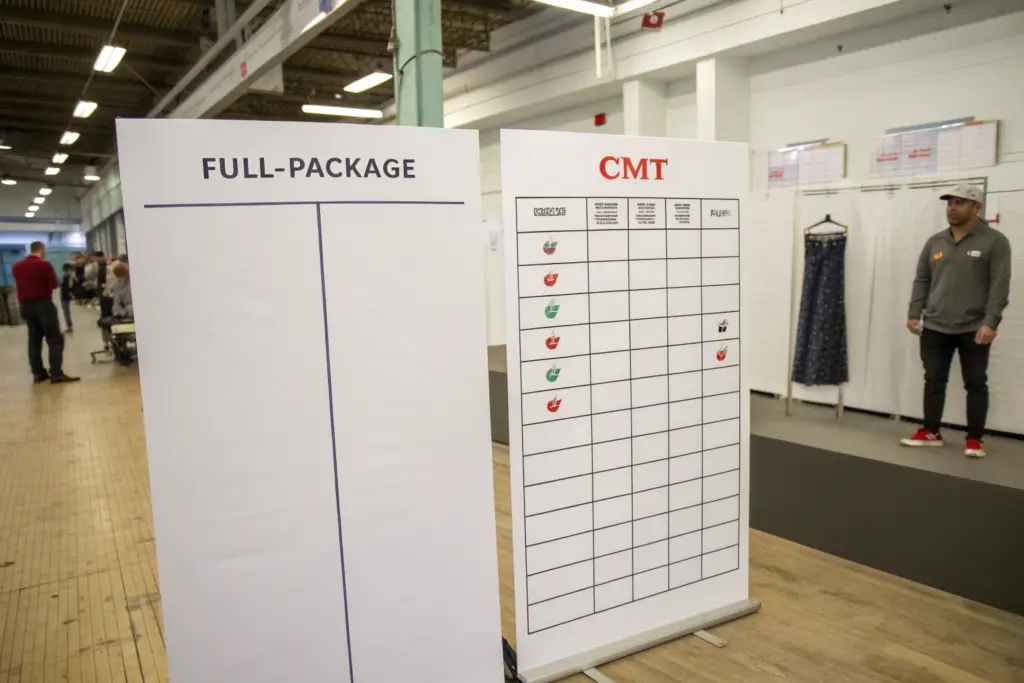
Fumao's CMT service is distinguished by our rigorous, specialized handling of client-supplied materials and our transparent communication. Unlike some CMT providers, we offer a full incoming inspection and detailed reporting. We treat your materials with the same care as if they were our own. While our Full-Package service provides a turnkey solution from design to delivery, our CMT service offers a high-touch, collaborative partnership for brands that prefer to control their own raw material supply chain.
A brand that has been a full-package partner with us for years decided to develop a unique, custom-milled wool coating for a special outerwear project. They wanted to own the relationship with the Italian mill directly. For this specific project, they shifted to a CMT arrangement with us. We seamlessly adapted. We received their precious fabric, inspected it, and produced the coats on our specialized outerwear line. We then provided them with a detailed reconciliation report, and they handled the final shipment themselves. The project was a huge success. This flexibility—the ability to support a partner in both full-package and CMT models—is a testament to the strength of our manufacturing capabilities .
What Reporting Does Fumao Provide After a CMT Production Run?
Transparency is paramount in CMT. After the order is complete, we provide a comprehensive CMT Closeout Package. This includes:
- Fabric Reconciliation Report: Detailing the exact yardage received, consumed, and remaining.
- Trim Reconciliation Report: Detailing the quantity of each trim received and used.
- Cutting Yield Analysis: Showing the achieved marker efficiency.
- Quality Inspection Report: The final AQL audit results.
This package provides a complete financial and operational audit trail, allowing the brand to close the books on the project with confidence. This is the standard of our transparent CMT reporting .
Can a Brand Transition Between CMT and Full-Package with Fumao?
Absolutely. This is one of the great advantages of a deep, long-term partnership with us. As your brand evolves and your needs change, we can adapt our service model with you. You might start with Full-Package to get off the ground, then transition a core product to CMT to leverage a unique fabric source. Or you might do a special CMT project alongside your regular full-package orders. Our flexible infrastructure and experienced team can support both models seamlessly. This is the benefit of a true strategic manufacturing partner .
Conclusion
CMT manufacturing is a powerful and specialized model within the garment industry. It offers established brands a unique combination of control, transparency, and potential cost efficiency by placing the responsibility for raw materials directly in their hands. It requires a higher level of operational discipline and coordination from the brand, but for those with a reliable material supply chain, it is an invaluable tool.
At Shanghai Fumao, we are experts in both CMT and Full-Package manufacturing. We do not push one model over the other. We listen to your needs, understand your supply chain, and help you determine the best fit for your specific project and your long-term brand strategy. Whether you need a turnkey solution or a pure manufacturing partner for your own exquisite materials, we have the expertise and the infrastructure to deliver exceptional quality.
If you are considering CMT for your next collection and want a partner with the rigor and transparency to handle your valuable materials, let's talk. Our Business Director, Elaine, can walk you through our CMT protocols and provide a detailed quote. Please email Elaine at: elaine@fumaoclothing.com.