You have sent your sketches. You have described your vision in passionate emails. You have waited weeks. The sample package finally arrives. You tear it open with a mix of excitement and dread. And then… your heart sinks. The neckline is too high. The fabric is all wrong. The length is off. It is close, but it is not right. A brand owner told me, "Getting a sample that didn't match my design felt like the factory didn't even look at my sketches. It was a punch in the gut every single time."
Ensuring samples match your original design is not about luck or hoping the factory "gets it." It is about replacing subjective, artistic language with objective, technical communication. The process requires three pillars: 1) A Flawless, Detailed Tech Pack (the single source of truth), 2) The Use of Physical Reference Samples (to communicate feel and drape), and 3) A Structured, Visual Feedback Loop (using annotated photos and measurable comments).
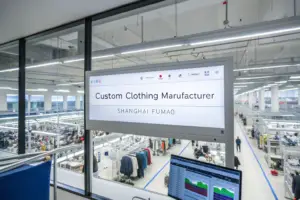
At Shanghai Fumao, we know that the sample is the moment of truth. It is where trust is either built or broken. Our entire product development process is engineered to ensure that the physical sample is a faithful translation of your creative vision. Let me share the specific, actionable strategies we use to bridge the gap between your imagination and the prototype in your hands.
Why Is a "Perfect" Tech Pack the Non-Negotiable Starting Point?
The single most common reason a sample does not match a design is a weak, incomplete, or vague Tech Pack. A beautiful watercolor sketch and a paragraph about "effortless drape" are poetry to a designer, but they are a confusing puzzle to a pattern maker. The factory needs a blueprint, not a poem. The Tech Pack is the legally binding, technical contract that translates your creative vision into an objective, measurable, and sewable language.
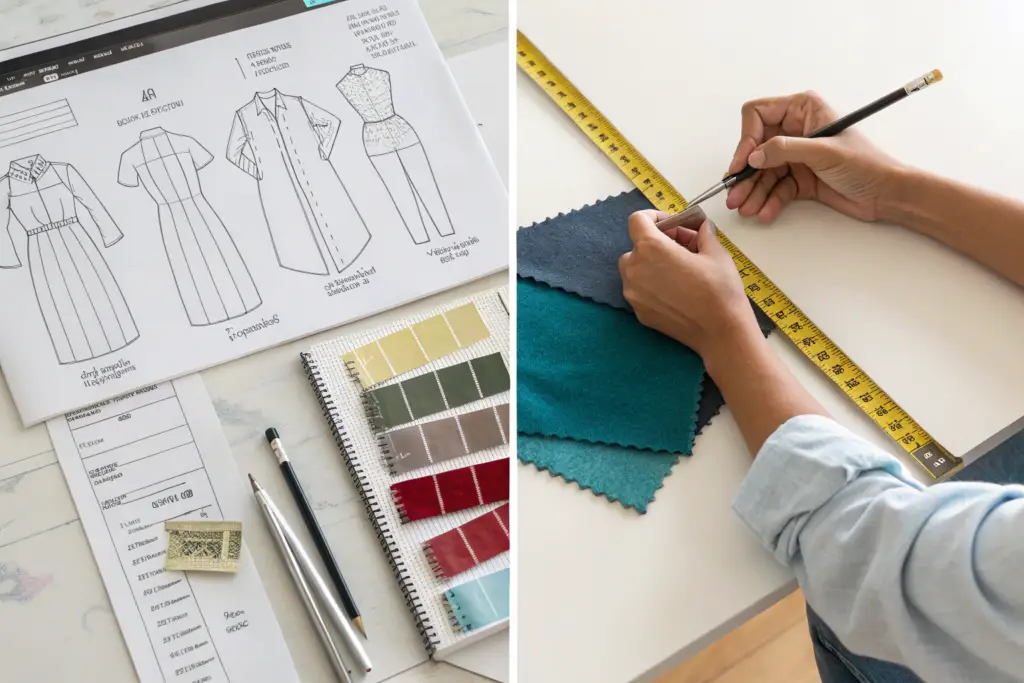
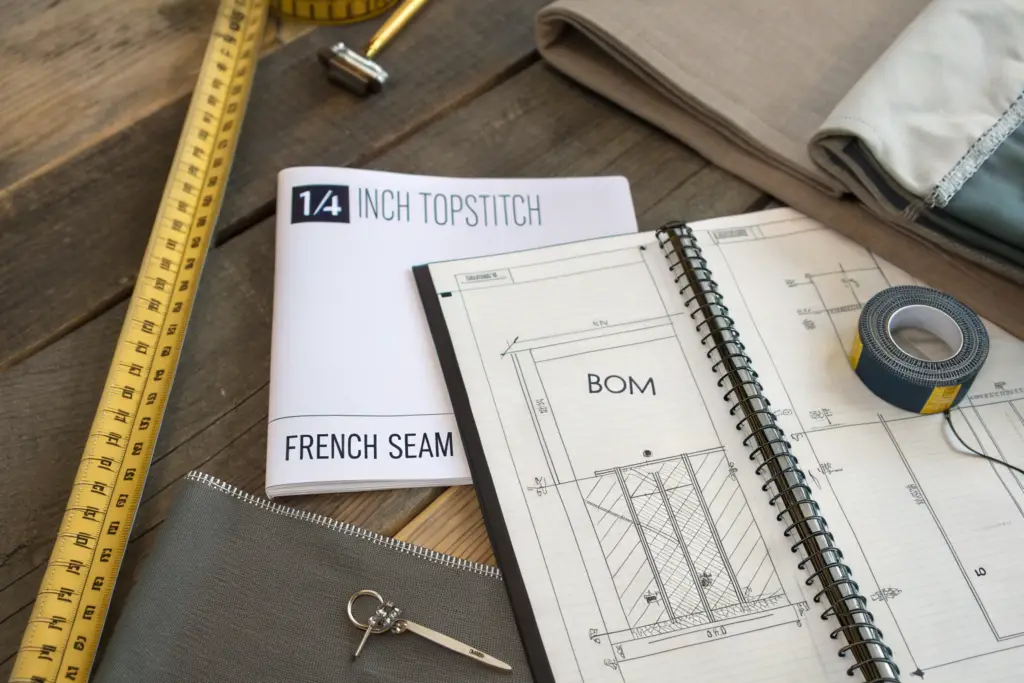
A perfect Tech Pack eliminates ambiguity. It must include: precise, technical flat sketches (front and back) showing every seam and stitch line; a detailed Bill of Materials (BOM) specifying the exact fabric, trims, and thread with supplier codes and color references; a graded measurement spec sheet with clear tolerances for every Point of Measure; and callouts for all critical construction and stitch details.
I recall a men's wear client who sent an exceptional Tech Pack for a woven shirt. His flat sketch included a close-up of the collar with a callout: "Edge stitch 1/4" from edge. Single needle. 12 SPI. Unfused collar band." He also specified the exact GOTS organic cotton fabric from a specific mill. The first sample we produced was 95% correct. He had one minor fit adjustment on the sleeve length. That was it. He didn't waste time or money on multiple, frustrating rounds of samples. His Tech Pack did the heavy lifting. This is the power of front-loading the detail. This is the standard we help our private label partners achieve.
What Are the Most Common Tech Pack Omissions That Lead to Sample Errors?
In our experience, these are the top five missing pieces that cause a sample to miss the mark:
- Missing Stitch Details: "Topstitch" is not enough. What is the distance from the edge? (e.g., 1/4"). What is the SPI?
- Vague Trim Specs: "White buttons." What size? What material? Matte or shiny? What brand?
- No Placement Specs: "Logo on chest." Where, exactly? How many inches down from the neck seam? Centered on what?
- Missing Seam Finishes: "Clean finish inside." What kind? French seam? Bound seam? Overlock?
- No Grading Rules: "Make sizes XS-XL." How much does the chest increase per size?
When these are missing, the factory must guess. And a guess is almost always wrong. Filling these gaps in your Tech Pack is the single most effective way to improve sample accuracy. This is why we offer Tech Pack development services.
How Do "Points of Measure" (POMs) Translate Design into Numbers?
A sketch shows the shape. The POMs provide the objective numbers. They are the specific locations on a garment where a measurement is taken (e.g., Chest Width, Body Length, Sleeve Length, Shoulder Width). By providing a target measurement and a tolerance (+/- 1/4") for each POM on the spec sheet, you remove all subjectivity from the fit evaluation. The sample either measures correctly or it does not. This data-driven approach is the foundation of our quality control process.
How Can Physical Reference Samples Bridge the Gap?
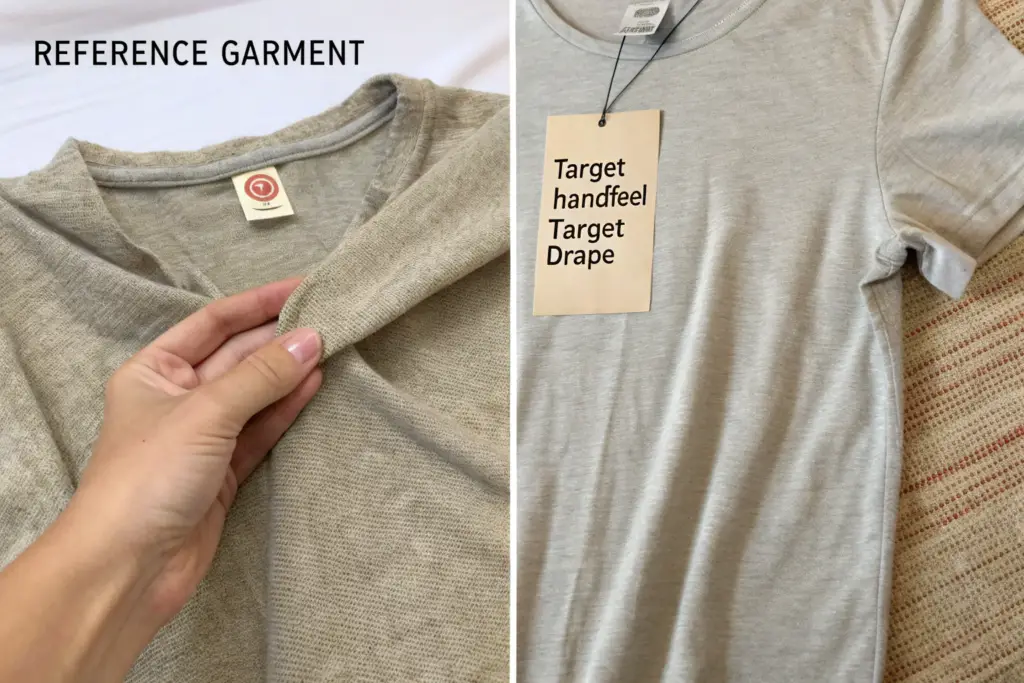
Even the best Tech Pack has limitations. It cannot fully communicate the subtle, tactile qualities that define a great garment. How do you describe the exact "buttery softness" of a premium jersey? Or the specific "crisp, dry handfeel" of a fine linen? Or the exact "fluid, liquid drape" of a silk charmeuse? Words fail. This is where physical reference samples become an essential communication tool.
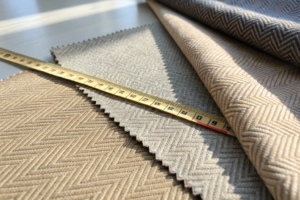
Physical reference samples bridge the gap where words and specs fail. Sending a swatch of the desired fabric, a vintage garment with the perfect fit, or a competitor's piece that has the ideal collar roll provides the factory's pattern maker and sewer with a tangible, sensory target. It allows them to feel the desired outcome, not just read about it.
A women's wear client was obsessed with replicating the fit and drape of a specific vintage slip dress from the 1990s. She sent us the dress. Our pattern maker carefully studied its construction—the way the bias-cut fabric draped, the exact width of the delicate straps, the weight of the silk charmeuse. We were able to deconstruct it, create a pattern, and source a nearly identical fabric. The resulting sample was a faithful homage to the original. She could never have achieved that result with a sketch and a spec sheet alone. The physical reference was the key. This is a powerful tool we encourage our design partners to use.
What Kind of Reference Samples Are Most Helpful?
The more sensory information you can provide, the better. Helpful references include:
- Fabric Swatches: The exact fabric you want to use, or a similar one with the target handfeel and weight.
- Fit Reference Garment: A garment (from any brand) that has the exact fit you are trying to achieve. "I want the body of this t-shirt, but with the sleeve of this other one."
- Construction Detail Reference: A close-up photo or a physical sample showing a specific seam finish, collar construction, or pocket detail.
- Trim Reference: A sample of the exact button, zipper, or label you want.
Sending these physical references along with your Tech Pack dramatically reduces the chance of misinterpretation.
How to Communicate "Handfeel" and "Drape" Effectively?
Since you cannot send a digital file of a feeling, use a combination of techniques:
- Send a Physical Swatch: This is the gold standard.
- Use Calibrated Descriptive Language: Instead of "soft," use terms like "brushed peach skin," "slick and cool," or "dry and papery."
- Use a Reference Garment: "I want the fabric to drape like this vintage slip dress."
- Send a Short Video: Show how you want the fabric to move on the body.
This multi-sensory approach gives our team the best possible chance of hitting your target. This is part of our commitment to collaborative development .
What Is the Most Effective Way to Provide Feedback on a Sample?
You have the sample in your hands. It is close, but not perfect. Now comes the most critical moment: communicating the necessary changes. This is where many projects go off the rails. Vague, subjective feedback ("The sleeve feels weird") leads to confusion, wasted time, and a second sample that is still not right. The way you provide feedback is just as important as the initial Tech Pack.
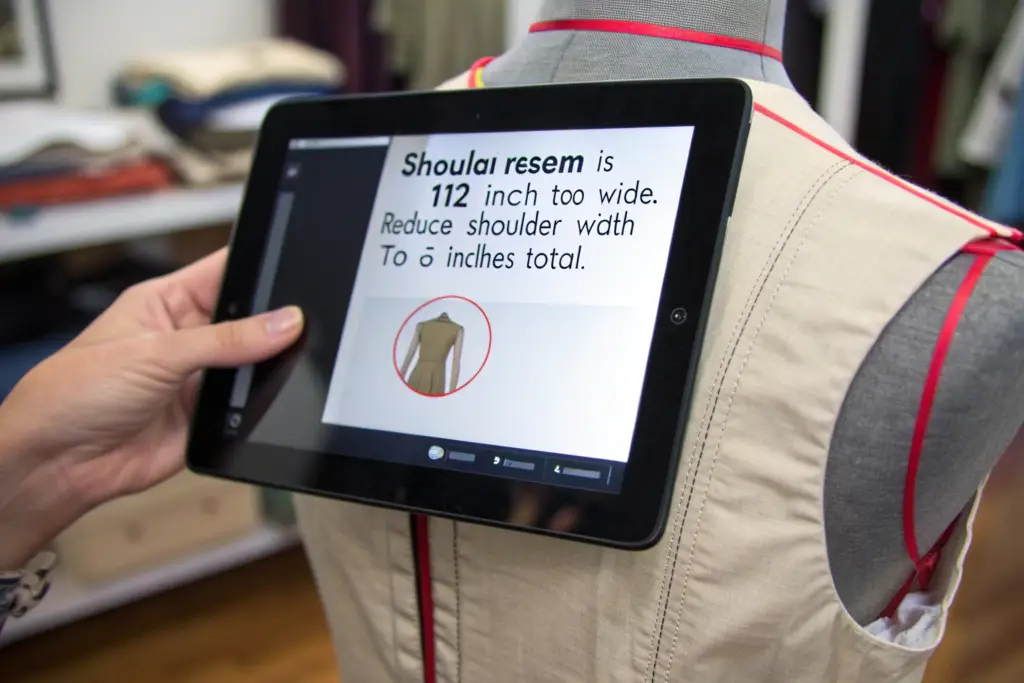
The most effective sample feedback is visual, specific, and measurable. Always combine a clear, annotated photo with a written comment that references the specific Point of Measure (POM) or construction detail. State the issue, the desired outcome, and the target measurement. For example: "Photo: POM 'D' (Bicep). Issue: Too tight. Target: 14' flat. Current sample measures 13.5'. Please increase by 0.5' total circumference."
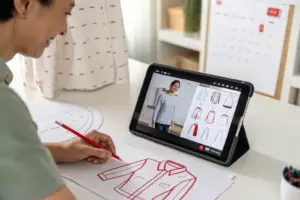
A brand we work with has a brilliant system. She puts the sample on her fit model and takes photos from the front, side, and back. She then uses a simple photo editing app to draw directly on the images. She draws a red line where the seam should be. She adds text: "Move pocket here. Down 1cm." She sends us these annotated photos along with a simple bulleted list of the POM adjustments. Her feedback is instantly understandable. There is zero ambiguity. Her samples are approved in 1-2 rounds, almost without fail. This is the gold standard for sample feedback. This is the kind of clear communication we encourage with all our partners.
Why Are Annotated Photos More Effective Than a Written Paragraph?
A picture is literally worth a thousand words, especially across a language barrier. A written description of a fit issue on a complex 3D shape is incredibly difficult to interpret. A photo with a red circle and an arrow pointing to the exact location of the issue is universally understood. It removes all guesswork. It shows our pattern maker exactly what you are looking at. This is a non-negotiable part of our sample feedback process.
How to Use a "Sample Revision Sheet" to Track Changes?
For complex garments with multiple revisions, a simple email thread is not enough. A Sample Revision Sheet is a simple document (a spreadsheet or a shared document) that tracks every change, round by round. It includes columns for:
- Date of Feedback
- POM / Detail
- Issue
- Requested Change
- Status
This creates a clear, auditable history of the development process. It prevents changes from being forgotten or miscommunicated between rounds. It is a simple, low-tech tool that provides immense clarity and accountability. We use these internally for all our complex development projects .
How Does Fumao's Internal Process Ensure Faithful Design Translation?
You can send a perfect Tech Pack, but what happens inside the factory's sample room is just as critical. A great factory has internal systems and a culture of precision that ensures the sample room's output is a faithful translation of the client's instructions. This is where the factory's expertise and discipline truly shine. It is the difference between a factory that just "makes samples" and one that is a true product development partner.
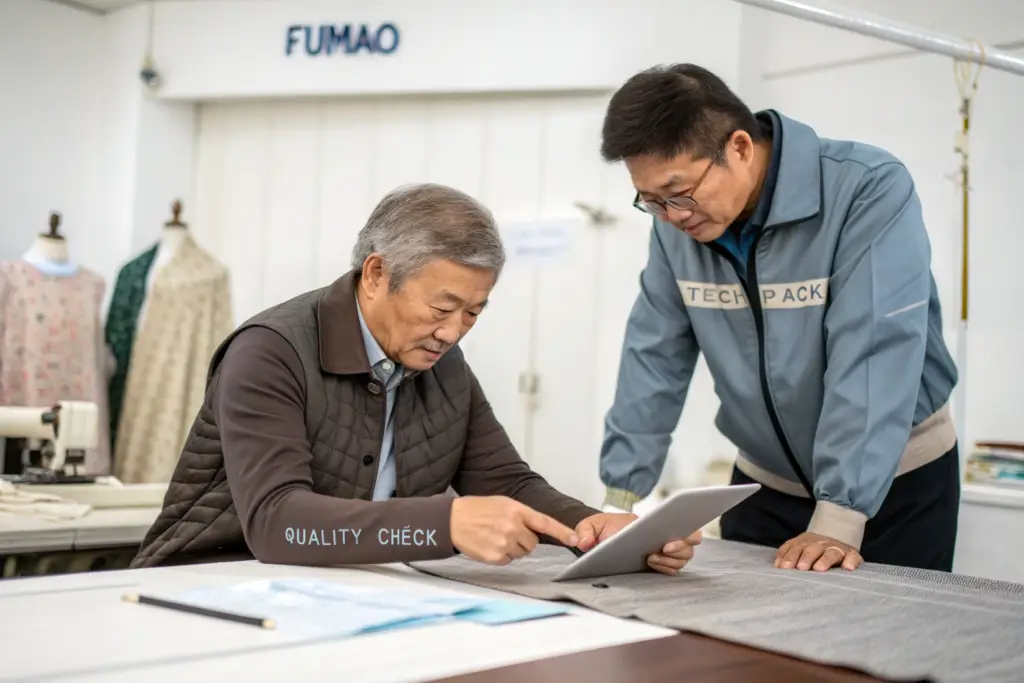
Fumao ensures faithful design translation through a rigorous internal process. Before a sample is ever shipped to a client, it undergoes an internal quality check against the original Tech Pack. Our pattern makers and sample sewers work collaboratively, often consulting directly with the client's Project Manager to clarify any ambiguities. We do not just guess; we ask. We treat the Tech Pack and any reference samples as the non-negotiable standard.
When a new Tech Pack arrives, our Project Manager and head pattern maker review it together. If there is any ambiguity—a missing measurement, an unclear construction note—we flag it before cutting the sample. We send a Request for Clarification (RFC) to the client. It takes a few extra hours upfront, but it prevents days of wasted time and a wrong sample. This proactive, questioning approach is how we ensure the first sample is as close to the design as possible. This is the discipline of a professional clothing manufacturer .
What Happens If There Is an Internal Discrepancy Between the Tech Pack and a Reference Sample?
This is a common scenario. The Tech Pack says one thing (e.g., "1/4" topstitch"), but the physical reference garment shows a 3/8" topstitch. We never guess which one is correct. We immediately flag this discrepancy for the client. We send a photo showing the difference and ask: "The Tech Pack calls for 1/4", but the reference sample has 3/8". Which is the correct standard for this sample?" We get written clarification. This meticulous attention to detail prevents the frustration of receiving a sample that is "wrong" because of an unresolved conflict in the source information.
How Do We Use the "Sealed Sample" as the Final Standard?
The ultimate goal of the sampling process is to arrive at the Sealed Sample—the final, fully approved prototype. Once approved, this sample is not just filed away. It becomes the new single source of truth, superseding the Tech Pack in case of any conflict. It is kept on the production floor and used as the physical standard for all bulk quality control. This ensures that the 5,000th unit matches the approved sample exactly, closing the loop between design and production. This is the cornerstone of our quality assurance .
Conclusion
Ensuring that your samples match your original design is a collaborative discipline, not a guessing game. It is the result of a clear, objective Tech Pack, the thoughtful use of physical references, and a structured, visual feedback loop. It requires a factory partner who is not just a sewer, but a careful translator of creative vision into technical reality.
At Shanghai Fumao, we have built our entire sample room culture around this principle of faithful translation. We respect the detail in your Tech Pack, we value the nuance of your physical references, and we are relentless in our pursuit of getting it right. We know that a perfect sample is the foundation of a successful collection and a trusted B2B partnership.
If you are tired of samples that miss the mark and are ready to partner with a factory that treats your design as the definitive blueprint, let's talk. Our Business Director, Elaine, can walk you through our sample development process and show you how we ensure accuracy from the first stitch. Please email Elaine at: elaine@fumaoclothing.com.