You have found a factory. Their website looks professional. Their salesperson is responsive on WhatsApp. Their price is competitive. You are excited. But a nagging voice in your head asks: "Are they legit? Are they really a factory, or just a slick trading company? Do they actually treat their workers well? Will they disappear with my deposit?" A brand owner told me, "I felt like I was trying to make a life-changing decision based on a few emails and a pretty website. It felt like a blind date with $10,000 on the line."
Verifying a garment factory's legitimacy and reputation requires a multi-step, proactive due diligence process. You cannot rely on a website or a sales pitch. You must: 1) Verify their legal business registration and physical address, 2) Conduct a live, unscripted video tour of the production floor, 3) Request and independently verify third-party audit reports (like SMETA or BSCI), and 4) Speak directly with verifiable client references.
At Shanghai Fumao, we welcome and encourage this level of scrutiny. We know that trust is earned, not given. Our transparent B2B model is built on being an open book to our partners. Let me give you the practical, actionable checklist we would use to vet a factory ourselves, so you can separate the legitimate, professional clothing manufacturers from the brokers and the pretenders.
How to Verify a Factory's Legal Business License and Physical Existence?
The most basic, yet most critical, first step is to confirm that the company you are talking to actually legally exists. In the digital age, it is shockingly easy for a trading company or even a fraudulent individual to create a professional-looking website and pose as a manufacturer. You need to verify their legal identity at the source. This is the first filter that eliminates the most obvious scams and pretenders.
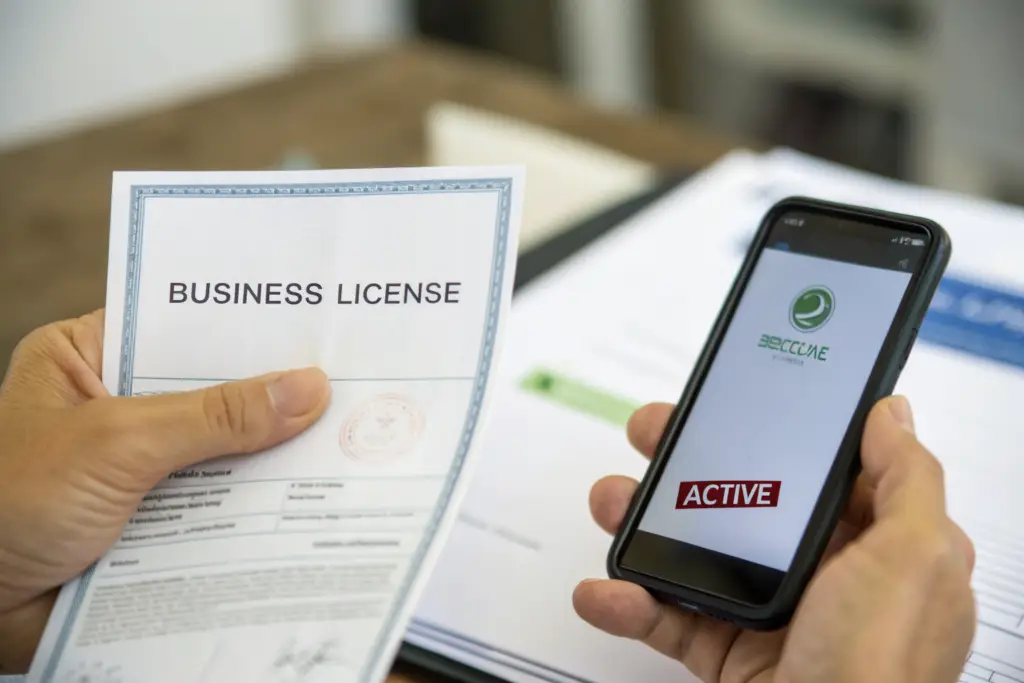
To verify legal existence, you must obtain a copy of the factory's official Business License. This document contains a unique, government-issued Unified Social Credit Code (in China). You should then independently verify this code on a reputable third-party verification platform that pulls data from the official government registry. Confirm that the company name, registered address, and business scope match what you have been told.
I recall a new brand founder who was about to send a deposit to a factory she found online. The website was beautiful. The salesperson was charming. As a final check, she asked for the Business License. The factory sent a blurry, incomplete scan. She asked us to take a look. The Unified Social Credit Code on the document was for a trading company, not a manufacturing factory. The "factory" was just a broker who would have marked up the price and had zero control over production. She walked away. That request for a license saved her thousands of dollars and months of potential headaches. This is a non-negotiable first step. You can use platforms like QiChaCha or similar business verification services that interface with China's State Administration for Market Regulation (SAMR) database to check the code.
What Is a "Unified Social Credit Code" and How Do You Check It?
This is the unique, 18-digit identifier for every legally registered company in China. It is the key to unlocking their official registration record. When you have this number, you can verify:
- Registered Company Name: Does it match the name on their website and invoices?
- Registered Legal Address: Is it a real, physical location? (Watch out for virtual office addresses).
- Business Scope: Does it explicitly include "manufacturing" or "production"?
- Company Status: Is it "Active" and in good standing?
- Shareholders and Legal Representative: Who are the people behind the company?
A legitimate factory will provide this number without hesitation. A reluctance to share it is a major red flag. This is the foundation of supplier due diligence .
Why Is a Live Video Tour More Reliable Than Photos or a Pre-Recorded Video?
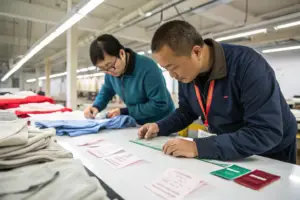
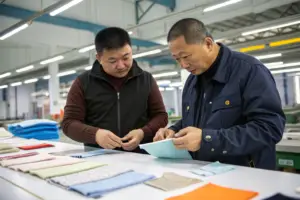
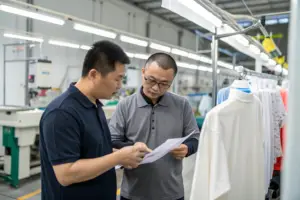
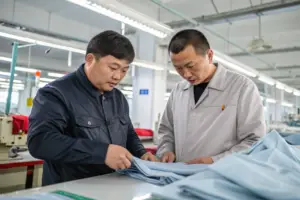
Photos can be stolen from other factories' websites. A pre-recorded video can be staged. A live, unscripted video tour is the gold standard for verifying physical existence and operational reality. During the call, ask them to:
- Walk the entire floor, slowly. Look for consistent branding, cleanliness, and organization.
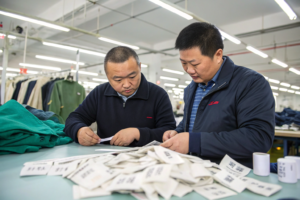
- Show current production. Ask to see the labels or trim cards on the bundles. This proves they are actively making goods for other brands.
- Point the camera at specific things: "Show me the ceiling. I want to see the fire sprinklers." "Show me the main exit door." "Show me the cutting table."
- Ask to speak to a random worker on the floor (with translation). "How long have you worked here?"
A factory that has nothing to hide will happily accommodate these requests. A factory that makes excuses ("bad internet today," "manager is not available") is a factory you should not trust. This is a standard part of our onboarding for new private label partners .
How Can Independent Audits and Certifications Validate Ethical Claims?
A factory can say they are ethical, safe, and compliant. They can even print logos on their website. But talk is cheap. You need objective, third-party proof. Independent social compliance audits and product safety certifications are the industry's tools for verifying these critical claims. However, the documents themselves can be faked. The real verification comes from checking the source.
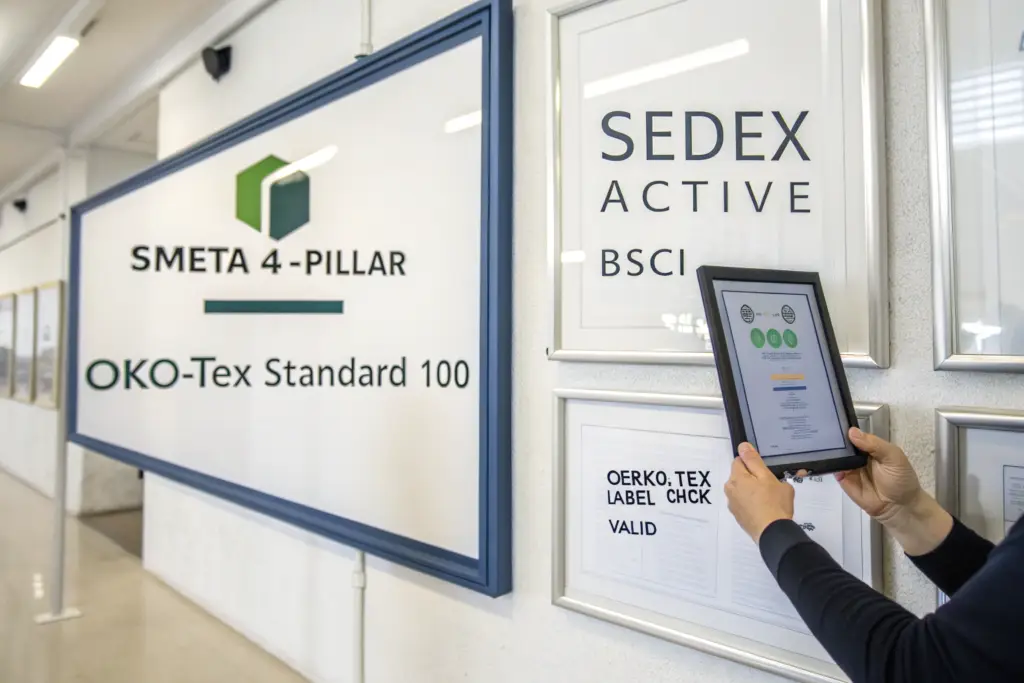
Independent audits like SMETA (Sedex) 4-Pillar and BSCI are the most credible validations of a factory's social and ethical performance. However, you must not accept a PDF at face value. You must verify the audit's authenticity by requesting the factory's unique reference number (e.g., Sedex Reference Number or Amfori ID) and checking the report directly on the official platform. Similarly, certifications like GOTS and OEKO-TEX should be verified on the certifying body's public database.
A large company buyer we work with has a strict vendor onboarding process. They do not just ask for our SMETA audit report. They ask for our Sedex Reference Number (ZC:) . They then log into their own Sedex account and view our live, unredacted audit report directly on the platform. They can see our full history, including any non-compliances and our corrective actions. This is the standard for serious, professional due diligence. We welcome it because we have nothing to hide. A factory that is unwilling to provide platform access for verification is a major red flag. This is a core part of our commitment to ethical production .

What Is the Difference Between Seeing a PDF Audit and Accessing It on the Sedex Platform?
This is the crucial difference between trusting a potentially forged document and seeing the source of truth. The Sedex platform is the central, secure repository for SMETA audit data. When a factory shares a PDF, it is a static image that can be easily manipulated. When they share their Sedex Reference Number, they are giving you the key to view the live, official version of the report, directly from the auditor. You can see the full, unedited findings, the auditor's notes, and the factory's corrective action plan. This is the only way to be certain the audit is authentic and complete.
How to Use the Public GOTS and OEKO-TEX Databases?
This is a simple, 60-second check that can save you from a greenwashing disaster. Every valid GOTS and OEKO-TEX certificate has a unique license or certification number.
- For GOTS, go to the official GOTS public database and enter the license number. It will show you the certified company's name, address, and the scope of their certification.
- For OEKO-TEX, go to the official OEKO-TEX Label Check and enter the certificate number. It will tell you if the certificate is valid, who it was issued to, and what product class it covers.
If the number does not appear, or if the company name does not match the factory you are talking to, the certificate is fraudulent. Walk away. This is a critical part of our brand protection advice.
What Are the Best Practices for Checking References and Past Performance?
Even with verified legal documents and a clean audit, you still need to know: What is this factory actually like to work with? Do they communicate well? Do they solve problems proactively? Do they hit their deadlines? The best way to answer these questions is to speak directly with other brands who have worked with them. However, you must ask for references in a way that yields genuine, useful information.
The best practice for checking references is to ask for contacts at brands with a similar production profile to yours (similar garment type, similar order volume). Do not just send a generic email. Get on a 15-minute video call. Ask specific, open-ended questions about communication, problem-solving, and reliability. Listen not just to what they say, but what they don't say. A moment of hesitation before answering can be as revealing as the words themselves.
I always advise clients to ask for references from a brand that is not the factory's biggest, most famous client. The service a factory gives to a massive, high-volume buyer is not necessarily the service they will give to a smaller, emerging brand. Ask for a reference from a brand that is at a similar stage to yours. When you speak to them, ask questions like:
- "Tell me about a time something went wrong with an order. How did the factory handle it?"
- "What is their communication style? Are they proactive or reactive?"
- "Have you ever had a quality issue? How was it resolved?"
- "Would you recommend them to a close friend?"
These qualitative conversations are invaluable. They reveal the factory's true character. This is the kind of partner we strive to be for our long-term partners .

What Specific Questions Reveal the Most About a Factory's Reliability?
Go beyond "Were you happy with them?" Dig into the specifics of the relationship:
- On-Time Delivery: "What is their actual on-time delivery rate, based on your experience? Not the promised date, but the actual date the goods shipped?"
- Quality Consistency: "Have you noticed any 'drift' in quality over multiple production runs?"
- Proactive Problem-Solving: "When a potential delay was looming, did they tell you early and offer a solution, or did they wait until you asked?"
- Transparency: "Do they provide you with in-process photos and QC reports without you having to ask?"
The answers to these questions will give you a realistic preview of what it is like to work with that factory on a daily basis.
How to Use Trade Shows and Online Platforms for Reputation Checking?
While not a substitute for direct verification, these can provide useful signals:
- Trade Shows: Meeting a factory in person at a reputable show like MAGIC or Texworld is a positive signal. It means they have invested in a physical presence. Collect their card and then follow up with the full verification steps outlined above.
- Online B2B Platforms (Alibaba): Look for "Verified Supplier" or "Gold Supplier" badges, but understand these are starting points, not guarantees. Read reviews carefully, especially the negative ones. Check how long they have been on the platform. A multi-year history is a positive sign, but still requires independent verification.
Always treat information from these sources as a lead to be investigated, not as a final endorsement.
How Does Fumao Provide Transparency and Build Trust from the First Contact?
We understand that choosing a manufacturing partner is a leap of faith. We do not expect you to trust us blindly. We expect you to vet us rigorously. Our entire new client onboarding process is designed to provide the transparency and verifiable evidence you need to make a confident, informed decision. We are proud of our operation, and we want you to see it for yourself.
Fumao builds trust from the first contact through a policy of proactive transparency. We offer a no-obligation, live video tour of our active production floor. We share our Business License and Sedex Reference Number without hesitation. We can provide verifiable references from clients with similar production profiles. Our goal is to answer all your due diligence questions before you even ask them, demonstrating that we are a legitimate, professional, and trustworthy B2B partner.
A potential client recently told our Business Director, Elaine, "I've spoken to five factories this week. You're the only one who volunteered to show me the inside of a carton on the live tour to prove it was real production for a real brand. That's when I knew you were the real deal." That is the level of transparency we believe in. We have nothing to hide. Our five production lines are clean, safe, and busy making beautiful clothes for brands across North America and Europe. We want you to see that. This open-book policy is the cornerstone of our B2B philosophy .
What Documents and Access Do We Provide During Vetting?
When a serious prospect is vetting us, we provide a comprehensive "Vetting Package," which includes:
- A copy of our Business License.
- Our Sedex Reference Number for direct SMETA audit access.
- Our GOTS and OEKO-TEX license numbers for independent database verification.
- A link to schedule a live video tour of our facility.
- Contact information for client references (with their permission).
We make the due diligence process as easy and transparent as possible because we are confident in what you will find. This is our commitment to transparent manufacturing .
Why Is a Factory's Willingness to Be Transparent a Key Indicator of Legitimacy?
Ultimately, the single most reliable indicator of a factory's legitimacy and trustworthiness is their willingness to be transparent. A legitimate, professional factory is proud of its operation. It has nothing to hide. It will welcome your questions, provide documentation, and open its doors (virtually). A factory that is evasive, makes excuses, or tries to rush you into a deposit before answering your questions is a factory that is hiding something. Trust your instincts. If the transparency is not there, the partnership is not worth the risk. Choose a partner who is an open book.
Conclusion
Verifying a garment factory's legitimacy and reputation is not a single action. It is a disciplined process of investigation and verification. It requires moving beyond the polished website and the charming sales pitch to examine the legal documents, witness the physical operation, and independently verify the compliance claims. It takes time and effort, but it is the most important investment you will make in your supply chain.
At Shanghai Fumao, we do not just understand this process; we welcome it. We have built our B2B business on a foundation of radical transparency because we believe it is the only way to build the deep, trusting, long-term partnerships that allow our clients' brands to thrive. We are an open book, and we invite you to read every page.
If you are ready to partner with a factory that earns your trust through transparency, let's talk. Our Business Director, Elaine, can walk you through our vetting package and schedule a live video tour of our facility. Please email Elaine at: elaine@fumaoclothing.com.