You have negotiated the price, finalized the Tech Pack, and are ready to start production. Now comes the conversation about money. You know you need to pay the factory, but the terms are a confusing mix of percentages and unfamiliar acronyms. You are nervous. You want to protect your cash flow, but you also do not want to scare off a good factory with unreasonable demands. A brand owner told me, "The payment conversation felt more intimidating than the design conversation. I was terrified of getting the terms wrong and either losing my money or losing the factory."
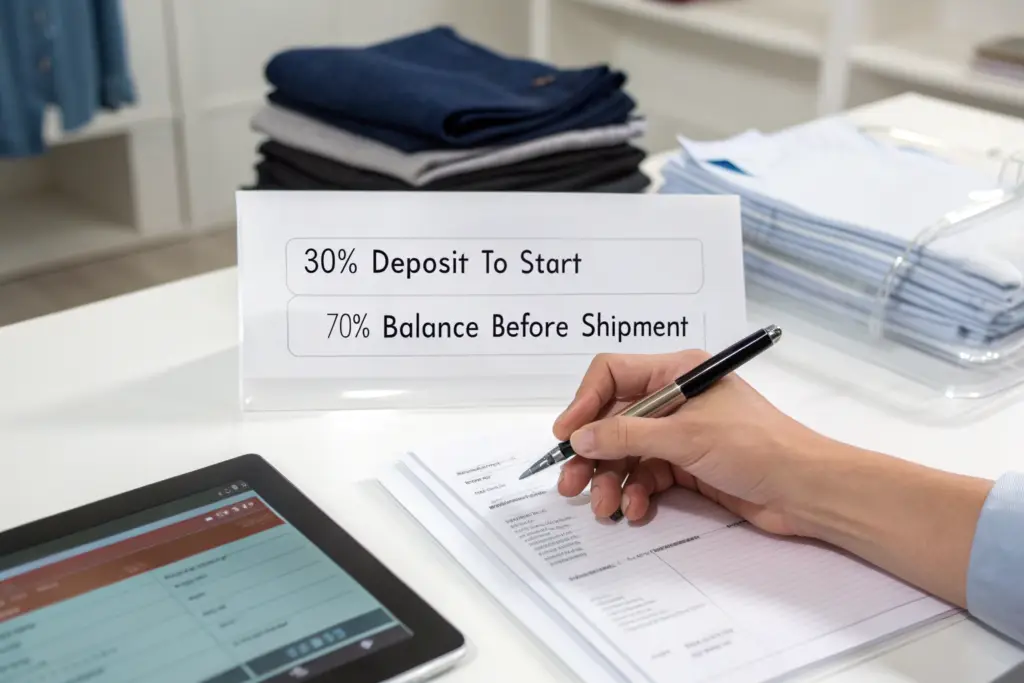
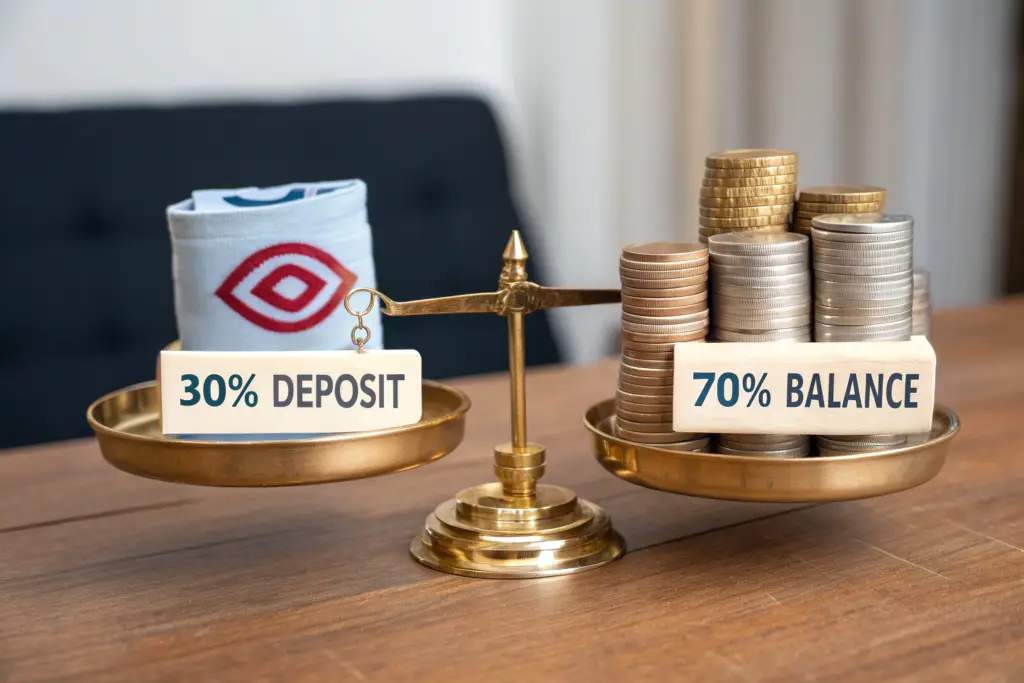
The standard and most common payment terms for custom clothing manufacturing, especially for a first-time B2B partnership, are a 30% deposit to initiate production and the 70% balance payment prior to shipment. This structure, known as 30/70 T/T (Telegraphic Transfer), balances the risk for both parties. The deposit covers the factory's upfront material costs, while the balance ensures the buyer has leverage for quality and delivery before the final payment is released.
At Shanghai Fumao, we believe in transparent and fair financial practices. Our payment terms are designed to protect both our B2B partners and our own operational stability. Let me demystify the process, explain the standard terms and the reasons behind them, and show you how a fair payment structure is the foundation of a trusted, long-term partnership.
What Are the Standard and Fair Payment Terms for a First Production Run?
The 30/70 payment structure (30% deposit, 70% balance before shipment) is the industry standard for a reason. It is a time-tested formula that aligns the incentives of both the brand and the clothing manufacturer. It is not arbitrary; it directly reflects the cash flow and risk profile of a private label production run. Understanding why this structure exists will help you see it as a fair practice, not an obstacle.
The 30% deposit is required upfront to secure the order and fund the purchase of raw materials—primarily fabric, but also trims like buttons and zippers. The 70% balance is due after production is complete and the goods have passed a final Pre-Shipment Inspection (PSI), but before the Bill of Lading is released. This ensures the buyer has significant leverage to ensure quality and timely delivery before making the final payment.
I recall a new brand founder who was very nervous about paying a 30% deposit to a factory she had never worked with. She asked, "What if I pay and they disappear?" It was a valid fear. I explained that the deposit is our protection as well. We are about to order thousands of dollars of custom-dyed fabric that has no other use. If she canceled the order after we bought the material, we would be left with a significant loss. The deposit covers that material risk. She understood. The transaction felt less like a gamble and more like a shared commitment. This is the foundation of a trustworthy B2B partnership .
Why Is the 70% Balance Tied to a Passed Pre-Shipment Inspection (PSI)?
This is the single most important protection for the buyer. The 70% balance should never be due simply on a calendar date. It must be tied to a specific, verifiable event: the completion and approval of the goods. The standard trigger is a passed Pre-Shipment Inspection (PSI) . This means an independent or factory QC team has audited the finished goods against the AQL standard and confirmed they meet the required quality. Only when this inspection is passed is the final invoice issued for the balance payment. This gives you immense leverage. If the goods fail inspection, you do not pay the balance until the issues are rectified. This is a key part of our quality control promise.
What Are the Risks of a 50/50 or 100% Upfront Payment Demand?
Be very wary of a factory demanding 50% upfront or, worse, 100% upfront for a first-time order.
- 50/50: While not uncommon, it signals a higher degree of caution from the factory, perhaps due to your newness or the complexity of the order. It gives you slightly less leverage.
- 100% Upfront: This is a major red flag. It removes all of your leverage. Once the factory has all your money, their incentive to meet quality standards or delivery dates is severely diminished. A factory confident in its product and processes will not need 100% upfront. It is an unacceptable risk for the buyer.
We offer 30/70 terms because we are confident in our ability to deliver a quality product on time. We want our partners to feel secure.
What Payment Methods Are Commonly Used in International B2B Manufacturing?
Once you agree on the payment schedule (e.g., 30/70), you need to decide on the payment method. How will the money actually move from your bank account to the factory's? This is a practical, but crucial, detail. Different methods offer different levels of security, speed, and cost. Choosing the right one for your business stage and the size of the order is important.
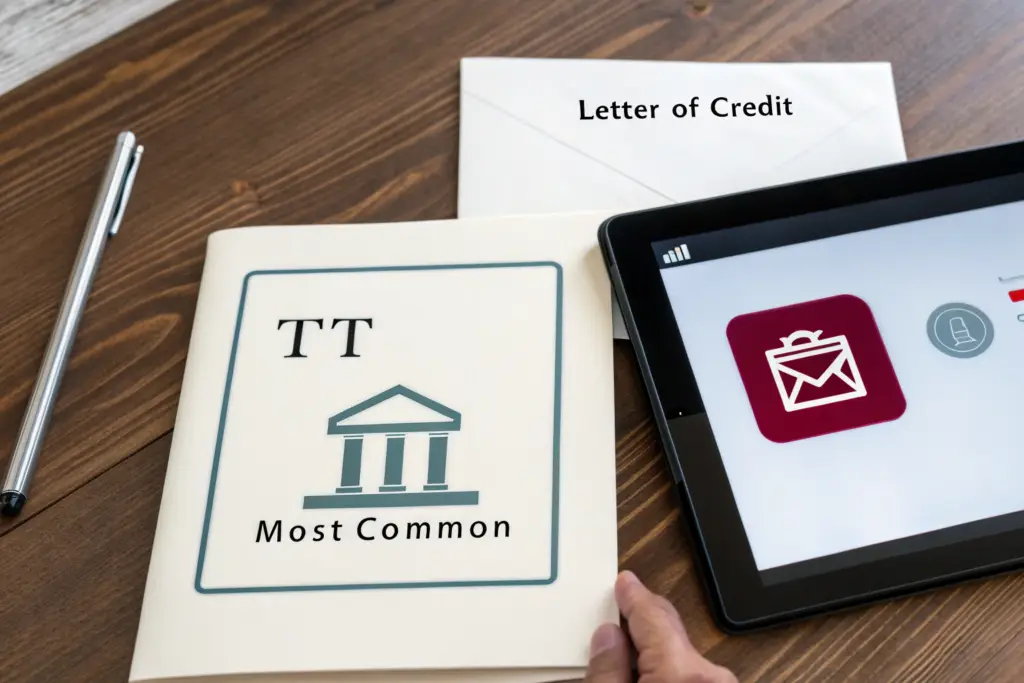
The most common payment method for B2B garment manufacturing is T/T (Telegraphic Transfer), also known as a wire transfer. It is fast, reliable, and has relatively low fees. For larger orders or new relationships where trust is still being built, a Letter of Credit (L/C) offers the highest level of security for both parties, as it involves a bank guarantee. Increasingly, modern FinTech platforms are offering a middle ground with lower fees and greater transparency than traditional banks.
A distributor we work with places regular, medium-sized orders. He uses T/T for all his payments with us. It is simple, and because we have a trusted long-term partnership, the process is smooth. A large company buyer placing a first-time, high-value order with a new factory will almost always use a Letter of Credit (L/C) . It is a more complex and expensive process, but the security it provides is essential for a high-stakes, initial transaction. We are comfortable working with both methods, depending on our client's needs and corporate policies. We can also discuss options available through modern international payment platforms .
How Does a Telegraphic Transfer (T/T) Work in Practice?
A T/T is an electronic transfer of funds from your bank account to ours. It is simple:
- We issue a Proforma Invoice with our full banking details (including the SWIFT code for international wires).
- You instruct your bank to send the specified amount.
- The funds typically arrive in our account within 1-3 business days.
The main thing to be aware of is that both the sending and receiving banks may charge fees (often $15-$50 per transaction). You should instruct your bank to send the payment "net of all charges," meaning you cover the fees so we receive the full invoiced amount.
What Is a Letter of Credit (L/C) and When Is It Necessary?
An L/C is a guarantee issued by your bank to our bank. Your bank promises to pay us a specific amount if and only if we present a set of pre-agreed, compliant documents (typically the Bill of Lading, Commercial Invoice, Packing List, and sometimes an Inspection Certificate). It is the safest method for both parties, as the bank acts as a trusted intermediary. It is best for:
- First-time, high-value orders where trust is not yet established.
- Large corporate buyers with strict treasury policies.
The downside is complexity and cost. Banks charge fees (often 1-2% of the invoice value), and the documentation must be absolutely perfect. A single typo can cause a payment delay. For established relationships, T/T is faster and cheaper. We offer flexible payment options to suit different partner needs.
How Do Payment Terms Evolve in a Long-Term Partnership?
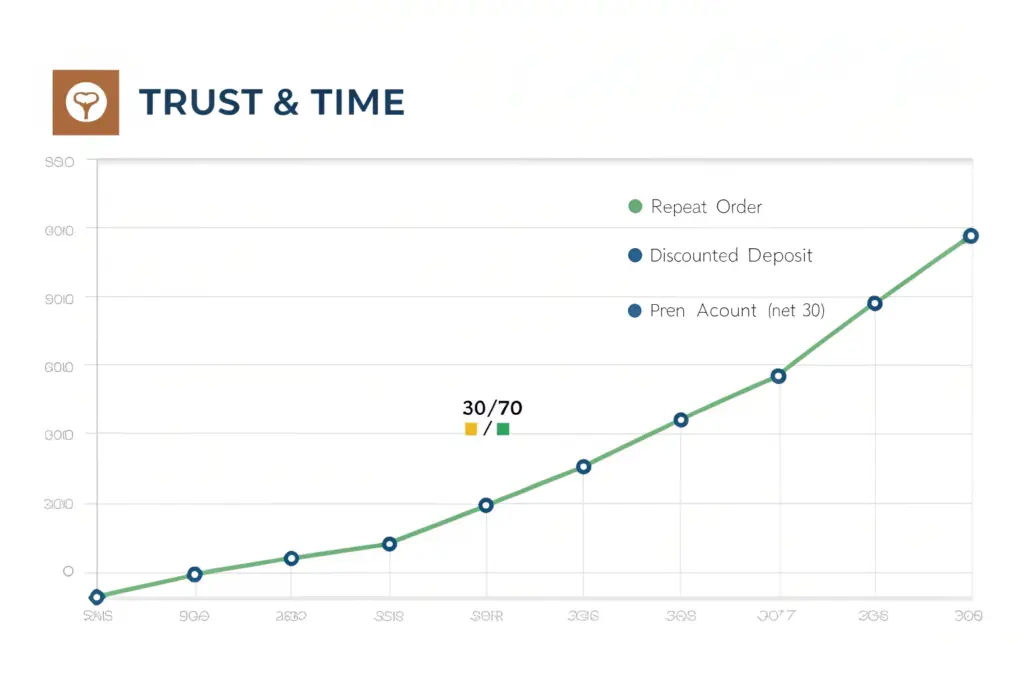
The payment terms for your first order are not set in stone for the life of your brand. They are the starting point of a relationship. As you successfully complete orders, pay on time, and build trust with your clothing manufacturer, the financial relationship can evolve. The factory's perception of risk decreases, and they may be willing to offer more favorable terms to a valued, reliable partner. This is one of the tangible benefits of a long-term partnership.
As trust is built over multiple successful production runs, payment terms can evolve to reflect the lower risk. A factory may be open to negotiating a lower deposit percentage (e.g., 20/80) for reorders, accepting payment for the balance after the goods have shipped, or, for very established partners, offering "Open Account" terms (e.g., Net 30), where payment is due a set number of days after delivery.
A brand we have worked with for over five years now operates on Net 30 terms for their regular reorders. They have a proven track record of consistent volume and prompt payment. We know their business. We trust them. This favorable payment term is a significant benefit to their cash flow. It allows them to sell the garments and collect revenue from their own customers before they have to pay us the balance. This is a powerful financial advantage that is only available to partners who have invested in the relationship. It is a reward for loyalty and reliability. This is the kind of strategic partnership we value.
What Does "Net 30" or "Open Account" Mean?
These terms represent the highest level of trust.
- Net 30: The factory ships the goods before receiving the balance payment. The full invoice amount is due 30 days after the Bill of Lading date (or date of delivery).
- Open Account: Similar to Net 30, it is a revolving line of credit.
These terms are rare for first-time or small-volume clients. They are reserved for established partners with a long, flawless payment history and significant, consistent order volume.
How Does Consistent Forecasting Impact Payment Flexibility?
As we discussed in building a long-term partnership, sharing a rolling 12-month forecast is a powerful trust-builder. It demonstrates that you are a serious, planning-oriented brand. A factory that can see your future volume pipeline is much more likely to be flexible on payment terms for your current orders, as they view you as a long-term investment, not a one-off transaction. Transparency in planning unlocks financial flexibility.
How Does Fumao Structure Invoicing and Payments for Transparency and Trust?
The way a factory handles the invoicing and payment process is a direct reflection of its professionalism and transparency. A vague email and a confusing invoice are red flags. A clear, documented, and predictable process builds confidence and reduces anxiety. We believe the financial aspect of the partnership should be as clear and well-managed as the production aspect.
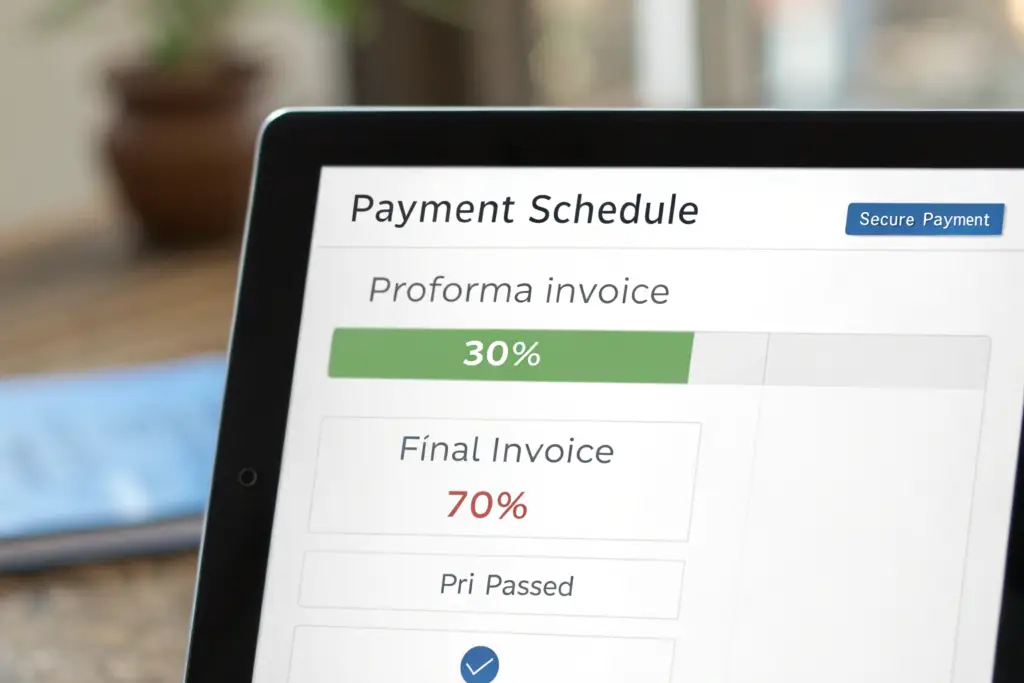
Fumao structures our payment process for maximum transparency. It begins with a detailed Proforma Invoice outlining the full cost breakdown and payment schedule. After order confirmation, we issue the deposit invoice. The final invoice is issued only after the client has received and approved the Pre-Shipment Inspection report. All communication regarding payment is documented in writing. This clear, step-by-step process ensures both parties are always aligned on financial expectations.
A new client recently commented on how much they appreciated our clear Proforma Invoice. It was not just a single number. It itemized the cost of the fabric, the trims, the labor, and the DDP shipping. They knew exactly where their money was going. This transparency built immense trust from the very first interaction. We also provide clear instructions for making international wire transfers, including our SWIFT code and any intermediary bank details. Our goal is to make the financial process as smooth and stress-free as the production process. This is part of our commitment to being a best-in-class B2B clothing manufacturer .
What Should a Professional Proforma Invoice Include?
A professional Proforma Invoice (PI) is more than just a total amount. It is a detailed financial roadmap for the order. It should include:
- Your Company Details and Our Company Details.
- A Unique Invoice Number and Date.
- A Detailed Description of Goods: Style numbers, quantities, unit prices.
- A Cost Breakdown: Ideally, showing Fabric, Trims, Labor, and Logistics components.
- The Agreed Payment Terms: Clearly stated (e.g., "30% Deposit, 70% Balance before shipment").
- Our Full Banking Details: Including Bank Name, Account Number, SWIFT Code.
We provide this level of detail on every PI. It is a standard part of our transparent pricing policy.
How Do We Handle Currency Exchange and Banking Fees?
We typically invoice in US Dollars (USD) to minimize currency risk for our US-based clients. For international wire transfers, it is important that you instruct your bank to send the payment "OUR" (which means you, the sender, pay all transfer fees). This ensures we receive the full invoiced amount in our account. If the payment is sent "SHA" (shared fees) or "BEN" (beneficiary pays fees), the amount we receive will be less than the invoiced total, and the shortfall will need to be settled on the next invoice. We provide clear guidance on this with every PI.
Conclusion
Understanding and agreeing upon fair payment terms is a critical step in building a successful and sustainable relationship with a custom clothing manufacturer. The standard 30/70 structure, paid via T/T and tied to a passed Pre-Shipment Inspection, is the industry's best practice for a reason—it fairly balances the financial risks of both the brand and the factory.
At Shanghai Fumao, we are committed to financial transparency and fairness. We believe that clear, professional payment terms, combined with a willingness to evolve those terms within a trusted long-term partnership, are the foundation of a strong B2B relationship. We do not just want your order; we want to be a reliable, transparent financial partner in your brand's growth.
If you have questions about payment terms or would like to discuss a potential project, let's talk. Our Business Director, Elaine, can walk you through our transparent process and provide a sample Proforma Invoice. Please email Elaine at: elaine@fumaoclothing.com.