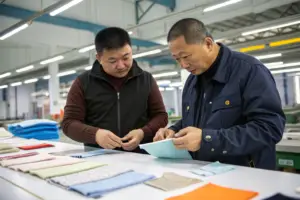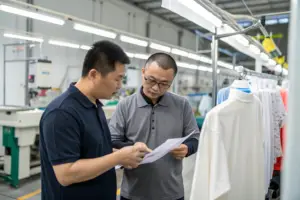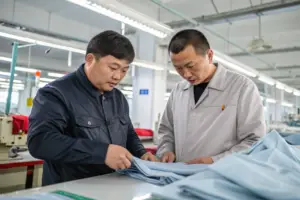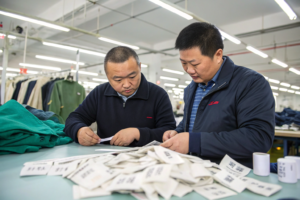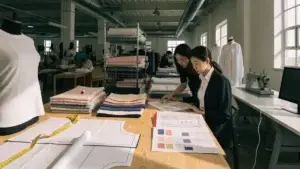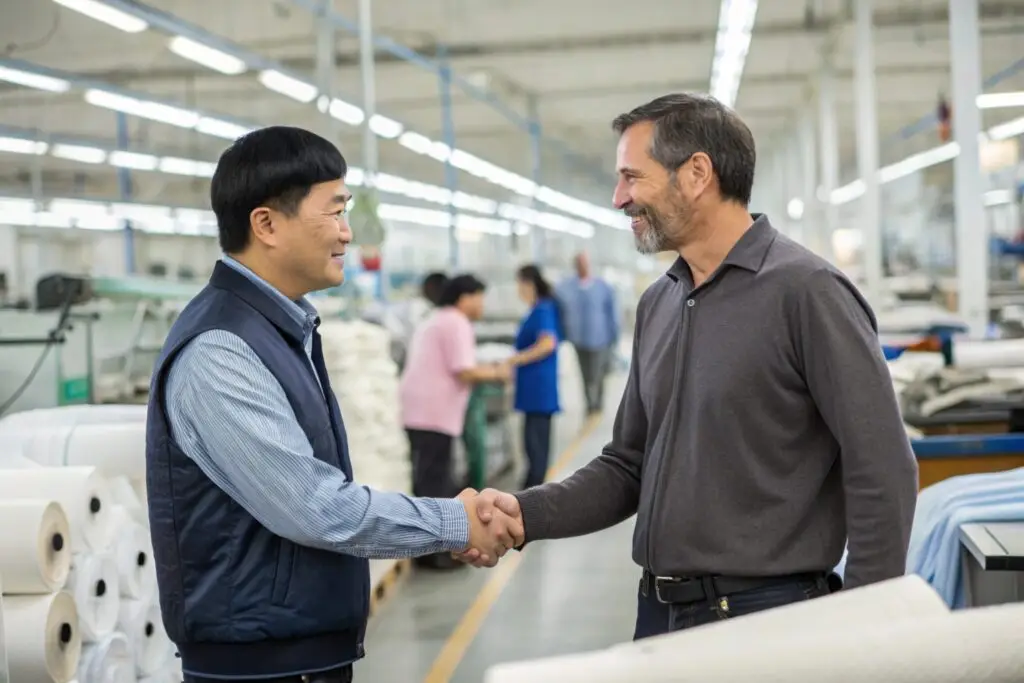
As the owner of Shanghai Fumao, I've sat across the table from dozens of American brand owners who are tired, frustrated, and sometimes outright angry. They tell me stories about wasted weeks waiting for email replies from trading companies. They show me photos of shipments that arrived with stitching completely different from the approved sample. They complain about certificates that look suspiciously like they were made in Microsoft Word. It’s a constant battle. And every time a season is missed because a middleman dropped the ball, a brand loses not just money, but the trust of their own retail customers. That's why more and more established buyers are changing their approach. They aren't just looking for a cheaper price anymore; they are looking for a direct line to the truth.
Large brand buyers insist on direct factory communication because it eliminates the information delay, quality dilution, and hidden markup costs inherent in using intermediary trading agents. Direct engagement with a manufacturer like Shanghai Fumao provides immediate technical feedback, transparent oversight of compliance certifications, and critical timeline control that prevents the financial disaster of a missed selling season.
If you are sourcing clothing from China, Vietnam, or India and still relying on a third party to relay messages back and forth, you are operating with one hand tied behind your back. You might feel like you're saving time by letting someone else handle the "details," but in reality, you're building a wall between your brand and the people who actually cut the fabric. Let me walk you through the real-world mechanics of how this works on the factory floor and why it matters for your bottom line.
How Does Direct Factory Contact Reduce Quality Control Failures?
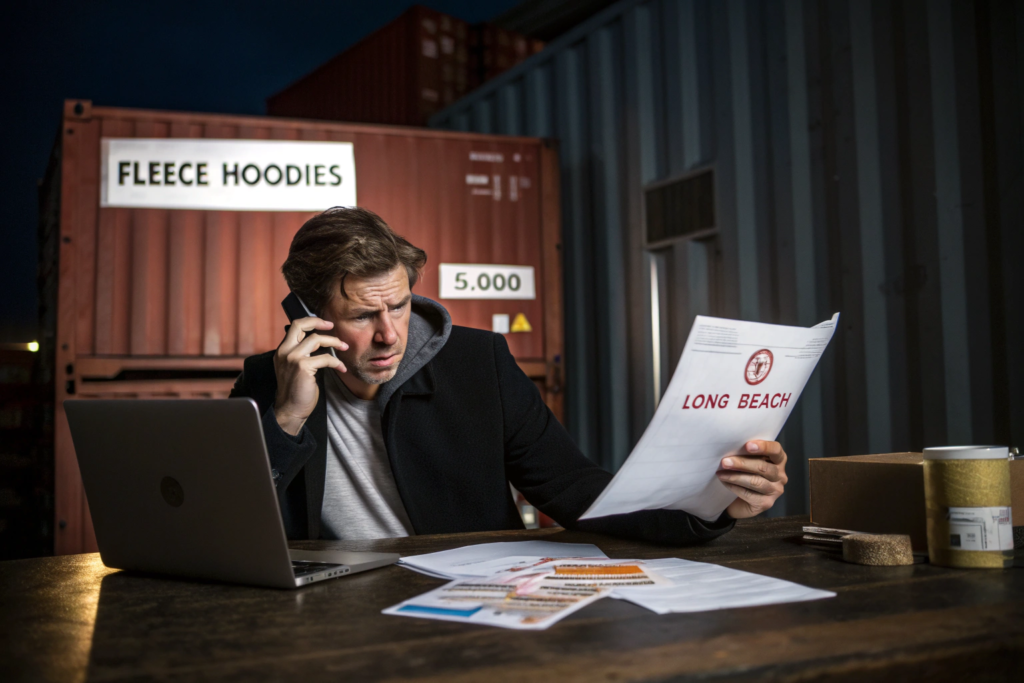
I remember a specific emergency call last November. A buyer from Texas was in a panic because a shipment of 5,000 fleece hoodies had just landed in Long Beach, and the zippers were sticking. He had been working through a sourcing agent based in Yiwu. The agent was sending emails to the factory. The factory was replying to the agent in Chinese. The agent was translating (poorly) back to the buyer. It took four days just to confirm which batch of zippers was used. When you buy direct from a factory like Shanghai Fumao, that four-day delay simply does not exist.
Direct contact creates a closed-loop quality system. Instead of filtered reports from a middleman, you get raw data and, more importantly, visual proof directly from the line.
There are three distinct layers to how direct oversight stops defects before they leave the loading dock. Let's break them down.
Why Is Real-Time Visual Confirmation Critical for Defect Prevention?
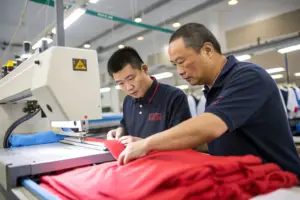
When you communicate with a trading company, you receive a polished "QC Report" that is often just a PDF with a few checkmarks. But when you are in direct contact with the production manager at Shanghai Fumao, you can demand a live video call from the stitching floor. Last spring, we were producing a complicated smocked dress for a boutique brand in California. The first run of 50 pieces had a slight tension issue on the smocking machine, causing the elastic to pucker incorrectly. Instead of shipping 500 bad units, our line supervisor caught it by 10:00 AM. I was able to WhatsApp the brand owner a photo of the defect by 10:15 AM. We stopped the line, adjusted the machine tension, and re-cut the affected panels by noon. If a trading agent had been in the middle, they would have told us "it looks fine" just to keep the schedule moving. By the time the buyer saw the problem, the entire order would have been finished and packed. Direct communication saves you from receiving a container full of "acceptable" defects.
How Does Inline Inspection Differ From Final Random Inspection?
This is a massive pain point that separates professional factories from simple assembly shops. Many buyers rely on AQL (Acceptable Quality Limit) standards, often using a 2.5 level for final random inspection. This means they check about 200 pieces out of a 10,000-piece order. That's a gamble.
Direct factory partnerships allow for a different model: Inline Inspection.
| Inspection Type | Stage | Intermediary Involvement | Result for Brand Buyer |
|---|---|---|---|
| Final Random Inspection | After 100% production & packing | Agent hires third party; report is delayed | High risk of whole batch rejection; costly rework in USA |
| Inline Inspection (Direct) | During Cutting, Sewing, Finishing | Zero. Direct feed to buyer | Defects fixed immediately; zero impact on ship date |
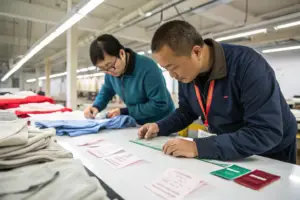
At Shanghai Fumao, we use a Traffic Light System on the floor. Red bins for rework, Green bins for pass. Our buyers can log into a shared cloud folder and see the ratio of Red to Green bins every 4 hours. This is the transparency you cannot fake and cannot get through a middleman. It's also why many brands are shifting their sourcing from pure price shopping to a Total Cost of Quality model. Fixing a seam in China costs $0.50. Fixing it in a US warehouse costs $15.00.
Can Direct Sourcing Prevent Missed Selling Seasons?
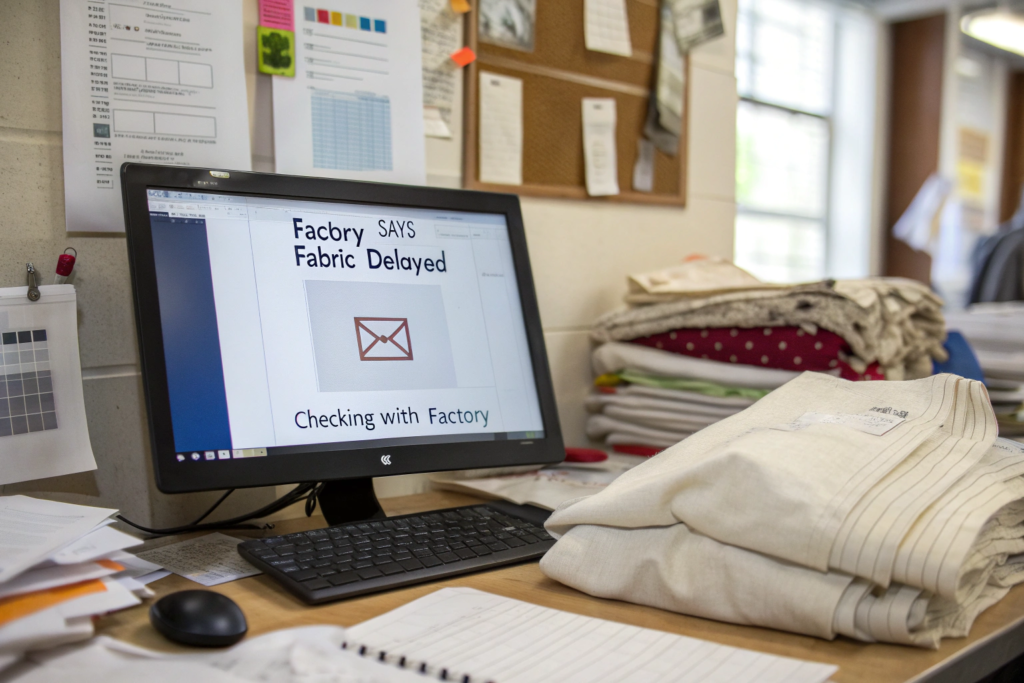
In 2023, we had a new client switch to us from a large trading company in Hangzhou. Their previous summer linen collection arrived on August 12th. In the US fashion calendar, August is clearance month for summer; the season is over. They lost 60% of their margin selling at a discount. This is the silent killer of apparel brands. When I asked why the shipment was late, the client showed me the email chain with the trading company. It was 47 emails long, mostly consisting of "Factory says fabric delayed" and "Checking with factory."
Direct sourcing cuts through the noise. The critical path in garment production is often determined by Fabric Greige Availability and Dyeing Capacity.
Let's look at the timeline differences. This is based on a standard 5,000 unit knitwear order.
Why Do Middlemen Struggle With Production Timelines?
A trading company manages risk by managing information flow—specifically, slowing it down. If there is a problem with yarn supply, the factory tells the agent. The agent takes a day or two to "formulate a solution" (which usually means finding out who is at fault) before informing the buyer. This creates a time vacuum.
Here is a real comparison of a 45-day production cycle:
| Production Phase | Direct Factory Communication | Via Trading Company |
|---|---|---|
| Fabric Delay Alert | Immediate notification (Day 2) | Buyer notified Day 5 (after agent confirms) |
| Problem Solving | Factory offers 3 alternative fabrics by Day 3 | Buyer receives 2 options by Day 7 |
| Production Start | Cutting begins Day 8 | Cutting begins Day 14 |
| Cumulative Delay | 0 Days (absorbed) | 6-8 Days (compounded) |
Six days might not sound like much, but in ocean freight, that's the difference between catching this week's vessel cut-off and waiting for next week's vessel. A missed vessel adds 7 days instantly. That 7 days pushes you past the Retail Compliance Date for major department stores, triggering chargebacks that can be 3% to 5% of the invoice value. By dealing with Shanghai Fumao directly, you aren't just talking to a sales rep; you're talking to the person who can re-prioritize the cutting schedule immediately.
What Is the Real Cost of a Missed Vessel Date?
Let's put a dollar figure on this delay. It's not just about the lost sales; it's about the hard costs and penalties.
- Air Freight Premium: To save a missed season, a 500kg shipment might cost $3,500 by sea but $12,000 by air. That's an $8,500 loss directly attributable to poor communication.
- Retailer Chargebacks: A major retailer like Macy's or Nordstrom has strict Vendor Compliance Manuals. A late shipment can result in a 5% cost-of-goods penalty.
- Markdown Money: If you miss the full-price window, you have to sell at 50% off or more. That erases your profit.
Last year, we ran a DDP (Delivered Duty Paid) program for a men's outerwear brand. Because we controlled the entire chain and communicated directly with their warehouse manager, we were able to adjust the Bill of Lading and routing three days before sailing to avoid a congested port. This proactive move saved them $11,000 in demurrage fees. A trading agent would have simply said, "The container is on the water; there is nothing we can do."
Is Direct Factory Access More Cost-Effective Than Using an Agent?
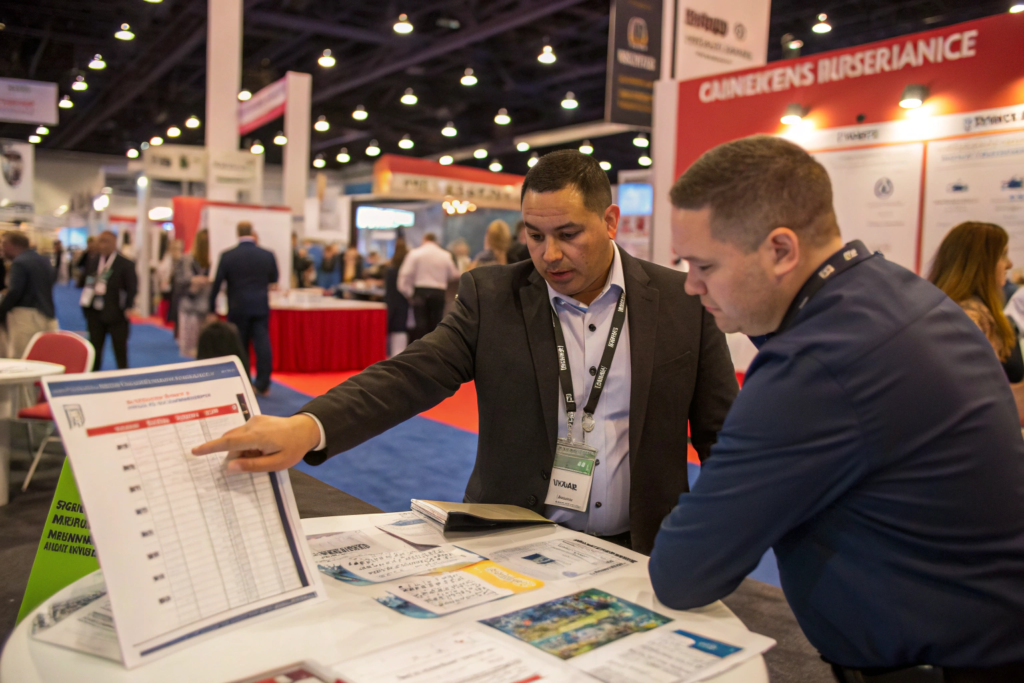
This is the question I hear most often at trade shows in Las Vegas. "Won't you just charge me the agent's commission anyway?" The answer is no, but the economics are more nuanced than just comparing a unit price on a spreadsheet. You have to look at Landed Cost versus FOB Price.
Many brands think they are getting a "factory price" from an agent, but they are actually getting a "factory price + 10-15% service fee + hidden logistics markup." When you cut out the middleman, the per-unit cost might stay the same on paper if you ask for a price match. But in reality, the value of that unit goes up significantly because the service surrounding it becomes more robust and less risky.
Let's examine the hidden costs that direct communication removes from your P&L statement.
What Hidden Fees Are Removed With Direct Communication?
Agents provide a service: they handle the language barrier and the time zone difference. But they also mark up freight and fabric. Here is a typical cost breakdown for a basic T-shirt order (FOB Price vs. Actual Cost).
| Cost Component | Through Sourcing Agent (FOB) | Direct with Shanghai Fumao (FOB) |
|---|---|---|
| Garment Price | $3.50 (Quoted) | $3.50 (Quoted) |
| Testing Fee | $450 (Agent Admin Fee) | $250 (Lab Direct Invoice) |
| Freight Markup | 15% hidden in freight quote | 0% (Direct contract with forwarder) |
| Sample Handling | $80/courier markup | $40/courier at cost |
In my experience, the biggest saving is not in the garment cost itself—competitive pressure keeps that fairly flat. The savings come from Testing and Compliance. We have a direct relationship with Bureau Veritas and SGS for fabric testing. When an agent handles this, they often add a "coordination fee." Over a year with multiple styles requiring CPSIA compliance for kids' wear or ASTM standards for sleepwear, these fees add up to thousands of dollars. Direct communication means you receive the lab's PDF report in your inbox at the same time we do. No markup. No delay. It's pure transparency.
Can Direct Communication Lower Product Development Costs?
Absolutely. This is where the creative process saves money. Let me give you a specific example from early 2024. A Chicago-based activewear startup came to us with a tech pack for a Seamless Legging. They had budgeted $2,500 for sampling with a Vietnamese agent.
Because they worked directly with Shanghai Fumao's pattern room, we identified that their proposed Gusset Construction would require a specialized machine we didn't have in-house for the initial sample run. Instead of spending $800 developing that specific detail for a first proto, we offered two alternative seams that could be made on existing machinery for the fit sample. Once the fit was approved, we invested in the new machine attachment for bulk production.
This process saved the client $1,200 in redundant sampling fees. An agent would have just sent the tech pack to the factory, collected the bill, and sent the sample back without any engineering input. Direct factory communication isn't just about making clothes; it's about Value Engineering. We look at how to achieve the same look and feel with smarter construction. This is especially critical for brands that are Private Labeling or doing Custom Cut and Sew for the first time.
How Does Direct Contact Verify Factory Compliance and Certifications?
This is the scariest part of overseas sourcing. I have heard too many stories about Social Compliance Audit documents being photoshopped. In the last 24 months, we've seen a rise in "greenwashing" in the supply chain where mills claim to use BCI Cotton or Recycled Polyester without the transaction certificates to back it up.
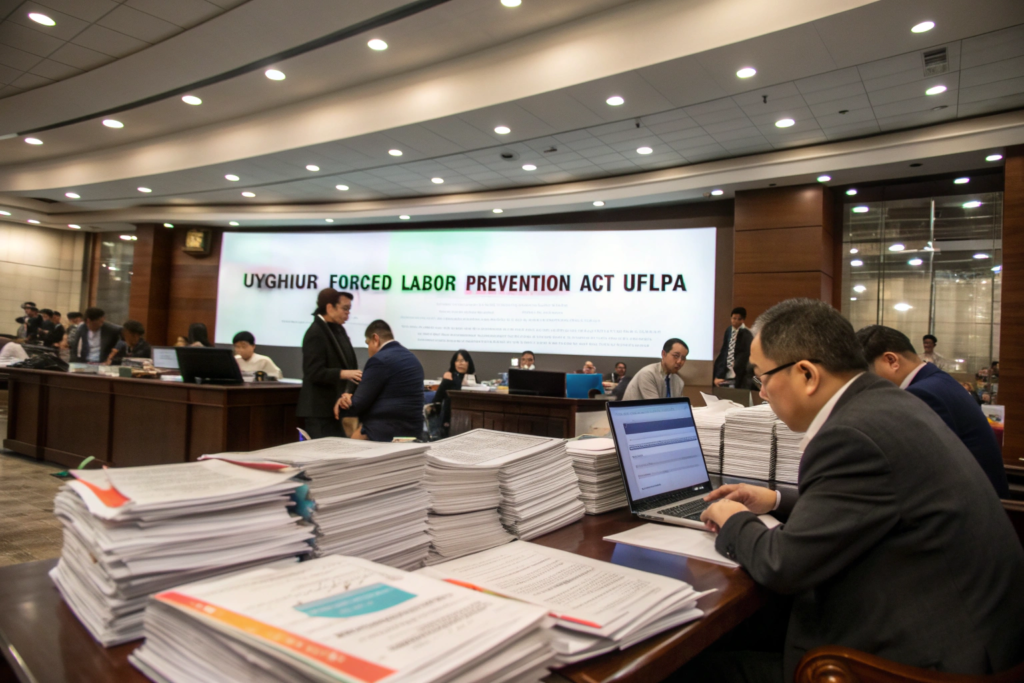
Large brands—especially those publicly traded or with strong ESG goals—are legally liable for what happens in their supply chain. The Uyghur Forced Labor Prevention Act (UFLPA) in the US has made it impossible for importers to plead ignorance. If CBP detains your shipment, you need documentation immediately. If you have to go through a trading company who then goes to the factory, you will run out of time to respond to CBP.
Direct contact means you get the raw, unedited documentation from the source.
Can You Verify Ethical Audits Without an Agent?
Yes. And you should. A legitimate factory will have no issue with a Virtual Tour or a Third-Party Unannounced Audit. In fact, we encourage it. Here is the workflow we offer our partners at Shanghai Fumao:
- Direct Access: You request the latest SMETA 4-Pillar Audit or WRAP Certificate.
- Verification: We provide the Audit ID Number. You can go directly to the auditing firm's public database (e.g., SEDEX) and verify the validity of the certificate yourself. This eliminates the risk of forged PDFs.
- Traceability: For fabric, we provide Transaction Certificates (TC) for organic or recycled content that match the shipment's Bill of Lading.
An agent might tell you "the factory is certified." But if they can't provide the login credentials to the online verification portal, you are taking a massive risk. With Shanghai Fumao, we give you the Factory Registration Number and the audit report reference. You verify it independently. This is the only way to sleep at night when you are importing 20,000 units of children's sleepwear that require strict Flammability Testing.
What Role Does Direct Communication Play in Fabric Traceability?
Fabric is where most counterfeiting occurs. A supplier might show you a swatch of Supima Cotton, but the bulk fabric is actually cheaper Upland Cotton. You can't tell the difference with your eyes; you need a lab scope.
Direct communication allows for a Chain of Custody approach. Here is a practical table showing how we manage this versus an agent.
| Verification Step | With Agent | Direct with Shanghai Fumao |
|---|---|---|
| Yarn Source | "From trusted mill" | Mill Name & Lot Number provided. |
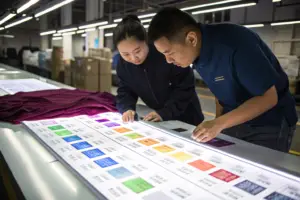
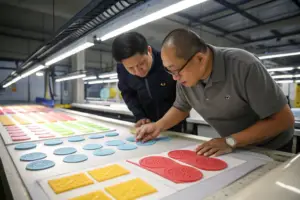
| Lab Dip Approval | Mail only. 7-10 days. | Digital Spectrophotometer reading shared same day. |
| Bulk Fabric Test | 2 weeks for report. | 3-day rush direct from SGS lab. |
| Cutting Ticket | Not shared. | Shared with buyer for verification of consumption. |
Last year, we produced a run of Merino Wool sweaters. The buyer requested RWS (Responsible Wool Standard) certification. Because we communicate directly with the spinner and the scourer, we were able to provide the full Scope Certificate and Transaction Certificate within 48 hours of the order confirmation. A trading company would likely have subcontracted this to a third-party mill and lost visibility of the wool's origin. This level of detail is no longer a "nice to have"—it's a requirement for selling on platforms like REI or Zappos.
Conclusion
Large brand buyers don't insist on direct factory communication because they enjoy micromanaging production lines at 2:00 AM due to the time difference. They do it because it is the single most effective risk mitigation strategy in the apparel industry. It closes the gap between the design sketch and the finished garment, removing the fog of war created by intermediaries. Whether it's stopping a zipper defect before it ships, saving $11,000 in port fees, or providing verifiable ethical compliance data, direct contact transforms a vendor relationship into a true partnership.
We've walked through the hard costs of miscommunication: the air freight premiums, the chargebacks, and the dead inventory from missed seasons. We've looked at the hidden value of engineering support during sampling and the absolute necessity of supply chain transparency in today's regulatory environment. The takeaway is clear. The further removed you are from the cutting table, the less control you have over your own brand's reputation.
If you are an apparel company owner tired of chasing vague answers and unverified certificates, I invite you to see how a direct partnership changes the game. At Shanghai Fumao, we operate five production lines specifically designed for the B2B wholesale and customization needs of the US and European markets. We don't just sew clothes; we manage risk and ensure your inventory arrives on time and to spec.
Let’s cut out the middleman and start a conversation about your next collection. You can reach our Business Director, Elaine, directly at elaine@fumaoclothing.com. She can provide a quote, arrange a virtual tour of our facility, and connect you directly with the people who will actually be making your garments. Stop guessing. Start knowing.