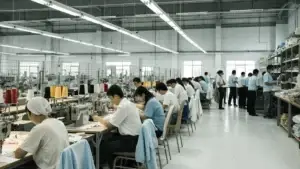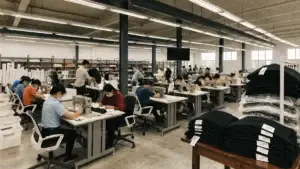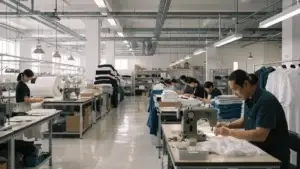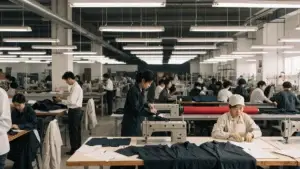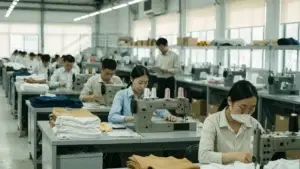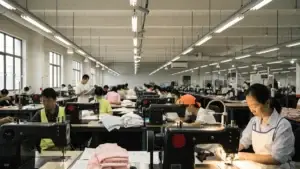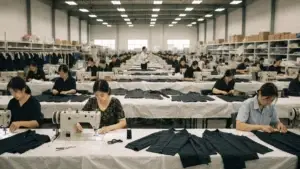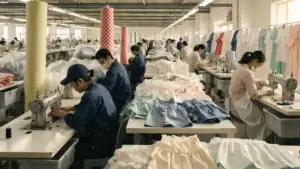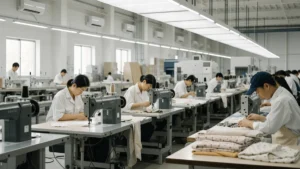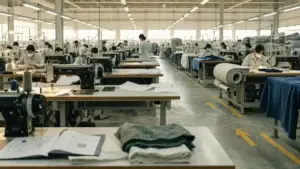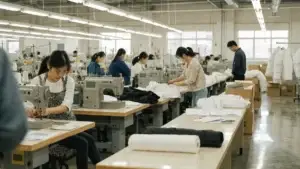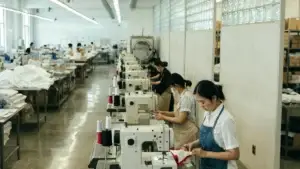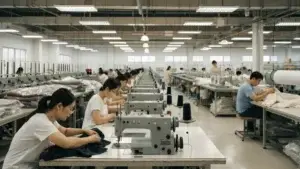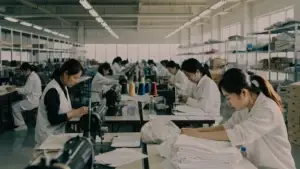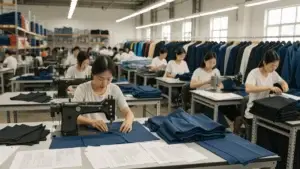
I have been in the garment business long enough to know one absolute truth. A factory is just a building with machines. What makes it work, or what makes it a nightmare, is the Production Manager. I have seen factories with brand new, expensive automated cutting machines fail to ship on time. And I have seen older factories with basic sewing machines run like a Swiss watch. The difference is always the person running the floor. When you are sourcing from overseas, you never meet this person face-to-face most of the time. But their skill, or lack of it, will determine your profit margin.
The top qualities of an effective garment production manager extend far beyond technical knowledge of sewing. They must possess a rare combination of Supply Chain Foresight to prevent bottlenecks, Crisis Management skills to solve problems without drama, and Communication Clarity to translate complex floor issues into simple updates for the brand owner.
At Shanghai Fumao, our production team is the engine of the business. Let me pull back the curtain and show you what you should be looking for, indirectly, when vetting a factory. Because if the production manager is weak, your order is in trouble.
Why Is Proactive Problem Solving More Important Than Sewing Knowledge?
Anyone can learn to sew a straight line with enough practice. That is a skill. But knowing how to handle a situation when the zipper shipment is late, or when the fabric shrinks 5% instead of 2%, that is an art. A great production manager is like a chess player. They are always thinking three moves ahead.
While technical sewing knowledge is a baseline requirement, proactive problem-solving is the distinguishing trait of a superior production manager. They anticipate issues like fabric shortages, machine downtime, and bottleneck operations before they impact the shipping date, implementing solutions quietly and efficiently without requiring constant oversight from the brand owner.
You want a manager who sees the fire before the smoke appears. You do not want a manager who just reports that the building has burned down.
How Does a Manager Handle the Inevitable "Fabric Emergency"?
Fabric is the lifeblood of production. And it is almost always late. Or flawed. A reactive manager waits for the fabric to arrive, realizes it is 500 yards short, and then emails the brand owner: "We have a problem. We need to delay shipment 10 days."
A proactive manager does this instead:
- Orders Buffer Stock: They know the industry standard waste factor. They order 3% extra fabric upfront just in case.
- Monitors Mill Shipping: They have a contact at the dye house. They know if the truck left the mill on time.
- Has a Plan B: If the fabric is delayed, they immediately look at the cutting schedule and ask, "Can we cut a different order for another client first to keep the lines moving, and then switch back?"
I remember a specific week last Fall. We had a large men's wear order scheduled to cut. The fabric mill called my production manager at 8:00 AM. "The dye lot failed the color fastness test. We need to re-dye. Fabric will be 4 days late." A lesser manager would have just marked the order "Delayed" and gone to lunch.
My manager immediately did three things:
- Called the cutting room: "Hold on that spread. Switch to Client B's order."
- Called the sewing line supervisor: "We are swapping styles tomorrow. Prep the folders for Style B."
- Called me (or Elaine): "Update the client. Give them the new ship date based on the mill's confirmed re-delivery."
Because of that 8:00 AM phone call, we shifted work seamlessly. The sewing lines never stopped. And while the men's wear order was delayed 4 days, the overall factory output for the month did not drop. That is the value of a manager who solves problems instead of just reporting them.
What Is the Role of "Line Balancing" in Hitting Deadlines?
This is pure industrial engineering. It is not glamorous. But it is where deadlines go to die or live. Line balancing is making sure that every operator on the sewing line has the exact same amount of work.
If Operator A (Sew Shoulder Seam) takes 30 seconds, and Operator B (Attach Collar) takes 60 seconds, you have a bottleneck. Shirts will pile up behind Operator B. The line moves at the speed of the slowest operation.
A skilled production manager walks the line and watches the bundles.
- Symptom of Bad Balancing: A big pile of cut pieces sitting next to one operator, while the operator next to her is waiting for work.
- Solution: The manager splits the collar operation into two steps (Attach Collar Top / Attach Collar Under) and assigns it to two operators. Now the line flows.
At Shanghai Fumao, we use a Modular Production System for complex women's wear. The manager uses a stopwatch app on their phone to re-balance the line every morning based on the style difficulty. This is how we achieve consistent daily output. A factory without a manager who understands line balancing will promise you 1,000 units a day and deliver 600. And you will be the one explaining the delay to your customers.
How Does a Production Manager Ensure Consistent Quality Across Bulk Runs?
Samples are easy. You make one perfect shirt. Bulk production is where the gremlins live. The operator gets tired. The machine tension drifts. The cutting knife is slightly dull. A great production manager is the guardian of the Standard.
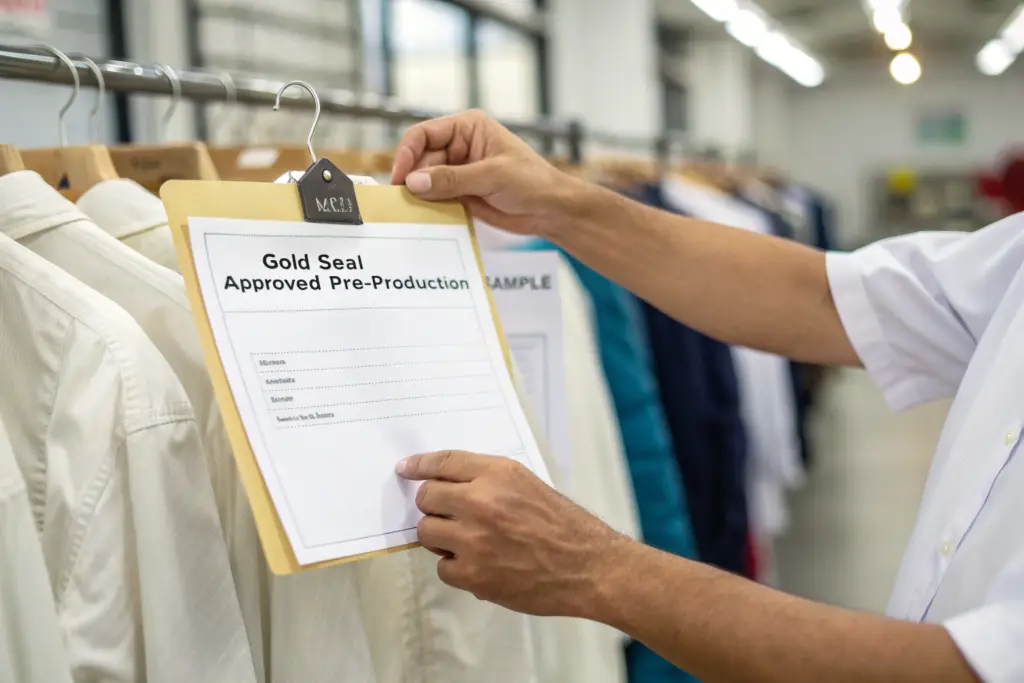
Ensuring consistent quality requires the production manager to enforce the "Standard Operating Procedure" (SOP) and the "Gold Seal Sample" with near-religious discipline. They do not rely on memory or verbal instructions; they ensure that every operator has a visual, physical reference for what "correct" looks like and that in-line checks are performed at critical construction points.
You cannot rely on final inspection to catch errors. Final inspection is a forensic report of what went wrong. The production manager is the police officer preventing the crime.
Why Is "In-Line Inspection" the Manager's Secret Weapon?
Most factories do End-of-Line Inspection. The shirt is finished, pressed, and buttoned. The inspector looks at it. If it is bad, it goes to the repair pile. But by then, 100 units have been sewn with the exact same mistake. The damage is done. The rework cost is high.
A strong manager implements In-Line Inspection.
- Checkpoint 1 (End of Cutting) : Is the placket cut on grain?
- Checkpoint 2 (After Collar Set) : Is the collar point length symmetrical?
- Checkpoint 3 (After Sleeve Attach) : Is the sleeve pitch correct? No twisting?
I recall an order of outerwear jackets. The design had a tricky welt pocket. The manager set up a "checkpoint" right after the pocket was sewn, but before the lining was closed. The in-line checker found that 2 out of the first 10 pockets had a slight puckering at the corner. The manager stopped the line. She adjusted the folder attachment on the machine. She retrained the operator for 5 minutes. The remaining 990 jackets were flawless. Without that checkpoint, we would have had 200 jackets with puckered pockets that needed to be opened up and re-sewn. That would have cost us two days of labor and delayed the container.
How Does a Manager Handle "The Friday Afternoon Slide"?
This is a real phenomenon in every factory in the world. Monday morning, quality is high. People are fresh. Friday afternoon, at 4:30 PM, quality dips. Operators are tired. They are thinking about the weekend. Stitches get skipped. Measurements drift.
A savvy production manager anticipates this human factor. On Friday afternoons, you will see them:
- Walking the Floor More Slowly: Just their presence reminds people to focus.
- Moving Difficult Operations: They might switch the line to an easier, high-volume basic t-shirt style instead of a complex blouse during the last hour.
- Spot Checking Vigorously: They pull random pieces off the line and measure them right in front of the operator.
I had a manager who would bring a small speaker and play upbeat music at 3:00 PM on Fridays. It sounds silly, but it boosted energy and kept the defect rate flat through the end of the shift. It is that kind of human understanding of the production floor that separates a time-server from a true leader.
What Communication Skills Bridge the Gap Between Factory and Brand?
You might have the best production manager in China, but if they cannot communicate with you clearly, you will feel like you are working with the worst. Communication is not about perfect English. It is about Clarity and Evidence.
A top-tier production manager communicates with precision and transparency. They provide concrete data (units cut, units sewn) and visual evidence (photos, short videos) rather than vague assurances. They understand that the brand owner's biggest fear is the unknown, and they proactively eliminate that fear through consistent, scheduled updates.
I train my managers to speak in a language that brand owners understand: Dates and Numbers.
Why Are Visual Updates More Effective Than Text Descriptions?
An email that says "The collar looks good" is useless to a brand owner in New York. Good according to whose standard? An email with a 10-second video of the collar being folded and showing the roll is priceless.
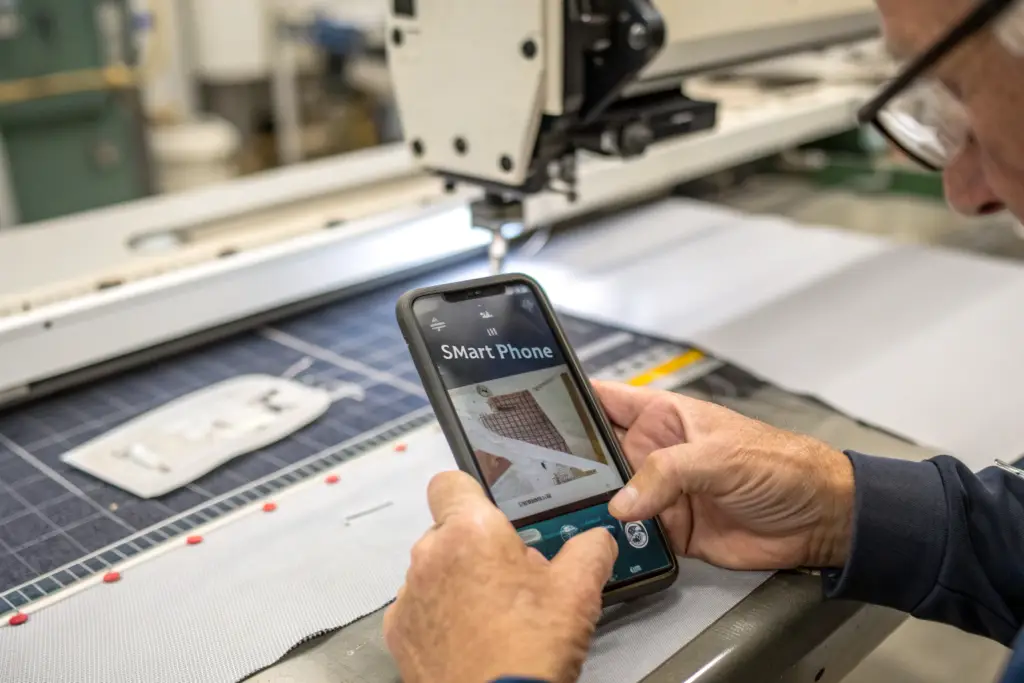
At Shanghai Fumao, our production managers are required to use their phones not for scrolling, but for documenting. We use a shared cloud folder for every client. The manager uploads:
- Photo of Cut Fabric Spread: Shows the layers and the alignment.
- Video of First Piece Sewn: Shows the construction sequence.
- Photo of Finished Measurement Check: Shows the tape measure on the garment.
This does two things. First, it gives the brand owner peace of mind. Second, it creates an Audit Trail. If three months later the brand says, "The collar on the re-order feels different," we can pull up the video from the first order and compare. "Here is Order #1. Here is Order #2. The construction is identical." This level of transparency prevents disputes and builds trust.
How Does a Manager Handle "Bad News" Delivery?
This is the ultimate test of character. Delays happen. Defects happen. A weak manager hides the problem, hoping it will magically fix itself (it never does). Or they send a panic-inducing email: "Big problem. Shipment late."
A strong manager uses the "Issue + Impact + Options" framework.
- Issue: "The zipper shipment from YKK was delayed due to a holiday at the port."
- Impact: "This will push our packing date by 48 hours. We will miss the Friday vessel."
- Options: "Option A: We ship by sea on Tuesday's vessel (arrives 4 days later). Option B: We air freight 20% of the order to cover your launch date, sea freight the rest."
I remember a situation with a kids' wear client. The snap buttons failed a lead test just days before shipping. A bad manager would have just shipped them and hoped customs didn't check. A mediocre manager would have just said "Order canceled." My manager called the client. "We have a compliance issue. Here is the lab report. We are sourcing certified snaps from a different supplier. They arrive in 3 days. We will re-set the snaps here. This will delay shipment 1 week. I know you have a photoshoot. We will courier 20 pieces that we fix by hand tomorrow."
The client was stressed, but she had a plan. And she knew we were protecting her from a recall. That is the value of a manager who communicates like a partner, not an order taker.
How Do You Assess a Production Manager's Organizational Skills?
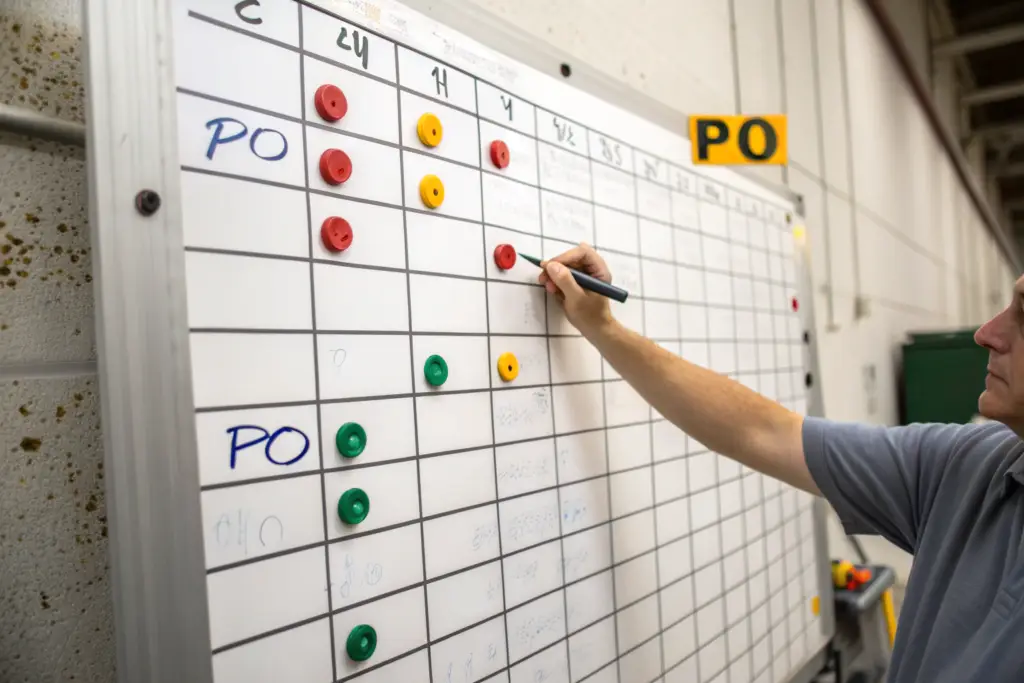
You will never see this whiteboard on a sales call. But this whiteboard is the central nervous system of a good factory. A production manager is essentially an Air Traffic Controller. They are managing multiple orders, multiple fabrics, and multiple deadlines simultaneously.
You can indirectly assess a production manager's organizational skills by the factory's adherence to the Time and Action (T&A) calendar. A well-organized manager maintains a dynamic production schedule that accounts for machine capacity, labor availability, and trim lead times, and they are never surprised by a "sudden" delay because they track dependencies weeks in advance.
Disorganization on the floor leads directly to missed ship dates for you.
What Is a "Capacity Crunch" and How Is It Avoided?
A capacity crunch happens when a factory takes on more orders than it can physically sew in a given week. It happens because the sales team over-promised, and the production manager did not push back.
A strong production manager knows the "Factory Capacity Formula."
- Total Operators: 80
- Average Efficiency: 85%
- Standard Minutes per Garment: 22 minutes (for a specific women's wear dress)
- Max Weekly Output: Calculated precisely.
When the sales team wants to slot in a new order, the manager looks at the Loading Chart. They can say, "We can do this order, but only if we shift the start date of Client A's order by 3 days. Do we have the buffer in Client A's calendar?" Or they can say, "No. We are full. We need to outsource this to a satellite workshop or push the delivery date."
I have seen factories accept every order and then collapse. Shipments go out 4 weeks late. A well-managed factory will occasionally say "No" to a new order. That is a sign of strength, not weakness. It means they respect the deadlines of the clients already in the system. At Shanghai Fumao, our production schedule is visible to the core management team. We never overload the lines.
Why Is Trim and Notion Inventory a Test of Organization?
Trims are the small things: zippers, buttons, labels, hangtags. They are easy to lose. They are easy to run out of.
A disorganized factory gets to the end of the order and realizes they are short 50 buttons. They cannot ship the order complete. They scramble to find matching buttons locally, which never look exactly right.
An organized manager has a Trim Card and a Trim Inventory Log.
- Trim Card: A physical piece of cardboard with every component of the garment stapled to it (fabric swatch, button, zipper, label).
- Inventory Log: A simple spreadsheet tracking "Received" vs. "Issued" vs. "Balance."
Before cutting starts, the manager confirms the trim inventory matches the cutting ticket plus 5% extra for loss and damage. If the numbers don't match, they stop the process and re-order before it becomes a crisis.
I recall a client who supplied their own expensive customizable logo leather patches. They sent exactly 1,000 patches for a 1,000 unit order. Our manager called them immediately. "We need at least 1,030. The sewing machine will eat a few." The client was annoyed but sent the extra 30. Sure enough, 7 patches were damaged during application. Because the manager was organized and demanded the buffer, the order shipped complete. Without that foresight, it would have been a 993-unit short shipment.
Conclusion
A great garment production manager is the unsung hero of your brand's success. You might never shake their hand or see their face. But they are the reason your shipment arrives on time and looks like the sample. They are the reason a fabric delay doesn't turn into a season-ending disaster. They are the reason the collar sits perfectly on 5,000 units.
When you are vetting a factory, you are not just vetting the sales rep or the price list. You are vetting the systems run by the production manager. Ask questions about their line balancing. Ask how they handle trim shortages. Ask for a sample of their weekly status report. The answers you get will tell you everything you need to know about how your order will be treated.
At Shanghai Fumao, we are proud of the production management team we have built. They are the quiet professionals who make our promises to you possible. If you want to work with a factory that values organization, transparency, and proactive problem-solving, reach out to our Business Director, Elaine. She works hand-in-hand with production every day to ensure your vision becomes a reality. Email her at strong>elaine@fumaoclothing.com</strong.