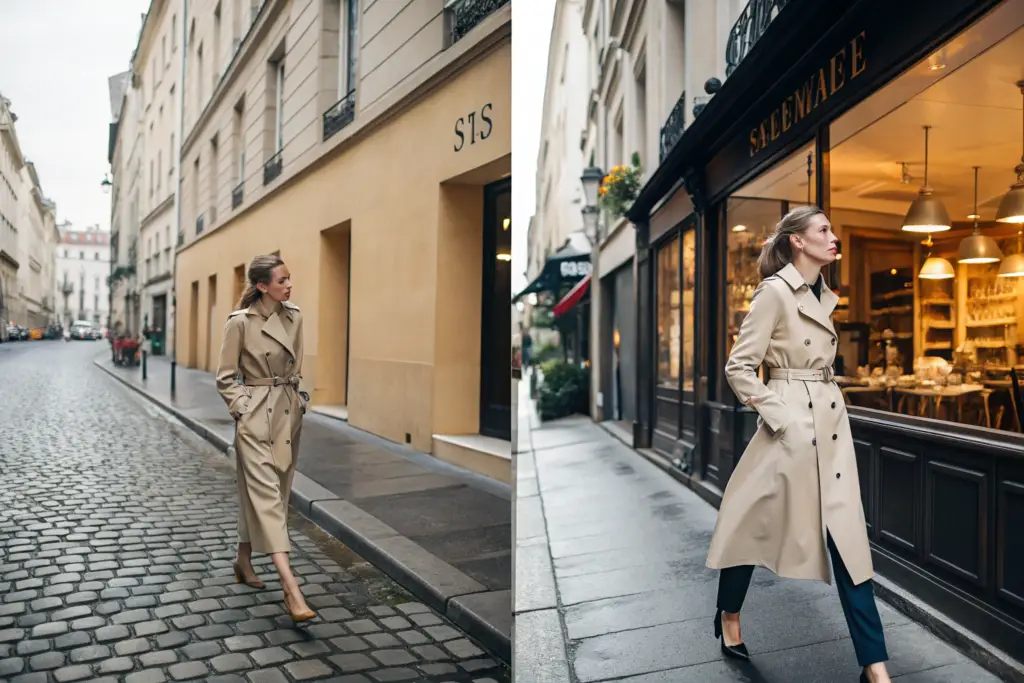
I have a client in Chicago. She is French by birth but has lived in the U.S. for twenty years. She came to me three years ago with a beautiful idea. She wanted to bring that specific, understated Parisian elegance to American women. She had the designs. She had the European fabric connections. But she had a problem. Her first two production attempts failed. The fit was wrong. The American sample size model kept saying the sleeves were too tight. The armholes were too high. And the factory she was using in Portugal could not hit the price point needed for the U.S. wholesale market. She was stuck between two continents.
Successfully importing European style women's wear into the USA requires bridging the gap between European design philosophy and American commercial reality. This involves technical adjustments to fit and sizing, strategic manufacturing to achieve viable landed costs, and a clear understanding of the nuanced differences in consumer expectations between the two markets.
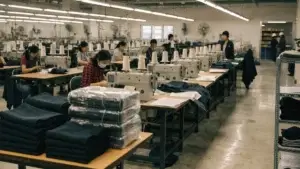
At Shanghai Fumao, we have become a bridge for these transatlantic brands. We use our manufacturing efficiency in China to execute European designs at a price that works for the U.S. market. Let me walk you through the specific challenges and how to solve them.
What Are the Key Differences Between European and American Fit Preferences?
This is the number one reason European brands fail in America. They assume that a "Size Medium" is universal. It is not. European clothing, particularly from France and Italy, is cut for a different body type and a different lifestyle. European fit tends to be "Tailored and Close." American fit tends to be "Comfortable and Forgiving."
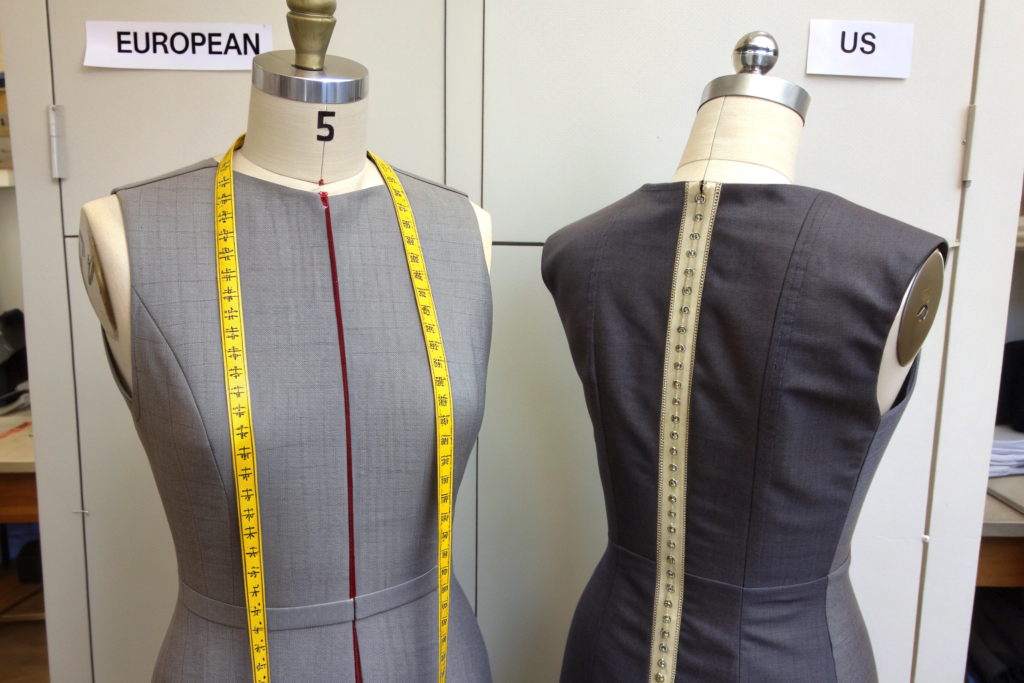
The primary fit differences between European and American women's wear lie in the shoulder slope, bicep circumference, and torso ease. European patterns typically feature a squarer shoulder, a narrower sleeve, and less allowance for movement in the bust and waist compared to the standard American fit model.
If you take a beautiful Italian blouse and simply size it up without regrading the pattern, you will end up with an American woman feeling like she is wearing a straitjacket. The garment is not wrong. The grading is wrong for the target customer.
How Should You Adapt European Shoulder and Sleeve Construction?
I learned this lesson the hard way with a women's wear jacket line we developed for a London-based designer. Her sample was impeccable. The wool was divine. But when we put it on our U.S. fit model (size 8), she could barely raise her arms to drive a car.
Technical Adjustments We Make for the U.S. Market:
- Shoulder Slope: The European shoulder is often more level. The American shoulder has a slightly more sloped angle. We adjust the pattern by dropping the shoulder point by 0.5cm to 1.0cm.
- Armhole Depth: European armholes (scye) are cut high and tight for a sleek look. Americans prefer a slightly lower armhole for comfort and layering. We lower the scye curve by 1.0cm to 1.5cm.
- Bicep Width: This is the biggest complaint area. We add an average of 1.5cm to 2.5cm of circumference to the bicep area for U.S. sizing.
I remember the Chicago client I mentioned earlier. Her first sample had a sleeve that was too tight for the American bicep. We did a "Fit Adjustment Session" over Zoom. I put the sample on our model and showed her the tension lines. We released the sleeve seam allowance and reshaped the armhole. The next sample was perfect. It retained that sharp European look but felt wearable for an American woman driving an SUV or typing at a desk. That balance is the secret.
Why Does "Vanity Sizing" Complicate European Imports?
This is a cultural and psychological minefield. In Europe, a size 40 is a size 40. It is based on body measurements in centimeters. In the U.S., sizing is inconsistent and often aspirational. A woman who wears a U.S. size 8 might be shocked to find she needs a European 42.
If you are a European brand, you have two choices when entering the U.S. market:
- Keep European Sizing (e.g., 36, 38, 40): This signals "Authentic European." It works for high-end, boutique brands where the customer expects to size up. You must provide a very clear size conversion chart.
- Convert to U.S. Letter Sizing (S, M, L): This is more approachable for mass market and e-commerce. However, you must adjust the physical garment measurements to match U.S. expectations. A U.S. Medium should have roughly the same measurements as a European 40/42, even if the tag says "M".
I always advise clients to provide Body Measurement Guides in inches on their website, not just a conversion chart. For example: "US Size 8 / EU 40. Bust: 36 in / 91 cm." This reduces returns because the customer can measure her own body. We also sew the care label with dual sizing when requested (e.g., "M / EU 40"). This helps with inventory management for the brand and reduces confusion at the boutique level.
How Can You Achieve the "European Look" with Competitive U.S. Pricing?
The European aesthetic is tied to fabric. It is about the drape of a heavy viscose crepe. It is about the texture of a brushed wool coating. But European fabric comes with a European price tag. If you manufacture in Europe using European fabric, your landed cost in the U.S. will often be too high for wholesale. You will price yourself out of the market.
Achieving competitive U.S. pricing for European-style garments requires a hybrid sourcing model. This involves using Asian manufacturing expertise to work with either imported European deadstock/fabric or high-end Asian-milled equivalents that replicate the handfeel and composition of the European original at a fraction of the cost.
You do not have to sacrifice the look. You just have to be smarter about where the pieces come from.
Is It Viable to Import European Fabric to Asia for Manufacturing?
Yes, and we do it regularly. For specific luxury clients, the "Made with Italian Fabric" story is non-negotiable. It is part of the brand DNA.
Here is the math we do with our clients:
- Scenario A: Made in Portugal (European Fabric + Labor) : Cost is X.
- Scenario B: Made in China (European Fabric + Asian Labor) : Cost is X minus 20-30%.
The savings come entirely from the labor and overhead differential. The shipping of the fabric from Italy to Shanghai adds about 2-3% to the material cost, but the savings on Cutting, Making, and Trimming (CMT) are substantial.
I worked with a brand that specialized in silk blouses. They were committed to a specific mill in Como, Italy. We arranged for the silk to be shipped directly to our factory in Shanghai. We handled the import customs for the raw material. We cut and sewed the garments. We then exported the finished goods to the U.S. The client saved over $12 per unit on labor compared to their previous Romanian factory. That savings allowed them to offer keystone markup to U.S. boutiques and still be profitable.
How to Source Asian Fabrics That Mimic European Quality?
This is where a factory's experience matters. You cannot just ask for "wool." You have to ask for the specific finish.
| Translation Guide for Fabric Sourcing: | European Descriptor | Asian Mill Equivalent / Specification |
|---|---|---|
| "Italian Crepe de Chine" | 16mm or 19mm Sandwashed Silk Charmeuse (China). | |
| "French Terry (Soft Hand)" | 380gsm 100% Cotton Fleece with Enzyme Wash and Silicon Softener. | |
| "Portuguese Flannel" | 100% Cotton Twill, Brushed Both Sides, 150gsm. | |
| "Loden Wool Coating" | 80/20 Wool/Poly Blend, Boiled Finish, 600g/M. |
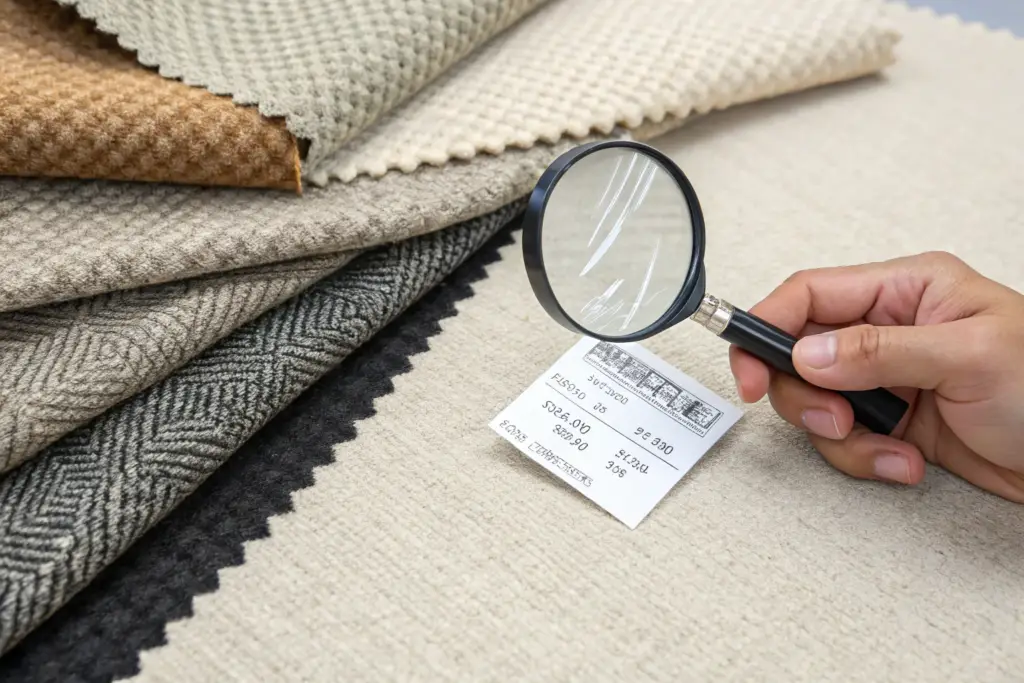
At Shanghai Fumao, we have a library of "European Equivalent Swatches." We show clients a sample from the Asian mill side-by-side with the European original. In 90% of cases, the difference is imperceptible to the end consumer, but the cost per yard is 40-50% lower. This is how you achieve that beautiful, minimalist outerwear drape at a price that works for a $198 retail price point instead of a $498 price point.
What Are the Labeling and Compliance Hurdles for Importing Apparel?
This is the boring part of fashion. It is also the part that gets your shipment held at the port for two weeks, racking up storage fees. When you import apparel, you are not just a designer. You are an Importer of Record. You are legally responsible for what is inside the box and what is written on the outside.
Importing women's wear into the USA requires strict adherence to labeling regulations enforced by the Federal Trade Commission (FTC) and Customs and Border Protection (CBP). Mandatory labels must include Fiber Content (in English), Country of Origin, and a Registered Identification Number (RN) or company name. European care symbols often differ from the ASTM standard preferred in North America.
Ignoring these details can result in costly delays and re-labeling fees.
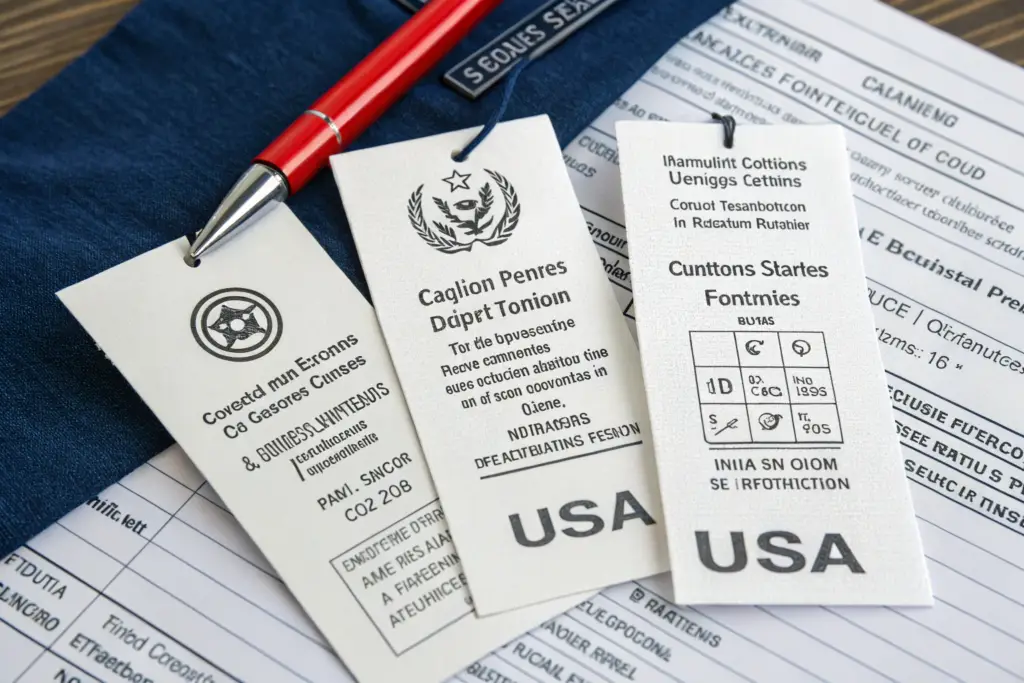
What Are the Mandatory FTC Label Requirements for U.S. Import?
If you are a European brand, you are used to care symbols that look like hieroglyphics (the ISO standard). In the U.S., while symbols are allowed, the Fiber Content and Country of Origin must be in English.
The Required U.S. Garment Label Must Include:
- Fiber Content: Must be listed in descending order of weight. (e.g., "100% Cotton" or "70% Wool / 30% Nylon"). Must be in English.
- Country of Origin: Must be conspicuous. (e.g., "Made in China"). This is non-negotiable for CBP.
- RN Number or Company Name: You need an RN (Registered Identification Number) from the FTC. It is free to apply for online. This allows you to use "RN 123456" instead of your full company name and address on the label, which looks cleaner.
I had a European client who shipped their first container with only the ISO care symbols and a "Made in Portugal" label (which was correct). The goods were flagged. Because the fiber content was not in English, CBP considered the goods "misbranded." We had to send a team to the warehouse in New Jersey to sew secondary labels over the existing ones. The cost was $1,800 in labor and a two-week delay. Apply for your RN number before you print labels.
How Do Care Labeling Standards Differ?
Europe uses a 5-symbol system (Wash Tub, Triangle for Bleach, Iron, Circle for Dry Clean, Square for Dry). The U.S. system under ASTM D5489 is similar but has specific nuances.
The biggest difference is "Do Not Dry Clean." In Europe, a crossed-out circle is clear. In the U.S., you must provide a reasonable basis for all care instructions. If you say "Dry Clean Only" on a cotton t-shirt, you might face consumer complaints because it is not necessary.
I always recommend that my clients use a Combination Label. Include both the ISO symbols (for global distribution) and the English text (for U.S. compliance). For example:
- Text: "MACHINE WASH COLD WITH LIKE COLORS. TUMBLE DRY LOW. COOL IRON IF NEEDED."
- Symbols: (Tub with 30C) (Triangle with X) (Iron with one dot) (Tumble Dry low symbol).
This covers you legally and makes the garment sellable in both European and American boutiques. At Shanghai Fumao, we keep a database of approved care text for different fabric types. We ensure the label matches the actual performance of the fabric.
How to Market European Aesthetics to the American Consumer?
You have the perfect fit. You have the right price. Now you have to tell the story. And this is where many European brands stumble. They assume that the same marketing that works in Berlin or Milan will work in Austin or Denver. It usually does not. American consumers buy the lifestyle, not just the clothes.
Successfully marketing European style in the U.S. involves translating "understated cool" into "everyday versatility." American consumers need to see how a structured Parisian blazer fits into a carpool lane or a casual brunch, not just a gallery opening. The visual language needs to be warmer, more accessible, and more focused on function alongside form.
You are selling the idea of European elegance, but you must make it feel attainable.

Should You Adapt Your Brand Voice for the U.S. Audience?
European luxury branding often relies on Aspiration and Mystery. The model does not smile. The copy is poetic. American branding, especially in the direct-to-consumer space, relies on Connection and Utility. The model is relatable. The copy explains why this dress is great for travel.
I had a client from Amsterdam. Her website copy was beautiful but vague. "A study in silhouette and shadow." American shoppers were confused. They wanted to know: "Does it have pockets?" "Is it stretchy?"
We worked with her to add a "Why We Made This" section to each product page.
- Old Copy (European) : "The Lila Blouse. An exploration of volume."
- New Copy (U.S. Added) : "Designed with a relaxed fit through the body. Features a hidden button placket for a clean look. Perfect for the office or dinner. Model is 5'9" wearing a size Small."
Sales increased by 30% the month she made that change. She did not change the product. She changed the conversation around the product. She made it legible to the American woman who wants to look chic but also needs to know if she can wear a regular bra with it.
How Important Is Showing "Wearable Versatility" in U.S. Imagery?
In Europe, a woman might buy a specific dress for a specific event. In the U.S., women want "Cost Per Wear." They want to know that the expensive blouse can be worn to work, then to a bar, and then on the weekend with jeans.
Your lookbook should show this explicitly.
- Shot 1 (European Vibe) : Model in the dress, standing by a modern architecture building. (This sets the tone).
- Shot 2 (American Vibe) : Model in the same dress, sitting on a park bench with sneakers and a tote bag. (This shows utility).
We work with our clients to produce "Lifestyle Flat Lays" during production. We style the garments on a flat surface with accessories that an American woman recognizes (a Stanley cup, a Kindle, a pair of Veja sneakers). This imagery performs incredibly well on Pinterest and TikTok. It bridges the gap between European design and American life.
Conclusion
Bringing European style to the American market is a beautiful but complex puzzle. It is not a simple copy-and-paste job. You have to respect the design integrity of the European aesthetic while embracing the commercial and cultural realities of the American consumer. You have to adjust the armhole without destroying the silhouette. You have to find the fabric that looks like Biella but costs like Shanghai. And you have to tell a story that makes a woman in Kansas City feel like a woman in Copenhagen.
This is exactly what we specialize in at Shanghai Fumao. We are the technical and logistical bridge. We help you navigate the fit, the fabric sourcing, and the compliance so you can focus on building the brand.
If you are ready to translate your European vision for the American wardrobe, let's talk. Our Business Director, Elaine, understands the nuances of both markets. She can help you plan a collection that looks like Paris but fits like America. Reach out to her at strong>elaine@fumaoclothing.com</strong.