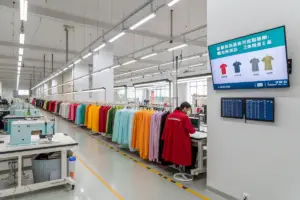
Scaling a clothing brand is terrifying. I know this because I have watched dozens of my clients go through it. You start small. You sell a few hundred units on Shopify or at a local market. It works. Then suddenly, a post goes viral on TikTok. Or a buyer from a major boutique places an order for 2,000 units. Your heart races. You are excited. And then you panic. How do you make 2,000 units when you barely managed 200? This is the moment where a reliable B2B supplier becomes the difference between explosive growth and a spectacular failure.
Scaling a clothing brand quickly requires a B2B supplier who can absorb your growth without breaking. This means a partner with flexible production capacity, robust raw material access, and internal systems that can handle volume increases without sacrificing quality or delivery timelines. The right supplier does not just make clothes; they remove the operational friction that caps your revenue.
At Shanghai Fumao, we have helped brands go from 500 units per month to 5,000 units per month in a single season. It is not magic. It is about having the right infrastructure and the right relationship. Let me walk you through exactly how to find and leverage that kind of partnership.
What Production Capabilities Allow a Factory to Scale with You?
I cannot tell you how many times a new client has come to me in a panic. Their previous supplier was great for samples and small runs. But when the brand landed a big wholesale order, the factory ghosted them. Or worse, they took the deposit and delivered the goods six weeks late. The factory had the sewing machines, but they did not have the capacity. They were a small workshop playing dress-up as a factory.
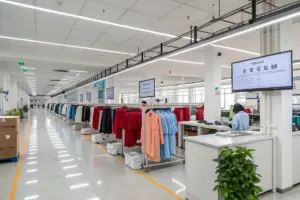
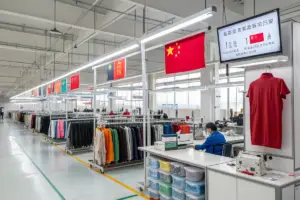
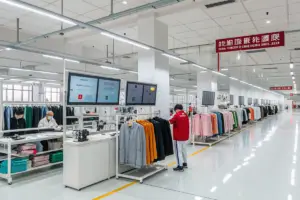
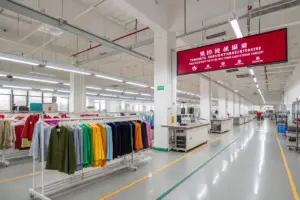
A factory’s ability to scale with a brand hinges on three core capabilities: Vertical Integration of key processes, Depth of Skilled Labor, and Financial Strength to procure raw materials upfront. Without these, a factory will hit a hard ceiling on volume and either decline your growth or fail catastrophically trying to meet it.
When you are vetting a partner for the long haul, you need to look past the sample room and into the engine room of the operation.
Why Does Vertical Integration Prevent Bottlenecks?
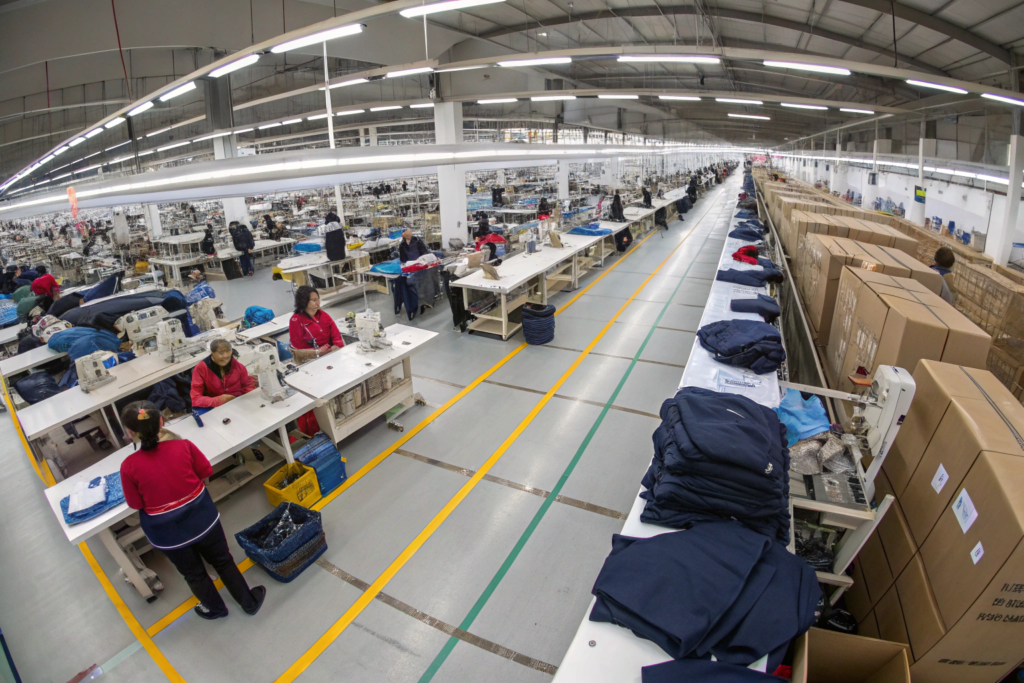
A bottleneck is where your order gets stuck. The most common bottleneck in apparel is fabric sourcing and cutting. If a factory relies on a third-party cutting service or a small external dye house, you are at their mercy.
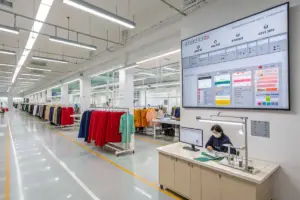
At Shanghai Fumao, we are not fully vertical like a massive denim mill, but we control the critical path. We have our own cutting tables and spreading machines. This means we do not wait in line behind another factory’s order to get our fabric cut.
Here is a comparison of how a bottleneck affects scaling:
| Process | Vertically Integrated Supplier (Shanghai Fumao) | Fragmented Supplier (Trading Company) |
|---|---|---|
| Fabric Dyeing | Partner mills with priority allocation. | Spot market availability. Delays common. |
| Cutting | In-house. Scheduled to match sewing line availability. | Outsourced. Wait time: 3-7 days. |
| Printing/Embroidery | Dedicated in-house partners. | Subcontracted with no priority. |
| Quality Control | Full-time in-line inspectors. | End-of-line only. Issues found too late. |
I remember a brand that needed to re-order a best-selling hoodie in the middle of winter. Their previous factory said the cutting service was booked for four weeks. Four weeks! That delay would have killed their restock window. Because we control our cutting schedule, we slotted their re-order in within 48 hours and had fabric on the sewing lines by the end of the week. That is how you keep a viral product in stock.
How Does Labor Depth Ensure Fast Turnaround Times?
Sewing is manual labor. There is no button you press to make 5,000 shirts appear instantly. You need people. And you need them trained on your specific style.
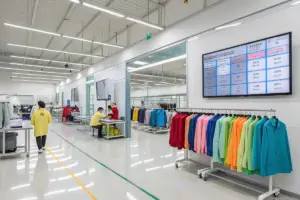
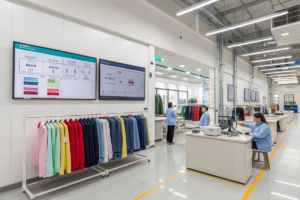
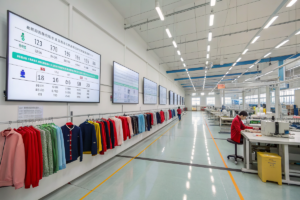
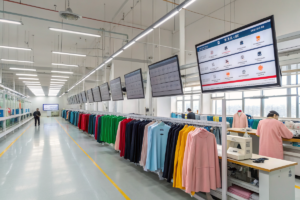
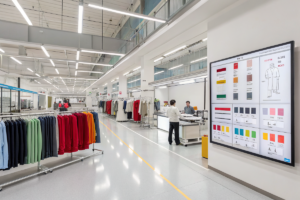
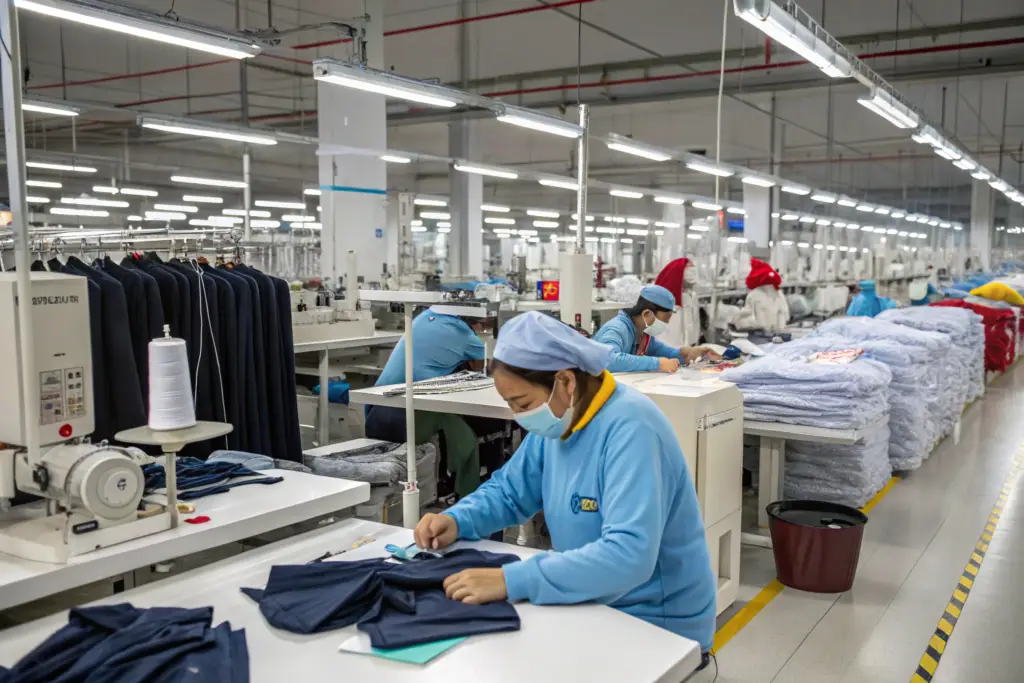
A factory with only 20 operators cannot scale to 2,000 units per week of a complex women’s wear blouse. They simply do not have the hours in the day. We operate 5 distinct production lines. This allows us to segregate work.
- Line 1 & 2: Dedicated to high-volume basic men’s wear tees and trousers.
- Line 3: Dedicated to outerwear and complex jackets.
- Line 4: Flexible line for kids’ wear and smaller run special projects.
- Line 5: Overflow and rapid response line.
When a client needs to scale from 500 units to 3,000 units of a specific t-shirt, I do not need to disrupt the jacket line. I shift the t-shirt production from one line to two lines. We duplicate the workflow. We train the second line using the first line as a model. This is only possible with a deep bench of skilled sewers and mechanics who can set up the specialized folders and attachments.
How Do You Avoid Stockouts and Fulfillment Delays During Rapid Growth?
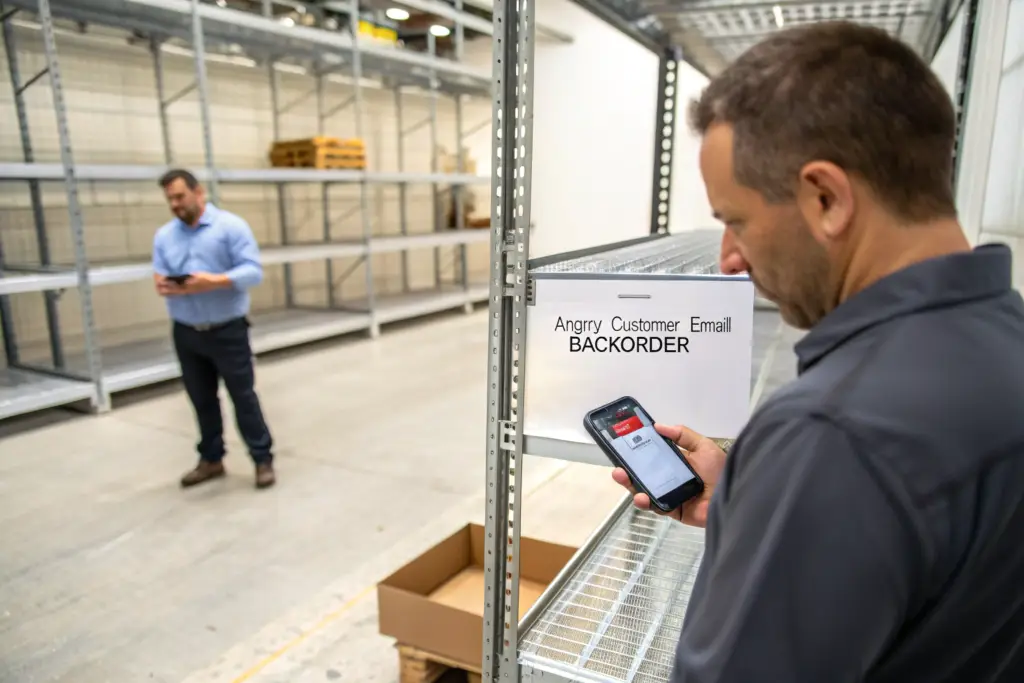
Growth kills cash flow. You sell out. You take the revenue. You place a re-order with the factory. But now you have a 60-day lead time. Your website says “Sold Out” for two months. Your momentum dies. Your customers forget about you. This is the trap of “hand-to-mouth” inventory management.
Avoiding stockouts during scaling requires a shift from reactive ordering to proactive inventory planning with your B2B supplier. This involves establishing Safety Stock programs for blank goods, implementing Rolling Purchase Orders, and leveraging the supplier’s warehousing capabilities to buffer finished goods closer to your market.
You cannot scale a brand on 30-day inventory. You need a supply chain that gives you 90-day visibility and the ability to pull inventory forward quickly.
What Is Greige Goods Inventory and Why Does It Matter?
This is an insider secret. “Greige goods” (pronounced “gray goods”) is fabric that has been knitted but not yet dyed or finished. It is a blank canvas.
Smart factories like Shanghai Fumao keep an inventory of greige goods for our best-selling yarn counts. Why? Because the longest part of the supply chain is often the knitting and dyeing. If you wait until you have a PO to start knitting yarn, you are looking at 45 days just for fabric.
If we have Greige Inventory, the timeline changes:
- Standard Lead Time: Knit (20d) + Dye (15d) + Cut/Sew (20d) = 55 Days.
- Greige Inventory Lead Time: Dye (15d) + Cut/Sew (20d) = 35 Days.
I worked with a brand that sold a specific shade of “Heather Charcoal” fabric. It was a blend of cotton and polyester. We kept 5,000 yards of greige ready in our warehouse. When their sales spiked in October, we were able to ship replenishment orders in 4 weeks instead of 8. They captured an extra $50,000 in sales that month simply because the shelves were full. That is the power of a supplier who invests in raw materials before the order is placed.
How Can a Supplier’s Logistics Network Speed Up Delivery?
Speed is not just about sewing. It is about the last mile. The boat from Shanghai to Los Angeles takes 14-18 days. That is physics. You cannot change that. But you can change what happens before the boat and after the boat.
Acceleration Tactics We Use for Scaling Brands:
- DDP Shipping with Express Clearance: We use customs brokers who clear goods before the vessel arrives. This saves 2-3 days of sitting at the port.
- Direct-to-Consumer (DTC) Fulfillment Prep: We can pack your goods according to your 3PL’s specifications. Cartons are labeled exactly as required. This eliminates the 3-5 day “Receiving and Processing” lag at the warehouse. The goods arrive and go straight to the pickable shelves.
- Air Freight for the “Bridging” Quantity: If you are completely out of stock, we recommend air freighting 20% of the order to cover backorders, while the other 80% comes by sea. It costs more, but it saves the customer relationship.
I had a client who used our DDP mode and warehouse prep service. Their previous shipment took 11 days from port arrival to “Available for Sale.” With our prep, it took 4 days. That extra week of selling during peak season paid for the entire shipping cost.
What Communication and Planning Systems Prevent Growing Pains?
When you are small, you can manage production with a few emails and a prayer. When you are scaling to 10,000 units a year, that system collapses. Things fall through the cracks. You forgot to approve the customizable logo placement. You forgot to send the updated address for the new warehouse. These small mistakes cause big, expensive delays.
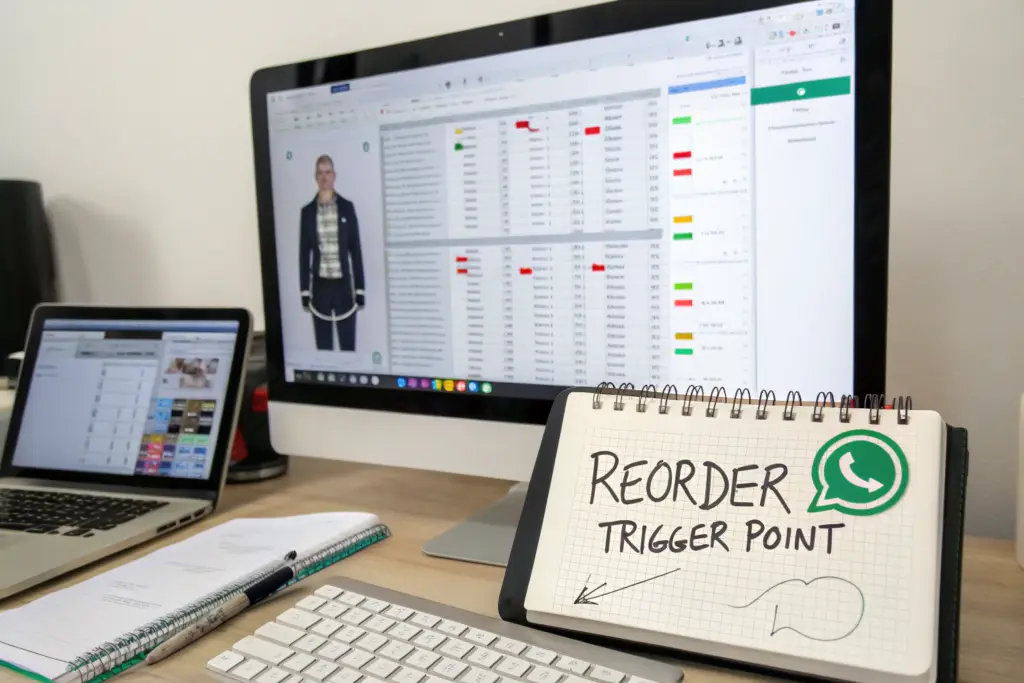
Scaling requires implementing structured communication protocols and shared planning tools with your B2B supplier. A reliable partner will provide a dedicated Account Manager, a transparent Time and Action (T&A) calendar, and automated reorder triggers that eliminate the need for constant fire-drill emails.
You want to move from “Chaos Communication” to “Process Communication.”
Why Is a Single Point of Contact Non-Negotiable for Scaling?
I mentioned this in an earlier piece, but when it comes to scaling, the value of a dedicated rep multiplies. You cannot afford to re-educate a new person every time you place an order.
At Shanghai Fumao, our Business Director Elaine functions as an extension of your operations team. For our scaling partners, we hold a 15-minute weekly check-in call. Just 15 minutes. No long emails. We review:
- Current WIP Status: Cutting/Sewing/Finishing percentages.
- Inventory Alerts: “You sold 300 units last week. You have 600 left. We need a reorder cut by next Friday to avoid a gap.”
- Upcoming Drops: “For the new outerwear drop in September, we need fabric approved by May 15.”
This cadence replaces 50 scattered emails with a single, clear source of truth. The brand owner stops being a production manager and goes back to being a creative director and marketer.
How Does a T&A Calendar Drive Predictable Growth?
A Time and Action Calendar is a living document. For a scaling brand, it is the central nervous system. I share this calendar with clients in real-time.
Here is a simplified view of what we track for a Rolling 3-Month Forecast:
| Milestone | Owner | Target Date | Status | Impact if Late |
|---|---|---|---|---|
| Re-order Trigger | Supplier | Inventory < 4 wks | N/A | Stockout risk high. |
| Fabric Reservation | Supplier | Week 1 | Green | Secures mill capacity. |
| Lab Dip Approval | Brand Owner | Week 2 | Red | Delay pushes cut date. |
| Bulk Cutting | Supplier | Week 4 | Yellow | Waiting on trim card. |
| Sewing Start | Supplier | Week 5 | Green | On track. |
| Container Booking | Supplier | Week 7 | Green | Vessel confirmed. |
Notice how the Brand Owner only has one action item: Lab Dip Approval. Everything else is managed by the supplier. This is how you scale without hiring a full-time production manager. You let the factory’s systems do the heavy lifting. When the calendar shows “Red,” it forces a conversation immediately, not a week later when the ship has sailed.
How Do You Maintain Quality and Consistency as Volume Spikes?
This is the biggest fear of any brand owner. “If I make 10,000 units, will they look like the 100 units I made last year?” The fear is valid. The jump from sample room to bulk production is where most brands get burned. The sample was sewn by a master tailor over 8 hours. The bulk is sewn by an assembly line at 2 minutes per operation.
Maintaining quality during volume spikes requires a shift from “Artisan Craft” to “Engineered Consistency.” A reliable B2B supplier uses Statistical Process Control (AQL inspections), documented Standard Operating Procedures (SOPs) for each style, and a “Gold Seal” reference sample that serves as the immutable quality benchmark for the entire production run.
You cannot inspect quality into a garment. You have to build it into the process.
What Is the Role of the “Gold Seal” Sample in Bulk Production?
This is the most important garment in your entire supply chain. It is not the first sample. It is the Pre-Production Sample (PPS) that you sign off on in writing.
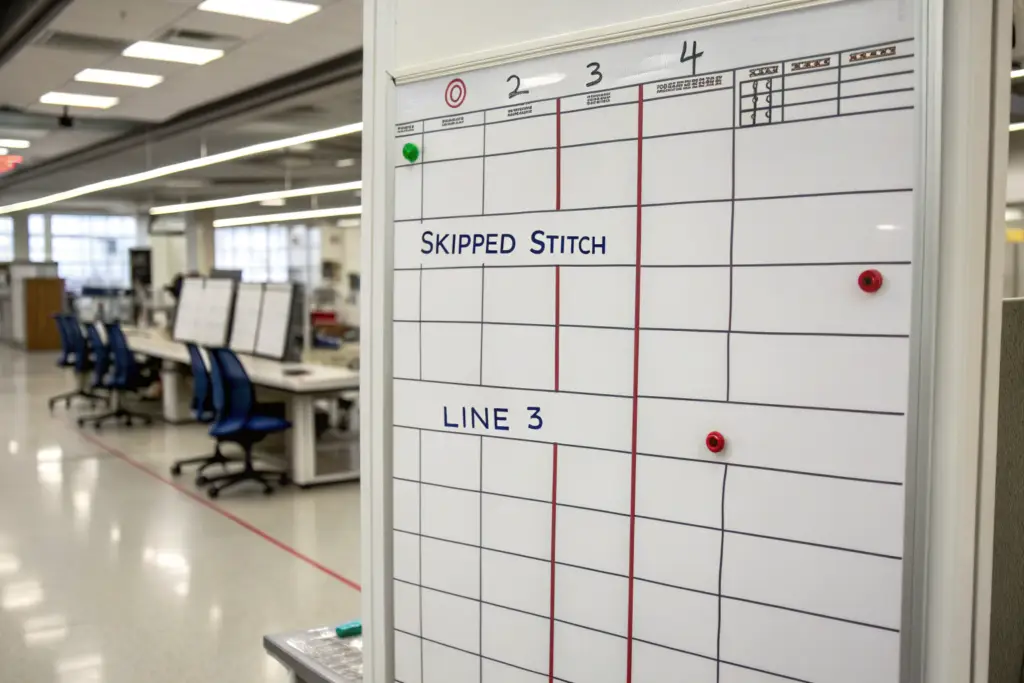
At Shanghai Fumao, we make three identical PPS samples. One goes to the client. One stays in my office. And the third one is hung on the sewing line in a clear plastic bag. It is the “Gold Seal.”
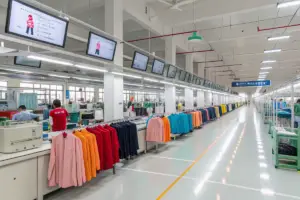
Every operator on the line can walk over and touch the Gold Seal. They can see the exact stitch length. They can see the exact position of the label. They can see the exact shade of the fabric. There is no guessing. There is no “I thought it went here.”
I remember a situation with a women’s wear dress that had a tricky asymmetrical hem. The pattern was cut correctly, but on Day 3 of sewing, an operator started attaching the hem facing slightly too high. Our in-line QC checker compared the piece to the Gold Seal, spotted the 1/4 inch drift, and stopped the line. We retrained the operators for 10 minutes. We saved 800 dresses from being wrong. Without that physical standard hanging right there, we would have found the error at final inspection and had to rework 800 garments. That is a margin killer.
How Do You Audit a Factory’s Quality System for Scalability?
You can ask for an AQL report, but that is a snapshot. You need to know if the factory has a system that can handle volume.
Here are the questions I suggest every brand owner ask their supplier before placing a 5,000+ unit order:
- “How many In-Line QC checkers do you have per line?”
- Red Flag: “We check everything at the end.” (This means they find problems when it is too late to fix them cheaply.)
- Good Answer: “One checker per 20 operators, plus a roving floor supervisor.”
- “What is your process for broken needles?”
- Red Flag: “We just replace it.”
- Good Answer: “We have a Needle Control Log. The broken piece must be reconstructed on tape and signed off by the mechanic before a new needle is issued.” (This is critical for kids’ wear and safety compliance.)
- “Can I see your rework tracking sheet?”
- Red Flag: “We don’t have many reworks.”
- Good Answer: Shows you a spreadsheet. “Line 2 had a 3% rework rate on collars yesterday. We adjusted the binder folder this morning. Rate is now 0.5%.”
A factory that measures its defects is a factory that can control them. A factory that hides its defects is a gamble you cannot afford to take when you are scaling.
Conclusion
Scaling a clothing brand quickly is about removing friction. Friction in sourcing fabric. Friction in cutting. Friction in communication. A reliable B2B supplier is the lubricant that makes the whole machine run faster. They have the greige goods on the shelf so you do not wait for yarn. They have the extra sewing lines so you can double capacity overnight. They have the QC system so your 10,000th unit looks like your 10th unit.
You built the brand. You built the audience. Now you need a partner who can build the garments at the speed your business demands. You need someone who sees your growth as an opportunity for partnership, not a headache.
At Shanghai Fumao, we have built our factory specifically to support brands in that critical scaling phase. We want to be the engine that powers your growth, not the bottleneck that holds it back.
If you are staring at a pile of orders and wondering how you are going to fill them, let’s talk. Our Business Director, Elaine, can walk you through our capacity, our systems, and how we can get you from 500 units to 5,000 units without losing your mind or your quality. Reach out to her at strong>elaine@fumaoclothing.com</strong. Let’s scale this thing together.