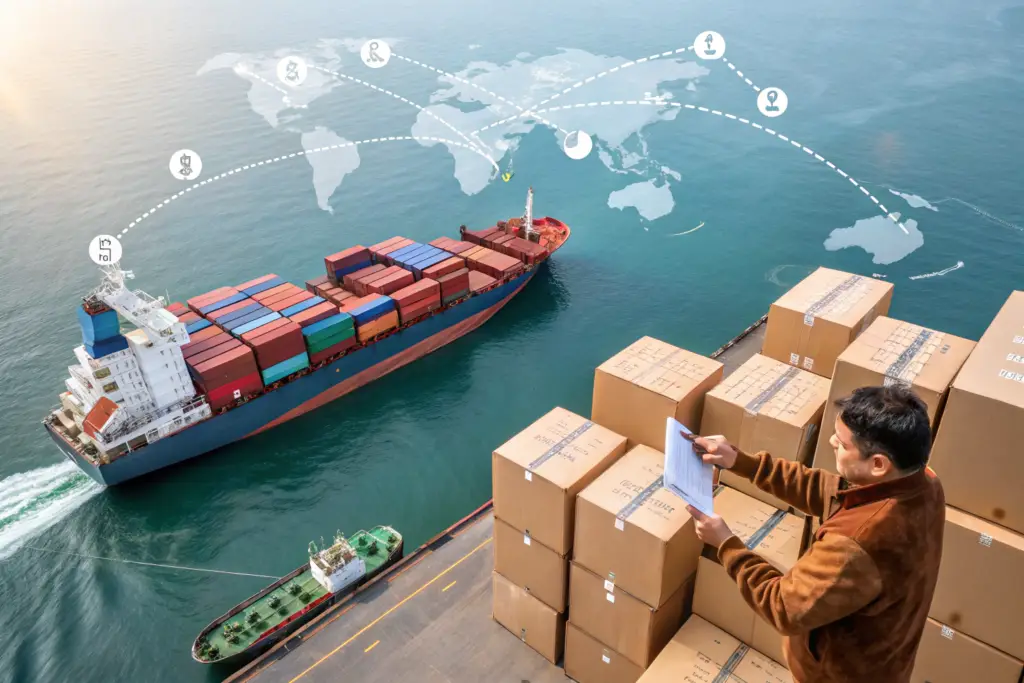
About eighteen months ago, I received a call that every factory owner dreads. A client’s container had arrived at the Port of Savannah. But it could not be unloaded. There was a Customs Hold due to a missing cotton fee payment. The client had used a cheap freight forwarder who did not understand textile imports. The container sat on the dock for 21 days. Demurrage charges hit $4,200. The spring selling window closed. Those beautiful linen dresses arrived just in time to be marked down by 40%. The client was furious, and honestly, so was I. I had made the garment perfectly, but the journey from my door to his door had failed him.
Navigating international garment shipping successfully requires more than booking a cheap rate. It demands a working knowledge of Incoterms, a disciplined approach to customs documentation, and a clear strategy for managing port delays.
Shipping is the invisible part of your brand. When it works, nobody notices. When it fails, it destroys your margin and your reputation with retailers. At Shanghai Fumao, we have spent years refining our logistics protocols so our clients never have to learn what “Demurrage” means the hard way. Let me demystify the process so you can move your goods with confidence.
What Are The Hidden Fees In Ocean Freight For Apparel Importers?
The price you see on a freight quote is rarely the price you pay. The base ocean freight rate might be $1,800 for a 40-foot container. But by the time that container hits your warehouse dock, the total bill is often $4,500 or more.
Hidden fees in ocean freight include terminal handling charges, documentation fees, chassis rental, and the dreaded demurrage and detention fees that accrue when containers sit still.
These fees are not illegal. They are standard industry practice. But they are hidden in plain sight if you do not know the right questions to ask. Let me break down the two biggest profit-eroders I see.

Why Is Demurrage And Detention The Biggest Drain On Margins?
Let me explain the difference clearly because this confuses even seasoned buyers.
- Demurrage: This is charged by the Port Terminal. You get “free days” (usually 3-5) to pick up your container after it is unloaded from the ship. If you take 6 days, you pay a penalty for the extra days. This fee goes to the port operator, not the shipping line.
- Detention: This is charged by the Shipping Line. You get “free days” (usually 5-7) to return the empty container to the depot after you unload it. If you keep it for 10 days, you pay a penalty.
Last fall, a distributor in Tennessee had a trucker shortage at his warehouse. He could not unload the container fast enough. He ended up paying $175 per day in combined fees for 12 extra days. That is over $2,000 in pure waste. On a 2,000-unit order, that added $1.00 per unit to his cost. That is a huge hit in wholesale apparel.
How do we prevent this at Shanghai Fumao? We use DDP Shipping. Under DDP terms, we are responsible for these fees. It is in our financial interest to have a trucker at the port on Day 2. We have a network of drayage carriers who we know will show up. This aligns our incentive with yours. You pay a fixed, landed cost. We manage the clock. You can find more information on avoiding these fees from the Federal Maritime Commission.
How Do Terminal Handling Charges Vary By Port Of Entry?
This is a detail most buyers overlook. Not all U.S. ports cost the same. The Terminal Handling Charge (THC) and local drayage rates vary significantly.
I did a comparison for a client shipping to a distribution center in Kansas City. They had always routed through Los Angeles/Long Beach. I suggested we look at routing through Houston and then intermodal rail to Kansas City.
Here is what we found on a per-container basis (estimates based on Q1 2026 spot rates):
| Port of Entry | Base Ocean Freight | Terminal Handling | Drayage to Rail Yard | Total Port Cost |
|---|---|---|---|---|
| Los Angeles/Long Beach | $1,850 | $480 | $350 | $2,680 |
| Savannah | $2,100 | $390 | $275 | $2,765 |
| Houston | $2,050 | $420 | $225 | $2,695 |
The savings were not in the ocean freight. The ocean freight to Houston was slightly higher. The savings were in the Drayage and THC. The Los Angeles market is congested and expensive for truckers. Houston was smoother. For that specific route, Houston saved him about $185 per container, plus it was 4 days faster rail transit to the Midwest.
This is the kind of analysis that a good freight partner should do for you. You should not just pick the closest port. You should pick the Path of Least Resistance. You can compare port productivity statistics on the Port of Los Angeles and Port of Savannah websites.
How Does Incoterms Choice Impact Your Shipping Liability?
Incoterms are three-letter codes that define who pays for what and who takes the risk at each stage of the journey. Choosing the wrong one is like playing a game without knowing the rules. You will lose.
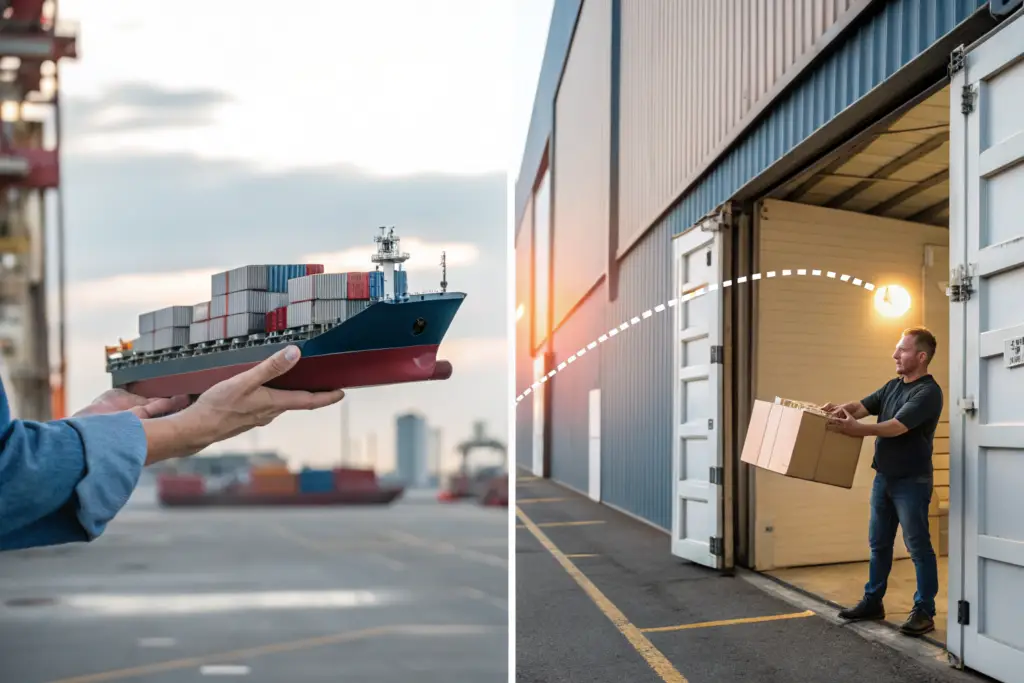
The choice between FOB and DDP is the single most important logistics decision an apparel buyer makes. It determines whether you control the freight or whether the factory controls it.
I have seen small brands get crushed by choosing FOB because they thought they could save 5% by managing freight themselves. Let me explain why that usually backfires.
Why Is DDP The Preferred Choice For Brands Without Logistics Teams?
If you are a brand owner with a team of three people, you do not have a logistics department. You are the designer, the salesperson, and the bookkeeper. You do not have time to negotiate with a freight forwarder in Mandarin at 10:00 PM.
When you buy FOB (Free on Board) , you are responsible for the container the moment it is loaded on the ship in Shanghai. This means:
- You must find a freight forwarder.
- You must purchase cargo insurance.
- You must file the Importer Security Filing (ISF).
- You must pay the customs broker.
- You must arrange the trucking from the port.
If one of those links breaks, it is your problem. And it usually breaks at the most expensive moment.
When you buy DDP (Delivered Duty Paid) from Shanghai Fumao, we do all of that. We give you one price: $12.85 per unit landed. That includes the garment, the shipping, the duty, the trucking, everything. You write one check, and the box shows up at your door.
I had a client who insisted on FOB because he had a “friend” who was a freight forwarder. That friend went on vacation during a critical customs clearance. The shipment sat. With DDP, there is no “friend” to blame. There is just us, taking full ownership of the process. You can learn the exact definitions of each term from the International Chamber of Commerce Incoterms 2024.
What Does “Free On Board” Actually Mean For A Small Distributor?
Let’s get specific about FOB so you understand the hidden workload. Under FOB Shanghai, the factory’s responsibility ends when the container crosses the ship’s rail.
Here is what happens next, and who pays for it under FOB:
| Step in Process | Responsible Party (FOB) | Estimated Cost / Effort |
|---|---|---|
| Ocean Freight | Buyer (You) | $1,800 – $3,500 per container |
| Marine Insurance | Buyer (You) | 0.5% of Invoice Value |
| ISF Filing (10+2) | Buyer (You) | Must be filed 24hrs before sailing |
| US Customs Bond | Buyer (You) | $500 Annual Fee |
| Customs Clearance | Buyer (You) | $125 Entry Fee |
| Port Demurrage | Buyer (You) | Your problem if trucker is late |
| Final Mile Trucking | Buyer (You) | $450 – $850 |
I have seen small distributors get a “cheap” FOB price of $8.50 per unit, only to find that their Landed Cost is actually $11.20 per unit after all these fees. They would have been better off taking the DDP price of $10.90.
FOB makes sense for large importers who ship 50 containers a year and have a dedicated logistics manager on payroll. For everyone else, DDP is a form of insurance against complexity.
How To Prepare Flawless Customs Documentation For Garments?
The number one reason garments get stuck in U.S. Customs is paperwork errors. Not smuggling. Not illegal goods. Simple, preventable typos and omissions.
Flawless customs documentation requires an exact match between the Commercial Invoice, the Packing List, and the physical carton markings. The description of goods must be specific enough for a Customs officer to classify the item without opening the box.
This is a task that rewards boring, repetitive precision. Here is how we ensure smooth clearance at our facility.

Why Is The HTS Code Classification So Critical For Duty Rates?
The Harmonized Tariff Schedule (HTS) is a 10-digit code that tells the U.S. Government exactly what you are importing and how much tax (duty) you owe.
If you use the wrong code, two bad things can happen:
- Overpayment: You pay 16% duty on a garment that should be 8%. You lose margin.
- Underpayment/Fine: You pay 8% on a garment that should be 16%. Customs audits you, finds the error, and bills you for the difference plus a penalty with interest going back 5 years.
The difference between a Men’s Cotton Knit Shirt (6109.10.0011) and a Women’s Cotton Knit Shirt (6109.10.0070) might be 2% in duty. That is $0.25 per unit. On 10,000 units, that is $2,500 in lost profit or a penalty liability.
At Shanghai Fumao, we do not guess at HTS codes. We use a software database that is updated daily with Customs rulings. We look at the fiber content, the gender, and the construction. For a recent order of kids’ pajamas, we had to use a specific subheading because they were “sleepwear.” That classification came with specific flammability testing requirements. We made sure the fabric was tested before we shipped. This is the level of detail required. You can search the official tariff database yourself on the USITC HTS Search website.
What Information Must Be Included On A Commercial Invoice For Textiles?
The Commercial Invoice is not just a receipt. It is a legal declaration. For textiles, U.S. Customs requires specific language.
Here is a checklist of what must be on every invoice we send:
- Detailed Description: Not “Shirt.” Must be “Men’s 100% Cotton Woven Dress Shirt.”
- Country of Origin: “Made in China.” This is mandatory.
- Manufacturer Name and Address: Not the trading company. The actual sewing factory.
- Fabric Composition by Weight: “Shell: 98% Cotton, 2% Spandex. Lining: 100% Polyester.”
- Method of Construction: “Woven” or “Knit.”
- Gender: “Men’s,” “Women’s,” “Unisex,” “Boys’ (Size 8-20).”
If any of these elements is missing, the Customs entry specialist has to flag the shipment for review. That review takes time. That time costs money in storage.
I once saw a container held because the invoice said “Ladies Blouse” but the packing list said “Women’s Top.” The words mean the same thing to you and me. To Customs, it is a discrepancy that needs clarification. We use a Standardized Description Template for all clients to ensure every word matches across every document. You can find the official requirements on the U.S. Customs and Border Protection website.
What Are The Alternatives To Traditional Ocean Freight Shipping?
Ocean freight is the backbone of the industry. But it is not the only way. For specific situations, you need to know the alternatives. Sometimes speed is worth more than the cost savings of a boat.
Alternatives to traditional ocean freight include air freight for urgent restocks and domestic warehousing for agile fulfillment. Each serves a distinct purpose in protecting revenue and customer relationships.
Let’s look at when it makes sense to deviate from the standard sea container.
When Is Air Freight A Profitable Option Despite Higher Cost?
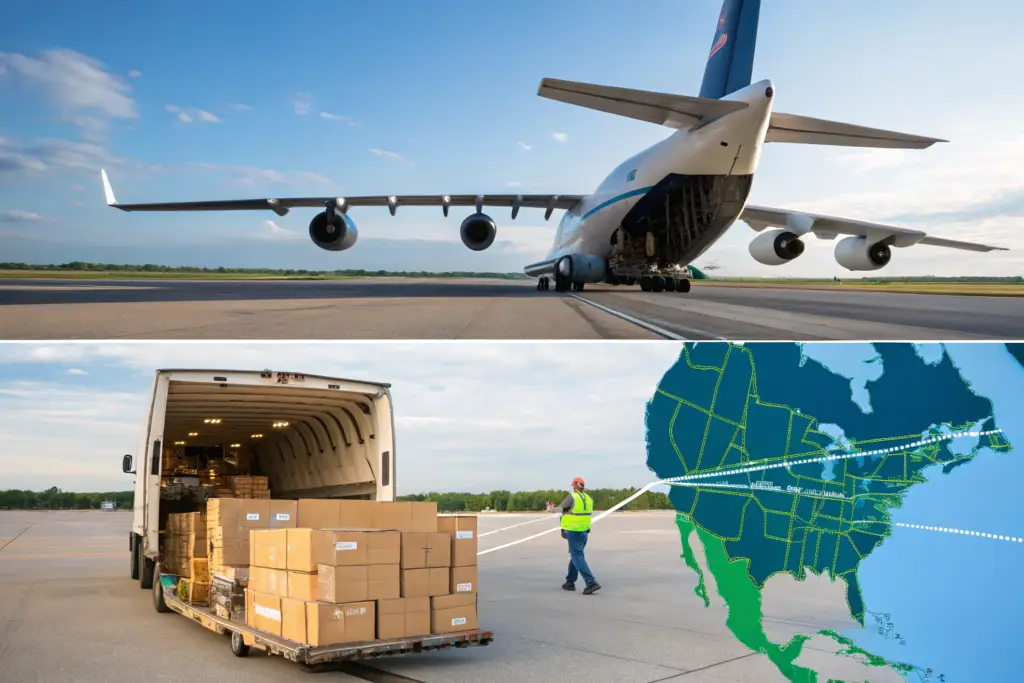
Air freight is expensive. There is no sugarcoating it. It can cost 5 to 8 times more than ocean freight. But it can also be the most profitable decision you make all year.
You should consider air freight when:
- You are Sold Out: You have zero inventory of a core best-seller. Every day you are out of stock is a day you lose 100% of the margin. Air freighting 300 units to cover a 3-week gap until the boat arrives is a no-brainer. The extra freight cost is less than the lost profit.
- Saving a Retail Relationship: A major department store has a strict delivery window. If you miss it, you pay a chargeback of 5-10% of the PO value. Paying $2,500 to air freight 500 units is cheaper than a $5,000 chargeback.
- Ultra-Lightweight Goods: For items like silk scarves or high-end lingerie, the weight is so low that air freight is not that much more expensive than ocean, but it saves 4 weeks.
I helped a women’s wear brand do the math on a reorder of a hot-selling dress. The margin per dress was $38. They needed 200 units. Ocean freight delay meant 3 weeks of lost sales. Air freight cost an extra $1,200 total ($6 per dress). They air freighted it. They sold out again in 5 days. They made an extra $7,600 in gross profit. The math works. You can compare costs using online freight calculators from companies like Freightos.
How Does A US-Based Warehousing Strategy Shorten Lead Times?
This is a more advanced strategy for brands doing over $1M in annual revenue. Instead of shipping directly from China to a retailer, you ship a bulk container to a 3PL (Third-Party Logistics) Warehouse in the U.S. (e.g., in Kentucky or New Jersey).
The goods sit in the U.S. warehouse under your ownership. When a boutique orders 24 units, the 3PL picks, packs, and ships it in 2 days via UPS Ground.
This strategy shortens the retailer’s perceived lead time from 75 Days to 3 Days.
It changes your business model. You go from being a slow, overseas pre-order vendor to a fast, domestic wholesale brand. You can reorder best-sellers from us to replenish the U.S. warehouse before it runs dry.
The cost is the storage fee (usually $15-$25 per pallet per month). But the benefit is higher wholesale prices and larger order sizes from retailers who love the convenience. We work with several 3PL partners in the U.S. and can coordinate the direct container delivery to their facility. This is how you scale beyond the boutique market and into larger chains. You can learn more about this model from the Council of Supply Chain Management Professionals.
Conclusion
Navigating international garment shipping is a discipline of details. It is about understanding that the base freight quote is just the starting line, not the finish line. It is about knowing that the three letters of an Incoterm—FOB or DDP—define who owns the headache when the port gets congested. It is about treating the Commercial Invoice not as busywork but as a legal document that determines whether your box clears customs in 2 hours or 2 weeks. And it is about knowing when to break the rules, when to use air freight to save a season or a warehouse strategy to transform your service model.
The goal is not to become a logistics expert yourself. The goal is to partner with people who are. That is the value we bring at Shanghai Fumao. We have made the mistakes so you do not have to. We know which ports are running smoothly and which HTS codes are under scrutiny. We turn a complex, risky, multi-step process into a single line item on your P&L: Landed Cost.
If the logistics of your next shipment are keeping you up at night, let’s simplify it. You focus on selling the clothes. We will focus on getting them there. Reach out to our Business Director, Elaine, at elaine@fumaoclothing.com. She can provide a DDP landed cost quote that includes every fee, so you know your exact margin before you place the order. Let’s get your goods moving safely and predictably.