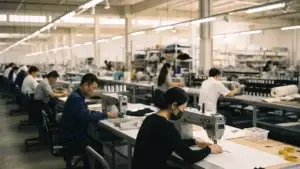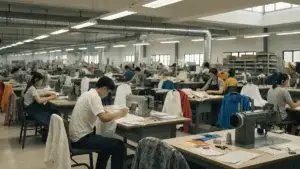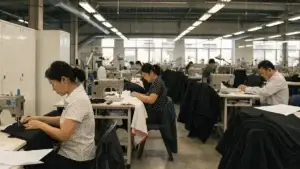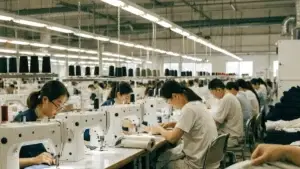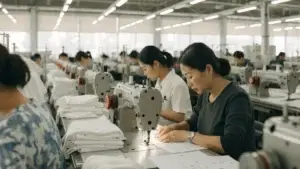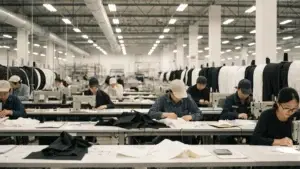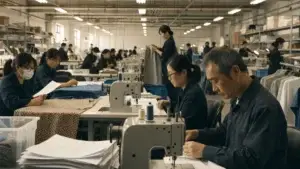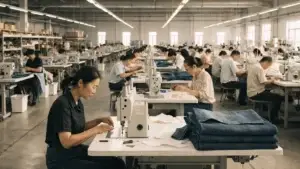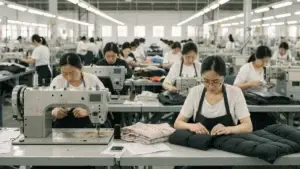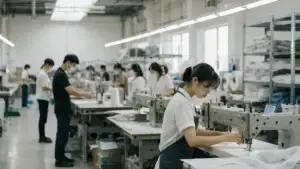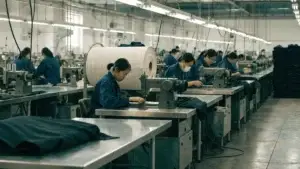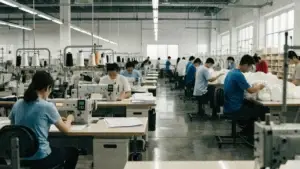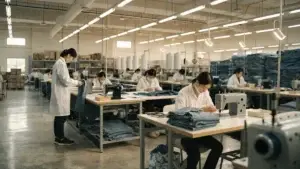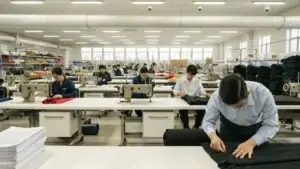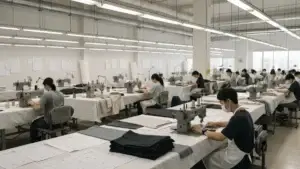
I lost a potential client once over a photo. It was a large men's brand from the Midwest. We had great calls. Pricing was right. Samples were approved. They were about to place a $60,000 opening order. Then the buyer asked for a photo of the factory floor where his goods would be cut. I had my team take a few quick snapshots. The lighting was poor. There were fabric scraps on the floor. It was a busy Tuesday afternoon. He emailed back: "This looks like a fire hazard. We are going to pause this PO." I had made the cardinal sin of the modern era. I had hidden nothing, but I had also revealed a messy moment without context. He did not see a factory working hard. He saw risk.
Factory transparency is the most important factor for modern clothing buyers because it directly mitigates the three biggest fears in offshore sourcing: reputational damage from unethical labor, financial loss from shipment failures, and brand erosion from inconsistent quality. Transparency transforms a distant vendor into a verifiable partner.
Ten years ago, a buyer asked three questions: "What is the price? What is the MOQ? When can you ship?" Today, they ask twenty questions. They want to see the fire extinguisher on the wall. They want to see the payroll records. They want to see the fabric lot number. At Shanghai Fumao, we learned that lesson from the messy floor photo. We changed how we operate. We now lead with transparency because we know it is the only way to build the trust required for long-term, profitable partnerships.
How Does Supply Chain Visibility Reduce Brand Reputation Risk?
A brand's reputation is built over decades and destroyed in a single headline. "Sweatshop Found in Brand X Supply Chain." That headline does not care that you are a small distributor with a 0.5% margin. It only cares that your label is in the collar.
Supply chain visibility allows a buyer to proactively prove ethical compliance rather than reactively defend against accusations. It shifts the narrative from "trust me" to "here is the evidence."
This is especially critical for brands selling to younger demographics. Gen Z and Millennial consumers are using tools like "Good On You" to check brand ethics before they even click "Add to Cart." If you cannot answer the question "Who made my clothes?" you are losing sales.
Why Are Unannounced Factory Audits More Valuable Than Staged Tours?
Anyone can clean a factory for a scheduled visit. I have seen factories rent potted plants and new chairs just for a buyer tour. That is theater. It is not transparency.
We offer our clients the option of Semi-Announced Audits. It works like this: We give the client a window. "We will arrange for a third-party auditor to visit the facility sometime between October 1st and October 15th." The factory knows an audit is coming that month, but they do not know the exact day.
This prevents the "whitewash." It ensures that the conditions the auditor sees are the real conditions the workers experience every day.
I had a client last year who used a service from QIMA to conduct such an audit on our facility. They wanted to verify our working hours and fire safety. The auditor arrived on a random Wednesday at 10:00 AM. He checked the punch-card system. He checked the emergency exit lights. He interviewed workers privately. We passed. More importantly, the client received a 45-page report with time-stamped photos that they could show to their own retail buyers. That report was worth more than any certificate on the wall. It was proof of life. You can learn more about the audit process from organizations like WRAP Compliance.
How Does Transparency In Waste Management Attract Eco-Conscious Retailers?
Transparency is not just about labor. It is about the environment. In California and New York, new legislation is holding brands responsible for the end-of-life of their textiles. Retailers are starting to ask: "What happens to the fabric scraps from my cutting order?"
In a traditional factory, scraps go into a black bag and disappear. The brand has no idea if they are recycled, landfilled, or burned.
At Shanghai Fumao, we implemented a Waste Log. It is a simple spreadsheet, but we share it with clients upon request. It tracks the weight of cutting waste per PO. We partner with a local recycling facility that turns cotton scraps into industrial wiping rags and polyester scraps into fiberfill.
I showed this log to a women's wear brand from Portland that was pursuing B Corp Certification. They needed to document their supply chain waste. Because we had the data, they could include our facility in their impact report. This is the new standard. Brands do not just want a product. They want a story of responsible production. The Sustainable Apparel Coalition provides frameworks like the Higg Index for measuring this.
What Are The Warning Signs Of An Opaque Overseas Supplier?
There is a specific feeling you get when dealing with an opaque supplier. It is the feeling of being gently managed, rather than honestly informed. You ask for a photo of the fabric inspection. They send a photo of the finished sample. You ask about the shipping delay. They blame "the port" generically.
The primary warning sign of an opaque supplier is the inability to provide real-time, verifiable data. They rely on vague assurances and stock excuses.
You need to listen to what is not being said.
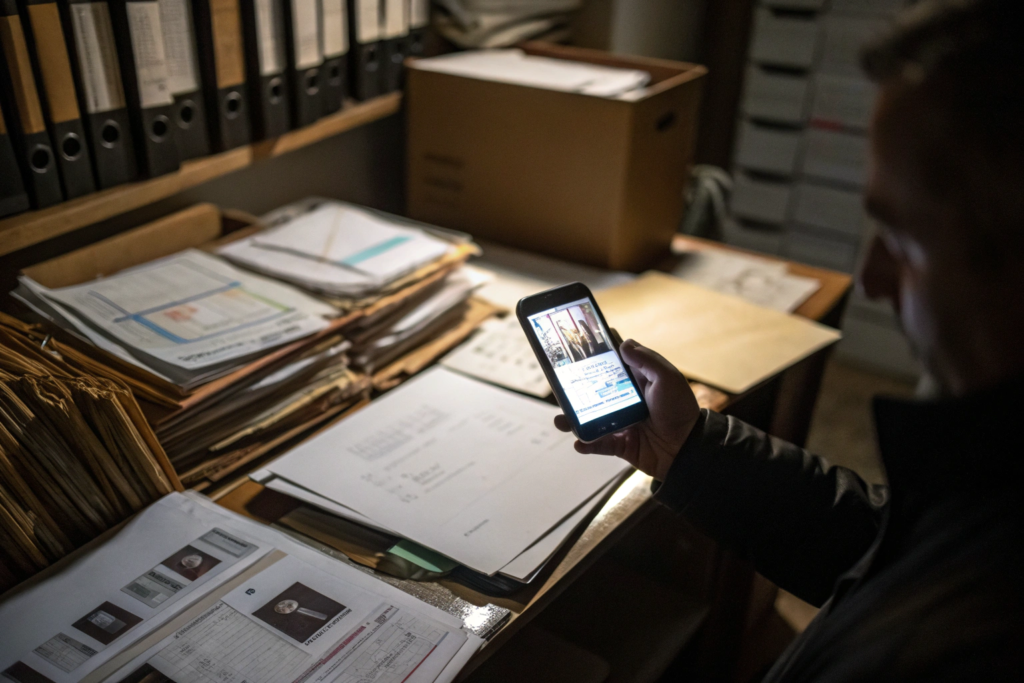
This is the most basic test. Ask for the exact address of the production facility. Not the "office address" in a high-rise in Hong Kong. Not the "showroom address" in Guangzhou. The physical location where the sewing machines are.
I have seen trading companies list a virtual office in a fancy district while the actual production is subcontracted to a small, unmonitored workshop three hours away in the countryside.
If a supplier hesitates to give you the GPS coordinates of the cutting table, they are hiding something. It could be that they are just a middleman with no control over quality. It could be that the factory is on a restricted list. Either way, it is a deal-breaker.
We provide our address: No. 188, Lane 2168, Huqingping Highway, Qingpu District, Shanghai. You can look it up on Google Maps. You can see the blue roof of the warehouse. You can send a friend who lives in Shanghai to drive by. There is no mystery. This is the baseline for any serious partnership. You can use tools like ImportGenius to cross-reference shipping records with claimed addresses.
What Does Vague Status Update Language Actually Mean?
I have developed a translator for "Supplier-Speak." When you hear these phrases, you should hear alarm bells:
- "We are processing." Translation: We have not started yet, but we do not want you to know that.
- "Small delay due to material." Translation: We did not order the material on time, or we used your deposit to buy fabric for another client.
- "The QC passed basically." Translation: There are major defects, but we hope you will not notice or we can negotiate a discount.
Transparency sounds different. It sounds like: "We found shading on 12% of the red panels in the inline inspection. Here is a photo. Do you want us to recut those panels (add 3 days) or ship them as B-grade?"
That level of detail is uncomfortable. It presents you with a problem. But it allows you to solve the problem while the goods are still in China. Vague language kicks the can down the road until the container is on the water, and you are stuck with it. This is why we train our merchandisers at Shanghai Fumao to be ruthlessly specific, even when the news is bad. You can read more about effective vendor communication in supply chain management from Harvard Business Review.
How Does Technology Enable True Factory Floor Transparency?
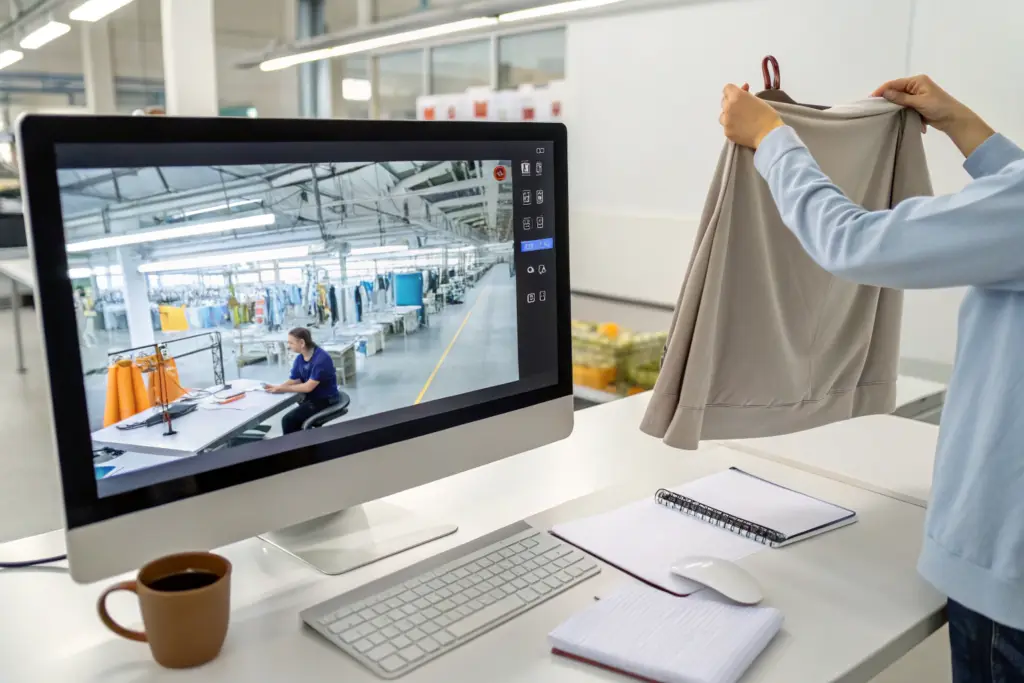
We have moved beyond the era of "trust me" photos taken on a flip phone. Technology now allows a buyer in New York to look over the shoulder of a QC inspector in Shanghai in real time.
Technology bridges the trust gap by providing objective, timestamped, and unalterable data points from the production floor. It replaces subjective reporting with digital verification.
This is not about spying on the factory. It is about creating a shared reality for both partners.
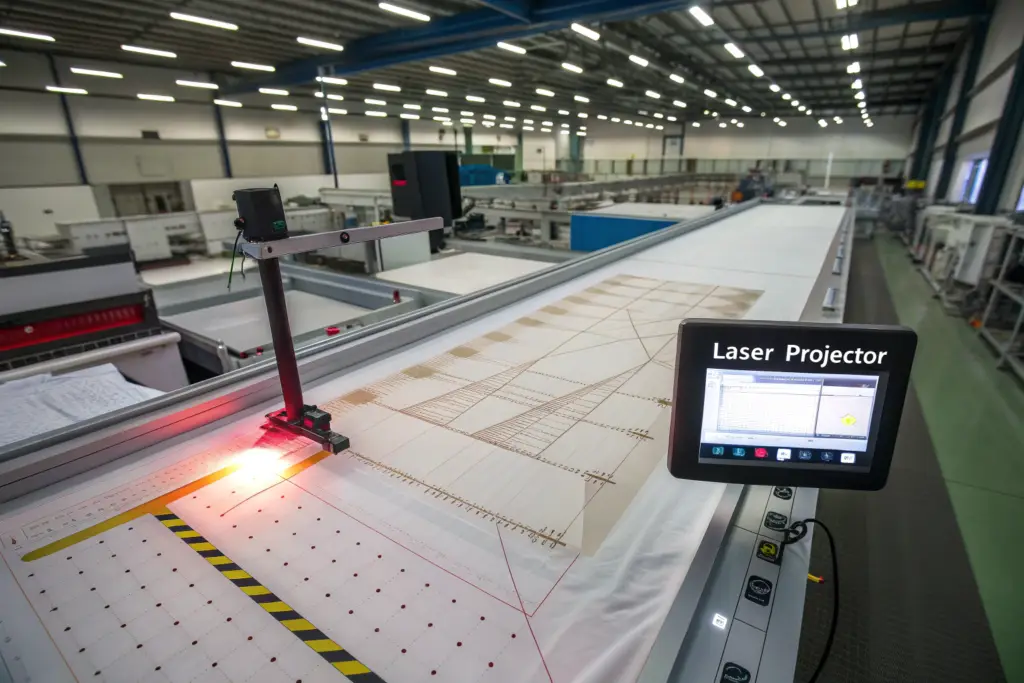
Can Real-Time Production Tracking Dashboards Prevent Delays?
I mentioned earlier that vague updates kill trust. We solve this by giving our larger clients a login to a Production Dashboard.
This is not a marketing gimmick. It is a view into our internal ERP system. It shows the following live statuses for their specific PO:
- Cutting: 0% / 50% / 100%
- Sewing: Line 1 started / Line 2 started
- Packing: Cartons 1-50 of 200 packed
When a buyer sees that "Cutting" has been stuck at 10% for four days, they do not need to send a panicked email. They can see there is a bottleneck. They can call me and ask, "Is there an issue with the fabric spread?" That is a much more productive conversation than "Where are my goods?"
This visibility also creates accountability for us. We know you are watching. It motivates our production managers to clear bottlenecks faster. It aligns our incentives. We want that bar to turn green just as much as you do. You can explore how Industry 4.0 is changing manufacturing visibility.
Why Is Digital Fabric Inspection Data Superior To Visual Checks?
The human eye is easily fooled. The lighting in the inspection room can make a fabric look perfect. A digital scanner cannot be fooled.
For high-value orders, we use a fabric inspection machine equipped with a Digital Imaging System. As the fabric rolls through the machine, cameras scan every millimeter. The software flags defects based on a pre-set tolerance (e.g., "Slub larger than 2mm").
The output is not a handwritten note. It is a Defect Map. It looks like a blueprint of the fabric roll, with red dots showing exactly where the flaws are. We share this map with the client.
I had a client who needed 500 perfect shirt fronts. We scanned the fabric. The map showed 12 major defects in the first 50 yards. We were able to cut around those defects. If we had relied on a visual check, those defects would have ended up on the shirt placket, resulting in 12 wasted garments. The digital data allowed us to optimize the cut and save the fabric. This is transparency at the granular level. It proves that we care about the inside of the garment as much as the outside. The ASTM International sets the standards for these fabric grading systems.
How To Build A Transparent Relationship With Your Manufacturer?
Transparency is a two-way street. You cannot demand that a factory open its books to you if you treat the relationship as purely transactional and adversarial. The best factory relationships feel like partnerships, not vendor-customer standoffs.
Building a transparent relationship requires the buyer to share forward-looking information (forecasts, design calendars) and to respect the factory's expertise in solving production challenges.
It is about creating a safe space for bad news.
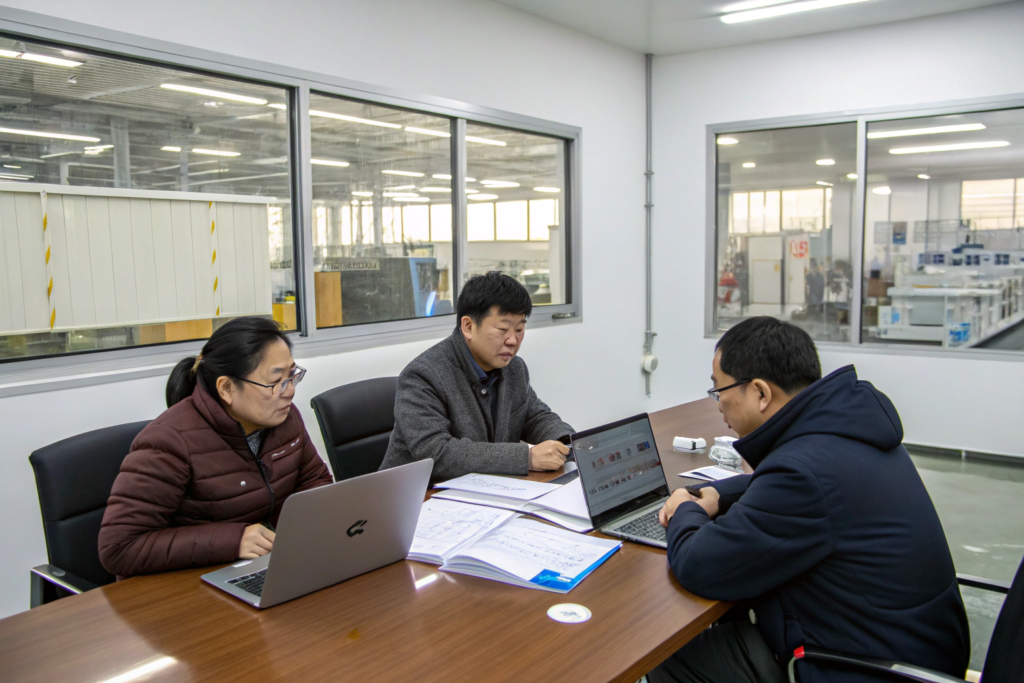
This is a concept that makes some brand owners nervous. "Why should I tell my factory how many units I sold?" Because that data allows the factory to serve you better.
I will give you an example. A men's brand we work with started sharing their weekly Sell-Through Report with me. I saw that a specific chino pant was selling 300% faster than forecasted. They were going to stock out in two weeks.
Because we had the data, I did not wait for them to place a reorder. I immediately looked at our fabric inventory. We had enough greige goods of that specific twill to make another 600 units. I emailed the client: "I see you are crushing it with style #M220. I have fabric for 600 more. Do you want me to cut them now? I can have them in LA in 45 days."
They said yes. They avoided a month of lost sales. That would not have happened if they had kept their sales data a secret. Transparency in sales data enables Agile Replenishment. It turns the factory into a responsive extension of your planning team. This is the future of demand-driven supply chains.
How Does Admitting A Mistake Strengthen Long-Term Partnership?
Perfection is a lie. In apparel manufacturing, something goes wrong on every single order. It is the nature of cutting and sewing soft, pliable materials with human hands.
The difference between a bad factory and a great factory is not the absence of mistakes. It is the speed and honesty of the recovery.
I remember a time we made a mistake on a kids' wear order. We used the wrong interlining on the collar. It was too stiff. The client would not have noticed until the garments were washed and the collar crinkled weirdly.
We caught it during the final press. We could have shipped it. The client might not have complained for months. Instead, we made a hard call. We emailed the client photos. "We messed up the interlining. We have to recut 400 collars. This will delay the shipment by 7 days."
The client was not happy. But he respected the honesty. We ate the cost of the recut and the air freight for the rest of the order. We lost money on that PO. But we gained a partner for life. He told me later, "Any other factory would have shipped that box and hoped for the best. You told me the truth."
That is the ultimate value of transparency. It is messy. It is sometimes expensive in the short term. But it is the only foundation strong enough to support a business relationship that spans years and tens of thousands of units. At Shanghai Fumao, we choose the hard right over the easy wrong.
Conclusion
Factory transparency is no longer a "nice to have" feature for a clothing manufacturer. It is the core product. Modern buyers are not just purchasing cut-and-sew labor. They are purchasing peace of mind. They are purchasing a shield against the reputational risk of a rogue subcontractor. They are purchasing the certainty that their inventory will arrive on time and as specified. They are purchasing the data they need to tell a compelling story to their own customers.
This shift changes how we operate. It means we have to be comfortable with cameras on the floor and dashboards in the cloud. It means we have to admit when we drop a stitch. It means we have to treat our waste stream as a data point, not just a cost of doing business. But for the brands that partner with us, this transparency translates directly into stronger margins, fewer chargebacks, and a more resilient business model.
If you are tired of the black box that is the traditional overseas supply chain, let's open the curtains. You can see the cutting table. You can see the QC report. You can see the real status of your order. Reach out to our Business Director, Elaine, at elaine@fumaoclothing.com. She can set up a virtual tour of our Shanghai facility and walk you through our transparency protocols. Let's build a partnership based on what is real, not what is easy.