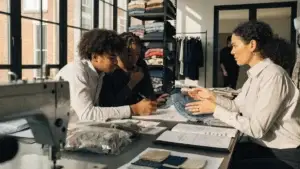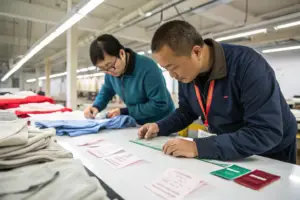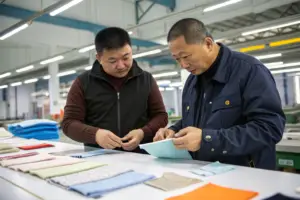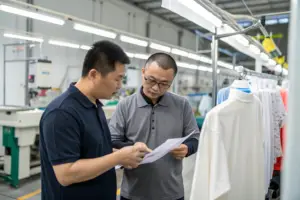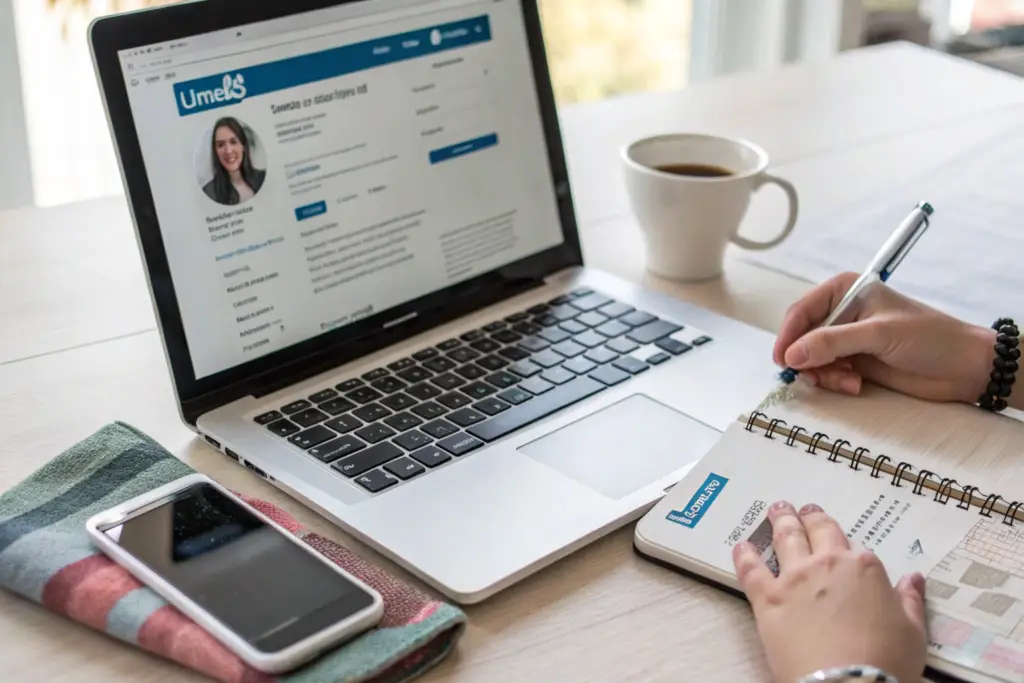
About eighteen months ago, I received a LinkedIn connection request from a brand owner in Portland. The request did not say the standard "I'd like to add you to my professional network." It said: "Hi, I saw your post about the enzyme-washed linen you developed. I've been looking for that exact fabric for two years. Would you be open to a quick chat?" I accepted immediately. We spoke the next day. Three weeks later, he placed a sample order. Today, he is one of our most consistent clients. That connection happened because he used LinkedIn the right way. He did not spam me with a catalog. He did not ask for a quote in the first message. He showed me he had done his homework and he had a specific, solvable problem.
Leveraging LinkedIn to connect with reliable clothing factory owners requires a shift from a buyer-vendor hunting mindset to a professional networking mindset. The most successful connections happen when a brand owner engages with a factory owner's content first, demonstrates knowledge of the factory's specific capabilities, and then sends a personalized, low-pressure connection request that references a specific post, product, or shared industry challenge. LinkedIn is not a sourcing directory like Alibaba. It is a platform where factory owners showcase their expertise. Treating it as a conversation starter rather than a transaction terminal is the key to unlocking high-quality manufacturing partnerships.
I manage my own LinkedIn profile. I do not have a social media intern posting for me. When I share a photo from our factory floor or a comment about textile trade policy, it is me. The factory owners you want to connect with—the ones who are hands-on, quality-focused, and reliable—are also on LinkedIn, sharing their perspective. Let me show you exactly how to find us, how to approach us, and how to use the platform to separate the genuine manufacturers from the trading company middlemen.
How Can I Identify Genuine Factory Owners vs Trading Companies on LinkedIn?
LinkedIn is crowded. For every one genuine factory owner like me, there are probably twenty trading company representatives or freelance sourcing agents claiming to be "Manufacturers." They use the same keywords. They post the same stock photos of garments. They send the same copy-paste InMail templates. If you connect with the wrong one, you are adding an unnecessary middleman who marks up the price and has zero control over quality or production timelines.
You can identify genuine factory owners on LinkedIn by analyzing three specific sections of their profile: the "About" summary, the "Experience" timeline, and their "Activity" feed. A real factory owner will describe their physical facility, mention specific machinery or production line count, and share original, unpolished content from the factory floor. A trading company representative will have a vague description about "supply chain solutions," a job history of short stints at various export companies, and a feed filled with glossy catalog photos of products they clearly did not make.
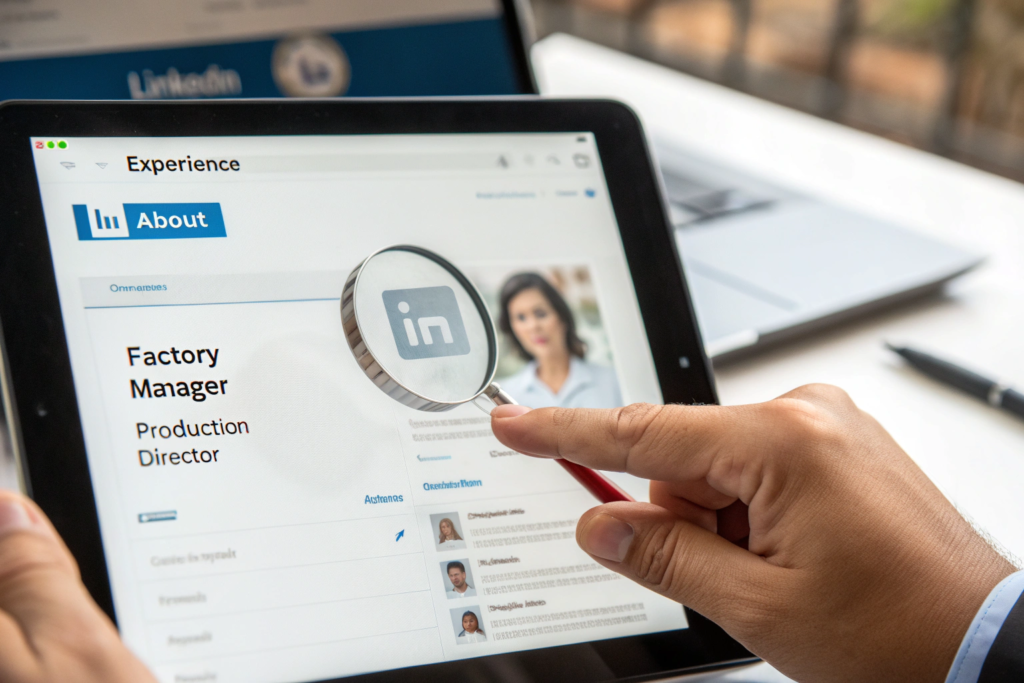
What Specific Job Titles and Descriptions Should I Look For?
The title is the first filter. "CEO" or "Founder" is fine, but it is vague. Look for titles that indicate operational responsibility.
High-Value Titles (More Likely Genuine Factory Owner/Manager):
- Owner / Factory Director
- Production Manager
- Managing Director (especially if combined with a specific factory name)
- General Manager (of a named manufacturing facility)
Low-Value Titles (More Likely Trading Company/Sales Agent):
- Sourcing Specialist
- Supply Chain Consultant
- Export Manager (without a specific factory affiliation)
- Business Development (Apparel)
Next, read the "About" Section. This is the most revealing piece of text on the profile.
| What a Genuine Factory Owner Writes | What a Trading Company Writes |
|---|---|
| "I run a 5-line factory in Shanghai specializing in woven outerwear. We have 120 workers and 80 machines." | "We provide one-stop supply chain solutions for global apparel brands." |
| "My father started this business in 1998. I took over in 2015 and modernized the QC lab." | "Connecting buyers with the best factories in Asia." |
| Mentions specific machinery: "Juki DDL-9000, Shima Seiki knitting machines." | Mentions broad categories: "T-shirts, Hoodies, Jackets, Dresses." |
| "We do cut-and-sew for U.S. boutique brands. MOQ is 200 pcs per style." | "No MOQ. We can do anything." |
Look at my LinkedIn profile for Shanghai Fumao. I state clearly that we have five production lines. I mention our location near the fabric markets in Shanghai. I talk about our DDP shipping service for U.S. clients. I am specific because my reputation depends on those specifics being true. A middleman is vague because they do not want you to know which factory they are using.
How Does the "Activity" Feed Reveal the Truth?
This is the secret weapon for vetting. Click on the "Posts" or "Activity" tab of the profile.
Genuine Factory Owner Feed:
- Content: Grainy smartphone photos of a cutting table. A short video of a new fabric inspection machine being installed. A post about Chinese New Year holiday dates and how they are managing the schedule.
- Tone: Technical, operational, sometimes a little stressed. "Dealing with a batch of inconsistent zipper tape today. Rejecting the lot."
- Frequency: Irregular. They post when they have a moment, not on a content calendar.
Trading Company Feed:
- Content: Glossy, professional studio photos of models wearing clothes. Posts that say "New Arrival! DM for Price!" Shared articles from industry blogs with generic comments like "Great insights."
- Tone: Salesy, promotional, impersonal.
- Frequency: Multiple times per day (automated or scheduled).
I post photos of fabric rolls arriving at our warehouse. I post about the challenges of training young sewers. I post about U.S. import regulations. This is not polished marketing. It is a window into my daily reality. When a brand owner comments on one of these posts, I know they are paying attention to the details that matter. That is the kind of connection I want.
What Is the Most Effective Way to Send a First Message to a Factory Owner?
You found a factory owner who looks legitimate. You have done your research. Now comes the moment of truth: the connection request note. This is where 90% of brand owners fail. They send a message that screams "I am a tire-kicker" or "I am copying and pasting this to fifty people." Factory owners receive dozens of these every week. We delete most of them without reading.
The most effective first message to a factory owner is a personalized connection request of under 300 characters that references a specific piece of content from their feed or profile and states a clear, niche intent. Avoid asking for a "catalog" or "price list" in the first message. Instead, express interest in a specific capability they mentioned. For example: "Hi [Name], I saw your post about the flatlock stitching on the kids' activewear. I'm developing a similar line and would value your perspective on fabric weights. Open to connecting?"
Why Should You Never Ask for a "Catalog" or "Price List" in the First Message?
Let me explain the factory owner's perspective. We do not have a "catalog." That is a trading company thing. A catalog implies we have a warehouse full of ready-made goods that we sell to anyone. That is not our business model at Shanghai Fumao. We are a custom cut-and-sew factory. We make your designs.
When I receive a message that says: "Hi, please send me your catalog and price list," I immediately know two things:
- This person does not understand custom manufacturing.
- This person is likely price-shopping and will waste my time.
I ignore these messages. They are not my target client.
Now, contrast that with this message I received last month: "Hi, I noticed in your comments on the textile waste post that you work with deadstock fabrics. I'm a small kids' brand looking to do a limited run of 50 dresses in a unique print. Is that something Shanghai Fumao handles?"
I replied within an hour. Why? Because this brand owner demonstrated that she:
- Read my content.
- Understood my specific niche (deadstock/small runs).
- Had a realistic, concrete project.
This is the approach that works. You are not asking me to send you a document. You are inviting me into a conversation about a specific problem I am equipped to solve. At Shanghai Fumao, we are looking for long-term partners, not one-off transactions. The first message sets the tone for that partnership.
How Do I Transition from LinkedIn Connection to WhatsApp or Email?
LinkedIn is for introductions. It is not for managing a production order. The platform is clunky for sharing large photo files or having rapid back-and-forth about a lab dip. You need to move the conversation to a more immediate channel.
But do not ask for WhatsApp in the very first message. Build a small bridge of conversation first.
The Bridge Workflow:
- Your First Message (Connection Request): "Hi, saw your post on X. Working on Y. Would love to connect."
- My Reply: "Thanks for connecting. Happy to chat about Y."
- Your Follow-Up Message (Still on LinkedIn): "Great. I'm finalizing tech packs for a spring delivery. We're looking at a 180gsm cotton slub with an all-over print. Do you have much experience with slub fabrics?"
- My Reply: "Yes, slub is a core fabric for us. We have a specific wash process to minimize shrinkage."
- The Handoff: "That's exactly what I needed to hear. I'd love to send you the tech pack for a rough quote. Would WhatsApp or Email be better for you?"
See the difference? You established a reason for the handoff. You proved you are a serious buyer with a specific project. I am now willing to give you my direct WhatsApp because I believe the conversation will be productive.
At Shanghai Fumao, this is the exact path most of our LinkedIn-sourced clients follow. They engage with our content first. They reference a specific capability. They ask an intelligent question. Then we move to a private channel. This process filters out the casual inquiries and leaves us with the serious brand owners.
How Can I Use LinkedIn Content to Attract Factories Instead of Just Hunting for Them?
The most powerful sourcing strategy on LinkedIn is not hunting. It is farming. You plant content that demonstrates your brand's vision and your technical needs. The right factory owners will find you. This is how the Portland brand owner found me. He was not searching for "clothing manufacturer China." He was reading a post I wrote about enzyme-washed linen. He commented. I checked his profile. He had a beautiful, cohesive brand aesthetic. I wanted to work with him.
You can attract factories by creating LinkedIn content that signals "serious buyer." Post about your design process. Share a photo of a fitting session with a note about a specific construction challenge you are trying to solve. Ask a question about fabric sourcing or minimum order quantities. Factory owners and production managers search LinkedIn for keywords like "cut and sew," "tech pack," and "MOQ." When they see a brand owner posting intelligently about these topics, they view that profile as a high-potential lead.
What Kind of Posts Signal That I Am a "Serious Buyer"?
There is a specific type of content that makes factory owners stop scrolling and click on your profile. It is content that demonstrates Technical Literacy.
Low-Signal Post (We Ignore):
- "Looking for a manufacturer for my new clothing line. DM me."
- (Photo of a generic t-shirt mockup).
High-Signal Post (We Click):
- "Fit update on our new chore coat. The first sample had pulling at the back yoke. We added a 0.5cm wedge to the back panel pattern and deepened the armhole by 1cm. Second sample is perfect. Huge thanks to our pattern maker for the quick turn."
- (Photo of the pattern piece or a muslin fitting).
Why does this work? Because you are speaking our language. You used the words "back yoke," "armhole," and "wedge." You showed that you understand the iterative nature of development. You are not just a dreamer with a sketch. You are a professional who understands that a garment is an engineered product.
When I see a post like that, I think: "This person will not waste my time. They will understand when I explain why the seam allowance needs to change. They will appreciate the work."
Here is a simple table of post ideas that attract factory attention:
| Post Topic | Example Hook | Why It Works |
|---|---|---|
| Fit Troubleshooting | "Struggling with neck gaping on our woven dress. Considering a back neck dart." | Shows technical knowledge and problem-solving. |
| Fabric Sourcing Challenge | "Looking for a 400gsm organic French Terry in Heather Grey. Anyone have mill recommendations?" | Specific request that factories with supply chain access can answer. |
| Quality Standard Question | "What AQL level do you recommend for a premium denim jacket?" | Signals that you care about objective quality metrics. |
| Celebrate a Win | "Our first bulk production run arrived and the quality is incredible. Thanks to our partners." | Shows you are a loyal, appreciative partner. |
At Shanghai Fumao, my team actively monitors LinkedIn for these kinds of posts. We do not just wait for InMails. We go looking for brands that are clearly in the trenches, solving the same problems we solve every day. Those are the clients we want.
How Can I Use LinkedIn Articles to Establish My Brand's Credibility?
If a post is a snapshot, a LinkedIn Article is a portfolio piece. Writing a long-form article about your brand's approach to sustainability, sizing inclusivity, or design philosophy does two things:
- It shows you are a thought leader in your niche.
- It gives a factory owner a deep look into your business before they ever speak to you.
I once connected with a women's wear brand founder because she wrote a detailed article about her commitment to using only GOTS certified organic cotton. She explained the supply chain challenges and why she was willing to pay a premium.
I read the article. I reached out to her. My message said: "I read your piece on GOTS certification. We have a segregated organic supply chain at our factory. We've navigated the audit process for several U.S. clients. Happy to share our certification if it's helpful."
She became a client. I initiated the conversation. She did not have to hunt for me. Her article acted as a beacon.
This is the long game of LinkedIn. You are not just looking for a supplier. You are building a professional brand presence that attracts the right partners. At Shanghai Fumao, we do the same thing. We write about our factory processes. We share our challenges. The right clients find us. The wrong ones scroll past. It is a self-filtering system that saves everyone time.
What Are the Red Flags in a Factory Owner's LinkedIn Profile or Behavior?
Just as there are clear signs of a good factory partner, there are glaring red flags that scream "Stay Away." These red flags are often visible within 60 seconds of looking at a LinkedIn profile. You just need to know what to look for.
Red flags in a factory owner's LinkedIn profile include a profile photo that is a logo or a stock image of a factory instead of a real person, an "Experience" section that shows a new profile with no history or a history of short stints at multiple unrelated companies, and a pattern of leaving generic, promotional comments on other people's posts (e.g., "Great post! DM for prices!"). Behaviorally, a factory owner who immediately pushes for a WhatsApp call without any prior conversation, or who asks for payment to a personal account, should be avoided.
Why Is a Profile Photo Without a Face a Major Warning Sign?
This is a simple but powerful filter. In China, business is built on Guanxi—relationships and trust. A genuine factory owner puts their face on their profile. They are accountable for their words. They are not hiding behind a logo.
If the profile photo is a company logo, a picture of a machine, or a generic image of a shirt, ask yourself: Why is this person hiding?
There are two common reasons:
- They are a trading company. The "person" is just a shared sales account managed by a rotating staff of young salespeople. The person you talk to today might not be there next month.
- They are using a fake profile. This is common with suppliers who have been banned from platforms or who are running multiple accounts to spam buyers.
My LinkedIn profile has my actual photo. You can see my face. When we do a Zoom call, the face matches the profile. This is basic accountability. At Shanghai Fumao, we stand behind our work. We do not hide.
What Does a "Job Hopper" History Indicate?
Click on the "Experience" section. Look at the timeline.
Stable Pattern (Good Sign):
- 2015 - Present: Owner, Shanghai Fumao Garment Co.
- 2010 - 2015: Production Manager, XYZ Textile Factory.
- Interpretation: This person has deep roots in the industry. They have climbed the ladder. They are likely an expert.
Unstable Pattern (Red Flag):
- 2023 - Present: Sourcing Manager, ABC Trading.
- 2022 - 2023: Sales Rep, DEF Imports.
- 2021 - 2022: Business Development, GHI Apparel.
- Interpretation: This person is likely a junior salesperson moving between trading companies for marginal salary increases. They have no operational knowledge of manufacturing. They cannot solve a production problem because they have never been on a factory floor. They are a middleman. You will pay their commission without getting any value.
I have been at Shanghai Fumao for over a decade. My experience section shows this. I cannot fake that history. When you connect with a factory owner, look for that depth of experience. It is a proxy for reliability.
What About the "Too Good to Be True" Connection Request?
Sometimes a profile looks decent, but the behavior is off. You receive a connection request, you accept, and immediately you get a long, copy-pasted InMail with a PDF catalog attached.
This is a spam blast. The sender is using automation tools to connect with anyone who has "Apparel" in their headline. They have not read your profile. They do not care about your brand.
A genuine factory owner like me is selective. We do not connect with everyone. We look at your profile first. If we send a message, it is personalized. We are protecting our time and our reputation.
If you accept a connection and get hit with an instant, generic sales pitch, unconnect immediately. That factory is not reliable. They are casting a wide net hoping to catch a naive buyer. Reliable factories at Shanghai Fumao's level do not need to spam. Our pipeline is full from referrals and organic content.
Conclusion
LinkedIn is the most underutilized tool in the apparel sourcing toolkit. It is a platform where the traditional power dynamic of buyer and seller flattens into a professional peer-to-peer network. It allows you to bypass the gatekeepers and speak directly to the people who own the machines and manage the workers.
We have explored the practical steps to leverage this platform effectively. It starts with learning to read the signs of a genuine factory owner, separating the hands-on operators from the commission-only middlemen by analyzing their titles, their about sections, and their activity feeds. It requires mastering the art of the first message, replacing the generic "send me a catalog" with a personalized note that references a specific shared interest. It involves shifting from a hunter mindset to a farmer mindset, creating content that signals your technical literacy and attracts the right partners to you. And it demands vigilance in spotting the red flags of anonymous profiles and spammy behavior.
At Shanghai Fumao, my LinkedIn profile is an open door. It is where I share what is happening on our five production lines. It is where I connect with brand owners who care about quality, consistency, and communication. I do not view it as a sales channel. I view it as a community.
If you are a brand owner who values a direct, transparent relationship with your manufacturing partner, I invite you to find me on LinkedIn. Look at my posts. See if my approach to manufacturing aligns with your approach to design. If it does, send me a note. Tell me what you are working on.
You can also reach out directly to our Business Director, Elaine, via email if you prefer a more formal introduction. She can answer your initial questions and arrange a time for us to connect.
Contact Elaine at: elaine@fumaoclothing.com. Let's connect on LinkedIn and start building a partnership based on trust and shared expertise.