I remember a conversation with a brand owner from Los Angeles who had just received his third shipment from a new supplier. The first batch of 200 units was perfect. The stitching was tight, the colors were rich, and his customers loved them. He reordered 800 units immediately. The second batch arrived, and something was off. The sleeves were slightly shorter. The fabric felt thinner. He measured the garments and found the chest width was half an inch smaller than the approved sample. The factory had switched the sewing line from their "A Team" to their "B Team" to handle the larger order, and nobody had calibrated the machines. He had to put that entire shipment on sale at a 40% discount. That is the hidden cost of inconsistent quality.
Maintaining top quality across multiple garment production lines requires a systematic approach built on three pillars: Standardized Operating Procedures (SOPs) with visual reference guides at every workstation, a tiered Quality Control (QC) checkpoint system that inspects goods at 20%, 80%, and 100% completion stages, and a digital tracking system that ties every finished garment back to the specific production line, operator, and even the roll of fabric used. Without these systems, quality becomes a lottery dependent on which team is working that day.
At Shanghai Fumao, we operate five production lines simultaneously. Some days we are running women's silk blouses on Line 1, kids' denim on Line 3, and men's outerwear on Line 5. The skill sets, the machine settings, and the quality standards are different for each product. Yet the expectation from our U.S. clients is the same: every single piece must look like it came from the same hands. Let me show you exactly how we achieve that consistency and how you can verify that your supplier does the same.
What Standardized Procedures Prevent Quality Drift in Apparel Factories?
Quality drift is a term I use often. It describes what happens when a factory slowly, imperceptibly lowers its standards over time. It is rarely intentional fraud. It is usually a result of pressure to meet a deadline or a key supervisor leaving for a new job. The only defense against quality drift is to remove the reliance on human memory. You must embed the standard into the physical environment of the factory floor.
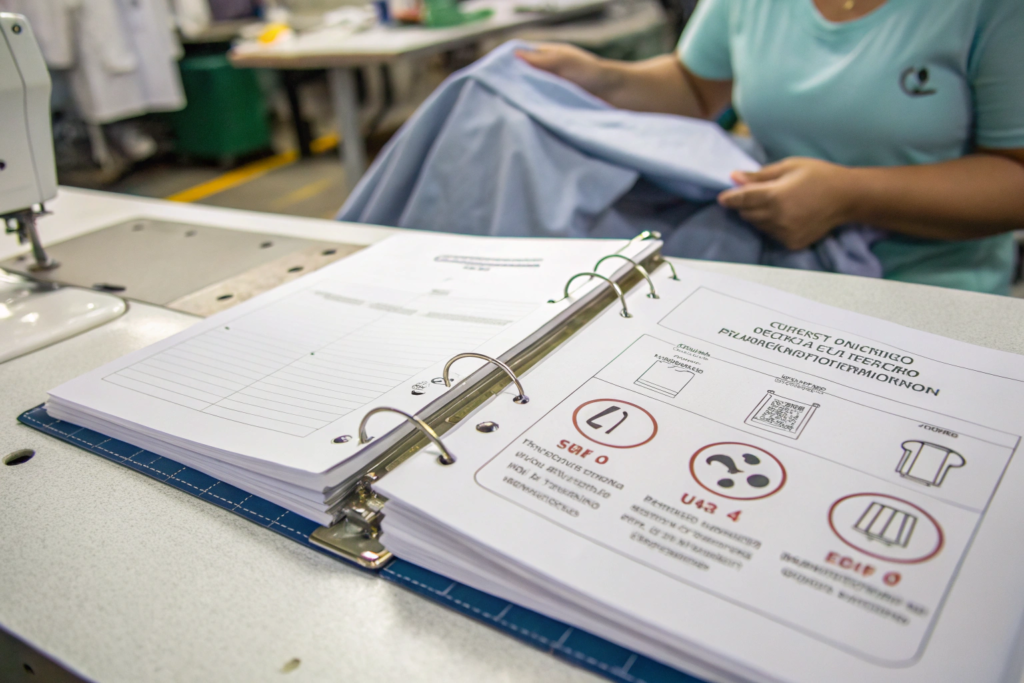
Standardized procedures prevent quality drift by replacing tribal knowledge with documented, measurable specifications. In a multi-line factory like Shanghai Fumao, this means every style has a unique "Tech Pack Binder" placed at the head of the production line. This binder contains the approved pre-production sample, a physical fabric swatch card with wash test results, a measurement chart with +/- tolerance clearly marked, and a "Seam Construction Library" showing the exact stitch type and stitches per inch required for every operation.
How Do "Visual Aids" on the Sewing Floor Reduce Operator Errors?
You cannot expect a sewer to remember the exact seam allowance for a curved neckline on a style they last made six weeks ago. That is an unreasonable expectation. You must give them a visual reference they can glance at without stopping their workflow.
At Shanghai Fumao, we use a system called "One-Point Lessons." These are A4-sized laminated cards hanging directly above each sewing machine station. They focus on one single critical operation.
For example, the station responsible for attaching the sleeve to the body of a jacket has a card that shows:
- Photo 1: Correct way (Fabric is feeding smoothly, no puckering).
- Photo 2: Wrong way (Puckering visible, too much ease being forced).
- Measurement: "Notch to notch alignment. Max 1mm tolerance."
We also use Physical Go/No-Go Gauges. For a buttonhole, we have a small metal template. If the buttonhole is too small for the button, the template physically blocks the button from passing through. This is faster and more accurate than measuring with a ruler. The operator tests every fifth piece with the gauge.
This approach removes subjectivity. The operator is not asking, "Does this look good enough?" They are checking, "Does this match the photo and fit the gauge?" This is how we ensure Line 3 in the afternoon shift produces the exact same sleeve attachment as Line 1 in the morning shift.
Here is a simple table of the visual tools we use to lock in consistency:
| Quality Risk Area | Visual Aid Tool | Purpose |
|---|---|---|
| Seam Puckering | Laminated Photo Comparison Card | Shows acceptable vs. unacceptable fabric feed tension. |
| Buttonhole Size | Metal Go/No-Go Gauge | Physically tests if button passes through easily. |
| Color Shading | Pantone Chip & Bulk Fabric Swatch | Operators check fabric roll color against the master standard every morning. |
| Print Placement | Clear Acrylic Template | Overlaid on garment to ensure logo is centered within 2mm. |
| Needle Change Schedule | Wall-Mounted Chart with Date Stamp | Tracks exactly when needles were last changed to prevent fabric snags. |
I encourage all brand owners visiting a potential factory to look for these visual aids. Walk the floor. If the sewing stations are bare except for the machine and a pile of fabric, the factory is relying on memory. Memory fails. If you see laminated cards and gauges, the factory is managing quality systematically.
Why Is the "Approved Pre-Production Sample" the Single Most Important Document?
I have mentioned this in previous discussions, but in the context of multi-line consistency, it becomes even more critical. The Approved PP Sample is not just for the buyer's approval. It is the Constitution for our production floor.
Before a new style goes into bulk production on any of our five lines, we hold a "Pre-Production Meeting." This meeting includes the Line Supervisor, the QC Manager, the Cutting Master, and the Head Mechanic. We put the Approved PP Sample in the middle of the table. We do not look at the tech pack PDF on a screen. We look at the physical garment.
We turn it inside out. We point out every detail:
- "See this French seam? It's 1/4 inch. Not 3/8."
- "See the tension on this topstitching? The needle thread is slightly looser than the bobbin thread."
- "Feel this collar interlining. It's the soft fusible, not the stiff one."
Then we take that exact sample and hang it in a clear plastic bag on the line. It stays there for the entire production run. At any moment, the QC inspector or the line supervisor can take a bulk piece off the line, hold it up next to the Approved Sample, and check for drift.
This is why I always advise clients to keep the duplicate PP Sample I send them. If you have a dispute later, and you say "The collar is different," and I pull out my duplicate and it matches the bulk, we have a factual basis for discussion. Without that physical benchmark, quality disputes dissolve into subjective arguments. At Shanghai Fumao, we archive the Approved PP Sample for at least two years after the last shipment. This allows us to perfectly replicate the style for a reorder, even if the original line supervisor has moved on.
How Do Inline and Final Inspections Work Together to Catch Defects?
Inspecting goods only after they are packed into cartons is the single biggest mistake in apparel quality management. It is an autopsy. You learn what killed the patient, but you cannot bring them back. To maintain consistent quality across multiple lines, you need a system of checkpoints that catch and correct errors while the garment is still in pieces or only partially assembled.
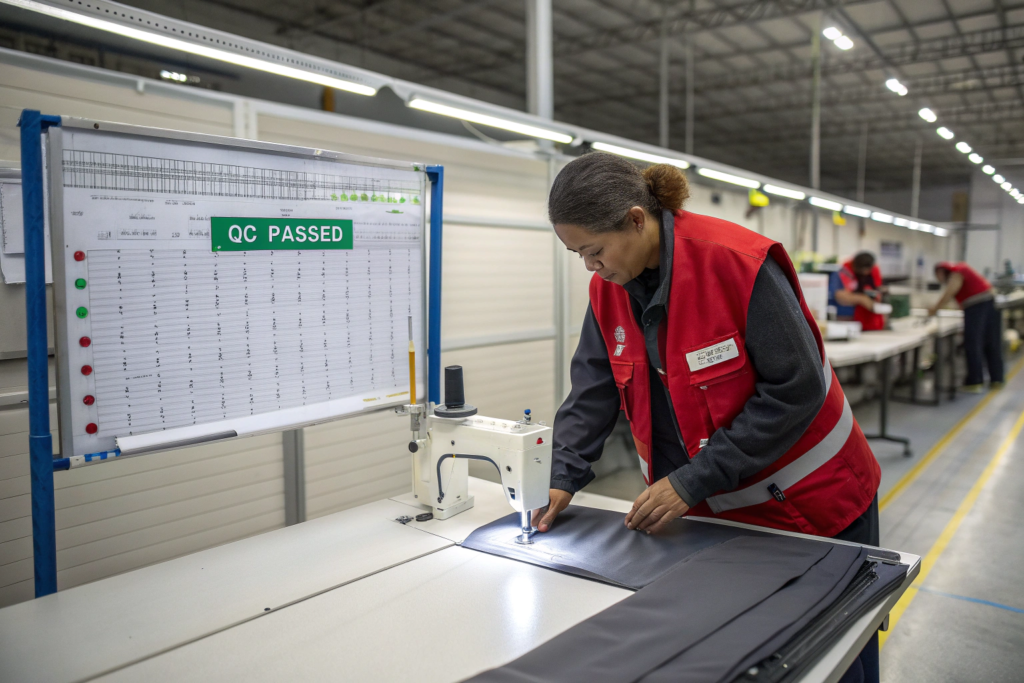
Inline and final inspections work together as a layered defense system. Inline inspections (often called DUPRO or "During Production") occur when 20-40% of the order is sewn. The inspector checks the sewing quality, measurements, and workmanship on the production floor itself. This catches systemic errors—like a mis-calibrated machine or a misunderstood seam allowance—before they affect the remaining 60% of the order. Final Random Inspection (FRI) occurs when 100% of goods are packed. This audit verifies that the inline corrections were effective and that the final packaging and labeling meet the buyer's specifications.
What Are the Four Mandatory QC Checkpoints on Our Production Lines?
At Shanghai Fumao, we do not wait for the buyer's third-party inspector to find problems. We have our own internal QC team that operates independently from the production supervisors. The QC team reports directly to the factory manager, not the line supervisor. This separation of powers is essential. A line supervisor is incentivized to hit output targets. A QC inspector is incentivized to find defects. These two roles must be in healthy tension.
Here are the four mandatory checkpoints every garment passes through on every one of our five lines:
Checkpoint 1: Fabric Inspection (Pre-Cutting)
- What: Every roll of fabric is run through a fabric inspection machine with backlighting.
- Checked: Holes, stains, barre (uneven dye streaks), and width variation.
- Action: Defects are marked with a red sticker. The cutting table is instructed to cut around these defects. Fabric with more than 10 points of defects per 100 yards is rejected and returned to the mill. This is a Four-Point System standard.
Checkpoint 2: Inline Sewing Audit (20% Complete)
- What: QC Inspector walks to the line and pulls 5 random pieces that have just had the main body assembled.
- Checked: Seam strength (pull test), stitch count per inch, needle cutting (holes near seam).
- Action: If a defect pattern is found, the line is stopped immediately. The mechanic adjusts the machine tension or the operator is retrained. We do not wait for the end of the day.
Checkpoint 3: Measurement & Trimming Audit (80% Complete)
- What: Garment is fully sewn but not pressed.
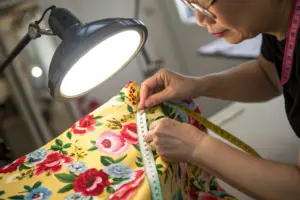
- Checked: Critical measurements (chest, length, sleeve) compared to spec sheet. Trim placement and logo embroidery quality.
- Action: If measurements are drifting (e.g., length is 1/2" too long), the operator's folding guide is adjusted.
Checkpoint 4: Final 100% Inspection (Pre-Pressing)
- What: Every single garment is inspected under bright light before it goes to the pressing station.
- Checked: Loose threads, oil stains, missed stitches.
- Action: Garments with minor defects are sent to the "Repair Station." Garments with major defects are replaced by cutting a new piece from the buffer fabric allowance.
Only after passing these four internal gates does the garment go to the finishing and packing area. When a third-party inspector from SGS arrives, they are inspecting a batch that has already been filtered through our own rigorous system. This is why our third-party inspection pass rate is over 99% on the first attempt. The system catches the problems internally, where we can fix them quickly and cheaply.
How Does Technology Help Track Defects in Real-Time Across Five Lines?
Managing this across five lines simultaneously requires more than clipboards and paper. We use a simple but effective digital system. Each QC checkpoint has a tablet. When a defect is found, the inspector taps a button on the screen corresponding to the defect type: "Seam Slippage," "Oil Stain," "Measurement Out of Tolerance."
This data streams to a dashboard in the Production Manager's office. If Line 2 suddenly shows a spike in "Seam Puckering" at 10:30 AM, the Manager is alerted immediately. He walks to Line 2 and checks the machine settings. The problem is fixed in minutes, not discovered days later at final inspection.
This data also allows us to generate a Defect Pareto Chart for each style. We can see that 80% of the issues on a particular silk blouse are related to "Fabric Snagging." We then implement a specific solution—perhaps requiring operators to wear soft cotton gloves or smoothing rough edges on the metal table guides. This continuous feedback loop is the only way to improve quality over time.
At Shanghai Fumao, we share these defect trend reports with our long-term clients during quarterly business reviews. It demonstrates that we are not just fixing problems; we are engineering them out of the process entirely. This level of transparency builds the kind of trust that turns a one-time order into a decade-long partnership.
What Role Does Fabric Sourcing Consistency Play in Final Garment Quality?
You can have the best sewing operators in the world, but if the fabric changes between Order 1 and Order 2, the garment will never look or feel the same. Fabric is the foundation. Inconsistency in raw material is the number one cause of "quality drift" that I see in the industry. A brand owner reorders a "best seller" and the new batch feels thinner or the color is slightly duller. The customer notices.
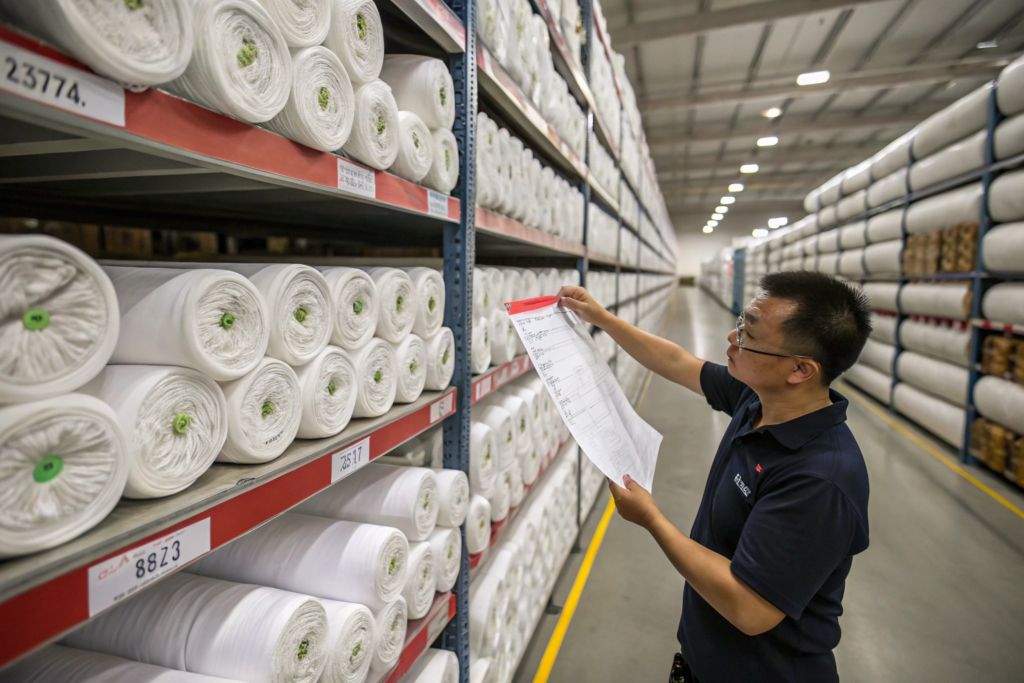
Fabric sourcing consistency is maintained by locking in specific mill partners and specific yarn specifications for each client's approved styles. At Shanghai Fumao, we maintain a "Fabric History File" for every repeat style. This file contains the original mill purchase order, the yarn lot number, the dye formula, and a physical swatch of the approved first production run. For reorders, we pull this file and source from the exact same mill and, where possible, the same yarn lot. If a mill discontinues a base cloth, we require a new lab dip and a new physical sample approval from the client before cutting.
How Do You Ensure the "Hand Feel" Stays the Same Between Production Runs?
Hand feel is subjective, but it is driven by objective factors: yarn size, yarn twist, fabric weight (GSM), and finishing chemicals. If any of these change, the hand feel changes.
Let's use a real example from our factory. A client had a popular women's t-shirt made from 180gsm Cotton Slub Jersey. The fabric had a nice, dry, textured feel. They reordered six months later. Our fabric sourcer went to the market to buy "180gsm Cotton Slub." The new roll arrived, and it felt softer and smoother. The weight was correct, but the texture was wrong.
We investigated. The original mill had used a Ring Spun yarn with a high twist. The new supplier had used an Open End yarn with a lower twist. Both are 100% cotton. Both are 180gsm. But the hand feel is completely different. Open End is fuzzier and softer; Ring Spun is smoother and stronger.
Because we keep a Yarn Specification Sheet in our Fabric History File, we caught this before cutting. We rejected the fabric and sourced the correct Ring Spun yarn from the original mill.
For a brand owner, this is invisible. You just know the shirt feels different. At Shanghai Fumao, we maintain a library of physical fabric standards. When a new roll arrives, our QC team compares it to the "Approved Hand Feel Standard" before it goes to the cutting table. If it does not match, it does not get cut. This is why we emphasize to our clients the importance of approving a bulk fabric swatch, not just a sample yardage. The bulk fabric is the truth.
What Is the Impact of "Dye Lot Variation" and How Is It Controlled?
This is a technical issue that drives retail customers crazy. A customer buys a "Navy Blue" cardigan online. They love it. They order a second one in the same "Navy Blue" a month later. The second one arrives, and it is slightly lighter or has a purple tint. They return it, complaining of "bad quality."
Dye lot variation is a reality of textile manufacturing. It is almost impossible to match two different dye baths perfectly. The solution is Lot Control.
At Shanghai Fumao, we implement the following rules for every order:
- Single Dye Lot per Order: We ensure that all fabric for a single purchase order comes from the same dye lot. This guarantees that every garment in that shipment matches perfectly.
- Lot Segregation: If a client places a reorder three months later, we inform them upfront: "This will be a new dye lot. We will send a new lab dip for approval." We do not cut the reorder until the client approves the new shade.
- Cutting Table Segregation: If we are forced to use two different dye lots for a single massive order, we mark the cartons clearly: "Lot A" and "Lot B." We advise the client to sell through Lot A completely before putting Lot B on the sales floor.
For online DTC brands, this is critical. If you mix Lot A and Lot B in your 3PL warehouse and a customer orders two units a week apart, they might receive two different shades. This creates a bad customer experience and erodes brand trust. A quality-focused factory partners with you to manage this complexity. We handle the segregation at the source so your warehouse team does not have to figure it out.
How Can a Brand Owner Audit a Multi-Line Factory's Quality System Remotely?
Traveling to China to audit a factory is ideal, but it is not always possible. Time and budget constraints are real. However, you cannot just trust the photos on the website. You need to see the system in action. The good news is that technology now allows for a very effective remote audit. I perform these virtual walkthroughs for potential clients of Shanghai Fumao almost every week.
A brand owner can remotely audit a multi-line factory's quality system by requesting a live, unscripted video walkthrough that focuses on three specific areas: the Fabric Inspection Station (to verify they check incoming materials), the Inline QC Checkpoint (to see if they are catching defects early), and the Approved Sample Archive (to confirm they maintain physical standards). The key is to ask the factory manager to show you the "Rejected Fabric" area or the "Repair Station." A clean factory is nice, but a busy Repair Station and a pile of rejected fabric rolls actually indicate a functioning quality system.

What Specific Things Should I Ask to See on a Live Factory Video Call?
Do not let the factory manager give you a pre-planned tour of the cleanest corner. Take control of the narrative. Ask them to walk to specific locations. Their reaction time and willingness tell you everything.
Here is a script I recommend for a 15-minute remote audit call:
Minute 1-3: The Fabric Store
- Instruction: "Please walk me to where you store fabric. Show me a roll of fabric that is waiting to be cut."
- What to look for: Is the fabric on shelves or on the floor? (Floor storage invites dirt and moisture). Is there a hangtag with a batch number? Is there a "Passed Inspection" sticker with a date?
Minute 4-8: The Production Line (Your Choice)
- Instruction: "Please walk to the middle of one of your lines. Pick up a random piece of the garment being sewn. Turn it inside out and hold it close to the camera."
- What to look for: Stitch consistency. Loose threads. Is the seam allowance trimmed neatly? Ask: "What is the AQL standard for this style?"
Minute 9-12: The Repair Station / Rejected Goods Area
- Instruction: "Please show me where you keep garments that failed inspection."
- What to look for: This is the most honest part of any factory. If the manager says, "Oh, we don't have any rejected goods," that is a lie. Every factory has defects. A good factory has a designated, organized area for them with tags explaining why they failed. This shows they analyze their mistakes.
Minute 13-15: The Sample Room Archive
- Instruction: "Can you show me the shelf where you keep the approved samples for clients who reorder?"
- What to look for: A dusty shelf with no samples means they do not value repeat consistency. An organized rack with clear labels means they take reorders seriously.
I have done this exact tour for dozens of U.S. brands considering Shanghai Fumao. I do not hesitate. I walk straight to the fabric inspection machine first because I am proud of how we track our raw materials. A factory that makes excuses or says "That area is too messy for video right now" is hiding something.
How Can I Use Third-Party Audit Reports to Verify the System?
While a live video call shows you the real-time condition, a third-party audit report shows you the systematic compliance. These audits are not just about checking a box for social compliance. They include a deep section on Quality Management Systems.
When you receive an audit report from a factory, do not just look at the first page score. Turn to the section on "Quality Assurance." Look for these specific line items:
- Section 5.2: Incoming Material Inspection: Does the factory have a documented procedure? Is there a calibration record for the inspection equipment?
- Section 5.6: In-Process Quality Control: Does the factory use statistical sampling? Are there records of inline inspections?
- Section 5.9: Control of Non-Conforming Product: Is there a procedure for handling defective goods? Is there a designated quarantine area?
A reputable factory will have a recent audit from WRAP, BSCI, or Sedex that includes these quality modules. At Shanghai Fumao, we keep our Sedex audit updated annually. The report is available to all potential clients via the Sedex platform. It provides an independent, third-party verification that the systems I have described in this article are actually in place and functioning. This combination of a live video walkthrough and a verified third-party audit report gives a brand owner about 90% of the confidence they would get from an in-person visit, at a fraction of the cost and time.
Conclusion
Consistent quality across multiple production lines is not a happy accident. It is the result of a deliberate, documented, and disciplined system. It is the difference between a factory that hopes for good quality and a factory that engineers good quality.
We have dissected the three core layers of this system. First, the use of Standardized Procedures and Visual Aids that remove guesswork and human error from the sewing floor, ensuring Line 1 and Line 5 sew the same sleeve the same way. Second, the deployment of a tiered inspection process that catches defects at 20% completion rather than waiting for the final packed carton, saving time, fabric, and money. Third, the often-overlooked discipline of Fabric Sourcing Consistency, where the hand feel and color of reorders are protected by rigorous mill management and lot control.
At Shanghai Fumao, these systems are not just theoretical. They are the daily rhythm of our factory. They are the reason our clients can launch a best-selling style, reorder it six months later, and receive a product that their customers cannot distinguish from the first run. They are the reason our repair station is busy but our return rate is low.
If you have been burned by inconsistent quality, or if you are preparing to scale your brand and are worried about maintaining the standard that built your reputation, I invite you to test our systems. Schedule a remote video audit. Ask us the hard questions. Ask to see our repair station.
Reach out to our Business Director, Elaine. She can arrange a live virtual tour of our five production lines and walk you through our QC checkpoints in real-time. Let us show you how we maintain the consistency that your brand deserves.
Contact Elaine at: elaine@fumaoclothing.com. Let's build a supply chain where quality is a guarantee, not a gamble.