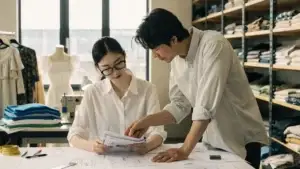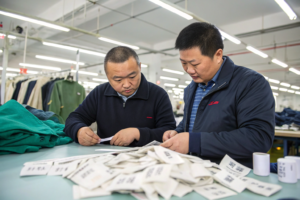
I received a frantic email last March from a boutique owner in Charleston. She had imported 400 "100% Linen" dresses from a new supplier she found on a sourcing platform. The dresses arrived looking beautiful. They sold well for three weeks. Then the reviews started coming in. "This dress shrank two sizes in cold water." "This feels like plastic, not linen." She took a lighter to a loose thread. Instead of burning like clean paper, it melted into a hard black bead. She had paid for linen but received a cheap polyester blend. She had no recourse because the shipment was already paid for and sold. That single mistake cost her reputation and forced her to issue $6,000 in refunds. That is the moment a brand owner realizes that trusting a hangtag is a gamble they cannot afford.
Verifying the fabric composition of imported wholesale clothing requires a multi-layered approach combining visual inspection, physical burn testing, and, for critical verification, professional lab testing using methods like AATCC 20 for fiber analysis. Relying solely on the supplier's word or the printed care label is insufficient due to common issues like fiber substitution, inaccurate blending ratios, and the use of lower-grade fibers that mimic the look but not the performance of premium materials.
I want to share the practical methods we use at Shanghai Fumao to guarantee fiber content for our U.S. clients. I have seen the dark side of fabric sourcing. I know the tricks some mills use to cut corners. This guide will give you the tools to protect your brand from the devastating impact of selling a garment that is not what it claims to be. Whether you are sourcing from China, Vietnam, or India, these verification steps are your shield against fraud and your assurance of quality.
What Are the Most Common Fabric Substitution Scams in Clothing Import?
Before you can verify fabric, you need to know what you are looking for. The global textile supply chain is vast and largely unregulated at the raw material stage. A trading company in one country might be buying greige fabric from a mill that has already misrepresented the fiber. The person sewing your shirts might not even know the fabric is fake. They just cut what the roll says on the sticker. The fraud often happens further up the chain.
The most common fabric substitution scams in apparel import involve replacing natural fibers with cheaper synthetic alternatives. These include labeling polyester satin as "Silk," labeling acrylic knitwear as "Wool" or "Cashmere," and blending a high percentage of polyester or viscose into what is sold as "100% Cotton" or "100% Linen." Another frequent issue is the misrepresentation of thread count or fabric weight, where a lighter, cheaper weight of cotton is used instead of the specified heavy-weight fabric.
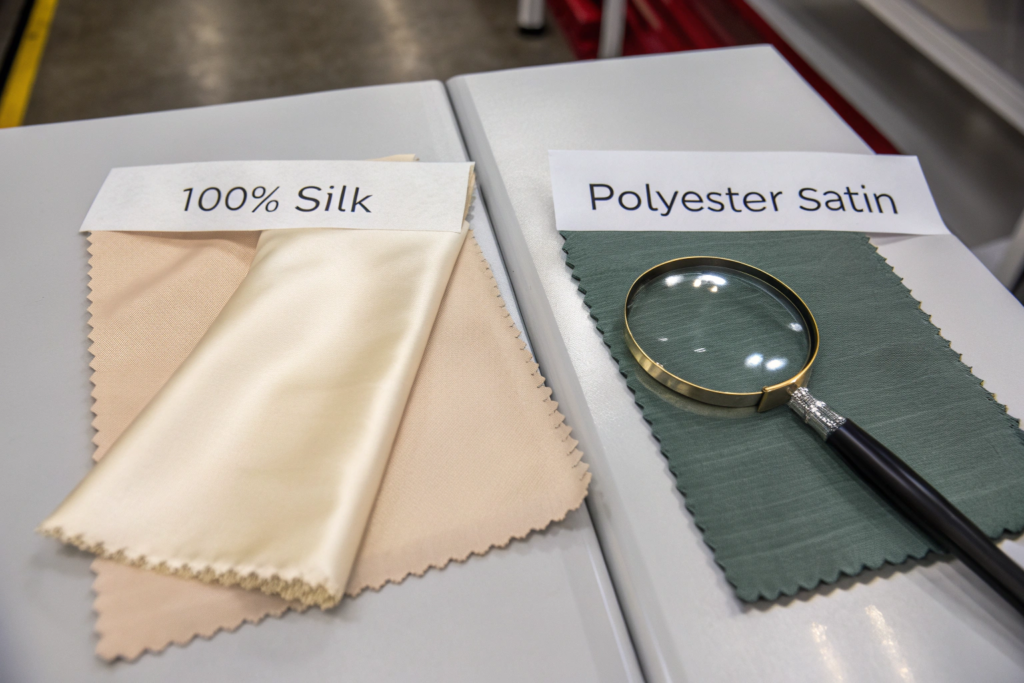
Why Would a Factory Sell Polyester as Silk or Acrylic as Wool?
The answer is simple economics. The price gap between natural fibers and their synthetic imposters is enormous. Let me show you the current market differential we see on the ground in China. These are approximate bulk fabric costs per yard for a standard medium-weight dress fabric.
| Fabric Type | Approximate Cost per Yard (Bulk) | Common Fake Substitute | Cost of Fake per Yard | Savings for Cheating Factory |
|---|---|---|---|---|
| 100% Silk Charmeuse (19mm) | $8.50 - $12.00 | Polyester Satin | $1.80 - $2.50 | ~75% Cheaper |
| 100% Merino Wool Jersey | $9.00 - $14.00 | Acrylic Knit | $2.20 - $3.00 | ~75% Cheaper |
| 100% Linen (Heavy Weight) | $6.50 - $9.00 | Polyester Linen-look Slub | $1.60 - $2.20 | ~70% Cheaper |
| Pima Cotton (Long Staple) | $4.50 - $6.00 | Standard Short-Staple Cotton w/ Silicone Wash | $2.50 - $3.00 | ~45% Cheaper |
When a brand owner emails me asking for a quote that matches an impossibly low price they got from another vendor, I often look at the spec sheet and immediately identify the scam. If someone is quoting a silk dress FOB $6.50, the fabric cannot be silk. The math does not work. The cost of the raw silk yarn alone exceeds that price.
I had a client who ran a sustainable fashion label in Portland. She ordered "100% Organic Cotton" French Terry from a new supplier. The price was 20% lower than our quote. She went with them. When the hoodies arrived, they felt soft, but they pilled heavily after one wash. We tested a sample for her. It was 60% cotton and 40% polyester. The polyester was giving it the soft hand feel initially, but the short-staple cotton was causing the pilling. The "organic" certificate was for a different mill. The supplier had simply used a stock photo of a certificate. This happens more often than anyone wants to admit.
How Can I Spot Fake "High Thread Count" Cotton?
This is a more sophisticated scam. The label says "100% Cotton, 60s Yarn Count." You expect a smooth, silky, durable fabric. You receive a fabric that feels okay but wrinkles like crazy and starts looking thin after five washes.
There are two ways factories cheat on cotton quality:
- False Yarn Count: They use a thicker yarn (e.g., 40s instead of 60s). The higher the number, the finer and softer the yarn. Using 40s is cheaper.
- Mercerization Skipping: Mercerization is a chemical treatment that makes cotton stronger, shinier, and more absorbent. It adds cost. Some mills skip it or do a "half-mercerization" to save money. The fabric looks okay on the roll but loses its shape and luster after washing.
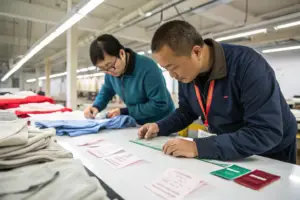
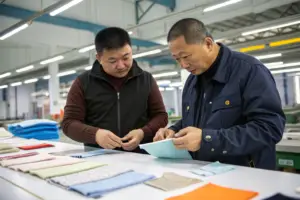
The visual difference is subtle to an untrained eye. You need to feel it against a known standard. At Shanghai Fumao, we keep a library of approved fabric swatches sealed in plastic. When a new dye lot of cotton arrives from the mill, we compare the hand feel and drape to the Approved Counter Sample before it goes to the cutting table. If the fabric feels "papery" or stiff instead of silky, we reject the lot. A brand owner importing goods should request a "Production Swatch" cut from the actual bulk roll before the factory cuts the full order. This swatch becomes your evidence. If the final goods do not match that swatch, you have a strong case for a discount or refund.
How Can I Perform a Burn Test to Identify Fabric Fibers at Home?
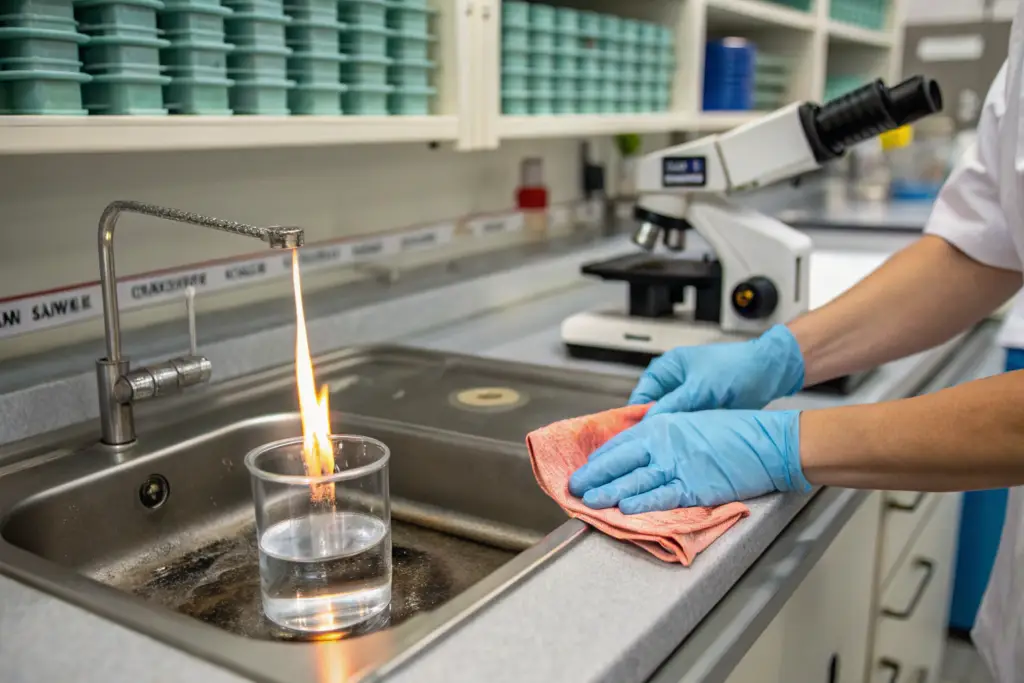
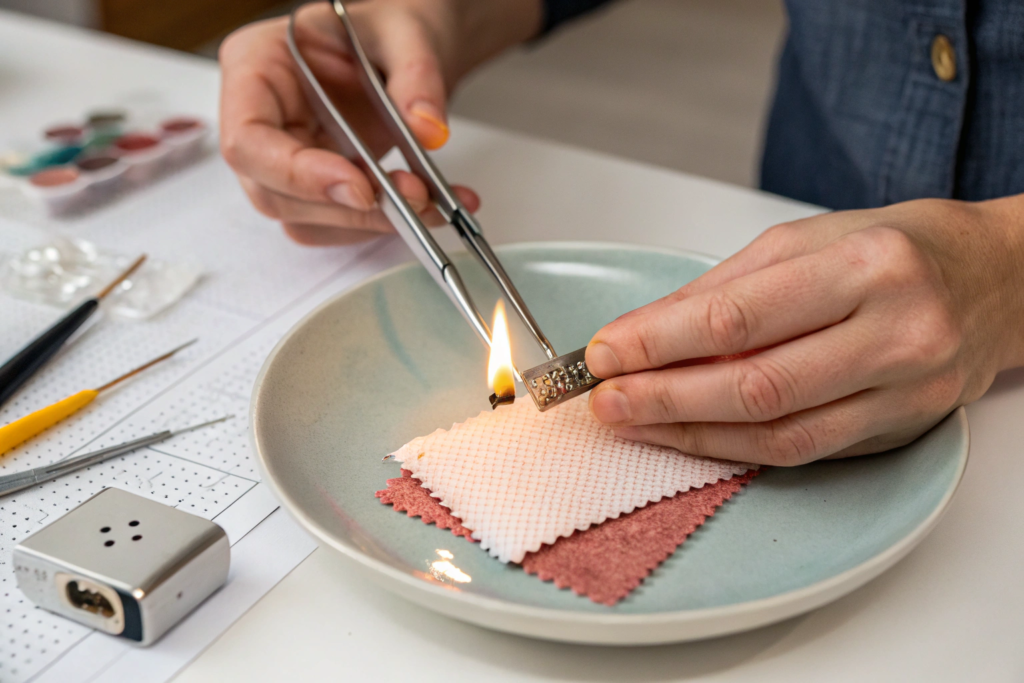
You do not need a laboratory coat or a chemistry degree to catch 80% of fabric fraud. The burn test is a method I have taught to dozens of my clients. It is a qualitative test that reveals the fundamental nature of the fiber. You are looking at two things: How it burns and What it smells like. This is the first line of defense you should use when you open that sample box or the first carton of bulk production.
A burn test identifies fabric fibers by observing the flame behavior, the odor of the smoke, and the characteristics of the resulting ash or residue. Natural plant fibers like cotton and linen burn quickly with a flame, smell like burning paper or wood, and leave a fine, gray, powdery ash. Natural protein fibers like wool and silk burn slowly, smell like burning hair, and leave a crushable black bead. Synthetic fibers like polyester and nylon melt away from the flame, smell like burning plastic or chemical sweetness, and leave a hard, uncrushable plastic bead.
What Does Burning Cotton, Linen, and Rayon Look and Smell Like?
These are cellulosic fibers. They come from plants (or processed wood pulp in the case of Rayon/Viscose). They behave similarly in a flame.
Safety First: Always do this over a non-flammable surface like a ceramic plate or a metal sink. Use long metal tweezers. Have a cup of water nearby. Do not inhale the fumes deeply.
Cotton:
- Approach to Flame: Ignites instantly. Does not shrink away.
- In Flame: Burns rapidly with a yellow flame.
- Removed from Flame: Continues to burn with an afterglow.
- Smell: Burning paper or burning leaves.
- Residue: Fine, soft gray ash that turns to dust when you rub it between your fingers.
Linen:
- Characteristics: Very similar to cotton, but often burns slightly slower and the ash is slightly darker gray. The smell is distinctly like burning dry grass or rope.
Rayon/Viscose (The Deceiver):
- Why it matters: Rayon is often used to fake silk or high-end cotton. It is a natural polymer (cellulose) but man-made.
- Burn Test: Burns exactly like cotton. Fast flame. Paper smell. Soft gray ash.
- The Trap: A burn test cannot easily distinguish Cotton from Rayon. A blend of 70% Cotton / 30% Rayon will still smell like paper and leave ash. This is where the burn test fails and you need the next method (bleach test) or a lab.
Polyester/Nylon (The Enemy of Natural Brands):
- Approach to Flame: Shrinks away and melts. Curls up into a hard ball.
- In Flame: Burns slowly, sputters, drips melted plastic (very hot and dangerous).
- Removed from Flame: Usually self-extinguishes.
- Smell: Sharp, acrid, chemical smell. Some compare it to burning plastic bottle or sweet chemical candy.
- Residue: Hard, shiny black bead that cannot be crushed between your fingers.
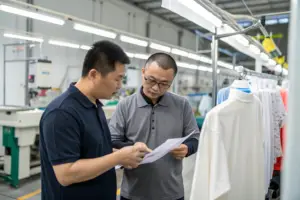
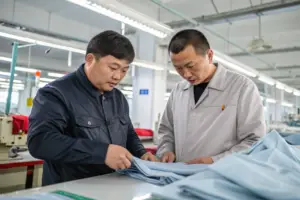
I recommend every brand owner keep a small "Fiber Library" kit. Cut a swatch of known 100% cotton, known 100% polyester, and known 100% wool. When you get a new shipment from a factory, pull a thread from a seam allowance inside the garment. Burn it. Compare the smell and the bead to your known samples. If your "100% Linen" dress melts into a hard black bead, you have proof of synthetic content. Send a video of this test to your supplier immediately. At Shanghai Fumao, we use the burn test as a quick check on the cutting table. If a fabric roll looks suspicious, the cutter burns a thread. If it melts, the roll is quarantined. It saves us from sewing 500 jackets with the wrong fabric.
How Do I Test for Wool vs Acrylic Blends Using Bleach?
This is a fantastic follow-up test for wool and animal hair blends. The burn test can sometimes be confusing with wool blends because acrylic can mimic the smell of burning hair to an untrained nose. The bleach test is definitive for protein fibers.
The Science: Wool and Silk are protein fibers. Chlorine bleach (sodium hypochlorite) dissolves protein. Cotton and Polyester are resistant to bleach.
The Test:
- Place a small sample of the yarn in a glass jar or cup.
- Cover it completely with regular household chlorine bleach.
- Wait 30 minutes to 1 hour.
Results:
- 100% Wool or Silk: The fiber will completely dissolve. The liquid will look cloudy and there will be no solid fiber left.
- Acrylic or Polyester: The fiber will be completely unaffected. It will float in the bleach looking exactly the same as when you put it in.
- Wool/Acrylic Blend: The fiber will break apart into small pieces, but solid synthetic strands will remain.
I had a client who was buying "Alpaca Blend" sweaters from a supplier in South America. They were expensive wholesale. She did the bleach test. The yarn turned to mush, but about 40% of the strands remained intact. She sent it to a lab. It was 60% Wool, 40% Nylon. The nylon was not disclosed on the spec sheet. While a wool/nylon blend is common for durability, the supplier had misrepresented it as a premium Alpaca blend to charge a higher price. This test allowed her to renegotiate the price based on the actual fiber content. This is the kind of leverage knowledge gives you.
What Are the Benefits of Professional Fabric Composition Testing Labs?
There is a limit to what you can do with a lighter and a jar of bleach. When the financial stakes are high, or when a dispute is heading toward legal action, you need a piece of paper from an accredited third party. This is the nuclear option, but it is an option every serious importer should have in their back pocket. I send samples out for lab testing at least once a quarter, either to verify a new mill's claims or to solve a specific performance issue.
Professional fabric composition testing labs provide quantitative, legally-defensible analysis of fiber content using standardized methods like AATCC 20 (Fiber Analysis: Qualitative) and AATCC 20A (Fiber Analysis: Quantitative). These tests use microscopy and chemical dissolution to determine the exact percentage of each fiber in a blend. The resulting report from an ISO 17025 accredited lab is the gold standard for settling disputes with suppliers, filing claims with trade insurance, or verifying compliance with U.S. labeling laws (Textile Fiber Products Identification Act).
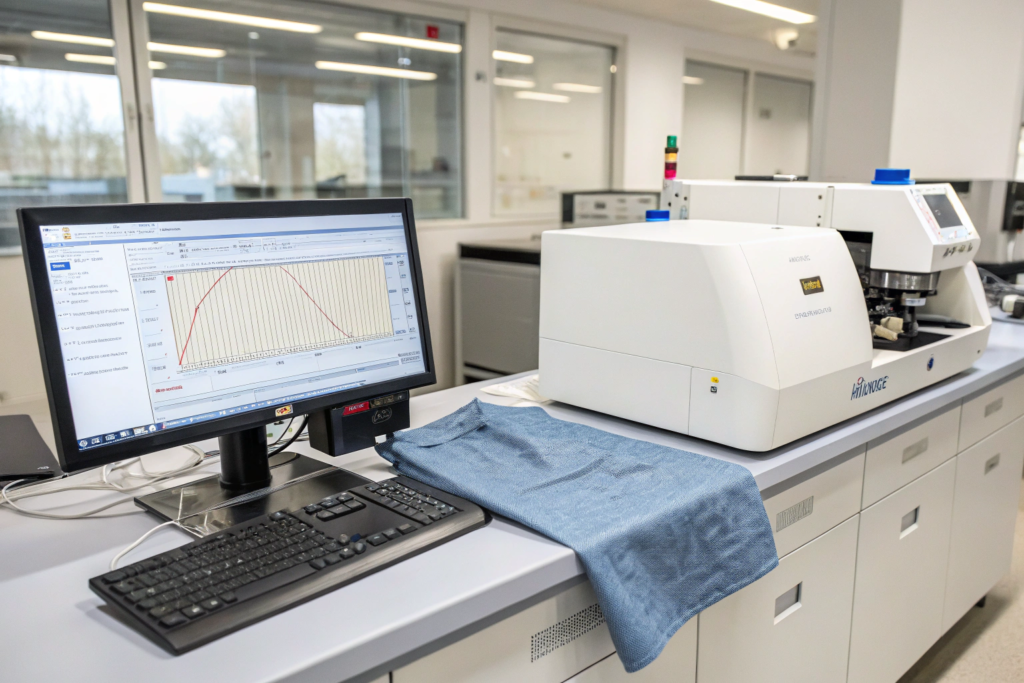
How Does Quantitative Fiber Analysis Actually Work in a Lab?
You might wonder how a scientist in a white coat can look at a piece of fabric and tell you it is exactly 78% Cotton, 20% Polyester, and 2% Spandex. It is not magic. It is chemistry and math.
The standard method is AATCC 20A, which relies on Selective Dissolution.
Here is the simplified workflow of how a lab like SGS or Intertek tests a blend of Cotton and Polyester:
- Preparation: The fabric sample is dried in an oven to remove all moisture. It is weighed precisely to 0.0001 grams. This is the "Dry Weight."
- Dissolution Step 1: The sample is submerged in 75% Sulfuric Acid. Cotton (cellulose) dissolves in this acid. Polyester does not.
- Weighing Step 1: The remaining fiber (Polyester) is rinsed, dried, and weighed.
- Calculation: The lab calculates the percentage of Polyester by dividing the weight after acid by the original dry weight. The Cotton percentage is the difference (minus a small standard allowance for moisture regain).
This process is repeated for each fiber type. For a complex blend like Wool/Nylon/Spandex, they use a sequence of different chemicals. Each chemical eats one specific fiber type and leaves the others intact.
This is why a lab report is undeniable. It provides the exact gram weight of each component. If the supplier claims the sweater is 80% Wool and 20% Nylon, but the lab report shows 65% Wool, 30% Nylon, and 5% Acrylic, the supplier cannot argue with the chemistry. I have used these reports from AATCC accredited labs to successfully claim chargebacks on behalf of my clients when a third-party mill provided us with faulty greige goods. The lab report is the single most powerful document in a fabric dispute.
What Is the Approximate Cost and Timeline for a Lab Test?
This is the practical question. Is it worth $100 and two weeks of waiting to get a lab report? The answer depends on the size of your order.
| Testing Parameter | Standard Method | Approximate Cost (USD) | Turnaround Time (Expedited Option) |
|---|---|---|---|
| Fiber Composition (1 Blend) | AATCC 20/20A | $85 - $150 | 5-7 Business Days (3 Days) |
| Fiber Composition (3 Blends) | AATCC 20/20A | $200 - $300 | 5-7 Business Days |
| Formaldehyde Content | AATCC 112 | $60 - $90 | 5-7 Business Days |
| Colorfastness to Laundering | AATCC 61 | $75 - $100 | 7-10 Business Days |
| Pilling Resistance | ASTM D4970 | $80 - $110 | 7-10 Business Days |
I advise my clients at Shanghai Fumao to budget for one "Gold Standard" test per season on their hero fabric. If you are ordering 2,000 yards of custom-milled fabric for a $50,000 production run, spending $150 on a lab test to verify the mill's composition claim is cheap insurance. It is less than 0.3% of the fabric cost.
I also recommend you do this before the fabric is cut. Many labs allow you to mail in a swatch directly from your home office in the U.S. You do not need to be in China to do this. Cut a 6-inch square from the sample yardage the factory sent you for approval. Mail it to an SGS lab in your country. In a week, you have the truth. If the fabric fails, you reject the bulk fabric before it is cut and sewn. This saves the cost of making 1,000 defective garments.
How Does the New U.S. Import Compliance Affect Fabric Verification?
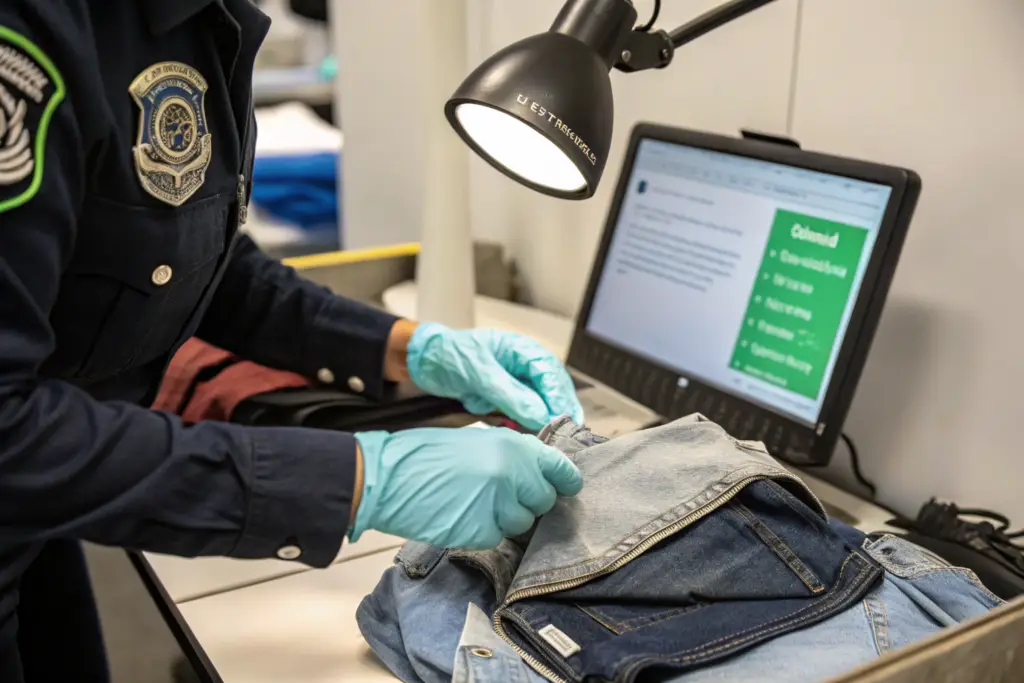
The rules of the game changed significantly in the last few years. It is no longer just about whether the fabric is soft enough for your customers. It is about whether the fabric can legally enter the United States at all. U.S. Customs and Border Protection (CBP) is not just looking for drugs and weapons anymore. They are looking for forced labor in the cotton supply chain and they are looking for misclassified textiles to collect the correct duties.
The new era of U.S. import compliance, specifically the Uyghur Forced Labor Prevention Act (UFLPA), makes fabric composition verification a legal necessity rather than just a quality control option. Importers must now be able to prove the origin of cotton fibers and demonstrate that their supply chain is free from forced labor. Failure to provide adequate documentation during a CBP review can result in the seizure and exclusion of goods, regardless of whether the shipment was FOB or DDP. This places a new premium on sourcing from transparent factories like Shanghai Fumao that maintain rigorous supply chain mapping.
Why Is Cotton Traceability Now Mandatory for U.S. Importers?
The UFLPA establishes a rebuttable presumption that all goods mined, produced, or manufactured wholly or in part in the Xinjiang Uyghur Autonomous Region (XUAR) are made with forced labor and are therefore prohibited from entry into the United States.
What does this mean for a small clothing brand in Austin, Texas? It means if your "100% Cotton" t-shirt is made from yarn that originated in Xinjiang, CBP can seize it at the Port of Houston. You will receive a Notice of Detention. To get your goods released, you must prove:
- The cotton was not sourced from XUAR; OR
- The production did not involve forced labor.
Proving a negative is incredibly difficult. You need a chain of custody document from the farm to the gin to the spinner to the knitter to the garment factory. Most small trading companies cannot provide this. They buy fabric from the open market and have no idea where the cotton boll came from.
This is why Shanghai Fumao has invested in a Segregated Supply Chain for our U.S.-bound cotton products. We only use cotton with documented origin from specific regions in China (outside XUAR), Australia, or the USA. We maintain a file for each production run that includes:
- Yarn Purchase Order
- Mill Certification of Origin
- Transaction Certificate for Organic Content (if applicable)
I urge you to read the guidance on CBP's UFLPA page. If your current supplier cannot provide a clear answer about where their cotton yarn comes from, you are importing at your own risk. The days of "don't ask, don't tell" in the cotton supply chain are over. This makes fabric verification not just about quality, but about the fundamental ability to receive your inventory.
How Do Incorrect HTS Codes on Fabric Content Lead to CBP Penalties?
This is another compliance layer that ties directly back to verifying your fabric composition. The Harmonized Tariff Schedule (HTS) code determines how much duty you pay. The code is based on the chief weight of the fabric.
For example:
- A men's woven shirt that is 55% Cotton / 45% Polyester: Duty is 19.7% .
- A men's woven shirt that is 55% Polyester / 45% Cotton: Duty is 29.9% (or higher).
That 10% difference in fiber ratio changes the duty by 10 percentage points. If a factory tells you the shirt is "Cotton Rich" but it is actually "Polyester Rich," and they use the Cotton HTS code to give you a cheaper DDP quote, you are the one committing customs fraud when CBP audits the entry.
CBP can audit entries going back five years. If they pull a sample of that shirt from the warehouse, test it, and find it is actually 52% Polyester, they will send you a bill for the unpaid duties plus interest and penalties. The penalty can be up to 20% of the underpaid amount, or even seizure for gross negligence.
This is why at Shanghai Fumao, our DDP service includes a strict policy: We do not guess HTS codes. We verify the fabric composition first, then we classify the garment. If we are unsure about a blend, we pay for the lab test. We would rather delay a shipment by five days for a lab test than expose a client to a five-year audit liability. When you are evaluating a new supplier, ask them: "Can you show me the mill test report for the fiber content of this specific dye lot?" If they cannot, they are guessing. And guessing with U.S. Customs is a game you cannot afford to lose.
Conclusion
Verifying the fabric composition of your imported clothing is not a task you can afford to outsource to trust alone. The apparel supply chain is filled with opportunities for substitution, whether intentional fraud or simple negligence. As a brand owner, your name is on the label. When that "Silk" blouse melts in the dryer, your customer does not blame the factory in China. They blame you.
We have walked through a practical toolkit for verification. We identified the most common scams, from polyester masquerading as silk to short-staple cotton hiding behind a soft finish. We covered the at-home methods you can use immediately, like the burn test for identifying synthetics and the bleach test for verifying wool. We looked at the gold standard of professional lab testing, understanding when to invest in an AATCC report to settle disputes or verify large orders. And crucially, we connected fabric verification to the new reality of U.S. import compliance, where the origin and content of your fibers have direct legal and financial consequences with Customs and Border Protection.
At Shanghai Fumao, these verification steps are not an extra service. They are part of our standard operating procedure. We burn test our incoming greige goods. We quarantine rolls that look suspicious. We maintain a digital file of mill certifications for every U.S.-bound order. We do this because we know that a quality garment starts with honest fiber.
If you are looking for a manufacturing partner who treats fabric integrity as seriously as you treat your brand reputation, we should talk. Do not let your next collection be the one that gets ruined by undisclosed polyester or a CBP detention order.
You can reach our Business Director, Elaine, for guidance on setting up a verification protocol for your next production run. She can also arrange for a pre-production fabric swatch to be sent to you for your own testing. Contact Elaine at: elaine@fumaoclothing.com. Let us help you build a supply chain where what you order is exactly what you receive.