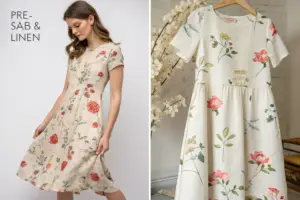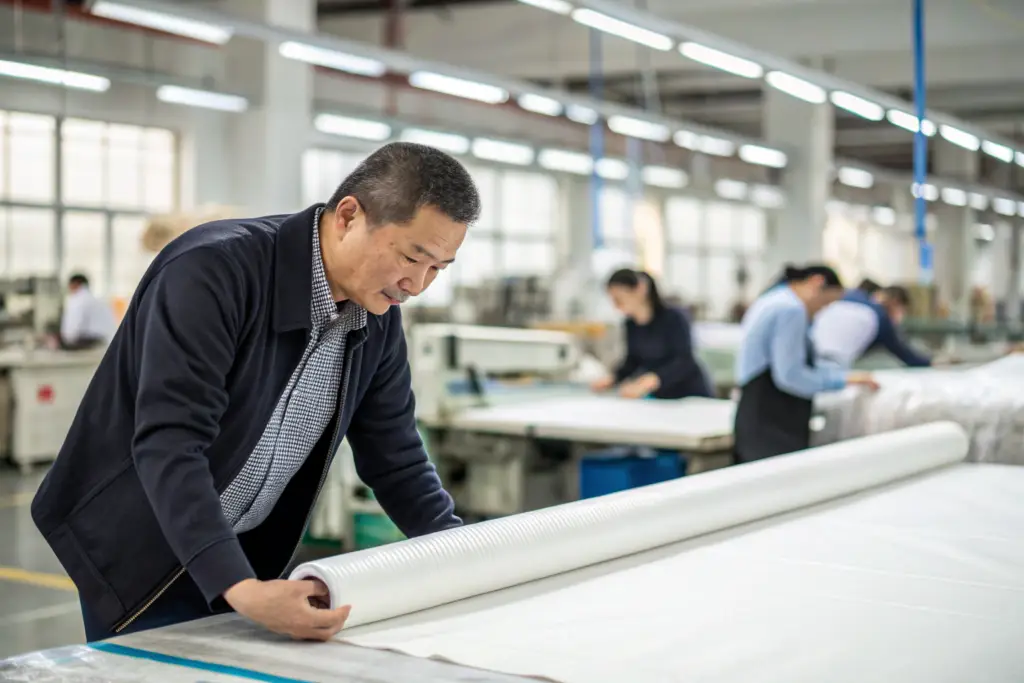
As an owner of a clothing factory in China with over fifteen years of experience, I have watched the global apparel supply chain shift back and forth like the tide. I run Shanghai Fumao, a facility with five dedicated production lines just outside the commercial heart of the country. Every season, I speak with brand owners from New York, Los Angeles, and Chicago who are exhausted. They tell me stories about missed deliveries from other regions, about quality control nightmares that lead to chargebacks, and about the sheer frustration of not knowing if their inventory will arrive in time for the selling window. They come to us tired of chasing problems, and they stay because we provide something that is becoming rare in this industry: a sense of calm and certainty.
Independent clothing brands are moving production to China because the manufacturing ecosystem here has evolved from a purely low-cost labor model to a high-efficiency, full-package supply chain model. The country offers a unique combination of raw material access, specialized technical skill in diverse fabric categories, and, most importantly, logistical reliability that directly addresses the pain points of delayed shipments and inconsistent quality that plague other sourcing destinations.
I want to be clear. This is not a conversation about exploiting cheap labor. That era ended years ago. Today, it is about value engineering. It is about getting the highest possible stitch count per dollar while ensuring the container hits the port of Long Beach exactly when we say it will. If you are a brand owner who values quality but cannot afford the opacity of a broken supply chain, let me walk you through the reality on the ground here. I will share exactly what we see from the factory floor at Shanghai Fumao and how we solve the specific problems that keep independent owners awake at night.
How Can US Brands Ensure Quality Control in Chinese Factories?
I remember a conversation I had last spring with a brand owner from Austin, Texas. He had previously been sourcing knit polo shirts from a trading company in Vietnam. The first shipment was fine. The second batch came in and the collars started curling after two washes. When he complained, the agent in Vietnam blamed the humidity during transit. That excuse did not fly with his customers who were returning the shirts. This is the exact moment an independent brand decides they need a direct line to the production floor.
Quality control in Chinese factories is ensured through a combination of AQL (Acceptable Quality Limit) inspection protocols, in-line production monitoring, and, critically, direct communication with the factory floor via platforms like WeChat and Zoom. Unlike dealing with a third-party agent who may never have seen the actual stitching, a reputable Chinese manufacturer like Shanghai Fumao offers real-time video walkthroughs of your specific order being cut and sewn.
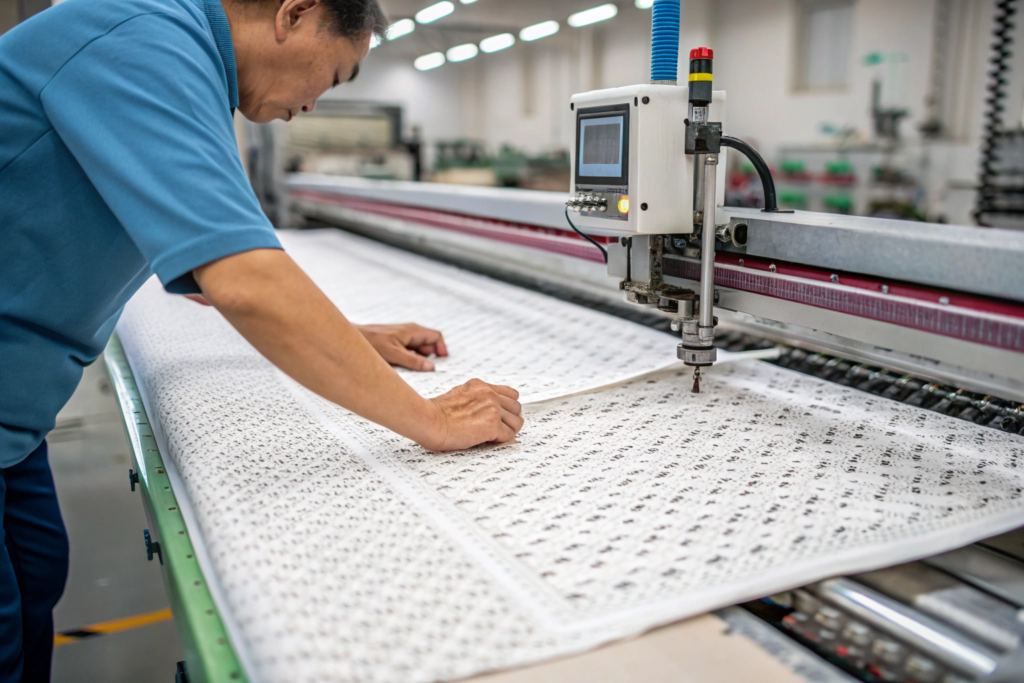
How Do AQL Standards Actually Work on the Ground?
AQL is a term thrown around a lot in sourcing circles, but many new brand owners do not know how it applies to their specific product. In simple terms, AQL is a statistical tool. It tells us how many defective units are acceptable in a random sample before we reject the entire batch. Here is a quick look at the most common standard we use at Shanghai Fumao for apparel destined for the U.S. market:
| Defect Type | AQL Level (General Inspection II) | Example in Garment |
|---|---|---|
| Critical Defect | 0 (Zero Tolerance) | Exposed sharp needle tip; mold on fabric. |
| Major Defect | 2.5% | Uneven hem length; zipper fails after 3 pulls; significant shade variation. |
| Minor Defect | 4.0% | Loose thread ends; slight wrinkle in packaging; off by 1/8" in measurement. |
This table is not just a formality. It is a contract between us and the buyer. Last year, we worked with a start-up activewear brand in San Diego that specialized in high-performance fabric blends. They were nervous because their fabric was a custom polyester-spandex mix sourced from a mill in Jiangsu. We implemented a Dupro inspection at the fabric stage and a Final Random Inspection before packing. Using an AQL 2.5 standard, we caught a batch where the sewing tension was slightly off on the side seams—an issue that would have led to seam slippage during squats and lunges. Because we caught it in-line, we adjusted the machines and saved that brand nearly $22,000 in potential return shipping costs from the U.S.
What Certifications Should I Look for Beyond the Price Quote?
When a brand owner emails me asking for a quote, the first thing I do after looking at the tech pack is send them a copy of our facility audit report. Price is important, but the cost of a failed compliance audit by a retailer like Nordstrom or Target is catastrophic. You need to know if the factory is on solid legal and ethical ground.
For U.S. importers, the conversation usually starts with WRAP certification. WRAP stands for Worldwide Responsible Accredited Production. It covers 12 principles including prohibition of forced labor, child labor, harassment, and ensures health and safety. If you are doing DDP (Delivered Duty Paid) shipping terms, as we offer at Shanghai Fumao, you need a partner who understands that U.S. Customs and Border Protection (CBP) is actively looking for goods produced with forced labor. A valid social compliance audit is your first line of defense against having your container seized at the port. We maintain not just WRAP, but also a BSCI audit for our European clients. Having these documents ready before you even ask saves weeks of back-and-forth and builds the kind of trust that a flashy website cannot.
Why Are Shipping Delays Less Frequent with China DDP Services?
Nothing kills a fashion brand faster than missing the season. I had a client from Chicago who ran a women's contemporary line. They designed a beautiful linen-blend trouser for the summer collection. They placed the order with a factory in India in February. The production was fine, but the logistics broker they used messed up the ocean freight booking during the post-Chinese New Year rush. The goods sat at the port for three weeks waiting for vessel space. By the time the trousers arrived in Chicago, it was July. The summer selling window was closed. They had to put $80,000 worth of inventory straight into storage for next year. That is a cash flow nightmare.
Shipping delays are less frequent when using China DDP services because the manufacturer assumes full responsibility and risk for the entire supply chain leg from the factory floor to the buyer's warehouse door. This model forces the factory to use only reliable, tier-one freight forwarders and to proactively solve customs clearance issues in the U.S. before they delay the final mile delivery.
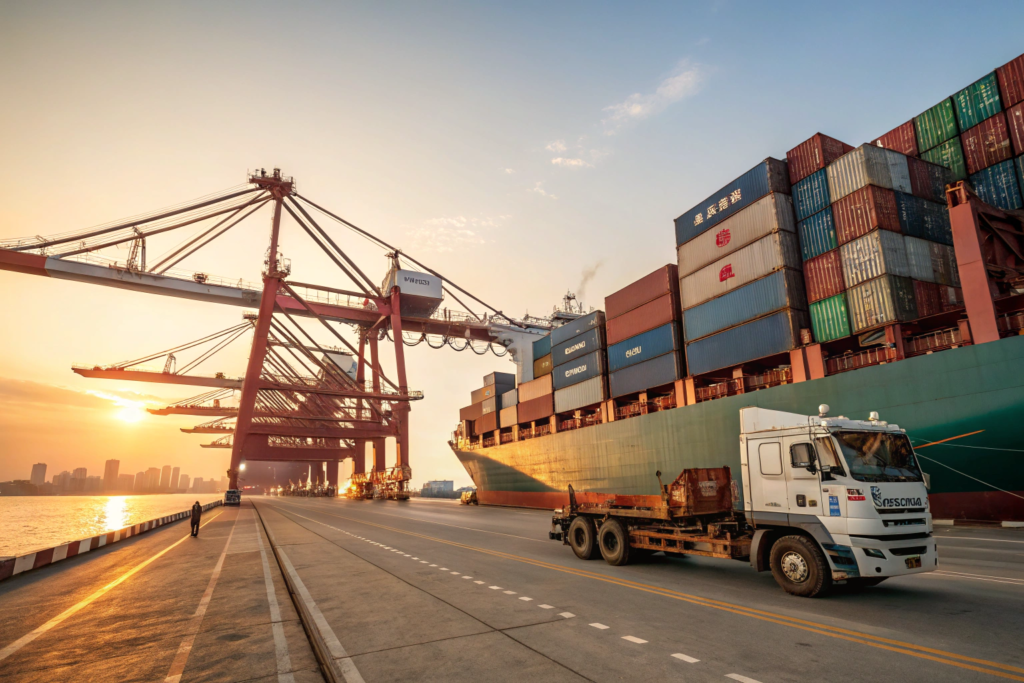
What Exactly Does DDP Shipping Mean for a Small Brand Owner?
Let me break this down because this is where I see the most confusion, and frankly, the most hidden costs. There are two common ways to ship: FOB (Free on Board) and DDP (Delivered Duty Paid).
With FOB, the brand owns the goods the moment they cross the ship's rail in Shanghai. You have to hire your own freight forwarder, pay for insurance, pay U.S. import duties, pay customs brokerage fees, and pay for trucking from the port. For a small independent brand moving 500 units, these extra charges can add up to 30-40% more than the invoice price, and they are a huge administrative headache.
With DDP, Shanghai Fumao handles everything. We quote you a price that includes the shirt, the carton, the ocean freight, the U.S. duty, and the truck to your door in Austin or Los Angeles.
Consider this real scenario from a shipment we handled last October for a men's streetwear brand based in Brooklyn:
| Cost Item | FOB Scenario (Brand Manages) | DDP Scenario (Shanghai Fumao Manages) |
|---|---|---|
| Ocean Freight | $3,800 (Market Rate) | Included in Unit Price |
| Customs Bond | $550 (Annual Fee) | N/A (Covered by our Broker) |
| ISF Filing | $45 | N/A |
| Duty (16% on Mens Wovens) | $4,200 | Included in Unit Price |
| Port Drayage/Demurrage Risk | $0 - $800+ (Variable) | $0 (Our risk) |
| Trucking to Brooklyn | $950 | Included |
Because we control the logistics, we consolidate cargo with other orders. This gives us better rates with steamship lines like Maersk than a small brand could get on their own. More importantly, if there is a customs hold at the port of Los Angeles, we get the alert. We handle the FDA or CBP query immediately. Under an FOB model, the brand owner is often asleep when the broker calls, leading to storage fees accruing by the hour. DDP eliminates that disconnect.
How Do Chinese Holidays Impact My Delivery Schedule and How Do We Plan Around Them?
Chinese New Year (CNY) is the single biggest variable in the global apparel calendar. It is not a one-day holiday. It is a month-long migration of a billion people. Factories shut down, workers go home, and the country stops shipping.
We do not treat CNY as a surprise. We treat it as a fixed deadline like Christmas Day. At Shanghai Fumao, we begin capacity planning for the January/February shutdown in September of the prior year. Here is the internal checklist we run with every brand partner:
- Fabric Reservation (90 Days Out): We order and hold all greige goods before the mills close for dyeing in December.
- Labor Lock-In: We offer retention bonuses to our 5 production line workers to ensure they return on the agreed date after the holiday. This prevents the "post-holiday labor shortage" that delays many smaller factories until March.
- Shipment Pre-Clearance: If a delivery window falls right after CNY, we push production to finish early and get the container on the water before the ports get congested with the backlog.
We advise all our U.S. clients to follow the Cotton Incorporated retail calendar for fabric trends, but we overlay the Asian manufacturing calendar on top. If you need goods in stores by August 1, we work backward and ensure the cut date avoids the peak shutdown week. This kind of granular, calendar-based planning prevents the dreaded email that says "Sorry, factory closed for holiday, shipment delayed 3 weeks."
What Apparel Categories Offer the Best Value When Made in China?
There is a misconception that China is only good for cheap, simple items like basic cotton t-shirts. That is old news. The cost of electricity and labor here has risen to the point where competing with Bangladesh or Pakistan on a basic 160gsm crewneck is a losing battle for us. Where China—and specifically a specialized factory like Shanghai Fumao—wins is in the mid-to-high tier categories that require skill, specific machinery, and a nearby supply of raw materials. We call this the "Value Add Zone."
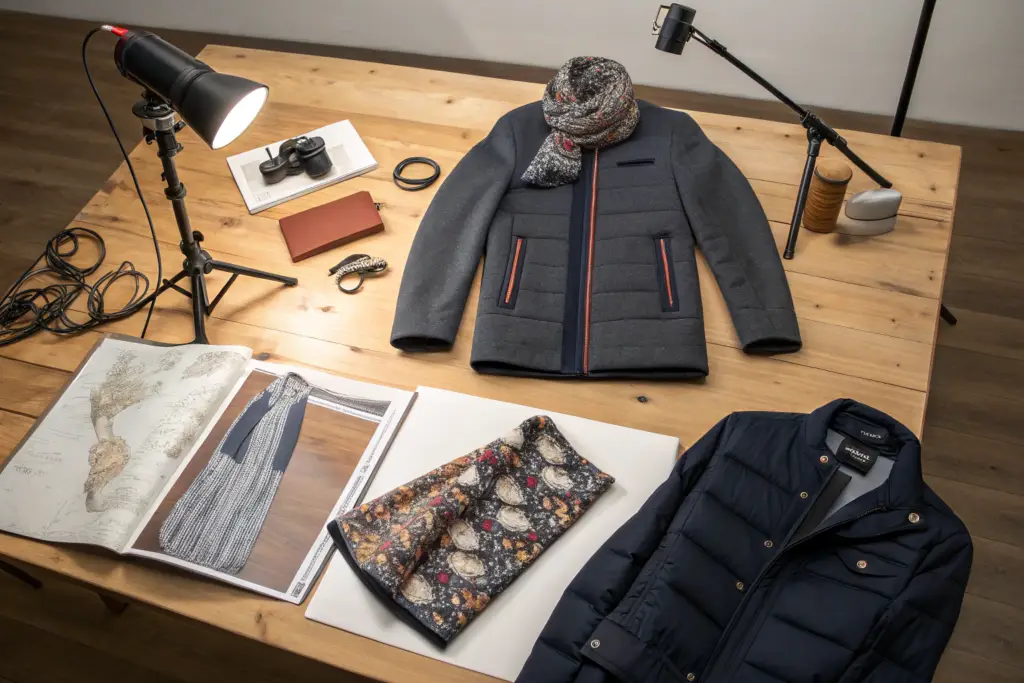
The best value apparel categories made in China are those requiring complex construction, synthetic fiber expertise, or delicate fabric handling. This includes tailored outerwear (coats and jackets), activewear with advanced seaming, and women's wear involving silk or high-end satin finishes. The local ecosystem of trim suppliers and specialized subcontractors allows for a level of finishing detail that is extremely difficult to replicate elsewhere at a competitive price.
Why Is Outerwear Manufacturing So Cost-Effective in the Yangtze River Delta?
If you want to make a down puffer jacket or a wool-blend walking coat, there is no better place on earth than the area around Shanghai and Hangzhou. The reason is simple physics: Supply Chain Density.
Let me give you a concrete example. Last winter, we produced a technical ski jacket for a Colorado-based outdoor brand. This jacket had:
- Outer shell fabric: 20D nylon ripstop (made in Suzhou, 1 hour from our factory).
- Insulation: 3M Thinsulate (sourced from a licensed distributor in Shanghai).
- Zippers: YKK AquaGuard (sourced from the YKK factory in Suzhou, 45 minutes away).
- Snaps and cord locks: Custom metal trims (made in Wenzhou, shipped overnight by truck).
If you were to make this exact jacket in Vietnam, you would need to import the YKK zippers from China, import the Thinsulate from the U.S., and import the fabric from Korea or China. You pay freight and duty on every component before you even cut the fabric. In our region, it all comes in by truck within a day. That logistical efficiency saves between 15% and 25% on the BOM (Bill of Materials) cost for a complex garment like a winter jacket.
Furthermore, outerwear sewing is hard. It requires specialized folder attachments on the machines to handle thick seams and baffles for down filling. Our workforce in this region has been sewing coats for three generations. We have seamstresses who can sew a sleeve into an armhole with 15mm of ease without puckering. That skill is not an algorithm; it is muscle memory. For an independent brand, paying a slightly higher labor rate for that skill means you have a jacket that looks like it retails for $600, not $200.
What Are the Hidden Advantages of Sourcing Knitwear from China?
Knitwear is a different beast. While basic cotton sweaters are a commodity, the real value in Chinese knitwear lies in Gauge Variety and Fiber Blends.
I want to share a story about a women's wear client from Nashville. She came to us with a design for a cardigan that used a blend of Merino wool and nylon with a "Fisherman Rib" stitch. She had tried a factory in India, but the sample came back feeling coarse and the rib was flat. She was about to give up on the design.
The issue was the machine gauge. The Indian factory used an old flatbed machine that could not hold the correct tension for that specific wool blend. In our network near Shanghai, we have access to Shima Seiki computerized knitting machines. These are Japanese-made, state-of-the-art machines that allow for fully fashioned knitting—meaning the collar and cuffs are knitted directly onto the body without a bulky linking seam.
The advantage is not just in the machine, but in the Yarn Market. China is the world's largest consumer of Australian Merino wool. Because of this volume, we can source high-twist, anti-pilling yarns for about 10-12% less than a factory in South Asia would pay to import the same yarn. This is a critical detail for brand owners like you, who are sensitive to quality. You do not want your beautiful $120 sweater to pill like a cheap drugstore item after two wears. By using Shanghai Fumao's domestic yarn sourcing network, we solved the Nashville client's issue. We sent her a swatch from the Shima machine, and the texture was exactly what she envisioned—plush, deep ribs, with a soft hand feel. She sold out that pre-order in four days.
Are There Minimum Order Quantity (MOQ) Solutions for Small US Brands?
This is the number one question I get in my LinkedIn DMs. "I love what you do, but I'm just starting. I only need 50 pieces per style. Can you help?" For years, the answer from Chinese factories was a flat "No." The industry was built on volume. Setting up a production line for 50 units costs more in changeover time than the profit from the order. However, that is changing rapidly, driven by a new generation of factory owners and smarter production methods.
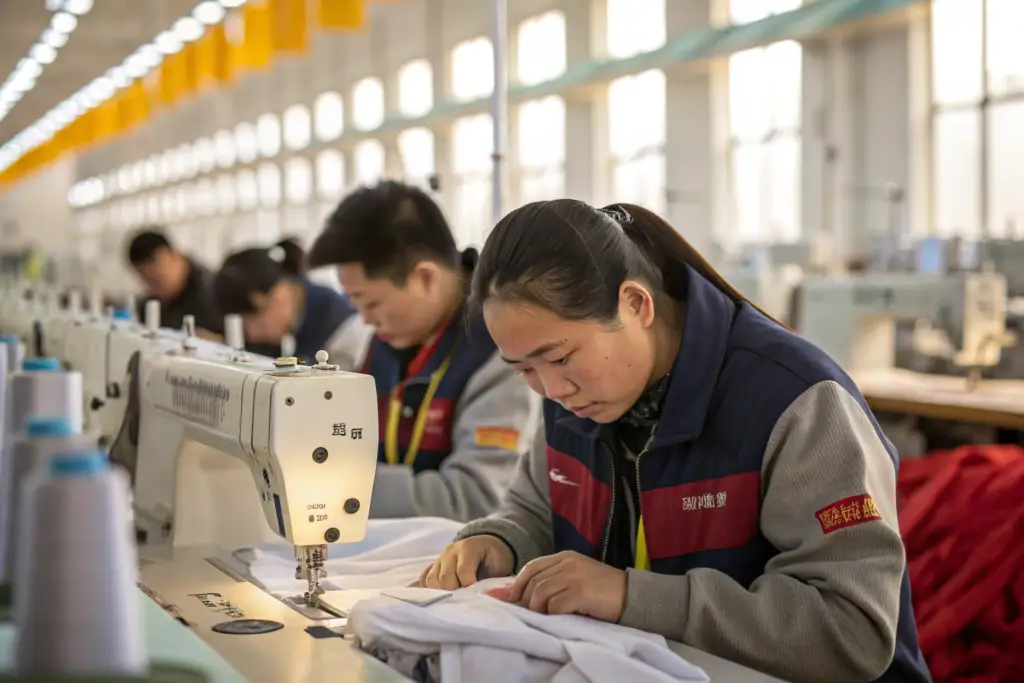
Yes, there are Minimum Order Quantity (MOQ) solutions for small US brands in China. These solutions typically involve joining group production runs, utilizing stock fabric services, or working with specialized small-batch factories like Shanghai Fumao that have adapted their workflow to accommodate the needs of independent designers and DTC brands. The key is shifting from full custom manufacturing to semi-custom manufacturing.
How Does Stock Fabric Service Help Beat High MOQs?
One of the biggest drivers of high MOQs is fabric. Mills require you to dye anywhere from 500 to 2,000 yards of a single color just to start the dye machine. If you want a custom lavender color for a run of 30 dresses, you are out of luck with a traditional mill.
The solution we offer at Shanghai Fumao is our Stock Fabric Library. We keep an inventory of the most popular greige (un-dyed) fabrics and ready-dyed basics in our warehouse. Think: 180gsm Cotton Jersey in White/Black/Navy, 230gsm French Terry, standard Poly Crepe de Chine.
Here is a comparison of how this changes the math for a brand owner named Sarah who wants to test a new t-shirt design:
| Requirement | Traditional Custom Route | Stock Fabric Service (Shanghai Fumao) |
|---|---|---|
| MOQ per style/color | 300 pcs (due to fabric dye lot) | 50 pcs |
| Fabric Lead Time | 25-30 days (dyeing + finishing) | 3-5 days (cut from roll) |
| Cost per Unit | $5.20 (amortizing dye cost) | $5.80 (slightly higher fabric $/yd) |
| Flexibility | None (locked into 300 units) | High (can re-order 50 more next week) |
This model allows brands to test the market. Last month, we worked with a new streetwear label from Portland. They had three new graphic t-shirt designs they wanted to test via Instagram ads. Using our stock blank t-shirt body and only applying their custom screen print, they were able to get 50 pieces of each design for a total investment of under $1,500. They found that Design A sold out in 48 hours, while Design C flopped. In the old model, they would have been stuck with 250 deadstock units of Design C. By using a small-batch production approach, they protected their cash flow and learned what their customer actually wanted.
What Is the Real Cost Per Unit When I Lower My MOQ?
Let's be honest about the numbers. Lowering the MOQ raises the cost per unit. That is a mathematical fact. But the total landed cost and the risk-adjusted return often favor the small batch. I need to explain this to brand owners because they often look at the unit price in isolation and get sticker shock.
Let's use a real quote I provided to a women's brand in Miami for a pair of tailored shorts (woven linen blend).
Option 1: Full Production (800 pcs)
- FOB Price: $12.50 / unit
- Total Ex-Factory Cost: $10,000
- Shipping + Duty: $1,200
- Total Investment: $11,200
Option 2: Small Batch MOQ (100 pcs)
- FOB Price: $18.50 / unit (due to higher cutting waste and smaller trim buy)
- Total Ex-Factory Cost: $1,850
- Shipping (Air Courier DDP): $450
- Total Investment: $2,300
At first glance, the $18.50 cost seems high compared to $12.50. But what if the shorts don't sell? What if the fit is slightly off and you need to tweak the pattern for Run 2?
- Scenario A (Success): You make 800 units. You save $6/unit. Profit: Good.
- Scenario B (Failure): You make 800 units. You have 600 left. You lose $9,000 in cash tied up in storage.
- Scenario C (Small Batch): You make 100 units. You learn the market. You re-order 700 units at the now-lower cost because the pattern is perfected and you can combine the order volume with other clients.
This is the lean manufacturing approach applied to fashion. At Shanghai Fumao, we encourage new brands to start with a sample run and a small batch. It is not about making more money on the first order for us. It is about building a partnership where the second order, the third order, and the tenth order are smooth, profitable, and free of the pain points that come from overproduction. We would rather have a client grow slowly with us than fail quickly with a warehouse full of unsold clothes.
Conclusion
The decision to move production to China is not about chasing the absolute lowest sticker price anymore. Those days are over. The smart, independent brands coming to Shanghai Fumao today are chasing something more valuable: Reliability and Complexity Management. They are tired of the inefficient communication, the falsified certificates, and the missed selling seasons that come from dealing with the wrong supply chain partners.
We have looked at the specific mechanics behind this shift. We talked about how rigorous AQL standards and direct video access eliminate the "quality guessing game." We discussed how DDP shipping removes the financial and logistical anxiety of importing goods into the U.S., ensuring that your inventory arrives when your marketing campaign is hot. We analyzed why outerwear and knitwear offer such high value here, thanks to a dense ecosystem of trims and technical skill that simply cannot be easily replicated. And finally, we tackled the biggest myth: that China only serves the giants. By using stock fabric and flexible line planning, we are empowering the next generation of DTC and boutique brands to start small and scale smart.
I have spent my career on this factory floor. I have seen the industry change from pure mass production to a service-oriented, technology-driven partnership model. My team and I at Shanghai Fumao are not just order takers. We solve fabric pilling issues. We catch sewing defects before they leave the building. We navigate the chaos of Chinese New Year so you do not have to.
If you are a brand owner reading this and you see a bit of your own struggle in these paragraphs—the worry about quality, the fear of hidden logistics fees, or the frustration of high minimums—I invite you to reach out. Let's talk about your tech packs. Let's discuss how we can take the headache out of your production process and help you build a brand that stands for quality and consistency.
You can contact our Business Director, Elaine, directly for a consultation on your next production run. She understands the U.S. market timeline and can provide you with transparent, honest pricing and lead times. Reach out to her at: elaine@fumaoclothing.com. Let us show you why independent brands trust Shanghai Fumao to bring their vision to life.