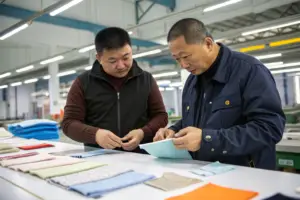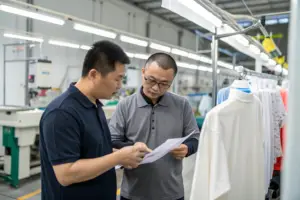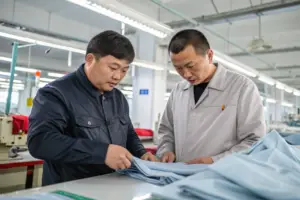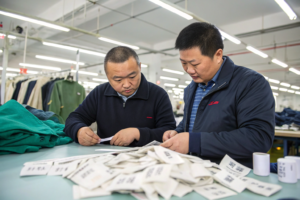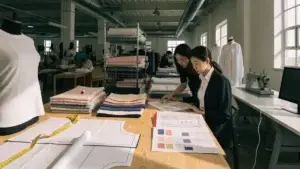
I received a panicked email from a brand owner in Chicago last March. His factory of seven years had just informed him they were closing their doors in sixty days. He had 15,000 units on order for his fall collection. The fabric was cut. The trims were purchased. But the factory was disappearing. He was facing a complete loss of his season. He asked me, "Is it even possible to move this mid-stream without destroying my business?" The answer was yes, but only with a military-level plan and a partner willing to absorb the chaos.
A seamless factory transition requires a phased approach involving parallel sampling, inventory transfer of raw materials, and a clearly defined Technical Package that leaves zero room for interpretation. The key is maintaining a "dual supply" overlap period where both old and new factories are operating simultaneously to prevent stockouts.
Most brands wait until there is a crisis to switch factories. A missed delivery. A quality disaster. A price hike. By then, you are already bleeding money and time. The transition becomes a desperate scramble instead of a strategic move. At Shanghai Fumao, we have rescued dozens of brands from failed factory relationships. We have also guided many through calm, planned transitions that improved their margins and quality without a single day of lost sales. Here is the exact blueprint we use to make the switch invisible to the end customer.
What Pre-Transition Planning Prevents Production Disasters
The worst time to find a new factory is when you desperately need one. Desperation leads to bad decisions. You skip the reference checks. You accept vague answers about capacity. You wire a deposit before you've seen a real sample. I've watched brands lose their entire production budget this way. The old factory failed them, and in their panic, they jumped into the arms of an even worse factory.
Effective pre-transition planning requires a minimum eight-week runway where you audit potential partners, secure your raw material inventory, and create a legal exit strategy with your current supplier.
You cannot flip a switch overnight. Garment manufacturing is a physical process involving dozens of human hands and complex machinery. You need time to re-create your entire supply chain fingerprint at a new location. Here is how you use that time wisely before you ever say the word "cancel" to your old factory.

How Do You Audit a New Factory Without Visiting in Person?
Flying to China or Vietnam for a factory visit costs thousands of dollars and several days away from your business. For many independent brands, it's not feasible. But you still need to verify that the building exists and that sewing machines are inside it.
You need a Virtual Factory Audit. This is a service offered by third-party inspection companies like QIMA, Bureau Veritas, or SGS. For a fee of $300 to $500, an inspector will physically visit the factory address. They will take dated, geotagged photos of the exterior, the production floor, the cutting tables, and the finished goods warehouse. They will count the number of sewing machines and workers.
Here is what you must request in the audit scope:
| Audit Component | What It Reveals | Red Flag |
|---|---|---|
| Physical Address Verification | Does the factory actually exist at this location? | Virtual office or residential address. |
| Machinery Count | Do they have the specific machines needed for your product? | Only basic lockstitch machines when you need coverstitch. |
| Current Production Lines | What brands are on the cutting table right now? | No recognizable brands or only low-complexity items. |
| Raw Material Storage | Is fabric stored properly off the floor and away from sunlight? | Dirty, damp, or disorganized warehouse. |
At Shanghai Fumao, we welcome these audits. We provide the inspector full access. A factory that hesitates or makes excuses about scheduling an audit is a factory with something to hide. Walk away.
What Is the Correct Way to Transfer Cut-Parts and Raw Materials?
This is the most delicate part of a mid-stream transition. Your old factory might have your fabric. They might have your custom buttons and zippers. They might even have partially sewn garments. You need to get those assets back without triggering a legal dispute or having them "held hostage."
First, secure ownership documentation. You need invoices proving you paid for the fabric and trims. If the old factory purchased the materials on your behalf, ensure the invoice is in your company name, not theirs.
Second, conduct a joint inventory count. Do not just accept their word on how many yards of fabric remain. If possible, have a third-party inspector count the rolls. Disputes over missing fabric yardage are the number one reason transitions turn ugly.
Third, arrange neutral freight forwarding. Do not let the old factory arrange shipping of the goods to the new factory. They have no incentive to make it fast or cheap. You hire a freight forwarder to pick up the materials. This keeps the chain of custody clean.
Finally, have the new factory inspect the incoming goods immediately. Fabric can be damaged in transit. If it arrives wet or moldy, you need to file a claim with the freight carrier within 24 hours. A good new partner like Shanghai Fumao will document the arrival condition with photos and a detailed receiving report.
How Do You Replicate Quality Standards During the Switch
The biggest fear every brand has when switching factories is that the new product won't feel the same. The hand-feel will be slightly off. The fit will be a half-inch tighter. The color will be a shade lighter. These small variances can trigger a wave of customer returns and negative reviews. Your loyal customers know what your size Large feels like. They will notice if it changes.
Replicating quality standards across different factories requires a sealed reference sample, a detailed measurement tolerance chart, and a pre-production approval process that compares the new sample against the original gold standard.
You cannot simply email a tech pack and hope for the best. A tech pack is a blueprint. Blueprints are interpreted. You need a physical reference that eliminates interpretation. At Shanghai Fumao, we insist on receiving the original sealed sample before we cut a single piece of fabric for a transition client.
Why Is a "Sealed Sample" More Important Than a Tech Pack?
A Tech Pack is a PDF. It contains measurements and maybe some construction notes. It is essential, but it is incomplete.
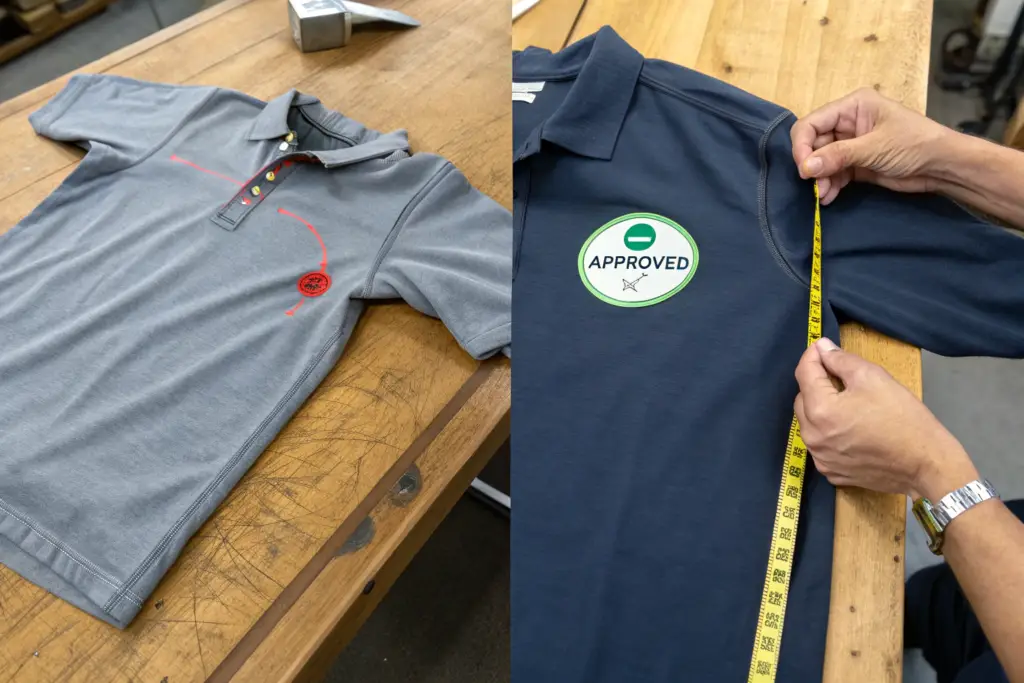
A Sealed Sample is a physical garment, usually from a previous production run, that has been approved by the brand owner. It is tagged and signed. It represents the exact fit, wash, and hand-feel that the customer expects.
When the new factory receives the sealed sample, they reverse-engineer it. They measure every seam. They analyze the stitch density under a magnifying glass. They match the thread sheen. They even match the sound of the zipper.
Here is the workflow we use for a seamless quality transfer:
- Receive Sealed Sample: Client ships us one unit of each SKU from their best previous production run.
- Deconstruction Analysis: Our pattern maker takes apart the sample (sacrificing one unit) to understand the internal construction—the interfacing used, the seam allowance, the type of elastic.
- Counter Sample Creation: We make a new sample using the new factory's machines and workers.
- Side-by-Side Review: We place the new sample next to the sealed sample. We photograph them together under standardized lighting. We send these comparison photos to the client.
- Approval: The client only approves production when the new sample is indistinguishable from the old sample.
What Measurement Tolerances Are Realistic to Demand?
Perfection does not exist in cut-and-sew manufacturing. Fabric stretches. Cutting knives have a kerf. Human sewers have slight variations in their hand movements. Demanding a tolerance of +/- 0 inches is a guarantee of disappointment and conflict.
However, premium brands should demand tighter tolerances than mass-market brands. Here is a realistic tolerance chart that protects your brand without grinding production to a halt:
| Measurement Point | Mass Market Tolerance | Premium Brand Tolerance | Why It Matters |
|---|---|---|---|
| Chest Width (1" below armhole) | +/- 1/2" | +/- 1/4" | Affects overall fit silhouette. |
| Body Length (HPS) | +/- 3/4" | +/- 3/8" | Affects proportions and tucking ability. |
| Sleeve Length | +/- 1/2" | +/- 1/4" | Highly visible difference. |
| Neck Opening | +/- 1/4" | +/- 1/8" | Comfort and layering fit. |
Any measurement outside these tolerances should trigger a root cause analysis. Is the cutting table misaligned? Is the fabric relaxation period too short? Is the sewing operator new? A good factory partner will identify and fix the process issue, not just alter the individual garment.
What Communication Protocols Prevent Transition Chaos
The old factory knew your shorthand. You could send an email that said, "Same as last time but navy," and they knew exactly what to do. The new factory doesn't have that institutional memory. They don't know that you hate visible topstitching on the back neck. They don't know that you want the care label sewn into the left side seam, not the right. This loss of tribal knowledge is where most transitions fall apart.
Structured communication protocols, including weekly video calls with a shared screen agenda and a cloud-based project management tracker, eliminate the ambiguity that causes costly errors during a factory transition.
You cannot manage a factory transition over email threads with 47 replies and six different people CC'd. It's a recipe for missed details. You need a single source of truth that both you and the factory can access in real-time. At Shanghai Fumao, we use shared project boards that give our clients visibility into exactly where their order sits in the production pipeline.

Why Are Weekly Video Calls More Effective Than Email Threads?
Email is asynchronous. It is perfect for sending a PDF or confirming a shipping address. It is terrible for solving complex problems. A technical question about seam puckering can take three days of back-and-forth emails to resolve. On a video call, you can hold the sample up to the camera. You can point to the specific area of concern. The factory manager can show you the machine settings in real-time.
The format of the call matters. Here is a simple, effective agenda for a 30-minute weekly transition call:
| Time | Agenda Item | Goal |
|---|---|---|
| 0-5 min | Review Previous Week's Action Items | Confirm tasks are closed. |
| 5-15 min | Live Sample Review (Camera On) | Show physical garment. Discuss specific fit/color issues. |
| 15-25 min | Timeline Review (Share Screen) | Check progress against Gantt chart. Identify bottlenecks. |
| 25-30 min | Next Steps & Written Recap | Assign clear owners for the coming week. |
After the call, a brief written recap must be sent. This is not optional. Verbal agreements in a second language can be misunderstood. The recap email serves as the official record. "Per our call, we agreed to increase the sleeve length by 1/4 inch. Revised sample will ship Friday."
How Do You Manage Color Consistency Across Different Dye Houses?
This is the single hardest thing to replicate when switching factories. Your old factory used Dye House A. Your new factory uses Dye House B. Even if they use the exact same Pantone color code, the result can look different due to water quality, dye stuff brand, and machine type.
You cannot email a Pantone number and expect a perfect match. You must use Lab Dip Submissions. This is a process where the new dye house creates small swatch samples of the fabric in several variations of the target color.
Here is the procedure we enforce for transition clients:
- Submit Original Cutting: Provide the new factory with a swatch of the actual approved fabric from the previous production run. Do not send a Pantone chip. Send the real fabric.
- Request Three Lab Dips: Ask the dye house to submit three variations: A (Slightly lighter), B (On target), C (Slightly darker/richer).
- Evaluate Under Multiple Light Sources: Check the lab dips under D65 (Daylight), TL84 (Store Light), and UV (Home Light). A match in daylight might look completely different under fluorescent store lighting. This is called Metamerism.
- Approve in Writing: Sign off on the specific Lab Dip (e.g., "Approved Lab Dip B").
Skipping the lab dip process to save ten days of lead time will cost you sixty days of rework and a container of unsellable off-color garments.
What Post-Transition Steps Lock In Long-Term Success
The first shipment from the new factory has arrived. You open the carton. The quality looks good. The color matches. The fit is right. You breathe a sigh of relief. This is the moment many brands make a critical mistake. They think the transition is over. They go back to focusing on marketing and design. They stop paying attention to the factory relationship. That's how you end up transitioning again in two years.
Post-transition success requires a structured first-production review, a documented quality scorecard, and a clear understanding of the new factory's capacity planning cycles to avoid future delays.
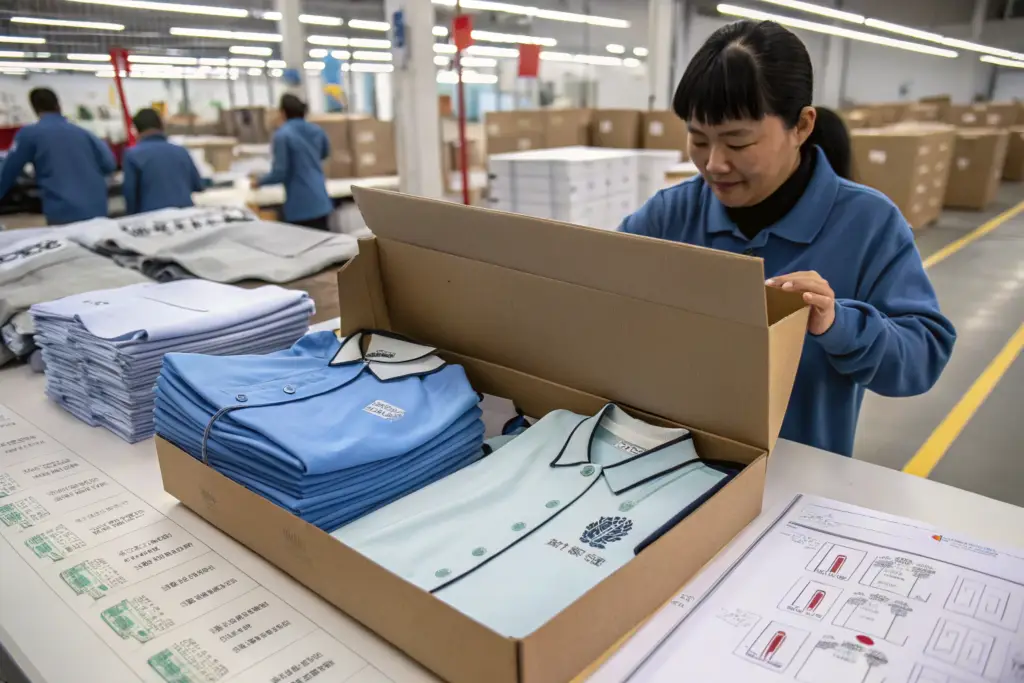
The first production run with a new partner is a learning experience. There will be small hiccups. A carton label was formatted wrong. The polybag was slightly too small. These are not deal-breakers, but they are opportunities to calibrate the relationship. At Shanghai Fumao, we treat the first shipment as a "live fire exercise" that refines the process for the second, third, and hundredth shipment.
How Do You Conduct an Effective Post-Mortem on the First Production Run?
A post-mortem is not a blame game. It is a process improvement meeting. It should happen within two weeks of receiving the goods, while memories are fresh.
You need a structured feedback format. A vague email saying "Everything was fine except a few things" is useless. Use a Defect Classification System:
| Defect Type | Definition | Example | Action Required |
|---|---|---|---|
| Critical | Garment cannot be sold. Safety issue or major visual flaw. | Broken zipper, large hole, illegal label. | 100% inspection of remaining inventory. Root cause analysis required. |
| Major | Garment can be sold as "Irregular" or at discount. | Shading variance, crooked embroidery. | Adjust factory QC checkpoint. Discuss compensation. |
| Minor | Customer unlikely to notice or return. | Loose thread, slightly off-center label. | Provide photo feedback for future runs. No compensation needed. |
Share this report with the factory in a collaborative tone. "Here is what we saw. How can we adjust the process so this doesn't happen on the next PO?" This approach builds a partnership. It shows you are invested in their success as much as your own.
What Information Do You Need for Accurate Future Capacity Planning?
Your new factory is not a magic vending machine. They cannot produce 10,000 units instantly just because you have a sudden order from a big retailer. They have other clients. They have scheduled machine maintenance. They have holidays.
To avoid the "delayed shipment" pain point with your new partner, you must understand their Production Calendar. Ask these questions upfront and document the answers:
- Lead Time by Process: What is the lead time for greige fabric? For dyeing? For cutting? For sewing? For finishing?
- Minimum Order Quantity (MOQ) Exceptions: Can you combine colors to meet the fabric MOQ? Can you run smaller quantities for a surcharge?
- Holiday Shutdown Schedule: What are the exact dates of Chinese New Year, Labor Day, and National Day? When do workers actually return to full capacity after these holidays?
I once had a client who placed a large reorder on January 15th, expecting delivery in March. He didn't realize that Chinese New Year was early that year and the factory would be effectively closed for three weeks. His delivery was delayed by 45 days. That's a lost selling season. Knowing the calendar is not optional. It is fundamental to running a profitable apparel business with overseas production.
Conclusion
Switching clothing production to a new overseas factory is one of the most stressful moves a brand can make. It tests your supply chain resilience and your operational discipline. But it does not have to be a disaster. We've walked through the essential pre-transition planning that prevents you from jumping out of the frying pan and into the fire. We've detailed how to replicate your hard-won quality standards using sealed samples and realistic tolerances. We've established the communication cadence that replaces institutional memory with clear, documented protocols. And we've outlined the post-transition steps that turn a new supplier into a long-term strategic partner.
The key to a seamless switch is treating the transition as a project with a defined beginning, middle, and end—not as a hope and a prayer. It requires a partner on the other side who is not just a manufacturer but a problem solver. A partner who can handle the logistics of material transfer, the technical challenge of color matching, and the human challenge of building a new working relationship.
If you are considering a change or facing an unexpected disruption with your current supply chain, we are equipped to make the transition smooth and invisible to your customers. We can assess your current production, manage the transfer of materials, and ensure that the first shipment from our facility meets or exceeds the quality of your previous supplier.
For a confidential conversation about transitioning your production to a reliable, quality-focused partner, please contact our Business Director, Elaine.
Contact Elaine at: elaine@fumaoclothing.com