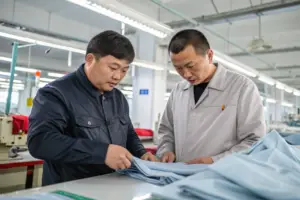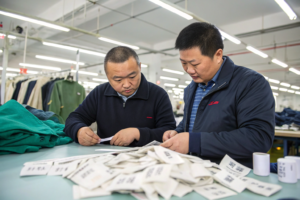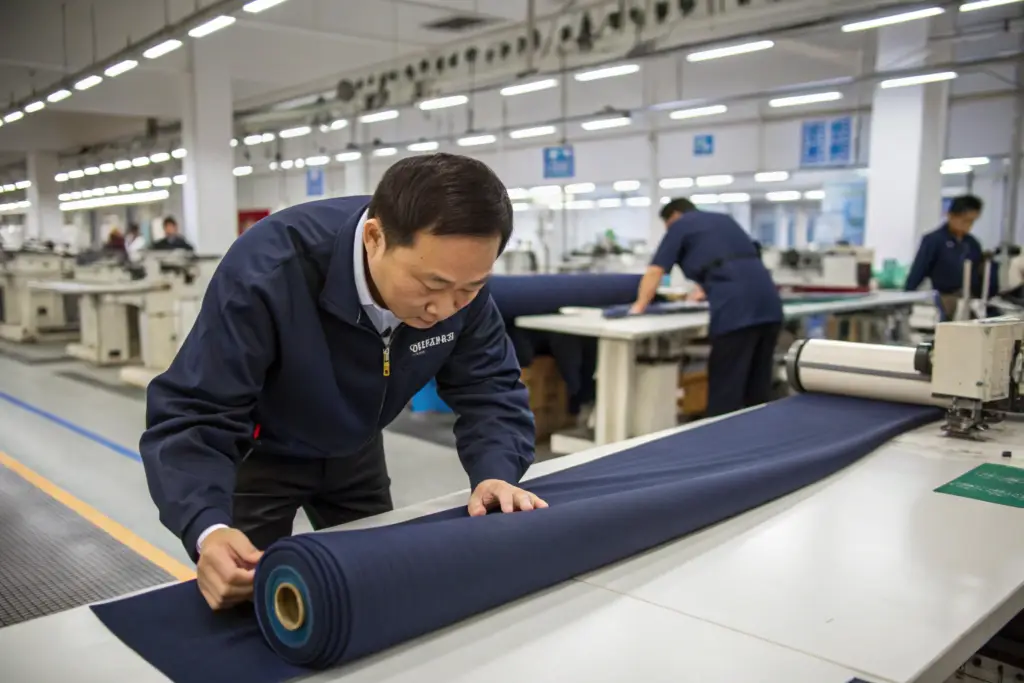
I know the frustration. You spend hours scrolling through endless supplier lists on Alibaba, clicking on profiles that all look the same. You request quotes and get flooded with generic emails that ignore half your technical specs. It feels like finding a real factory that makes premium clothes—not just cheap junk—is a full-time job you didn't sign up for. And even when you think you've found "the one," a delayed shipment or a blurry photo of a fabric defect makes you question everything.
The best channels for sourcing premium wholesale garments are a strategic mix of digital B2B verification platforms, targeted industry trade shows, and direct factory outreach via professional networks like LinkedIn. Relying solely on search engines often leads to middlemen. Real premium quality is found by knowing exactly where to look and what questions to ask the specific sales channels.
Let's be honest. A Google search for "clothing manufacturer" is like drinking from a fire hose. You get millions of results, but the first ten pages are usually the biggest advertising spenders, not necessarily the best factories. I've been running Shanghai Fumao for years, and I see how American brands struggle with this filter. You need a channel strategy that weeds out the noise and gets you talking to an actual production manager, not just a chat bot. Here is how you narrow that gap.
Why Are B2B Platforms Still Reliable for Vetting Apparel Factories
Clicking "Contact Supplier" on a wholesale website feels like pulling the lever on a slot machine. Sometimes you hit the jackpot with a responsive sales rep. Other times, you get three jackpot results—none of which answer your email for four days. The problem is that many buyers treat B2B platforms like Amazon. They expect instant inventory and retail-level customer service. That's not how industrial manufacturing works. The real value of these platforms isn't the storefront; it's the verification toolbox hiding behind the paywall.
B2B platforms remain the most efficient filter for premium garments if you use them as a first-step credential check, not a final purchasing decision. They provide third-party verification of a factory's export license and on-the-ground production capacity that a simple website cannot prove.
Think about it. Anyone can build a nice website on Shopify for $29 a month and claim they have five production lines. But on a major B2B platform, the cost of maintaining a verified status with an inspection report is high. It's a barrier to entry that casual traders won't cross. I always tell my clients to look for the "Onsite Check" icon. Last spring, a potential partner from Texas almost signed a contract with a "factory" that had a gorgeous website but no B2B footprint. Turns out it was a trading office with zero quality control. Using a platform's verification tool saved him a $20,000 deposit.

How Do Verified Supplier Badges Actually Reduce Sourcing Risk?
A verified badge isn't just a pretty graphic. It usually means a third-party service has physically walked into the facility. They checked the business license against the actual address. For you, this means you aren't wiring money to a virtual office in a shared workspace.
Here is a breakdown of what different levels of verification typically cover:
| Verification Type | What It Confirms | Why It Matters for Premium Goods |
|---|---|---|
| Basic Verified | Business license exists. Address matches registration. | Filters out outright scams and fake company names. |
| Onsite Check | Photos of production floor, number of employees, machinery count. | Confirms the factory actually has the capacity to sew your order size. |
| Inspection Service | Quality control check of a specific batch of goods before shipping. | Ensures the garment quality matches the pre-production sample you approved. |
You should also cross-reference the platform profile with the factory's own website. I run Shanghai Fumao. We keep our B2B profile clean and link it directly to our domain. If the website and the platform info don't match—different address, different company name—walk away.
What Specific Search Filters Uncover Hidden Premium Manufacturers?
Most buyers type "men's t-shirt" and hit enter. That's why you're seeing the same 50 results as everyone else. Premium garments require a different search syntax. You need to use filters that narrow the pool from 100,000 suppliers to maybe 200 qualified ones.
First, always toggle the filter for "Trade Assurance" or "Secure Payment." This shows you suppliers who have skin in the game regarding delivery dates. Second, look for the "Customization" filter. If you want premium, you want a factory comfortable with custom clothing manufacturing, not just stock clearance.
But here is a tip from someone who sells on these platforms: Don't just filter by "Gold Supplier." Filter by "Years on Platform." Look for factories with 8+ years of history. They've survived the platform's algorithm changes and customer disputes. They know how to handle complex logistics. This stability is a better indicator of premium consistency than a low price per unit.
How Do International Trade Shows Compare to Digital Sourcing
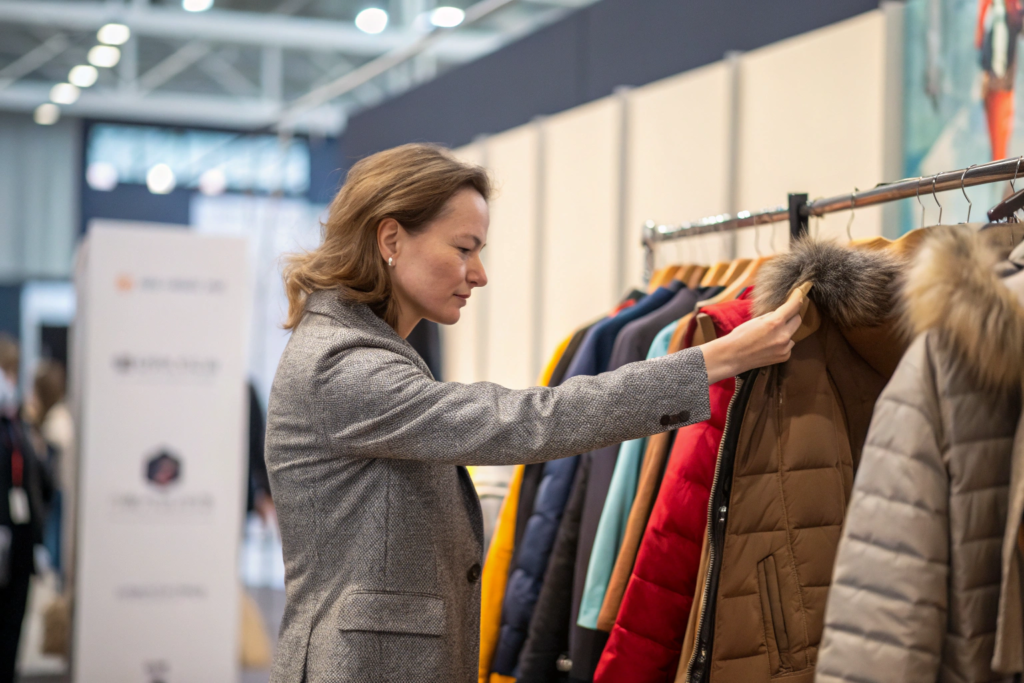
Flying to a trade show is expensive. The flight, the hotel, the overpriced convention center coffee. You might wonder if it's worth the time away from the office. Many of my clients from America tell me they've cut their travel budget and rely entirely on digital. But they then complain they can't feel the fabric through a screen. They rely on sales reps describing something as "soft," but "soft" is subjective. You need to feel the drape of a rayon challis or the stiffness of a structured denim.
Trade shows offer a sensory verification that no 4K video can replicate, making them essential for premium product categories where fabric hand-feel and stitching density define the final retail price point.
However, the value of trade shows has shifted. It's no longer about finding a supplier (you can do that online). It's about testing the relationship. You can see how the factory's representative behaves under pressure. Do they know the difference between ring-spun and open-end yarn when you ask? Or do they just smile and nod? At a show like Magic Las Vegas, you can hold a sample from Shanghai Fumao in your left hand and a sample from a Vietnamese competitor in your right hand and compare seam finishes in real-time.
Can You Really Verify Garment Construction Better In Person?
Absolutely. While we send high-res videos and spec sheets, the nuances of premium construction are micro-level. In a physical meeting, you can turn the garment inside out. You can pull at the seam to test stitch tension. You can hold the fabric up to the convention hall light to check the weave density.
I recall a conversation with a buyer from Seattle who specialized in premium loungewear. She visited our booth last year and immediately noticed the flatlock stitching on our hoodies. It's a detail we feature in photos, but she admitted it looks "standard" online. In person, she ran her thumb over the seam and felt the smoothness. She said, "This is the difference between a $60 hoodie and a $120 hoodie." You can't get that tactile feedback from a PDF. That's why for first-time orders over $10,000, meeting at an expo can save months of back-and-forth sampling.
Which Networking Opportunities Do Shows Provide That Google Cannot?
Google can find a factory. It cannot find you a logistics partner who specializes in DDP shipping to Texas. This is the hidden gem of trade shows—the secondary conversations.
When you sit at the bar after the show floor closes, you talk to other brand owners. You learn who uses which freight forwarder. You learn about the new import tariffs and regulations affecting certain fabric blends. This informal intel is gold for premium brands that need to plan inventory 12 months out. The educational seminars at these events also often cover niche topics like the Global Recycled Standard certification process, which is crucial for premium eco-friendly lines.
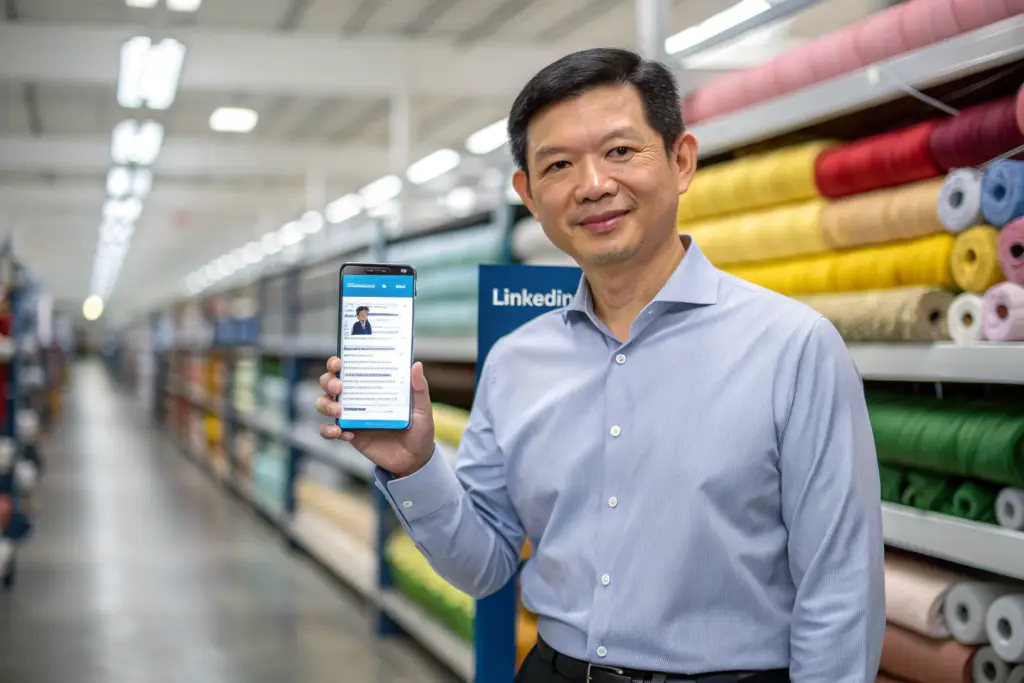
Why Is Direct LinkedIn Outreach Effective for Premium Sourcing
LinkedIn is a mess of spam these days. I get it. Your inbox is full of "Dear Sir, I saw your profile and..." from people who clearly did not read my profile. So why would I recommend this channel for finding premium wholesale garments? Because the noise is exactly what makes the signal so clear. Premium factories—the ones with real technical expertise and stable management—don't send spammy connection requests. They are too busy making clothes.
Direct LinkedIn outreach works for premium sourcing because it allows you to bypass the generic sales team and connect with the owner or production director who has the final say on order scheduling and special fabric procurement.
When you message me on LinkedIn, you're not talking to a chat algorithm. You're talking to the person who signs the checks for the cotton yarn. This direct line is critical when you're dealing with premium garments that require specific, sometimes rare, trims. If you rely on the website contact form, you might get a junior sales rep who only has a list of stock colors. But if you reach out directly to a factory manager, you can ask: "Can you source deadstock Tencel in Navy for a 500-piece run?" That's a question for a decision-maker, not an order-taker.
How Can You Identify a Real Factory Owner Versus a Trading Agent on LinkedIn?
This requires a bit of digital sleuthing, but the signs are usually obvious. Look at their profile history. Did they work as a Merchandiser, then Production Manager, then Managing Director? That's a factory career path. If their entire history is "Sales Executive" at five different "Import Export Co., Ltd." firms, that's a trading agent.
Check their "Activity" feed. A real factory owner like me shares updates from the floor. It might be a video of a new cutting machine being installed or a photo of a bulk shipment being loaded into a container. It's not always polished marketing material. It's real. It's messy. That's authenticity. Also, look at the "People Also Viewed" sidebar. If everyone else is in the Garment Manufacturing industry, that's a good sign. If they're all connected to people in "Financial Services" or random "Recruiting" firms, be wary.
What Should Your First LinkedIn Message Include to Get a Quick Reply?
Don't start with "Hi, I want a price list." That's a surefire way to get ignored. Premium manufacturers are busy. You need to show you've done your homework and you're a serious buyer.
Here is a template that works on me and other factory owners I know:
Subject: Inquiry from [Your Brand Name] - Interest in [Specific Fabric] Production
Body:
Hi [Name], I saw your recent post about the new [Machine Name] install at Shanghai Fumao. We're a brand based in Chicago specializing in [Niche, e.g., Merino Wool Activewear]. We're looking for a partner who can handle [Specific Technical Detail, e.g., flatlock seams on lightweight wool].Is this something your facility is currently set up to run?
Thanks,
[Your Name]
This message shows you looked at their content (not just their title) and you have a technical question. It signals that you value quality over a cheap price. This type of message gets a response 90% of the time because it's specific and requires expertise to answer.
How Can You Evaluate a Factory's Credibility Beyond Their Website
A factory's website is a curated highlight reel. It shows the best photo of the cleanest corner of the building, taken on the sunniest day of the year. It tells you what they want you to think. As someone whose website is exactly that—a highlight reel—I'm the first to tell you: don't make a six-figure deposit based on a pretty homepage. The real story of a premium garment factory lies in the unsexy documents: the certifications, the packaging of previous shipments, and the clarity of their technical communication.
Evaluating a factory's credibility for premium wholesale garments requires looking for third-party validation of their compliance and logistics capabilities, specifically in the areas of social audits and customs handling experience.
This is where the premium part gets real. A cheap factory can sew a straight stitch. But can they document that the cotton was grown without child labor? Can they prove the buttons are lead-free? That's the stuff that gets your brand sued in the US if it's wrong. Overlooking this step is like buying a house without an inspection. Sure, the paint looks fresh, but what about the foundation?

Which Compliance Certifications Actually Matter for US Premium Brands?
There are a dozen acronyms in this industry, and some are just wallpaper. Here is the shortlist that US premium boutiques and large retailers actually check for:
| Certification | Focus Area | Why the US Market Demands It |
|---|---|---|
| WRAP | Worldwide Responsible Accredited Production | Covers labor practices, law compliance, and workplace safety. Widely accepted by US brands. |
| BSCI | Business Social Compliance Initiative | Focuses heavily on supply chain ethics and working hours. Essential for EU/US crossover brands. |
| OEKO-TEX Standard 100 | Chemical Safety | Guarantees every thread, button, and zipper is free from harmful substances. Non-negotiable for kids' wear. |
| GOTS | Organic Textile Standard | Required if you are labeling a garment "Organic Cotton." |
Always ask for the certificate number and check its validity on the issuing body's public database. Last year, we had a client from Miami who was nearly fooled by an expired OEKO-TEX certificate that a factory had photoshopped with a new date. We spotted it in five minutes. This is the kind of vetting that separates professional garment sourcing from gambling.
How Does Factory Packing Reveal Their True Approach to Quality?
This is a trick I learned the hard way when I first started in this business 20 years ago. How a factory packs a sample is a microcosm of how they will pack a bulk order of 5,000 units.
Did the sample arrive in a crumpled polybag? Are the seams creased? Is the hangtag attached with a rusty pin? If the answer is yes, run. Premium factories treat a single sample like a diamond necklace. At Shanghai Fumao, we fold garments with acid-free tissue paper. We use plastic clips instead of pins to avoid holes. We double-bag for shipping.
Pay attention to the shipping carton. If it's a generic box with no markings, it's fine. But if the outer carton has clear shipping marks, weight labeling, and a packing list envelope attached professionally, you are dealing with a factory that understands the chaos of US receiving warehouses. They understand that if the carton isn't labeled right, the goods get lost. This level of detail in the unboxing experience is the clearest indicator you'll have of how they handle production.
Conclusion
Finding premium wholesale garments isn't a simple Google search; it's a deliberate investigation across multiple channels. We've walked through how B2B platforms filter out the scams, how trade shows filter in the texture, how LinkedIn filters through to the real decision-makers, and finally, how documents and details filter out the pretenders. Each channel serves a unique purpose in your supply chain defense strategy. Combining the digital verification of a platform with the sensory check of a show and the direct line of a LinkedIn connection creates a sourcing triangle that is very hard to break.
The goal is consistency. You want every shipment to arrive looking like the sample. You want the sewing to be clean and the fabric to be what you paid for. That requires a partner who is as invested in your brand's reputation as you are. It requires communication that isn't lost in translation.
If you are ready to move beyond the uncertainty of random suppliers and want a direct line to a US-focused manufacturing team, we are here to help. At Shanghai Fumao, we specialize in taking the complexity out of premium custom apparel production. From DDP shipping logistics to rigorous quality checks, we make sure you receive exactly what you ordered, when you need it.
For a specific conversation about your upcoming production run, reach out to our Business Director, Elaine. She can walk you through our capacity and fabric options.
Contact Elaine at: elaine@fumaoclothing.com