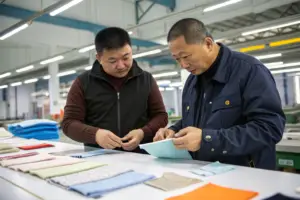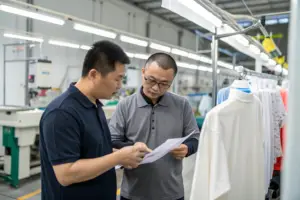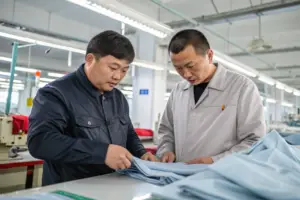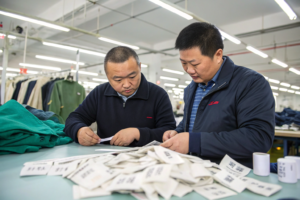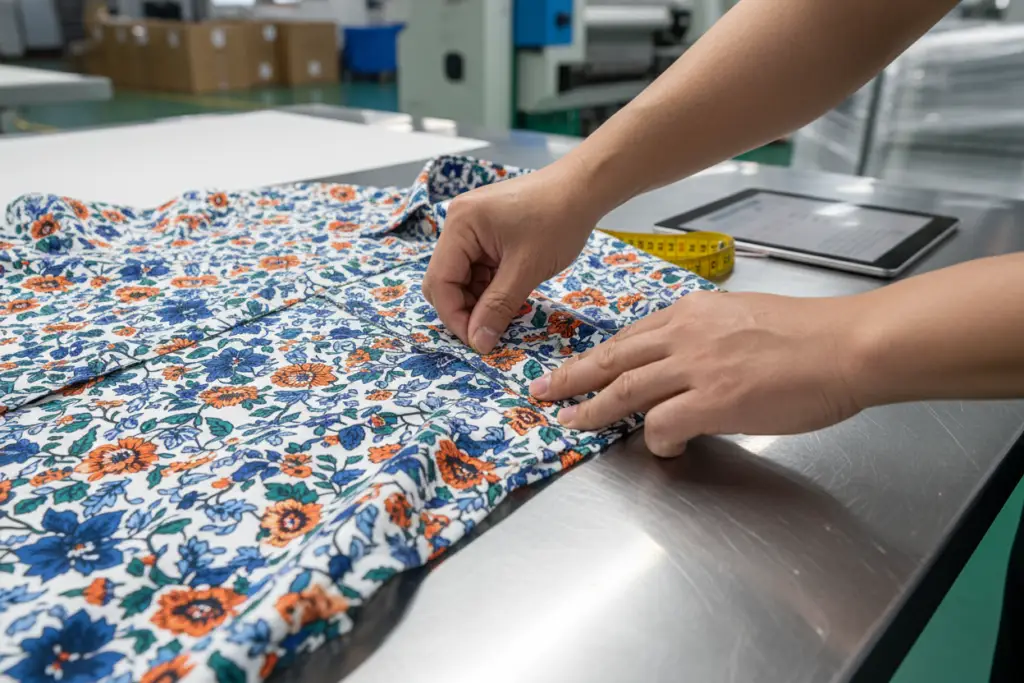
Every few months, I get a panicked email from a brand owner who just opened a container from overseas. The photos attached tell a painful story: crooked hems on what should be premium trousers, color shading so bad you'd think they came from two different dye lots, or buttons that snap off the moment you try the garment on. The worst part isn't the manufacturing error itself. The worst part is that they paid for the goods, paid for shipping, paid for customs duties, and now they're staring at inventory they cannot sell at full price—or at all. I've been in the garment business in China for over fifteen years, and I can tell you with certainty: quality doesn't happen by accident. It happens by design. And when you're sourcing from thousands of miles away, that design must be bulletproof.
Ensuring top quality control when sourcing apparel from developing countries requires a shift from reactive final inspection to proactive process control. This means establishing a binding Technical Package before production, implementing mandatory inline inspections during manufacturing, and securing independent third-party lab testing for materials before they reach the cutting table. A factory partner like Shanghai Fumao must provide real-time visibility into these three pillars.
You might think that paying a higher FOB price automatically guarantees better quality. It doesn't. I've seen brands pay premium rates to agents and still receive substandard goods because the instructions got lost in translation. Quality control is not a service you buy; it's a system you verify. And the only way to verify it is to understand the specific checkpoints along the production journey. Let me walk you through the exact steps we use at our facility to make sure what leaves our loading dock matches what you approved on the sample room table.
What Are the Most Critical Stages for Garment Quality Inspection?
Many buyers focus 100% of their attention on the Pre-Shipment Inspection. This is a mistake. By the time a pre-shipment inspection happens, the garments are already folded, polybagged, and packed into cartons. You can check for quantity and major visible defects, but you cannot fix a seam slippage issue inside the shoulder without unpacking and re-sewing thousands of units. That costs time you don't have and money the factory won't want to spend.
True quality control happens upstream. I always tell my clients at Shanghai Fumao that there are three gates the product must pass through. If it fails Gate 1, we don't even cut the fabric. This approach saves weeks of lead time and tens of thousands of dollars in wasted labor.
Understanding where to put your focus changes the outcome dramatically. Let's break down the two most overlooked but absolutely critical stages.
Why Is Fabric Inspection More Important Than Garment Inspection?
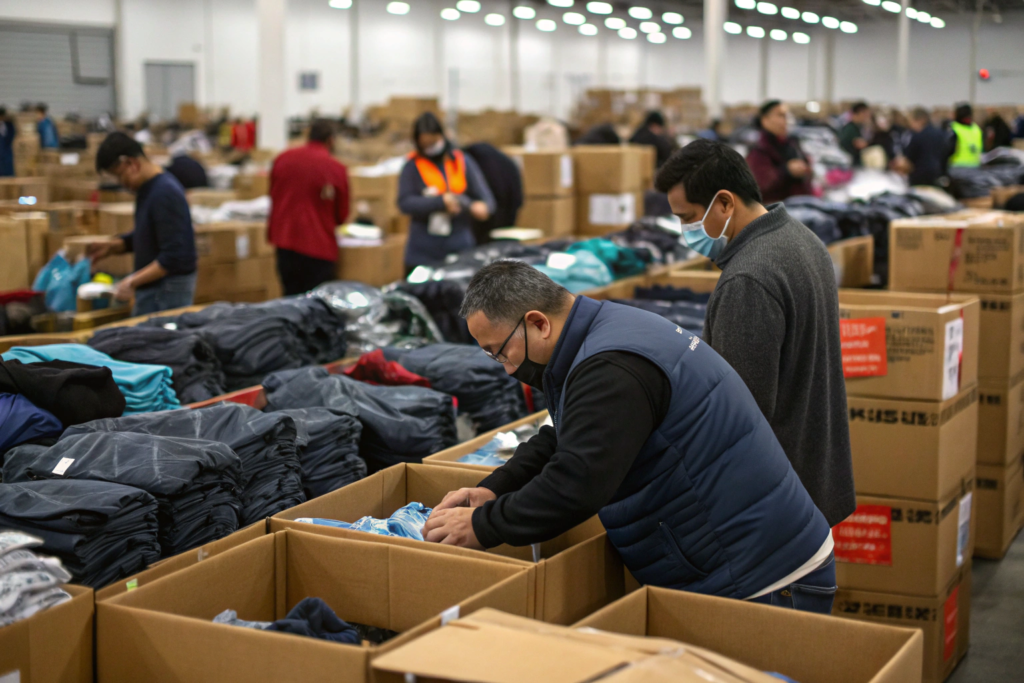
You cannot make a great shirt out of bad fabric. It's that simple. Yet, I am constantly surprised by how many buyers skip the 4-Point Fabric Inspection step. They trust the mill certificate. But mill certificates can be generic, or they can reflect the master roll while the actual shipment roll has hidden flaws.
In my experience, fabric defects account for nearly 60% of all major quality claims. These are issues like:
- Barre: Uneven dye absorption creating horizontal stripes.
- Slubs: Thick, lumpy threads woven into the fabric.
- Holes: Needle cuts or weaving flaws.
Here is a real-world comparison of how this plays out:
| Scenario | Action Taken | Outcome |
|---|---|---|
| No Fabric Inspection | Fabric sent directly to cutting table. | 2,000 units cut with invisible hole. Defect found only after washing. Result: 2,000 units scrapped. Loss of fabric and labor. |
| 4-Point Fabric Inspection | Fabric checked on inspection machine before spreading. | 5 yards of damaged selvedge found and cut out. Cutting marker adjusted. Result: Zero defective garments produced. |
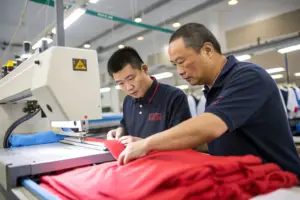
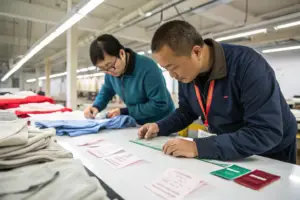
At Shanghai Fumao, we use a digital fabric inspection machine that records defects per 100 yards. We share this report with the buyer before the first knife hits the fabric. If the points per 100 yards exceed the agreed-upon AQL 2.5 standard for textiles, we stop and either reject the roll or get a concession from the buyer in writing. This is the kind of transparency you cannot get if you are dealing with a middleman who has never stepped foot on the factory floor.
How Can Inline Inspection Catch Defects Before Finishing?
This is the secret weapon of high-quality factories. Final inspection is a snapshot. Inline Inspection is a continuous movie. It means checking the garment while it is still on the sewing line, before buttons are attached, before collars are pressed, and certainly before it hits the wash.
Let me give you a specific example from last summer. We were producing a run of Women's Woven Blouses with a delicate Pintuck Detail on the front placket. This detail required a special folder on the sewing machine. On day two of bulk production, our inline QC checker noticed that the spacing between pintucks had drifted from 2mm to 3mm on about 15% of the units coming off a specific line.
Here is the workflow we followed:
- Immediate Stop: Line stopped for 20 minutes.
- Root Cause: Found that the needle clamp screw had vibrated loose on one machine.
- Fix: Mechanic tightened screw and re-calibrated the folder.
- Containment: The 47 pieces with 3mm spacing were pulled from the line and set aside for rework before they went to the button attachment station.
If this had been caught at final inspection, those 47 blouses would have been fully finished. Taking the buttons off to re-do the pintuck would have left needle holes, ruining the garment entirely. That's a 100% loss. Instead, we fixed them in 15 minutes each. This is why our clients report a Return Rate that is significantly lower than the industry average of 5% for imported apparel. Direct communication with the production floor enables this real-time intervention.
Why Is a Detailed Tech Pack Essential for Sourcing Quality Apparel?
I sometimes receive inquiries that say: "I need a men's polo shirt, 100% cotton, size M. What's your price?" This is like calling a custom home builder and saying, "I need a house with a door. How much?" Without a Tech Pack, you are asking the factory to guess. And when a factory has to guess, they will guess in the way that is cheapest and fastest for them, not best for you.
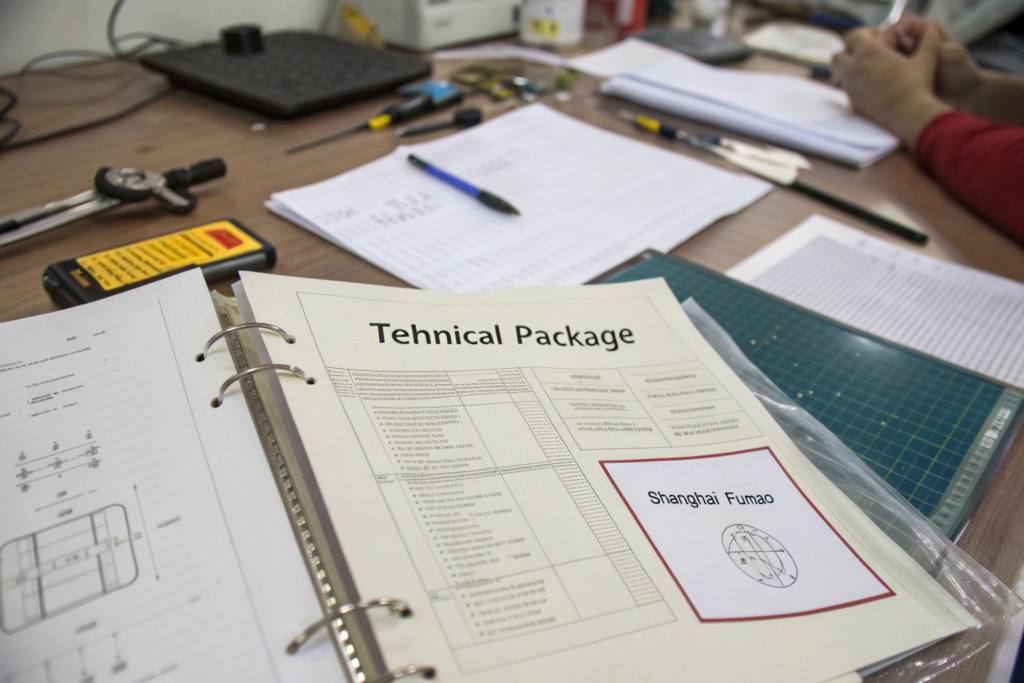
A Technical Package is the legal contract for quality. It translates your creative vision into engineering language that a pattern maker and a sewer can execute. At Shanghai Fumao, we treat the tech pack as the single source of truth. Any deviation from the tech pack requires written approval.
A good tech pack eliminates the "I thought you meant..." conversations. Let's look at two key components that are often left vague.
What Specific Measurements Prevent Sizing Discrepancies?
Sizing is the number one reason for customer returns in e-commerce. A customer orders a Large based on your size chart, but the Large fits like a Medium. That's a lost sale, return shipping costs, and a damaged brand reputation.
A vague spec sheet might say "Chest: 44 inches." A professional tech pack specifies Points of Measure (POM) . It includes a diagram showing exactly where the tape measure goes.
Here is a typical table we require from our clients. The more columns, the better the fit.
| Measurement Point (Inches) | Small | Medium | Large | Tolerance (+/-) |
|---|---|---|---|---|
| Chest (1" below armhole) | 40 | 42 | 44 | 0.5" |
| Body Length (HPS to Hem) | 28 | 29 | 30 | 0.5" |
| Sleeve Length (CB Neck to Cuff) | 34 | 35 | 36 | 0.5" |
| Shoulder Slope | 18 | 18.5 | 19 | 0.25" |
Notice the Tolerance column. No factory in the world can hit exactly 44.00 inches on every single shirt. Fabric stretches. Machines have variance. But by setting a tolerance, we agree on what is "acceptable" versus "reject." For Shoulder Slope, the tolerance is tight because a 1/2 inch difference there throws off the entire hang of the garment.
How Do Stitch and Seam Specifications Impact Durability?
This is the part of quality control you feel rather than see. A garment can look beautiful on the hanger but fall apart after three washes because the Seam Construction was weak.
You cannot just say "Use strong thread." You have to specify:
- Stitch Type: For example, ISO 401 (Single Needle Lockstitch) for main seams or ISO 504 (Three Thread Overedge) for knit hems.
- Stitch Per Inch (SPI) : A high-quality dress shirt should have 12-14 SPI. A cheap fast fashion shirt might have 8 SPI. Lower SPI means faster sewing but weaker seams. The human eye can barely tell the difference at a glance, but the washing machine will expose it fast.
- Seam Allowance: If you only leave 1/4 inch of fabric inside the seam and the fabric frays, the seam bursts. We insist on minimum 3/8 inch for woven fabrics unless it's a specific French seam detail.
Last year, we worked with a new brand that had a previous issue with Crotch Seam Blowouts on their active shorts. We reviewed their old tech pack. It simply said "Safety Stitch." We upgraded the spec to a Flatlock Stitch with Stretch Nylon Thread and increased the seam allowance at the curve by 1/8 inch. The result? The new batch of shorts passed their wear-testing with zero failures. This is the engineering side of fashion that factories like ours bring to the table.
How Can You Verify Material Certifications and Lab Tests Remotely?
This is where trust meets technology. If you are sitting in New York or Los Angeles and your factory is in Shanghai or Ho Chi Minh City, you cannot physically watch the lab technician run a Colorfastness Test. You are relying on a PDF report. The question is: Is that PDF real?
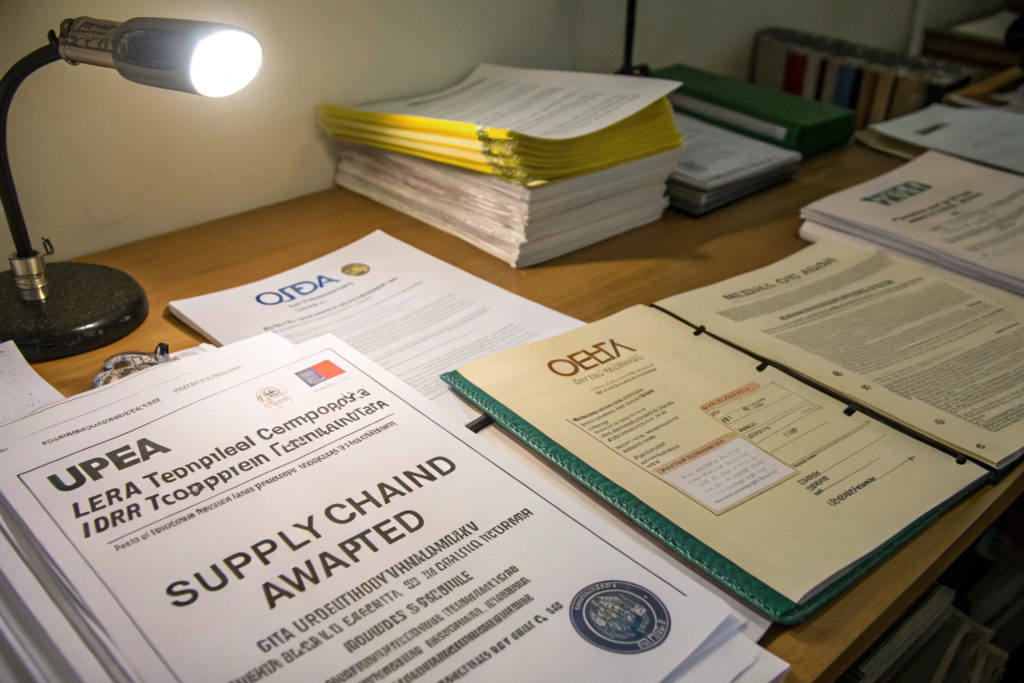
Unfortunately, the apparel industry has a problem with fraudulent documentation. I've seen buyers accept Oeko-Tex Standard 100 certificates that expired three years ago, simply because the font looked official. With the increased scrutiny on Supply Chain Transparency, especially regarding UFLPA compliance and sustainable materials, verifying these documents remotely is not just a quality issue; it's a legal and ethical one.
Here is the exact methodology we use to give our buyers peace of mind when they cannot be here in person.
How Does Third-Party Lab Testing Differ From Mill Certificates?
A Mill Certificate is a piece of paper provided by the fabric supplier. It states the composition: "95% Cotton, 5% Spandex." It might even show a test result. But it's like letting a student grade their own homework.
Third-Party Lab Testing involves sending a physical cut swatch of the actual bulk fabric to an independent organization like SGS, Intertek, or Bureau Veritas. They test it using standardized methods (e.g., AATCC for color, ASTM for strength) and issue a report directly to you, the buyer.
Here is a critical comparison table based on a real experience we had with a Kids' Wear order requiring CPSIA compliance:
| Aspect | Mill Certificate | Third-Party Lab Test (via Shanghai Fumao) |
|---|---|---|
| Lead Content Test | "Pass" (No data shown) | < 90 ppm (Specific number reported) |
| Phthalates Test | "Compliant" (Generic statement) | 6P Content: ND (Non-Detect) |
| Verification | None. Just a logo on paper. | Unique Report Number for lookup on SGS website. |
| Cost to Buyer | "Free" (hidden in fabric cost) | $150 - $250 (paid once for peace of mind) |
At Shanghai Fumao, our standard protocol for Children's Apparel is to collect a cutting from the bulk production roll, seal it in a tamper-proof bag, and courier it directly to the lab. The lab emails you the report before we cut a single piece of fabric. That $250 test is the cheapest insurance policy you will ever buy against a Consumer Product Safety Commission recall.
What Visual Proof Can Replace a Physical Inspection Visit?
Even with perfect lab reports, you want to see the goods. You want to know if the sewing lines are clean and if the pressing is crisp. While a virtual tour isn't the same as touching the fabric, it comes very close when done right.
Here are the non-negotiable tools we use for remote buyers:
- Live Video Walkthroughs: Not pre-recorded marketing videos. I'm talking about a WhatsApp call where the buyer says, "Show me Line 3 right now." We walk over and show them the Traffic Light Rework Bins and the Inline QC Checker's Clipboard.
- High-Resolution Detail Shots: We use a Macro Lens on a smartphone to photograph the stitch density. You can count the SPI from a photo if the resolution is high enough.
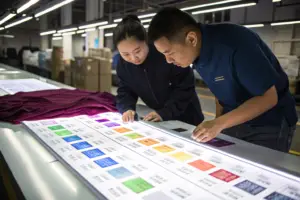
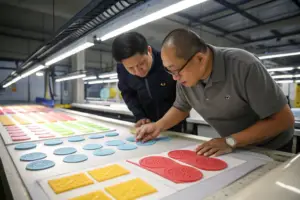
- Color Spectrophotometer Readings: Instead of sending a Lab Dip via FedEx and waiting a week, we use a Digital Color Reader. We take a reading of the bulk fabric and send the Delta E (dE) value. A dE of < 1.0 means the color match is perfect to the human eye. You get this data in minutes, not days.
I recall a buyer from Chicago who was very anxious about a Garment Dye program because shading is common. We sent him a spreadsheet with the dE readings for 12 different wash batches, showing variance between 0.3 and 0.7. He approved the shipment without ever seeing a physical sample. That is the power of data transparency.
What Are the Best Logistics Practices to Protect Quality During Transit?
You can manufacture a perfect garment. But if it gets wet on the tarmac, crushed in a container, or stolen at port, the quality is irrelevant. The journey from factory floor to your warehouse is a dangerous one for textiles.
Many brands focus solely on the Freight Cost. I encourage my clients to focus on Freight Integrity. Saving $200 on a shipping quote means nothing if you have to write off $2,000 in damaged inventory. Proper logistics is an extension of quality control. It is the final mile of our responsibility as a Full-Package Manufacturer.
Let's talk about the two areas where quality most often dies in transit: moisture and handling.
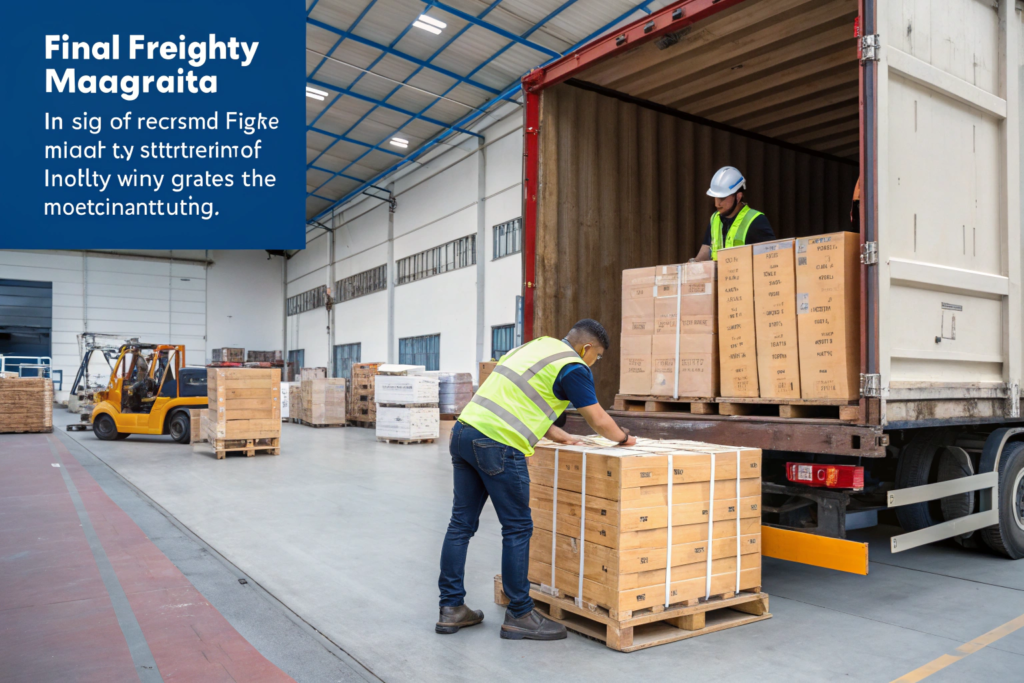
How Do You Prevent Moisture Damage and Mold in Shipping?
Cotton is a sponge. If you pack cotton T-shirts in a humid environment or ship them through a tropical climate zone, they will absorb moisture. Once inside a sealed container, that moisture condenses when temperatures drop at night. It rains inside the container. This leads to Mildew and Mold. The garments smell like a damp basement and are unsellable.
Here are the standard protocols we implement at Shanghai Fumao for ocean freight:
| Risk Factor | Prevention Method | Why It Matters |
|---|---|---|
| Ambient Humidity | Silica Gel Desiccants placed inside cartons. | Absorbs moisture trapped during packing. We use 50g bags per standard carton. |
| Container Sweat | Container Desiccants (Poles) hung on the container walls. | Prevents "container rain" from dripping onto cartons. |
| Floor Moisture | Plastic Pallet Wrapping or Dry Liner on container floor. | Stops ground moisture from wicking up into cardboard cartons. |
| Ventilation | Small Vent Holes in cartons (if buyer approves). | Allows air flow to equalize temperature. |
I once had a client who shipped their own freight and declined desiccants to save $40. A shipment of Fleece Hoodies arrived in Florida smelling musty. They had to pay $1,500 for an ozone treatment cleaning service just to get the smell out. We now include moisture control as a non-negotiable part of our DDP (Delivered Duty Paid) service offering.
What Is the Correct Way to Pack Apparel for Long-Haul Shipping?
How you fold and pack the garment affects how it looks when it arrives. If you pack a Woven Dress Shirt in a tight, thin polybag, it will arrive with deep, permanent creases that cannot be steamed out. Those creases break the fibers of the fabric.
Here is a quick reference guide we use based on product type:
| Garment Type | Recommended Fold | Packaging Material | Reason |
|---|---|---|---|
| Knit Polo Shirt | Flat Fold with Cardboard Insert | 2.0 Mil Polybag | Prevents collar crushing and maintains shape. |
| Silk Blouse | Acid-Free Tissue Paper Wrap | Strong Corrugated Carton | Prevents yellowing and protects delicate fiber. |
| Down Jacket | Vacuum Pack (Compressed) | Heavy-Duty Carton | Saves volume but requires 24hrs to "fluff" upon arrival. |
| Denim Jeans | Flat Pack / No Insert Needed | Bulk Pack Carton | Durable fabric; focus on Carton Burst Strength (200+ PSI). |
Carton strength is another hidden detail. We use Double-Wall Corrugated Cartons with a Burst Strength rating of at least 200 lbs per square inch for all export shipments. The extra $0.60 per carton is worth it when you see how forklifts treat pallets at the port.
Conclusion
Ensuring top quality control when sourcing from developing countries isn't about being lucky or finding a "cheap and good" unicorn. It's about building a system of verification that starts long before the first stitch and extends well past the container doors closing. We've explored the critical importance of Fabric Inspection as your first line of defense, the non-negotiable clarity of a detailed Tech Pack, the verifiable truth of Third-Party Lab Testing, and the often-forgotten discipline of Protective Logistics.
Each of these steps requires direct access to the factory floor and the people making decisions there. You cannot verify a lab report if you don't know the batch number. You cannot adjust seam allowance in real-time if your message is being passed through three different email accounts. Quality control is a conversation, not a memo.
If you are ready to move beyond the guesswork and the anxiety of opening containers, I invite you to partner with a manufacturer that makes quality measurable and transparent. At Shanghai Fumao, our five production lines are structured around these exact principles of inline monitoring and documentation transparency. We specialize in B2B wholesale, custom cut-and-sew, and private label programs for the US and European markets.
Don't leave your brand reputation to chance. Let's build a quality control plan that fits your specific product. You can contact our Business Director, Elaine, directly at elaine@fumaoclothing.com. She can walk you through our QC checklists, share recent inspection video samples, and provide a roadmap for making your next production run flawless.